Many custom options...


And formats...



Loving You in Chinese / Japanese...
Buy a Loving You calligraphy wall scroll here!
Personalize your custom “Loving You” project by clicking the button next to your favorite “Loving You” title below...
1. Mercy / Compassion / Buddhist Loving Kindness
6. Loving-Kindness Conquers All
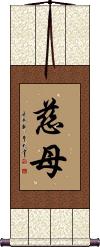
10. Loving Mother
11. Loving Father
16. Life of Love
17. The Art of Love
18. Love Life
19. Life of Love
20. Ed
21. Love and Protect
22. Thankfulness
23. Kind Words
24. Buddha Heart / Mind of Buddha
26. The Middle Way
Mercy / Compassion / Buddhist Loving Kindness
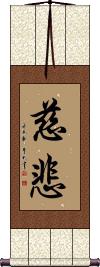
Besides the title above, 慈悲 can also be defined as clemency or lenience and sometimes the act of giving charity.
In the Buddhist context, it can be defined as “benevolence,” “loving-kindness and compassion,” or “mercy and compassion.”
This Buddhist virtue is perhaps the most important to employ in your life. All sentient beings that you encounter should be given your loving kindness. And trust me, however much you can give, it comes back. Make your life and the world a better place!
This Chinese/Japanese Buddhist term is the equivalent of Metta Karuna from Pali or Maitri Karuna from Sanskrit.
慈 can mean loving-kindness by itself.
悲 adds a component of sorrow, empathy, compassion, and sympathy for others.
See Also: Benevolence
Mercy / Compassion / Love
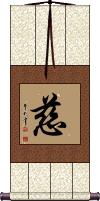
慈 is the simplest way to express the idea of compassion.
This can also mean love for your fellow humans, humanity, or living creatures. Sometimes this is extended to mean charity.
This term is often used in a Buddhist or Christian context. The concept was also spoken of by Laozi (Lao Tzu) in the Dao De Jing (Tao Te Ching).
慈 is considered the direct translation of the Sanskrit word मैत्री (maitrī) Pali word मेत्ता (mettā). In this context, it means benevolence, loving kindness, and goodwill.
This Chinese character is understood in Japanese but is usually used in compound words (not seen alone). Also used in old Korean Hanja, so it's very universal.
See Also: Mercy | Benevolence | Forgiveness | Kindness
Loving Grandfather
Maternal (Southern China - Informal)
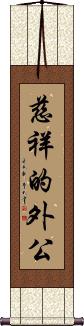
慈祥的外公 is “Loving Grandfather” using an informal way to call your maternal grandfather (mother's father) in Southern China.
Loving Grandmother
Paternal (Southern China)
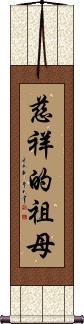
慈祥的祖母 is “Loving Grandmother” in the most common way to refer to your father's mother (paternal grandmother) in Southern China.
Loving Grandmother
Paternal (Northern China)
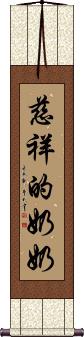
慈祥的奶奶 is “Loving Grandmother” in probably the most common way to refer to your father's mother (paternal grandmother) in northern China.
Loving Grandfather
Maternal (Southern China)
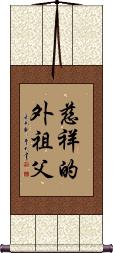
慈祥的外祖父 is “Loving Grandfather” in the formal way that people in Southern China usually call their mother's father (maternal grandfather).
Loving-Kindness Conquers All
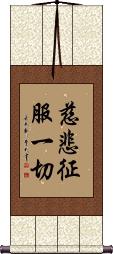
慈悲征服一切 is a way to express the idea that mercy, compassion, and loving-kindness can overcome all things.
This phrase is composed of 3 Chinese words:
慈悲 = loving-kindness; mercy; compassion; benevolence. It's used in Buddhism a lot to express the idea of how one should treat everyone else and all living beings.
征服 = to conquer; to subdue; to vanquish; to overcome.
一切 = all; everything; the whole; lock, stock, and barrel; without exception.
Loving Grandfather
Paternal (Southern China)
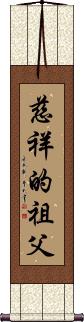
慈祥的祖父 is “Loving Grandfather” in the way people in Southern China call their father's father (paternal grandfather).
Loving Grandmother
Maternal (Northern China)
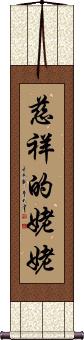
慈祥的姥姥 is “Loving Grandmother” in the common way to refer to your mother's mother (maternal grandmother) in Northern China.
Loving Grandmother
Maternal (Southern China)
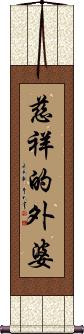
慈祥的外婆 is “Loving Grandmother” in a common way to refer to your mother's mother (maternal grandmother) in Southern China.
Loving Grandmother
Maternal (Southern China - formal)
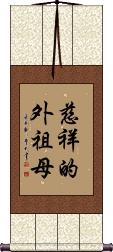
慈祥的外祖母 is “Loving Grandmother” in the formal way to refer to your mother's mother (maternal grandmother) in Southern China.
Loving Grandfather
Paternal (Northern China)
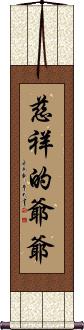
慈祥的爺爺 is “Loving Grandfather” using the most common way for people in Northern China to refer to their father's father (paternal grandfather).
Loving Mother
Loving Father
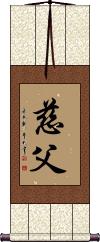
慈父 is the title of a loving father, affectionate father, or merciful father.
A great gift for your dad.
Loving Heart / Compassion
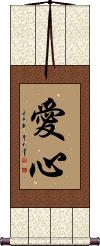
愛心 literally means “loving heart.” It can also be translated as “compassion.”
In Chinese, it carries more of a compassionate meaning.
愛心 is rarely used in Japanese anymore, so best if your audience is Chinese.
See Also: Compassion | Love
Loving Heart / One’s Love
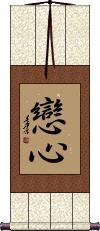
戀心 literally means “loving heart.” It can also be translated as “one's love” or “awakening of love.”
戀心 is used exclusively for love between boyfriends and girlfriends or husband and wife.
Breaking down the meaning of each Kanji, the first means love, affection, or tender passion. The second Kanji means heart, mind, or soul (most will read it as the heart).
See Also: Compassion | Love
Loving Grandfather
Maternal (Northern China)
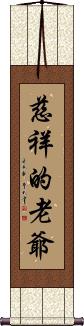
慈祥的老爺 is what you would call your maternal grandfather (mother's father) in Northern China with the adjective/title “Dear” on the front.
Mama / Mother / Mommy
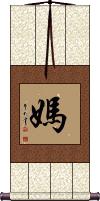
媽 is the oral way that most Chinese people refer to their mothers. Often, they will put this together twice (two of the same character in a row) to create a word that sounds like “Mama.” That's absolutely what little kids call their mothers in China. This Chinese “Mama” is the rough equivalent of “Mommy” in English. Beyond a certain age, Chinese will start to just say “Ma,” which is like saying “Mom.”
This entry is just here for a language lesson. This would make a strange wall scroll by Chinese standards. In Chinese, there are sometimes oral words that don't seem appropriate when written in calligraphy, and this is one of them. See our entry for “Loving Mother” for a better selection.
See Also: Loving Mother | Family
Life of Love
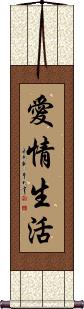
愛情生活 is the Chinese proverb for “Loving Life.” Some also translate this as “[your] Loving Life” or “Life full of Love.”
This is about being a loving person (to your spouse and/or family) during your life. This is not the same as loving the state of being alive - not “love of living” but rather “being a loving person during your life.”
Note: Korean pronunciation is included above, though use of this proverb in Korean has not been verified.
This proverb can be understood in Japanese but
it’s
primarily a Chinese proverb (it will "feel" Chinese to a Japanese person).
The Art of Love
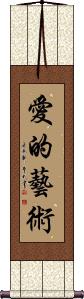
愛的藝術 means “art of love” or “art of loving” in Chinese.
This is also the Chinese title of the book “Art of Loving” by Erich Fromm.
Love Life
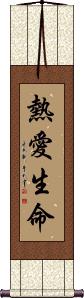
熱愛生命 is the Chinese phrase for “Love Life” or “Love of Life.”
If you love your life or want a reminder on your wall to keep you loving your life each day, this is the selection for you.
To clarify, this is different than “A life full of love,” or “love while you live.” With this phrase, you are loving the state of being alive.
Note: Korean pronunciation is included above, though use of this phrase in Korean has not been verified.
Life of Love
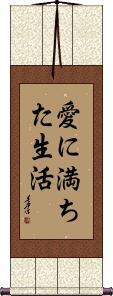
愛に満ちた生活 is a Japanese phrase that means “a loving life” or “life filled with love.”
Note: Because this selection contains some special Japanese Hiragana characters, it should be written by a Japanese calligrapher.
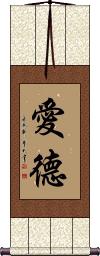
愛德 is a common transliteration to Mandarin Chinese for the name Ed.
愛德 mean “loving virtue” or charity.
Love and Protect
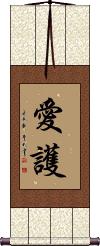
愛護 is the Chinese and Japanese Kanji for cherish, to treasure, to take care of, to love and protect, to provide loving protection, or tender care.
Thankfulness
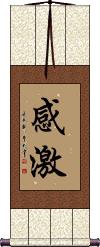
感激 is thankfulness or being grateful for what you have.
It is an attitude of gratitude for learning, loving, and being. Appreciate the little things that happen around you and within you every day. Think positively. Thankfulness brings contentment.
Different meaning in Japanese - more like "deep emotion," "impression," "inspiration" - not recommended for a Japanese audience.
Kind Words
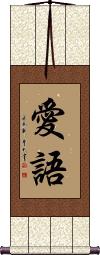
In the simplest terms, 愛語 means kind words.
In the Buddhist context, this is one of the four methods of approach to people which the bodhisattvas use to guide them to the way of the Buddha.
Other translations include loving speech or simply the words of a bodhisattva.
愛語 is also a common female name, Aigo, in Japanese.
Buddha Heart / Mind of Buddha
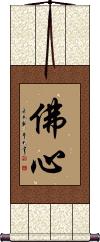
佛心 means the Buddha's mind, Buddha-heart, or the spiritually enlightened heart/mind.
The Buddha Heart is detached from good and evil and other such constructs. The Buddha Heart has mercy, compassion, and loving-kindness for all sentient life, the good, the wicked, and all in between.
The heart and mind (心) are the same concepts in the ancient Orient, so you can use heart and mind interchangeably in this context.
Kindness / Benevolence
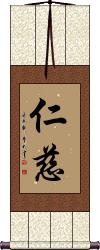
仁慈 word is used in Chinese, Korean, Japanese, and Asian Buddhism to relay the important idea of loving kindness.
仁慈 can also be defined as: benevolent; charitable; kind; merciful; kind-hearted; benevolence; kindness; humanity; mercy.
In Japanese, this can also be the given name Hitoji. This would also be a good Mandarin Chinese given name romanized as Jentzu (in Taiwan) or Renci (which sounds like ren-tsuh).
The Middle Way
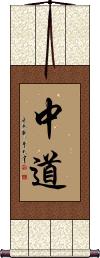
In the most basic translation, 中道 means road through the middle or middle road.
The expanded meaning can be moderation or the golden mean.
But if you are looking for this title, you are probably seeking the Buddhist definition, which is more complex.
中道 is the middle way or middle path of Buddhism. This has various interpretations. In general, it denotes the mean between two extremes and has special reference to the mean between realism and nihilism, or eternal substantial existence and annihilation.
The Buddha teaches that one should not take things to extremes. Don't be extremely evil and engage in debauchery and murder. But do not spend every waking out trying to be a perfect saint. Instead, take the middle path, try to help others, show loving kindness wherever you can, and try not to do harm. If you inadvertently harm another being, make amends if you can, and move on. Realize you are not perfect, but in time, a path of moderation lead toward proper living and enlightenment.
Appreciation and Love for Your Parents
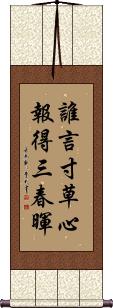
誰言寸草心報得三春暉 is the last line of a famous poem. It is perceived as a tribute or ode to your parents or mother from a child or children that have left home.
The poem was written by Meng Jiao during the Tang Dynasty (about 1200 years ago). The Chinese title is “You Zi Yin” which means “The Traveler's Recite.”
The last line as shown here speaks of the generous and warm spring sunlight which gives the grass far beyond what the little grass can could ever give back (except perhaps by showing its lovely green leaves and flourishing). The metaphor is that the sun is your mother or parents, and you are the grass. Your parents raise you and give you all the love and care you need to prepare you for the world. A debt that you can never repay, nor is repayment expected.
The first part of the poem (not written in the characters to the left) suggests that the thread in a loving mother's hands is the shirt of her traveling offspring. Vigorously sewing while wishing them to come back sooner than they left.
...This part is really hard to translate into English that makes any sense but maybe you get the idea. We are talking about a poem that is so old that many Chinese people would have trouble reading it (as if it was the King James Version of Chinese).
This in-stock artwork might be what you are looking for, and ships right away...

Gallery Price: $60.00
Your Price: $39.88
The following table may be helpful for those studying Chinese or Japanese...
| Title | Characters | Romaji (Romanized Japanese) | Various forms of Romanized Chinese | |
| Mercy Compassion Buddhist Loving Kindness | 慈悲 | ji hi / jihi | cí bēi / ci2 bei1 / ci bei / cibei | tz`u pei / tzupei / tzu pei |
| Mercy Compassion Love | 慈 | ji | cí / ci2 / ci | tz`u / tzu |
| Loving Grandfather | 慈祥的外公 | cí xiáng de wài gōng ci2 xiang2 de wai4 gong1 ci xiang de wai gong cixiangdewaigong | tz`u hsiang te wai kung tzuhsiangtewaikung tzu hsiang te wai kung |
|
| Loving Grandmother | 慈祥的祖母 | cí xiáng de zǔ mǔ ci2 xiang2 de zu3 mu3 ci xiang de zu mu cixiangdezumu | tz`u hsiang te tsu mu tzuhsiangtetsumu tzu hsiang te tsu mu |
|
| Loving Grandmother | 慈祥的奶奶 | cí xiáng de nǎi nai ci2 xiang2 de nai3 nai ci xiang de nai nai cixiangdenainai | tz`u hsiang te nai nai tzuhsiangtenainai tzu hsiang te nai nai |
|
| Loving Grandfather | 慈祥的外祖父 | cí xiáng de wài zǔ fù ci2 xiang2 de wai4 zu3 fu4 ci xiang de wai zu fu cixiangdewaizufu | tz`u hsiang te wai tsu fu tzuhsiangtewaitsufu tzu hsiang te wai tsu fu |
|
| Loving-Kindness Conquers All | 慈悲征服一切 | cí bēi zhēng fú yī qiè ci2 bei1 zheng1 fu2 yi1 qie4 ci bei zheng fu yi qie cibeizhengfuyiqie | tz`u pei cheng fu i ch`ieh tzupeichengfuichieh tzu pei cheng fu i chieh |
|
| Loving Grandfather | 慈祥的祖父 | cí xiáng de zǔ fù ci2 xiang2 de zu3 fu4 ci xiang de zu fu cixiangdezufu | tz`u hsiang te tsu fu tzuhsiangtetsufu tzu hsiang te tsu fu |
|
| Loving Grandmother | 慈祥的姥姥 | cí xiáng de lǎo lao ci2 xiang2 de lao3 lao ci xiang de lao lao cixiangdelaolao | tz`u hsiang te lao lao tzuhsiangtelaolao tzu hsiang te lao lao |
|
| Loving Grandmother | 慈祥的外婆 | cí xiáng de wài pó ci2 xiang2 de wai4 po2 ci xiang de wai po cixiangdewaipo | tz`u hsiang te wai p`o tzuhsiangtewaipo tzu hsiang te wai po |
|
| Loving Grandmother | 慈祥的外祖母 | cí xiáng de wài zǔ mǔ ci2 xiang2 de wai4 zu3 mu3 ci xiang de wai zu mu cixiangdewaizumu | tz`u hsiang te wai tsu mu tzuhsiangtewaitsumu tzu hsiang te wai tsu mu |
|
| Loving Grandfather | 慈祥的爺爺 慈祥的爷爷 | cí xiáng de yé ye ci2 xiang2 de ye2 ye ci xiang de ye ye cixiangdeyeye | tz`u hsiang te yeh yeh tzuhsiangteyehyeh tzu hsiang te yeh yeh |
|
| Loving Mother | 慈母 | ji bo / jibo | cí mǔ / ci2 mu3 / ci mu / cimu | tz`u mu / tzumu / tzu mu |
| Loving Father | 慈父 | jifu | cí fù / ci2 fu4 / ci fu / cifu | tz`u fu / tzufu / tzu fu |
| Loving Heart Compassion | 愛心 爱心 | ài xīn / ai4 xin1 / ai xin / aixin | ai hsin / aihsin | |
| Loving Heart One’s Love | 戀心 恋心 | koi gokoro / koigokoro | ||
| Loving Grandfather | 慈祥的老爺 慈祥的老爷 | cí xiáng de lǎo ye ci2 xiang2 de lao3 ye ci xiang de lao ye cixiangdelaoye | tz`u hsiang te lao yeh tzuhsiangtelaoyeh tzu hsiang te lao yeh |
|
| Mama Mother Mommy | 媽 妈 | mā / ma1 / ma | ||
| Life of Love | 愛情生活 爱情生活 | aijyou seikatsu aijyouseikatsu aijyo seikatsu | ài qíng shēng huó ai4 qing2 sheng1 huo2 ai qing sheng huo aiqingshenghuo | ai ch`ing sheng huo aichingshenghuo ai ching sheng huo |
| The Art of Love | 愛的藝術 爱的艺术 | ài de yì shù ai4 de yi4 shu4 ai de yi shu aideyishu | ai te i shu aiteishu |
|
| Love Life | 熱愛生命 热爱生命 | rè ài shēng mìng re4 ai4 sheng1 ming4 re ai sheng ming reaishengming | je ai sheng ming jeaishengming |
|
| Life of Love | 愛に満ちた生活 | aini michita seikatsu ainimichitaseikatsu | ||
| Ed | 愛德 爱德 | ài dé / ai4 de2 / ai de / aide | ai te / aite | |
| Love and Protect | 愛護 爱护 | ai go / aigo | ài hù / ai4 hu4 / ai hu / aihu | |
| Thankfulness | 感激 | kangeki | gǎn jī / gan3 ji1 / gan ji / ganji | kan chi / kanchi |
| Kind Words | 愛語 爱语 | aigo | ài yǔ / ai4 yu3 / ai yu / aiyu | ai yü / aiyü |
| Buddha Heart Mind of Buddha | 佛心 | busshin / bushin | fó xīn / fo2 xin1 / fo xin / foxin | fo hsin / fohsin |
| Kindness Benevolence | 仁慈 | jin ji / jinji | rén cí / ren2 ci2 / ren ci / renci | jen tz`u / jentzu / jen tzu |
| The Middle Way | 中道 | chuu dou / chuudou / chu do | zhōng dào zhong1 dao4 zhong dao zhongdao | chung tao chungtao |
| Appreciation and Love for Your Parents | 誰言寸草心報得三春暉 谁言寸草心报得三春晖 | shuí yán cùn cǎo xīn bào dé sān chūn huī shui2 yan2 cun4 cao3 xin1 bao4 de2 san1 chun1 hui1 shui yan cun cao xin bao de san chun hui | shui yen ts`un ts`ao hsin pao te san ch`un hui shui yen tsun tsao hsin pao te san chun hui |
|
| In some entries above you will see that characters have different versions above and below a line. In these cases, the characters above the line are Traditional Chinese, while the ones below are Simplified Chinese. | ||||

Successful Chinese Character and Japanese Kanji calligraphy searches within the last few hours...



