Many custom options


And formats



Not what you want?
Try other similar-meaning words, fewer words, or just one word.
French Aimee Meaning Beloved in Chinese / Japanese
Buy a French Aimee Meaning Beloved calligraphy wall scroll here!
Personalize your custom “French Aimee Meaning Beloved” project by clicking the button next to your favorite “French Aimee Meaning Beloved” title below.
Switched to secondary search mode due to lack of results using primary.
These secondary results may not be very accurate. Try a different but similar meaning word or phrase for better results. Or:
Look up French Aimee Meaning Beloved in my Japanese Kanji & Chinese Character Dictionary(My dictionary is a different system then the calligraphy search you just tried)
If you want a special phrase, word, title, name, or proverb, feel free to contact me, and I will translate your custom calligraphy idea for you.
2. Abelard
3. Year-In Year-Out Have Abundance
4. Adelaide
5. Adelie
7. Adoring Love
8. Adrienne
9. Adventure
10. Agathe
11. Agathon
12. Agobart
13. Aijou-Ryu
14. Aimee
15. Sky / Void
16. Akiyama
17. Alaric
18. Albane
19. Alberic
20. Alcide
21. Alderic
22. Alexandrine
23. Alexane
24. Alexiane
25. Alizee
26. Almerinda
27. Alois
28. Amance
29. Amaury
30. Amazing / Shocking / Astonished
31. Amazing Grace
32. Ambre
33. Amedee
34. Amelie
35. Amour
36. Anae
37. Anaelle
38. Anatole
39. Andreanne
40. Ange
41. Angel / Messenger of Heaven
42. Angel
43. Angele
44. Anik
45. Annabelle
46. Anne-Marie
47. Anne-Claire
48. Anne-France
49. Anne-Laure
50. Anne-Marie
51. Anne-Sophie
52. Anouchka
53. Anouck
54. Antonin
55. Apolline
56. Appoline
57. Archer
58. Ardent / Fierce
59. Passionate Love / Ardent Love and Devotion
60. Arielle
61. Arlette
62. Armelle
63. Arsene
64. Asian Pride / Oriental Pride / AZN Pryde
65. Assetou
66. Aubin
67. Aubouin
68. Aude
69. Audreanne
70. Augustin
71. Aung
72. Aurane
73. Aurelie
74. Aurelien
75. Auriane
76. Aurore
77. Auxanne
78. Axelle
79. Ayme
80. Aysia
81. Blue Dragon / Azure Dragon
82. Unmoved by the Eight Winds
83. Barnabe
84. Bastien
85. Beautiful Life / Life in Perfect Harmony
86. Beauty: The art of makeup / cosmetics
87. Beautiful Soul
88. You are always a beauty in your lover’s eyes
89. Beauty is in the eyes of the beholder
90. Becassine
91. Bee
92. Belarus
Five Red Bats
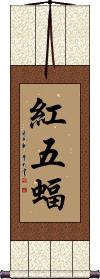
紅五蝠 is a play on words in Chinese because of some homophones.
The first thing you need to know is that the word for bat, 蝠, sounds exactly like the word for good fortune, 福. Thus, bats are often associated with good luck and good fortune in Chinese culture.
Five bats (五福 / 五蝠) means “five fortunes,” referring to luck, prosperity, wealth, happiness, and longevity.
The word red, 红, has the same sound as 宏 meaning vast, great, or magnificent. Therefore, a red bat means “vast fortune.”
Altogether, five red bats represent vast reaches of the five fortunes.
Abelard
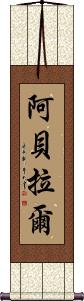
This is a common Mandarin Chinese transliteration for the male French name Abélard or Abelard.
Year-In Year-Out Have Abundance
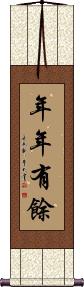
年年有餘 is a common proverb or wish of prosperity you'll hear around the time of Chinese New Year.
Directly translated character by character, it means “Year Year Have Surplus.” A more natural English translation including the deeper meaning would be “Every Year may you Have Abundance in your life.”
On a side note, this phrase often goes with a gift of something related to fish. This is because the last character, “yu” which means surplus or abundance, has exactly the same pronunciation in Mandarin as the word for “fish.”
This is also one of the most common titles for traditional paintings that feature koi fish.
In China, this phrase might make an odd wall scroll - a customer asked especially for this common phrase which is why it appears here. See my other abundance-related words if you want a wall scroll that will seem more comfortable in Chinese culture.
Note: This can be pronounced in Korean, but it's not a commonly used term.
See Also: Prosperity | House of Good Fortune
Adelaide
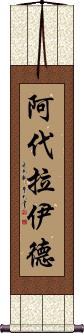
This is a common Mandarin Chinese transliteration for the female French name Adélaïde or Adelaide.
Adelie
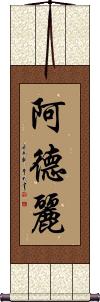
This is a common Mandarin Chinese transliteration for the female French name Adélie or Adelie.
Adorable / Cute / Lovely
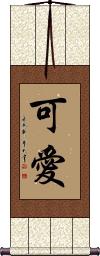
可愛 is a Chinese word that means adorable, cute, and lovely.
It also has a similar meaning in Japanese, but it's more often used as the given name Kawai.
In the Buddhist context, it can mean agreeable.
Adoring Love
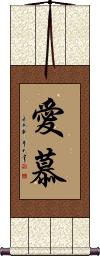
愛慕 means “adoring love” in Chinese, Japanese, and Korean.
I suppose this is the best form of love to have. 愛慕 has the common character for love. But the second character modifies and reinforces the meaning to become adore, adoring love, or to love and adore.
Ancient Chinese warning:
Adoring someone is fine until you are in the shoes of the Prince of the Kingdom of Wu. This Prince adored a certain beautiful woman (Xi Shi) so much that he neglected his duties and soon let the kingdom fall into ruins.
Adrienne
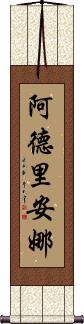
This is a common Mandarin Chinese transliteration for the female French name Adrienne.
Adventure
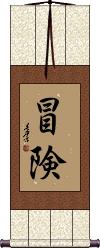
冒険 is a common Japanese way to say “Adventure.”
The first character can mean “to risk,” “to defy” or “to dare.” The second character means “inaccessible place” or “impregnable position.” Together, you get the idea of why these two characters mean adventure when put them together in Japanese.
Note: The second character is a morphed Japanese Kanji. The original Chinese version is also available and holds the same root meaning.
See Also: Bon Voyage | Traveler / Wanderer / Vagabond / Rolling Stone
Adventure
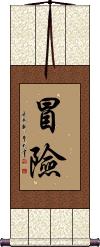
冒險 is another Chinese and Korean word for “Adventure.”
This is a more “risk-taking” sense of adventure.
The first character can mean “brave” and “bold.” The second character means “dangerous” and “rugged.” Together they can mean a word meaning “adventure” in Chinese and Korean.
Note: Some dictionaries translate these two characters as “take a risk.”
See Also: Bon Voyage | Traveler / Wanderer / Vagabond / Rolling Stone
Agathe
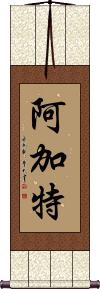
This is a common Mandarin Chinese transliteration for the female French name Agathe.
Agathon
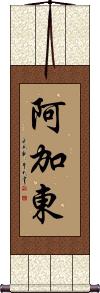
This is a common Mandarin Chinese transliteration for the male French name Agathon.
Agobart
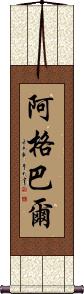
This is a common Mandarin Chinese transliteration for the male French name Agobart.
Aijou-Ryu
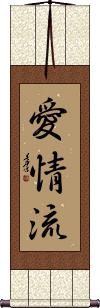
This is the title Aijō-Ryū, Aijou-Ryu or Aijou-Ryuu meaning “style of love and affection” or “flow of love” in Japanese.
Aimee
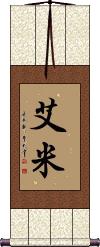
This is the most common transliteration to Mandarin Chinese for the name Aimee.
Aimee
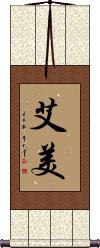
This is a common Mandarin Chinese transliteration for the female French name Aimée or Aimee.
Aimee
This is a common Mandarin Chinese transliteration for the female French name Aimée or Aimee.
Aimee
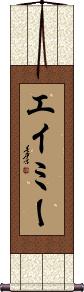
エイミー is the name Aimee in Japanese.
Note: Because this title is entirely Japanese Katakana, it should be written by a Japanese calligrapher.
Aimee
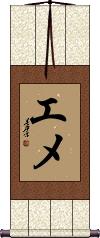
This is a short way to write the name Aimee in Katakana (phonetic Japanese).
Note: Because this title is entirely Japanese Katakana, it should be written by a Japanese calligrapher.
Sky / Void
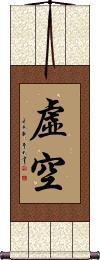
虛空 means void, hollow, empty, space, sky, atmosphere, heaven, or ether.
虛空 is the Chinese and Japanese version of the Sanskrit word ākāśa (or akasa / akash) which, beyond the sky or space meaning can be the immaterial universe behind all phenomena in the Buddhist context.
Akiyama
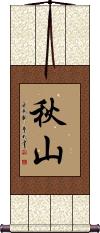
This is the surname and place name Akiyama in Japanese.
It can be read in Chinese but would be understood to be a Japanese name (no meaning in Chinese).
Alaric
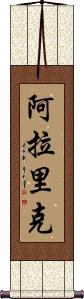
This is a common Mandarin Chinese transliteration for the male French name Alaric.
Albane
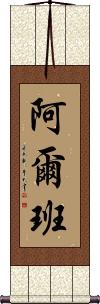
This is a common Mandarin Chinese transliteration for the female French name Albane.
Alberic
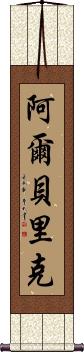
This is a common Mandarin Chinese transliteration for the male French name Albéric or Alberic.
Alcide
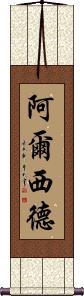
This is a common Mandarin Chinese transliteration for the male French name Alcide.
Alderic
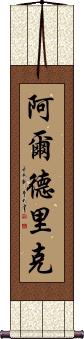
This is a common Mandarin Chinese transliteration for the male French name Aldéric or Alderic.
Alexandrine
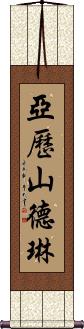
This is a common Mandarin Chinese transliteration for the female French name Alexandrine.
Alexane
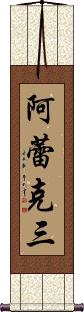
This is a common Mandarin Chinese transliteration for the female French name Alexane.
Alexiane
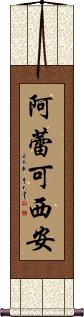
This is a common Mandarin Chinese transliteration for the female French name Alexiane.
Alizee
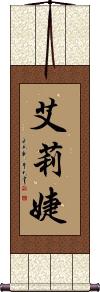
This is a common Mandarin Chinese transliteration for the female French name Alizée or Alizee.
Almerinda
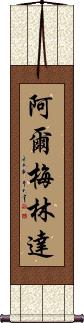
This is a common Mandarin Chinese transliteration for the female French name Almérinda or Almerinda.
Alois
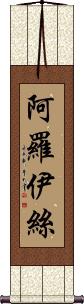
This is a common Mandarin Chinese transliteration for the female French name Aloïs or Alois.
Amance
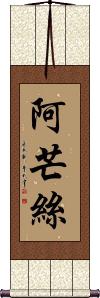
This is a common Mandarin Chinese transliteration for the female French name Amance.
Amaury
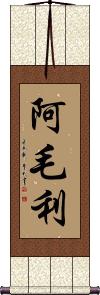
This is a common Mandarin Chinese transliteration for the male French name Amaury.
Amazing / Shocking / Astonished
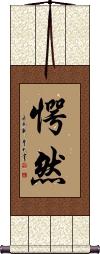
愕然 is a Chinese and Japanese word meaning amazing, shocking, astonishment, shock, or amazement.
Amazing Grace
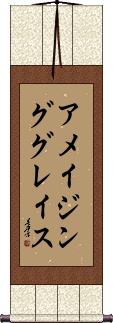
アメイジング・グレイス is the Japanese Katakana for Amazing Grace.
This phonetically sounds like the English, “Amazing Grace” but does not hold that meaning since it is a transliteration versus a translation.
Note: Because this title is entirely Japanese Katakana, it should be written by a Japanese calligrapher.
Ambre
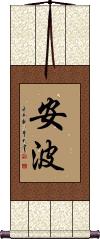
This is a common Mandarin Chinese transliteration for the female French name Ambre.
Amedee
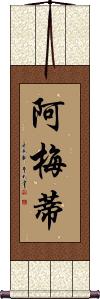
This is a common Mandarin Chinese transliteration for the male French name Amédée or Amedee.
Amelie
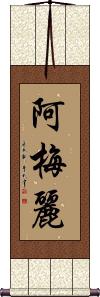
This is a common Mandarin Chinese transliteration for the female French name Amélie or Amelie.
Amour
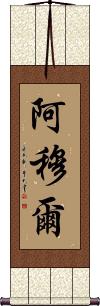
This is a common Mandarin Chinese transliteration for the male French name Amour.
Anae
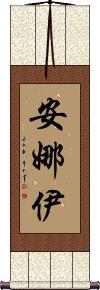
This is a common Mandarin Chinese transliteration for the female French name Anaé or Anae.
Anaelle
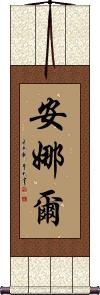
This is a common Mandarin Chinese transliteration for the female French name Anaëlle or Anaelle.
Anatole
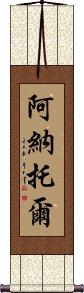
This is the msot common Mandarin Chinese transliteration for the male French name Anatole.
Anatole
This is the second most common Mandarin Chinese transliteration for the male French name Anatole.
Andreanne
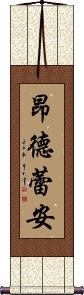
This is a common Mandarin Chinese transliteration for the female French name Andréanne or Andreanne.
Ange
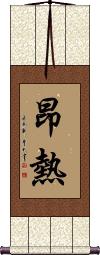
This is a common Mandarin Chinese transliteration for the French name Ange.
Angel / Messenger of Heaven
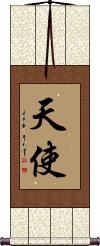
天使 is the meaning of Angel in Chinese, Japanese Kanji, and old Korean Hanja.
The first character means heaven. The second means messenger. Together it makes sense that we are talking about angels as Heaven's Messengers.
If you are an “Angel Junkie,” this may be the wall scroll for you.
I also think it's a great choice if your name happens to be Angel.
See Also: Guardian Angel
Angel
(Name Version 1)
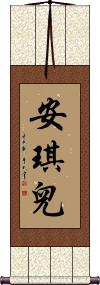
安琪兒 is the most common transliteration to Mandarin Chinese for the name Angel.
It is supposed to sound like Angel but to be honest, this one misses the mark.
I would go with the meaning of Angel if I were you.
Angel
(Name - Version 2)
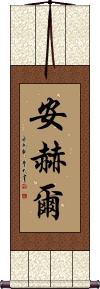
安赫爾 is another common transliteration to Mandarin Chinese for the name Angel.
This one misses the mark too - It uses a hard “H” sound to simulate the “J” sound of the “G” in this name. I don't know who transliterated these first and how it became the standard.
Again, I recommend using the meaning of Angel above.
If anything, this is the more masculine form of Angel. This is also the form commonly used for the masculine Latin name Ángel.
Angele
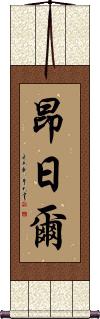
This is a common Mandarin Chinese transliteration for the female French name Angèle or Angele.
Anik
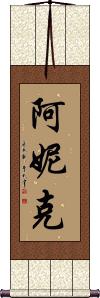
This is a common Mandarin Chinese transliteration for the female French name Anik.
Annabelle
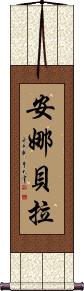
This is the most common Mandarin Chinese transliteration for the female French name Annabelle.
Anne-Marie
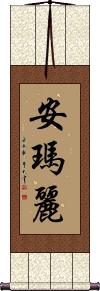
This is a common Mandarin Chinese transliteration for the female French name Anne-Marie.
Anne-Claire
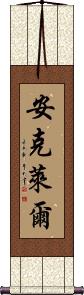
This is a common Mandarin Chinese transliteration for the female French name Anne-Claire.
Anne-France
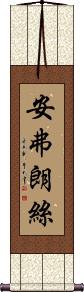
This is a common Mandarin Chinese transliteration for the female French name Anne-France.
Anne-Laure
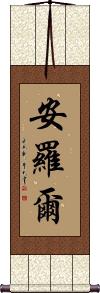
This is a common Mandarin Chinese transliteration for the female French name Anne-Laure.
Anne-Marie
This is a common Mandarin Chinese transliteration for the female French name Anne-Marie or Annemarie.
Anne-Sophie
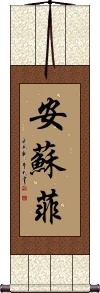
This is a common Mandarin Chinese transliteration for the female French name Anne-Sophie.
Anouchka
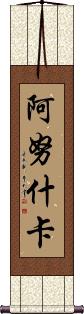
This is a common Mandarin Chinese transliteration for the female French name Anouchka.
Anouck
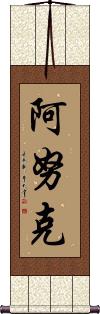
This is a common Mandarin Chinese transliteration for the female French name Anouck.
Antonin
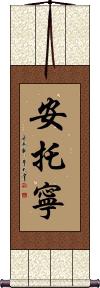
This is a common Mandarin Chinese transliteration for the male French name Antonin.
Apolline
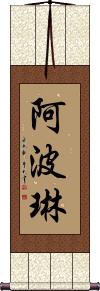
This is a common Mandarin Chinese transliteration for the female French name Apolline.
Appoline
This is a common Mandarin Chinese transliteration for the female French name Appoline.
Archer
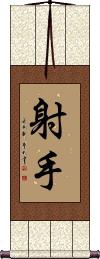
射手 means archer, shooter, or marksman in Chinese, Japanese Kanji, and old Korean Hanja.
Depending on the context, it can also mean “goal-getter” in Chinese. This would also be the word for a bowman.
射手 is modern in Asia, meaning that it's only been in use for a few hundred years. However, the more ancient version of the archer is often not even recognized by the current generation of Chinese and Japanese people.
The first character means “shoot” or “fire” (in the context of a gun or bow). It's also a suffix for radioactive things (in the context of chemistry) - radioactive things “fire off” electrons. In Japanese, the first Kanji is a short name and suffix for archery.
The second character means “hand,” but the hand can also mean a person, in the same way, that a “farmhand” is a person in English.
Archer
Modern Chinese Version
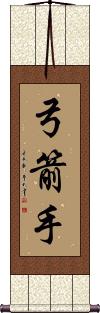
弓箭手 is how to write “archer” in modern Chinese.
弓箭手 literally means “bow arrow hand.”
There are other ways to write “archer” in Chinese, but this is probably the most common title for modern China. The other, less-common version of “archer” is also more universal because it has the same meaning in Japanese (this one is not used in Japan).
Ardent / Fierce
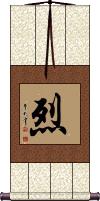
烈 is a Chinese word that means ardent; intense; fierce; stern; upright; to give one's life for a noble cause.
In another context, this character can refer to one's exploits or achievements.
In the Buddhist context, this is burning, fierce, virtuous, and/or heroic.
While technically, it had the same meaning in Japanese, it's usually a female given name, Retsu in Japanese these days.
Passionate Love / Ardent Love and Devotion
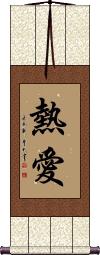
熱愛 means love passionately, ardent love, devotion, adoration.
The literal meaning is “hot love,” as the first character means heat, fervent, hot, and warm. Sometimes it can mean fever, restlessness, or zeal. The second character is, of course, love. If you adore and are devoted to someone with all your love, this is the title for you.
Arielle
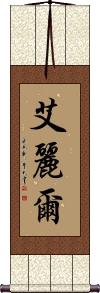
This is a common Mandarin Chinese transliteration for the female French name Arielle.
Arlette
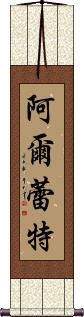
This is a common Mandarin Chinese transliteration for the female French name Arlette.
Armelle
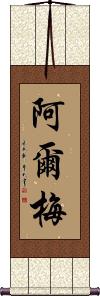
This is a common Mandarin Chinese transliteration for the female French name Armelle.
Arsene
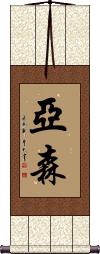
This is a common Mandarin Chinese transliteration for the male French name Arsène or Arsene.
Asian Pride / Oriental Pride / AZN Pryde
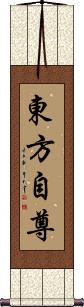
東方自尊 is the universal way to write “Asian Pride.”
We worked on this one for a long time. The effort involved both Chinese and Japanese translators and lengthy discussions. If you have been searching for this term, there is a reason that it's hard to find the way to write “Asian Pride” in Chinese and Japanese - it's because of the inherent difficulties in figuring out a universal combination of characters that can be read in all languages that use forms of Chinese characters.
This final solution that you see to the left creates a reasonable title in Chinese and an exotic (perhaps unusual) title in Japanese (This could be read as “Eastern Self-Respect” in Japanese”).
Although not as natural, it does have the same meaning as Korean Hanja, and the older generation of Vietnamese people will be able to read it.
The first two characters literally mean “Oriental” and the second two mean “pride,” “self-esteem,” or “self-respect” (we chose the most non-arrogant way to say “pride”). If you have “Asian Pride” (sometimes spelled Asian Pryde) these are the characters for you.
Note: For those who wonder, there is nothing technically wrong with the word “Oriental.” It is a correct word, and any bad meanings were created by so-called “Asian Americans” and Caucasians in the United States. To say “Asian” would not completely correct the intended meaning since that would include people from Saudi Arabia, Iraq, Iran, India, and portions of Russia.
For further proof, if you were of East Asian ancestry and born in England, you would be known as a “British Oriental” (The “Oriental stigma” is essentially an American creation and, therefore, applies mainly to the American English language - where they get a bit overzealous with political correctness).
Further, since the Chinese and Japanese word for Oriental is not English, they cannot be construed as having ill meaning. On one trip to China or Japan, you will find many things titled with these two characters, such as malls, buildings, and business names. These places also use “Oriental” as their English title (much as we do since our Chinese business name starts with these same two characters).
In short, the first two characters have the meaning that Americans attach to “Asian” but is more technically correct.
Assetou
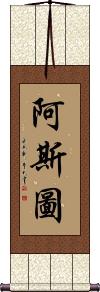
This is a common Mandarin Chinese transliteration for the male French name Assetou.
Aubin
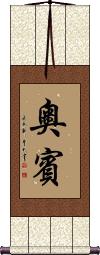
This is a common Mandarin Chinese transliteration for the male French name Aubin.
Aubouin
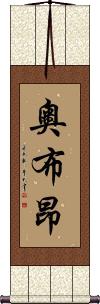
This is a common Mandarin Chinese transliteration for the male French name Aubouin.
Aude
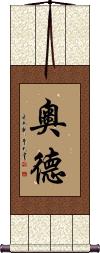
This is a common Mandarin Chinese transliteration for the female French name Aude.
Audreanne
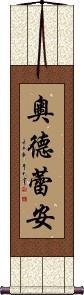
This is a common Mandarin Chinese transliteration for the female French name Audréanne or Audreanne.
Augustin
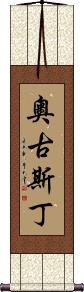
This is a common Mandarin Chinese transliteration for the male French name Augustin.
Aung
Burmese Surname
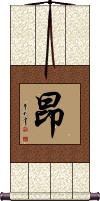
昂 is often used to represent the Burmese surname Aung.
The actual meaning is to lift, raise, high, high spirits, soar, or soaring.
In Japanese, this can be the given name Hisashi.
Aurane
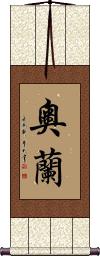
This is a common Mandarin Chinese transliteration for the female French name Aurane.
Aurelie
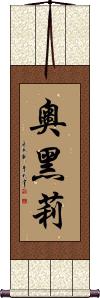
This is a common Mandarin Chinese transliteration for the female French name Aurélie or Aurelie.
Aurelien
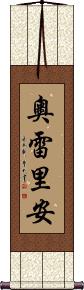
This is a common Mandarin Chinese transliteration for the male French name Aurélien or Aurelien.
Auriane
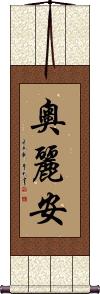
This is a common Mandarin Chinese transliteration for the female French name Auriane.
Aurore
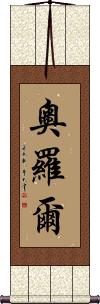
This is a common Mandarin Chinese transliteration for the female French name Aurore.
Auxanne
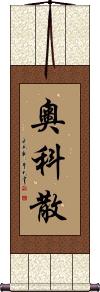
This is a common Mandarin Chinese transliteration for the female French name Auxanne.
Axelle
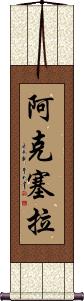
This is a common Mandarin Chinese transliteration for the female French name Axelle.
Ayme
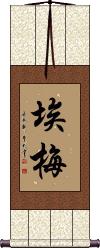
This is a common Mandarin Chinese transliteration for the male French name Aymé or Ayme.
Aysia
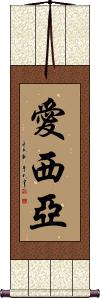
愛西亞 is the transliteration to Mandarin Chinese for the name Aysia.
The meaning is “Love West Asia,” although it will be read as a name, rather than this meaning by most.
Blue Dragon / Azure Dragon
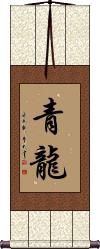
青龍 is a scholarly title for “Blue Dragon” or “Azure Dragon.”
You'll find this title used in ancient Chinese literature and astronomy. This dragon has dominion over the eastern sky or eastern heavens. The Azure Dragon is also noted for representing the spring season. Also seen as an auspicious omen.
Emperor Huizong of the Song Dynasty canonized the five colored dragons as “kings.” The Azure Dragon represents the most compassionate of kings.
In Japanese, this title is known with the same meaning but can also be a given name, Seiryuu or Seiryu.
Note, the first character can be written as  OR
OR  . Same character, just two ways to write it.
Unmoved by the Eight Winds

八風吹不動 is an ancient Buddhist phrase from about 1000 years ago.
Literal meaning: “The Eight Winds cannot move [me].”
The original famous anecdote is from Song Dynasty China, involving the poet-official 蘇東坡 (Su Dongpo / Su Shi, 1037–1101) and Zen master 佛印 (Foyin).
Su Dongpo wrote 八風吹不動,一屁打過江
“The Eight Winds cannot move me; Yet one fart blows me across the river.”
Foyin’s irreverent reply exposed Su Dongpo’s ego, which is kind of a classic Zen/Chan teaching story.
利 gain
衰 loss
毀 disgrace
譽 praise
稱 honor
譏 ridicule
苦 suffering
樂 pleasure
“The Eight Winds cannot move [him / the mind].”
“Unmoved by the Eight Winds.”
“The Eight Winds do not move me.”
“Not moved by the Eight Winds.”
“Unshaken by the Eight Winds.”
“Unaffected by the Eight Winds.”
“Unmoved by worldly forces.”
“Steadfast against the Eight Winds.”
“Remaining unmoved amid the Eight Winds.”
There is a shorter Japanese Zen version, 八風不動, which drops the middle character. Often romanized as happū fudō. The romanization of 八風吹不動 is arguably happū fukedomo ugokazu or happū sui fudō.
Barnabe
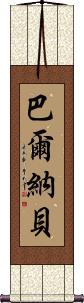
This is a common Mandarin Chinese transliteration for the male French name Barnabé or Barnabe.
Bastien
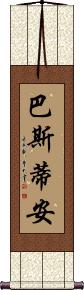
This is a common Mandarin Chinese transliteration for the male French name Bastien.
Beautiful Life / Life in Perfect Harmony
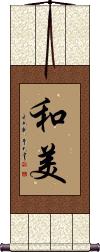
和美 is a word that means “harmonious” or, “in perfect harmony.”
The deeper meaning or more natural translation would be something like, “beautiful life.”
The first character means peace and harmony.
The second character means beautiful. But in this case, when combined with the first character, beautiful refers to being satisfied with what you have in your life. This can be having good relations, good feelings, comfort, and having enough (with no feeling of wanting).
Note: In Japanese, this is often used as the name “Wami.” This title is probably more appropriate if your audience is Chinese.
Beauty: The art of makeup / cosmetics
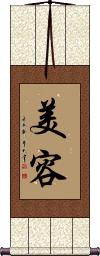
In Chinese, 美容 is the title for the art of beauty, as applying makeup or cosmetics to enhance beauty.
Note: In Japanese and Korean, this takes the meaning of beautiful face or beauty of figure or form. Be sure you know who your audience is and have matched the desired meaning.
Beautiful Soul
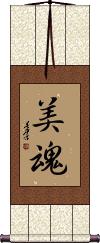
美魂 is a very short or abbreviated way to say “Beautiful Soul” in Japanese.
There is a more extended version that might be a little more natural and also closer to the intended meaning. This short title is often translated awkwardly as “Beauty Soul” in Japanese.
You are always a beauty in your lover’s eyes
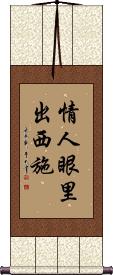
Any woman with affection for Asian art will love a gift of this Chinese proverb calligraphy on a wall scroll.
She will melt in your arms as you tell her the meaning of these characters.
Contained in this phrase is a reference to the most beautiful woman in Chinese history. Her name was Xi Shi, and she was known to have good looks that need not have fine robes or makeup. Her charms were so powerful that she brought down an entire kingdom (in a successful effort to bring honor and pride back to her people).
情人眼里出西施 is a great way to express that the woman in your life is your one love.
Beauty is in the eyes of the beholder
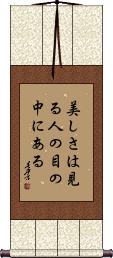
美しさは見る人の目の中にある means “Beauty is in the eyes of the beholder” in Japanese.
Japanese grammar and word order are different than English, but I will partially break this down for you:
美しさ = Beauty
は = is/relates
見る = to look/see
人の = person's
目の = eye's
中にあ = inside
る = !
Note: Because this selection contains some special Japanese Hiragana characters, it should be written by a Japanese calligrapher.
Becassine
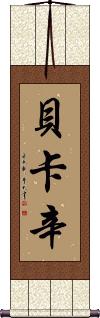
This is a common Mandarin Chinese transliteration for the female French name Bécassine or Becassine.
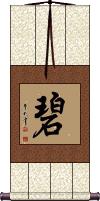
碧 is a common transliteration to Mandarin Chinese for the name Bee.
This has nothing to do with the insect bee. The meaning of the character is actually “fresh and green.”
Belarus
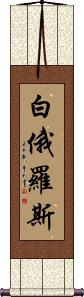
白俄羅斯 is the Chinese name for the country of Belarus or Byelorussia.
The meaning is roughly “White Russia.”
Believe / Faith / Trust
śraddhā
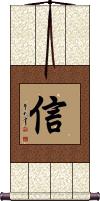
信 can mean to believe, truth, faith, fidelity, sincerity, trust, and confidence in Chinese, old Korean Hanja, and Japanese Kanji.
This single character is often part of other words with similar meanings.
It is one of the five basic tenets of Confucius.
In Chinese, it sometimes has the secondary meaning of a letter (as in the mail) depending on context but it will not be read that way when seen on a wall scroll.
In the Buddhist context, this is śraddhā (faith through hearing or being taught).
See Also: Faith | Trust Your Heart | Confucius
This in-stock artwork might be what you are looking for, and ships right away...


Successful Chinese Character and Japanese Kanji calligraphy searches within the last few hours...



