Many custom options


And formats



Fan4 in Chinese / Japanese
Buy a Fan4 calligraphy wall scroll here!
Personalize your custom “Fan4” project by clicking the button next to your favorite “Fan4” title below.
1. Fan
2. Van
3. Vann
4. Pham
5. Fann
6. Han
7. Fancy
8. Fanny
9. Fany
10. Shihan
11. Vandi
12. Vanj
13. Vanryn
14. Vansh
15. Fanni
16. Fant
17. Fanning
18. Fannin
19. Fancher
20. Evanie
21. Vanluven
22. Vandyke
23. Vanhook
24. Vanhouten
25. Vanhorn
26. Vanness
27. Vanmeter
28. Vannoy
29. Vanover
30. Vanzandt
31. Vanzant
32. Vandusen
33. Vandiver
34. Vancamp
35. Vanburen
36. Vanderheyden
37. Vatican City
38. Vanpelt
39. Vansickle
40. Vanwinkle
41. Vandenberg
42. Vanderpool
43. Vancleave
44. Vandenheuvel
45. Vanlandingham
46. Vanbuskirk
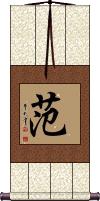
范 is a Chinese surname that romanizes as Fan, or a Japanese surname that romanizes as Han.
This can also be a personal name, Fan, in Japanese.
This is not the only character or name that romanizes as Fan or Han, so please ensure you are picking the correct character before you order.
范 is the name Van in Chinese (Mandarin).
Vann
范 is the name Vann in Chinese (Mandarin).
Pham
范 is the original Chinese character for the Vietnamese surname Pham or Phạm.
范 means pattern, model, or example.
Fann
范 is the name Fann in Chinese (Mandarin).
范 is a Japanese surname that romanizes as Han or a Chinese surname that romanizes as Fan.
This can also be a personal name, Fan, in Japanese.
This is not the only character or name that romanizes as Fan or Han, so please ensure you are picking the correct character before you order.
Fancy
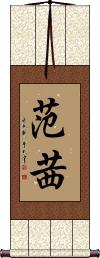
范茜 is the name Fancy in Chinese (Mandarin).
Fanny
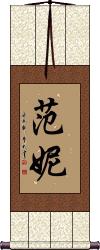
This is a common Mandarin Chinese transliteration for the female French name Fanny.
Fany
范妮 is the name Fany in Chinese (Mandarin).
Shihan
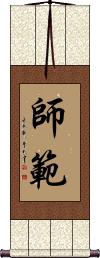
師範 or Shihan is a Japanese term, often used in Japanese martial arts.
In typical Japanese language, it can refer to a teacher or instructor. However, in martial arts, it's often an honorific title for an expert or master instructor.
Example: In Aikido the title can refer to someone with the rank of 7th dan. But other schools use it to mean a master who has earned the right to award black belts.
This term is also used in Chinese, where it refers to teacher-training or the art of teaching by example. It's used within the proper name of certain types of universities in China.
Vandi
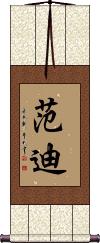
范迪 is the name Vandi in Chinese (Mandarin).
Vanj
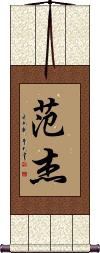
范杰 is the name Vanj in Chinese (Mandarin).
Vanryn
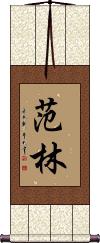
范林 is the name Vanryn in Chinese (Mandarin).
Vansh
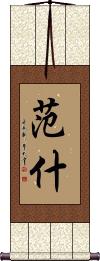
范什 is the name Vansh in Chinese (Mandarin).
Fanni

范尼 is the name Fanni in Chinese (Mandarin).
Fant

范特 is the name Fant in Chinese (Mandarin).
Fanning

范寧 is the name Fanning in Chinese (Mandarin).
Fannin
范寧 is the name Fannin in Chinese (Mandarin).
Fancher

范徹 is the name Fancher in Chinese (Mandarin).
Evanie
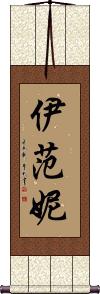
This is a common Mandarin Chinese transliteration for the female French name Évanie or Evanie.
Vanluven

范魯文 is the name Vanluven in Chinese (Mandarin).
Vandyke

范戴克 is the name Vandyke in Chinese (Mandarin).
Vanhook

范胡克 is the name Vanhook in Chinese (Mandarin).
Vanhouten

范豪頓 is the name Vanhouten in Chinese (Mandarin).
Vanhorn

范霍恩 is the name Vanhorn in Chinese (Mandarin).
Vanness

范尼斯 is the name Vanness in Chinese (Mandarin).
Vanmeter

范米特 is the name Vanmeter in Chinese (Mandarin).
Vannoy

范諾伊 is the name Vannoy in Chinese (Mandarin).
Vanover

范諾弗 is the name Vanover in Chinese (Mandarin).
Vanzandt

范贊特 is the name Vanzandt in Chinese (Mandarin).
Vanzant
范贊特 is the name Vanzant in Chinese (Mandarin).
Vandusen

范杜森 is the name Vandusen in Chinese (Mandarin).
Vandiver

范迪弗 is the name Vandiver in Chinese (Mandarin).
Vancamp

范坎普 is the name Vancamp in Chinese (Mandarin).
Vanburen

范布倫 is the name Vanburen in Chinese (Mandarin).
Vanderheyden

范德海登 is the name Vanderheyden in Chinese (Mandarin).
Vatican City
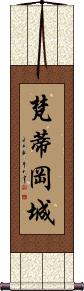
梵蒂岡城 is the Chinese name for Vatican City, the capital of the Holy See.
Vanpelt

范佩爾特 is the name Vanpelt in Chinese (Mandarin).
Vansickle

范西克爾 is the name Vansickle in Chinese (Mandarin).
Vanwinkle

范溫克爾 is the name Vanwinkle in Chinese (Mandarin).
Vandenberg

范登伯格 is the name Vandenberg in Chinese (Mandarin).
Vanderpool

范德普爾 is the name Vanderpool in Chinese (Mandarin).
Vancleave

范克利夫 is the name Vancleave in Chinese (Mandarin).
Vandenheuvel

范登赫維爾 is the name Vandenheuvel in Chinese (Mandarin).
Vanlandingham

范蘭丁漢姆 is the name Vanlandingham in Chinese (Mandarin).
Vanbuskirk

范布斯柯克 is the name Vanbuskirk in Chinese (Mandarin).
Not the results for fan4 that you were looking for?
Below are some entries from our dictionary that may match your fan4 search:
| Characters If shown, 2nd row is Simp. Chinese |
Pronunciation Romanization |
Simple Dictionary Definition |
范 see styles |
fàn fan4 fan fan ふぁん |
More info & calligraphy: Han(personal name) Fan |
師範 师范 see styles |
shī fàn shi1 fan4 shih fan shihan しはん |
More info & calligraphy: Shihan(noun or adjectival noun) instructor; (fencing) teacher; model |
嬎 see styles |
fàn fan4 fan |
(dialect) (of birds) to lay eggs; (archaic) to reproduce; to bear offspring |
梵 see styles |
fàn fan4 fan bon ぼん |
abbr. for 梵教[Fan4 jiao4] Brahmanism; abbr. for Sanskrit 梵語|梵语[Fan4 yu3] or 梵文[Fan4 wen2]; abbr. for 梵蒂岡|梵蒂冈[Fan4 di4 gang1], the Vatican (1) Brahman (ultimate reality of the universe in Hinduism); Brahma; (2) Brahma (Hindu creator god); (3) (abbreviation) (See 梵語) Sanskrit; (given name) Bon Brahman (from roots bṛh, vṛh, connected with bṛṃh, "religious devotion," "prayer," "a sacred text," or mantra, "the mystic syllable om"; "sacred learning," "the religious life," "the Supreme Being regarded as impersonal," "the Absolute," "the priestly or sacerdotal class," etc. M.W. Translit. |
氾 泛 see styles |
fàn fan4 fan hiromu ひろむ |
variant of 泛[fan4] (given name) Hiromu |
汎 泛 see styles |
fàn fan4 fan hiroshi ひろし |
variant of 泛[fan4] (prefix) pan-; (male given name) Hiroshi to float in the water |
泛 see styles |
fàn fan4 fan hiroshi ひろし |
(bound form) general; non-specific; extensive; pan-; to flood; (literary) to float about; to be suffused with (a color, emotion, odor etc) (given name) Hiroshi generalization |
犯 see styles |
fàn fan4 fan han はん |
to violate; to offend; to assault; criminal; crime; to make a mistake; recurrence (of mistake or something bad) (suffix) perpetrators of (some) crime; (some type of) crime To offend against, break (as a law). |
畈 see styles |
fàn fan4 fan |
field; farm |
笵 see styles |
fàn fan4 fan |
bamboo mold |
範 范 see styles |
fàn fan4 fan han はん |
pattern; model; example example; model; (surname, given name) Han Pattern, rule, method. |
販 贩 see styles |
fàn fan4 fan |
to deal in; to buy and sell; to trade in; to retail; to peddle |
飯 饭 see styles |
fàn fan4 fan meshi めし |
cooked rice; CL:碗[wan3]; meal; CL:頓|顿[dun4]; (loanword) fan; devotee (1) (masculine speech) cooked rice; (2) (masculine speech) meal; food; (3) (masculine speech) one's living; livelihood; (surname) Meshi Rice (cooked); food; to eat. |
飰 see styles |
fàn fan4 fan |
old variant of 飯|饭[fan4] |
三梵 see styles |
sān fàn san1 fan4 san fan sanbon |
The three Brahma heavens of the first dhyāna: that of 梵衆 Brahma-pāriṣadya, the assembly of Brahma; 梵輔 Brahma-purohitas, his attendants; 大梵 Mahābrahmā, Great Brahma. |
下飯 下饭 see styles |
xià fàn xia4 fan4 hsia fan shimomeshi しもめし |
to eat one's rice with an accompanying dish (to make the rice more palatable); (of a dish) to go well with rice (surname) Shimomeshi |
不犯 see styles |
bù fàn bu4 fan4 pu fan fubon ふぼん |
{Buddh} strict observance of the commandment that all priests should be celibate non-violation [of precepts] |
中梵 see styles |
zhōng fàn zhong1 fan4 chung fan Chūbon |
Central North India, idem 中國. |
中飯 中饭 see styles |
zhōng fàn zhong1 fan4 chung fan nakaii / nakai なかいい |
lunch the noonday meal; (surname) Nakaii |
主犯 see styles |
zhǔ fàn zhu3 fan4 chu fan shuhan しゅはん |
culprit {law} principal offence; principal offense; principal offender |
九梵 see styles |
jiǔ fàn jiu3 fan4 chiu fan kubon |
The nine heavens of the fourth dhyāna heaven. |
乾飯 干饭 see styles |
gān fàn gan1 fan4 kan fan karei; kareii / kare; kare かれい; かれいい |
plain cooked rice (as opposed to rice porridge) dried boiled rice |
二犯 see styles |
èr fàn er4 fan4 erh fan nibon |
The two kinds of sin, 止犯 and 作犯. |
人犯 see styles |
rén fàn ren2 fan4 jen fan |
criminal; culprit; suspect (old) |
伽梵 see styles |
qié fàn qie2 fan4 ch`ieh fan chieh fan gabon |
伽婆 Abbrev. for bhagavan, see 婆伽婆. |
佛飯 佛饭 see styles |
fó fàn fo2 fan4 fo fan buppan |
offering of a meal to the Buddha |
作梵 see styles |
zuò fàn zuo4 fan4 tso fan sabon |
(作梵唄) The call to order in the assembly. |
作犯 see styles |
zuò fàn zuo4 fan4 tso fan sabon |
Transgression, sin by action, active sin. |
來犯 来犯 see styles |
lái fàn lai2 fan4 lai fan |
(of enemy forces) to invade; to attack |
侵犯 see styles |
qīn fàn qin1 fan4 ch`in fan chin fan shinpan しんぱん |
to infringe on; to encroach on; to violate; to assault (noun, transitive verb) violation (of foreign territory, rights, etc.); invasion; infringement |
Click here for more fan4 results from our dictionary
The following table may be helpful for those studying Chinese or Japanese:
| Title | Characters | Romaji (Romanized Japanese) | Various forms of Romanized Chinese | |
| Fan | 范 | fan / han | fàn / fan4 / fan | |
| Van | 范 | fàn / fan4 / fan | ||
| Vann | 范 | fàn / fan4 / fan | ||
| Pham | 范 | fàn / fan4 / fan | ||
| Fann | 范 | fàn / fan4 / fan | ||
| Han | 范 | han / fan | fàn / fan4 / fan | |
| Fancy | 范茜 | fàn xī / fan4 xi1 / fan xi / fanxi | fan hsi / fanhsi | |
| Fanny | 范妮 | fàn nī / fan4 ni1 / fan ni / fanni | ||
| Fany | 范妮 | fàn nī / fan4 ni1 / fan ni / fanni | ||
| Shihan | 師範 师范 | shi han / shihan | shī fàn / shi1 fan4 / shi fan / shifan | shih fan / shihfan |
| Vandi | 范迪 | fàn dí / fan4 di2 / fan di / fandi | fan ti / fanti | |
| Vanj | 范杰 | fàn jié / fan4 jie2 / fan jie / fanjie | fan chieh / fanchieh | |
| Vanryn | 范林 | fàn lín / fan4 lin2 / fan lin / fanlin | ||
| Vansh | 范什 | fàn shí / fan4 shi2 / fan shi / fanshi | fan shih / fanshih | |
| Fanni | 范尼 | fàn ní / fan4 ni2 / fan ni / fanni | ||
| Fant | 范特 | fàn tè / fan4 te4 / fan te / fante | fan t`e / fante / fan te | |
| Fanning | 范寧 范宁 | fàn níng / fan4 ning2 / fan ning / fanning | ||
| Fannin | 范寧 范宁 | fàn níng / fan4 ning2 / fan ning / fanning | ||
| Fancher | 范徹 范彻 | fàn chè / fan4 che4 / fan che / fanche | fan ch`e / fanche / fan che | |
| Evanie | 伊范妮 | yī fàn nī yi1 fan4 ni1 yi fan ni yifanni | i fan ni ifanni |
|
| Vanluven | 范魯文 范鲁文 | fàn lǔ wén fan4 lu3 wen2 fan lu wen fanluwen | ||
| Vandyke | 范戴克 | fàn dài kè fan4 dai4 ke4 fan dai ke fandaike | fan tai k`o fantaiko fan tai ko |
|
| Vanhook | 范胡克 | fàn hú kè fan4 hu2 ke4 fan hu ke fanhuke | fan hu k`o fanhuko fan hu ko |
|
| Vanhouten | 范豪頓 范豪顿 | fàn háo dùn fan4 hao2 dun4 fan hao dun fanhaodun | fan hao tun fanhaotun |
|
| Vanhorn | 范霍恩 | fàn huò ēn fan4 huo4 en1 fan huo en fanhuoen | ||
| Vanness | 范尼斯 | fàn ní sī fan4 ni2 si1 fan ni si fannisi | fan ni ssu fannissu |
|
| Vanmeter | 范米特 | fàn mǐ tè fan4 mi3 te4 fan mi te fanmite | fan mi t`e fanmite fan mi te |
|
| Vannoy | 范諾伊 范诺伊 | fàn nuò yī fan4 nuo4 yi1 fan nuo yi fannuoyi | fan no i fannoi |
|
| Vanover | 范諾弗 范诺弗 | fàn nuò fú fan4 nuo4 fu2 fan nuo fu fannuofu | fan no fu fannofu |
|
| Vanzandt | 范贊特 范赞特 | fàn zàn tè fan4 zan4 te4 fan zan te fanzante | fan tsan t`e fantsante fan tsan te |
|
| Vanzant | 范贊特 范赞特 | fàn zàn tè fan4 zan4 te4 fan zan te fanzante | fan tsan t`e fantsante fan tsan te |
|
| Vandusen | 范杜森 | fàn dù sēn fan4 du4 sen1 fan du sen fandusen | fan tu sen fantusen |
|
| Vandiver | 范迪弗 | fàn dí fú fan4 di2 fu2 fan di fu fandifu | fan ti fu fantifu |
|
| Vancamp | 范坎普 | fàn kǎn pǔ fan4 kan3 pu3 fan kan pu fankanpu | fan k`an p`u fankanpu fan kan pu |
|
| Vanburen | 范布倫 范布伦 | fàn bù lún fan4 bu4 lun2 fan bu lun fanbulun | fan pu lun fanpulun |
|
| Vanderheyden | 范德海登 | fàn dé hǎi dēng fan4 de2 hai3 deng1 fan de hai deng fandehaideng | fan te hai teng fantehaiteng |
|
| Vatican City | 梵蒂岡城 梵蒂冈城 | fàn dì gāng chéng fan4 di4 gang1 cheng2 fan di gang cheng fandigangcheng | fan ti kang ch`eng fantikangcheng fan ti kang cheng |
|
| Vanpelt | 范佩爾特 范佩尔特 | fàn pèi ěr tè fan4 pei4 er3 te4 fan pei er te fanpeierte | fan p`ei erh t`e fanpeierhte fan pei erh te |
|
| Vansickle | 范西克爾 范西克尔 | fàn xī kè ěr fan4 xi1 ke4 er3 fan xi ke er fanxikeer | fan hsi k`o erh fanhsikoerh fan hsi ko erh |
|
| Vanwinkle | 范溫克爾 范温克尔 | fàn wēn kè ěr fan4 wen1 ke4 er3 fan wen ke er fanwenkeer | fan wen k`o erh fanwenkoerh fan wen ko erh |
|
| Vandenberg | 范登伯格 | fàn dēng bó gé fan4 deng1 bo2 ge2 fan deng bo ge fandengboge | fan teng po ko fantengpoko |
|
| Vanderpool | 范德普爾 范德普尔 | fàn dé pǔ ěr fan4 de2 pu3 er3 fan de pu er fandepuer | fan te p`u erh fantepuerh fan te pu erh |
|
| Vancleave | 范克利夫 | fàn kè lì fū fan4 ke4 li4 fu1 fan ke li fu fankelifu | fan k`o li fu fankolifu fan ko li fu |
|
| Vandenheuvel | 范登赫維爾 范登赫维尔 | fàn dēng hè wéi ěr fan4 deng1 he4 wei2 er3 fan deng he wei er fandengheweier | fan teng ho wei erh fantenghoweierh |
|
| Vanlandingham | 范蘭丁漢姆 范兰丁汉姆 | fàn lán dīng hàn mǔ fan4 lan2 ding1 han4 mu3 fan lan ding han mu fanlandinghanmu | fan lan ting han mu fanlantinghanmu |
|
| Vanbuskirk | 范布斯柯克 | fàn bù sī kē kè fan4 bu4 si1 ke1 ke4 fan bu si ke ke fanbusikeke | fan pu ssu k`o k`o fanpussukoko fan pu ssu ko ko |
|
| In some entries above you will see that characters have different versions above and below a line. In these cases, the characters above the line are Traditional Chinese, while the ones below are Simplified Chinese. | ||||

Successful Chinese Character and Japanese Kanji calligraphy searches within the last few hours...



