Many custom options


And formats



Record in Chinese / Japanese
Buy a Record calligraphy wall scroll here!
Personalize your custom “Record” project by clicking the button next to your favorite “Record” title below.
Record

レコード is the name Record in Japanese Katakana.
Note: Because this title is entirely Japanese Katakana, it should be written by a Japanese calligrapher.
Koan
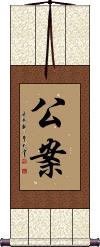
In the Buddhist context, 公案 is a Zen question for meditation.
From the Buddhist dictionary, this is:
Problems set by Zen masters, upon which thought is concentrated as a means to attain inner unity and illumination.
The secular meaning of this word can mean a judge's desk, a complex legal case, a contentious issue, a dossier, a case record, public laws, regulations, or case law.
Hua Tuo
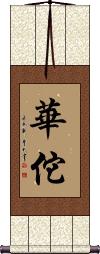
華佗 or Hua Tuo was a Chinese physician who lived during the late Eastern Han dynasty.
The historical texts Records of the Three Kingdoms and Book of the Later Han record Hua Tuo as the first person in China to use anesthesia during surgery.
Hua Tuo used a general anesthetic combining wine with a herbal concoction called 麻沸散, literally, “cannabis boil powder.” This was in the second century AD, almost 1700 years before western medicine had any form of anesthesia (1846).
1 Corinthians 13:4-8
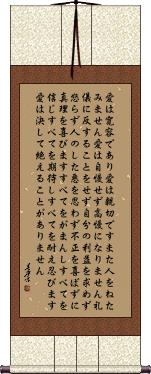
Here is 1st Corinthians 13:4-8 (just the first sentence of verse 8) in Japanese.
In the familiar NIV, this would read:
Love is patient, love is kind. It does not envy, it does not boast, it is not proud.
It does not dishonor others, it is not self-seeking, it is not easily angered, it keeps no record of wrongs.
Love does not delight in evil but rejoices with the truth.
It always protects, always trusts, always hopes, always perseveres.
Love never fails...
The Japanese text is from the 新改訳聖書 (Shinkaiyaku) or New Japanese Bible. Popular among most Protestant denominations in modern Japan.
Note: Because this selection contains some special Japanese Hiragana characters, it should be written by a Japanese calligrapher.
These search terms might be related to Record:
A Journey of 1000 Miles Begins With a Single Step
Best
Best / Number One
Best Friends
Best Friends / Buddies
Best Friends / Closest Friend
Best Love / Most Sincere Love
Brevity: Fewer Words Are Best
Doing Good is the Greatest Source of Happiness
Forgive Yourself / Release Yourself
Forgiveness (From the Top Down)
Greatest Infinite Love
Greatest Love
Highest Quality / Top Notch
Intelligence / Information-Gathering
Most Sincere Friend / Honest Friend / Real Friend / Best Friend
Register
Release / Let Go
Release of Desires
Simply the Best
The Single Life
There is One Single Thread Binding My Way Together
Top Quality / First Class
When the Sun Rises It First Shines on the Highest Mountain
Not the results for Record that you were looking for?
Below are some entries from our dictionary that may match your Record search:
| Characters If shown, 2nd row is Simp. Chinese |
Pronunciation Romanization |
Simple Dictionary Definition |
公案 see styles |
gōng àn gong1 an4 kung an kouan / koan こうあん |
More info & calligraphy: Koan{Buddh} koan; kōan; Zen question for meditation (e.g. the sound of one hand clapping) J. kōan; 因緣 A dossier, or case-record; a cause; public laws, regulations; case-law. Problems set by Zen masters, upon which thought is concentrated as a means to attain inner unity and illumination. |
創造 创造 see styles |
chuàng zào chuang4 zao4 ch`uang tsao chuang tsao souzou / sozo そうぞう |
More info & calligraphy: Create / Creation(noun, transitive verb) (1) creation; (noun, transitive verb) (2) Creation (by God); (given name) Souzou |
成績 成绩 see styles |
chéng jì cheng2 ji4 ch`eng chi cheng chi seiseki / seseki せいせき |
More info & calligraphy: Achievementresults; record; grades; marks |
マーク see styles |
maagu / magu マーグ |
More info & calligraphy: Mark |
レコード see styles |
rekoodo レコード |
More info & calligraphy: Record |
傳 传 see styles |
zhuàn zhuan4 chuan fuu / fu ふう |
biography; historical narrative; commentaries; relay station (surname) Fū To transmit, pass on, hand down, promulgate, propagate; tradition; summon; interpret; record; the Abhidharma. |
前 see styles |
qián qian2 ch`ien chien misaki みさき |
front; forward; ahead; first; top (followed by a number); future; ago; before; BC (e.g. 前293年); former; formerly (1) in front (of); before (e.g. a building); (n,adj-no,adv) (2) before; earlier; previously; prior; ago; (minutes) to (the hour); (noun - becomes adjective with の) (3) (the) front; frontal part; fore; head (e.g. of a line); (4) forward; ahead; (5) (in the) presence (of); in front (of someone); (can be adjective with の) (6) previous (e.g. page); prior (e.g. engagement); first (e.g. half); former (e.g. example); (suffix) (7) (after a noun or the -masu stem of a verb) (See 一人前・1) portion; helping; (8) front (of one's body or clothing); breast (of a coat, kimono, etc.); (9) privates; private parts; (10) (colloquialism) criminal record; previous conviction; (a) prior; (personal name) Misaki pūrva. Before; former, previous; in front. |
底 see styles |
dǐ di3 ti soko そこ |
bottom; base; background; foundation; copy (of a manuscript or receipt etc) kept as a record; (suffix) end of a year or month; (math.) radix; base (abbr. for 底數|底数[di3 shu4]) (1) {math} base (logarithmic, exponential, number system); radix; (2) {geom} base (triangle, cone, cylinder, etc.); (3) type; kind; extent; degree; (surname) Soko Bottom, basis; translit. t, d, dh. |
案 see styles |
àn an4 an tsukue つくえ |
(legal) case; incident; record; file; table (n,n-suf) (1) idea; plan; proposal; suggestion; (government) bill; (2) draft; rough copy; (3) expectation; (4) (archaism) desk; stand; (female given name) Tsukue A judge's desk; a case at law. |
歴 历 see styles |
lì li4 li reki れき |
old variant of 歷|历[li4] (suffix) experience; history; record; career; (surname, female given name) Reki |
注 see styles |
zhù zhu4 chu chuu / chu ちゅう |
(bound form) to pour into; to flow into; to inject; (bound form) to focus (one's spirit, gaze etc) on a single point; to concentrate; (bound form) stake (in gambling); classifier for stakes, sums of money, transactions or beams of light; variant of 註|注[zhu4] (noun/participle) annotation; explanatory note; comment; (given name) Chuu Fix, record; flow. |
灌 see styles |
guàn guan4 kuan kan |
to irrigate; to pour; to install (software); to record (music) To water, sprinkle, pour; to flow together, or into, accumulate. |
登 see styles |
dēng deng1 teng minoru みのる |
to scale (a height); to ascend; to mount; to publish or record; to enter (e.g. in a register); to press down with the foot; to step or tread on; to put on (shoes or trousers) (dialect); to be gathered and taken to the threshing ground (old) (given name) Minoru Ascend, advance, start; attain, ripen; to note, fix. |
盤 盘 see styles |
pán pan2 p`an pan ban ばん |
tray; plate; dish; (finance) (bound form) market prices; (computing) (bound form) disk; to coil (a rope, pigtail etc); to check; to examine; to investigate; to transfer; to sell (property); to shift; to move (something big and heavy); classifier for things resembling a plate or dish; classifier for coils; classifier for games or matches (chess, table tennis etc) (1) board (in shogi, go, chess, etc.); (2) (phonograph) record; disc; disk; (suffix noun) (3) board; panel; plate; (personal name) Ban A dish, plate; round, to coil, wind up; to go about, travel, convey; to inquire about, interrogate. Translit. pa, ba, bha, va; cf. 般, 半, etc. |
篇 see styles |
piān pian1 p`ien pien hin へん |
sheet; piece of writing; bound set of bamboo slips used for record keeping (old); classifier for written items: chapter, article (n,n-suf) (1) compilation (of a text); editing; (n,n-suf,ctr) (2) volume (of a text); (3) completed literary work A slip of bamboo, a slip, leaf, page, books. |
簿 see styles |
bù bu4 pu bo ぼ |
a book; a register; account-book (suffix) register; record book Notebook, register, etc. |
籍 see styles |
jí ji2 chi seki せき |
(bound form) book; record; register; (bound form) place of one's family or ancestral records; (bound form) membership (n,n-suf) (1) one's family register; one's domicile; (suffix noun) (2) nationality; (suffix noun) (3) membership (club, party, etc.); (surname) Seki to write |
籙 箓 see styles |
lù lu4 lu |
record book; archive; Taoist written charm; document of prophecy attesting to dynastic fortunes |
紀 纪 see styles |
jì ji4 chi motoi もとい |
order; discipline; age; era; period; to chronicle (n,n-suf) (1) {geol} period; (2) (abbreviation) (See 日本書紀) Nihon Shoki (second oldest work of Japanese history, compiled in 720 CE); Nihongi; Chronicles of Japan; (3) (abbreviation) (hist) Kii (former province located in present-day Wakayama and southern Mie prefectures); (personal name) Motoi To record; regulate; a year, a period (of twelve years). |
職 职 see styles |
zhí zhi2 chih shoku(p); soku(ok) しょく(P); そく(ok) |
office; duty (n,n-suf) (1) job; work; employment; occupation; position; (n,n-suf) (2) duties; (n,n-suf) (3) trade; skill To record, oversee, direct; office, official duty. |
記 记 see styles |
jì ji4 chi fumi ふみ |
to record; to note; to memorize; to remember; mark; sign; classifier for blows, kicks, shots (n,n-suf) (1) (also written 紀) account; history; chronicle; annals; record; (expression) (2) (begins a list or details, as in 記....以上) (See 以上・5) notice; note; as follows; (3) (abbreviation) (See 古事記) Kojiki (earliest historical record of Japan, compiled in 712 CE); Records of Ancient Matters; (female given name) Fumi To remember, to record; to record as foretelling, prophesy. |
註 注 see styles |
zhù zhu4 chu chū ちゅう |
to annotate; to provide explanatory notes on a written text; an annotation; an explanatory note; (bound form) to put on record; to register (noun/participle) annotation; explanatory note; comment Explain, open up the meaning, define. |
誌 志 see styles |
zhì zhi4 chih shi し |
sign; mark; to record; to write a footnote (n-suf,ctr) (abbreviation) (See 雑誌) magazine; journal To remember, record. |
識 识 see styles |
zhì zhi4 chih tsuguhide つぐひで |
to record; to write a footnote (1) acquaintanceship; (2) {Buddh} vijnana; consciousness; (3) (after a signature) written by ...; (personal name) Tsuguhide vijñāna, "the art of distinguishing, or perceiving, or recognizing, discerning, understanding, comprehending, distinction, intelligence, knowledge, science, learning . . . wisdom." M.W. parijñāna, "perception, thorough knowledge," etc. M.W. It is intp. by 心 the mind, mental discernment, perception, in contrast with the object discerned; also by 了別 understanding and discrimination. There are classifications of 一識 that all things are the one mind, or are metaphysical; 二識 q. v. discriminating the ālaya-vijñāna or primal undivided condition from the mano-vijñāna or that of discrimination; 三識 in the Laṅkāvatāra Sutra, fundamental, manifested and discriminate; 五識 q.v. in the 起信論, i.e. 業, 轉, 現, 知, and 相續識; 六識 the perceptions and discernings of the six organs of sense; also of 8, 9, 10, and 11 識. The most important is the eight of the 起信論, i.e. the perceptions of the six organs of sense, eye, ear, nose, tongue, body (or touch), and mind, together with manas, intp. as 意識 the consciousness of the previous moment, on which the other six depend; the eighth is the ālaya-vijñāna, v. 阿賴耶, in which is contained the seed or stock of all phenomena and which 無沒 loses none, or nothing, is indestructible; a substitute for the seventh is ādāna 'receiving' of the 唯識, which is intp. as 無解 undiscriminated, or indefinite perception; there is a difference of view between the 相 and the 性 schools in regard to the seventh and eight 識; and the latter school add a ninth called the amala, or pure vijñāna, i.e. the non-phenomenal 眞如識. The esoterics add that all phenomena are mental and all things are the one mind, hence the one mind is 無量識 unlimited mind or knowledge, every kind of knowledge, or omniscience. vijñāna is one of the twelve nidānas.; Ālaya-vijñāna and mano-vijñāna; i. e. 阿梨耶 | and 分別事 |; v. 識. |
譜 谱 see styles |
pǔ pu3 p`u pu fu ふ |
chart; list; table; register; score (music); spectrum (physics); to set to music (1) (sheet) music; (musical) note; (musical) score; (2) genealogy; family tree; (3) (abbreviation) (See 棋譜) record of a game of go, shogi, chess, etc. |
鋕 see styles |
zhì zhi4 chih |
to engrave; to record |
錄 录 see styles |
lù lu4 lu roku |
diary; record; to hit; to copy record |
録 see styles |
lù lu4 lu hasumi はすみ |
Japanese variant of 錄|录[lu4] (n,suf) record; transcript; (personal name) Hasumi |
A面 see styles |
eemen エーめん |
A-side (of a record) |
B面 see styles |
biimen / bimen ビーめん |
B-side (of a record) |
Click here for more Record results from our dictionary
The following table may be helpful for those studying Chinese or Japanese:
| Title | Characters | Romaji (Romanized Japanese) | Various forms of Romanized Chinese | |
| Record | レコード | rekoodo / rekodo | ||
| Koan | 公案 | kouan / koan | gōng àn / gong1 an4 / gong an / gongan | kung an / kungan |
| Hua Tuo | 華佗 华佗 | huá tuó / hua2 tuo2 / hua tuo / huatuo | hua t`o / huato / hua to | |
| 1 Corinthians 13:4-8 | 愛は寛容であり愛は親切ですまた人をねたみません愛は自慢せず高慢になりません礼儀に反することをせず自分の利益を求めず怒らず人のした悪を思わず不正を喜ばずに真理を喜びますすべてをがまんしすべてを信じすべてを期待しすべてを耐え忍びます愛は決して絶えることがありません | ai wa kan youdeari ai wa shinsetsudesu mata hito o netamimasen ai wa jiman sezu kouman ni narimasen reigi ni hansuru koto o sezu jibun no rieki o motomezu okorazu hito no shita aku o omowazu fusei o yorokobazu ni shinri o yorokobimasu subete o gaman shi s ai wa kan yodeari ai wa shinsetsudesu mata hito o netamimasen ai wa jiman sezu koman ni narimasen reigi ni hansuru koto o sezu jibun no rieki o motomezu okorazu hito no shita aku o omowazu fusei o yorokobazu ni shinri o yorokobimasu subete o gaman shi s | ||
| In some entries above you will see that characters have different versions above and below a line. In these cases, the characters above the line are Traditional Chinese, while the ones below are Simplified Chinese. | ||||

Successful Chinese Character and Japanese Kanji calligraphy searches within the last few hours...



