I am shipping orders on Thursday this week. News and More Info

Many custom options...

Tan Paper and Copper Silk Love Wall Scroll
Red Paper and Ivory Silk Love Wall Scroll
Orange Paper Love Scroll
Crazy Blue and Gold Silk Love Scroll


And formats...

Love Vertical Portrait
Love Horizontal Wall Scroll
Love Vertical Portrait

Out of Reality in Chinese / Japanese...

Buy an Out of Reality calligraphy wall scroll here!

Personalize your custom “Out of Reality” project by clicking the button next to your favorite “Out of Reality” title below...


  1. Reality

  2. Honesty

  3. Reality and Illusion

  4. Ultimate Reality

  5. Reality / Realistic

  6. Reality and Illusion

  7. Wake Up to Reality

  8. Illusion

  9. Truth

10. The True and Complete Enlightenment

11. The Supreme Mahayana Truth

12. Life Is But A Dream

13. Sky / Ether / Void / Emptiness / Unreality

14. Therapeutic Massage

15. Big Dream

16. Kyojitsu: Falsehood and Truth

17. Spiritual Peace / Enlightened Peace

18. Pursue Your Dreams

19. Paramartha

20. Koi Fish

21. Wu Wei / Without Action

22. Live In The Moment / Live In The Now

23. Sensei / Master / Teacher / Mister

24. Listen to Both Sides and be Enlightened, Listen to One Side and be in the Dark
25. Gung Ho


 xǐng wù
Reality Scroll

醒悟 is a Chinese word that expresses the idea of reality or coming to understand what is true and real.

The first character means to wake up, awaken, comprehend, introspect, or visit.

The second character means to comprehend or understand (be enlightened).

The meanings of Chinese words are not necessarily the sum of their parts. In this case, at best, you can derive that the characters express “understanding what is real” or “knowing what is real.” Any Chinese person will perceive this word in a similar way to how we use “reality” in English.


省Note: The first character can also be written in a different form as shown to the right. Same meaning in Chinese, either way it’s written.

 shí
 
Honesty Scroll

實 means real, true, honest, or solid.

It is one of several ways to express the idea of truth.

Note: In some contexts, this can carry extended meanings of reality, actuality, sincerity, or substance.


See Also:  Truth | Trust | Justice

Reality and Illusion

 gen jitsu to gen sou
Reality and Illusion Scroll

現実と幻想 is the Japanese way to write, “reality and illusion.”

Ultimate Reality

 jīng zhēn
 shou shin
Ultimate Reality Scroll

精眞 means pure truth or the apprehension of ultimate reality.

Reality / Realistic

 gen jitsu sei
Reality / Realistic Scroll

現実性 is a Japanese word that expresses the idea of reality or coming to understand what is true and real.

This can also be translated as realistic, practical, or feasible.


See Also:  Illusion

Reality and Illusion

Buddhism Concept

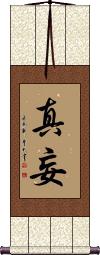
 zhēn wàng
Reality and Illusion Scroll

真妄 is a specifically Buddhist term that means “reality and illusion.” Out of Buddhist context, it might be read as “The real and the absurd.”

Separately, the first character means real, true, and genuine, and the second character means absurd, fantastic, or related to fantasy.

Wake Up to Reality

 xǐng wù
 shō go
Wake Up to Reality Scroll

省悟 is a Chinese word that means “to wake up to reality,” “to come to oneself,” “to realize,” “to see the truth,” or “to reflect and become aware.”

省悟 is often used in the context of Buddhism.

In Japanese, this has the same meaning but is more often used as a given name, Seigo.

 huàn xiàng
 gen zou
Illusion Scroll

幻像 is a universal word for Illusion in Chinese, Japanese Kanji, and old Korean Hanja.

The first character means phantasm, vision, dream, illusion, apparition, or fantasy.

The second character means statue, picture, image, figure, portrait, shape, form, appearance, to be like, to resemble, to take after, to seem, or in rare/ancient context: an elephant.


象Note that the first character can be written without the left-side radical in Chinese. This form is shown to the right. Both forms are acceptable in Chinese but the character shown to the right is more likely to be read as "elephant."


See Also:  Reality

 shinjitsu / sana
Truth Scroll

真実 means “truth,” “actual,” or “reality” in Japanese.

The second character is modified or no longer used in Chinese vocabulary - so this is Japanese only.

The True and Complete Enlightenment

 zhēn jué
 shinkaku
The True and Complete Enlightenment Scroll

眞覺 means true and complete enlightenment.

This can refer to the perfect nirvana of the Buddha or the perception of ultimate truth or true awareness of all things (reality and unreality).

The Supreme Mahayana Truth

 dà shèng wú shàng fǎ
 dai jou mu jou hou
The Supreme Mahayana Truth Scroll

大乘無上法 means the supreme Mahāyāna truth.

This refers to the ultimate reality in contrast with the temporary and apparent. Other translations include “the reliance on the power of the vow of the bodhisattva” or “the peerless great vehicle teaching.”


Note: This may suggest that Mahayana Buddhism, as practiced in China, Japan, Korea, Vietnam, and other regions is superior (with subtle arrogance) to the original Theravada (or old school) Buddhism. Mahayana and Theravada Buddhists generally get along better than Catholics and Protestants, but there have been schisms.

Life Is But A Dream

 rén shēng rú mèng
Life Is But A Dream Scroll

人生如夢 is an old Chinese proverb that suggests, “life is but a dream.”

This kind of follows the Buddhist idea that the world is a temporal place, where reality may not be as real as you think.

Sky / Ether / Void / Emptiness / Unreality

(Used in Japanese version of five elements)

 kōng
 kuu / kara / sora / ron
 
Sky / Ether / Void / Emptiness / Unreality Scroll

空 is a single character that means empty, void, hollow, vacant, vacuum, blank, nonexistent, vacuity, voidness, emptiness, non-existence, immateriality, unreality, the false or illusory nature of all existence, and being unreal.

In the Buddhist context, this relates to the doctrine that all phenomena and the ego have no reality but are composed of a certain number of skandhas or elements, which disintegrate. The void, the sky, space. The universal, the absolute, complete abstraction without relativity. The doctrine further explains that all things are compounds, or unstable organisms, possessing no self-essence, i.e. are dependent, or caused, come into existence only to perish. The underlying reality, the principle of eternal relativity, or non-infinity, i.e. śūnya, permeates all phenomena making possible their evolution.

From Sanskrit and/or Pali, this is the translation to Chinese and Japanese of the title śūnya or śūnyatā.

In Japanese, when pronounced as “ron” (sounds like “roan”) this can be a given name. It should be noted that this Kanji has about 5 different possible pronunciations in Japanese: kuu, kara, sora, ron, and uro. 空 is also an element in the Japanese version of the five elements.

Therapeutic Massage

 tuī ná
Therapeutic Massage Scroll

推拿 is “Tui Na,” a Chinese version of therapeutic massage.

The title suggests a pushing and pulling motion.

In reality, this is the most legitimate form of massage in China. Seeing this on a sign in front of a building tells you it's a place for health improvement via massage. No mistaking this for any illicit version of massage.

 dà mèng
 daimu
Big Dream Scroll

大夢 means “Big Dream” in Chinese and Japanese.

大夢 is primarily a Buddhist term referring to the great dream that represents a long and winding life that feels like a dream (since reality is an illusion anyway in Buddhism).

This can also be a female given name, Hiromu, or Oomu, in Japanese. Also, more rare unisex given names Daimu or Taimu.

Kyojitsu: Falsehood and Truth

 kyo jitsu
Kyojitsu: Falsehood and Truth Scroll

虚実 is a Japanese word that means “falsehood [and] truth” or “fiction [and] fact.”

This concept is used in warfare, gameplay, and martial arts strategies. 虚実 can be a strategy of real and/or deceptive moves. This gets to some Sun Tzu Art of War stuff where in warfare a strategic move is either a real and serious move or it is a deceptive blow.

Let's explore each character in more depth:

was originally written (there is a very subtle difference in the strokes at the bottom of the character) and means unpreparedness, falsehood, emptiness, void, abstract theory, empty or unoccupied, diffident or timid, false, humble or modest, virtual, or in vain.
In the Buddhist context, 虛 represents the Pali/Sanskrit word “śūnya,” meaning empty, vacant, unreal, unsubstantial, untrue, space, humble, or in vain.
In ancient Eastern/Chinese astronomy, 虛 represents the “Emptiness” constellation (one of the 28 mansions in the sky).

was originally in Chinese (they currently write it as in Simplified Chinese) with the meaning, truth, reality, sincerity, honesty, fidelity, and substance.
The Buddhist context is similar, adding real, true, honest, really, solid, definitely, sincere, solid, fixed, full, to fill, fruit, kernel, verily, in fact, the supreme fact, or ultimate reality to the definition.

Spiritual Peace / Enlightened Peace

 an jin ritsu myou
Spiritual Peace / Enlightened Peace Scroll

These Japanese Kanji, 安心立命, can be translated as “religious enlightenment” or “spiritual peace gained through faith.”

Other dictionaries define as “spiritual peace and enlightenment” or “keeping an unperturbed mind through faith.”

My Buddhist dictionary defines it as “spiritual peace and realization of enlightenment.”

In the Zen school, this is about settling one's body and life; attaining complete peace, and establishing one's course of life in accord with the ultimate reality.

Pursue Your Dreams

 zhuī xún mèng xiǎng
Pursue Your Dreams Scroll

追尋夢想 means “pursue your dreams,” “follow your dreams,” or “chase your dreams” in Chinese.

The first two characters mean “to pursue,” “to track down,” or “to search for.”

The last two mean dreams. This version of dreams refers to those with an element of reality (not the dreams you have when you sleep but rather your aspirations or goals in life).

This title will tell everyone that you want to make your dreams come true.


See Also:  Pursuit of Happiness

 bō luó mò tuó
 ha ra ma da
Paramartha Scroll

波羅末陀 is the Chinese and Japanese way to write the ancient Sanskrit word Paramārtha or परमार्थ which now means the highest truth, ultimate truth, ultimate reality, or fundamental meaning.

Paramārtha is the name of a famous Buddhist monk born in 499 CE. Paramārtha traveled the world (including Cambodia and territories that are now part of China) to spread the teachings of Buddhism by translating scriptures into the local languages so the truth could be understood by the masses.

So, we should all want to be a Paramārtha who brings the ultimate truth, knowledge, and enlightenment to others.

 lǐ
 koi
 
Koi Fish Scroll

鯉 is the Japanese Kanji that created the title “koi fish.” 鯉 is pronounced “koi” in Japanese.

Here is the reality: 鯉 actually means “carp” in Chinese, Japanese Kanji, and old Korean Hanja. Koi fish really are carp (by species) and were bred to obtain colorful variations in ancient China. Some generations later, some of these colorful fish were transported to Japan, where they also became vastly popular.

Note: Please see our other entry for koi fish (Nishiki Goi) which is a more normal selection for a Japanese koi fish enthusiast to have on their wall.

Wu Wei / Without Action

Daoist / Taoist Tenet

 wú wéi
 mui
Wu Wei / Without Action Scroll

無為 or “Wu Wei” is a Daoist (Taoist) tenet that speaks to the idea of letting nature take its course.

Some will say it's about knowing when to take action and when not to. In reality, it's more about not going against the flow. What will happen is controlled by the Dao (Tao), for which one who follows the Dao will not resist or struggle against.

You can think of 無為 as the Chinese way to express “laissez-faire.”

There is a lot more to this concept, but if you are looking for this entry, you already know the expanded concept.

Warning: Outside of the Daoist context, this means idleness or inactivity (especially in Japanese, where not everyone knows this as a Daoist concept, though it does pair well with the Japanese concept of Wabi-Sabi).

Live In The Moment / Live In The Now

 xiàn shì
 gen sei
Live In The Moment / Live In The Now Scroll

現世 is a very short way to write “live in the moment” or “live in the now” in Japanese.

This short word is open to interpretation. It's used in Japanese Buddhism to mean “the current epoch” or “the current age” (the current age is but a brief moment in the greater scope of existence). In that context, this is pronounced “utsushiyo” or “ustusiyo” in Japanese. Otherwise, it's pronounced “gensei” in Japanese.

Other translation possibilities include:

Live for now
Earthly world
This world
This life
Earthly life
Present life
Present generation
Present incarnation
Current age
This existence
This (momentary) reality


Note: This is also a word in Chinese and old Korean Hanja. While the meaning is more or less the same, this is not recommended for a wall scroll if your audience is Chinese or Korean. This selection is best if your audience is Japanese.

Sensei / Master / Teacher / Mister

 xiān shēng
 sen sei
Sensei / Master / Teacher / Mister Scroll

先生 is sensei, which is associated in the west with a master or instructor of karate, aikido, judo, and other Japanese martial arts.

In reality, this is a term of respect for almost any professional or skilled person (doctor, lawyer, teacher, etc.). Sometimes, it is used for musicians and artists who have achieved a certain level of fame, skill, or accomplishment.

It should be noted that this is also a courtesy title in Chinese but more like calling someone “mister” or “gentleman.” It doesn't have the “master” or “teacher” meaning in Chinese - see our Chinese “Master / Sifu / Shi Fu” entry if your audience is Chinese.

In Korean Hanja, this means teacher, instructor, schoolmaster, or schoolmistress.

This entry is for educational purposes. 先生 is kind of a strange thing to put on a wall scroll. It's a title that is used more orally to show respect rather than something written in calligraphy. If you feel it is appropriate in your circumstances, we will create a piece of sensei Japanese calligraphy artwork for you.

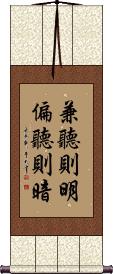
Listen to Both Sides and be Enlightened, Listen to One Side and be in the Dark

 jiān tīng zé míng, piān tīng zé àn
Listen to Both Sides and be Enlightened, Listen to One Side and be in the Dark Scroll

兼聽則明偏聽則暗 is an ancient Chinese proverb about getting all the information from all sides so that you truly understand a situation.
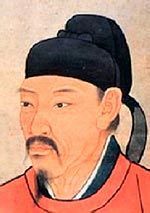
Wei Zheng

Wei Zheng

A man named Wei Zheng lived between 580-643 AD. He was a noble and wise historian and minister in the court of the early Tang Dynasty. The emperor once asked him, “What should an emperor do to understand the real-world situation, and what makes an emperor out-of-touch with reality?”

Wei Zheng replied, “Listen to both sides and you will be enlightened; listen to only one side and you will be left in the dark.”

Then Wei Zheng went on to cite examples of leaders in history that were victorious after heeding both sides of the story, and other leaders that met their doom because they believed one-sided stories which often came from flattering lips.

Please note that there is an unwritten rule when the same character appears twice in the same phrase, the calligrapher will alter the appearance so that no two characters are exactly alike in the same piece. This calligraphy has two repeating characters that will be written differently than they appear here.

Gung Ho

Working Together
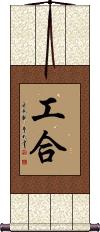
 gōng hé
 guai
Gung Ho Scroll

工合 is one of those Asian words that is used more in English than in the original Chinese.

Gung Ho was originally used to speak of Carlson's Raiders, a group of “Gung Ho” U.S. Marines who went on an island-hopping campaign of death during WWII.

A movie called Gung Ho came out in the mid-1940s and was later re-released in the 1950s depicting the 2nd Marine Raider Battalion, and brought this word to the mainstream.

It is still sometimes used today within the U.S. Marine Corps brotherhood to refer to a unit or group that works well together or is otherwise efficient and motivated (has good morals).

In 1986, there was a movie called Gung Ho about a Japanese company taking over an American automotive factory. They completely ignored the fact that this was a Chinese title.

It should be noted that this title actually means a condition, state, manner, or the health of something in Japanese.

Language and pronunciation notes:
Like many Asian words absorbed into common use in English, this one is drastically mispronounced. The official Romanization is “gong he” but that doesn't tell you enough. The vowel sound on the first character is like the English word “own,” now just add the g-sounds to the beginning and end. The second character is misleading, as you might think it is like the English word “he.” In reality, the vowel sound is more like the “u” in “up.”

It should also be noted that the current generation in China no longer uses or recognizes this as a common word or slogan.


Note: This can be pronounced and is a word in Japanese, though seldom used. Japanese will use a variation of "具合" instead. But still, not common.


The following table may be helpful for those studying Chinese or Japanese...

Title CharactersRomaji (Romanized Japanese)Various forms of Romanized Chinese
Reality醒悟 / 省悟
醒悟
xǐng wù / xing3 wu4 / xing wu / xingwuhsing wu / hsingwu
Honesty
shí / shi2 / shishih
Reality and Illusion現実と幻想gen jitsu to gen sou
genjitsutogensou
gen jitsu to gen so
Ultimate Reality精眞shou shin / shoushin / sho shinjīng zhēn
jing1 zhen1
jing zhen
jingzhen
ching chen
chingchen
Reality
Realistic
現実性gen jitsu sei
genjitsusei
Reality and Illusion真妄zhēn wàng
zhen1 wang4
zhen wang
zhenwang
chen wang
chenwang
Wake Up to Reality省悟shō go / shōgoxǐng wù / xing3 wu4 / xing wu / xingwuhsing wu / hsingwu
Illusion幻像
幻像 / 幻象
gen zou / genzou / gen zohuàn xiàng
huan4 xiang4
huan xiang
huanxiang
huan hsiang
huanhsiang
Truth真實
真実
shinjitsu / sana
The True and Complete Enlightenment眞覺
眞觉
shinkakuzhēn jué / zhen1 jue2 / zhen jue / zhenjuechen chüeh / chenchüeh
The Supreme Mahayana Truth大乘無上法
大乘无上法
dai jou mu jou hou
daijoumujouhou
dai jo mu jo ho
dà shèng wú shàng fǎ
da4 sheng4 wu2 shang4 fa3
da sheng wu shang fa
dashengwushangfa
ta sheng wu shang fa
tashengwushangfa
Life Is But A Dream人生如夢
人生如梦
rén shēng rú mèng
ren2 sheng1 ru2 meng4
ren sheng ru meng
renshengrumeng
jen sheng ju meng
jenshengjumeng
Sky
Ether
Void
Emptiness
Unreality
kuu / kara / sora / ron
ku / kara / sora / ron
kōng / kong1 / kongk`ung / kung
Therapeutic Massage推拿tuī ná / tui1 na2 / tui na / tuinat`ui na / tuina / tui na
Big Dream大夢daimudà mèng / da4 meng4 / da meng / damengta meng / tameng
Kyojitsu: Falsehood and Truth虚実kyo jitsu / kyojitsu
Spiritual Peace
Enlightened Peace
安心立命an jin ritsu myou
anjinritsumyou
an jin ritsu myo
Pursue Your Dreams追尋夢想
追寻梦想
zhuī xún mèng xiǎng
zhui1 xun2 meng4 xiang3
zhui xun meng xiang
zhuixunmengxiang
chui hsün meng hsiang
chuihsünmenghsiang
Paramartha波羅末陀
波罗末陀
ha ra ma da
haramada
bō luó mò tuó
bo1 luo2 mo4 tuo2
bo luo mo tuo
boluomotuo
po lo mo t`o
polomoto
po lo mo to
Koi Fish
koilǐ / li3 / li
Wu Wei
Without Action
無為
无为
muiwú wéi / wu2 wei2 / wu wei / wuwei
Live In The Moment
Live In The Now
現世
现世
gen sei / genseixiàn shì / xian4 shi4 / xian shi / xianshihsien shih / hsienshih
Sensei
Master
Teacher
Mister
先生sen sei / senseixiān shēng
xian1 sheng1
xian sheng
xiansheng
hsien sheng
hsiensheng
Listen to Both Sides and be Enlightened, Listen to One Side and be in the Dark兼聽則明偏聽則暗
兼听则明偏听则暗
jiān tīng zé míng, piān tīng zé àn
jian1 ting1 ze2 ming2, pian1 ting1 ze2 an4
jian ting ze ming, pian ting ze an
chien t`ing tse ming, p`ien t`ing tse an
chien ting tse ming, pien ting tse an
Gung Ho工合guaigōng hé / gong1 he2 / gong he / gonghekung ho / kungho
In some entries above you will see that characters have different versions above and below a line.
In these cases, the characters above the line are Traditional Chinese, while the ones below are Simplified Chinese.


Dictionary

Lookup Out of Reality in my Japanese & Chinese Dictionary


Successful Chinese Character and Japanese Kanji calligraphy searches within the last few hours...


50th AnniversaryAadenAadonAakashAaroAbayaAbbasAbbeyAbbieAbhishekAbigaiAbundance and ProsperityAdamAdamarisAdapt and OvercomeAddieAdejahAdelineAdityaAdnanAdonisAdrianaAdriannaAdrielAguilarAhmadAimiAishaAjayAkbarAkilaAlanaAleishaAlessaAlessandraAlexAlexandraAlexandriaAlfiAliceAlinaAlishaAliyaAllaAllahAllyAlmedaAlmighty OmnipotentAloraAlvinAlyshaAlyssaAlyssiaAmadAmalAmelAminAmirAnasAndreAndreiAndyAngelAnilAnjaniAnne-SophieAntonAntonellaAntonioAnyaArelyAriaArisaArlenArmanArmandoAshrafAslamAubreeAubreyAuraAureliaAvengerAyanAydenAymanAzuraBa Gua ZhangBaileeBaileyBashaBasilBayuBeautyBeauty of NatureBellaBelovedBennettBhumikaBiancaBibekBibiBishalBlack Tiger FistBlairBlessed by GodBradenBradyBraedenBraydenBristolBritneyBrockBryanBrysonBubbaBuddha Dharma SanghaButterflyCallieCamdenCarenCarleenCarmenCasperChantalChanteChelseaChen SurnameCherryChevelleChinoChop Wood Carry WaterChristinaClaireCobraColeCompassionConnieConnorConstanceCorbinCosmoCourageCristianCullenCyanCyrilDamarisDanaDaniDaniealDanielleDaniloDaodejingDaodejing Tao Te Ching - Chapter 54DaphneDariaDark AngelDarrenDarrylDaruDavianDeath Before DishonorDeepikaDefenseDerrickDeterminationDevonDharmaDianaDillowDimaDogenDominicDoveDragonDragon WarriorDrewDuncanDurellDwightEdieEduardoEdwardsElaineEldiEleanorEleonorEliezerElinElishaEllieElmerElsieElviraEmanEmelineEmiliaEmmettEnlightenment

All of our calligraphy wall scrolls are handmade.

When the calligrapher finishes creating your artwork, it is taken to my art mounting workshop in Beijing where a wall scroll is made by hand from a combination of silk, rice paper, and wood.
After we create your wall scroll, it takes at least two weeks for air mail delivery from Beijing to you.

Allow a few weeks for delivery. Rush service speeds it up by a week or two for $10!

When you select your calligraphy, you'll be taken to another page where you can choose various custom options.


A nice Chinese calligraphy wall scroll

The wall scroll that Sandy is holding in this picture is a "large size"
single-character wall scroll.
We also offer custom wall scrolls in small, medium, and an even-larger jumbo size.

A professional Chinese Calligrapher

Professional calligraphers are getting to be hard to find these days.
Instead of drawing characters by hand, the new generation in China merely type roman letters into their computer keyboards and pick the character that they want from a list that pops up.

There is some fear that true Chinese calligraphy may become a lost art in the coming years. Many art institutes in China are now promoting calligraphy programs in hopes of keeping this unique form of art alive.

Trying to learn Chinese calligrapher - a futile effort

Even with the teachings of a top-ranked calligrapher in China, my calligraphy will never be good enough to sell. I will leave that to the experts.

A high-ranked Chinese master calligrapher that I met in Zhongwei

The same calligrapher who gave me those lessons also attracted a crowd of thousands and a TV crew as he created characters over 6-feet high. He happens to be ranked as one of the top 100 calligraphers in all of China. He is also one of very few that would actually attempt such a feat.


Check out my lists of Japanese Kanji Calligraphy Wall Scrolls and Old Korean Hanja Calligraphy Wall Scrolls.

Some people may refer to this entry as Out of Reality Kanji, Out of Reality Characters, Out of Reality in Mandarin Chinese, Out of Reality Characters, Out of Reality in Chinese Writing, Out of Reality in Japanese Writing, Out of Reality in Asian Writing, Out of Reality Ideograms, Chinese Out of Reality symbols, Out of Reality Hieroglyphics, Out of Reality Glyphs, Out of Reality in Chinese Letters, Out of Reality Hanzi, Out of Reality in Japanese Kanji, Out of Reality Pictograms, Out of Reality in the Chinese Written-Language, or Out of Reality in the Japanese Written-Language.

104 people have searched for Out of Reality in Chinese or Japanese in the past year.
Out of Reality was last searched for by someone else on Oct 18th, 2025