Many custom options...


And formats...



D in Chinese / Japanese...
Buy a D calligraphy wall scroll here!
Personalize your custom “D” project by clicking the button next to your favorite “D” title below...
Switched to secondary search mode due to lack of results using primary.
These secondary results may not be very accurate. Try a different but similar meaning word or phrase for better results. Or...
Look up D in my Japanese Kanji & Chinese Character Dictionary(My dictionary is a different system then the calligraphy search you just tried)
If you want a special phrase, word, title, name, or proverb, feel free to contact me, and I will translate your custom calligraphy idea for you.
1. One Day Seems Like 1000 Years
2. 1. Right Understanding / Right Perspective / Right View / Perfect View
3. Even a fool may sometimes come up with a good idea
4. Wood Dog
8. Wood Rat
9. Wood Monkey
10. Wood Rooster
11. Fire Dog
14. Water Dragon
15. Wood Ox/Bull
16. Wood Horse
17. Wood Goat/Sheep
18. Earth Dog
19. Golden/Metal Rat
21. 4. Right Action / Perfect Conduct
22. Wood Dragon
23. Wood Snake
24. Golden/Metal Dog
27. 5. Right Living / Right Livelihood / Perfect Livelihood
28. Five Red Bats
29. Wood Tiger
30. Wood Rabbit
31. Fire Dragon
34. Water Dog
35. Earth Dragon
36. 6. Right Effort / Right Endeavor / Perfect Effort
37. 7. Right Mindfulness / Right Memory / Perfect Mindfulness
40. Aaden
41. Aadhya
42. Aadil
43. Aadilah
44. Aaditya
45. Aadon
46. Aanand
47. Abad
48. Abadd
49. Abaddo
50. Abadi
51. Abadie
52. Abdalla
53. Abdallah
54. Abdalrahman
55. Abdel
56. Abdelfettah
57. Abdelhak
58. Abdelilah
59. Abdelkader
60. Abdelmouiz
61. Abderrahim
62. Abdi
63. Abdiel
64. Abdillah
65. Abdirahman
66. Abdon
67. Abdou
68. Abdul
69. Abdulaziz
70. Abdulfattah
One Day Seems Like 1000 Years
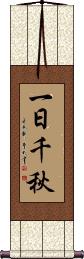
一日千秋 is a Japanese and Chinese proverb about missing someone.
一日千秋 is often used to express how hard it is to wait for someone's return or to be away from someone.
Some will translate this as “one day feels like a very long time” or “waiting for someone (something) is hard.”
You might see this romanized as a single word, Ichijitsusenshuu, or as “Ichijitsu Senshuu” from Japanese.
If you break down the characters one-by-one, we get:
一 = one/a
日 = day/sun (can also represent time or date)
千 = 1000/thousand
秋 = autumn/fall
Together, 千秋 can mean “autumn comes thousand times” (or 1000 years). It can also be read as 1000 periods of time.
However, it relays the idea of heartache as you wait for someone you miss.
1. Right Understanding / Right Perspective / Right View / Perfect View
Samyag Dristhi / Samyag Drsti / Samma Ditthi
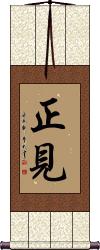
正見 is one of the Noble Eightfold Paths of Buddhism. Right View, along with the Right Thought, constitutes the path to Wisdom.
To get to the correct view of the world, you must first understand and follow Four Noble Truths.
Note: This term is exclusively used by devout Buddhists. It is not a common term, and is remains an unknown concept to most Japanese and Chinese people.
See Also: Buddhism | Enlightenment | Noble Eightfold Path
Even a fool may sometimes come up with a good idea
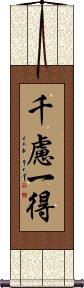
千慮一得 means “1000 tries, one success,” or “[a] thousand tries [leads to] one success.”
This proverb is a humble way to express your success, ideas, or accomplishments. As if you are a fool who just got lucky in inventing or creating something.
Translations for this proverb include:
Even without any notable ability on my part, I may still get it right sometimes by good luck.
Even a fool may sometimes come up with a good idea.
Compare this to the English idiom, “Even a broken clock is right twice a day.”
Wood Dog
The Year of the Wood Dog
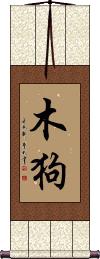
木狗 is Wood Dog in Chinese.
In the Chinese zodiac and sexagenary (60-year) cycle, this combination occurs in years that include 1874, 1934, 1994, and 2054.
In the sexagenary cycle, this year is represented by 甲戌.
See Also: Dog
Wood Pig/Boar
The Year of the Wood Pig/Boar
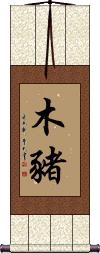
木豬 is Wood Pig/Boar in Chinese.
In the Chinese zodiac and sexagenary (60-year) cycle, this combination occurs in years that include 1875, 1935, 1995, and 2055.
In the sexagenary cycle, this year is represented by 乙亥.
See Also: Pig/Boar
Golden/Metal Dragon
The Year of the Golden/Metal Dragon
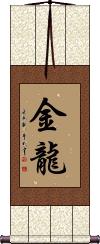
金龍 is Golden/Metal Dragon in Chinese.
In the Chinese zodiac and sexagenary (60-year) cycle, this combination occurs in years that include 1880, 1940, 2000, and 2060.
In the sexagenary cycle, this year is represented by 庚辰.
See Also: Dragon
Golden/Metal Snake
The Year of the Gold Snake
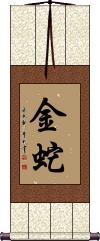
金蛇 is Golden/Metal Snake in Chinese.
In the Chinese zodiac and sexagenary (60-year) cycle, this combination occurs in years that include 1881, 1941, 2001, and 2061.
In the sexagenary cycle, this year is represented by 辛巳.
See Also: Snake
Wood Rat
The Year of the Wood Rat
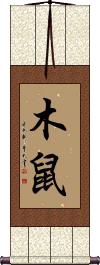
木鼠 is Wood Rat in Chinese.
In the Chinese zodiac and sexagenary (60-year) cycle, this combination occurs in years that include 1864, 1924, 1984, and 2044.
In the sexagenary cycle, this year is represented by 甲子.
See Also: Rat
Wood Monkey
The Year of the Wood Monkey
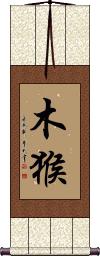
木猴 is Wood Monkey in Chinese.
In the Chinese zodiac and sexagenary (60-year) cycle, this combination occurs in years that include 1884, 1944, 2004, and 2064.
In the sexagenary cycle, this year is represented by 甲申.
See Also: Monkey
Wood Rooster
The Year of the Wood Rooster
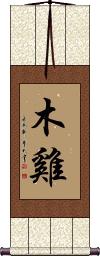
木雞 is Wood Rooster in Chinese.
In the Chinese zodiac and sexagenary (60-year) cycle, this combination occurs in years that include 1885, 1945, 2005, and 2065.
In the sexagenary cycle, this year is represented by 乙酉.
See Also: Rooster
Fire Dog
The Year of the Fire Dog
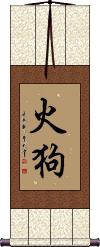
火狗 is Fire Dog in Chinese.
In the Chinese zodiac and sexagenary (60-year) cycle, this combination occurs in years that include 1886, 1946, 2006, and 2066.
In the sexagenary cycle, this year is represented by 丙戌.
See Also: Dog
Golden/Metal Tiger
The Year of the Golden/Metal Tiger
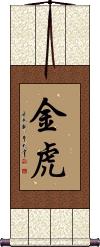
金虎 is Golden/Metal Tiger in Chinese.
In the Chinese zodiac and sexagenary (60-year) cycle, this combination occurs in years that include 1890, 1950, 2010, and 2070.
In the sexagenary cycle, this year is represented by 庚寅.
See Also: Tiger
Golden/Metal Rabbit
The Year of the Golden/Metal Rabbit
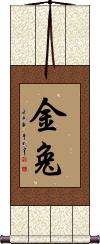
金兔 is Golden/Metal Rabbit in Chinese.
In the Chinese zodiac and sexagenary (60-year) cycle, this combination occurs in years that include 1891, 1951, 2011, and 2071.
In the sexagenary cycle, this year is represented by 辛卯.
See Also: Rabbit
Water Dragon
The Year of the Water Dragon
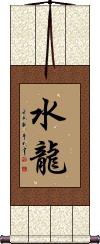
水龍 is Water Dragon in Chinese.
In the Chinese zodiac and sexagenary (60-year) cycle, this combination occurs in years that include 1892, 1952, 2012, and 2072.
In the sexagenary cycle, this year is represented by 壬辰.
See Also: Dragon
Wood Ox/Bull
The Year of the Wood Ox/Bull
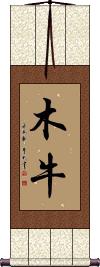
木牛 is Wood Ox/Bull in Chinese.
In the Chinese zodiac and sexagenary (60-year) cycle, this combination occurs in years that include 1865, 1925, 1985, and 2045.
In the sexagenary cycle, this year is represented by 乙丑.
See Also: Ox/Bull
Wood Horse
The Year of the Wood Horse
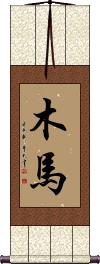
Wood Goat/Sheep
The Year of the Wood Goat/Sheep
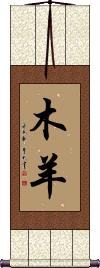
木羊 is Wood Goat/Sheep in Chinese.
In the Chinese zodiac and sexagenary (60-year) cycle, this combination occurs in years that include 1895, 1955, 2015, and 2075.
In the sexagenary cycle, this year is represented by 乙未.
See Also: Goat/Sheep
Earth Dog
The Year of the Earth Dog
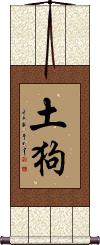
土狗 is Earth Dog in Chinese.
In the Chinese zodiac and sexagenary (60-year) cycle, this combination occurs in years that include 1898, 1958, 2018, and 2078.
In the sexagenary cycle, this year is represented by 戊戌.
See Also: Dog
Golden/Metal Rat
The Year of the Golden/Metal Rat
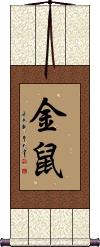
金鼠 is Golden/Metal Rat in Chinese.
In the Chinese zodiac and sexagenary (60-year) cycle, this combination occurs in years that include 1900, 1960, 2020, and 2080.
In the sexagenary cycle, this year is represented by 庚子.
See Also: Rat
Golden/Metal Ox/Bull
The Year of the Golden/Metal Ox/Bull
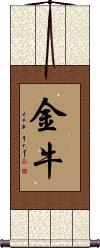
金牛 is Golden/Metal Ox/Bull in Chinese.
In the Chinese zodiac and sexagenary (60-year) cycle, this combination occurs in years that include 1901, 1961, 2021, and 2081.
In the sexagenary cycle, this year is represented by 辛丑.
See Also: Ox/Bull
4. Right Action / Perfect Conduct
Samyak Karmanta / Samma Kammanta
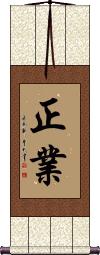
正業 is one of the Noble Eightfold Paths of Buddhism. Right Action, along with Right Speech and Right Living, constitute the path to Virtue.
The five precepts of Right Action are...
1. Refrain from destroying living beings (no murder or any form of taking a life).
2. Refrain from stealing.
3. Refrain from sexual misconduct (adultery, rape, etc.).
4. Refrain from false speech (lying or trickery).
5. Refrain from intoxicants that lead to heedlessness (no drugs or alcohol).
This concept can be summarized as “Avoidance of actions that conflict with moral discipline.”
Note: In Japanese, when read by a non-Buddhist, this will mean “the right job/vocation.”
This term is exclusively used by devout Buddhists. It is not a common term, and is remains an unknown concept to most Japanese and Chinese people.
See Also: Buddhism | Enlightenment | Noble Eightfold Path
Wood Dragon
The Year of the Wood Dragon
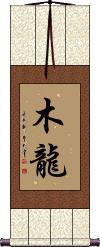
木龍 is Wood Dragon in Chinese.
In the Chinese zodiac and sexagenary (60-year) cycle, this combination occurs in years that include 1904, 1964, 2024, and 2084.
In the sexagenary cycle, this year is represented by 甲辰.
See Also: Dragon
Wood Snake
The Year of the Wood Snake
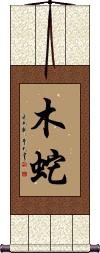
木蛇 is Wood Snake in Chinese.
In the Chinese zodiac and sexagenary (60-year) cycle, this combination occurs in years that include 1905, 1965, 2025, and 2085.
In the sexagenary cycle, this year is represented by 乙巳.
See Also: Snake
Golden/Metal Dog
The Year of the Golden/Metal Dog
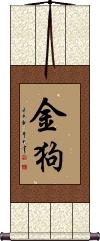
金狗 is Golden/Metal Dog in Chinese.
In the Chinese zodiac and sexagenary (60-year) cycle, this combination occurs in years that include 1910, 1970, 2030, and 2090.
In the sexagenary cycle, this year is represented by 庚戌.
See Also: Dog
Golden/Metal Pig/Boar
The Year of the Golden/Metal Pig/Boar
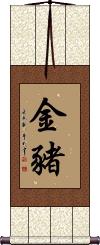
金豬 is Golden/Metal Pig/Boar in Chinese.
In the Chinese zodiac and sexagenary (60-year) cycle, this combination occurs in years that include 1911, 1971, 2031, and 2091.
In the sexagenary cycle, this year is represented by 辛亥.
See Also: Pig/Boar
Five Codes of Tang Soo Do
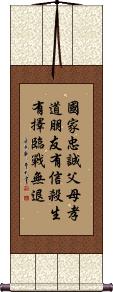
国家忠诚父母孝道朋友有信杀生有择临战无退 are the five codes of Tang Soo Do.
I suggest you have this arranged in five columns when you get to the options page for your custom calligraphy wall scroll.
Here are my translations of each of the five codes:
國家忠誠 Be loyal to your country.
父母孝道 In regards to parents, behave in a filial way.
朋友有信 Be faithful in friendship.
殺生有擇 When fighting for life and death, make noble choices.
臨戰無退 No retreat in battle.
Note: “Tang Soo Do” is a romanization of 唐手道. It's 당수도 in Korean Hangul. It can also be romanized as “Tangsudo” or “Dangsudo.”
5. Right Living / Right Livelihood / Perfect Livelihood
Samyag Ajiva / Samma Ajiva
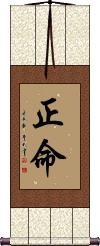
正命 (right living) is one of the Noble Eightfold Paths of Buddhism.
Right Living, along with Right Speech and Right Action, constitute the path to Virtue.
Right Living means that a Buddhist should only take a job or pursue a career in a field that does no harm. Buddhists should not work in the arms trade, as pimps or in the field of prostitution, as a butcher or in a shop that kills or sells meat, in a laboratory that does animal research, or in any other business that involves scheming or unethical behavior.
Another definition: Avoidance of professions that are harmful to sentient beings, such as slaughterer, hunter, dealer in weaponry or narcotics, etc.
This term is exclusively used by devout Buddhists. It is not a common term, and is remains an unknown concept to most Japanese and Chinese people.
See Also: Buddhism | Enlightenment | Noble Eightfold Path
Five Red Bats
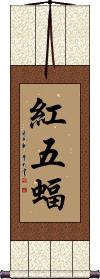
紅五蝠 is a play on words in Chinese because of some homophones.
The first thing you need to know is that the word for bat, 蝠, sounds exactly like the word for good fortune, 福. Thus, bats are often associated with good luck and good fortune in Chinese culture.
Five bats (五福 / 五蝠) means “five fortunes,” referring to luck, prosperity, wealth, happiness, and longevity.
The word red, 红, has the same sound as 宏 meaning vast, great, or magnificent. Therefore, a red bat means “vast fortune.”
Altogether, five red bats represent vast reaches of the five fortunes.
Wood Tiger
The Year of the Wood Tiger
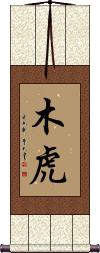
木虎 is Wood Tiger in Chinese.
In the Chinese zodiac and sexagenary (60-year) cycle, this combination occurs in years that include 1914, 1974, 2034, and 2094.
In the sexagenary cycle, this year is represented by 甲寅.
See Also: Tiger
Wood Rabbit
The Year of the Wood Rabbit
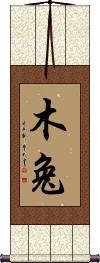
木兔 is Wood Rabbit in Chinese.
In the Chinese zodiac and sexagenary (60-year) cycle, this combination occurs in years that include 1915, 1975, 2035, and 2095.
In the sexagenary cycle, this year is represented by 乙卯.
See Also: Rabbit
Fire Dragon
The Year of the Fire Dragon
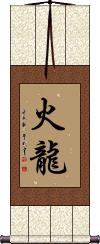
火龍 is Fire Dragon in Chinese.
In the Chinese zodiac and sexagenary (60-year) cycle, this combination occurs in years that include 1916, 1976, 2036, and 2096.
In the sexagenary cycle, this year is represented by 丙辰.
See Also: Dragon
Golden/Metal Monkey
The Year of the Golden/Metal Monkey
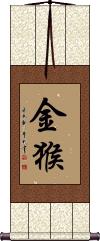
金猴 is Golden/Metal Monkey in Chinese.
In the Chinese zodiac and sexagenary (60-year) cycle, this combination occurs in years that include 1920, 1980, 2040, and 2100.
In the sexagenary cycle, this year is represented by 庚申.
See Also: Monkey
Golden/Metal Rooster
The Year of the Golden/Metal Rooster
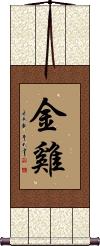
金雞 is Golden/Metal Rooster in Chinese.
In the Chinese zodiac and sexagenary (60-year) cycle, this combination occurs in years that include 1921, 1981, 2041, and 2101.
In the sexagenary cycle, this year is represented by 辛酉.
See Also: Rooster
Water Dog
The Year of the Water Dog
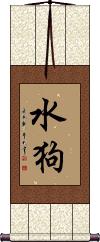
水狗 is Water Dog in Chinese.
In the Chinese zodiac and sexagenary (60-year) cycle, this combination occurs in years that include 1922, 1982, 2042, and 2102.
In the sexagenary cycle, this year is represented by 壬戌.
See Also: Dog
Earth Dragon
The Year of the Earth Dragon
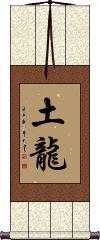
土龍 is Earth Dragon in Chinese.
In the Chinese zodiac and sexagenary (60-year) cycle, this combination occurs in years that include 1868, 1928, 1988, and 2048.
In the sexagenary cycle, this year is represented by 戊辰.
See Also: Dragon
6. Right Effort / Right Endeavor / Perfect Effort
Samyag Vyayama / Samma Vayama
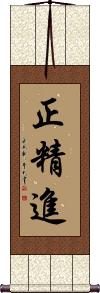
正精進 is one of the Noble Eightfold Paths of Buddhism. Right Effort, along with Right Mindfulness and Right Concentration, constitute the path to Concentration or Perfect Thought.
The proper effort is not the effort to make something particular happen. It is the effort to be aware and awake in each moment, the effort to overcome laziness and defilement, and the effort to make each activity of our daily meditation. This concept is about pursuing wholesome things that promote good karma.
Another definition: Cultivation of what is karmically wholesome and avoidance of what is karmically unwholesome.
This term is exclusively used by devout Buddhists. It is not a common term, and is remains an unknown concept to most Japanese and Chinese people.
See Also: Buddhism | Enlightenment | Noble Eightfold Path
7. Right Mindfulness / Right Memory / Perfect Mindfulness
Samyak Smriti / Samyak Smrti / Samma Sati
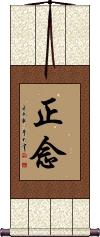
正念 is one of the Noble Eightfold Paths of Buddhism. Right Mindfulness, along with Right Effort and Right Concentration, constitute the path to Concentration or Perfect Thought.
Right Mindfulness is about remaining focused on one's body, feelings, mind, and mental qualities. It's also about being ardent, aware, and mindful, and supposes that you've already put aside worldly desire and aversion.
Monk Bhikkhu Bodhi described this as “The mind is deliberately kept at the level of bare attention, a detached observation of what is happening within us and around us in the present moment.” When practicing right mindfulness, the mind is trained to remain in the present, open, quiet, and alert, contemplating the present event.
Another definition: Ongoing mindfulness of body, feelings, thinking, and objects of thought.
This term is exclusively used by devout Buddhists. It is not a common term, and is remains an unknown concept to most Japanese and Chinese people.
See Also: Buddhism | Enlightenment | Noble Eightfold Path
Golden/Metal Horse
The Year of the Golden/Metal Horse
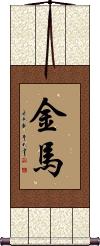
金馬 is Golden/Metal Horse in Chinese.
In the Chinese zodiac and sexagenary (60-year) cycle, this combination occurs in years that include 1870, 1930, 1990, and 2050.
In the sexagenary cycle, this year is represented by 庚午.
See Also: Horse
Golden/Metal Goat/Sheep
The Year of the Golden/Metal Goat/Sheep
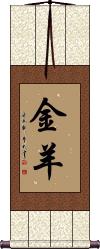
金羊 is Golden/Metal Goat/Sheep in Chinese.
In the Chinese zodiac and sexagenary (60-year) cycle, this combination occurs in years that include 1871, 1931, 1991, and 2051.
In the sexagenary cycle, this year is represented by 辛未.
See Also: Goat/Sheep
Aaden
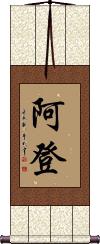
阿登 is the name Aaden in Chinese (Mandarin).
Aaden
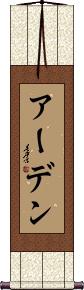
アーデン is the name Aaden in Japanese Katakana.
Note: Because this title is entirely Japanese Katakana, it should be written by a Japanese calligrapher.
Aadhya
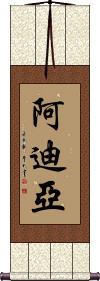
阿迪亞 is the name Aadhya in Chinese (Mandarin).
Aadhya
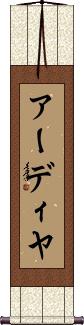
アーディヤ is the name Aadhya in Japanese Katakana.
Note: Because this title is entirely Japanese Katakana, it should be written by a Japanese calligrapher.
Aadil
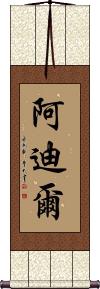
阿迪爾 is the name Aadil in Chinese (Mandarin).
Aadil
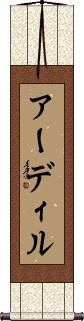
アーディル is the name Aadil in Japanese Katakana.
Note: Because this title is entirely Japanese Katakana, it should be written by a Japanese calligrapher.
Aadilah
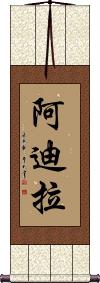
阿迪拉 is the name Aadilah in Chinese (Mandarin).
Aadilah
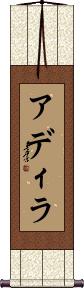
アディラ is the name Aadilah in Japanese Katakana.
Note: Because this title is entirely Japanese Katakana, it should be written by a Japanese calligrapher.
Aaditya

阿迪蒂亞 is the name Aaditya in Chinese (Mandarin).
Aaditya

アディティア is the name Aaditya in Japanese Katakana.
Note: Because this title is entirely Japanese Katakana, it should be written by a Japanese calligrapher.
Aadon
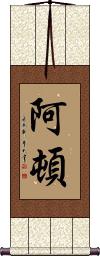
阿頓 is the name Aadon in Chinese (Mandarin).
Aadon
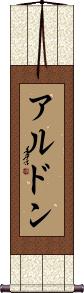
アルドン is the name Aadon in Japanese (Katakana).
Note: Because this title is entirely Japanese Katakana, it should be written by a Japanese calligrapher.
Aanand
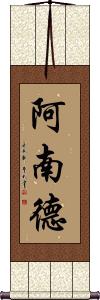
阿南德 is the name Aanand in Chinese (Mandarin).
Aanand
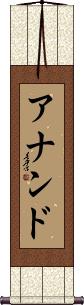
アナンド is the name Aanand in Japanese.
Note: Because this title is entirely Japanese Katakana, it should be written by a Japanese calligrapher.
Abad
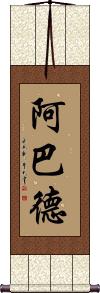
阿巴德 is the name Abad in Chinese (Mandarin).
Abad
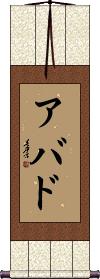
アバド is the name Abad in Japanese Katakana.
Note: Because this title is entirely Japanese Katakana, it should be written by a Japanese calligrapher.
Abadd
阿巴德 is the name Abadd in Chinese (Mandarin).
Abadd
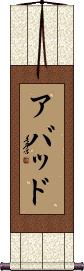
アバッド is the name Abadd in Japanese Katakana.
Note: Because this title is entirely Japanese Katakana, it should be written by a Japanese calligrapher.
Abaddo
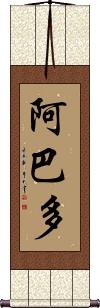
阿巴多 is the name Abaddo in Chinese (Mandarin).
Abaddo
アバド is the name Abaddo in Japanese Katakana.
Note: Because this title is entirely Japanese Katakana, it should be written by a Japanese calligrapher.
Abadi
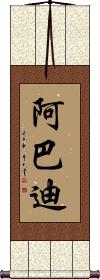
阿巴迪 is the name Abadi in Chinese (Mandarin).
Abadi
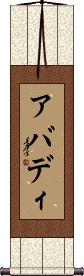
アバディ is the name Abadi in Japanese.
Note: Because this title is entirely Japanese Katakana, it should be written by a Japanese calligrapher.
Abadie
阿巴迪 is the name Abadie in Chinese (Mandarin).
Abadie
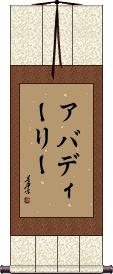
アバディーリー is the name Abadie in Japanese (Katakana).
Note: Because this title is entirely Japanese Katakana, it should be written by a Japanese calligrapher.
Abdalla
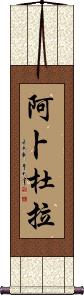
阿卜杜拉 is the name Abdalla in Chinese (Mandarin).
Abdalla
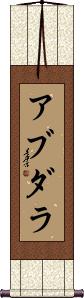
アブダラ is the name Abdalla in Japanese Katakana.
Note: Because this title is entirely Japanese Katakana, it should be written by a Japanese calligrapher.
Abdallah
阿卜杜拉 is the name Abdallah in Chinese (Mandarin).
Abdallah
アブダラ is the name Abdallah in Japanese Katakana.
Note: Because this title is entirely Japanese Katakana, it should be written by a Japanese calligrapher.
Abdalrahman
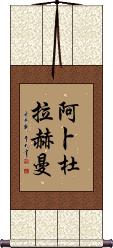
阿卜杜拉赫曼 is the name Abdalrahman in Chinese (Mandarin).
Abdalrahman
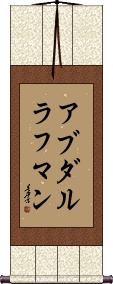
アブダルラフマン is the name Abdalrahman in Japanese Katakana.
Note: Because this title is entirely Japanese Katakana, it should be written by a Japanese calligrapher.
Abdel
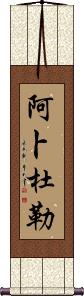
This is a common Mandarin Chinese transliteration for the male Arabic name Abdel.
Abdel
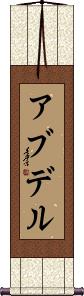
アブデル is the name Abdel in Japanese (Katakana).
Note: Because this title is entirely Japanese Katakana, it should be written by a Japanese calligrapher.
Abdelfettah
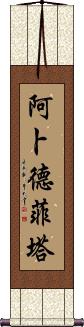
This is a common Mandarin Chinese transliteration for the male Arabic name Abdelfettah.
Abdelfettah
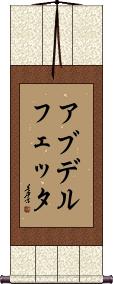
アブデルフェッタ is the name Abdelfettah in Japanese (Katakana).
Note: Because this title is entirely Japanese Katakana, it should be written by a Japanese calligrapher.
Abdelhak
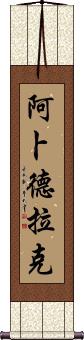
This is a common Mandarin Chinese transliteration for the male Arabic name Abdelhak.
Abdelhak
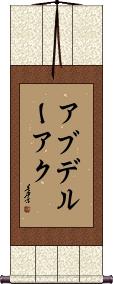
アブデルーアク is the name Abdelhak in Japanese (Katakana).
Note: Because this title is entirely Japanese Katakana, it should be written by a Japanese calligrapher.
Abdelilah
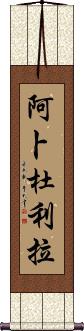
阿卜杜利拉 is the name Abdelilah in Chinese (Mandarin).
Abdelilah
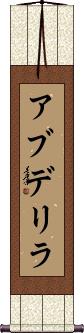
アブデリラ is the name Abdelilah in Japanese Katakana.
Note: Because this title is entirely Japanese Katakana, it should be written by a Japanese calligrapher.
Abdelkader

阿卜杜勒卡德爾 is the name Abdelkader in Chinese (Mandarin).
Abdelkader

アブデルカデル is the name Abdelkader in Japanese Katakana.
Note: Because this title is entirely Japanese Katakana, it should be written by a Japanese calligrapher.
Abdelmouiz

阿卜杜勒穆伊茲 is the name Abdelmouiz in Chinese (Mandarin).
Abdelmouiz

アブデルムイズ is the name Abdelmouiz in Japanese Katakana.
Note: Because this title is entirely Japanese Katakana, it should be written by a Japanese calligrapher.
Abderrahim
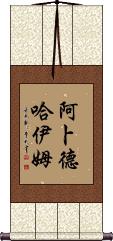
This is a common Mandarin Chinese transliteration for the male Arabic name Abderrahim.
Abderrahim
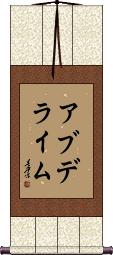
アブデライム is the name Abderrahim in Japanese (Katakana).
Note: Because this title is entirely Japanese Katakana, it should be written by a Japanese calligrapher.
Abdi

阿卜迪 is the name Abdi in Chinese (Mandarin).
Abdi

アブディ is the name Abdi in Japanese Katakana.
Note: Because this title is entirely Japanese Katakana, it should be written by a Japanese calligrapher.
Abdiel
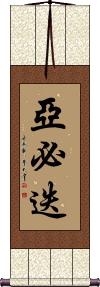
亞必迭 is the name Abdiel in Chinese (Mandarin).
Abdiel
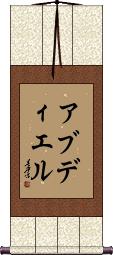
アブディエル is the name Abdiel in Japanese (Katakana).
Note: Because this title is entirely Japanese Katakana, it should be written by a Japanese calligrapher.
Abdillah
阿卜杜拉 is the name Abdillah in Chinese (Mandarin).
Abdillah

アブディラ is the name Abdillah in Japanese Katakana.
Note: Because this title is entirely Japanese Katakana, it should be written by a Japanese calligrapher.
Abdirahman
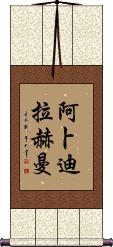
阿卜迪拉赫曼 is the name Abdirahman in Chinese (Mandarin).
Abdirahman
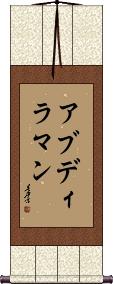
アブディラマン is the name Abdirahman in Japanese Katakana.
Note: Because this title is entirely Japanese Katakana, it should be written by a Japanese calligrapher.
Abdon
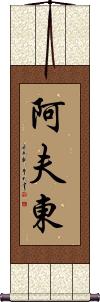
阿夫東 is the transliteration to Mandarin Chinese for the Latin / Spanish name Abdón.
Abdon
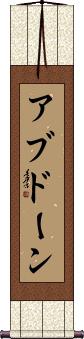
アブドーン is the name Abdon in Japanese (Katakana).
Note: Because this title is entirely Japanese Katakana, it should be written by a Japanese calligrapher.
Abdou
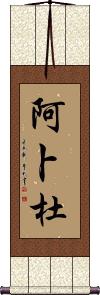
This is a common Mandarin Chinese transliteration for the male Arabic name Abdou.
Abdou
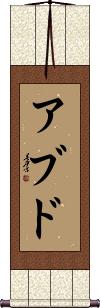
アブド is the name Abdou in Japanese (Katakana).
Note: Because this title is entirely Japanese Katakana, it should be written by a Japanese calligrapher.
Abdul
阿卜杜勒 is the name Abdul in Chinese (Mandarin).
Abdul
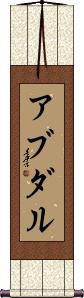
アブダル is the name Abdul in Japanese.
Note: Because this title is entirely Japanese Katakana, it should be written by a Japanese calligrapher.
Abdulaziz
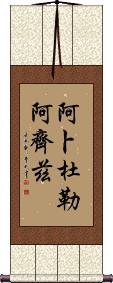
阿卜杜勒阿齊茲 is the name Abdulaziz in Chinese (Mandarin).
Abdulaziz
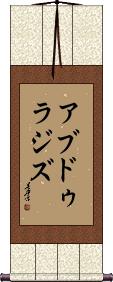
アブドゥラジズ is the name Abdulaziz in Japanese Katakana.
Note: Because this title is entirely Japanese Katakana, it should be written by a Japanese calligrapher.
Abdulfattah
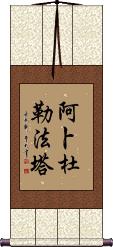
阿卜杜勒法塔 is the name Abdulfattah in Chinese (Mandarin).
Abdulfattah
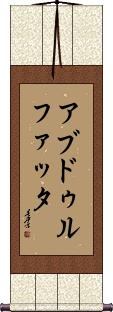
アブドゥルファッタ is the name Abdulfattah in Japanese Katakana.
Note: Because this title is entirely Japanese Katakana, it should be written by a Japanese calligrapher.

Successful Chinese Character and Japanese Kanji calligraphy searches within the last few hours...



