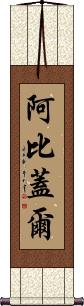
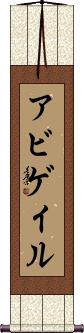
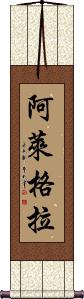
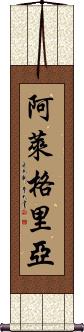
Artwork
Search:

Exact
Phrase

Oriental Outpost LogoFlagTowerwatercolor
Chinese Calligraphy Search
ArtPaintingsAsian Art Gallery

Adventures in Asian Art

Didn't find what you want?
Try these methods:

1. Make your search more specific.
2. Use other similar-meaning words.
3. Use less words or just one word.
4. Post your request on our forum so that we can translate/create what you want.


Selections for Eg in Chinese and/or Japanese...

We'll build you a handmade custom "Eg" calligraphy wall scroll if you wish!


Quick links to words on this page...

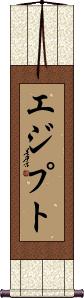
  1. Egypt
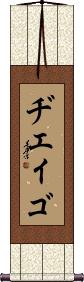
  2. Peggy
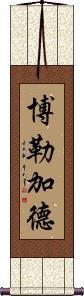
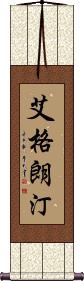
  3. Gregory
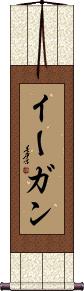
  4. Megan
  5. Honor and Integrity
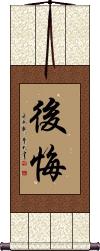
  6. Live Without Regret
  7. Integrity
  8. Mind of the Beginner
  9. Begging Forgiveness
10. Sense of Shame / Sense of Honor / Integrity / Modesty
11. Gregorio
12. Greg
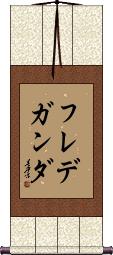
13. Fredegunda
14. Degas
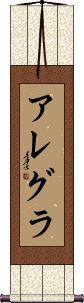
15. Alegria
16. Begona
17. Diego
18. Greg
19. Gregory
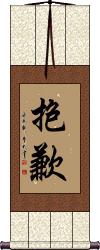
20. Sorry / Feel Apologetic / Regret
21. Dignity / Honor / Sanctity / Integrity
22. Legendary Phoenix
23. Hunt Foxes with Stealth,
       Hunt Wolves in the Open

24. Furinkazan
25. Loyalty
26. Indomitable Spirit
27. Responsibility
28. Undaunted After Repeated Setbacks
29. One Justice Can Overpower 100 Evils
30. Goddess
31. Assassin
32. Duty / Responsibility / Obligation
33. House of Good Fortune
34. Drain the pond to get all the fish
35. Purple / Violet Color
36. Seeing is Believing
37. Self-Respect / Self-Esteem
38. Sun Tzu - Art of War
39. Drunken Fist
40. Phoenix Rising from the Ashes
41. Self-Restraint / Self-Control
42. Please Forgive Me
43. Value of Warrior Generals
44. Fidelity Honor Courage
45. Dedication
46. Diligence
47. Moderation
48. Attack When The Enemy Has Low Morale
49. Japanese Snapping Turtle
       Chinese Soft Shell Turtle

50. Honesty
51. Honor
52. Heaven / Sky
53. No Mind
54. Humble / Modest
55. Enso - Japanese Zen Circle
56. Frightful Demon / Asura
57. Forgive
58. The Tree of Enlightenment
       The Bodhi Tree

59. Beware of the Lawyers
60. Art of War
61. Adventure
62. Accountant / CPA
63. Adoring Love
64. Art of War: 5 Points of Analysis
65. Wisdom from Hard Knocks
66. Bodhi - Awakening Enlightenment
67. You May Learn from Victory,
       You Will Learn from Failure

68. Bamboo
69. Death Before Dishonor
70. Christianity / Christian
71. Confucius
72. Daoism / Taoism
73. Darkness
74. Death Before Dishonor
75. Demon / Raksha
76. Devotion to your Profession / Career
77. Dragon
78. The Spirit of the Dragon Horse,
       the Power of a Tiger.

79. Elegant / Exquisite
80. Enlightenment
81. Everyday Life
82. Extreme / Intense
83. Flower Open / Blooming Flower
84. Soccer / Football / Futbol
85. Fraternity
86. From this Moment Forward
87. From this moment on
       From this day forward.

88. Good Luck / Good Fortune
89. Giri
90. Gung Ho
91. Woman of Strong Character / Woman Hero
92. Having High Principles
93. Speed
94. Holy Bible
95. Hong Kong
96. Human Race / Humanity / Mankind
97. Even The 100-Foot Bamboo
       Can Grow One More Foot

98. Iaido
99. I Love You
100. Impartial and Fair to the Brotherhood
       and Sisterhood of the World

101. Indomitable / Unyielding
102. Integrity - Sincere Honest and Faithful
103. Intensity
104. Iron Palm
105. Islam
106. John 3:16
107. Judge
108. King
109. Kirin / Giraffe / Mythical Creature
110. Korean CKD Virtues
111. Legendary Turtle
112. Macao / Macau
113. Marine Corps
114. Martial Morality
       Martial Arts Ethics / Virtue

115. Martial Arts Skills
116. Meg
117. Megan
118. Meghan
119. Morality of Mind
120. Ninjutsu / Ninjitsu
121. Oceania
122. Olegario
123. Opening / Blooming Flowers
124. Orchid
125. Patience / Perseverance
       To Endure / Tolerant

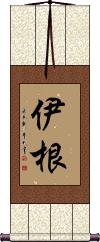
126. Peggy
127. Mountain Travels Poem by Dumu
128. Personal Integrity
129. Phoenix
130. Power of Understanding and Wisdom
131. Pride
132. Principles of Life
133. Profound / Powerful Words
134. Prosperity
135. Protection
136. Protector
137. Push or Knock
138. Qi Gong / Chi Kung
139. Reggie
140. Regina
141. Robust / Sturdy
142. Ronin / Masterless Samurai
143. Sacrifice
144. The Saint
145. Self-Control
146. Senegal
147. Shakyamuni / The Buddha
148. Soldiers
149. State of Anarchy
150. Storm / Windstorm


Check out all the Custom Calligraphy Options


Japanese & Chinese Calligraphy Search:

Click on a
button
to select your calligraphy and start customizing your artwork project...

Select

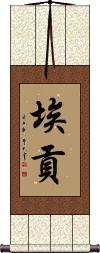
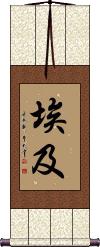
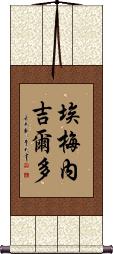
Egypt

Mandarin: āi jí

埃
及

This is the Chinese name for the country of Egypt.

Note: Egypt rests partially in Asia and Africa.

See Also...  Africa | Asia

Score: 100/100

Select

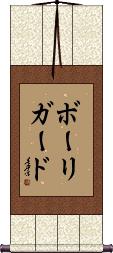
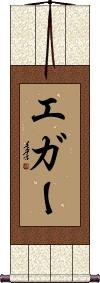
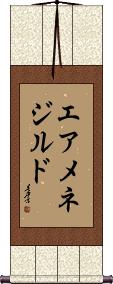
Peggy (Japanese Katakana)

Japanese: pegii

ペ
ギ
ー

This is the name Peggy written in Katakana (phonetic Japanese).

As of February 2009, we are experimenting with adding English names in Japanese Katakana. This is a specifically-Japanese character set.
This selection MUST be written by our Japanese master calligrapher
(sorry, no standard calligraphy service/pricing for this selection).
If you order this, it will be reviewed by the Japanese calligrapher. We have not double-checked or had a Japanese translator review of these new Katakana names.
Please do not use this for a tattoo without a further consultation!

Score: 100/100

Select

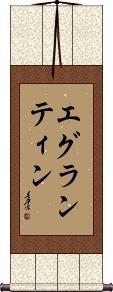
Gregory (Japanese Katakana)

Japanese: guregori

グ
レ
ゴ
リ

This is the name Gregory written in Katakana (phonetic Japanese).

As of February 2009, we are experimenting with adding English names in Japanese Katakana. This is a specifically-Japanese character set.
This selection MUST be written by our Japanese master calligrapher
(sorry, no standard calligraphy service/pricing for this selection).
If you order this, it will be reviewed by the Japanese calligrapher. We have not double-checked or had a Japanese translator review of these new Katakana names.
Please do not use this for a tattoo without a further consultation!

Score: 100/100

Select

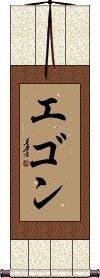
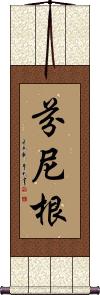
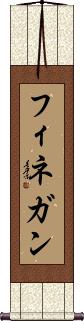
Megan (Japanese Katakana)

Japanese: megan

メ
ガ
ン

This is the name Megan written in Katakana (phonetic Japanese).

As of February 2009, we are experimenting with adding English names in Japanese Katakana. This is a specifically-Japanese character set.
This selection MUST be written by our Japanese master calligrapher
(sorry, no standard calligraphy service/pricing for this selection).
If you order this, it will be reviewed by the Japanese calligrapher. We have not double-checked or had a Japanese translator review of these new Katakana names.
Please do not use this for a tattoo without a further consultation!

Score: 100/100

Select

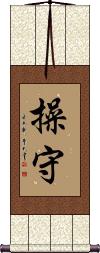
Honor and Integrity

Mandarin: jié cāo
Japanese: sessou

節
操

There are a few ways to relay integrity in Asian languages, and more than one way to define honor in English. Here's what this entry means:

...honorable, integrity of principle, constancy, honor, and in certain context, chastity.

Score: 100/100

Select

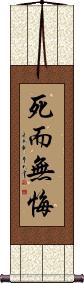
Live Without Regret

Mandarin: shēng ér wú huǐ

生
而
無
悔

This is how to say "live without regrets" in Mandarin Chinese. This also makes sense in Japanese, but I don't yet have the pronunciation info.

See Also...  Live For Today

Score: 100/100

Select

Integrity

Mandarin: zhèng zhí
Japanese: shoujiki
Korean: 정직

正
直

Integrity is living by your highest values. It is being honest and sincere. Integrity helps you to listen to your conscience, to do the right thing, and to tell the truth. You act with integrity when your words and actions match. Integrity gives you self-respect and a peaceful heart.

Japanese jikiPlease note that the second Kanji sometimes has an alternate form in Japanese. Let us know if you want the alternate form shown to the right.

Note: This entry is cross-listed as "honesty" because it also fits that definition.

Beyond Integrity, this word also means "upright" and "honest" in Chinese. Means "integrity", "honesty" or "frankness" in Japanese.

See Also...  Honor | Honesty | Truth | Trust

Score: 100/100

Back to the top of this page

Select

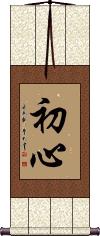
Mind of the Beginner

Mandarin: chū xīn
Japanese: shoshin

初
心

This is often translated in Japanese as "beginner's mind". In Chinese, the dictionary definition is "one's original intention".

The first character means first, initial, primary, junior, beginning, or basic.

The second character means heart, mind, soul, or essence.

This is one of the five spirits of the warrior (budo), and is often used as a Japanese martial arts tenet. Under that context, places such as the Budo Dojo define it this way: The state of shoshin is that of a beginners mind. It is a state of awareness the remains always fully conscious, aware, and prepared to see things for the first time. The attitude of shoshin is essential to continued learning.

Score: 100/100

Select

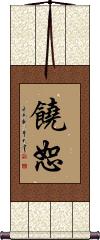
Begging Forgiveness

Mandarin: ráo shù

饒
恕

This Chinese word is a kind of forgiveness that you would beg for like a servant begging a master. This can also be the forgiveness that a person would beg from the king or God.

This word suggests that this is forgiveness for something really bad (a terrible crime or sin).

Score: 100/100

Select

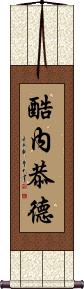
Sense of Shame / Sense of Honor / Integrity / Modesty (Korean)

Mandarin: lián chǐ
Korean: 염치

廉
恥

This simultaneously means "sense of honor" and "sense of shame" in Korean.

This term is often used as a tenet of Taekwondo where the English terms "integrity" and/or "modesty" are applied.

This is also a Chinese word, though it is usually read with the "sense of shame" meaning, and is a poor choice for a wall scroll if your audience is Chinese.

Score: 100/100

Back to the top of this page

Select

Gregorio

masculine name

Mandarin: gé léi gē lǐ ào

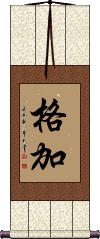
格
雷
戈
裡
奧

This is the transliteration to Mandarin Chinese for the Latin / Spanish name Gregorio

Score: 100/100

Select

Greg (Japanese Katakana)

Japanese: guretsugu

グ
レ
ツ
グ

This is the name Greg written in Katakana (phonetic Japanese).

As of February 2009, we are experimenting with adding English names in Japanese Katakana. This is a specifically-Japanese character set.
This selection MUST be written by our Japanese master calligrapher
(sorry, no standard calligraphy service/pricing for this selection).
If you order this, it will be reviewed by the Japanese calligrapher. We have not double-checked or had a Japanese translator review of these new Katakana names.
Please do not use this for a tattoo without a further consultation!

Score: 100/100

Select

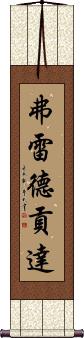
Fredegunda

feminine name

Mandarin: fú léi dé gòng dá

弗
雷
德
貢
達

This is the transliteration to Mandarin Chinese for the Latin / Spanish name Fredegunda

Score: 100/100

Back to the top of this page

Select

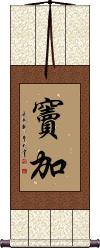
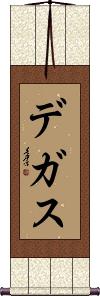
Degas

Mandarin: dòu jiā

竇
加

This is the transliteration to Mandarin Chinese for the French name Degas.

Score: 100/100

Select

Alegria

feminine name

Mandarin: ā lái gé lǐ yà

阿
萊
格
裡
亞

This is the transliteration to Mandarin Chinese for the Latin / Spanish name Alegría

Score: 100/100

Select

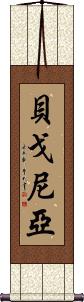
Begona

feminine name

Mandarin: bèi gē ní yà

貝
戈
尼
亞

This is the transliteration to Mandarin Chinese for the Latin / Spanish name Begoña

Score: 100/100

Back to the top of this page

Select

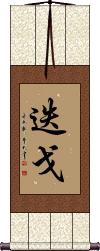
Diego

masculine name

Mandarin: dié gē

迭
戈

This is the transliteration to Mandarin Chinese for the Latin / Spanish name Diego

Score: 100/100

Select

Greg

Mandarin: gé léi gé

格
雷
格

This is the most common transliteration to Mandarin Chinese for the name Greg

Score: 100/100

Select

Greg

Mandarin: gé lǐ gé

格
裡
格

This is the second most common transliteration to Mandarin Chinese for the name Greg

Score: 100/100

Back to the top of this page

Select

Gregory

Mandarin: gē léi gē lǐ

格
雷
戈
裡

This is the transliteration to Mandarin Chinese for the name Gregory

Score: 100/100

Select

Sorry / Feel Apologetic / Regret

Mandarin: bào qiàn

抱
歉

This is the feeling of being or feeling sorry or apologetic. Basically the idea of being regretful. Not quite the same thing as sorrow.

Note: This is a strange thing to write on a wall scroll for Chinese people - but you can bend the rules if you want in the west.

Score: 100/100

Select

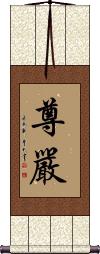
Dignity / Honor / Sanctity / Integrity

Mandarin: zūn yán
Japanese: son gen
Korean: 존엄

尊
嚴

This form of honor is showing great respect for yourself, other people, and the rules you live by.

When you are honorable, you keep your word. You do the right thing regardless of what others are doing.

This is the kind of personal honor or dignity that is of great value. If you lose this, you have lost yourself and perhaps the reputation of your family as well.

While this is not directly the same thing as "face" or "saving face" in Asian culture, it is associated with the same concept in China.

࡞In Japan, they currently use a more simplified second character for this word. The ancient Japanese form is the same as China, but after WWII some Kanji were changed. If you want the modern Japanese version, just click on the Kanji image shown to the right, instead of the button above.

Score: 100/100

Back to the top of this page

Select

Legendary Phoenix

Mandarin: fèng huáng
Japanese: houou
Korean: 봉황

鳳
凰

This is the word that translates as "Legendary Phoenix" in Chinese. This refers to the bird that according to Chinese folklore, rose from the fiery ashes.

The phoenix and dragon are by far the most famous creatures in Chinese mythology.

Score: 100/100

Select

Hunt Foxes with Stealth, Hunt Wolves in the Open

Mandarin: àn dǎ hú li míng dǎ láng

明
打
狼
闇
打
狐
狸


Characters shown
above are read
vertically, starting
from the right

This literally translates as: Hunt foxes stealthily, [and] hunt wolves openly [just as they themselves do].

Figuratively, this means:
Different opponents require different appropriate strategies.

This is a suggestion that you should know your enemy, and know that each enemy is different, that therefore requires a specialized approach (attack).

See Also...  Art Of War

Score: 100/100

Select

Furinkazan

military strategy

Mandarin: fēng lín huǒ shān
Japanese: fuu rin ka zan

風
林
火
山

This is the battle strategy and motto of Japanese feudal lord Takeda Shingen (1521–1573 A.D.). This came from the Art of War by Chinese strategist and tactician Sun Tzu (Sunzi).

You can think of this as a sort of abbreviation to remind officers and troops how to conduct battle.

This is literally a word list: Wind, Forest, Fire, Mountain.

The more expanded meaning is supposed to be...

"Swift as wind, quiet as forest, fierce as fire, and immovable as a mountain"

"As fast as the wind, as quiet as the forest, as daring as fire, and immovable as the mountain"

"Move as swift as a wind, stay as silent as forest, attack as fierce as fire, undefeatable defense like a mountain"

"Move swiftly like the wind, stay silent like the forest, attack fiercely like fire, take tactical position on the mountain"

See Also...  Art Of War

Score: 83/100

Back to the top of this page

Select

Loyalty

Japanese Chinese Korean

Mandarin: zhōng chéng
Japanese: chuu sei
Korean: 충성

忠
誠

Loyalty is staying true to someone. It is standing up for something you believe in without wavering. It is being faithful to your family, country, school, friends or ideals, when the going gets tough as well as when things are good. With loyalty, you build relationships that last forever.

Notes:
1. This written form of loyalty is universal in Chinese, Japanese Kanji, and old Korean Hanja.

2. There is also a Japanese version that is part of the Bushido Code which may be more desirable depending on whether your intended audience is Japanese or Chinese.

3. This version of loyalty is sometimes translated as devotion, sincerity, fidelity, or allegiance.

See Also...  Honor | Trust | Sincerity

Score: 60/100

Select

Indomitable Spirit (Korean)

Mandarin: bǎi shé bù qū
Korean: 백절불굴

百
折
不
屈

This Korean word means "indomitable spirit", at least, that is the way it is commonly translated in martial arts circles (Taekwondo, Hapkido, etc).

The literal translation is "[one] hundred [times] broken [still] don't succumb".
Or more naturally translated, "Even if attacked/beaten one hundred times, still be undaunted/indomitable".

This is also a word in Chinese, though rarely used in modern times.

Score: 53/100

Select

Responsibility

Mandarin: zé rèn
Japanese: sekinin
Korean: 책임

責
任

Being responsible means others can trust you to do things with excellence. Responsibility is the ability to respond ably and to make smart choices.

This word can also refer to someone who is willing to take the blame when things go wrong (instead of making excuses or passing the blame to someone else). While this is a noble idea, I think it is getting more rare these days in both eastern and western cultures.

Also associated with the idea of "duty".

Score: 53/100

Back to the top of this page

Select

Undaunted After Repeated Setbacks

Persistence to overcome all challenges

Mandarin:
bǎi zhé bù náo

Japanese:
hyaku setsu su tou

Korean: 백절불요

百
折
不
撓

This phrase means "Be undaunted in the face of repeated setbacks".

It comes from a long, and occasionally tragic story of a man that lived sometime around 25-220 AD. His name was Qiao Xuan and he never stooped to flattery, but remained an upright person at all times. He fought to expose corruption of higher-level government officials at great risk to himself.

Then when he was at a higher level in the Imperial Court, bandits were regularly capturing hostages and demanding ransoms. But when his own son was captured, he was so focused on his duty to the Emperor and common good that he sent a platoon of soldiers to raid the bandits' hideout, and stop them once and for all even at the risk of his own son's life. While all of the bandits were arrested in the raid, they killed Qiao Xuan's son at first sight of the raiding soldiers.

Near the end of his career a new Emperor came to power, and Qiao Xuan reported to him that one of his ministers was bullying the people and extorting money from them. The new Emperor refused to listen to Qiao Xuan and even promoted the corrupt Minister. Qiao Xuan was so disgusted that in protest he resigned his post as minister (something almost never done) and left for his home village.

His tombstone reads "Bai Zhe Bu Nao" which is now a phrase used in Chinese culture to describe a person of strong will who puts up stubborn resistance against great odds.

My Chinese-English dictionary defines these 4 characters as, "keep on fighting in spite of all setbacks", "be undaunted by repeated setbacks" and "be indomitable".

Our translator says it can mean, "never give up" in modern Chinese.

Although the first two characters are translated correctly as "repeated setbacks", the literal meaning is "100 setbacks" or "a rope that breaks 100 times". The last two characters can mean "do not yield" or "do not give up".
Most Chinese, Japanese, and Korean people will not take this absolutely literal meaning, but will instead understand it as the title suggests above.

See Also...  Tenacity | Fortitude | Strength | Perseverance

Score: 56/100

Select

One Justice Can Overpower 100 Evils

Mandarin:
yī zhèng yā bǎi xié

Korean: 일정압백사

一
正
壓
百
邪

This ancient "One Justice Can Overpower a Hundred Evils" idiom and proverb is famous in China. But it has been around so long that its origins have long been forgotten.

It could be something that Confucius or one of his disciples said, but no one can say for sure.

See Also...  Confucius

Score: 53/100

Select

Goddess

Mandarin: nǚ shén
Japanese: megami / joshin
Korean: 여신

女
神

This is "goddess" in both Chinese and Japanese.

Score: 53/100

Back to the top of this page

Select

Assassin

Mandarin: cì kè
Japanese: shikaku / shikyaku
Korean: 자객

刺
客

This is the most sophisticated way to write "assassin" in Chinese, Korean and Japanese. The unsophisticated way just means murderer.

Score: 53/100

Select

Duty / Responsibility / Obligation

Mandarin: zhí zé
Korean: 직책

職
責

If you have a sense of duty or sense of responsibility, this might be the wall scroll that you want to hang above your desk. It is a great way to quietly remind yourself to take pride in your duties at all times.

In different context, this can mean "official duties" or "position".

Score: 53/100

Select

House of Good Fortune

Mandarin: fú zhái
Korean: 복택

福
宅

Perhaps the Chinese equivalent of "This blessed house" or perhaps "home sweet home". This phrase literally means "Good fortune house" or "Good luck household". It makes any Chinese person who sees it feel that good things happen in the home in which this calligraphy is hung.

Score: 53/100

Back to the top of this page

Select

Drain the pond to get all the fish

Kill the goose that lays the golden eggs

Mandarin: jié zé ér yú

竭
澤
而
漁

In 632 BC, Duke Wen of the Kingdom of Jin was about to lead an army against the forces of the Kingdom of Chu.
The Duke asked one of his advisers, Jiu Fan, how they could possibly win the impending battle, as they were drastically outnumbered.
Jiu Fan said, "All is fair in war", and went on to suggest a plan of dishonorable tactics (cheating).
The Duke was not sure of this advice, so he asked another adviser, Yong Ji, who replied, "If you catch fish by draining the pond, you can certainly get all the fish. But there will be no fish the following year. You can cheat this one time in battle, but such tactics can only be used once, as the enemy will be wise in future encounters".

The Duke heard the words of his wiser adviser, but cheated to gain victory in the battle. However, he rewarded Yong Ji more than Jiu Fan at the victory celebration, stating that while Jiu Fan's advice gained one victory, the wise words of Yong Ji would last forever.

This Chinese idiom/proverb is still used, over 2600 years later to remind people not to burn bridges, cheat, or dishonor oneself in exchange for a short term gain, while sacrificing the future.

This is very similar to the meaning of the English phrase, "Kill the goose that lays the golden eggs".

Score: 50/100

Select

Purple / Violet Color

(two character version)

Mandarin: zǐ sè
Japanese: murasakiiro
Korean: 자색

紫
色

This is the two-character Chinese, Japanese and old Korean title for the color violet / purple. The second character basically means "color", so this literally means "violet color". It's more common to add the "color character" in Asian languages than it is to say "color" after the name of the color in English. Therefore, this is a very natural way to express "violet" in Asian languages.

Score: 53/100

Select

Seeing is Believing

Mandarin: bǎi wén bù rú yí jiàn
Korean: 백문불여일견

如
一
見
百
聞
不


Characters shown
above are read
vertically, starting
from the right

This phrase literally means "Better to see something once rather than hear about it one hundred times" or "Telling me about something 100 times is not as good as seeing it once". In English, we have the similar phrase of "Seeing is believing", but this has a bit of the "A picture paints a thousand words" meaning too.

Score: 53/100

Back to the top of this page

Select

Self-Respect / Self-Esteem

Mandarin: zì zūn
Japanese: jison
Korean: 자존

自
尊

This word means self-respect or self-esteem in Chinese, Korean and Japanese. It can also mean "pride in oneself".

Note: Japanese sometimes put the character for heart after these two. However, this two-character word is universal between all three languages (which is often better since more than a third of the world's population can read this version as a native word).

Score: 50/100

Select

Sun Tzu - Art of War

military strategy, tactics, and procedure

Mandarin: sūn zǐ bīng fǎ
Japanese: son shi hyou hou
Korean: 손자병법

孫
子
兵
法

This is the full title of the most famous book about warfare in the history of the world. The English title is "Sun Tzu's The Art of War".

The last two characters have come to be known in the west as "The Art of War", but a better translation would be, "military strategy and tactics", "military skills" or "army procedures".

Note: Sometimes the author's name is Romanized as "Sun Zi" or "Sunzi".

It's written the same in Chinese, Japanese Kanji and Korean Hanja.

See Also...  Military | Warrior

Score: 46/100

Select

Drunken Fist

(A legitimate style of Kung Fu)

Mandarin: zuì quán
Japanese: suiken
Korean: 취권

醉
拳

Drunken Fist is a traditional Chinese martial art / technique of Kung Fu.

It is a northern style of martial art that imitates a drunk person in its movements. Many staggering movements serve to deceive the opponent and keep them off-balance.

Some consider Drunken Fist to be among the harder styles of martial arts due to the need for powerful joints and fingers.

See Also...  Drunken Monkey

Score: 43/100

Back to the top of this page

Select

Phoenix Rising from the Ashes

Mandarin: fèng huáng niè pán

鳳
凰
涅
磐

This suggests "Legendary Phoenix rises from the ashes". Literally, it means, "Legendary Phoenix [reaches] Nirvana".

There is a legend in China of a great bird which is reborn once every 500 years. This bird gathers all the ill-will, suffering, desire, and other negative things of the whole world. The bird then plunges into the fire to burn away all negative things, sacrificing itself in the process (achieving Nirvana, or perhaps allowing others the opportunity to reach Nirvana).

500 years later, the phoenix is reborn from the ashes again, and the cycle repeats.

Score: 38/100

Select

Self-Restraint / Self-Control

Mandarin: kè jǐ
Japanese: kokki
Korean: 극기

克
己

This word can be translated as "self-denial", "self-abnegation", "self-restraint", "self-discipline", "self-mastery" or selflessness.

As a tenet of Korean taekwondo, and other martial arts, this is often used with the title "self-control".

Score: 38/100

Select

Please Forgive Me

Mandarin: qíng yuán liàng

請
原
諒

If you are looking for forgiveness, this is what you would say to ask/beg for it.

Note: This is a strange thing to write on a wall scroll for Chinese people - but you can bend the rules if you want in the west.

Score: 38/100

Back to the top of this page

Select

Value of Warrior Generals

Mandarin: bīng zài jīng ér bù zài duō jiàng zài móu ér bù zài yǒng

而
不
在
勇
在
多
將
在
謀
兵
在
精
而
不


Characters shown
above are read
vertically, starting
from the right

This literally means: [Just as] soldiers/warriors [are valued for their] quality and not [just] for quantity, [so] generals [are valued] for their tactics, not [just] for [their] bravery.

This is a phrase that follows one about how it is better to have warriors of quality, rather than just a large quantity of warriors in your army/force.

See Also...  兵在精而不在多

Score: 35/100

Select

Fidelity Honor Courage

Mandarin: xìn yì zūn yán yǒng qì

信
義
尊
嚴
勇
氣

This is a word list that was requested by a customer. Word lists are not that common in Chinese, but we've put this one on the best order/context to make it as natural as possible.

We used the "honor" that leans toward the definition of "dignity" since that seemed like the best match for the other two words.

Please note: These are three two-character words. You should choose the single-column format when you get to the options when you order this selection. The two-column option would split one word or it would be arranged with four characters on one side and two on the other.

Score: 35/100

Select

Dedication

Dedicated to One Thing

Mandarin: zhuān yòng
Korean: 전용

專
用

This is the kind of dedication you might have to your job, or a person.

Trivia: It is the same word used as an adjective in front of the word for "network" to say "dedicated network" in Chinese.

Please note: While this is a word in Korean, the meaning is private or "exclusive use". So this is best if your audience is Chinese.

See Also...  Devotion | Passion | Tenacious | Commitment

Score: 35/100

Back to the top of this page

Select

Diligence

(single character)

Mandarin: qín
Japanese: kin
Korean:

勤

This single-character means diligence or "sense of duty" in Chinese and Korean (also understood in Japanese, but not commonly-seen as a stand-alone Kanji).

As a single character on a wall scroll, this will only be seen with this meaning. However, in certain context, it can mean "frequent".

If you, or someone you know is a hard-worker (or needs a reminder to be diligent), then this is the wall scroll to have in your/their office.

See Also...  Tenacity | Undaunted

Score: 35/100

Select

Moderation

Mandarin: jié zhì
Japanese: sessei
Korean: 절제

節
制

Moderation is creating a healthy balance in your life between work and play, rest and exercise. You don't overdo or get swept away by the things you like. You use your self-discipline to take charge of your life and your time.

This word can also be translated as "self-restraint" or "temperance".

See Also...  Prudence | Ethics | Humble | Humility

Score: 35/100

Select

Attack When The Enemy Has Low Morale

Mandarin: bì qí ruì qì jī qí duò guī

擊
其
惰
歸
避
其
鋭
氣


Characters shown
above are read
vertically, starting
from the right

This literally translates as: Avoid [your enemy's] fighting spirit [and] attack [when] his [morale is] declining.

Figuratively, this means: Avoid the enemy when his morale is high. and strike him when his morale is flagging.

Score: 35/100

Back to the top of this page

Select

Japanese Snapping Turtle
Chinese Soft Shell Turtle

Mandarin: biē
Japanese: suppon
Korean:

鼈

This character refers to different turtles in different languages. See individual language notes below:

Japanese: This means "snapping turtle" or "mud turtle".

This is Trionyx Sinensis.

Chinese: This means soft-shelled turtle. A specific species, Trionyx Sinensis which is native to Asia.
In China, this species is related to the "wang ba", a soft-shelled turtle sometimes known in English as a banjo turtle (due to it's long neck, and general shape). Unfortunately, there is a word, "wang ba dan" which means the egg of this species of turtle. That term has come to mean "bastard" in Chinese (a turtle hatches from an abandoned egg, and does not know who his mother or father is). This is not a good selection for a wall scroll if your audience is Chinese.

In Korean, this character can be pronounced (though most Koreans would have to look it up in a dictionary). It has not been in common use in Korea for at least a few hundred years.

General notes: You may notice that the bottom half of this character is the same as some other turtle-related titles. That bottom half is actually an ancient character that means "toad". Though not see in this way today, most turtle-related characters hold the meaning of "a toad with a shell" in their ancient origin. That toad character is rarely used alone anymore, but you can see what it looks like in the image to the right.

Score: 29/100

Select

Honesty

Mandarin: zhèng zhí
Japanese: shoujiki
Korean: 정직

正
直

Honesty is being truthful and sincere. It is important because it builds trust. When people are honest, they can be relied on not to lie, cheat or steal. Being honest means that you accept yourself as you are. When you are open and trustworthy, others can believe in you.

Japanese jikiPlease note that the second Kanji sometimes has an alternate form in Japanese. Let us know if you want the alternate form shown to the right.

Note: This entry is cross-listed as "integrity" because it also fits that definition.

See Also...  Truth | Trust

Score: 28/100

Select

Honor (Japanese / Simplified version)

Mandarin: míng yù
Japanese: meiyo
Korean: 명예

名
誉

This version of honor is about having or earning the respect of others and about your reputation. It is the status of being worthy of honor (not to be confused with doing honorable things or specific actions - see our other "honor" listing for that).

譽Both modern Japanese and modern mainland Chinese use the same simplified version of the second character of honor. We will automatically use the simplified version shown to the left, unless you make a special request for the traditional second character as shown to the right (just click on that character to order the traditional Chinese version). Before WWII, both Japan and China used the traditional form, but modern Japanese and Chinese are more likely to identify this simplified form. Koreans still use the traditional form when they are not writing in their modern Hangul glyphs.

This is also a virtue of the Samurai Warrior
See our page with just Code of the Samurai / Bushido here

See Also...  Respect

Score: 25/100

Back to the top of this page

Select

Heaven / Sky

Mandarin: tiān
Japanese: ten
Korean:

天

This is the character which means "heaven" or "sky" in Chinese, Japanese Kanji, and old Korean Hanja.

Context of how this character is used determines if you are talking about heaven or the sky above (often they are the same concept anyway).

When combined with other characters, words like "today" and "tomorrow" are created. While sometimes the character for "sun" is used to mean "day", often "sky" represents "day" in Asian languages.
Example: "this sky" = "today", "next sky" = "tomorrow" in modern Chinese and Japanese (they also use "sun" in the same way - but the use of the "sun" character in words like today and tomorrow feels more ancient).

In Chinese culture, regardless of which religion, it's almost always assumed that God (and any other deities) live up above in the sky. This is probably how the idea of heaven being associated with this character began.
The equation goes something like this: God's domain is the sky, thus, the sky is heaven.

Note: As a single character, this is a little ambiguous, so you might want to choose our Kingdom of Heaven selection instead.

See Also...  Heaven | God | Today | Sun

Score: 11/100

Select

No Mind

Mandarin: wú xīn
Japanese: mushin
Korean: 무심

無
心

In Japanese, this word means innocent, or one with no knowledge of good and evil. It literally means "without mind".

This is one of the five spirits of the warrior (budo), and is often used as a Japanese martial arts tenet. Under that context, places such as the Budo Dojo define it this way: "No mind, a mind without ego. A mind like a mirror which reflects and dos not judge." The original term was "mushin no shin", meaning, "mind of no mind." It is a state of mind without fear, anger, or anxiety. Mushin is often described by the phrase, "mizu no kokoro", which means, "mind like water". The phrase is a metaphor describing the pond that clearly reflects it’s surroundings when calm, but whose images are obscured once a pebble is dropped into its waters.

This has a good meaning in conjunction with Chan / Zen Buddhism in Japan. However, out of that context, it means mindlessness or absent-minded. To non-Buddhists in China, this is associated with doing something without thinking.
In Korean, this usually means indifference.

Use caution and know your audience before ordering this selection.

Score: 10/100

Select

Humble / Modest

Mandarin: qiān xū
Japanese: ken kyo
Korean: 겸허

謙
虛

In Chinese and Korean, the first character means "modest". The second means "empty". Together these characters reinforce the ideas of modesty and being empty of ego.

This can also be translated as humbleness or humility.

In Japan, they tend to use a slightly-simplified version of the second Kanji for this word. It also happens to be an alternate/simplified version used in China too. If you want to order the modern Japanese/simplified version, just click in the Kanji image shown to the right, instead of the button above.

See Also...  Moderation

Score: 10/100

Back to the top of this page

Select

Enso - Japanese Zen Circle

Japanese: en sou

〇

This is Enso, which is really NOT a regular Japanese Kanji character. It falls more into the category of a symbol. In this case, it can be considered a religious symbol, as it is strongly-associated with Japanese Zen Buddhism.

Some call this "The Circle of Enlightenment". Others call it the "Infinity Circle". If you actually took the meanings of the two Kanji that make up the word "Enso", you could read it as "Mutual Circle" or "Circle of Togetherness". I think the Enso symbol can simply mean different things to different people. Therefore, you should let it have the meaning that you perceive.

Please note when you start making your customizations for an Enso wall scroll, you will see some possible ways it might be written, listed under the different calligraphy styles that we normally offer. However, Enso does not really conform to normal Asian calligraphy styles. Therefore, do not expect that you can make a style selection and expect the actual result to be identical. The appearance of your Enso will be determined by the artist's personal style, feeling, mood, etc. You cannot control or constrain that, to do so, would remove the art from the symbol.
Note: Our calligraphy selection process does not take this into account, as it was designed for Chinese characters and Japanese Kanji selection.

Please ignore the part where you are invited to pick a calligraphy style in the following pages.

Both our Japanese and Chinese master calligraphers are Buddhist (not as devout as monks, but Buddhist none the less). Therefore you can be assured that your Enso symbol will be written with the utmost effort and feeling.

By the way, when "Enso" is written in Kanji, it looks like this: 円相

Score: 11/100

Select

Frightful Demon / Asura

Mandarin: ē xiū luó
Japanese: ashura
Korean: 아수라

阿
修
羅

This demon title comes from the ancient Sanskrit word Asura. This is often used in Buddhism when describing various demons. Sometime defined as "Fighting and battling giant demon".

In the context of Buddhism: This title originally meant a spirit, spirits, or even the gods (perhaps before 1700 years ago). It now generally indicates titanic demons, enemies of the gods, with whom, especially Indra, they wage constant war. They are defined as "not devas", and "ugly", and "without wine". There are four classes of asuras, separated according to their manner of rebirth. They can be egg-born, womb-born, transformation-born, and spawn- or water-born. Their abode is in the ocean, north of Sumeru, but certain of the weaker dwell in a western mountain cave. They have realms, rulers, and palaces, as have the devas.

In terms of power, Asuras rank above humans but below most of the other deities. They live in the area near the coastal foot of Mount Sumeru (on the northern side). Their domain is partially or wholly in the ocean.

Score: 10/100

Select

Forgive

Deep heartfelt forgiveness

Mandarin: kuān shù
Japanese: kan jo
Korean: 관서

寬
恕

This two-character word of Chinese origin means forgive or forgiveness. This is a deep kind of forgiveness from the bottom of your heart.

In a religious context, this is the kind of forgiveness that you beg God for.

In Korean Hanja, this can also be defined as forbearance or leniency.

In Japanese Kanji, beyond forgiveness, this can also mean magnanimity or generosity.

While we don't actively recommend Asian tattoos, this would be the forgiveness title which is best for a tattoo in most cases.

寛 Note: The first character can also be written in the form shown to the right (especially in Japanese). If you have a preference, please let us know in the "special instructions" when you place your order.

Score: 6/100

Back to the top of this page

Select

The Tree of Enlightenment
The Bodhi Tree

Mandarin: pú tí shù
Japanese: bodaiju
Korean: 보리수

菩
提
樹

These three characters are the full title of the Bodhi tree (a fig tree) under which Siddhartha Gautama (the legendary man and who established the Buddhist religion), achieved enlightenment. Sometimes this is referred to as "the tree of enlightenment". If you don't have a Bodhi tree to sit under, maybe you can achieve your enlightenment under a wall scroll with this title.

Score: 6/100

Select

Beware of the Lawyers

Mandarin: xiǎo xīn lǜ shī

提
防
律
師

This is kind of a joke. The first two characters mean "guard yourself against (an attack)" or simply "beware". The last two characters can be translated as lawyer, attorney, or solicitor. Separately, those characters mean law/regulation/control and master/expert/teacher. Here, you can see the attorney meaning is pretty clear in the individual characters.

Please note, this is Chinese only (it won't make sense in Japanese, and the last two characters are sometimes translated together as "Buddhist Priest" in Japanese).

Score: 6/100

Select

Art of War

Mandarin: bīng fǎ
Japanese: hyou hou
Korean: 병법

兵
法

This means "Art of War". It also part of the title of a famous book of tactics by Sun Tzu. These characters could also be translated as "military strategy and tactics", "military skills" or "army procedures". If you are a military tactician, this is the wall scroll for you.

See Also...  Military

Score: 6/100

Back to the top of this page

Select

Adventure (Japanese)

Japanese: bou ken

冒
険

This is a common Japanese way to say "Adventure".

The first character can mean "to risk", "to defy" or "to dare". The second character means "inaccessible place" or "impregnable position". Together, you get the idea of why these two characters mean adventure when put them together in Japanese.

Note: The second character is a morphed Japanese Kanji. The original Chinese version is also available, and holds the same root meaning.

Score: 6/100

Select

Accountant / CPA

Mandarin: kuài jì shī
Korean: 회계사

會
計
師

This is the occupational or legal title of an accountant in Chinese and Korean. In Asia, special study and certification is needed to obtain this title. Therefore, this is the closest match to the English term of Certified Public Accountant. Such a professional might have a sign on his desk or a name badge that has his/her name on it, and this title in Chinese characters. It's not too common to see this on a wall scroll in Asia, but you are allowed to take such liberties in the west.

Score: 6/100

Select

Adoring Love

Mandarin: ài mù
Japanese: ai bou
Korean: 애모

愛
慕

The best kind of love to have I suppose. This word has the well-know character for love. But the second character modifies and/or reinforces the meaning to become adore, adoring love, or to love and adore.

I say that I suppose this is the best kind of love because adoring someone is fine, until you are in the shoes of the Prince of the Kingdom of Wu. This Prince adored a certain beautiful woman (Xi Shi) so much that he neglected his duties, and soon let the kingdom fall into ruins.

Score: 6/100

Back to the top of this page

Select

Art of War: 5 Points of Analysis

Mandarin: dào tiān dì jiàng fǎ
Japanese: dou ten chi shou hou
Korean: 도천지장법

道
天
地
將
法

The first chapter of Sun Tzu's Art of War lists five key points to analyzing your situation. Sun Tzu says that to sharpen your skills, you must plan. To plan well, you must know your situation. Therefore, you must consider and discuss the following:

1. Philosophy and Politics: Make sure your way or your policy is agreeable among all of your troops (and the citizens of your kingdom as well). For when your soldiers believe in you and your way, they will follow you to their deaths without hesitation, and will not question your orders.

2. Heaven/Sky: Consider climate / weather. This can also mean to consider whether God is smiling on you. In the modern military, this could be waiting for clear skies so that you can have air support for an amphibious landing.

3. Ground/Earth: Consider the terrain in which the battle will take place. This includes analyzing defensible positions, exit routes, and using varying elevation to your advantage. When you plan an ambush, you must know your terrain, and the best location from which to stage that ambush. This knowledge will also help you avoid being ambushed, as you will know where the likely places in which to expect an ambush from your enemy.

4. Leadership: This applies to you as the general, and also to your lieutenants. A leader should be smart and be able to develop good strategies. Leaders should keep their word, and if they break a promise, they should punish themselves as harshly as they would punish subordinates. Leaders should be benevolent to their troops, with almost a fatherly love for them. Leaders must have the ability to make brave and fast decisions. Leaders must have steadfast principles.

5. [Military] Methods: This can also mean laws, rules, principles, model, or system. You must have an efficient organization in place to manage both your troops and supplies. In the modern military, this would be a combination of how your unit is organized, and your SOP (Standard Operating Procedure).

Notes: This is a simplistic translation and explanation. Much more is suggested in the actual text of the Art of War (Bing Fa). It would take a lot of study to master all of these aspects. In fact, these five characters can be compared to the modern military acronyms such as BAMCIS or SMEAC.

CJK notes: I have included the Japanese and Korean pronunciations, but in Chinese, Korean and Japanese, this does not make a typical phrase (with subject, verb and object) it is a list that only someone familiar with Sun Tzu's writings would understand.

Score: 6/100

Select

Wisdom from Hard Knocks

Mandarin: ái yī quán dé yī zhāo ái shí quán biàn zhū gě

挨
十
拳
變
諸
葛
挨
一
拳
得
一
招


Characters shown
above are read
vertically, starting
from the right

This literally translates as: Receive on blow, [and one] learns a lesson; Receive ten blows, [and one] becomes a great Zhuge [Liang]. You must first understand that a man named Zhuge Liang was one of the great strategists and philosophers in Chinese history. He's known as a man of great wisdom.

Figuratively, this phrase means:
One can learn much from failure or "hard knocks".

Score: 6/100

Select

Bodhi - Awakening Enlightenment

Mandarin: pú tí
Japanese: bodai
Korean: 보리

菩
提

The Bodhi is the moment of completion in Buddhism. It is when all things become known, and you have completed your journey to enlightenment.

The reference is to the Bodhi tree where Siddhartha Gautama (the legendary man and who established the Buddhist religion), achieved enlightenment. Sometimes this is referred to as "the tree of enlightenment", but if you want the full version with the character for tree on the end, please see our other entry.

See Also...  Buddhism | Buddha | Nirvana | Enlightenment

Score: 6/100

Back to the top of this page

Select

You May Learn from Victory, You Will Learn from Failure

Mandarin: bǎi shèng nán lǜ dí sān zhé nǎi liáng yī

三
折
乃
良
醫
百
勝
難
慮
敵


Characters shown
above are read
vertically, starting
from the right

This literally translates as: [Even a general who has won a] hundred victories [may be] hard put to see through the enemy's [strategy], [but one who has] broken [his] arm three [times] [will] be a good doctor.

Figuratively, this means: One cannot always depend on past successes to guarantee future success, but one can always learn from lessons drawn from failure.

See Also...  Failure - Mother Of Success | Experience - Mother Of Success | Fall Down 7 Times Get Up 8 | Hard Knocks

Score: 6/100

Select

Bamboo

Mandarin: zhú
Japanese: take
Korean:

竹

This is the character that means bamboo in Chinese, Japanese Kanji, and old Korean Hanja. In Asian cultures, bamboo is often seen as a symbol of a noble gentleman (being tall, straight, and honest).

There are also some multi-character bamboo words that regard individual bamboo plants, species of bamboo, bamboo as lumber, and edible bamboo shoots. However, this single-character seems most appropriate for a wall scroll, and covers the whole category of Asian bamboo.

Score: 11/100

Select

Death Before Dishonor

Better to be broken jade than unbroken pottery

Mandarin: níng wéi yù suì

寧
為
玉
碎

This is the short version of a longer Chinese phrase which means, "rather be shattered piece of jade than an unbroken piece of pottery". The characters shown above just say the "rather be a broken piece of jade" part (the second half is implied - everyone in China knows this idiom).

A little more explanation:
Death is implied with the "broken" meaning. Jade is one of the most precious materials in Chinese history, and in this case is compared with one's honor and self-worth. Pottery is just something you eat off of, it has no deep value, just as a person who has lost their honor, or had none to begin with.
Thus, this means, "better to die with honor than to live in shame" or words to that effect.

This is often translated in English as "Death Before Dishonor", the famous military slogan.

Score: 6/100

Back to the top of this page

Select

Death Before Dishonor

Better to be broken jade than unbroken pottery

Mandarin: níng wéi yù suì bú wéi wǎ quán

寧
為
玉
碎
不
為
瓦
全

This is the long version of a Chinese phrase which means, "rather be shattered piece of jade than an unbroken piece of pottery".

A little more explanation:
Death is implied with the "broken" meaning. Jade is one of the most precious materials in Chinese history, and in this case is compared with one's honor and self-worth. Pottery is just something you eat off of, it has no deep value, just as a person who has lost their honor, or had none to begin with.
Thus, this means, "better to die with honor than to live in shame" or words to that effect.

This is often translated in English as "Death Before Dishonor", the famous military slogan.

This is an idiom. It therefore doesn't directly say exactly what it means. If you think about the English idiom, "The grass is always greener", it does not directly say "jealousy" or "envy" but everyone knows that it is implied.

Score: 6/100

Select

Christianity / Christian

Mandarin: jī dū jiào
Japanese: kirisutokyou
Korean: 기독교

基
督
教

This is the Chinese, Japanese and Korean word for "Christianity". Just as in English, this word is often used to mean "Protestant" but includes Catholics in the true definition.

It is the word used to refer to the whole "Christian religion" or "Christian Faith" and therefore it can be translated as "Christianity". However, used as an adjective in regards to a person, it would translate as "Christian". But more like saying "His religion is Christianity" rather than a noun form.

If you break it apart, the characters mean Base/Foundation Leading/Supervising Religion/Teaching. It makes more sense in Japanese, Chinese, and Korean. The first two characters together are translated as "Christ". So you can also say this means "Christ's Religion" or "Christ's Teachings" when directly translated, or in reverse, "The Religion of Christ" or "The Teaching of Christ".

Notes: The last character has a slight difference in one stroke - however, in calligraphic form, this will not be apparent. This entry can easily be read by any Korean person who knows Hanja characters (Chinese characters used in Korean).

See Also...  Jesus Christ | God Of Abraham

Score: 6/100

Select

Confucius

Mandarin: kǒng zǐ
Japanese: koushi
Korean: 공자

孔
子

This is how to write the name of the great sage, known in the west as Confucius. His real name is Kongzi (The name Confucius is a westernized version of his name - his family name is Kong, and "zi" was added as a title of distinction). He lived some 2500 years ago in Qufu, a town in modern day Shandong Province of Northern China (about 6 hours south of Beijing by bus). He was a consort to Emperors, and after his death, the impact of his philosophies still served to advise emperors, officials, and common people for generations. Also during these thousands of years, the Kong family remained powerful in China, and the Kong estate was much like the Vatican in Rome. The Kong estate existed as if on sovereign ground with its own small garrison of guards and privileges of a kingdom within an empire.

This was true up until the time the Kong family had to flee to Taiwan in 1949 when the Red Army took victory over the Nationalists during the Revolution. The home of Confucius was later razed and all statues defaced or stolen during the Cultural Revolution. Finally, after years of smearing his name and image, it is once again okay to celebrate the teachings of Confucius in mainland China.

Score: 6/100

Back to the top of this page

Select

Daoism / Taoism

Literally: The Way or Road

Mandarin: dào
Japanese: michi / -do
Korean:

道

This is the character "dao" which is sometimes written as "tao" but pronounced like "dow" in Mandarin.

This is the base of what is known as "Taoism". If you translate this literally, it can mean "the way" or "the path".

Dao is believed to be that which flows through all things, and keeps them in balance. It incorporates the ideas of yin and yang (e.g. there would be no love without hate, no light without dark, no male without female.)

The beginning of Taoism can be traced to a mystical man named
Lao Zi (604-531 BC), who followed, and added to the teachings of Confucius.

More about Taoism / Daoism here.

Note that this is pronounced "dou" and sometimes "michi" when written alone in Japanese, but pronounced "do" in word compounds such as Karate-do and Bushido. It's also "do" in Korean.

Alternate translations and meanings: road, way, path; truth, principle province.

Important Japanese note: In Japanese, this will generally be read with the road, way, or path meaning. Taoism is not as popular or well-known in Japan, so that Daoist/Taoist philosophy is not the first thing a Japanese person will think of then they read this character.

See our Taoism Page

Score: 6/100

Select

Darkness

Mandarin: àn
Japanese: yami
Korean:

闇

This is the single-character, and rather universal way (in Chinese, Japanese Kanji, and old Korean Hanja) to write "darkness".

In Chinese this can mean: dark, gloomy, hidden, secret, to shut the door, unilluminated.

In Japanese this can mean: darkness, the dark, black-marketeering, dark, shady, illegal.

In old Korean Hanja this can mean: dark, obscure, hidden, secret.

暗 Note that there is an alternate form of this character. It is used as an alternate in all three languages (that rarely happens). You can see this alternate version to the right. If you want to order that version, please click on that character, instead of the button above.

Score: 6/100

Select

Death Before Dishonor

A soldier can die or kill, but never dishonor or disgrace himself

Mandarin: shì kě shā bù kě rǔ

士
可
殺
不
可
辱

This almost directly matches the military idea of "Death Before Dishonor", while also being an ancient Chinese phrase.

The direct meaning is, "[A] soldier/warrior can die/kill [but he/she] cannot [allow] dishonor/disgrace [upon himself/herself]". Chinese grammar, and especially ancient grammar is a little different than English. Not nearly as many articles are needed, and a lot is implied.

There are a lot of ways to express ideas similar to "Death Before Dishonor" in Chinese, and I would rate this one in the top two.

This is the original form of this phrase with the character for "soldier/warrior" at the beginning. Most of the time, this character is dropped, and this becomes a five-character phrase (the soldier/warrior part is implied, even without the character being present in the phrase). We also offer the shorter version.

Score: 6/100

Back to the top of this page

Select

Demon / Raksha

Mandarin: luó chà

羅
剎

This Chinese version of demon comes from the ancient Sanskrit word raksha, raksasa (rākṣasa), raksas (rakṣas), or raksasi (rākṣasī).

This title regards malignant spirits, demons. These demons are described in ancient texts as terrifying, with black bodies, red hair, green eyes, and as devourers of men.

刹FYI: Sometimes the second character is written in the form shown to the right.

Score: 6/100

Select

Devotion to your Profession / Career

Chinese Korean

Mandarin: cóng shì
Korean: 종사

從
事

This word is often used to describe the devotion someone has to their profession - However, it can just mean career, depending on context. We don't highly-recommend this selection for a wall scroll.

In more simple terms, this word also means undertake / to deal with / to handle / to do. It does not have to refer to a career issue, as it could be used to encourage someone that is beginning their university studies etc.

This kind of makes sense in Japanese, however, there is a slight deviation in the way they write the first Kanji in Japanese.

Score: 6/100

Select

Dragon

Mandarin: lóng
Japanese: ryuu / tatsu
Korean: 룡 or 용

龍

This is pretty self-explanatory. This is the creature of myth and legend that dominates Chinese, Japanese, and even European folklore. In China, the dragon is the symbol of the Emperor, strength and power, and the Chinese dragon is known as the god of water.

See: More Chinese & Japanese Dragon calligraphy & Dragon information.

Score: 6/100

Back to the top of this page

Select

The Spirit of the Dragon Horse, the Power of a Tiger.

Mandarin: lóng mǎ jīng shén hǔ hǔ shēng wēi

虎
虎
生
威
龍
馬
精
神


Characters shown
above are read
vertically, starting
from the right

This is an old phrase that is used to wish someone great health and success combined as a great compliment.

The meaning is "The vigor and spirit of the legendary dragon-horse, and the power and prestige of the tiger".

By giving a wall scroll like this to someone, you were either wishing or telling them that they have these qualities. There is also a suggestion of good health - at least anyone with the vigor of a dragon horse, would seem to also be in good health.

Score: 6/100

Select

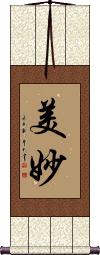
Elegant / Exquisite

Mandarin: měi miào
Japanese: bimyou
Korean: 미묘

美
妙

Beyond elegant and exquisite elegance, this is also the word used to say "beautiful" or "marvelous" when referring to a work of art.

Can also be translated as exquisiteness, gracefulness.

Note: Not a commonly-used word in Japanese.

Score: 100/100

Select

Enlightenment

Mandarin: qǐ méng
Japanese: keimou
Korean: 계몽

啟
蒙

The first character means to open, to start, to begin, to commence or to explain. The second character means deception or ignorance. Basically it suggests that enlightenment is the opening or cutting through what deceives you in the world or the ignorance of the world. This title can also mean "to educate".

啓The Japanese and Korean version of the first character of this title varies slightly from the Chinese. Please click on the Kanji to the right, instead of the button above, if you want the Japanese/Korean version.

Score: 6/100

Back to the top of this page

Select

Everyday Life

Mandarin: rì cháng shēng huó
Japanese: nichi jou sei katsu
Korean: 일상생활

日
常
生
活

This simply means everyday life or regular life. You can also translate it as "Living day to day".

Score: 6/100

Select

Extreme / Intense

Mandarin: jí dù
Japanese: kyokudo
Korean: 극도

極
度

This word means extreme, intense, and sometimes "maximum" or "zenith" depending on context.

The first character means extremely or utmost.

The second character means degree or capacity.

Score: 6/100

Select

Flower Open / Blooming Flower

Mandarin: huā kāi

花
開

These two characters literally mean flower open. This word is also associated with Springtime, the beginning of something, or youth.

This word is often followed by "flower falls" (closes and loses its petals) which means "Things come and go" or "Youth comes and goes".

If you like flowers and the Springtime, this is a great selection for you. However, if you want the companion "flower falls" (flower withers), we offer that as a companion wall scroll or all together as a four-character phrase.

See Also...  Flowers Fall

Score: 6/100

Back to the top of this page

Select

Soccer / Football / Futbol (Chinese)

Mandarin: zú qiú

足
球

This the word for football or soccer in Chinese. As with most of the world, football is very popular in China. During the World Cup, the whole country seems to shut down to watch (regardless of whether Team China is playing or not).

Soccer is probably the 3rd most popular participation sport in China (after ping pong and badminton).

As you might expect, the first character means "foot" and the second character means "ball".

FYI: This game would never be confused with American Football in Chinese. As with the rest of the world, there is a vague awareness of what American Football is (often described as "that game kind of like rugby").

For those familiar with American Football, there is some disgust regarding the fact that winners of the Superbowl call themselves "world champions" of a game that is only played in the USA. This is one of the reasons that jokes abound about how Americans are unaware that there is a world outside of their borders.

-Gary (born in USA)

Score: 6/100

Select

Fraternity

University Brotherhood / House

Mandarin: xiōng dì huì

兄
弟
會

This is the word in Chinese for a college fraternity or some other kind of fraternal order. Literally, these characters mean "Elder brother younger brother association". The last character can also be translated as group, union, gathering, assembly, meeting, or conference.

Score: 6/100

Select

From this Moment Forward

Mandarin: cóng cǐ yǐ hòu

從
此
以
后

In simple terms, this means "from now on", but you can also interpret it as "Now is the beginning of the future" or "From this day forward.

The first two characters roughly mean "henceforth". The last two characters mean later, afterwards, following, or "in the future".

Score: 6/100

Back to the top of this page

Select

From this moment on / From this day forward.

Mandarin: cóng cǐ yǐ hòu
Korean: 종차이후

從
此
以
后

In simple terms, this means "from now on", but you can also interpret it as "Now is the beginning of the future" or "From this day forward.

The first two characters roughly mean "henceforth". The last two characters mean later, afterwards, following, or "in the future".

Score: 6/100

Select

Good Luck / Good Fortune

Mandarin:
Japanese: fuku
Korean:

福

This Character is pronounced "fu" in Chinese.

The character "fu" is posted by virtually all Chinese people on the doors of their homes during the Spring Festival (closely associated with the Chinese New Years).

One tradition from the Zhou Dynasty (beginning in 256 B.C.) holds that putting a fu symbol on your front door will keep the goddess of poverty away.

This character literally means good fortune, prosperity, blessed, happiness, and fulfillment.

See Also...  Lucky

Score: 6/100

Select

Giri

(obligation or duty in Japanese)

Mandarin: yì lǐ
Japanese: giri
Korean: 의리

義
理

This term means obligation or a sense of duty that one may have to their employer, country or culture.

This is a specifically Japanese term, as in Chinese, these two characters form a word that means "religious doctrine" or refers to the argument presented in an essay.

This term has similar meaning in Korean where is can be translated as justice, sense of duty, loyalty, integrity or obligation.

More information about Giri

Score: 6/100

Back to the top of this page

Select

Gung Ho

Working Together

Mandarin: gōng hé
Japanese: guai

工
合

This is one of those Asian words that is used more in English than it is in the original Chinese.

Gung Ho was originally used to speak of Carlson's Raiders, a group of "Gung Ho U.S. Marines who went on an island-hopping campaign of death during WWII.

A movie called Gung Ho came out in the mid-1940s and was later re-released in the 1950s depicting the 2nd Marine Raider Battalion, and brought this word to the mainstream.

It is still sometimes used today within the U.S. Marine Corps brotherhood to refer to a unit or group that works well together, or is otherwise efficient and motivated (has good moral).

In 1986, there was a movie called Gung Ho, about a Japanese company taking over an American automotive factory. They completely ignored the fact that this was a Chinese title.

It should be noted that this title actually means condition, state, manner, or health of something in Japanese.

Language and pronunciation notes:
Like many Asian words absorbed into common use in English, this one is drastically mispronounced. The official Romanization is "gong he", but that doesn't tell you enough. The vowel sound on the first character is like the English word "own", now just add the g-sounds to the beginning and end. The second character is misleading, as you might think it is like the English word "he". In reality, the vowel sound is more like the "u" in "up".

It should also be noted, that the current generation in China no longer uses, or recognizes this as a common word or slogan.

Score: 6/100

Select

Woman of Strong Character / Woman Hero

Mandarin: nǚ jiá
Japanese: joketsu

女
傑

This can mean brave woman, heroine, lady of character, distinguished woman, outstanding woman, and sometimes prominent woman.

In modern usage, some people might use this to give a title to women like Oprah Winfrey, Hillary Clinton, or Sarah Palin. I would rather use it for a woman like Araceli Segarra (the first woman from Spain to climb Mt. Everest).

Score: 6/100

Select

Having High Principles

Do not bow down for the sake of five pecks of rice

Mandarin: bù wèi wǔ dǒu mǐ zhé yāo

米
折
腰
不
為
五
鬥


Characters shown
above are read
vertically, starting
from the right

This Chinese idiom/proverb speaks of being above bribes, and not losing face or honor for a short-term gain. Some may also translate the perceived meaning as, "high-hearted", or "integrity beyond reproach".

The more literal meaning is "Do not bow down for the sake of five pecks of rice".

Score: 6/100

Back to the top of this page

Select

Speed

Mandarin: gāo sù
Japanese: kousoku
Korean: 고속

高
速

This means "high speed" or "in high gear" in Chinese and Japanese Kanji. In old Korean Hanja, it also means "high speed", but can also be a nickname for "rapid transit".

This is the best selection if you want to say "speed" in regards to your race car, race boat, or lifestyle. You need this word, which literally means "high speed", as the Asian word for "speed" alone does not suggest whether you mean fast or slow.

Score: 6/100

Select

Holy Bible

Mandarin: shèng jīng
Korean: 성경

聖
經

This is how to write Bible in Chinese.

The first character means Holy, sacred, saint, or sage.
The second character means sacred book or scripture.

Each Sunday morning, if you are near a Catholic or Protestant Church, you will see plenty of Chinese people carrying their Bibles. Virtually every large or medium city in China has at least one Christian church. Beijing has about 14 Christian churches of Catholic and various Protestant denominations. That number more than doubles if you count all the church services that are for foreigners only, and doubles again if you count all of the underground Christian Churches. Many Embassies (Canadian, Italian, French, etc.) offer Protestant and Catholic services, however, the U.S. Embassy is the most unfriendly Embassy in all of China, and offers no such religious services and regularly denies entry and kicks out Americans and others, whether or not they have official business.

See Also...  Christian | Disciple

Score: 6/100

Select

Hong Kong

Mandarin: xiāng gǎng

香
港

This is the Chinese name for the Special Administrative Region (SAR) of The Peoples Republic of China known as Hong Kong (formerly a British administrated territory).

See Also...  Great Britain | China | Macao | Taiwan | Singapore | Japan | Vietnam | Korea | Asia

Score: 6/100

Back to the top of this page

Select

Human Race / Humanity / Mankind

Mandarin: rén lèi
Japanese: jinrui
Korean: 인류

人
類

This is the way to say mankind or humankind in Chinese. It's kind of the "animal title" for human. This is the word you would use if you said this phrase in Chinese, "Mammals include dolphins, monkeys, dogs, and humans among others".

This is a weird selection for a calligraphy wall scroll. But a customer begged me to add this word.

Score: 6/100

Select

Even The 100-Foot Bamboo Can Grow One More Foot

Mandarin: bǎi chǐ gān tóu gèng jìng yī bù

更
進
一
步
百
尺
竿
頭


Characters shown
above are read
vertically, starting
from the right

This literally translates as: [Even a] one-hundred foot [tall] bamboo [can] progress even one [more] step.

Figuratively, this means: After having achieved a fair degree of success, one should try to do still better.

Score: 6/100

Select

Iaido

Japanese: iaidou

居
合
道

This is the Japanese Kanji title for the martial art of Iaidō, which emphasizes the smooth and elegant draw of the sword from its scabbard.

Note, these characters can be pronounced, and have meaning in Chinese and old Korean, but not this meaning. This should therefore be considered a "Japanese only" title.

Score: 6/100

Back to the top of this page

Select

I Love You

Mandarin: wǒ ài nǐ

我
愛
你

This is exactly what the title suggests. The words directly translate from English to Chinese characters. This is a common phrase used between lovers in China.

Note: While the Japanese language uses the same characters, this phrase would not be spoken - it's kind of taboo in Japan. A man might tell a woman that he likes her with the phrase "Watashi wa anata ga suki-desu" (I regarding you have liking). If your audience is Japanese, avoid this "I love you" phrase. If you need something special, we have a Japanese translator on call.

Score: 6/100

Select

Impartial and Fair to the Brotherhood
and Sisterhood of the World

AKA: Universal Benevolence

Mandarin:
yí shì tóng rén

Japanese:
isshidoujin

Korean: 일시동인

一
視
同
仁

This is how to write "universal benevolence". This is also how to express the idea that you see all people the same.

If you are kind and charitable to all people, this is the best way to state that virtue. It is the essence of being impartial to all mankind, regardless of social standing, background, race, sex, etc. You do not judge others, but rather you see them eye to eye on the same level with you.

See Also...  Benevolence | Compassion | Equality | Justice | Right Decision | Selflessness | Work Unselfishly For The Common

Score: 6/100

Select

Indomitable / Unyielding

Mandarin: bù qū bù náo
Japanese: fukutsu futou

不
屈
不
撓

This is a long word by Chinese standards. At least it is often translated as a single word into English. This simply means "Indomitable" or "Unyielding".

If you want to break it down, you can see that the first and third characters are the same. Both meaning "not" (they work as a suffix to make a negative or opposite meaning to whatever character follows). The second character means "bendable". The last means "scratched" or "bothered".
So this really means "Won't be bent, can't be bothered". I have also seen it written as "Will not crouch, will not submit". This comes from the fact that the second character can mean, "to crouch" and the last can mean "to submit" (as in "to give in" such as "submitting to the rule of someone else"). This may explain better why these four characters mean "indomitable".

Notes:
Some will translate this as "indomitable spirit"; however, technically, there is no character to suggest the idea of "spirit" in this word.
The first two characters can be a stand-alone word in Chinese.
In Japanese, this is considered to be two words (with very similar meanings).
The same characters are used in Korean, but the 2nd and 4th characters are swapped to create a word pronounced "불요불굴" in Korean.
Just let me know if you want the Korean version, which will also make sense in Japanese, and though not as natural, will also make sense in Chinese as well.

See Also...  Tenacity | Fortitude | Strength | Undaunted

Score: 6/100

Back to the top of this page

Select

Integrity - Sincere Honest and Faithful

Japanese: sei jitsu

誠
実

This is the Japanese version of integrity which can also be defined as a combination of "sincere, honest and faithful".

Some may also define this as "loyal" or "loyalty". In some context, it can mean "genuine". Yes, all of this meaning in just one Japanese word!

Score: 100/100

Select

Intensity

Mandarin: qiáng liè
Japanese: kyouretsu
Korean: 강렬

強
烈

This word means intensity in regards to strength.

Note: In some context, this can mean violently strong or severe.

Score: 6/100

Select

Iron Palm

Mandarin: tiě zhǎng
Japanese: tetsu-tenohira
Korean: 철장

鐵
掌

These two characters mean "iron palm", the martial arts technique taught by Brian Gray and others.

This term can mean different things to different people. The consensus is that rather than a type or style of martial arts, this is a technique for refining hand position and strengthening of hands in order to strike blows for with maximum force and effect.

The regime may include herbal treatments and special exercises to fortify the hands.

In more extreme versions, the carpals and metacarpal bones in the hand are systematically broken, so that when they heal, they will become stronger.

Japanese note: This does make sense in Japanese (though the version shown above is the ancient form of the first Kanji) this is far from a commonly-known term.

Score: 6/100

Back to the top of this page

Select

Islam

(phonetic version)

Mandarin: yī sī lán jiào

伊
斯
蘭
教

This both means and sounds like "Islam" in Mandarin Chinese.

The first three characters sound like the word "Islam", and the last character means "religion" or "teaching". It's the more general term for "Islam" in China. The highest concentration of Muslims in China is Xinjiang (the vast region in northwest China that was known as East Turkistan Republic until 1949 and is sometimes called Chinese Turkistan, Uyghuristan or Uyghur Stan). Here you will find Uygurs, Kazakhs, and Kyrgyz and others that are descendants of Turkmen (possibly mixed with Persians and Arabs). Many of their ancestors were traders who traveled the silk road to buy and sell spices, silk, and exchange other goods from the Orient and Middle East.

I spent some time in Xinjiang and got to know this community. They are strong people who can endure much. They are friendly and love to have a good time. I was a stranger, but I was treated by villagers (near China's border with Afghanistan) as if I was a good friend.
But I have heard that it's best not to cross them, as in this land, the law is the blade, and everything is "eye for an eye". The Chinese government has little control in Xinjiang with almost no police officers except in the capital of Urumqi (so it's a 60-hour roundtrip train ride to seek the aid of law enforcement in most cases).

While few seem to be devout, there are at least small mosques in every village. And you will never see a man or woman outside without a head covering.

It should be noted that these people are all citizens of China but they are officially of the Caucasian race. A visit to Xinjiang will change your idea what it means to be Chinese.

Score: 6/100

Select

John 3:16


Mandarin: shén ài shì rén shèn zhì jiāng tā de dú shēng zǐ cì gè tā mén jiào yí qiè xìn tā de bú zhì miè wáng fǎn dé yǒng shēng

他
的
不
至
滅
亡
反
得
永
生
生
子
賜
給
他
們
叫
一
切
信
神
愛
世
人
甚
至
將
他
的
獨


Characters shown
above are read
vertically, starting
from the right

This is the full translation of John 3:16 into Chinese.

This translation comes from the Chinese Union Bible which comes from a revised version of the King James. This Chinese Bible was originally translated and printed in 1919 (several revisions since then).

Because of the origin being the KJV, I'll say that in English, this would be, "For God so loved the world, that he gave his only begotten Son, that whosoever believeth in him should not perish, but have everlasting life".

As with any translation, there are interesting cultural and linguistic issues. For instance, the word used for "world" in Chinese can also mean "common people". So you could say that it means "For God so loved the common people..."
This does not take away from the text, as it will be understood with the same meaning and connotation.

There is no direct Greek to Chinese translation in print (that I know of), so this is the best available. Of course, you can ask any Greek person of faith, and they will claim that a bit is lost from the original Greek of the New Testament to any of the English versions of the Bible in print.

Score: 6/100

Select

John 3:16 (first half)

Mandarin: shén ài shì rén shèn zhì jiāng tā de dú shēng zǐ cì gè tā mén

生
子
賜
給
他
們
至
將
他
的
獨
神
愛
世
人
甚


Characters shown
above are read
vertically, starting
from the right

This is the first half of John 3:16

This reads roughly as, "For God so loved the world, that he gave his only begotten Son".

Translation taken directly from the Chinese Union Bible first printed in 1919.

Score: 6/100

Back to the top of this page

Select

Judge

Mandarin: fǎ guān
Japanese: hou kan
Korean: 법관

法
官

This is the written title used to refer to Judges in the legal court system in China, Japan, and ancient Korea (same word used, but now written differently in modern Korea).

Score: 6/100

Select

King

Mandarin: wáng
Cantonese: wong
Japanese: ou
Korean:

王

This is wang which means king. It is not pronounced the way you think in Chinese. It is more like English-speakers would want to pronounce wong. It has roughly the same vowel sound as tong, song, or long in English.

Note that this means king only, not emperor. An emperor is higher than a king, and theoretically is chosen by God, according to ancient Chinese culture. However, the definition is often blurred at various points in Asian history.

This word can also be defined as ruler, sovereign, monarch or magnate. It is also can refer to a game piece in the chess-like Japanese strategic game of shoji.

Note: This can also be a family name in Chinese, Korean and Vietnamese (in Vietnamese it's Vương).

See Also...  Queen

Score: 6/100

Select

Kirin / Giraffe / Mythical Creature

Mandarin: qí lǐn
Cantonese: keilun
Japanese: kirin
Korean: 기린

麒
麟

This word is the title of a mythical beast of Asia.

The animal is thought to be related to the giraffe, and in some ways, it is a giraffe. However, it is often depicted with the horns of a dragon or deer and sometimes with the body like a horse, but many variations exist.

In Japanese it is pronounced “Kirin” as in “Kirin Ichiban” beer.

Kirin - Mythical Beast and Great Japanese Beer!
Notes:

1. This is sometimes spelled as “kylin”.

2. In Japanese, this is the only Kanji word for giraffe. Therefore in Japan, this word needs context to know whether you are talking about the mythical creature or the long-necked giraffe of Africa.

3. Apparently, this was the first word used for regular giraffes in China (some were brought from Africa to China during the Ming Dynasty - probably around the year 1400). Though the mythical creature may have existed before, the name “qilin” was given to the “new giraffe”. This is because, more than 600 years ago, giraffes somewhat matched the mythical creature's description when Chinese people saw them for the first time. Later, to avoid such an ambiguous title, a three-character word was devised to mean a “giraffe of Africa”. The characters for “qilin” shown here are only for the mythological version in modern Chinese.

4. More information about the qilin / kirin from Wikipedia.

5. This creature is sometimes translated as the “Chinese Unicorn”, even though it is generally portrayed with two horns. I think this is done more for the fantasy aspect of the unicorn and because most westerners don't know what a qilin or kirin is (this avoids a long explanation by the translator).

6. In Korean, this can mean kirin or simply giraffe (usually the mythological creature is what they would think of when seeing these characters alone on a wall scroll).

Score: 6/100

Back to the top of this page

Select

Korean CKD Virtues

Mandarin: qiān xùn zhèng zhí wēn róu rěn nài kè jǐ bù qū
Korean: 겸손정직온유인내극기불굴

忍
耐
克
己
不
屈
謙
遜
正
直
溫
柔


Characters shown
above are read
vertically, starting
from the right

These are the virtues used by Choi Kwang Do Martial Arts.

This is a word list, containing these tenets:
1. Humility (Humble / Modesty)
2. Honesty (Integrity)
3. Gentleness
4. Perseverance (To Endure)
5. Self-Control (Self-Restraint)
6. Unbreakable Spirit (Unyielding / Unbending)

The characters shown here are the ancient Korean Hanja form of writing. If you wish for a Korean Hangul form of these tenets, we can arrange that with our Master Calligrapher Xing An-Ping.

Korean Pronunciation:
1. gyeom son
2. jeong jig
3. on yu
4. in nae
5. geug gi
6. bur gur

Score: 6/100

Select

Legendary Turtle

Mandarin: áo
Korean:

鼇

This means "legendary turtle" in Chinese. This is a great mythological turtle that travels the seas. The creature is comparable to the dragon of China, however, it so happens that dragons became a bit more famous as history progressed. In modern Chinese, this character can just refer to a large sea turtle.

Note: This character can be pronounced in Korean, but this is a very rare Korean Hanja form - it hasn't been used in Korea for at least a few hundred years (even before they switched to Hangul characters).

Score: 100/100

Select

Macao / Macau

Mandarin: ào mén

澳
門

This is the Chinese name for the island of Macao.

Note: Macao / Macau is a special administrative region of the People's Republic of China, but formerly a territory of Portugal. Potugese remains an official language.

See Also...  China | Hong Kong | Taiwan | Asia | Portugal

Score: 6/100

Back to the top of this page

Select

Marine Corps

Japanese & Korean

Japanese: kaiheitai
Korean: 해병대

海
兵
隊

This is the Japanese and Korean way to express "Marine Corps" or simply "Marines". It is not specific, so this can be the Marine Corps of any country, such as the British Royal Marines to the U.S. Marines.

Breaking down each character, this means:
"ocean/sea soldiers/army corps/regiment/group".

Score: 6/100

Select

Martial Morality
Martial Arts Ethics / Virtue

Mandarin: wǔ dé
Japanese: butoku
Korean: 무덕

武
德

This refers to the virtue, morality, and ethics that any practitioner of martial arts should posses. This can be used in both Chinese and Japanese in lieu of English terms such as "soldierly virtue", "good conduct" (military), "warrior ethics", and being honorable in regards to any fight or competition.

See Also...  Morality Of Mind | Morality Of Deed

Score: 6/100

Select

Martial Arts Skills

Mandarin: wǔ jì
Japanese: bugi
Korean: 무기

武
技

This can be translated as "martial arts skills", "warrior skills", or "military skills" depending on usage. In both Japanese and Chinese, rather than meaning martial arts, this speaks more to the skills that you posses in regards to martial arts. This phrase also has a light suggestion of "having an itch to show off these skills".

Score: 6/100

Back to the top of this page

Select

Meg

Mandarin: méi gē

梅
格

This is the transliteration to Mandarin Chinese for the name Meg

Score: 100/100

Select

Megan

Mandarin: méi gēn

梅
根

This is the transliteration to Mandarin Chinese for the name Megan.

Score: 100/100

Select

Meghan

Mandarin: méi gēn

梅
根

This is the transliteration to Mandarin Chinese for the name Meghan.

Score: 100/100

Back to the top of this page

Select

Morality of Mind

Mandarin: xīn dé

心
德

The idea of "morality of mind" goes along with "wu de" (martial morality or virtues of the warrior).

Here, the first character is a representation of your heart or mind.
The second character refers to morality or virtue.

This can also be translated as "morality of heart", "virtue of heart", or "virtue of the mind".

Note that since ancient times in Asia, the idea of your mind (the place where your soul resides, and your thought originate from) has been associated with the heart. Just as in western culture where we say "it comes from the heart", or "heartfelt emotions", there is a belief that your heart and mind are one and the same (medical science now begs to differ).

See Also...  Morality Of Deed | Martial Morality

Score: 6/100

Select

Ninjutsu / Ninjitsu

Mandarin: rěn shù
Japanese: ninjutsu

忍
術

This is the "art of the ninja" in Japanese. Most Japanese people associate ninjas with some degree of romance and reverence to Japan's ancient past. But most will accept that the ninja is an idea or way of life whose time has passed. However, this has not stopped floods of movies about ninjas and dojos offering Ninjutsu training from keeping the idea of the ninja alive in modern times.

My modern Japanese dictionary defines this term as "assassination, stealth and combat techniques", or "fighting art of the ninja".

These character are sometimes Romanized as two words: Shin obi, or Shin-obi.

忍Note that when writing this as Kanji, Japanese will tend to write the first character in the form shown to the right. Because this is specifically a Japanese title, we only suggest our Japanese master calligrapher for this selection - and you will get the form shown to the right if you do that (please ignore the fact that some of the images you see during the following pages in the options process will be the Chinese/alternate form).

Score: 6/100

Select

Oceania

Mandarin: dà yáng zhōu

大
洋
洲

This is the Chinese name for Oceania (sometimes called Oceanica). The geographical, often geopolitical, region consisting of numerous lands - mostly islands and usually including Australia. Basically, Oceania includes the Pacific Ocean and surrounding area.

Score: 6/100

Back to the top of this page

Select

Olegario

masculine name

Mandarin: ào lái jiā lǐ ào

奧
萊
加
裡
奧

This is the transliteration to Mandarin Chinese for the Latin / Spanish name Olegario

Score: 100/100

Select

Opening / Blooming Flowers

Mandarin: kāi huā
Japanese: kai ka
Korean: 개화

開
花

These two characters literally mean opening flowers (a verb). This word is also associated with Springtime, the beginning of something, or youth.

If you like flowers and the Springtime, this is a great selection for you.

In Korean Hanja, this can be a metaphor for achieving enlightenment or becoming civilized (blooming civilization).

See Also...  Flowers Fall

Score: 6/100

Select

Orchid

Mandarin: lán
Japanese: ran
Korean: 난 or 란

蘭

This is the character for orchid in Chinese, Japanese Kanji, and old Korean Hanja.

Also: Epidendrum.

This character is used in some context to mean fragrant, elegant, or refined.

This character can also be the Chinese family name romanized as, "Lan". However, it is not the only character that can be romanized as Lan.

In Japanese and Korean, this character means orchid, but is also used as a suffix or short name for the Netherlands / Holland.

Score: 6/100

Back to the top of this page

Select

Patience / Perseverance / To Endure / Tolerant

Mandarin: rěn nài
Japanese: nintai
Korean: 인내

忍
耐

Patience is quiet hope and trust that things will turn out right. You wait without complaining. You are tolerant and accepting of difficulties and mistakes. You picture the end in the beginning and persevere to meet your goals.

These characters can also mean "to endure", "restrain oneself" and in some context it can mean "perseverance" or "endurance".

This is also used as a tenet of Taekwondo and other Korean martial arts.

忍Note that when writing this as Kanji, Japanese will tend to write the first character in the form shown to the right. If you select our Japanese master calligrapher, please expect this Kanji form (yes, it's just one stroke that is slightly different in location, crossing another stroke in the Japanese Kanji form).

See Also...  Peace | Inner Peace | Harmony | Perseverance

Score: 6/100

Select

Peggy

Mandarin: pèi jí

佩
吉

This is the transliteration to Mandarin Chinese for the name Peggy

Score: 100/100

Select

Mountain Travels Poem by Dumu


Mandarin: yuǎn shàng hán shān shí jìng xiá bái yún shēng chù yǒu rén jiā tíng chē zuò ài fēng lín wǎn shuàng yè hóng yú èr yuè huā

遠
上
寒
山
石
徑
斜
白
雲
生
處
有
人
家
停
車
坐
愛
楓
林
晚
霜
葉
紅
於
二
月
花

This poem was written almost 1200 years ago during the Tang dynasty. It depicts traveling up a place known as Cold Mountain, where some hearty people have built their homes. The traveler is overwhelmed by the beauty of the turning leaves of the maple forest that surrounds him just as night overtakes the day, and darkness prevails. His heart implores him to stop, and take in all of the beauty around him.

First before you get to the full translation, I must tell you that Chinese poetry is a lot different than what we have in the west. Chinese words simply don't rhyme in the same way that English, or other western languages do. Chinese poetry depends on rhythm and a certain beat of repeated numbers of characters.

I have done my best to translate this poem keeping a certain feel of the original poet. But some of the original beauty of the poem in it's original Chinese will be lost in translation.

Far away on Cold Mountain, a stone path leads upwards.
Among white clouds peoples homes reside.
Stopping my carriage I must, as to admire the maple forest at nights fall.
In awe of autumn leaves showing more red than even flowers of early spring.

Hopefully, this poem will remind you to stop, and "take it all in" as you travel through life.
The poet's name is "Du Mu" in Chinese that is: 杜牧.
The title of the poem, "Mountain Travels" is: 山行
You can have the title, poet's name, and even Tang Dynasty written as an inscription on your custom wall scroll if you like.

More about the poet:

Dumu lived from 803-852 AD and was a leading Chinese poet during the later part of the Tang dynasty.
He was born in Chang'an, a city of central China and former capital of the ancient Chinese empire in 221-206 BC. In present day China, his birthplace is currently known as Xi'an, the home of the Terracotta Soldiers.

He was awarded his Jinshi degree (an exam administered by the emperor's court which leads to becoming an official of the court) at the age of 25, and went on to hold many official positions over the years. However, he never achieved a high rank, apparently because of some disputes between various factions, and his family's criticism of the government. His last post in the court was his appointment to the office of Secretariat Drafter.

During his life, he wrote scores of narrative poems, as well as a commentary on the Art of War and many letters of advice to high officials.

His poems were often very realistic, and often depicted every day life. He wrote poems about everything, from drinking beer in a tavern to weepy poems about lost love.

The thing that strikes you most is the fact even after 1200 years, not much has changed about the beauty of nature, toils and troubles of love and beer drinking.

Score: 6/100

Back to the top of this page

Select

Personal Integrity

Mandarin: zhì cāo
Korean: 지조

誌
操

This is personal integrity - basically, holding yourself to a higher standard of honesty and reliability. These two characters also contain the ideas of constancy, principles, and faithfulness.

Score: 100/100

Select

Phoenix (male)

Mandarin: fèng
Japanese: ootori
Korean:

鳳

This is the simplest way to write "Phoenix" in Chinese. Because dragon is usually expressed as a single character, when you see "dragon and phoenix" written in Chinese, you'll often see this single-character version.

Please note, this is also the male element of phoenix, so it also means "male phoenix bird". However some Chinese people may argue that the phoenix has a female characteristic, regardless of which character you use.

Score: 6/100

Select

Power of Understanding and Wisdom

Mandarin: wù xìng
Japanese: gosei
Korean: 오성

悟
性

This means the power of understanding and insight in Chinese. It is often associated with Neo-Confucianism. In that regard, it means to realize man's true nature or to find your soul, the soul of others, or the soul of the world. Some will translate this simply as the state of being "savvy".

In Japanese, this is often translated as wisdom and understanding.

Score: 6/100

Back to the top of this page

Select

Pride

Mandarin: zì zūn
Cantonese: chi juen
Japanese: jison
Korean: 자존

自
尊

This word can mean "pride", "self-respect" or "self-esteem". The first character means "oneself" and the second can mean revered, valuable, precious, noble, exalted, honorable or simply "pride".

I have also seen this two-character word translated as "amour propre", self-regard, and self-pride.

This word is universal between Chinese, Japanese Kanji, and Korean Hanja written languages. It may also be understood in old Vietnamese (they once used Chinese characters as well).

Score: 6/100

Select

Principles of Life

Mandarin: shēng huó xìn tiáo
Korean: 생활신조

生
活
信
條

This means "principles of life" or "The personal obligations and rules that you live by". For instance, if you were a vegetarian, the act of not eating meat fits into this category.
This could also be translated as "Way of living".

Score: 11/100

Select

Profound / Powerful Words

Mandarin: rù mù sān fēn

入
木
三
分

These four characters together translate in English to a strong form of "profound" or "written with a forceful hand".

But there is much more to the story...

The deep meaning behind this phrase comes from a man named Wan Xizhi who lived in the third century.

He was a great writer and calligrapher whose writing style influenced generations of other writers and calligraphers.

He once wrote words on a piece of wood to be taken to an engraver.
When the engraver began to carve the characters into the wood, he found that Wang Xizhi's writing had penetrated the wood about 3/8 of an inch.

Thus people believed that his words were so powerful, and so profound this it caused the ink from his brush to penetrate the wood deeply.

The phrase literally means "penetrated wood three fen" (fen is an ancient Chinese measurement a little over to 1/8 of an inch or almost 4mm).

Score: 6/100

Back to the top of this page

Select

Prosperity

Mandarin: fán róng
Japanese: han ei
Korean: 번영

繁
榮

This means "prosperous", "flourishing", or "thriving" when used in regards to a person.

However, when used in reference to a whole country, it can mean "booming economy".

This is the traditional Chinese, ancient Japanese Kanji, and ancient Korean Hanja version of prosperity.

栄 Note: If you order this from the Japanese master calligrapher, the second character may look more like the Kanji shown to the right. If you want a different form, please note that in the special instructions for your order.

Score: 6/100

Select

Protection

Mandarin: bì hù
Japanese: hi go
Korean: 비호

庇
護

This is not the most common word for a wall scroll, but this is the word for protection in Chinese, Japanese Kanji, and old Korean Hanja.

This is the non-religious, non-superstitious form of protection.

This word can be translated as shelter, shield, defend, safeguard, take under one's wing, to put under protection. In certain context, it means to grant asylum or give refuge and sanctuary.

See Also...  Guardian Angel

Score: 6/100

Select

Protector

Mandarin: bǎo hù zhě
Japanese: hogosha
Korean: 보호자

保
護
者

This is the universal word for protector in Chinese, Japanese Kanji, and old Korean Hanja.

The first character means to defend, to protect, to insure or guarantee, to maintain, hold or keep, or to guard.

The second character means to protect.

Together the first and second characters create a word that means to defend, to protect, or to safeguard.

The last character means person.

Add all three characters together, and you have a word that means "protector", one who will protect, guard, and keep you safe.

Some will also translate this word as guardian or patron.

See Also...  Guardian Angel

Score: 6/100

Back to the top of this page

Select

Push or Knock

To weigh one's words

Mandarin: fǎn fù tuī qiāo
Korean: 반복추고

反
復
推
敲

During the Tang Dynasty, a man named Jia Dao (born in the year 779), a well studied scholar and poet, went to the capital to take the imperial examination.

One day as he rides a donkey through the city streets, a poem begins to form in his mind. A portion of the poem comes into his head like this:

"The bird sits on the tree branch near a pond,
A monk approaches and knocks at the gate..."


At the same time, he wondered if the word "push" would be better than "knock" in his poem.

As he rides down the street, he imagines the monk pushing or knocking. Soon he finds himself making motions of pushing, and shaking a fist in a knocking motion as he debates which word to use. He is quite a sight as he makes his way down the street on his donkey with hands and fists flying about as the internal debate continues.

As he amuses people along the street, he becomes completely lost in his thoughts and does not see the mayor's procession coming in the opposite direction. Jia Bao is blocking the way for the procession to continue down the road, and the mayor's guards immediately decide to remove Jia Bao by force. Jia Bao, not realizing that he was in the way, apologizes, explains his poetic dilemma, and awaits his punishment for blocking the mayor's way.

The mayor, Han Yu, a scholar and author of prose himself, finds himself intrigued by Jia Dao's poem and problem. Han Yu gets off his horse, and addresses Jia Bao, stating, "I think knock is better". The relieved Jia Bao raises his head, and is invited by the mayor to join the procession, and are seen riding off together down the street exchanging their ideas and love of poetry.

In modern Chinese, this idiom is used when someone is trying to decide which word to use in their writing or when struggling to decide between two things when neither seems to have a downside.

Score: 6/100

Select

Qi Gong / Chi Kung

Mandarin: qì gōng
Japanese: kikou
Korean: 기공

氣
功

Qigong is the title of a technique that is somewhere between a medical practice, meditation, and in some cases a religion. The definition is blurred depending on which school of Qigong you are following. In some cases, it is even incorporated with martial arts.

Some people (even Chinese people) mix this title with Tai Chi (Tai Qi) exercises.

Lately in China, people will claim to practice Tai Chi rather than Qigong because the Qigong title was recently used as a cover for an illegal pseudo-religious movement in China with the initials F.G. or F.D. (I can not write those names here for fear of our website being banned in China).

You can learn those names and more here: Further info about Qigong

If you are wondering about why I wrote "Qi Gong" and "Chi Kung" as the title of this calligraphy entry, I should teach you a little about the various ways in which Chinese can be Romanized. One form writes this as "Chi Kung" or "Chikung" (Taiwan). In the mainland and elsewhere, it is Romanized as "Qi Gong" or "Qigong". The actual pronunciation is the same in Taiwan, mainland, and Singapore Mandarin. Neither Romanization is exactly like English. If you want to know how to say this with English rules, it would be something like "Chee Gong" (but the "gong" has a vowel sound like the "O" in "go").

Romanization is a really confusing topic and has caused many Chinese words to be mispronounced in the west. One example is "Kung Pao Chicken" which should actually be more like "Gong Bao" with the "O" sounding like "oh" for both characters. Neither system of Romanization in Taiwan or the Mainland is perfect in my opinion and lead to many misunderstandings.


Score: 6/100

Select

Reggie (Japanese Katakana)

Japanese: rejii

レ
ジ
ー

This is the name Reggie written in Katakana (phonetic Japanese).

As of February 2009, we are experimenting with adding English names in Japanese Katakana. This is a specifically-Japanese character set.
This selection MUST be written by our Japanese master calligrapher
(sorry, no standard calligraphy service/pricing for this selection).
If you order this, it will be reviewed by the Japanese calligrapher. We have not double-checked or had a Japanese translator review of these new Katakana names.
Please do not use this for a tattoo without a further consultation!

Score: 100/100

Back to the top of this page

Select

Regina

Mandarin: lěi jí nà

蕾
吉
娜

This is the transliteration to Mandarin Chinese for the name Regina

Score: 100/100

Select

Robust / Sturdy

Mandarin: qiáng jiàn
Japanese: kyouken
Korean: 강건

強
健

This means robustness or sturdiness in regards to being healthy and fit. This can also be used to say "persistently good health".

Score: 6/100

Select

Ronin / Masterless Samurai

Mandarin: làng rén
Japanese: rou nin
Korean: 낭인

浪
人

The Ronin have no master - The most famous are the 47 ronin created after their Lord committed suicide. This term was not exactly a positive title for the Samurai of ancient Japan. However, in recent years, movies and video games have glorified the term Ronin.

In Chinese, this term has the original meaning of a hobo, vagabond or ruffian.
In Korean Hanja, these characters would be read as adventurer, wanderer, someone without a steady job, or someone who is wasting away time.

In modern Japan, this term is used as a nickname for a high school student who has failed a college entry exam (and is trying again).

In Chinese and Korean, the Japanese definition of "Masterless Samurai" is known because of the historical context, even in Japanese, the literal translation is closer to the Chinese and Korean definitions shown above.

This will make a fine wall scroll if you are a fan of the Ronin, or see yourself as a Ronin of sorts. However, please think twice before getting a Ronin tattoo!

Score: 6/100

Back to the top of this page

Select

Sacrifice

Mandarin: xī shēng
Japanese: gi sei
Korean: 희생

犧
牲

This means sacrifice in Chinese, Japanese Kanji, and old Korean Hanja.

There is a suggestion in this word that this regards sacrificing your life.

Score: 6/100

Select

The Saint

(single character)

Mandarin: shèng
Japanese: sei
Korean:

聖

This is the simple, single-character religious form of "saint" in Chinese (also holds same meaning in Japanese and Korean, though rarely used alone like this).

This can also mean: holy, sage, master, or priest.
Note: This character is often used in compound words (words of more than one character) to create further meanings. In compounds, it can mean holy, sacred or divine.

This character is also used as the first word for Spanish and English place names such as "San Diego" and "St. Louis" in Chinese (not Japanese).

Score: 6/100

Select

Self-Control

Mandarin: zì jǐ yì zhì
Japanese: jikoyokusei
Korean: 자기억� �

自
己
抑
制

The first two characters mean "regarding oneself", and the second two mean "to refrain" or "to restrain". So together, this has a meaning like "to restrain oneself".

See Also...  Discipline | Will-Power

Score: 6/100

Back to the top of this page

Select

Senegal

Mandarin: sāi nèi jiā ěr

塞
內
加
爾

This is the Chinese name for the country of Senegal

See Also...  Africa

Score: 100/100

Select

Shakyamuni / The Buddha

Mandarin: shì jiā móu ní
Japanese: sha ka mu ni
Korean: 석가모니

釋
迦
牟
尼

This means "Shakyamuni" in Chinese. This same Buddha is also known as "Siddhartha Gautama", "Gotama Buddha", "Tathagata", or simply, "The Supreme Buddha".

This is the legendary man and prince who eventually established the Buddhist religion.

Note: Occasionally Romanized as "Siddhattha Gotama".

This combination of characters is sometimes seen and used in South Korea and Japan as well (with the same meaning).

See Also...  Nirvana | Buddhism

Score: 6/100

Select

Soldiers

Mandarin: bīng
Japanese: hei
Korean:

兵

This character can be used to express soldiers, troops, a force, an army, weapons, arms, military, warfare, tactics, strategy, or warlike. The final meaning depends on context. It's also part of the Chinese title for the Terracotta soldiers. In fact, this character is usually used in compound words (words of more than one character). Sometimes this single character is the title used for the pawns in a chess game (in a related issue, this is also a nickname for soldiers with the rank of Private).

See Also...  Military | Warrior

Score: 6/100

Back to the top of this page

Select

State of Anarchy

(Japanese)

Mandarin: wú jíng chá
Japanese: mukeisatsu
Korean: 무경찰

無
警
察

This means the state of anarchy. More literally it means "without rules or judges". This combination of characters makes sense in Korean and Chinese, but with a meaning closer to, "without police". This is kind of a weird selection for a wall scroll, and a rather obscure idea (a couple of customers begged for this term, so we added it).

Score: 6/100

Select

Storm / Windstorm

Best for Japanese audience

Mandarin: bào fēng
Japanese: baku fuu / bou fuu
Korean: 폭풍

暴
風

This is the Japanese Kanji and old Korean Hanja word for storm (can also mean gale, tempest, typhoon, hurricane, gale, violent wind, or windstorm - especially in Korean and Chinese).

If the meaning of storm is somehow important or significant to you, these are the Kanji you want.

The first Kanji means violent or sudden. The second Kanji means wind.

This also means storm in Chinese, but more in regards to a wind storm than a general storm. It's about the same for this word in Korean.

See Also...  Rain | Wave | Wind

Score: 6/100

Select

Taekwondo

Mandarin: tái quán dào
Japanese: te kon do
Korean: 태권도

跆
拳
道

This is one of the most widespread types of martial arts in the world as well as being an Olympic sport. Taekwondo was born in Korea with influences of Chinese and Japanese styles, combined with traditional Korean combat skills. Some will define it as the "Korean art of empty-handed self-defense".

In the simplest translation, the first character means "kick", the second character can mean either "fist" or "punching" the third means "way" or "method". Altogether, you could say this is "Kick Punch Method". When heard or read in various Asian languages, all will automatically think of this famous Korean martial art. It is written the same in Japanese Kanji, Chinese, and Korean Hanja characters - so the appearance of the characters are rather universal. However, you should note that there is another way to write this in modern Korean Hangul characters which looks like the image to the right. Taekwondo Hangul Characters

We suggest the original Korean Hanja (Chinese characters) for a wall scroll, but if you really need the Hangul version, just select master calligrapher Xing An-Ping, and make a note in the special instructions box when you place your order.

Note: Taekwondo is sometimes Romanized as Tae-Kwondo, Tae Kwon Do, Taekwon-do, Taegwondo, Tae Gweon Do, Tai Kwon Do, Taikwondo, Taekwando, Tae Kwan Do and in Chinese Taiquandao, Tai Quan Dao, Taichuando, or Tai Chuan Tao.

Score: 6/100

Back to the top of this page

Select

Taiwan

Mandarin: tái wān

薹
灣

This is the Chinese name for the Republic of China which is more commonly known as Taiwan. The island of Taiwan is actually considered a renegade province of mainland China. It became the last holdout of the former government of China after Chairman Mao took power during the revolution that followed WWII.

Note: There are two totally different ways two write the first character of Taiwan. 台 They are not always considered Simplified and Traditional, but one is more simple than the other, so they fit that track. The more complex form is seen upper left of this box. The more simple form (looks like a house) can be seen to the right. If you want a certain style, please specify in the "special instructions" when you order.

See Also...  Asia

Score: 6/100

Select

Tibet

Mandarin: xī zàng

西
藏

This is the Chinese name for the Tibet autonomous region. It is a vast area in southwest China for which the Chinese government has little control (except in the capital of Llasa). During your travels in Tibet (outside of Llasa) you will find it's rough country full of ruthless bandits and honorable and upright Living Buddhas. There are about 2000 Living Buddhas in Tibet, and at least 10 times more bandits ready to ambush you on the road or trail.

On the eastern frontier of Tibet, you will find the place designated to be Shangri-la. It's a friendly village of Tibetans and is the gateway to greater Tibet.

See Also...  China | Nepal | Asia

Score: 6/100

Select

Tiger Rumor

Mandarin: sān rén chéng hǔ
Korean: 삼인성호

三
人
成
虎

These four characters together relay the meaning that can be expressed in English as, "When three people say there's a tiger running in the street, you believe it".

Of course, there is an ancient story behind this phrase...

This is actually an idiom that resulted from a conversation that occurred around 300 B.C.

The conversation was between the king of the Wei kingdom and one of the king's ministers named Pang Cong.

It was near the end of one of many wars, this time with the Zhao kingdom. Pang Cong was to be sent by the king to the Zhao kingdom with the king's son who was to be held hostage. It was common at the time for a king to make his son a hostage to secure stable peace between warring kingdoms.

Before minister Pang Cong departed, he asked his king, "If one person told you there was a tiger running in the street, would you believe it?".

"No", the king said.

The minister continued, "What if two people told you?"

The king replied, "Well, I would have my doubts, but I might believe it".

The minister continued, "So, what if three people told you that there is a tiger running in the streets?"

The king replied, "Yes, I would believe it, it must be true if three people say it".

The minister then reminded the king, "Your son and I are now traveling far away to live in the distant Zhao kingdom - much farther from your palace than the street. Rumors may fly about me in my absence, so I hope your majesty will weight such rumors appropriately".

The king replied, "I have every trust in you, do not worry"

While the minister was gone, the king's enemies gossiped about minister Pang Cong on many occasions. At first, the king thought nothing of these comments and rumors. But slowly as the rumors mounted, the king began to suspect ill of his minister.

Some time later when peace was well-established, the minister and prince were freed and returned to the kingdom of Wei. The king received his son, BUT DID NOT EVEN SUMMON MINISTER PANG CONG TO THE PALACE!

Hopefully this story will help you see how dangerous words can be when used to promote rumors, or create ill will. And perhaps will inspire you to not believe everything you hear.

There is also a secondary suggestion in this idiom that gossip is as ferocious as a tiger. Some Chinese people who don't know the ancient story above may believe that this scroll means that rumors are as vicious as three tigers.

Note: This phrase appears in my Korean dictionary, but is not well-known in Korea.

Score: 6/100

Back to the top of this page

Select

United States Marine Corps

Japanese Only

Japanese: bei kai hei tai
Korean: 미해병대

米
海
兵
隊

This is the Japanese way to write "United States Marine Corps" or simply "U.S. Marines".

Breaking down each Kanji, this means:
"rice (American) ocean/sea soldiers/army/military corps/regiment/group".

This title will only make sense in Japanese, it is not the same in Chinese! Make sure you know your audience before ordering a custom wall scroll.

If you are wondering about the rice, America is known as "rice country" or "rice kingdom" when literally translated. The Kanji for rice is often used as an abbreviation in front of words (like a sub-adjective) to make something "American". Americans say "rice-burner" for a Japanese car, and "rice-rocket" for a Japanese motorcycle. If you did the same in Japanese, it would be exactly the opposite meaning.

Note: I have not verified this, but I've found this title used for U.S. Marines in Korean articles, so it's most likely a normal Korean term as well (but only in Korean Hanja).

See Also...  Marine Corps | Navy | Army | Art Of War | Warrior

Score: 6/100

Select

Wedding

Mandarin: hūn
Korean:

婚

This character is related to the ideas of getting married, being in a marriage, or taking a wife (could also mean take a husband, as "take a wife" is a western term, and this is just a general Chinese term regarding a wedding).

See Also...  Double Happiness

Score: 6/100

Select

White

Mandarin: bái
Japanese: shiro
Korean:

白

A lot of people search our website for "white". I am not sure the purpose, unless your family name is white.

This is the universal character for white in Chinese, Japanese Kanji, and old Korean Hanja.

In certain context, outside of the white definition, it can mean snowy, empty, blank, bright, clear, plain, pure, or gratuitous. In Korean, this can be a family name romanized as Paek or Baeg.

Score: 56/100

Back to the top of this page

Select

Work Unselfishly for the Common Good

Mandarin:
kè jǐ fèng gōng

Korean: 극기봉공

克
己
奉
公

This can also mean: "Place Strict Standards on Oneself in Public Service".
This Chinese phrase is often used to express how one should act as a government official. Most of us wish our public officials would hold themselves to higher standards. I wish I could send this scroll, along with the meaning to every member of Congress, and the President (or if I was from the UK, all the members of Parliament, and the PM)

The story behind this ancient Chinese idiom:
A man named Cai Zun was born in China a little over 2000 years ago. In 24 AD, he joined an uprising led by Liu Xiu who later became the emperor of the Eastern Han Dynasty.

Later, the new emperor put Cai Zun in charge of the military court. Cai Zun exercised his power in strict accordance with military law, regardless of the offender's rank or background. He even ordered the execution of one of the emperor's close servants after the servant committed a serious crime.

Cai Zun led a simple life, but put great demands on himself to do all things in an honorable way. The emperor rewarded him for his honest character and honorable nature by promoting him to the rank of General and granting him the title of Marquis.

Whenever Cai Zun would receive an award, he would give credit to his men and share the reward with them.
Cai Zun was always praised by historians who found many examples of his selfless acts that served the public interest.
Sometime, long ago in history, people began to refer to Cai Zun as "ke ji feng gong".

See Also...  Unselfish | Selflessness | Altruism

Score: 11/100

Select

Ultimate Loyalty to Your Country

The most famous tattoo in Chinese history

Mandarin: jìn zhōng bào guó

盡
忠
報
國

This is the tattoo worn on the back of Yue Fei, a famous Chinese warrior who lived until 1142 A.D.

The tattoo can be translated as "Serve the country with the utmost loyalty". More literally, it means, "[The] Ultimate Loyalty [is too] Duty [of] Country".

Legend has it that this tattoo once saved his life when he was accused of treason.

The first two characters have come to create a word that means "serve the country faithfully" or "die for the country". Note: It's more a willingness to die for one's country than the actual act of dying.

The last two characters have come to mean, "Dedicate oneself to the service of one's country".

Both of these words are probably only in the Chinese lexicon because of this famous tattoo.

If you break it down, character-by-character, here is what you get:
1. To the utmost, to the limit of something, the ultimate.
2. Loyalty or duty (a sense of duty to one's master, lord, country, job).
3. Report, recompense, give back to (in this case, you are giving yourself to your country as payback).
4. Country, state, nation, kingdom.

More about the famous warrior and army general, Yue Fei

Score: 6/100

Select

Zen / Chan / Meditation

...as in Zen Buddhism

Mandarin: chán
Japanese: zen
Korean:

禪

First let's correct something: The Japanese romanization for this character, "zen" has penetrated the English language. In English, it's almost always incorrectly used for phrases like "That's so zen". Nobody says "That's so meditation" - right? As the title of a sect, this would be like saying, "That's soooo Baptist!"

This character by itself just means "meditation". In that context, it should not be confined to use by any one religion or sect.

Regardless of the dictionary definition, more often than not, this character is associated with Buddhism. And here is one of the main reasons:
Zen is used as the title of a branch of Mahayana Buddhism which strongly emphasizes the practice of meditation.
However, it should be noted that Buddhism came from India, and "Chan Buddhism" evolved and developed in medieval China. The Chinese character "Chan" was eventually pronounced as "Zen" in Japanese. Chan Buddhists in China have a lot in common with Zen Buddhists in Japan.

More about the history of Zen Buddhism here.

Please also note that the Japanese Kanji character for zen has evolved a little in Japan, and the two boxes (kou) that you see at the top of the right side of the character have been replaced by three dots with tails.Japanese Zen Kanji The original character would still be generally understood and recognized in Japanese (it's considered an ancient version in Japan), but if you want the specifically modern Japanese version, please click on the zen Kanji to the right. Technically, there is no difference in Tensho and Reisho versions of zen since they are ancient character styles that existed long before Japan had a written language.

Chinese Zen/Chan CharacterThere is also an alternate/shorthand/simplified Chinese version which has two dots or tails above the right-side radical. This version is also popular for calligraphy in China. If you want this version, just click the character to the right.

Further notes: Zen is just one of seven sects of Buddhism practiced in Japan. The others are 律 Ritsu (or Risshū), 法相 Hossō, 論 Sanron 華嚴Kegon, 天台 Tendai, and 眞言 Shingon.

Score: 6/100

Back to the top of this page

Select

Warriors Adapt and Overcome

Soldiers need a fluid plan

Mandarin: bīng wú cháng shì shuǐ wú cháng xíng

水
無
常
形
兵
無
常
勢


Characters shown
above are read
vertically, starting
from the right

This literally translates as: Troops/soldiers/warriors have no fixed [battlefield] strategy [just as] water has no constant shape [but adapts itself to whatever container it is in].

Figuratively, this means: One should seek to find whatever strategy or method is best suited to resolving each individual problem.

Score: 11/100

Select

Warriors: Quality Over Quantity

Mandarin: bīng zài jīng ér bù zài duō

不
在
多
兵
在
精
而


Characters shown
above are read
vertically, starting
from the right

This literally means: [The value of] soldiers/warriors lies in [their] quality, not [just] in [their] quantity.

In simple terms, this says that in regard to warriors, quality is better than quantity.

Most tacticians will agree that this can aid in the factor known as "force multiplication". Having good troops, of high morale, excellent training, and good discipline is like having a force that is three times larger.

See Also...  兵在精

Score: 6/100

Select

Advance Bravely / Indomitable Spirit

Mandarin: yǒng wàng zhí qián

勇
往
直
前

This phrase creates an image of a warrior bravely advancing against an enemy regardless of the odds.

This phrase can also be translated as "indomitable spirit" or "march fearlessly onward".

See Also...  Indomitable | Fortitude

Score: 6/100

Back to the top of this page

Select

Siddhartha

Mandarin: xī dá duō

悉
達
多

This is the name Siddhartha (as in Siddhartha Gautama) which is sometimes romanized from the original Sanskrit or Pali as Siddhattha (from Siddhattha Gotama).

This same Buddha is also known as "Shakyamuni Gautama", "Gotama Buddha", "Tathagata".

Siddhartha Gautama was a spiritual teacher in the northern region of the Indian subcontinent who founded Buddhism. He is generally seen by Buddhists as the Supreme Buddha (Sammāsambuddha) of known human history.

Score: 6/100

Select

Adventure Lover

Japanese: bou ken ya rou

冒
険
野
郎

This is a Japanese title which means "adventure lover". It literally means something like "adventure wild man".

This is kind of a funny choice for a wall scroll, but then it's kind of a funny (but legitimate) word in Japanese.

Score: 6/100

Select

The Spirit of the Dragon Horse

Mandarin: lóng mǎ jīng shén

龍
馬
精
神

This is an old phrase that is used to wish someone good health and success combined as a great compliment.

The meaning is "The vigor and spirit of the legendary dragon-horse". These four characters are often accompanied by four more which mean, "...and the power and prestige of the tiger". Here we are just offering the first part which is considered the short version.

By giving a wall scroll like this to someone, you were either wishing or telling them that they have an amazing quality. There is also a suggestion of good health - at least anyone with the vigor of a dragon horse, would seem to also be in good health.

Score: 6/100

Back to the top of this page

Select

Life in Harmony / The Balanced Life

Harmonious Life

Mandarin: hé xié shēng huó

和
諧
生
活

This title suggests that you have, or want to get your life in balance.

The first two characters regard the idea of balance, harmony, and peace.

The second two characters mean "life". More specifically this refers to your livelihood, career, and the daily activities that comprise your life or living. Some would translate those two characters as "one's daily existence".

Note: We have a couple of titles for this idea. This version is more of a noun, thus "The Balanced Life" verses a verb form like "Balancing [Your] Life".

Score: 6/100


Wall scroll artwork shown on this page is priced as follows:

1 character $29.88 each

2-3 characters $39.88 each

4 characters $49.88 each

5-10 characters $59.88 each

11 or more characters $69.88 each


We dispatch any size order to any country worldwide for a flat rate US$9.80 P&P

After you select your calligraphy, our website will take you through the process of customizing your artwork.

Options for other mounting such as portraits are available for $13 less.

We also offer the services of a famous master calligrapher for a $40 fee on any scroll if you are looking for investment-quality calligraphy.

If you chose our famous master-calligrapher, you also get more choices for silk and paper colors and the option for larger artwork.


All of our calligraphy is completely done by hand in the ancient way.

When the calligrapher finishes creating your artwork, it is taken to our art mounting workshop in Beijing where a wall scroll is made by hand from a combination of silk, rice paper, and wood.

After we create your wall scroll, it takes at least two weeks for air mail delivery from Beijing to you.

Therefore, allow at least 3 weeks for delivery from the time you place your order.

When you select your calligraphy, you'll be taken to another page where you can choose various custom options.

We also have these ready-to-ship pieces of artwork that may match your search:

More EG Asian artwork can be found here.


Egrets and Bamboo Painting

Egrets and Bamboo Painting

Two egrets enjoy themselves in a beautiful background of deep green bamboo.

Typical Gallery Price: $220.00

Our Price:
US$98.88U.S. Dollars

GBP £60.01British Pounds
Euro €66.74Euro
Canadian $105.96Canadian Dollars
Australian $108.78Australian Dollars


Egrets and Bamboo Painting

Egrets and Bamboo Painting

Two egrets enjoy themselves in a beautiful background of deep green bamboo.

Typical Gallery Price: $220.00

Our Price:
US$88.88U.S. Dollars

GBP £53.94British Pounds
Euro €59.99Euro
Canadian $95.25Canadian Dollars
Australian $97.78Australian Dollars


White Egrets - Autumn Pond Painting

White Egrets
Autumn Pond Painting

This is a wonderful painting featuring a pair of white Chinese egrets and all the red, orange, and gold colors of Autumn.

Typical Gallery Price: $220.00

Our Price:
US$98.88U.S. Dollars

GBP £60.01British Pounds
Euro €66.74Euro
Canadian $105.96Canadian Dollars
Australian $108.78Australian Dollars


Morning Dew of the Lotus Pond - Egrets Wall Scroll

Morning Dew of the Lotus Pond
Egrets Wall Scroll

Great Asian artwork that speaks for itself.

Typical Gallery Price: $150.00

Our Price:
US$68.88U.S. Dollars

GBP £41.80British Pounds
Euro €46.49Euro
Canadian $73.81Canadian Dollars
Australian $75.78Australian Dollars


Big Egrets and Green Bamboo Wall Scroll

Big Egrets and Green Bamboo Wall Scroll

A great scroll for anyone that likes egrets and other large graceful birds of Asia.

Typical Gallery Price: $220.00

Our Price:
US$98.88U.S. Dollars

GBP £60.01British Pounds
Euro €66.74Euro
Canadian $105.96Canadian Dollars
Australian $108.78Australian Dollars


Egrets - Early Morning Dew Painting

Egrets
Early Morning Dew Painting

This painting features two egrets in the midst of lotus flowers.

Typical Gallery Price: $140.00

Our Price:
US$68.88U.S. Dollars

GBP £41.80British Pounds
Euro €46.49Euro
Canadian $73.81Canadian Dollars
Australian $75.78Australian Dollars


Big Egrets and Green Bamboo Wall Scroll

Big Egrets and Green Bamboo Wall Scroll

A great scroll for anyone that likes egrets and other large graceful birds of Asia.

Typical Gallery Price: $220.00

Our Price:
US$98.88U.S. Dollars

GBP £60.01British Pounds
Euro €66.74Euro
Canadian $105.96Canadian Dollars
Australian $108.78Australian Dollars


Big Egrets and Green Bamboo Wall Scroll

Big Egrets and Green Bamboo Wall Scroll

A great scroll for anyone that likes egrets and other large graceful birds of Asia.

Typical Gallery Price: $220.00

Our Price:
US$98.88U.S. Dollars

GBP £60.01British Pounds
Euro €66.74Euro
Canadian $105.96Canadian Dollars
Australian $108.78Australian Dollars


Morning Dew of the Lotus Pond - Egrets Wall Scroll

Morning Dew of the Lotus Pond
Egrets Wall Scroll

Great Asian artwork that speaks for itself.

Typical Gallery Price: $160.00

Our Price:
US$69.88U.S. Dollars

GBP £42.41British Pounds
Euro €47.17Euro
Canadian $74.88Canadian Dollars
Australian $76.88Australian Dollars


Dignity / Honor / Integrity - Chinese Calligraphy Wall Scroll

Dignity / Honor / Integrity
Chinese Calligraphy Wall Scroll

This form of honor is showing great respect for yourself, other people, and the rules you live by.

Typical Gallery Price: $180.00

Our Price:
US$79.88U.S. Dollars

GBP £48.48British Pounds
Euro €53.92Euro
Canadian $85.60Canadian Dollars
Australian $87.88Australian Dollars


Egrets - Early Morning Dew Painting

Egrets
Early Morning Dew Painting

This painting features two egrets in the midst of lotus flowers.

Typical Gallery Price: $140.00

Our Price:
US$68.88U.S. Dollars

GBP £41.80British Pounds
Euro €46.49Euro
Canadian $73.81Canadian Dollars
Australian $75.78Australian Dollars


North Korean Strategy Game Gathering Wall Scroll

North Korean Strategy Game Gathering Wall Scroll

The gentlemen in this painting are wearing very traditional Korean clothing - depicting a time when Korea still had an emperor (and there was no such thing as North Korea or South Korea).

Typical Gallery Price: $200.00

Our Price:
US$79.88U.S. Dollars

GBP £48.48British Pounds
Euro €53.92Euro
Canadian $85.60Canadian Dollars
Australian $87.88Australian Dollars


Egrets - Early Morning Dew Painting

Egrets
Early Morning Dew Painting

This painting features two egrets in the midst of lotus flowers.

Typical Gallery Price: $140.00

Our Price:
US$68.88U.S. Dollars

GBP £41.80British Pounds
Euro €46.49Euro
Canadian $73.81Canadian Dollars
Australian $75.78Australian Dollars


Elegant Room, Fragrance of Orchids - Chinese Wall Scroll

Elegant Room, Fragrance of Orchids
Chinese Wall Scroll

This poetic scroll suggests a soothing place. This is the perfect wall scroll to hang in a reading room or meditation room.

Typical Gallery Price: $250.00

Our Price:
US$88.88U.S. Dollars

GBP £53.94British Pounds
Euro €59.99Euro
Canadian $95.25Canadian Dollars
Australian $97.78Australian Dollars


Egrets and Bamboo Painting

Egrets and Bamboo Painting

Two egrets enjoy themselves in a beautiful background of bamboo.

Typical Gallery Price: $220.00

Our Price:
US$68.88U.S. Dollars

GBP £41.80British Pounds
Euro €46.49Euro
Canadian $73.81Canadian Dollars
Australian $75.78Australian Dollars


A nice Chinese calligraphy wall scroll

The scroll that I am holding in this picture is a "regular size"
4-character wall scroll.
As you can see, it is a great size to hang on your wall.
(We also offer custom wall scrolls in larger sizes)

A professional Chinese Calligrapher

Professional calligraphers are getting to be hard to find these days.
Instead of drawing characters by hand, the new generation in China merely type roman letters into their computer keyboards and pick the character that they want from a list that pops up.

There is some fear that true Chinese calligraphy may become a lost art in the coming years. Many art institutes in China are now promoting calligraphy programs in hopes of keeping this unique form of art alive.

Trying to learn Chinese calligrapher - a futile effort

Even with the teachings of a top-ranked calligrapher in China, my calligraphy will never be good enough to sell. I will leave that to the experts.


A high-ranked Chinese master calligrapher that I met in Zhongwei

The same calligrapher who gave me those lessons also attracted a crowd of thousands and a TV crew as he created characters over 6-feet high. He happens to be ranked as one of the top 100 calligraphers in all of China. He is also one of very few that would actually attempt such a feat.


Successful Chinese and Japanese calligraphy searches within the last few hours...

If your search is not successful, just post your request on our forum, and we'll be happy to do research or translation for any reasonable request.

abbey
alex
amanda
assassin
古道
believe
bible
brotherhood
chad
chelsea
chloe
clarity
creativity
destiny
devotion
dog
dragon
element
faith
freedom
gemini
god
happiness
harmony
honor
hope
iaido
james
japan
jenni
laugh
liberty
life
light
little
live
love
luck
matt
max
meet
melissa
mia
michael
money
music
natalia
nice
ninja
owen
passion
patience
peace
prayer
pussy
rain
randy
respect
rosemary
ryan
sarah
shadow
shop
snow
stephanie
strength
strong woman
susan
tao
tea
thank you
truth
understanding
war
weed
wind
wisdom
wolf
wu wei
yuki
With so many searches, we had to upgrade to our own Linux server.
Of course, only one in 500 searches results in a purchase - Hey buy a wall scroll!!!


See: Our list of specifically Japanese Kanji Calligraphy Wall Scrolls. And, check out Our list of specifically old Korean Hanja Calligraphy Wall Scrolls.


The following table is only helpful for those studying Chinese (or Japanese), and perhaps helps search engines to find this page when someone enters Romanized Chinese or Japanese

Title
 
Characters
Simplified
Traditional
Japanese Romaji
(Romanized Japanese)
Various forms of Hanyu-Pinyin
(Romanized Chinese)
Egypt埃及
埃及
n/aāi jí
ai ji
ai1 ji2
aiji
Peggy (Japanese Katakana)ペギーpegii
pegi
n/a
Gregory (Japanese Katakana)グレゴリguregorin/a
Megan (Japanese Katakana)メガンmegann/a
Honor and Integrity节操
節操
sessou
seso
jié cāo
jie cao
jie2 cao1
jiecao
Live Without Regret生而无悔
生而無悔
n/ashēng ér wú huǐ
sheng er wu hui
sheng1 er2 wu2 hui3
shengerwuhui
Integrity正直
正直
shoujiki
shojiki
zhèng zhí
zheng zhi
zheng4 zhi2
zhengzhi
Mind of the Beginner初心
初心
shoshinchū xīn
chu xin
chu1 xin1
chuxin
Begging Forgiveness饶恕
饒恕
n/aráo shù
rao shu
rao2 shu4
raoshu
Sense of Shame / Sense of Honor / Integrity / Modesty (Korean)廉耻
廉恥
n/alián chǐ
lian chi
lian2 chi3
lianchi
Gregorio格雷戈里奥
格雷戈裡奧
n/agé léi gē lǐ ào
ge lei ge li ao
ge2 lei2 ge1 li3 ao4
geleigeliao
Greg (Japanese Katakana)グレツグguretsugun/a
Fredegunda弗雷德贡达
弗雷德貢達
n/afú léi dé gòng dá
fu lei de gong da
fu2 lei2 de2 gong4 da2
fuleidegongda
Degas窦加
竇加
n/adòu jiā
dou jia
dou4 jia1
doujia
Alegria阿莱格里亚
阿萊格裡亞
n/aā lái gé lǐ yà
a lai ge li ya
a1 lai2 ge2 li3 ya4
alaigeliya
Begona贝戈尼亚
貝戈尼亞
n/abèi gē ní yà
bei ge ni ya
bei4 ge1 ni2 ya4
beigeniya
Diego迭戈
迭戈
n/adié gē
die ge
die2 ge1
diege
Greg格雷格
格雷格
n/agé léi gé
ge lei ge
ge2 lei2 ge2
geleige
Greg格里格
格裡格
n/agé lǐ gé
ge li ge
ge2 li3 ge2
gelige
Gregory格雷戈里
格雷戈裡
n/agē léi gē lǐ
ge lei ge li
ge1 lei2 ge1 li3
geleigeli
Sorry / Feel Apologetic / Regret抱歉
抱歉
n/abào qiàn
bao qian
bao4 qian4
baoqian
Dignity / Honor / Sanctity / Integrity尊严 / 尊厳
尊嚴
son gen
songen
zūn yán
zun yan
zun1 yan2
zunyan
Legendary Phoenix凤凰
鳳凰
houou
ho
fèng huáng
feng huang
feng4 huang2
fenghuang
Hunt Foxes with Stealth, Hunt Wolves in the Open暗打狐狸明打狼
闇打狐狸明打狼
n/aàn dǎ hú li míng dǎ láng
an da hu li ming da lang
an4 da3 hu2 li ming2 da3 lang2
andahulimingdalang
Furinkazan风林火山
風林火山
fuu rin ka zan
fuurinkazan
fu rin ka zan
fēng lín huǒ shān
feng lin huo shan
feng1 lin2 huo3 shan1
fenglinhuoshan
Loyalty忠诚
忠誠
chuu sei
chuusei
chu sei
zhōng chéng
zhong cheng
zhong1 cheng2
zhongcheng
Indomitable Spirit (Korean)百折不屈
百折不屈
n/abǎi shé bù qū
bai she bu qu
bai3 she2 bu4 qu1
baishebuqu
Responsibility责任
責任
sekininzé rèn
ze ren
ze2 ren4
zeren
Undaunted After Repeated Setbacks百折不挠
百折不撓

hyaku setsu su tou

hyakusetsusutou

hyaku setsu su to
bǎi zhé bù náo
bai zhe bu nao
bai3 zhe2 bu4 nao2
baizhebunao
One Justice Can Overpower 100 Evils一正压百邪
一正壓百邪
n/ayī zhèng yā bǎi xié
yi zheng ya bai xie
yi1 zheng4 ya1 bai3 xie2
yizhengyabaixie
Goddess女神
女神
megami / joshin
megami/joshin
nǚ shén
nv shen
nv3 shen2
nvshen
Assassin刺客
刺客
shikaku / shikyaku
shikaku/shikyaku
cì kè
ci ke
ci4 ke4
cike
Duty / Responsibility / Obligation职责
職責
n/azhí zé
zhi ze
zhi2 ze2
zhize
House of Good Fortune福宅
福宅
n/afú zhái
fu zhai
fu2 zhai2
fuzhai
Drain the pond to get all the fish竭泽而渔
竭澤而漁
n/ajié zé ér yú
jie ze er yu
jie2 ze2 er2 yu2
jiezeeryu
Purple / Violet Color紫色
紫色
murasakiiro
murasakiro
zǐ sè
zi se
zi3 se4
zise
Seeing is Believing百闻不如一见
百聞不如一見
n/abǎi wén bù rú yí jiàn
bai wen bu ru yi jian
bai3 wen2 bu4 ru2 yi2 jian4
baiwenburuyijian
Self-Respect / Self-Esteem自尊
自尊
jisonzì zūn
zi zun
zi4 zun1
zizun
Sun Tzu - Art of War孙子兵法
孫子兵法
son shi hyou hou
sonshihyouhou
son shi hyo ho
sūn zǐ bīng fǎ
sun zi bing fa
sun1 zi3 bing1 fa3
sunzibingfa
Drunken Fist醉拳
醉拳
suikenzuì quán
zui quan
zui4 quan2
zuiquan
Phoenix Rising from the Ashes凤凰涅磐
鳳凰涅磐
n/afèng huáng niè pán
feng huang nie pan
feng4 huang2 nie4 pan2
fenghuangniepan
Self-Restraint / Self-Control克己
克己 / 剋己
kokki
koki
kè jǐ
ke ji
ke4 ji3
keji
Please Forgive Me请原谅
請原諒
n/aqíng yuán liàng
qing yuan liang
qing2 yuan2 liang4
qingyuanliang
Value of Warrior Generals兵在精而不在多将在谋而不在勇
兵在精而不在多將在謀而不在勇
n/abīng zài jīng ér bù zài duō jiàng zài móu ér bù zài yǒng
bing zai jing er bu zai duo jiang zai mou er bu zai yong
bing1 zai4 jing1 er2 bu4 zai4 duo1 jiang4 zai4 mou2 er2 bu4 zai4 yong3
Fidelity Honor Courage信义尊严勇气
信義尊嚴勇氣
n/axìn yì zūn yán yǒng qì
xin yi zun yan yong qi
xin4 yi4 zun1 yan2 yong3 qi4
xinyizunyanyongqi
Dedication专用
專用
n/azhuān yòng
zhuan yong
zhuan1 yong4
zhuanyong
Diligence
kinqín
qin
qin2
qin
Moderation节制
節制
sessei
sesei
jié zhì
jie zhi
jie2 zhi4
jiezhi
Attack When The Enemy Has Low Morale避其锐气击其惰归
避其鋭氣擊其惰歸
n/abì qí ruì qì jī qí duò guī
bi qi rui qi ji qi duo gui
bi4 qi2 rui4 qi4 ji1 qi2 duo4 gui1
biqiruiqijiqiduogui
Japanese Snapping Turtle
Chinese Soft Shell Turtle

suppon
supon
biē
bie
bie1
bie
Honesty正直
正直
shoujiki
shojiki
zhèng zhí
zheng zhi
zheng4 zhi2
zhengzhi
Honor (Japanese / Simplified version)名誉
名譽
meiyomíng yù
ming yu
ming2 yu4
mingyu
Heaven / Sky
tentiān
tian
tian1
tian
No Mind无心
無心
mushinwú xīn
wu xin
wu2 xin1
wuxin
Humble / Modest谦虚
謙虛
ken kyo
kenkyo
qiān xū
qian xu
qian1 xu1
qianxu
Enso - Japanese Zen Circle〇 / 円相
〇 / 円相
en sou
ensou
en so
n/a
Frightful Demon / Asura阿修罗
阿修羅
ashuraē xiū luó
e xiu luo
e1 xiu1 luo2
exiuluo
Forgive宽恕
寬恕 / 寛恕
kan jo
kanjo
kuān shù
kuan shu
kuan1 shu4
kuanshu
The Tree of Enlightenment
The Bodhi Tree
菩提树
菩提樹
bodaijupú tí shù
pu ti shu
pu2 ti2 shu4
putishu
Beware of the Lawyers提防律师
提防律師
n/axiǎo xīn lǜ shī
xiao xin lv shi
xiao3 xin1 lv4 shi1
xiaoxinlvshi
Art of War兵法
兵法
hyou hou
hyouhou
hyo ho
bīng fǎ
bing fa
bing1 fa3
bingfa
Adventure (Japanese)冒険
冒険
bou ken
bo ken
n/a
Accountant / CPA会计师
會計師
n/akuài jì shī
kuai ji shi
kuai4 ji4 shi1
kuaijishi
Adoring Love爱慕
愛慕
ai bou
aibou
ai bo
ài mù
ai mu
ai4 mu4
aimu
Art of War: 5 Points of Analysis道天地将法
道天地將法
dou ten chi shou hou
doutenchishouhou
do ten chi sho ho
dào tiān dì jiàng fǎ
dao tian di jiang fa
dao4 tian1 di4 jiang4 fa3
daotiandijiangfa
Wisdom from Hard Knocks挨一拳得一招挨十拳变诸葛
挨一拳得一招挨十拳變諸葛
n/aái yī quán dé yī zhāo ái shí quán biàn zhū gě
ai yi quan de yi zhao ai shi quan bian zhu ge
ai2 yi1 quan2 de2 yi1 zhao1 ai2 shi2 quan2 bian4 zhu1 ge3
Bodhi - Awakening Enlightenment菩提
菩提
bodaipú tí
pu ti
pu2 ti2
puti
You May Learn from Victory, You Will Learn from Failure百胜难虑敌三折乃良医
百勝難慮敵三折乃良醫
n/abǎi shèng nán lǜ dí sān zhé nǎi liáng yī
bai sheng nan lv di san zhe nai liang yi
bai3 sheng4 nan2 lv4 di2 san1 zhe2 nai3 liang2 yi1
Bamboo
takezhú
zhu
zhu2
zhu
Death Before Dishonor宁为玉碎
寧為玉碎
n/aníng wéi yù suì
ning wei yu sui
ning2 wei2 yu4 sui4
ningweiyusui
Death Before Dishonor宁为玉碎不为瓦全
寧為玉碎不為瓦全
n/aníng wéi yù suì bú wéi wǎ quán
ning wei yu sui bu wei wa quan
ning2 wei2 yu4 sui4 bu2 wei2 wa3 quan2
ningweiyusuibuweiwaquan
Christianity / Christian基督教
基督教
kirisutokyou
kirisutokyo
jī dū jiào
ji du jiao
ji1 du1 jiao4
jidujiao
Confucius孔子
孔子
koushi
koshi
kǒng zǐ
kong zi
kong3 zi3
kongzi
Daoism / Taoism
michi / -do
michi/-do
dào
dao
dao4
dao
Darkness
yamiàn
an
an4
an
Death Before Dishonor士可杀不可辱
士可殺不可辱
n/ashì kě shā bù kě rǔ
shi ke sha bu ke ru
shi4 ke3 sha1 bu4 ke3 ru3
shikeshabukeru
Demon / Raksha罗刹
羅剎 / 羅刹
n/aluó chà
luo cha
luo2 cha4
luocha
Devotion to your Profession / Career从事
從事
n/acóng shì
cong shi
cong2 shi4
congshi
Dragon
ryuu / tatsu
ryuu/tatsu
ryu / tatsu
lóng
long
long2
long
The Spirit of the Dragon Horse, the Power of a Tiger.龙马精神虎虎生威
龍馬精神虎虎生威
n/alóng mǎ jīng shén hǔ hǔ shēng wēi
long ma jing shen hu hu sheng wei
long2 ma3 jing1 shen2 hu3 hu3 sheng1 wei1
Elegant / Exquisite美妙
美妙
bimyou
bimyo
měi miào
mei miao
mei3 miao4
meimiao
Enlightenment启蒙
啟蒙
keimou
keimo
qǐ méng
qi meng
qi3 meng2
qimeng
Everyday Life日常生活
日常生活
nichi jou sei katsu
nichijouseikatsu
nichi jo sei katsu
rì cháng shēng huó
ri chang sheng huo
ri4 chang2 sheng1 huo2
richangshenghuo
Extreme / Intense极度
極度
kyokudojí dù
ji du
ji2 du4
jidu
Flower Open / Blooming Flower花开
花開
n/ahuā kāi
hua kai
hua1 kai1
huakai
Soccer / Football / Futbol (Chinese)足球
足球
n/azú qiú
zu qiu
zu2 qiu2
zuqiu
Fraternity兄弟会
兄弟會
n/axiōng dì huì
xiong di hui
xiong1 di4 hui4
xiongdihui
From this Moment Forward从此以后
從此以后
n/acóng cǐ yǐ hòu
cong ci yi hou
cong2 ci3 yi3 hou4
congciyihou
From this moment on / From this day forward.从此以后
從此以后
n/acóng cǐ yǐ hòu
cong ci yi hou
cong2 ci3 yi3 hou4
congciyihou
Good Luck / Good Fortune
fuku
fu
fu2
fu
Giri义理
義理
giriyì lǐ
yi li
yi4 li3
yili
Gung Ho工合
工合
guaigōng hé
gong he
gong1 he2
gonghe
Woman of Strong Character / Woman Hero女杰
女傑
joketsunǚ jiá
nv jia
nv3 jia2
nvjia
Having High Principles不为五斗米折腰
不為五斗米折腰
n/abù wèi wǔ dǒu mǐ zhé yāo
bu wei wu dou mi zhe yao
bu4 wei4 wu3 dou3 mi3 zhe2 yao1
buweiwudoumizheyao
Speed高速
高速
kousoku
kosoku
gāo sù
gao su
gao1 su4
gaosu
Holy Bible圣经
聖經
n/ashèng jīng
sheng jing
sheng4 jing1
shengjing
Hong Kong香港
香港
n/axiāng gǎng
xiang gang
xiang1 gang3
xianggang
Human Race / Humanity / Mankind人类
人類
jinruirén lèi
ren lei
ren2 lei4
renlei
Even The 100-Foot Bamboo Can Grow One More Foot百尺竿头更进一步
百尺竿頭更進一步
n/abǎi chǐ gān tóu gèng jìng yī bù
bai chi gan tou geng jing yi bu
bai3 chi3 gan1 tou2 geng4 jing4 yi1 bu4
baichigantougengjingyibu
Iaido居合道
居合道
iaidou
iaido
n/a
I Love You我爱你
我愛你
n/awǒ ài nǐ
wo ai ni
wo3 ai4 ni3
woaini
Impartial and Fair to the Brotherhood
and Sisterhood of the World
一视同仁
一視同仁

isshidoujin

ishidojin
yí shì tóng rén
yi shi tong ren
yi2 shi4 tong2 ren2
yishitongren
Indomitable / Unyielding不屈不挠
不屈不撓
fukutsu futou
fukutsufutou
fukutsu futo
bù qū bù náo
bu qu bu nao
bu4 qu1 bu4 nao2
buqubunao
Integrity - Sincere Honest and Faithful誠実
誓實
sei jitsu
seijitsu
n/a
Intensity强烈
強烈
kyouretsu
kyoretsu
qiáng liè
qiang lie
qiang2 lie4
qianglie
Iron Palm铁掌
鐵掌
tetsu-tenohiratiě zhǎng
tie zhang
tie3 zhang3
tiezhang
Islam伊斯兰教
伊斯蘭教
n/ayī sī lán jiào
yi si lan jiao
yi1 si1 lan2 jiao4
yisilanjiao
John 3:16神爱世人甚至将他的独生子赐给他们叫一切信他的不至灭亡反得永生
神愛世人甚至將他的獨生子賜給他們叫一切信他的不至滅亡反得永生
n/ashén ài shì rén shèn zhì jiāng tā de dú shēng zǐ cì gè tā mén jiào yí qiè xìn tā de bú zhì miè wáng fǎn dé yǒng shēng
shen ai shi ren shen zhi jiang ta de du sheng zi ci gei ta men jiao yi qie xin ta de bu zhi mie wang fan de yong sheng
shen2 ai4 shi4 ren2 shen4 zhi4 jiang1 ta1 de du2 sheng1 zi3 ci4 gei3 ta1 men2 jiao4 yi2 qie4 xin4 ta1 de bu2 zhi4 mie4 wang2 fan3 de2 yong3 sheng1
John 3:16 (first half)神爱世人甚至将他的独生子赐给他们
神愛世人甚至將他的獨生子賜給他們
n/ashén ài shì rén shèn zhì jiāng tā de dú shēng zǐ cì gè tā mén
shen ai shi ren shen zhi jiang ta de du sheng zi ci gei ta men
shen2 ai4 shi4 ren2 shen4 zhi4 jiang1 ta1 de du2 sheng1 zi3 ci4 gei3 ta1 men2
Judge法官
法官
hou kan
houkan
ho kan
fǎ guān
fa guan
fa3 guan1
faguan
King
ou
o
wáng
wang
wang2
wang
Kirin / Giraffe / Mythical Creature麒麟
麒麟
kirinqí lǐn
qi lin
qi2 lin3
qilin
Korean CKD Virtues谦逊正直温柔忍耐克己不屈
謙遜正直溫柔忍耐克己不屈
n/aqiān xùn zhèng zhí wēn róu rěn nài kè jǐ bù qū
qian xun zheng zhi wen rou ren nai ke ji bu qu
qian1 xun4 zheng4 zhi2 wen1 rou2 ren3 nai4 ke4 ji3 bu4 qu1
Legendary Turtle
n/aáo
ao
ao2
ao
Macao / Macau澳门
澳門
n/aào mén
ao men
ao4 men2
aomen
Marine Corps海兵队
海兵隊
kaiheitain/a
Martial Morality / Martial Arts Ethics / Virtue武德
武德
butokuwǔ dé
wu de
wu3 de2
wude
Martial Arts Skills武技
武技
bugiwǔ jì
wu ji
wu3 ji4
wuji
Meg梅格
梅格
n/améi gē
mei ge
mei2 ge1
meige
Megan梅根
梅根
n/améi gēn
mei gen
mei2 gen1
meigen
Meghan梅根
梅根
n/améi gēn
mei gen
mei2 gen1
meigen
Morality of Mind心德
心德
n/axīn dé
xin de
xin1 de2
xinde
Ninjutsu / Ninjitsu忍术
忍術
ninjutsurěn shù
ren shu
ren3 shu4
renshu
Oceania大洋洲
大洋洲
n/adà yáng zhōu
da yang zhou
da4 yang2 zhou1
dayangzhou
Olegario奥莱加里奥
奧萊加裡奧
n/aào lái jiā lǐ ào
ao lai jia li ao
ao4 lai2 jia1 li3 ao4
aolaijialiao
Opening / Blooming Flowers开花
開花
kai ka
kaika
kāi huā
kai hua
kai1 hua1
kaihua
Orchid
ranlán
lan
lan2
lan
Patience / Perseverance / To Endure / Tolerant忍耐
忍耐
nintairěn nài
ren nai
ren3 nai4
rennai
Peggy佩吉
佩吉
n/apèi jí
pei ji
pei4 ji2
peiji
Mountain Travels Poem by Dumu远上寒山石径斜白云生处有人家停车坐爱枫林晚霜叶红于二月花
遠上寒山石徑斜白雲生處有人家停車坐愛楓林晚霜葉紅於二月花
n/ayuǎn shàng hán shān shí jìng xiá bái yún shēng chù yǒu rén jiā tíng chē zuò ài fēng lín wǎn shuàng yè hóng yú èr yuè huā
yuan shang han shan shi jing xia bai yun sheng chu you ren jia ting che zuo ai feng lin wan shuang ye hong yu er yue hua
yuan3 shang4 han2 shan1 shi2 jing4 xia2 bai2 yun2 sheng1 chu4 you3 ren2 jia1 ting2 che1 zuo4 ai4 feng1 lin2 wan3 shuang4 ye4 hong2 yu2 er4 yue4 hua1
Personal Integrity志操
誌操
n/azhì cāo
zhi cao
zhi4 cao1
zhicao
Phoenix (male)
ootori
otori
fèng
feng
feng4
feng
Power of Understanding and Wisdom悟性
悟性
goseiwù xìng
wu xing
wu4 xing4
wuxing
Pride自尊
自尊
jisonzì zūn
zi zun
zi4 zun1
zizun
Principles of Life生活信条
生活信條
n/ashēng huó xìn tiáo
sheng huo xin tiao
sheng1 huo2 xin4 tiao2
shenghuoxintiao
Profound / Powerful Words入木三分
入木三分
n/arù mù sān fēn
ru mu san fen
ru4 mu4 san1 fen1
rumusanfen
Prosperity繁荣
繁榮
han ei
hanei
fán róng
fan rong
fan2 rong2
fanrong
Protection庇护
庇護
hi go
higo
bì hù
bi hu
bi4 hu4
bihu
Protector保护者
保護者
hogoshabǎo hù zhě
bao hu zhe
bao3 hu4 zhe3
baohuzhe
Push or Knock反复推敲
反復推敲
n/afǎn fù tuī qiāo
fan fu tui qiao
fan3 fu4 tui1 qiao1
fanfutuiqiao
Qi Gong / Chi Kung气功
氣功
kikou
kiko
qì gōng
qi gong
qi4 gong1
qigong
Reggie (Japanese Katakana)レジーrejii
reji
n/a
Regina蕾吉娜
蕾吉娜
n/alěi jí nà
lei ji na
lei3 ji2 na4
leijina
Robust / Sturdy强健
強健
kyouken
kyoken
qiáng jiàn
qiang jian
qiang2 jian4
qiangjian
Ronin / Masterless Samurai浪人
浪人
rou nin
rounin
ro nin
làng rén
lang ren
lang4 ren2
langren
Sacrifice牺牲
犧牲
gi sei
gisei
xī shēng
xi sheng
xi1 sheng1
xisheng
The Saint
seishèng
sheng
sheng4
sheng
Self-Control自己抑制
自己抑制
jikoyokuseizì jǐ yì zhì
zi ji yi zhi
zi4 ji3 yi4 zhi4
zijiyizhi
Senegal塞内加尔
塞內加爾
n/asāi nèi jiā ěr
sai nei jia er
sai1 nei4 jia1 er3
saineijiaer
Shakyamuni / The Buddha释迦牟尼
釋迦牟尼
sha ka mu ni
shakamuni
shì jiā móu ní
shi jia mou ni
shi4 jia1 mou2 ni2
shijiamouni
Soldiers
heibīng
bing
bing1
bing
State of Anarchy无警察
無警察
mukeisatsuwú jíng chá
wu jing cha
wu2 jing2 cha2
wujingcha
Storm / Windstorm暴风
暴風
baku fuu / bou fuu
bakufuu/boufuu
baku fu / bo fu
bào fēng
bao feng
bao4 feng1
baofeng
Taekwondo跆拳道
跆拳道
te kon do
tekondo
tái quán dào
tai quan dao
tai2 quan2 dao4
taiquandao
Taiwan台湾
薹灣
n/atái wān
tai wan
tai2 wan1
taiwan
Tibet西藏
西藏
n/axī zàng
xi zang
xi1 zang4
xizang
Tiger Rumor三人成虎
三人成虎
n/asān rén chéng hǔ
san ren cheng hu
san1 ren2 cheng2 hu3
sanrenchenghu
United States Marine Corps米海兵隊
米海兵隊
bei kai hei tai
beikaiheitai
n/a
Wedding
n/ahūn
hun
hun1
hun
White
shirobái
bai
bai2
bai
Work Unselfishly for the Common Good克己奉公
克己奉公
n/akè jǐ fèng gōng
ke ji feng gong
ke4 ji3 feng4 gong1
kejifenggong
Ultimate Loyalty to Your Country尽忠报国
盡忠報國
n/ajìn zhōng bào guó
jin zhong bao guo
jin4 zhong1 bao4 guo2
jinzhongbaoguo
Zen / Chan / Meditation
zenchán
chan
chan2
chan
Warriors Adapt and Overcome兵无常势水无常形
兵無常勢水無常形
n/abīng wú cháng shì shuǐ wú cháng xíng
bing wu chang shi shui wu chang xing
bing1 wu2 chang2 shi4 shui3 wu2 chang2 xing2
Warriors: Quality Over Quantity兵在精而不在多
兵在精而不在多
n/abīng zài jīng ér bù zài duō
bing zai jing er bu zai duo
bing1 zai4 jing1 er2 bu4 zai4 duo1
bingzaijingerbuzaiduo
Advance Bravely / Indomitable Spirit勇往直前
勇往直前
n/ayǒng wàng zhí qián
yong wang zhi qian
yong3 wang4 zhi2 qian2
yongwangzhiqian
Siddhartha悉达多
悉達多
n/axī dá duō
xi da duo
xi1 da2 duo1
xidaduo
Adventure Lover冒険野郎
冒険野郎
bou ken ya rou
boukenyarou
bo ken ya ro
n/a
The Spirit of the Dragon Horse龙马精神
龍馬精神
n/alóng mǎ jīng shén
long ma jing shen
long2 ma3 jing1 shen2
longmajingshen
Life in Harmony / The Balanced Life和谐生活
和諧生活
n/ahé xié shēng huó
he xie sheng huo
he2 xie2 sheng1 huo2
hexieshenghuo
If you have not set up your computer to display Chinese, the characters in this table probably look like empty boxes or random text garbage.
This is why we spent hundreds of hours making images so that you could view the characters in the "eg" listings above.
If you want your Windows computer to be able to display Chinese characters you can either head to your Regional and Language options in your Win XP control panel, select the [Languages] tab and click on [Install files for East Asian Languages]. This task will ask for your Win XP CD to complete in most cases. If you don't have your Windows XP CD, or are running Windows 98, you can also download/run the simplified Chinese font package installer from Microsoft which works independently with Win 98, ME, 2000, and XP. It's a 2.5MB download, so if you are on dial up, start the download and go make a sandwich.


Some people may refer to this entry as Eg Kanji, Eg Characters, Eg in Chinese Writing, Eg in Japanese Writing, Eg in Asian Writing, Eg Ideograms, Chinese Eg symbols, Eg Hieroglyphics, Eg Glyphs, Eg in Chinese Letters, Eg Hanzi, Eg in Japanese Kanji, Eg Pictograms, Eg in the Chinese Written-Language, or Eg in the Japanese Written-Language.

All custom calligraphy items are made-to-order in our little Beijing artwork-mounting workshop.
Please note: Rush service can be as fast as two weeks, but regular service is over a month for delivery.


Key / Important Pages Information Pages "How To" Pages Search Engine & Tech Stuff
Home About Us Asian Art Questions & Answers How We Make Our Wall Scrolls Site Map
Asian Art Gallery About China How Chinese Paintings are Mounted How To Care For Wall Scrolls Asian Language Tools
New Asian Art Arrivals F.A.Q. Asian Art Adventures Framing Suggestions for Chinese Art Characters
Love in Chinese/Japanese Gary's Stories Japanese & Chinese Calligraphy Search How To Frame Asian Art Asian Art Index
Strength in Chinese/Japanese Contact Us Japanese Kakejiku   Chinese / Japanese Dictionary

Copyright Oriental Outpost 2002-2009   -   All Rights Reserved
Image Use Policy | Privacy Policy


This page of eg Chinese calligraphy dictionary search results was generated in 0.933967113495seconds.