Many custom options...

Tan Paper and Copper Silk Love Wall Scroll
Red Paper and Ivory Silk Love Wall Scroll
Orange Paper Love Scroll
Crazy Blue and Gold Silk Love Scroll


And formats...

Love Vertical Portrait
Love Horizontal Wall Scroll
Love Vertical Portrait

Not what you want?

Try other similar-meaning words, fewer words, or just one word.

Esprit De Corps Determination in Chinese / Japanese...

Buy an Esprit De Corps Determination calligraphy wall scroll here!

Personalize your custom “Esprit De Corps Determination” project by clicking the button next to your favorite “Esprit De Corps Determination” title below...


  1. Esprit de Corps / Determination

  2. Esprit de Corps / Team Spirit

  3. United States Marine Corps

  4. Paix de l'esprit

  5. Marine Corps

  6. Determination

  7. Unwavering Determination and Resolve

  8. Determination to Achieve / Will-Power

  9. Determination to Achieve

10. Unswerving Determination / Firm and Persistent

11. Training / Drill

12. Dependable

13. Strong Hearted / Strong Willed

14. Tenacious / Tenacity

15. Will-Power / Self-Control

16. Marine

17. Motivation

18. Pain is Weakness Leaving the Body

19. Samadhi

20. Military Engineering

21. Pain is Weakness Leaving the Body

22. Osu No Seishin

23. Resolute Mind

24. Discipline

25. Maintain An Army For 1000 Days, Use It For An Hour

26. Live Free or Die

27. Gung Ho

28. Banzai

29. Marine / Soldier of the Sea


Esprit de Corps / Determination

 shi ki / shi ge
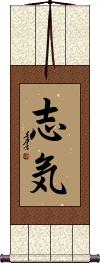
Esprit de Corps / Determination Scroll

志気 is a Japanese word that can mean “esprit de corps” or “determination to achieve.”

When this is pronounced “Shige,” it can refer to a place in Japan. It can also be a Japanese surname, Shiki.

Esprit de Corps / Team Spirit

 tuán duì jīng shén
Esprit de Corps / Team Spirit Scroll

團隊精神 is a Chinese word that can mean “esprit de corps” or “team spirit.”

Other translations include collectivism, teamwork, or solidarity.

United States Marine Corps

 bei kai hei tai
United States Marine Corps Scroll

米海兵隊 is the Japanese way to write “United States Marine Corps” or simply “U.S. Marines.”

Breaking down each Kanji, this means:
“rice (American) ocean/sea soldiers/army/military corps/regiment/group.”

This title will only make sense in Japanese, it is not the same in Chinese! Make sure you know your audience before ordering a custom wall scroll.

If you are wondering about rice, America is known as “rice country” or “rice kingdom” when literally translated. The Kanji for rice is often used as an abbreviation in front of words (like a sub-adjective) to make something “American.” Americans say “rice burner” for a Japanese car and “rice rocket” for a Japanese motorcycle. If you did the same in Japanese, it would have the opposite meaning.


Note: I have not verified this but I’ve found this title used for U.S. Marines in Korean articles, so it’s most likely a normal Korean term as well (but only in Korean Hanja).


See Also:  Marine Corps | Navy | Army | Art of War | Warrior | Military

Paix de l'esprit

 nèi xīn de píng jìng
Paix de l'esprit Scroll

內心的平靜 means inner peace or peace of mind.

This is the Chinese equivalent of the French phrase Paix de l'esprit.

Marine Corps

 kaiheitai
Marine Corps Scroll

海兵隊 is the Japanese and Korean way to express “Marine Corps” or simply “Marines.” It is not specific, so this can be the Marine Corps of any country, such as the British Royal Marines to the U.S. Marines.

Breaking down each character, this means:
“ocean/sea soldiers/army corps/regiment/group.”


See Also:  Military

Marine Corps

 hǎi jūn lù zhàn duì
Marine Corps Scroll

海軍陸戰隊 is the Chinese way to express “Marine Corps.” This could be the Marine Corps of virtually any country that has an amphibious military force.

Let me know if you want a more specific title, such as British Royal Marines or U.S. Marine Corps.

The Chinese title for Marines is very verbose...
Breaking down each character this means:
“ocean/sea military/arms shore/land fighting/war/battle corps/team/group.”


See Also:  Military

Determination

 jué xīn
 kesshin
Determination Scroll

決心 is a Chinese, Japanese, and Korean word that holds the dictionary definition of determination but literally means determined heart.

The first character means to determine or determined.

The second character means heart, mind, or soul, so you can imagine that this form of determination partially means putting your heart into something. It can also be translated as resolve, resolution, or decision (as in a decision made and followed).


See Also:  Devotion | Tenacious | Passion | Dedication | Will-Power

Unwavering Determination and Resolve

 jiān dìng jué xīn
Unwavering Determination and Resolve Scroll

This can be translated as unwavering determination, unwavering resolve, or strong determination.

堅定 means unwavering, firm, steady, staunch, and/or resolute.

決心 means determination, resolve, resolution, determined, firm and resolute, or to make up one's mind.

If you want a longer version, 堅定不移的決心 is also a popular phrase with a similar meaning. Contact me if you want that instead.

Determination to Achieve / Will-Power

 yì zhì
 ishi
Determination to Achieve / Will-Power Scroll

意志 is a Chinese, Korean, and Japanese word that means “determination to achieve.” It can also be translated as: will; willpower; determination; volition; intention; or intent.

In Japanese, this can also be the given name, Ishi.

Determination to Achieve

 ichi nen ho kki
Determination to Achieve Scroll

一念発起 is a Japanese proverb, “Ichinen Hokki,” which suggests being resolved to do something or having a wholehearted intention to accomplish something.

Some will translate this as “the determination to accomplish something,” or “turning over a new leaf and being determined to find success.”

Unswerving Determination / Firm and Persistent

 jiān yì
Unswerving Determination / Firm and Persistent Scroll

堅毅 means unswerving determination or firm and persistent in Chinese.

This single Chinese word means “firm and persistent” and/or “unswerving determination.”

Training / Drill

 xùn liàn
 kunren
Training / Drill Scroll

If training or drill is important to you (especially for military drill and training), 訓練 might be just the thing for a drill master to hang behind his/her desk.

This term is universal in Chinese, Japanese Kanji, and old Korean Hanja. It can also mean practice or exercise, depending on context.

 jiān yì kě kào
Dependable Scroll

The first two characters mean resolute with firm determination.
The second two characters mean reliable.

Together, this creates a 4-character expression that means dependable.

Strong Hearted / Strong Willed

 yì zhì jiān qiáng
Strong Hearted / Strong Willed Scroll

意志堅強 can mean either “strong-hearted,” “strong-willed” or “determination.”

The first two characters can be translated as “will,” “willpower,” “determination,” “volition,” “intention,” or “intent.” But, it should be noted that this first part possesses the element of “heart” in the lower portion of both characters (they also partially carry the meaning “with the whole heart”).

The last two characters mean “strong” or “staunch.”

Chinese word order and grammar are a bit different than English, so in this case, they are in reverse order of English but have the correct meaning in a natural form.


See Also:  Strong Willed | Discipline | Will-Power

Tenacious / Tenacity

 wán qiáng
 gan kyou
Tenacious / Tenacity Scroll

頑強 means “Tenacious,” “Hard to Defeat,” or “Dogged.”

Alone, the first character means mischievous, obstinate, or stubborn. But it loses some of the mischievous meaning when the second character is added.

The second character means strength, force, power, or better.


See Also:  Determination | Dedication | Devotion | Never Give Up

Will-Power / Self-Control

 yì zhì lì
 ishi ryoku
Will-Power / Self-Control Scroll

意志力 is a form of willpower or self-control and is about having the determination or tenacity to keep going.

In Japanese, this is the power of will, the strength of will, volition, intention, intent, or determination.

Marine

Amphibious Warrior

 hǎi jūn lù zhàn duì yuán
Marine Scroll

海軍陸戰隊員 is the Chinese way to express “Marine.” (as in a member of the Marine Corps). It is not country-specific, so it could be the Royal Marines, U.S. Marines, Chinese Marines, etc.
In Australian English, they would translate this as “Naval Infantryman.”

Breaking down each character this means:
“ocean/sea military/arms shore/land fighting/war/battle corps/team/group person/member.” Note that the first two characters are presented together but outside of this phrase mean “navy” (sea military).


See Also:  Warrior | Military | Navy | Art of War

 yaruki
Motivation Scroll

やる気 means motivation in Japanese.

It also can be translated as willingness (e.g., to do something), eagerness, inspiration, determination, totally willing, fully motivated, and high aspirations.


Note: Because this selection contains some special Japanese Hiragana characters, it should be written by a Japanese calligrapher.


See Also:  Enthusiasm | Passion

Pain is Weakness Leaving the Body

 itami wa karada kara nukeru yowasa
Pain is Weakness Leaving the Body Scroll

痛みは体から抜ける弱さ is how to write “pain is weakness leaving the body” in Japanese.

I remember this being shouted a lot during U.S. Marine Corps boot camp.


Note: Because this selection contains some special Japanese Hiragana characters, it should be written by a Japanese calligrapher.

 sān mó tí
 sanmaji
Samadhi Scroll

In Buddhism, “三摩提” is the transliteration of the Sanskrit word Samādhi, which means equanimity, concentration, and determination.

It is one of the Buddhist practices aimed at eliminating all distractions and calming the mind.

Sometimes written in a shorter form of 三昧 (san mei).

Military Engineering

 gōng bīng
 kouhei
Military Engineering Scroll

工兵 means the “engineering corps” of the army or other branches of the military.

The first character alone means work, worker, skill, profession, trade, craft, construction, or labor. The second character means army, force, or military.


See Also:  Military

Pain is Weakness Leaving the Body

 téng tòng jiù shì shuāi ruò lí nǐ ér qù de shí hòu
Pain is Weakness Leaving the Body Scroll

I remember this being shouted a lot during U.S. Marine Corps boot camp. 疼痛就是衰弱離你而去的時候 is how to write that phrase in Chinese. At least, this is as close as we could compose/translate it, and hold the full original meaning and connotations.

The version shown here is really, “Pain is weakness leaving your body.” Although it's said in English both ways (the or your), it works better in Chinese with “your.”

Osu No Seishin

 o su no sei shin
Osu No Seishin Scroll

押忍の精神 is the name Osu No Seishin or “Spirit of Osu” in Japanese.

This Spirit of Osu is an essential concept in Karate. You will hear “Osu!” shouted in every Karate dojo which is not just a sign of respect and obedience to the Sensei but also means patience, determination, and perseverance. Shouting “Osu!” serves as a reminder to embody these qualities.

Resolute Mind

 jué dìng xīn
 ketsujou shin
Resolute Mind Scroll

決定心 means the mind of certainty, resolute mind, imperturbable mind, firm determination, firm resolution, or stable commitment.

In the context of Buddhism, this is the deep resolution needed to attain enlightenment.

If you go to a deeper meaning, this is a condition of settling into the thought that occurs in the process of perception subsequent to the “seeking mind” or “尋求心.”

 jì lǜ
Discipline Scroll

紀律 is a Chinese and Korean word that conveys the idea of extreme self-control and perhaps self-sacrifice, and obedience.

This word matches the kind of “discipline” I was in the Marine Corps. There is also an additional idea of maintaining order or being orderly in your tasks.

This idea would also fit an athlete training for the Olympics who gives up many pleasures to stay focused on their training.


See Also:  Self-Control | Will-Power

Maintain An Army For 1000 Days, Use It For An Hour

 yǎng bīng qiān rì, yàng bīng yì shí
Maintain An Army For 1000 Days, Use It For An Hour Scroll

Nothing could be more true. When I was in the Marine Corps, we trained for years for combat that often lasts only hours.

養兵千日用兵一時 is a Chinese proverb that, also reminds me of a common phrase used in the military to describe combat: “Weeks of total boredom, punctuated with five minutes of sheer terror.”

This may have some roots in Sun Tzu's The Art of War. Though I can not find this passage in his writings.

On the subject of the Art of War, if you have a favorite passage, we can create a custom calligraphy scroll with that phrase.

Live Free or Die

Give me liberty or give me death

 bú zì yóu wú nìng sǐ
Live Free or Die Scroll

不自由毋寧死 means “Give me liberty or give me death” in Chinese.

This is also the best way to say, “Live free or die.”

The characters break down this way:
不 = Not; none; without.
自由 = Freedom; liberty; freewill; self-determination.
毋寧 = Rather; would rather; rather be.
死 = Dead; death.

This will go nicely next to your “Don't tread on me” flag. This phrase is known well enough in China that it's listed in a few dictionaries. Though I doubt you will find too many Chinese citizens willing to yell this on the steps of the capital in Beijing.


See Also:  Death Before Dishonor

Gung Ho

Working Together

 gōng hé
 guai
Gung Ho Scroll

工合 is one of those Asian words that is used more in English than in the original Chinese.

Gung Ho was originally used to speak of Carlson's Raiders, a group of “Gung Ho” U.S. Marines who went on an island-hopping campaign of death during WWII.

A movie called Gung Ho came out in the mid-1940s and was later re-released in the 1950s depicting the 2nd Marine Raider Battalion, and brought this word to the mainstream.

It is still sometimes used today within the U.S. Marine Corps brotherhood to refer to a unit or group that works well together or is otherwise efficient and motivated (has good morals).

In 1986, there was a movie called Gung Ho about a Japanese company taking over an American automotive factory. They completely ignored the fact that this was a Chinese title.

It should be noted that this title actually means a condition, state, manner, or the health of something in Japanese.

Language and pronunciation notes:
Like many Asian words absorbed into common use in English, this one is drastically mispronounced. The official Romanization is “gong he” but that doesn't tell you enough. The vowel sound on the first character is like the English word “own,” now just add the g-sounds to the beginning and end. The second character is misleading, as you might think it is like the English word “he.” In reality, the vowel sound is more like the “u” in “up.”

It should also be noted that the current generation in China no longer uses or recognizes this as a common word or slogan.


Note: This can be pronounced and is a word in Japanese, though seldom used. Japanese will use a variation of "具合" instead. But still, not common.

Banzai

Modern Japanese Version

 wàn suì
 banzai
Banzai Scroll

万歲 is the modern Japanese way to write banzai.

We've made two almost identical entries for this word, with just a variation on the first character. In the last century, 萬 was simplified to 万 in Japan and China. The new generation will expect it to be written as 万 but the old generation can still read the more traditional 萬 form. You must make your determination as to what version is best for you. If your audience is mostly Japanese, I suggest 万歲.

While it has become a popular, if not an odd, thing to scream as you jump out of an airplane (preferably with a parachute attached), banzai is actually a very old Asian way to say “hooray.” The Japanese word “banzai” comes from the Chinese word “wan sui” which means “The age of 10,000 years.” It is actually a wish that the Emperor or the Empire live that long.

Imagine long ago when the Emperor made a rare public appearance. This is what all of the people would yell to their leader in respect.

So if you like it as a hooray, or you want to wish someone that they live for 10,000 years, this is the calligraphy for you.

To other things with banzai in their names, I am still waiting for the promised sequel to Buckaroo Banzai.

Other translations: hurrah, long life, congratulations, cheers, live long.

Notes: Sometimes people confuse banzai with bonsai. A bonsai is a miniature tree. They have nothing to do with each other. Further, Bonzai is not a word at all - although it would make a great name for a calcium supplement for older people.

Marine / Soldier of the Sea

 kai hei
Marine / Soldier of the Sea Scroll

海兵 is a way to express “Marine” as in an individual “Soldier of the Sea” in Japanese Kanji and old Korean Hanja characters (not to be confused with Korean Hangul).

Breaking down each character, this means:
“ocean/sea soldier/army/warrior.”

Please note that this Japanese/Korean version kind of means “sailor” or “navy” in Chinese.


See Also:  Military


This in-stock artwork might be what you are looking for, and ships right away...

Gallery Price: $61.00

Your Price: $33.88


The following table may be helpful for those studying Chinese or Japanese...

Title CharactersRomaji (Romanized Japanese)Various forms of Romanized Chinese
Esprit de Corps
Determination
志気shi ki / shi ge
shiki / shige
Esprit de Corps
Team Spirit
團隊精神
团队精神
tuán duì jīng shén
tuan2 dui4 jing1 shen2
tuan dui jing shen
tuanduijingshen
t`uan tui ching shen
tuantuichingshen
tuan tui ching shen
United States Marine Corps米海兵隊bei kai hei tai
beikaiheitai
Paix de l'esprit內心的平靜
内心的平静
nèi xīn de píng jìng
nei4 xin1 de ping2 jing4
nei xin de ping jing
neixindepingjing
nei hsin te p`ing ching
neihsintepingching
nei hsin te ping ching
Marine Corps海兵隊
海兵队
kaiheitai
Marine Corps海軍陸戰隊
海军陆战队
hǎi jūn lù zhàn duì
hai3 jun1 lu4 zhan4 dui4
hai jun lu zhan dui
haijunluzhandui
hai chün lu chan tui
haichünluchantui
Determination決心
决心
kesshin / keshinjué xīn / jue2 xin1 / jue xin / juexinchüeh hsin / chüehhsin
Unwavering Determination and Resolve堅定決心
坚定决心
jiān dìng jué xīn
jian1 ding4 jue2 xin1
jian ding jue xin
jiandingjuexin
chien ting chüeh hsin
chientingchüehhsin
Determination to Achieve
Will-Power
意志ishiyì zhì / yi4 zhi4 / yi zhi / yizhii chih / ichih
Determination to Achieve一念発起ichi nen ho kki
ichinenhokki
ichi nen ho ki
Unswerving Determination
Firm and Persistent
堅毅
坚毅
jiān yì / jian1 yi4 / jian yi / jianyichien i / chieni
Training
Drill
訓練
训练
kunrenxùn liàn / xun4 lian4 / xun lian / xunlianhsün lien / hsünlien
Dependable堅毅可靠
坚毅可靠
jiān yì kě kào
jian1 yi4 ke3 kao4
jian yi ke kao
jianyikekao
chien i k`o k`ao
chienikokao
chien i ko kao
Strong Hearted
Strong Willed
意志堅強
意志坚强
yì zhì jiān qiáng
yi4 zhi4 jian1 qiang2
yi zhi jian qiang
yizhijianqiang
i chih chien ch`iang
ichihchienchiang
i chih chien chiang
Tenacious
Tenacity
頑強
顽强
gan kyou / gankyou / gan kyowán qiáng
wan2 qiang2
wan qiang
wanqiang
wan ch`iang
wanchiang
wan chiang
Will-Power
Self-Control
意志力ishi ryoku / ishiryokuyì zhì lì
yi4 zhi4 li4
yi zhi li
yizhili
i chih li
ichihli
Marine海軍陸戰隊員
海军陆战队员
hǎi jūn lù zhàn duì yuán
hai3 jun1 lu4 zhan4 dui4 yuan2
hai jun lu zhan dui yuan
haijunluzhanduiyuan
hai chün lu chan tui yüan
haichünluchantuiyüan
Motivationやる気yaruki
Pain is Weakness Leaving the Body痛みは體から抜ける弱さ
痛みは体から抜ける弱さ
itami wa karada kara nukeru yowasa
Samadhi三摩提sanmajisān mó tí
san1 mo2 ti2
san mo ti
sanmoti
san mo t`i
sanmoti
san mo ti
Military Engineering工兵kouhei / koheigōng bīng
gong1 bing1
gong bing
gongbing
kung ping
kungping
Pain is Weakness Leaving the Body疼痛就是衰弱離你而去的時候
疼痛就是衰弱离你而去的时候
téng tòng jiù shì shuāi ruò lí nǐ ér qù de shí hòu
teng2 tong4 jiu4 shi4 shuai1 ruo4 li2 ni3 er2 qu4 de shi2 hou4
teng tong jiu shi shuai ruo li ni er qu de shi hou
t`eng t`ung chiu shih shuai jo li ni erh ch`ü te shih hou
teng tung chiu shih shuai jo li ni erh chü te shih hou
Osu No Seishin押忍の精神o su no sei shin
osunoseishin
Resolute Mind決定心
决定心
ketsujou shin
ketsujoushin
ketsujo shin
jué dìng xīn
jue2 ding4 xin1
jue ding xin
juedingxin
chüeh ting hsin
chüehtinghsin
Discipline紀律
纪律
jì lǜ / ji4 lv4 / ji lv / jilvchi lü / chilü
Maintain An Army For 1000 Days, Use It For An Hour養兵千日用兵一時
养兵千日用兵一时
yǎng bīng qiān rì, yàng bīng yì shí
yang3 bing1 qian1 ri4 yang4 bing1 yi4 shi2
yang bing qian ri yang bing yi shi
yang ping ch`ien jih yang ping i shih
yang ping chien jih yang ping i shih
Live Free or Die不自由毋寧死
不自由毋宁死
bú zì yóu wú nìng sǐ
bu2 zi4 you2 wu2 ning4 si3
bu zi you wu ning si
buziyouwuningsi
pu tzu yu wu ning ssu
putzuyuwuningssu
Gung Ho工合guaigōng hé / gong1 he2 / gong he / gonghekung ho / kungho
Banzai万歲 / 萬歲
万岁
banzaiwàn suì / wan4 sui4 / wan sui / wansui
Marine
Soldier of the Sea
海兵kai hei / kaihei
In some entries above you will see that characters have different versions above and below a line.
In these cases, the characters above the line are Traditional Chinese, while the ones below are Simplified Chinese.


Dictionary

Lookup Esprit De Corps Determination in my Japanese & Chinese Dictionary


Successful Chinese Character and Japanese Kanji calligraphy searches within the last few hours...

7 Virtues of BushidoAbayaAbbieAbbyAbdullahAbdulrahmanAbimaelAbirAbsalomAdalenaAdamAdeelAdityaAdlaiAdnanAdolphAdrijaAdventureAetherAftabAgathaAgobartAgronAhmedAiki JujutsuAilaAileenAishaAishuAizaAjayAjinkyaAjmalAkashAkhilAkshayAlayAlbaAldanaAldinAldoAldzenAlexAlexandAlexanderAlinAlinaAlisaAlishaAllahAllysonAlmighty OmnipotentAlokAlomAlyaAmadiAmairaniAmanAmandaAmeliaAmelieAminAminaAmineAmiraAmirulAmjathAnarchyAndeeAndreanAndreeaAngelaAngelinaAngeloAngieAnikaAnilaAnkitaAnnabelleAnushaArcanaArchieAriaArloArmanArmandoArvidAsherAshokAshrafAslamAveryAyanAylaAyushAzharAzkaAzraBakiBarshaBartBasiaBasilBe Like WaterBe Like Water My FriendBe True to YourselfBeatriceBeckyBenevolenceBentonBergBertBibleBinnaBlacksmithBlancaBlessed by GodBorjeBraedenBrahmavihara - the Four ImmeasurablesBrianBrittneyBrockBruce LeeBryanBrysonBudo Kai JutsuBudo-KaiBushidokanBushidokan DojoByakuranCabralCallumCamillaCaoimheCardenasCarlCarmenCarpe DiemCaseyCassandraCassiusCatrinCaydenCelineChantalCharismaCharisseChelsyCherry BlossomChi EnergyChinaChop Wood Carry WaterChristaChung Shin Tong IlCiaraCindyClaireClarissaClaudeClaudiaCleoColbyColinConnellyConquerCourageCourage to ChangeCraneCrisCruzCullenDamarisDamianDanaDanicaDanielaDanielleDannyDaodejingDariusDarknessDarumaDavidDaviesDayanaDaynaDeanDebbieDeepakDelaDelaneyDeliaDelilahDestinyDeterminationDeviDevinDevotionDevyn

All of our calligraphy wall scrolls are handmade.

When the calligrapher finishes creating your artwork, it is taken to my art mounting workshop in Beijing where a wall scroll is made by hand from a combination of silk, rice paper, and wood.
After we create your wall scroll, it takes at least two weeks for air mail delivery from Beijing to you.

Allow a few weeks for delivery. Rush service speeds it up by a week or two for $10!

When you select your calligraphy, you'll be taken to another page where you can choose various custom options.


A nice Chinese calligraphy wall scroll

The wall scroll that Sandy is holding in this picture is a "large size"
single-character wall scroll.
We also offer custom wall scrolls in small, medium, and an even-larger jumbo size.

A professional Chinese Calligrapher

Professional calligraphers are getting to be hard to find these days.
Instead of drawing characters by hand, the new generation in China merely type roman letters into their computer keyboards and pick the character that they want from a list that pops up.

There is some fear that true Chinese calligraphy may become a lost art in the coming years. Many art institutes in China are now promoting calligraphy programs in hopes of keeping this unique form of art alive.

Trying to learn Chinese calligrapher - a futile effort

Even with the teachings of a top-ranked calligrapher in China, my calligraphy will never be good enough to sell. I will leave that to the experts.

A high-ranked Chinese master calligrapher that I met in Zhongwei

The same calligrapher who gave me those lessons also attracted a crowd of thousands and a TV crew as he created characters over 6-feet high. He happens to be ranked as one of the top 100 calligraphers in all of China. He is also one of very few that would actually attempt such a feat.


Check out my lists of Japanese Kanji Calligraphy Wall Scrolls and Old Korean Hanja Calligraphy Wall Scrolls.

Some people may refer to this entry as Esprit De Corps Determination Kanji, Esprit De Corps Determination Characters, Esprit De Corps Determination in Mandarin Chinese, Esprit De Corps Determination Characters, Esprit De Corps Determination in Chinese Writing, Esprit De Corps Determination in Japanese Writing, Esprit De Corps Determination in Asian Writing, Esprit De Corps Determination Ideograms, Chinese Esprit De Corps Determination symbols, Esprit De Corps Determination Hieroglyphics, Esprit De Corps Determination Glyphs, Esprit De Corps Determination in Chinese Letters, Esprit De Corps Determination Hanzi, Esprit De Corps Determination in Japanese Kanji, Esprit De Corps Determination Pictograms, Esprit De Corps Determination in the Chinese Written-Language, or Esprit De Corps Determination in the Japanese Written-Language.




