Many custom options...


And formats...



關 in Chinese / Japanese...
Buy an 關 calligraphy wall scroll here!
Personalize your custom “關” project by clicking the button next to your favorite “關” title below...
1. Guaman
3. Gwan
4. Caring
5. Guam
8. Guan Yu
10. Sisterhood / Sisters Relationship
11. Relationship
12. Guanxi
Guaman
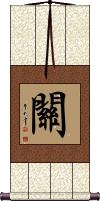
關 is the name Guaman in Chinese (Mandarin).
Guan / Kwan / Seki
Surname
關 is a surname in three languages.
In Chinese, it romanizes as Guan.
In Korean, it's Kwan (or Gwan).
In Japanese it's Seki.
The meaning of the character is mountain pass; to close; to shut; to turn off; barrier; frontier.
Gwan
The surname "Gwan" is primarily of Chinese origin, meaning things like "mountain pass," "to close," or "to manage."
Other Chinese variations include 官 and 管.
Romanization variations of 關: Guan (Mandarin), Kwan (Cantonese/HK), Kuan (Taiwan), Quan (Vietnamese).
History: Associated with ancient states and officials, like the descendants of Guan Zhong.
In Korean there is a Gwan or Kwon that comes from 權 (권), meaning "power" or "authority," though "Gwan" can also be used as a given name with meanings like "strong" or "official".
Caring
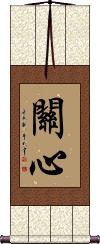
關心 means caring in Chinese.
Caring is giving love and attention to people and things that matter to you and anyone who needs help. When you care about people, you help them. You do a careful job, giving your very best effort. You treat people and things gently and respectfully. Caring makes the world a safer place.
Note: 關心 is also a word in Korean Hanja, but in Korean, it means taking interest or concern. In Korean, it's still a good word, but it doesn't quite have the “caring for a person” meaning that it does in Chinese.
Guam
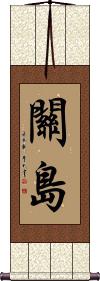
關島 is the Chinese name for the island of Guam (overseas territory of the United States).
Guandi: God of War
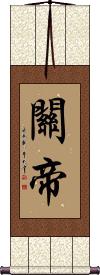
關帝 is the title, Guandi, the God of War, a deified hero of the Three Kingdoms, and a protector of Buddhism.
Guan Gong / Warrior Saint
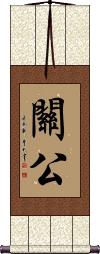
關公 is a Chinese title, Guan Gong, that means Lord Guan (The warrior saint of ancient China).
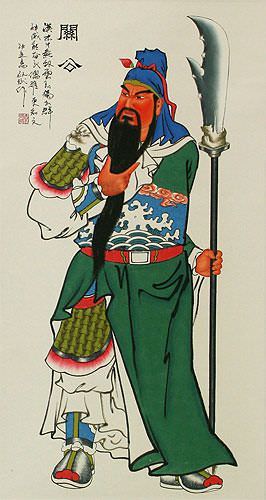 While his real name was Guan Yu / 關羽, he is commonly known by the title of Guan Gong (關公).
Some Chinese soldiers still pray to Guan Gong for protection. They would especially do this before going into battle. Statues of Guan Gong are seen throughout China.
Guan Yu
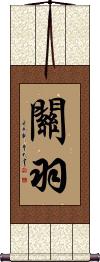
關羽 is the name Guan Yu, Army General for the Kingdom of Shu.
He is also known as Guan Gong (like saying Duke Guan or Sir Guan)
He was immortalized in the novel, “Romance of the Three Kingdoms.”
He was a fearsome fighter, also famous for his virtue and loyalty. He is worshiped by some modern-day soldiers and has the title “Warrior Saint” in China. Some believe he offers safety and protection for military servicemen.
Guan Yu lived until 219 A.D.
The Gateless Gate
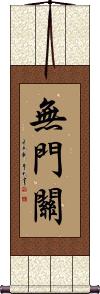
無門關 is the ancient title for “The Gateless Barrier.”
This has both direct meaning and is the title of a 13th-century collection of koans, compiled by a Chinese Chan Master known as Wumen in China (known in Japan as Zen Master Mumon).
While this is the original title, you may see this written as 無門関 in Japan, where the last character, 關, was simplified to 関 after 1945.
Sisterhood / Sisters Relationship
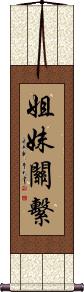
姐妹關繫 is an expression that means “sisterhood.”
Literally, this means “sisters relationship.”
Relationship
Most common Japanese version
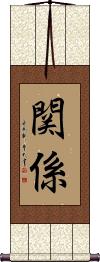
The dictionary definition is:
relation, relationship, connection, participation, involvement, concern, influence, effect, related to, connected to, or as a suffix to sexual it can mean sexual relations or relationship.
But there's more to it...
In Japan, the relationship that you have with certain people can open doors for you. Having this relationship with someone also means they would never rip you off but instead are honor-bound to treat you fairly.
See our Chinese Guanxi entry for more information. This term is used in very similar ways in China, Japan, and Korea.
Guanxi
The Chinese Concept of Relationship and Exchange of Favors
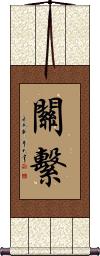
The dictionary definition is:
Relations/relationship, to concern, to affect, to have to do with, or connection.
But there's more to it...
In China, the relationship that you have with certain people can open doors for you. Having guanxi with someone also means they would never defraud you but are honor-bound to treat you fairly (of course, this goes both ways). Sometimes it is suggested that guanxi is the exchange of favors. 關繫 / 関繫 / 關係 is more about having a relationship that allows you to ask for and expect favors without shame.
There is no concept in western culture that exactly matches guanxi, but perhaps having a social or professional network is similar.
Note that there are some variations common within Chinese, Japanese Kanji, and Korean Hanja for this word... Japanese tend to use a Chinese alternate form as shown to the right for
the first character.
 There's also another alternate form of that first character (currently used as the official Simplified form in mainland China) which looks like the character shown to the right. It's basically the central radical of the alternate version shown above but without the “door radical” around it. In more free-flowing calligraphy styles, this version would be the likely choice for a calligrapher.
 In Modern Japanese, they use the character shown to the right.
They also tend to use this same form in Korean Hanja (I've only checked this word in my Korean dictionary, but it has not been confirmed by a translator's review).
 If that was not confusing enough, there is another alternate form of that second character. See right.
An Asian calligrapher of any nationality may use these forms at their discretion. However, They would tend to stick to the most common form used in their respective languages.
If you have any preference on any of these issues, please give us a special note with your order, and we'll make sure it's done the way you want.
Daodejing / Tao Te Ching - Chapter 27
The Mastery of Effortless Skill

Chapter 27 of the Daodejing reveals a profound truth about mastery: the highest skill leaves no trace, requires no force, and appears almost invisible.
善行無轍跡,
善言無瑕謫,
善數不用籌策,
善閉無關鍵而不可開,
善結無繩約而不可解。
是以聖人常善救人,
故無棄人;
常善救物,
故無棄物。
是謂襲明。
故善人者,不善人之師;
不善人者,善人之資。
不貴其師,不愛其資,
雖智大迷,
是謂要妙。
The sage moves through life with such natural harmony that nothing seems imposed; doors need no locks, knots require no rope, and actions leave no mark behind.
This is the essence of wúwéi (effortless action), where true ability arises from deep alignment with the Tao rather than deliberate effort.
At its heart, this chapter teaches compassion without exception. The sage “abandons no one and nothing,” recognizing value in all people and all things. Even those who seem flawed or unrefined are not rejected, but understood as part of a greater whole with each person both a student and a teacher in the unfolding of life.
Laozi reminds us that wisdom is not about perfection or control, but about subtle awareness. The truly skilled individual does not rely on tools, rules, or rigid structures; instead, they embody an intuitive understanding that makes their actions naturally complete.
In this way, excellence becomes quiet, effortless, and beyond imitation.
This teaching also reflects a deeper philosophical insight: Opposites are interdependent. The “good” person learns from the “not good,” and the “not good” provides the material for growth. To reject either is to misunderstand the balance of existence itself.
As calligraphy, Daodejing Chapter 27 serves as a reminder to cultivate inner mastery rather than outward display. It is a meditation on refinement, humility, and the quiet power of skill perfected through harmony with the natural order.
Note: The Chinese text used here is based on the early Mawangdui silk manuscript tradition (2nd century BCE). The Guodian manuscripts do NOT preserve Chapter 27 in full form.
Not the results for 關 that you were looking for?
Below are some entries from our dictionary that may match your 關 search...
| Characters If shown, 2nd row is Simp. Chinese |
Pronunciation Romanization |
Simple Dictionary Definition |
關 关 see styles |
guān guan1 kuan seki せき |
More info & calligraphy: Guan / Kwan / Seki(surname) Seki To shut, a closed place, barrier, frontier; to include, concern, involve. |
關公 关公 see styles |
guān gōng guan1 gong1 kuan kung |
More info & calligraphy: Guan Gong / Warrior Saint |
關島 关岛 see styles |
guān dǎo guan1 dao3 kuan tao |
More info & calligraphy: Guam |
關帝 关帝 see styles |
guān dì guan1 di4 kuan ti Kantei |
More info & calligraphy: Guandi: God of War |
關心 关心 see styles |
guān xīn guan1 xin1 kuan hsin |
More info & calligraphy: Caring |
關羽 关羽 see styles |
guān yǔ guan1 yu3 kuan yü |
More info & calligraphy: Guan Yu |
無門關 无门关 see styles |
wú mén guān wu2 men2 guan1 wu men kuan Mumon kan |
More info & calligraphy: The Gateless Gate |
三關 三关 see styles |
sān guān san1 guan1 san kuan sankan |
three barriers |
上關 see styles |
kamiseki かみせき |
(surname) Kamiseki |
下關 下关 see styles |
xià guān xia4 guan1 hsia kuan |
Xiaguan district of Nanjing City 南京市 in Jiangsu 江蘇|江苏 |
不關 不关 see styles |
bù guān bu4 guan1 pu kuan fukan |
irrelevant |
事關 事关 see styles |
shì guān shi4 guan1 shih kuan |
to concern; on (some topic); about; concerning; to have importance for |
互關 互关 see styles |
hù guān hu4 guan1 hu kuan |
to follow each other on a social media platform (abbr. for 互相關注|互相关注[hu4 xiang1 guan1 zhu4]) |
井關 see styles |
izeki いぜき |
(surname) Izeki |
伊關 see styles |
izeki いぜき |
(personal name) Izeki |
偏關 偏关 see styles |
piān guān pian1 guan1 p`ien kuan pien kuan |
Pianguan county in Xinzhou 忻州[Xin1 zhou1], Shanxi |
入關 入关 see styles |
rù guān ru4 guan1 ju kuan |
to enter a pass; to go through customs |
公關 公关 see styles |
gōng guān gong1 guan1 kung kuan |
public relations |
剛關 刚关 see styles |
gāng guān gang1 guan1 kang kuan gōkan |
firm gate |
北關 北关 see styles |
běi guān bei3 guan1 pei kuan |
see 北關區|北关区[Bei3 guan1 Qu1] |
南關 南关 see styles |
nán guān nan2 guan1 nan kuan |
see 南關區|南关区[Nan2 guan1 Qu1] |
卡關 卡关 see styles |
kǎ guān ka3 guan1 k`a kuan ka kuan |
to be stuck; to feel stuck |
取關 取关 see styles |
qǔ guān qu3 guan1 ch`ü kuan chü kuan |
to unfollow (on social media etc) (abbr. for 取消關注|取消关注[qu3 xiao1 guan1 zhu4]) |
叩關 叩关 see styles |
kòu guān kou4 guan1 k`ou kuan kou kuan |
to knock at the gate (old); to make an approach; to invade; to attack the goal (sports) |
國關 国关 see styles |
guó guān guo2 guan1 kuo kuan |
abbr. for 國際關係學院|国际关系学院[Guo2 ji4 Guan1 xi4 Xue2 yuan4], University of International Relations, Beijing |
坐關 坐关 see styles |
zuò guān zuo4 guan1 tso kuan |
(Buddhism) to sit in contemplation |
城關 城关 see styles |
chéng guān cheng2 guan1 ch`eng kuan cheng kuan |
area outside a city gate |
報關 报关 see styles |
bào guān bao4 guan1 pao kuan |
to declare at customs |
壺關 壶关 see styles |
hú guān hu2 guan1 hu kuan |
Huguan county in Changzhi 長治|长治[Chang2 zhi4], Shanxi |
大關 大关 see styles |
dà guān da4 guan1 ta kuan oozeki おおぜき |
strategic pass; barrier or mark (i.e. a level considered impressive, usually a round figure such as 10,000); instrument of torture used to break limbs (surname) Oozeki |
Click here for more 關 results from our dictionary
The following table may be helpful for those studying Chinese or Japanese...
| Title | Characters | Romaji (Romanized Japanese) | Various forms of Romanized Chinese | |
| Guaman | 關 关 | guān / guan1 / guan | kuan | |
| Guan Kwan Seki | 關 关 | seki | guān / guan1 / guan | kuan |
| Gwan | 關 关 | guān / guan1 / guan | kuan | |
| Caring | 關心 关心 | guān xīn / guan1 xin1 / guan xin / guanxin | kuan hsin / kuanhsin | |
| Guam | 關島 关岛 | guān dǎo / guan1 dao3 / guan dao / guandao | kuan tao / kuantao | |
| Guandi: God of War | 關帝 关帝 | kan tei / kantei | Guān dì / Guan1 di4 / Guan di / Guandi | Kuan ti / Kuanti |
| Guan Gong Warrior Saint | 關公 关公 | guān gōng guan1 gong1 guan gong guangong | kuan kung kuankung |
|
| Guan Yu | 關羽 关羽 | guān yǔ / guan1 yu3 / guan yu / guanyu | kuan yü / kuanyü | |
| The Gateless Gate | 無門關 无门关 | mu mon kan / mumonkan | wú mén guān wu2 men2 guan1 wu men guan wumenguan | wu men kuan wumenkuan |
| Sisterhood Sisters Relationship | 姐妹關繫 姐妹关系 | jiě mèi guān xì jie3 mei4 guan1 xi4 jie mei guan xi jiemeiguanxi | chieh mei kuan hsi chiehmeikuanhsi |
|
| Relationship | 關繫 / 関繫 / 關係 関係 | kan kei / kankei | guān xì / guan1 xi4 / guan xi / guanxi | kuan hsi / kuanhsi |
| Guanxi | 關繫 / 関繫 / 關係 关系 / 関係 | kankei | guān xì / guan1 xi4 / guan xi / guanxi | kuan hsi / kuanhsi |
| Daodejing Tao Te Ching - Chapter 27 | 善行無轍跡善言無瑕謫善數不用籌策善閉無關鍵而不可開善結無繩約而不可解是以聖人常善救人故無棄人常善救物故無棄物是謂襲明故善人者不善人之師不善人者善人之資不貴其師不愛其資雖智大迷是謂要妙 善行无辙迹善言无瑕谪善数不用筹策善闭无关键而不可开善结无绳约而不可解是以圣人常善救人故无弃人常善救物故无弃物是谓袭明故善人者不善人之师不善人者善人之资不贵其师不爱其资虽智大迷是谓要妙 | shàn xíng wú zhé jì shàn yán wú xiá zhé shàn shù bù yòng chóu cè shàn bì wú guān jiàn ér bù kě kāi shàn jié wú shéng yuē ér bù kě jiě shì yǐ shèng rén cháng shàn jiù rén gù wú qì rén cháng shàn jiù wù gù wú qì wù shì wèi xí míng gù shàn rén zhě bù shàn rén zhī shī bù shàn rén zhě shàn rén zhī zī bù guì qí shī bù ài qí zī suī zhì dà mí shì wèi yào miào shan4 xing2 wu2 zhe2 ji4 shan4 yan2 wu2 xia2 zhe2 shan4 shu4 bu4 yong4 chou2 ce4 shan4 bi4 wu2 guan1 jian4 er2 bu4 ke3 kai1 shan4 jie2 wu2 sheng2 yue1 er2 bu4 ke3 jie3 shi4 yi3 sheng4 ren2 chang2 shan4 jiu4 ren2 gu4 wu2 qi4 ren2 chang2 shan4 jiu4 wu4 gu4 wu2 qi4 wu4 shi4 wei4 xi2 ming2 gu4 shan4 ren2 zhe3 bu4 shan4 ren2 zhi1 shi1 bu4 shan4 ren2 zhe3 shan4 ren2 zhi1 zi1 bu4 gui4 qi2 shi1 bu4 ai4 qi2 zi1 sui1 zhi4 da4 mi2 shi4 wei4 yao4 miao4 shan xing wu zhe ji shan yan wu xia zhe shan shu bu yong chou ce shan bi wu guan jian er bu ke kai shan jie wu sheng yue er bu ke jie shi yi sheng ren chang shan jiu ren gu wu qi ren chang shan jiu wu gu wu qi wu shi wei xi ming gu shan ren zhe bu shan ren zhi shi bu shan ren zhe shan ren zhi zi bu gui qi shi bu ai qi zi sui zhi da mi shi wei yao miao | shan hsing wu che chi shan yen wu hsia che shan shu pu yung ch`ou ts`e shan pi wu kuan chien erh pu k`o k`ai shan chieh wu sheng yüeh erh pu k`o chieh shih i sheng jen ch`ang shan chiu jen ku wu ch`i jen ch`ang shan chiu wu ku wu ch`i wu shih wei hsi ming ku shan jen che pu shan jen chih shih pu shan jen che shan jen chih tzu pu kuei ch`i shih pu ai ch`i tzu sui chih ta mi shih wei yao miao shan hsing wu che chi shan yen wu hsia che shan shu pu yung chou tse shan pi wu kuan chien erh pu ko kai shan chieh wu sheng yüeh erh pu ko chieh shih i sheng jen chang shan chiu jen ku wu chi jen chang shan chiu wu ku wu chi wu shih wei hsi ming ku shan jen che pu shan jen chih shih pu shan jen che shan jen chih tzu pu kuei chi shih pu ai chi tzu sui chih ta mi shih wei yao miao |
|
| In some entries above you will see that characters have different versions above and below a line. In these cases, the characters above the line are Traditional Chinese, while the ones below are Simplified Chinese. | ||||

Successful Chinese Character and Japanese Kanji calligraphy searches within the last few hours...



