Many custom options...


And formats...



聖 in Chinese / Japanese...
Buy an 聖 calligraphy wall scroll here!
Personalize your custom “聖” project by clicking the button next to your favorite “聖” title below...
1. The Saint
2. Christmas
3. Ganesh
4. Holy Bible
5. Holy Land
7. Juggernaut
10. Sacred Fire
11. The Saint
12. Holy Man / Saint
13. Warrior Saint / Saint of War
15. Holy Warrior
16. Paladin
17. Sanjuan
18. Seishin-Kan
19. Stjohn
20. Sundance
22. Sword Saint
23. Merry Christmas
24. San Marino
25. San Pedro
26. San Diego
27. Santa Claus
28. Santiago
29. Stclair
30. Stlouis
31. Stpierre
35. Galatians 5:25
37. Daodejing / Tao Te Ching - Chapter 81
38. Daodejing / Tao Te Ching - Chapter 27
The Saint
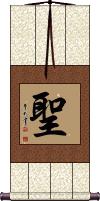
聖 is the simple, single-character religious form of “saint” in Chinese (also holds the same meaning in Japanese and Korean, though rarely used alone like this).
This can also mean holy, sage, master, or priest.
Note: 聖 is often used in compound words (words of more than one character) to create further meanings. In compounds, it can mean holy, sacred, or divine.
聖 is also used as the first word for Spanish and English place names such as “San Diego” and “St. Louis” in Chinese (not Japanese).
In the Buddhist context, this can represent ārya or sādhu. And mean a sage; wise and good; upright, or correct in all his character; sacred, holy, or saintly.
Christmas
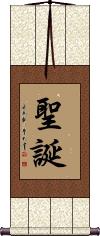
聖誕 is how to write Christmas in Chinese.
The original meaning was the Emperor's Birthday (and sometimes Confucius' birthday), but in modern times, this is almost exclusively used to refer to the western religious holiday of Christmas.
Ganesh
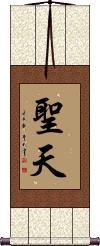
聖天 is the Chinese and Japanese title for Ganesh, Nandikesvara, or Āryadeva (A deity in the Buddhist pantheon).
Can also be a female Japanese given name Seiten.
Holy Bible
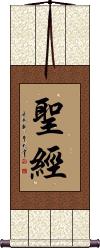
聖經 is how to write Bible in Chinese.
The first character means Holy, sacred, saint, or sage.
The second character means sacred book or scripture.
Each Sunday morning, if you are near a Catholic or Protestant Church, you will see plenty of Chinese people carrying their Bibles. Virtually every large or medium city in China has at least one Christian church. Beijing has about 14 Christian churches of Catholic and various Protestant denominations. That number doubles if you count all the church services that are for foreigners only and doubles again if you count all of the underground Christian Churches. Many Embassies (Canadian, Italian, French, etc.) offer Protestant and Catholic services. However, the U.S. Embassy is the most unfriendly in all of China, offering no such religious services, regularly denying entry, and kicking out Americans and others, whether or not they have official business.
Holy Bible
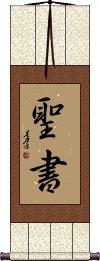
聖書 is how to write Bible in Japanese.
The first character means Holy, sacred, saint, or sage.
The second character means book (can also mean scroll or letter).
Holy Land
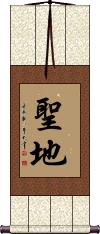
聖地 can be titled or translated in many different ways: sacred ground, the Holy Land, Holy city, sacred place, Holy ground, or shrine.
I have seen all of these English translations used when coming from Chinese, Japanese, and Korean.
Holy Mother / Saint Mary
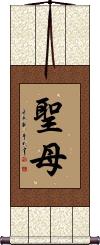
聖母 is the title for the Holy Mother, Madonna, or Virgin Mary used by Catholic Chinese, Korean, and Japanese people.
I think this would be a very cool wall scroll for a devout Catholic who also appreciates Asian artwork and language.
Note: Koreans often put a third character after these two, which creates a title that means “Hail Mary”; however, this character is not added or used in the same way in Japanese or Chinese. If you want that Korean title, just let me know, and we'll add that character for you. The two-character title shown to the left is universal, so I think it's the best choice.
Juggernaut
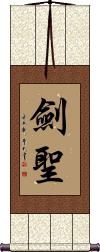
劍聖 is about the closest you can get to juggernaut in Chinese.
This more literally means “Sage of the Sword,” “Master Swordsman,” or “Sword Saint.” In Chinese terms, such a person with a divine mastery of the sword is unstoppable. Thus, the meaning of juggernaut can be derived from this term.
There is a very similar Japanese word (a slight variation on the first character) that means “Sword Saint” or “Kensei.”
Ministry / Priesthood
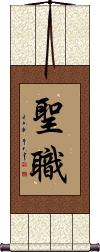
聖職 can mean a ministry, priesthood, holy orders, or sacred profession in Chinese, Japanese, and Korean.
Prophet Muhammad
PBUH
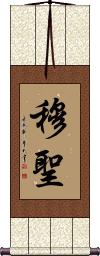
穆聖 is the Chinese title for the Prophet Muhammad (PBUH).
I'm not sure this is appropriate for members of all Muslim sects to hang on their walls, so please make your own careful decision before you order this.
Sacred Fire
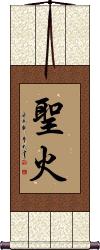
聖火 is a Chinese, Japanese, and Korean term that applies to the sacred fire of the ancient Greek Olympic torch or games.
This could also apply to other sacred or holy fires, as it can be a somewhat generic term.
The Saint
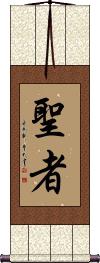
聖者 is the religious way to express the idea of “Saint” in Chinese, Korean Hanja, and Japanese Kanji.
Some may translate this as “Holy man” or “Holy person.”
Holy Man / Saint
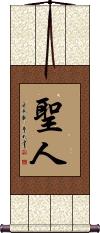
聖人 can mean saint, sage, or holy man.
Note: There is more than one way to express this idea. This one really matches “Holy man” because the second character means “human” or “person” (therefore, this could equally mean “Holy woman”).
Warrior Saint / Saint of War
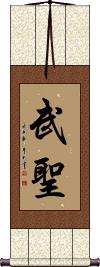
This Chinese title, Wusheng, means Saint of War.
武聖 is usually a reference to Guan Yu (關羽), also known as Guan Gong (關公).
Some Chinese soldiers still pray to Wusheng for protection. They would especially do this before going into battle.
Noble Eightfold Path
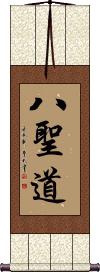
八聖道 is one of two titles for the Buddhist Noble Eightfold Path.
This version specifically has the “noble” idea in the middle character, which also means holy, sacred, wise and good, or upright.
The other title also romanizes as Hasshoudou or Hasshōdō in Japanese but is written 八正道.
Holy Warrior
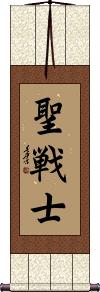
聖戦士 means “Holy Warrior,” in Japanese.
Paladin
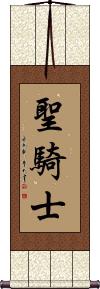
聖騎士 is how Paladin is written in Chinese.
This title originates from the warriors of Charlemagne's court.
The literal translation of this Chinese title is something like “Saintly Knight.”
Sanjuan

聖胡安 is the name Sanjuan in Chinese (Mandarin).
Seishin-Kan

聖心館 is the martial arts style Seishin-Kan or Seishinkan in Japanese Kanji.
The meaning is “Sacred Heart Hall” or “House of the Sacred/Good Heart.”
Do not confuse Seishin-Kan with Seishi-Kan! It's not the same!
Stjohn

聖約翰 is the name Stjohn in Chinese (Mandarin).
Sundance
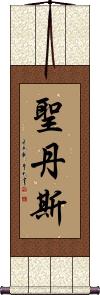
聖丹斯 is the name Sundance in Chinese (Mandarin).
Holy Spirit / Holy Ghost
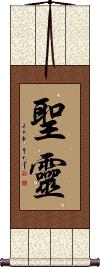
聖靈 is the title for the Holy Spirit or Holy Ghost as used by Jewish, Catholic, and Protestant (and other Christian) Chinese people.
And yes, Chinese Jews do exist, but there are not many of them.
The first character means Holy, Sacred, Saint, or Sage. The second means ghost, spirit, efficacious, or intelligence.
This is valid in Chinese characters and old Korean Hanja. This will be recognized in Japan but see the note below...
 In modern Japan, they now use a variant/simplified Kanji of the second character of Holy Spirit. If you want this Japanese version, click on the Kanji to the right instead of the button above.
Sword Saint
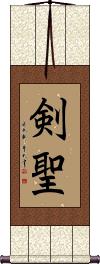
剣聖 can mean “Sword Saint,” “God of the Sword,” or “Saint of the Sword.” This is an ancient Japanese title bestowed on a master with the greatest of skills in swordsmanship.
Keep in mind that this is an antiquated term. It will only be understood in the context of martial arts. The pronunciation “kensei” also applies to other words like “constitutional government” and power (these words have different kanji and are completely unrelated).
Notes: This is sometimes Romanized as “kensei,” “ken sei,” and incorrectly as “Kensai.”
Chinese Note: This title is pronounceable in Chinese but seldom, if ever, used in Chinese. Also, the first character is an alternate character form for a sword, currently only used in Japan.
Merry Christmas
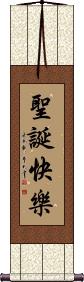
聖誕快樂 is “Merry Christmas” in Chinese.
San Marino
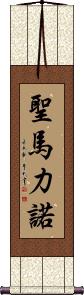
This is the Chinese name for the country of San Marino.
San Pedro

聖佩德羅 is the name San Pedro in Chinese (Mandarin).
San Diego
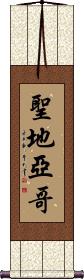
聖地亞哥 is how to write San Diego in Mandarin Chinese.
Santa Claus

聖誕老人 is the name Santa Claus in Chinese (Mandarin).
Santiago
聖地亞哥 is the transliteration to Mandarin Chinese for the Latin / Spanish name Santiago.
Stclair

聖克萊爾 is the name Stclair in Chinese (Mandarin).
Stlouis

聖路易斯 is the name Stlouis in Chinese (Mandarin).
Stpierre

聖皮埃爾 is the name Stpierre in Chinese (Mandarin).
Nichiren Daishonin
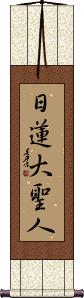
日蓮大聖人 is the title Nichiren Daishōnin or Nichirendaishōnin in Japanese Kanji.
Seishin-Kai / Seishinkai
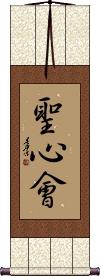
聖心会 is the Japanese martial arts title “Seishinkai” or “Seishin-Kai.”
It literally means “Sacred Heart Association” or “Pure-Heart Club.”
聖 can mean holy, sacred, saint, sage, virtuous, expert, wise and good, upright, or correct.
心 can mean heart, mind, center, core, spirit, soul, or vitality.
聖心 creates a word meaning sacred heart, or the holy mind (that of Buddha).
会 in Japanese means association, club, meeting, assembly, party, gathering, conference, athletic meet, or society.
Sanctified by God
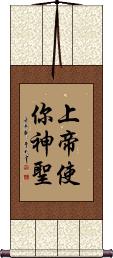
上帝使你神聖 means “Sanctified by God,” in Chinese.
This was added at the request of a customer. This may be more appropriate for a priest or reverend than a layman. But that depends on how your religion sees the order of things.
If you directly translate, you get something like, “God made you Holy.”
Here's the character breakdown:
上帝 = God
使 = Makes; Made; Let
你 = You
神聖 = Sacred; Holy; Sanctification; Divine; Hallow; Holiness
Galatians 5:25
If we live in the Spirit, let us also walk in the Spirit
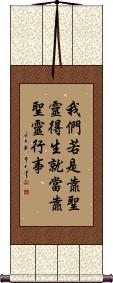
我們若是靠聖靈得生就當靠聖靈行事 is the translation of Galatians 5:25 into Mandarin Chinese via the Chinese Union Bible.
KJV: If we live in the Spirit, let us also walk in the Spirit.
NIV: Since we live by the Spirit, let us keep in step with the Spirit.
The annotation of this Chinese translation:
1.我们 wǒ men - we / us / ourselves
2.若是 ruò shì - if
3.靠 kào - depend upon / lean on / near / by / against / to support
4.圣灵 shèng líng - Holy Ghost
5.得 děi - to have to / must / ought to / degree or possibility
6.生就 shēng jiù - born one way or another (nervous, suspicious, etc.)
7.当 dàng - suitable / adequate / fitting / proper
8.靠 kào - depend upon / lean on / near / by / against / to support
9.圣灵 shèng líng - Holy Ghost
10.行事 xíng shì - how one does things / how one runs things (in this case, it suggests, “to walk in step with”)
Galatians 5:22-23

Here is Galatians 5:22 and a bit of 23 in Chinese.
The text with punctuation:
圣灵所结的果子,就是仁爱,喜乐,和平,忍耐,恩慈,良善,信实,温柔,节制。
Hand-painted calligraphy does not retain punctuation.
This translation is from the Chinese Union Bible.
You may know it from the KJV as:
5:22 But the fruit of the Spirit is love, joy, peace, longsuffering, gentleness, goodness, faith,
5:23 Meekness, temperance...
Daodejing / Tao Te Ching - Chapter 81
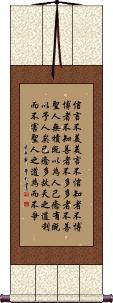
信言不美美言不信知者不博博者不知善者不多多者不善聖人無積既以為人己癒有既以予人矣已癒多故天之道利而不害聖人之道為而不爭 is the Mawangdui version of Daodejing chapter 81.
Credible words are not eloquent;
Eloquent words are not credible.
The wise are not erudite;
The erudite are not wise.
The adept are not all-around;
The all-around are not adept.
The sages do not accumulate things.
Yet the more they have done for others,
The more they have gained themselves;
The more they have given to others,
The more they have gotten themselves.
Thus, the way of tian (heaven) is to benefit without harming;
The way of sages is to do without contending.
Sincere words are not showy;
showy words are not sincere.
Those who know are not “widely learned";
those “widely learned” do not know.
The good do not have a lot;
Those with a lot are not good.
The Sage accumulates nothing.
Having used what he had for others,
he has even more.
Having given what he had to others,
what he has is even greater.
Therefore, the Way of Heaven is to benefit and not cause any harm,
The Way of Man is to act on behalf of others and not to compete with them.
True words aren't charming,
charming words aren't true.
Good people aren't contentious,
contentious people aren't good.
People who know aren't learned,
learned people don't know.
Wise souls don't hoard;
the more they do for others the more they have,
the more they give the richer they are.
The Way of heaven provides without destroying.
Doing without outdoing
is the Way of the wise.
Daodejing / Tao Te Ching - Chapter 27
The Mastery of Effortless Skill

Chapter 27 of the Daodejing reveals a profound truth about mastery: the highest skill leaves no trace, requires no force, and appears almost invisible.
善行無轍跡,
善言無瑕謫,
善數不用籌策,
善閉無關鍵而不可開,
善結無繩約而不可解。
是以聖人常善救人,
故無棄人;
常善救物,
故無棄物。
是謂襲明。
故善人者,不善人之師;
不善人者,善人之資。
不貴其師,不愛其資,
雖智大迷,
是謂要妙。
The sage moves through life with such natural harmony that nothing seems imposed; doors need no locks, knots require no rope, and actions leave no mark behind.
This is the essence of wúwéi (effortless action), where true ability arises from deep alignment with the Tao rather than deliberate effort.
At its heart, this chapter teaches compassion without exception. The sage “abandons no one and nothing,” recognizing value in all people and all things. Even those who seem flawed or unrefined are not rejected, but understood as part of a greater whole with each person both a student and a teacher in the unfolding of life.
Laozi reminds us that wisdom is not about perfection or control, but about subtle awareness. The truly skilled individual does not rely on tools, rules, or rigid structures; instead, they embody an intuitive understanding that makes their actions naturally complete.
In this way, excellence becomes quiet, effortless, and beyond imitation.
This teaching also reflects a deeper philosophical insight: Opposites are interdependent. The “good” person learns from the “not good,” and the “not good” provides the material for growth. To reject either is to misunderstand the balance of existence itself.
As calligraphy, Daodejing Chapter 27 serves as a reminder to cultivate inner mastery rather than outward display. It is a meditation on refinement, humility, and the quiet power of skill perfected through harmony with the natural order.
Note: The Chinese text used here is based on the early Mawangdui silk manuscript tradition (2nd century BCE). The Guodian manuscripts do NOT preserve Chapter 27 in full form.
The Lord's Prayer / Mathew 6:9-13
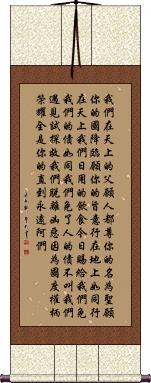
Here is the Lord's Prayer in Chinese from Mathew 6:9-13.
The Chinese text with punctuation is:
Part of 6:9 ...我们在天上的父,愿人都尊你的名为圣。
6:10 愿你的国降临,愿你的旨意行在地上,如同行在天上。
6:11 我们日用的饮食,今日赐给我们。
6:12 免我们的债,如同我们免了人的债。
6:13 不叫我们遇见试探,救我们脱离凶恶,因为国度,权柄,荣耀,全是你的,直到永远,阿们。
Note that punctuation is not included in traditional Chinese calligraphy artwork.
From KJV, this is:
Part of 6:9 ...Our Father which art in heaven, Hallowed be thy name.
6:10 Thy kingdom come. Thy will be done in earth, as it is in heaven.
6:11 Give us this day our daily bread.
6:12 And forgive us our debts, as we forgive our debtors.
6:13 And lead us not into temptation, but deliver us from evil: For thine is the kingdom, and the power, and the glory, forever. Amen.
The Lord's Prayer / Luke 11:2-4
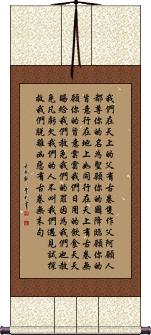
Here is the Lord's Prayer in Chinese from Luke 11:2-4.
The Chinese text with punctuation is:
Part of 11:2 ...我们在天上的父,有古卷只作父阿愿人都尊你的名为圣。愿你的国降临。愿你的旨意行在地上,如同行在天上。有古卷无愿你的旨意云云。
11:3 我们日用的饮食,天天赐给我们。
11:4 赦免我们的罪,因为我们也赦免凡亏欠我们的人。不叫我们遇见试探。救我们脱离凶恶。有古卷无末句。
Note that punctuation is not included in traditional Chinese calligraphy artwork.
From KJV, this is:
Part of 11:2 ...Our Father which art in heaven, Hallowed be thy name. Thy kingdom come. Thy will be done, as in heaven, so in earth.
11:3 Give us day by day our daily bread.
11:4 And forgive us our sins; for we also forgive everyone that is indebted to us. And lead us not into temptation, but deliver us from evil.
Not the results for 聖 that you were looking for?
Below are some entries from our dictionary that may match your 聖 search...
| Characters If shown, 2nd row is Simp. Chinese |
Pronunciation Romanization |
Simple Dictionary Definition |
聖 圣 see styles |
shèng sheng4 sheng mina みな |
More info & calligraphy: The Saint(1) highly virtuous monk; (2) (honorific or respectful language) monk; (3) Buddhist solitary; (4) (See 高野聖・1) Buddhist missionary; (5) saint (i.e. a virtuous person); (6) (archaism) (honorific or respectful language) emperor; (7) (in form 〜の聖) master; expert; (female given name) Mina ārya; sādhu; a sage; wise and good; upright, or correct in all his character; sacred, holy, saintly. |
武聖 武圣 see styles |
wǔ shèng wu3 sheng4 wu sheng |
More info & calligraphy: Warrior Saint / Saint of War |
穆聖 穆圣 see styles |
mù shèng mu4 sheng4 mu sheng |
More info & calligraphy: Prophet Muhammad |
聖人 圣人 see styles |
shèng rén sheng4 ren2 sheng jen masato まさと |
More info & calligraphy: Holy Man / Saint(1) {Christn} saint; (2) (orig. meaning) wise and virtuous person (esp. in Confucianism); great religious teacher; sage; (3) (See 清酒) refined sake; (male given name) Masato is the opposite of the 凡人 common, or unenlightened man. |
聖地 圣地 see styles |
shèng dì sheng4 di4 sheng ti seichi / sechi せいち |
More info & calligraphy: Holy Land(1) sacred place; holy ground; the Holy Land; (2) (slang) real-life location used as a setting in a novel, film, anime, etc.; (place-name) Seichi stage of enlightenment |
聖天 圣天 see styles |
shèng tiān sheng4 tian1 sheng t`ien sheng tien seiten / seten せいてん |
More info & calligraphy: GaneshĀryadeva |
聖書 see styles |
seisho / sesho せいしょ |
More info & calligraphy: Holy Bible |
聖母 圣母 see styles |
shèng mǔ sheng4 mu3 sheng mu maria まりあ |
More info & calligraphy: Holy Mother / Saint Mary(1) mother of a holy person; (2) {Christn} Holy Mother; Virgin Mary; Our Lady; (female given name) Maria |
聖火 圣火 see styles |
shèng huǒ sheng4 huo3 sheng huo seika / seka せいか |
More info & calligraphy: Sacred Fire(1) sacred fire; sacred flame; (2) (See オリンピック聖火) Olympic flame; Olympic torch; (given name) Seika |
聖經 圣经 see styles |
shèng jīng sheng4 jing1 sheng ching |
More info & calligraphy: Holy Bible |
聖者 圣者 see styles |
shèng zhě sheng4 zhe3 sheng che seija; shouja / seja; shoja せいじゃ; しょうじゃ |
More info & calligraphy: The Saintsaint ārya, holy or saintly one; one who has started on the path to nirvāṇa; holiness. |
聖職 圣职 see styles |
shèng zhí sheng4 zhi2 sheng chih seishoku / seshoku せいしょく |
More info & calligraphy: Ministry / Priesthood(1) esteemed profession (e.g. priest, monk, teacher, doctor, etc.); venerable vocation; (2) {Christn} ministry; priesthood; holy orders |
聖誕 圣诞 see styles |
shèng dàn sheng4 dan4 sheng tan shōtan |
More info & calligraphy: Christmasemperor's birthday |
八聖道 八圣道 see styles |
bā shèng dào ba1 sheng4 dao4 pa sheng tao hasshōdō はっしょうどう |
More info & calligraphy: Noble Eightfold Pathnoble eightfold path |
聖約翰 圣约翰 see styles |
shèng yuē hàn sheng4 yue1 han4 sheng yüeh han |
More info & calligraphy: Stjohn |
聖胡安 圣胡安 see styles |
shèng hú ān sheng4 hu2 an1 sheng hu an |
More info & calligraphy: Sanjuan |
聖地亞哥 圣地亚哥 see styles |
shèng dì yà gē sheng4 di4 ya4 ge1 sheng ti ya ko |
More info & calligraphy: San Diego |
聖誕快樂 圣诞快乐 see styles |
shèng dàn kuài lè sheng4 dan4 kuai4 le4 sheng tan k`uai le sheng tan kuai le |
More info & calligraphy: Merry Christmas |
聖誕老人 圣诞老人 see styles |
shèng dàn lǎo rén sheng4 dan4 lao3 ren2 sheng tan lao jen |
More info & calligraphy: Santa Claus |
聖路易斯 圣路易斯 see styles |
shèng lù yì sī sheng4 lu4 yi4 si1 sheng lu i ssu |
More info & calligraphy: Stlouis |
聖馬力諾 圣马力诺 see styles |
shèng mǎ lì nuò sheng4 ma3 li4 nuo4 sheng ma li no |
More info & calligraphy: San Marino |
一聖 see styles |
kazukiyo かずきよ |
(given name) Kazukiyo |
七聖 七圣 see styles |
qī shèng qi1 sheng4 ch`i sheng chi sheng nanasei / nanase ななせい |
(male given name) Nanasei v.七賢, 七聖, 七聖財, saptadhana. The seven sacred graces variously defined, e.g. 信 faith, 戒 observation of the commandments, 聞hearing instruction, 慙 shame (for self), 愧 shame (for others); 捨 renunciation; and慧 wisdom. |
万聖 see styles |
makiyo まきよ |
(female given name) Makiyo |
三聖 三圣 see styles |
sān shèng san1 sheng4 san sheng misato みさと |
(1) three enlightened men (Buddha, Confucius and Christ; Lao-tzu, Confucius and Buddha; etc.); three sages; three virtuous men; (2) the three most accomplished people (of a particular craft or trade); (female given name) Misato The three sages, or holy ones, of whom there are several groups. The 華嚴Huayan have Vairocana in the center with Mañjuśrī on his left and Samantabhadra on his right. The 彌陀 Mituo or Pure-land sect, have Amitābha in the center, with Avalokiteśvara on his left and Mahāsthāmaprāpta on his right. The Tiantai use the term for the 藏, 別, and 圓教v. 三教. |
乃聖 see styles |
noa のあ |
(female given name) Noa |
二聖 二圣 see styles |
èr shèng er4 sheng4 erh sheng ni shō |
Śākyamuni and Prabhūtaratna 多寶. |
亘聖 see styles |
kousei / kose こうせい |
(personal name) Kōsei |
亜聖 see styles |
tsuguhito つぐひと |
sage of the second order; (personal name) Tsuguhito |
亞聖 亚圣 see styles |
yà shèng ya4 sheng4 ya sheng asei / ase あせい |
Second Sage, traditional title of Mencius 孟子[Meng4 zi3] in Confucian studies (female given name) Asei |
Click here for more 聖 results from our dictionary
The following table may be helpful for those studying Chinese or Japanese...
| Title | Characters | Romaji (Romanized Japanese) | Various forms of Romanized Chinese | |
| The Saint | 聖 圣 | sei | shèng / sheng4 / sheng | |
| Christmas | 聖誕 圣诞 | shèng dàn sheng4 dan4 sheng dan shengdan | sheng tan shengtan |
|
| Ganesh | 聖天 圣天 | shouten / shoten | shèng tiān sheng4 tian1 sheng tian shengtian | sheng t`ien shengtien sheng tien |
| Holy Bible | 聖經 圣经 | shèng jīng sheng4 jing1 sheng jing shengjing | sheng ching shengching |
|
| Holy Bible | 聖書 圣书 | seisho | ||
| Holy Land | 聖地 圣地 | seichi | shèng dì / sheng4 di4 / sheng di / shengdi | sheng ti / shengti |
| Holy Mother Saint Mary | 聖母 圣母 | seibo | shèng mǔ / sheng4 mu3 / sheng mu / shengmu | |
| Juggernaut | 劍聖 剑圣 | jiàn shèng jian4 sheng4 jian sheng jiansheng | chien sheng chiensheng |
|
| Ministry Priesthood | 聖職 圣职 | seishoku | shèng zhí sheng4 zhi2 sheng zhi shengzhi | sheng chih shengchih |
| Prophet Muhammad | 穆聖 穆圣 | mù shèng / mu4 sheng4 / mu sheng / musheng | ||
| Sacred Fire | 聖火 圣火 | seika | shèng huǒ sheng4 huo3 sheng huo shenghuo | |
| The Saint | 聖者 圣者 | seija | shèng zhě sheng4 zhe3 sheng zhe shengzhe | sheng che shengche |
| Holy Man Saint | 聖人 圣人 | seijin | shèng rén sheng4 ren2 sheng ren shengren | sheng jen shengjen |
| Warrior Saint Saint of War | 武聖 武圣 | wǔ shèng / wu3 sheng4 / wu sheng / wusheng | ||
| Noble Eightfold Path | 八聖道 八圣道 | hasshoudou / hashodo | bā shèng dào ba1 sheng4 dao4 ba sheng dao bashengdao | pa sheng tao pashengtao |
| Holy Warrior | 聖戦士 | sei senshi / seisenshi | ||
| Paladin | 聖騎士 圣骑士 | shèng qí shì sheng4 qi2 shi4 sheng qi shi shengqishi | sheng ch`i shih shengchishih sheng chi shih |
|
| Sanjuan | 聖胡安 圣胡安 | shèng hú ān sheng4 hu2 an1 sheng hu an shenghuan | ||
| Seishin-Kan | 聖心館 | sei shin kan seishinkan | ||
| Stjohn | 聖約翰 圣约翰 | shèng yuē hàn sheng4 yue1 han4 sheng yue han shengyuehan | sheng yüeh han shengyüehhan |
|
| Sundance | 聖丹斯 圣丹斯 | shèng dān sī sheng4 dan1 si1 sheng dan si shengdansi | sheng tan ssu shengtanssu |
|
| Holy Spirit Holy Ghost | 聖靈 / 聖霊 圣灵 | sei rei / seirei | shèng líng sheng4 ling2 sheng ling shengling | |
| Sword Saint | 剣聖 / 剣聖 剣圣 | kensei | jiàn shèng jian4 sheng4 jian sheng jiansheng | chien sheng chiensheng |
| Merry Christmas | 聖誕快樂 圣诞快乐 | shèng dàn kuài lè sheng4 dan4 kuai4 le4 sheng dan kuai le shengdankuaile | sheng tan k`uai le shengtankuaile sheng tan kuai le |
|
| San Marino | 聖馬力諾 圣马力诺 | shèng mǎ lì nuò sheng4 ma3 li4 nuo4 sheng ma li nuo shengmalinuo | sheng ma li no shengmalino |
|
| San Pedro | 聖佩德羅 圣佩德罗 | shèng pèi dé luó sheng4 pei4 de2 luo2 sheng pei de luo shengpeideluo | sheng p`ei te lo shengpeitelo sheng pei te lo |
|
| San Diego | 聖地亞哥 圣地亚哥 | shèng dì yà gē sheng4 di4 y4 ge1 sheng di y ge shengdiyge | sheng ti ko shengtiko |
|
| Santa Claus | 聖誕老人 圣诞老人 | shèng dàn lǎo rén sheng4 dan4 lao3 ren2 sheng dan lao ren shengdanlaoren | sheng tan lao jen shengtanlaojen |
|
| Santiago | 聖地亞哥 圣地亚哥 | shèng dì yà gē sheng4 di4 ya4 ge1 sheng di ya ge shengdiyage | sheng ti ya ko shengtiyako |
|
| Stclair | 聖克萊爾 圣克莱尔 | shèng kè lái ěr sheng4 ke4 lai2 er3 sheng ke lai er shengkelaier | sheng k`o lai erh shengkolaierh sheng ko lai erh |
|
| Stlouis | 聖路易斯 圣路易斯 | shèng lù yì sī sheng4 lu4 yi4 si1 sheng lu yi si shengluyisi | sheng lu i ssu shengluissu |
|
| Stpierre | 聖皮埃爾 圣皮埃尔 | shèng pí āi ěr sheng4 pi2 ai1 er3 sheng pi ai er shengpiaier | sheng p`i ai erh shengpiaierh sheng pi ai erh |
|
| Nichiren Daishonin | 日蓮大聖人 | nichi ren dai shou nin nichirendaishounin nichi ren dai sho nin | ||
| Seishin-Kai Seishinkai | 聖心会 / 聖心會 聖心会 | sei shin kai seishinkai | ||
| Sanctified by God | 上帝使你神聖 上帝使你神圣 | shèng dì shǐ nǐ shén shèng sheng4 di4 shi3 ni3 shen2 sheng4 sheng di shi ni shen sheng shengdishinishensheng | sheng ti shih ni shen sheng shengtishihnishensheng |
|
| Galatians 5:25 | 我們若是靠聖靈得生就當靠聖靈行事 我们若是靠圣灵得生就当靠圣灵行事 | wǒ men ruò shì kào shèng líng shēn jiù dāng kào shèng líng xíng shì wo3 men ruo4 shi4 kao4 sheng4 ling2 dei3 shen1 jiu4 dang1 kao4 sheng4 ling2 xing2 shi4 wo men ruo shi kao sheng ling dei shen jiu dang kao sheng ling xing shi | wo men jo shih k`ao sheng ling tei shen chiu tang k`ao sheng ling hsing shih wo men jo shih kao sheng ling tei shen chiu tang kao sheng ling hsing shih |
|
| Galatians 5:22-23 | 聖靈所結的果子就是仁愛喜樂和平忍耐恩慈良善信實溫柔節制 圣灵所结的果子就是仁爱喜乐和平忍耐恩慈良善信实温柔节制 | shèng líng suǒ jié de guǒ zi jiù shì rén ài xǐ lè he píng rěn nài ēn cí liáng shàn xìn shí wēn róu jié zhì sheng4 ling2 suo3 jie2 de guo3 zi jiu4 shi4 ren2 ai4 xi3 le4 he ping2 ren3 nai4 en1 ci2 liang2 shan4 xin4 shi2 wen1 rou2 jie2 zhi4 sheng ling suo jie de guo zi jiu shi ren ai xi le he ping ren nai en ci liang shan xin shi wen rou jie zhi | sheng ling so chieh te kuo tzu chiu shih jen ai hsi le ho p`ing jen nai en tz`u liang shan hsin shih wen jou chieh chih sheng ling so chieh te kuo tzu chiu shih jen ai hsi le ho ping jen nai en tzu liang shan hsin shih wen jou chieh chih |
|
| Daodejing Tao Te Ching - Chapter 81 | 信言不美美言不信知者不博博者不知善者不多多者不善聖人無積既以為人己癒有既以予人矣已癒多故天之道利而不害聖人之道為而不爭 信言不美美言不信知者不博博者不知善者不多多者不善圣人无积既以为人己愈有既以予人矣已愈多故天之道利而不害圣人之道为而不争 | |||
| Daodejing Tao Te Ching - Chapter 27 | 善行無轍跡善言無瑕謫善數不用籌策善閉無關鍵而不可開善結無繩約而不可解是以聖人常善救人故無棄人常善救物故無棄物是謂襲明故善人者不善人之師不善人者善人之資不貴其師不愛其資雖智大迷是謂要妙 善行无辙迹善言无瑕谪善数不用筹策善闭无关键而不可开善结无绳约而不可解是以圣人常善救人故无弃人常善救物故无弃物是谓袭明故善人者不善人之师不善人者善人之资不贵其师不爱其资虽智大迷是谓要妙 | shàn xíng wú zhé jì shàn yán wú xiá zhé shàn shù bù yòng chóu cè shàn bì wú guān jiàn ér bù kě kāi shàn jié wú shéng yuē ér bù kě jiě shì yǐ shèng rén cháng shàn jiù rén gù wú qì rén cháng shàn jiù wù gù wú qì wù shì wèi xí míng gù shàn rén zhě bù shàn rén zhī shī bù shàn rén zhě shàn rén zhī zī bù guì qí shī bù ài qí zī suī zhì dà mí shì wèi yào miào shan4 xing2 wu2 zhe2 ji4 shan4 yan2 wu2 xia2 zhe2 shan4 shu4 bu4 yong4 chou2 ce4 shan4 bi4 wu2 guan1 jian4 er2 bu4 ke3 kai1 shan4 jie2 wu2 sheng2 yue1 er2 bu4 ke3 jie3 shi4 yi3 sheng4 ren2 chang2 shan4 jiu4 ren2 gu4 wu2 qi4 ren2 chang2 shan4 jiu4 wu4 gu4 wu2 qi4 wu4 shi4 wei4 xi2 ming2 gu4 shan4 ren2 zhe3 bu4 shan4 ren2 zhi1 shi1 bu4 shan4 ren2 zhe3 shan4 ren2 zhi1 zi1 bu4 gui4 qi2 shi1 bu4 ai4 qi2 zi1 sui1 zhi4 da4 mi2 shi4 wei4 yao4 miao4 shan xing wu zhe ji shan yan wu xia zhe shan shu bu yong chou ce shan bi wu guan jian er bu ke kai shan jie wu sheng yue er bu ke jie shi yi sheng ren chang shan jiu ren gu wu qi ren chang shan jiu wu gu wu qi wu shi wei xi ming gu shan ren zhe bu shan ren zhi shi bu shan ren zhe shan ren zhi zi bu gui qi shi bu ai qi zi sui zhi da mi shi wei yao miao | shan hsing wu che chi shan yen wu hsia che shan shu pu yung ch`ou ts`e shan pi wu kuan chien erh pu k`o k`ai shan chieh wu sheng yüeh erh pu k`o chieh shih i sheng jen ch`ang shan chiu jen ku wu ch`i jen ch`ang shan chiu wu ku wu ch`i wu shih wei hsi ming ku shan jen che pu shan jen chih shih pu shan jen che shan jen chih tzu pu kuei ch`i shih pu ai ch`i tzu sui chih ta mi shih wei yao miao shan hsing wu che chi shan yen wu hsia che shan shu pu yung chou tse shan pi wu kuan chien erh pu ko kai shan chieh wu sheng yüeh erh pu ko chieh shih i sheng jen chang shan chiu jen ku wu chi jen chang shan chiu wu ku wu chi wu shih wei hsi ming ku shan jen che pu shan jen chih shih pu shan jen che shan jen chih tzu pu kuei chi shih pu ai chi tzu sui chih ta mi shih wei yao miao |
|
| The Lord's Prayer Mathew 6:9-13 | 我們在天上的父願人都尊你的名為聖願你的國降臨願你的旨意行在地上如同行在天上我們日用的飲食今日賜給我們免我們的債如同我們免了人的債不叫我們遇見試探救我們脫離凶惡因為國度權柄榮耀全是你的直到永遠阿們 我们在天上的父愿人都尊你的名为圣愿你的国降临愿你的旨意行在地上如同行在天上我们日用的饮食今日赐给我们免我们的债如同我们免了人的债不叫我们遇见试探救我们脱离凶恶因为国度权柄荣耀全是你的直到永远阿们 | wǒ men zài tiān shàng de fù yuàn rén dōu zūn nǐ de míng wèi shèng yuàn nǐ de guó jiàng lín yuàn nǐ de zhǐ yì xíng zài dì shàng rú tóng xíng zài tiān shàng wǒ men rì yòng de yǐn shí jīn rì cì gěi wǒ men miǎn wǒ men de zhài rú tóng wǒ men miǎn le rén de zhài bù jiào wǒ men yù jiàn shì tàn jiù wǒ men tuō lí xiōng è yīn wèi guó dù quán bǐng róng yào quán shì nǐ de zhí dào yǒng yuǎn ā men wo3 men zai4 tian1 shang4 de fu4 yuan4 ren2 dou1 zun1 ni3 de ming2 wei4 sheng4 yuan4 ni3 de guo2 jiang4 lin2 yuan4 ni3 de zhi3 yi4 xing2 zai4 di4 shang4 ru2 tong2 xing2 zai4 tian1 shang4 wo3 men ri4 yong4 de yin3 shi2 jin1 ri4 ci4 gei3 wo3 men mian3 wo3 men de zhai4 ru2 tong2 wo3 men mian3 le ren2 de zhai4 bu4 jiao4 wo3 men yu4 jian4 shi4 tan4 jiu4 wo3 men tuo1 li2 xiong1 e4 yin1 wei4 guo2 du4 quan2 bing3 rong2 yao4 quan2 shi4 ni3 de zhi2 dao4 yong3 yuan3 a1 men wo men zai tian shang de fu yuan ren dou zun ni de ming wei sheng yuan ni de guo jiang lin yuan ni de zhi yi xing zai di shang ru tong xing zai tian shang wo men ri yong de yin shi jin ri ci gei wo men mian wo men de zhai ru tong wo men mian le ren de zhai bu jiao wo men yu jian shi tan jiu wo men tuo li xiong e yin wei guo du quan bing rong yao quan shi ni de zhi dao yong yuan a men | wo men tsai t`ien shang te fu yüan jen tou tsun ni te ming wei sheng yüan ni te kuo chiang lin yüan ni te chih i hsing tsai ti shang ju t`ung hsing tsai t`ien shang wo men jih yung te yin shih chin jih tz`u kei wo men mien wo men te chai ju t`ung wo men mien le jen te chai pu chiao wo men yü chien shih t`an chiu wo men t`o li hsiung o yin wei kuo tu ch`üan ping jung yao ch`üan shih ni te chih tao yung yüan a men wo men tsai tien shang te fu yüan jen tou tsun ni te ming wei sheng yüan ni te kuo chiang lin yüan ni te chih i hsing tsai ti shang ju tung hsing tsai tien shang wo men jih yung te yin shih chin jih tzu kei wo men mien wo men te chai ju tung wo men mien le jen te chai pu chiao wo men yü chien shih tan chiu wo men to li hsiung o yin wei kuo tu chüan ping jung yao chüan shih ni te chih tao yung yüan a men |
|
| The Lord's Prayer Luke 11:2-4 | 我們在天上的父有古卷隻作父阿願人都尊你的名為聖願你的國降臨願你的旨意行在地上如同行在天上有古卷無願你的旨意雲雲我們日用的飲食天天賜給我們赦免我們的罪因為我們也赦免凡虧欠我們的人不叫我們遇見試探救我們脫離凶惡有古卷無末句 我们在天上的父有古卷只作父阿愿人都尊你的名为圣愿你的国降临愿你的旨意行在地上如同行在天上有古卷无愿你的旨意云云我们日用的饮食天天赐给我们赦免我们的罪因为我们也赦免凡亏欠我们的人不叫我们遇见试探救我们脱离凶恶有古卷无末句 | wǒ men zài tiān shàng de fù yǒu gǔ juǎn zhǐ zuò fù ā yuàn rén dōu zūn nǐ de míng wèi shèng yuàn nǐ de guó jiàng lín yuàn nǐ de zhǐ yì xíng zài dì shàng rú tóng xíng zài tiān shàng yǒu gǔ juǎn wú yuàn nǐ de zhǐ yì yún yún wǒ men rì yòng de yǐn shí tiān tiān cì gěi wǒ men shè miǎn wǒ men de zuì yīn wèi wǒ men yě shè miǎn fán kuī qiàn wǒ men de rén bù jiào wǒ men yù jiàn shì tàn jiù wǒ men tuō lí xiōng è yǒu gǔ juǎn wú mò jù wo3 men zai4 tian1 shang4 de fu4 you3 gu3 juan3 zhi3 zuo4 fu4 a1 yuan4 ren2 dou1 zun1 ni3 de ming2 wei4 sheng4 yuan4 ni3 de guo2 jiang4 lin2 yuan4 ni3 de zhi3 yi4 xing2 zai4 di4 shang4 ru2 tong2 xing2 zai4 tian1 shang4 you3 gu3 juan3 wu2 yuan4 ni3 de zhi3 yi4 yun2 yun2 wo3 men ri4 yong4 de yin3 shi2 tian1 tian1 ci4 gei3 wo3 men she4 mian3 wo3 men de zui4 yin1 wei4 wo3 men ye3 she4 mian3 fan2 kui1 qian4 wo3 men de ren2 bu4 jiao4 wo3 men yu4 jian4 shi4 tan4 jiu4 wo3 men tuo1 li2 xiong1 e4 you3 gu3 juan3 wu2 mo4 ju4 wo men zai tian shang de fu you gu juan zhi zuo fu a yuan ren dou zun ni de ming wei sheng yuan ni de guo jiang lin yuan ni de zhi yi xing zai di shang ru tong xing zai tian shang you gu juan wu yuan ni de zhi yi yun yun wo men ri yong de yin shi tian tian ci gei wo men she mian wo men de zui yin wei wo men ye she mian fan kui qian wo men de ren bu jiao wo men yu jian shi tan jiu wo men tuo li xiong e you gu juan wu mo ju | wo men tsai t`ien shang te fu yu ku chüan chih tso fu a yüan jen tou tsun ni te ming wei sheng yüan ni te kuo chiang lin yüan ni te chih i hsing tsai ti shang ju t`ung hsing tsai t`ien shang yu ku chüan wu yüan ni te chih i yün yün wo men jih yung te yin shih t`ien t`ien tz`u kei wo men she mien wo men te tsui yin wei wo men yeh she mien fan k`uei ch`ien wo men te jen pu chiao wo men yü chien shih t`an chiu wo men t`o li hsiung o yu ku chüan wu mo chü wo men tsai tien shang te fu yu ku chüan chih tso fu a yüan jen tou tsun ni te ming wei sheng yüan ni te kuo chiang lin yüan ni te chih i hsing tsai ti shang ju tung hsing tsai tien shang yu ku chüan wu yüan ni te chih i yün yün wo men jih yung te yin shih tien tien tzu kei wo men she mien wo men te tsui yin wei wo men yeh she mien fan kuei chien wo men te jen pu chiao wo men yü chien shih tan chiu wo men to li hsiung o yu ku chüan wu mo chü |
|
| In some entries above you will see that characters have different versions above and below a line. In these cases, the characters above the line are Traditional Chinese, while the ones below are Simplified Chinese. | ||||

Successful Chinese Character and Japanese Kanji calligraphy searches within the last few hours...



