Many custom options...


And formats...



Zu in Chinese / Japanese...
Buy a Zu calligraphy wall scroll here!
Personalize your custom “Zu” project by clicking the button next to your favorite “Zu” title below...
1. Bazu
2. Family / Members of a Family
3. Grandfather
5. Contentment
7. Zuma
8. Zumi
9. Zura
10. Zook
11. Zucker
12. Suzu
13. Arzoo
14. Azizu
15. Azur
16. Brotherly and Sisterly Love
17. I am Enough
18. Izzul
19. Jeezus
20. Kanzul
21. Rezuan
22. Ridzuan
23. Rizuan
25. Zubair
26. Zubayer
27. Zuhause
28. Zuhra
29. Zulaika
30. Zumaya
31. Zunaidah
32. Zunaira
33. Zunayra
34. Zuria
35. Azuran
36. Zunaith
37. Zunait
38. Zuneet
39. Kunzum
40. Zuzanna
41. Zuber
42. Zuckerman
43. Zurita
44. Ozuna
45. Mazur
46. Arvizu
47. Suzunu
49. Azusena
50. Jeezust
51. Overcome: Regardless of the Rain and Wind
52. Zuharaas
53. Zazueta
55. Dear Grandfather
57. Dear Grandmother
58. Orsorezu
59. Moctezuma
61. Dear Grandfather
63. Dear Grandmother
66. A Journey of 1000 Miles Begins with a Single Step
67. Regardless of the Weather, We Overcome Troubles Together
Bazu
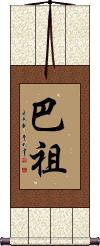
巴祖 is the name Bazu in Chinese (Mandarin).
Family / Members of a Family
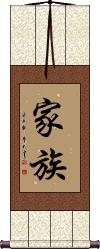
家族 is family in Japanese Kanji, Chinese and Korean.
This represents all the members of a family.
This can also mean household or clan, depending on the context.
Grandfather
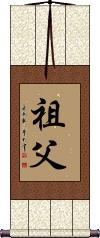
祖父 is a title for grandfather in Japanese.
In Chinese, this is specifically paternal grandfather.
This title alone is not normal for a calligraphy wall scroll.
Soccer / Football / Futbol
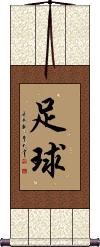
足球 is the word for football or soccer in Chinese.
As with most of the world, football is very popular in China. During the World Cup, the whole country seems to shut down to watch (regardless of whether Team China is playing or not).
Soccer is probably the 3rd most popular participation sport in China (after ping pong and badminton).
As you might expect, the first character means “foot” and the second character means “ball.”
FYI: This game would never be confused with American Football in Chinese. As with the rest of the world, there is a vague awareness of what American Football is (often described as "that game kind of like rugby").
For those familiar with American Football, there is some disgust regarding the fact that winners of the Superbowl call themselves "world champions" of a game that is only played in the USA. This is one of the reasons that jokes abound about how Americans are unaware that there is a world outside of their borders.
Contentment
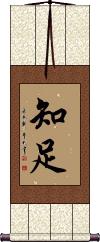
知足 means content with one's situation or to know contentment (hence happiness).
From the Zen Buddhist context, Chisoku or 知足 (knowing what’s enough) means always to know and be
satisfied with one’s lot.
Human pain and suffering are born of greed, and that greed arises because we do not know what’s enough.
The Chinese philosopher, Menzi (372-289 BCE) said, “to nourish the mind, there is nothing better than to make the desires few.”
This relays the idea that the best method to cultivate the mind is to have little desire.
Manchu / Manchurian
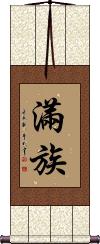
滿族 is the Chinese title for the Manchu or Manchurian ethnic group.
In modern times, they hail from the Liaoning province of northeast China.
Zuma
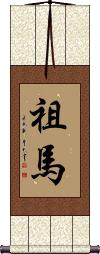
祖馬 is the name Zuma in Chinese (Mandarin).
Zumi
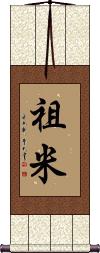
祖米 is the name Zumi in Chinese (Mandarin).
Zura
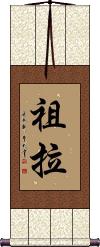
祖拉 is the name Zura in Chinese (Mandarin).
Zook

祖克 is the name Zook in Chinese (Mandarin).
Zucker
祖克 is the name Zucker in Chinese (Mandarin).
Suzu

蘇祖 is the name Suzu in Chinese (Mandarin).
Arzoo

阿爾祖 is the name Arzoo in Chinese (Mandarin).
Azizu
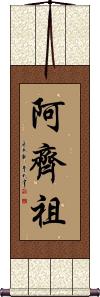
阿齊祖 is the name Azizu in Chinese (Mandarin).
Azur

阿祖爾 is the name Azur in Chinese (Mandarin).
Brotherly and Sisterly Love
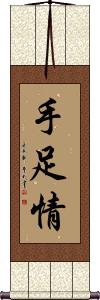
手足情 is the love between siblings.
When you love, protect, care for, and have a deep bond that only brothers or sisters can.
The actual translation is “Hand and Foot,” but the relationship between brothers or sisters is like that of hands and feet. They belong together and complete the body. Even though this says “hand and foot,” it will always be read with the brotherly and sisterly love meaning in Chinese.
Note: During the past 20 years, the “One child policy” in China is slowly making this term obsolete.
I am Enough
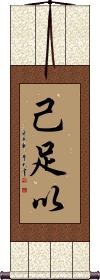
己足以 is a profound and philosophical way to say “I am enough” in Chinese.
The first character means self or oneself.
The last two characters are a word that means sufficient or enough.
Izzul

伊祖爾 is the name Izzul in Chinese (Mandarin).
Jeezus

吉祖斯 is the name Jeezus in Chinese (Mandarin).
Kanzul
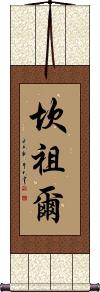
坎祖爾 is the name Kanzul in Chinese (Mandarin).
Rezuan

雷祖安 is the name Rezuan in Chinese (Mandarin).
Ridzuan
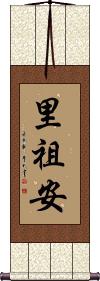
里祖安 is the name Ridzuan in Chinese (Mandarin).
Rizuan

日祖安 is the name Rizuan in Chinese (Mandarin).
Five Ancestors Fist
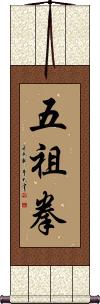
五祖拳 is a martial arts concept (or school) known as Five Ancestors' Fist.
The first character means five.
The second means ancestor, forefather, or grandparents.
The third means fist.
The ancestors referred to by this title and whose attributes contribute to this style are as follows:
1. Grace of the White Crane.
2. Agility of the Monkey.
3. Precision and skill of Emperor Taizu (great mythical ancestor).
4. Power of Luohan (Buddhist arhat).
5. Breath of Damo (founder of Buddhism, or the first Buddha).
Zubair

祖拜爾 is the name Zubair in Chinese (Mandarin).
Zubayer
祖拜爾 is the name Zubayer in Chinese (Mandarin).
Zuhause

祖豪斯 is the name Zuhause in Chinese (Mandarin).
Zuhra
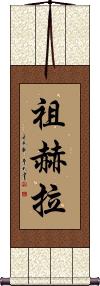
祖赫拉 is the name Zuhra in Chinese (Mandarin).
Zulaika

祖萊卡 is the name Zulaika in Chinese (Mandarin).
Zumaya
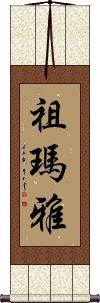
祖瑪雅 is the name Zumaya in Chinese (Mandarin).
Zunaidah
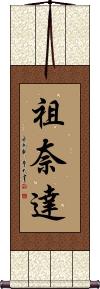
祖奈達 is the name Zunaidah in Chinese (Mandarin).
Zunaira
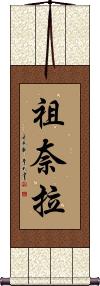
祖奈拉 is the name Zunaira in Chinese (Mandarin).
Zunayra
祖奈拉 is the name Zunayra in Chinese (Mandarin).
Zuria

祖里亞 is the name Zuria in Chinese (Mandarin).
Azuran

阿祖蘭 is the name Azuran in Chinese (Mandarin).
Zunaith

祖奈斯 is the name Zunaith in Chinese (Mandarin).
Zunait

祖奈特 is the name Zunait in Chinese (Mandarin).
Zuneet

祖尼特 is the name Zuneet in Chinese (Mandarin).
Kunzum

昆祖姆 is the name Kunzum in Chinese (Mandarin).
Zuzanna

祖贊納 is the name Zuzanna in Chinese (Mandarin).
Zuber
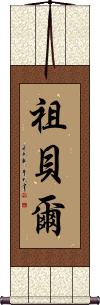
祖貝爾 is the name Zuber in Chinese (Mandarin).
Zuckerman

祖克曼 is the name Zuckerman in Chinese (Mandarin).
Zurita

祖里塔 is the name Zurita in Chinese (Mandarin).
Ozuna

奧祖納 is the name Ozuna in Chinese (Mandarin).
Mazur

馬祖爾 is the name Mazur in Chinese (Mandarin).
Arvizu

阿維祖 is the name Arvizu in Chinese (Mandarin).
Suzunu

蘇祖努 is the name Suzunu in Chinese (Mandarin).
Happiness / Contentment
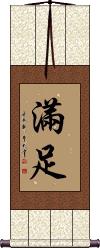
滿足 is the kind of happiness that involves being satisfied and content.
This can also suggest the actions of “to satisfy,” and “to meet the needs of.”
Other single-word definitions include satisfaction, contentment, sufficient, enough, adequate, full, or complete.
 In Japanese, the Kanji for this word is an alternate Chinese form. You can see and select this version at the right (recommended only if your audience is specifically Japanese).
See Also: Satisfaction | Contentment | Pleasure | Well-Being
Azusena
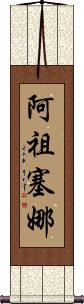
阿祖塞娜 is the name Azusena in Chinese (Mandarin).
Jeezust

杰祖斯特 is the name Jeezust in Chinese (Mandarin).
Overcome: Regardless of the Rain and Wind
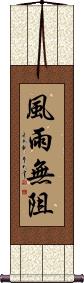
風雨無阻 is a proverb that is often translated as “Go ahead as planned regardless of the weather” or, “[Overcome] despite the rain and wind.”
This is a Chinese proverb that suggests that you are willing (or should be willing) to overcome any adversity, and accomplish your task at hand.
There is a second/optional part to this phrase that suggests that you should do this together with someone (see our other 8-character version if you want the full phrase).
Zuharaas

祖哈拉斯 is the name Zuharaas in Chinese (Mandarin).
Zazueta

扎祖埃塔 is the name Zazueta in Chinese (Mandarin).
Loving Grandfather
Paternal (Southern China)
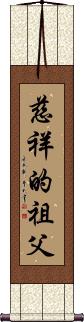
慈祥的祖父 is “Loving Grandfather” in the way people in Southern China call their father's father (paternal grandfather).
Dear Grandfather
Paternal (Southern China)
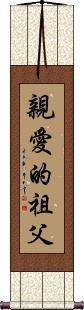
親愛的祖父 is how people in Southern China call their father's father (paternal grandfather) with the adjective/title “Dear” on the front.
Loving Grandmother
Paternal (Southern China)
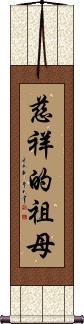
慈祥的祖母 is “Loving Grandmother” in the most common way to refer to your father's mother (paternal grandmother) in Southern China.
Dear Grandmother
Paternal (Southern China)
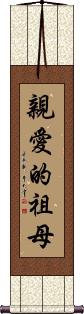
The most common way to refer to your father's mother (paternal grandmother) in Southern China with the adjective/title “Dear” on the front.
Orsorezu
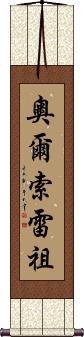
奧爾索雷祖 is the name Orsorezu in Chinese (Mandarin).
Moctezuma

莫克特祖瑪 is the name Moctezuma in Chinese (Mandarin).
Loving Grandfather
Maternal (Southern China)
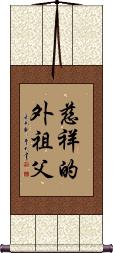
慈祥的外祖父 is “Loving Grandfather” in the formal way that people in Southern China usually call their mother's father (maternal grandfather).
Dear Grandfather
Maternal (Southern China)
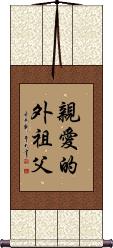
親愛的外祖父 is the formal way that people in Southern China usually call their mother's father (maternal grandfather) with the adjective/title “Dear” on the front.
Loving Grandmother
Maternal (Southern China - formal)
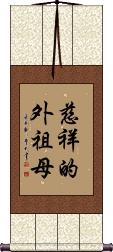
慈祥的外祖母 is “Loving Grandmother” in the formal way to refer to your mother's mother (maternal grandmother) in Southern China.
Dear Grandmother
Maternal (Southern China - formal)
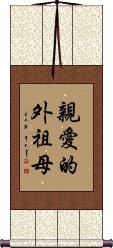
亲爱的外祖母 is the formal way to refer to your mother's mother (maternal grandmother) in Southern China with the adjective/title “Dear” on the front.
Love Loyalty Respect
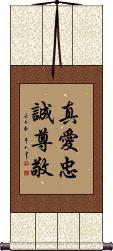
真愛忠誠尊敬 is a Chinese word list that means love, loyalty, and respect.
Honor for Ancestors
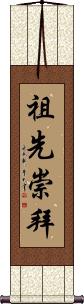
祖先崇拜 means “Appreciation and honor of your ancestors.”
This can refer to anyone from your grandparents and beyond.
The first two characters mean ancestors or forefathers.
The last two characters mean worship, adore/adoration, or admiration.
This is the kind of wall scroll that a filial son or daughter in China or Japan would hang to honor their ancestors who paved the way for the new generation.
 Japanese use a slight variation on the last Kanji. If you want this specifically Japanese version, just click on the Kanji image to the right (instead of the button above). Note that Japanese people would easily be able to identify the original Chinese form of that Kanji anyway.
They also have a similar phrase in old Korean but the first two characters are reversed - just let me know if you want that version when you place your order.
A Journey of 1000 Miles Begins with a Single Step
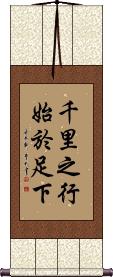
千里之行始於足下 is a Chinese proverb that means “a thousand-mile journey begins with the first step.”
This proverb figuratively means “big accomplishments come from an accumulation of little achievements made one by one.”
Regardless of the Weather, We Overcome Troubles Together
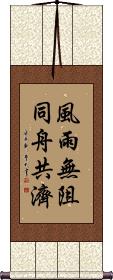
The first four characters are often translated as “Go ahead as planned regardless of the weather” or, “[Overcome] despite the rain and wind.” The last four characters can mean “Stick together” but literally means “Take the same boat [together].”
風雨無阻同舟共濟 is a Chinese proverb that suggests that you are willing (or should be willing) to overcome any adversity, and accomplish your task at hand. The second part (last four characters) is sometimes left off but this second part strongly suggests that you should overcome that adversity together.
Daodejing / Tao Te Ching - Chapter 33
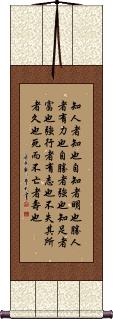
This is referred to as passage or chapter 33 of the Dao De Jing (often Romanized as “Tao Te Ching”).
These are the words of the philosopher Laozi (Lao Tzu).
To know others is wisdom;
To know oneself is acuity/intelligence.
To conquer others is power,
To conquer oneself is strength.
To know contentment is to have wealth.
To act resolutely is to have purpose.
To stay one's ground is to be enduring.
To die and yet not be forgotten is to be long-lived.
To understand others is to be knowledgeable;
To understand yourself is to be wise.
To conquer others is to have strength;
To conquer yourself is to be strong.
To know when you have enough is to be rich.
To go forward with strength is to have ambition.
To not lose your place is to be long-lasting.
To die but not be forgotten -- that's true long life.
He who is content is rich;
He who acts with persistence has will;
He who does not lose his roots will endure;
He who dies physically but preserves the Dao
will enjoy a long after-life.
Notes:
During our research, the Chinese characters shown here are probably the most accurate to the original text of Laozi. These were taken for the most part from the Mawangdui 1973 and Guodan 1993 manuscripts which pre-date other Daodejing texts by about 1000 years.
Grammar was a little different in Laozi’s time. So you should consider this to be the ancient Chinese version. Some have modernized this passage by adding, removing, or swapping articles and changing the grammar (we felt the oldest and most original version would be more desirable). You may find other versions printed in books or online - sometimes these modern texts are simply used to explain to Chinese people what the original text really means.
This language issue can be compared in English by thinking how the King James (known as the Authorized version in Great Britain) Bible from 1611 was written, and comparing it to modern English. Now imagine that the Daodejing was probably written around 403 BCE (2000 years before the King James Version of the Bible). To a Chinese person, the original Daodejing reads like text that is 3 times more detached compared to Shakespeare’s English is to our modern-day speech.
Extended notes:
While on this Biblical text comparison, it should be noted, that just like the Bible, all the original texts of the Daodejing were lost or destroyed long ago. Just as with the scripture used to create the Bible, various manuscripts exist, many with variations or copyist errors. Just as the earliest New Testament scripture (incomplete) is from 170 years after Christ, the earliest Daodejing manuscript (incomplete) is from 100-200 years after the death of Laozi.
The reason that the originals were lost probably has a lot to do with the first Qin Emperor. Upon taking power and unifying China, he ordered the burning and destruction of all books (scrolls/rolls) except those pertaining to Chinese medicine and a few other subjects. The surviving Daodejing manuscripts were either hidden on purpose or simply forgotten about. Some were not unearthed until as late as 1993.
We compared a lot of research by various archeologists and historians before deciding on this as the most accurate and correct version. But one must allow that it may not be perfect, or the actual and original as from the hand of Laozi himself.
Shaolin Generational Poem
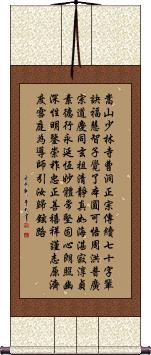
This is a poem, including a title, that celebrates the tactics and virtues of the Shaolin Kung Fu Monks for future generations.
Not the results for zu that you were looking for?
Below are some entries from our dictionary that may match your zu search...
| Characters If shown, 2nd row is Simp. Chinese |
Pronunciation Romanization |
Simple Dictionary Definition |
家族 see styles |
jiā zú jia1 zu2 chia tsu kazoku かぞく |
More info & calligraphy: Family / Members of a Familyfamily |
滿族 满族 see styles |
mǎn zú man3 zu2 man tsu |
More info & calligraphy: Manchu / Manchurian |
知足 see styles |
zhī zú zhi1 zu2 chih tsu tomotaru ともたる |
More info & calligraphy: Contentment(personal name) Tomotaru Complete knowledge; satisfaction. |
祖母 see styles |
zǔ mǔ zu3 mu3 tsu mu sobo(p); baba; ooba; oba; uba そぼ(P); ばば; おおば; おば; うば |
More info & calligraphy: Grandma / Grandmothergrandmother |
祖父 see styles |
zǔ fù zu3 fu4 tsu fu sofu そふ |
More info & calligraphy: Grandfather(1) grandfather; (2) (おおじ only) (See 爺・1) old man; (3) (おおじ only) kyogen mask used for the role of an old man; (place-name) Sofu grandfather |
祖馬 祖马 see styles |
zǔ mǎ zu3 ma3 tsu ma |
More info & calligraphy: Zuma |
足球 see styles |
zú qiú zu2 qiu2 tsu ch`iu tsu chiu |
More info & calligraphy: Soccer / Football / Futbol |
五祖拳 see styles |
wǔ zǔ quán wu3 zu3 quan2 wu tsu ch`üan wu tsu chüan |
More info & calligraphy: Five Ancestors Fist |
俎 see styles |
zǔ zu3 tsu so そ |
a stand for food at sacrifice altar of sacrifice |
卆 see styles |
zú zu2 tsu |
variant of 卒[zu2], soldier; to die |
卒 see styles |
zú zu2 tsu sosu そす |
soldier; servant; to finish; to die; finally; at last; pawn in Chinese chess (1) (hist) low-ranking soldier; (n-suf,n) (2) (abbreviation) (See 卒業・1) graduation; (n-suf,n-pref) (3) (abbreviation) (See 卒業・2) moving on (from); outgrowing (something); (4) (abbreviation) (hist) (See 卒族) low-ranking samurai (1870-1872); (5) (abbreviation) (See 卒去) death (of a noble, etc.); (given name) Sosu suddenly |
哫 see styles |
zú zu2 tsu |
to cajole |
崒 see styles |
zú zu2 tsu |
rocky peaks; lofty and dangerous |
族 see styles |
zú zu2 tsu yakara やから |
race; nationality; ethnicity; clan; by extension, social group (e.g. office workers 上班族) (suffix noun) (1) tribe; race; people; family; (suffix noun) (2) group (of people who share a common feature); gang; lot; bunch; (n,n-suf) (3) {zool} (See 連・3) tribe (taxonomic rank); (n,n-suf) (4) {chem} group (in the periodic table); (female given name) Yakara clan |
珇 see styles |
zǔ zu3 tsu |
carving on jade |
祖 see styles |
zǔ zu3 tsu takaso たかそ |
ancestor; forefather; grandparents (1) ancestor; forefather; progenitor; (2) originator; pioneer; inventor; founder; (3) (orig. meaning) grandfather; (surname) Takaso Grandfather; ancestor; patriarch; founder; origin. See 二十八祖. |
租 see styles |
zū zu1 tsu mitsugi みつぎ |
to hire; to rent; to charter; to rent out; to lease out; rent; land tax (1) (See 田租) rice tax (ritsuryō system); rice levy; tax on rice fields; (2) annual tribute; annual tax; (given name) Mitsugi |
組 组 see styles |
zǔ zu3 tsu takagumi たかぐみ |
to form; to organize; group; team; classifier for sets, series, groups of people, batteries (n,n-suf) (1) set (of items); (2) group (of people); class (of students); company (esp. construction); family (i.e. mafia); team; (3) typesetting; composition; (surname) Takagumi |
菹 see styles |
zū zu1 tsu |
marshland; swamp; salted or pickled vegetables; to mince; to shred; to mince human flesh and bones; Taiwan pr. [ju1] |
葅 see styles |
zū zu1 tsu |
variant of 菹[zu1] |
詛 诅 see styles |
zǔ zu3 tsu so |
curse; swear (oath) to curse |
足 see styles |
zú zu2 tsu mitsuru みつる |
(bound form) foot; leg; sufficient; ample; as much as; fully (counter) counter for pairs of socks, shoes, etc.; (given name) Mitsuru Foot, leg; enough, full.; A man's two legs, compared to goodness and wisdom, 福 being counted as the first five of the pāramitās, 智 as the sixth; v. 六度. 二足尊 The honoured one among bipeds or men, i. e. a Buddha; cf. 兩足. |
鏃 镞 see styles |
zú zu2 tsu yajiri やじり |
arrowhead; sharp arrowhead |
阻 see styles |
zǔ zu3 tsu |
to hinder; to block; to obstruct |
䘚 卒 see styles |
zú zu2 tsu |
variant of 卒[zu2] See: 卒 |
一族 see styles |
yī zú yi1 zu2 i tsu ichizoku いちぞく |
social group; subculture; family; clan; see also 族[zu2] (1) family; relatives; dependents; (2) household |
七祖 see styles |
qī zǔ qi1 zu3 ch`i tsu chi tsu shichiso |
(1) The seven founders of the 華嚴 Huayan School, whose names are given as 馬鳴 Aśvaghoṣa, 龍樹 Nāgārjuna 杜順 (i.e. 法順) , Zhiyan 智儼, Fazang 法藏, Chengguan 澄觀 and Zongmi 宗密; (2) the seven founders of the 禪Chan School, i.e. 達磨 or 菩提達磨 Bodhidharma, Huike 慧可, Sengcan 僧璨, Daoxin 道信, Hongren 弘忍, Huineng 慧能 and Heze 荷澤 (or Shenhui 神曾); (3) The seven founders of the 淨土 Pure Land School, i.e. Nagarjuna, 世親 Vasubandhu, Tanluan 曇鸞, Daochuo 道綽, Shandao 善導, Yuanxin 源信 and Yuankong 源空 (or Faran 法然), whose teaching is contained in the Qizushengjiao 七祖聖教. |
三族 see styles |
sān zú san1 zu2 san tsu sanzoku さんぞく |
(old) three generations (father, self and sons); three clans (your own, your mother's, your wife's) three types of relatives (e.g. father, children and grandchildren; parents, siblings, wife and children; etc.) |
三祖 see styles |
sān zǔ san1 zu3 san tsu sanso |
Third Patriarch |
上足 see styles |
shàng zú shang4 zu2 shang tsu jousoku / josoku じょうそく |
high retainer A superior disciple or follower. |
Click here for more zu results from our dictionary
The following table may be helpful for those studying Chinese or Japanese...
| Title | Characters | Romaji (Romanized Japanese) | Various forms of Romanized Chinese | |
| Bazu | 巴祖 | bā zǔ / ba1 zu3 / ba zu / bazu | pa | |
| Family Members of a Family | 家族 | ka zoku / kazoku | jiā zú / jia1 zu2 / jia zu / jiazu | chia tsu / chiatsu |
| Grandfather | 祖父 | so fu / sofu | zǔ fù / zu3 fu4 / zu fu / zufu | tsu fu / tsufu |
| Soccer Football Futbol | 足球 | zú qiú / zu2 qiu2 / zu qiu / zuqiu | tsu ch`iu / tsuchiu / tsu chiu | |
| Contentment | 知足 | chisoku | zhī zú / zhi1 zu2 / zhi zu / zhizu | chih tsu / chihtsu |
| Manchu Manchurian | 滿族 满族 | mǎn zú / man3 zu2 / man zu / manzu | man tsu / mantsu | |
| Zuma | 祖馬 祖马 | zǔ mǎ / zu3 ma3 / zu ma / zuma | tsu ma / tsuma | |
| Zumi | 祖米 | zǔ mǐ / zu3 mi3 / zu mi / zumi | tsu mi / tsumi | |
| Zura | 祖拉 | zǔ lā / zu3 la1 / zu la / zula | tsu la / tsula | |
| Zook | 祖克 | zǔ kè / zu3 ke4 / zu ke / zuke | tsu k`o / tsuko / tsu ko | |
| Zucker | 祖克 | zǔ kè / zu3 ke4 / zu ke / zuke | tsu k`o / tsuko / tsu ko | |
| Suzu | 蘇祖 苏祖 | sū zǔ / su1 zu3 / su zu / suzu | su tsu / sutsu | |
| Arzoo | 阿爾祖 阿尔祖 | ā ěr zǔ / a1 er3 zu3 / a er zu / aerzu | a erh tsu / aerhtsu | |
| Azizu | 阿齊祖 阿齐祖 | ā qí zǔ / a1 qi2 zu3 / a qi zu / aqizu | a ch`i tsu / achitsu / a chi tsu | |
| Azur | 阿祖爾 阿祖尔 | ā zǔ ěr / a1 zu3 er3 / a zu er / azuer | a tsu erh / atsuerh | |
| Brotherly and Sisterly Love | 手足情 | shǒu zú qíng shou3 zu2 qing2 shou zu qing shouzuqing | shou tsu ch`ing shoutsuching shou tsu ching |
|
| I am Enough | 己足以 | jǐ zú yǐ ji3 zu2 yi3 ji zu yi jizuyi | chi tsu i chitsui |
|
| Izzul | 伊祖爾 伊祖尔 | yī zǔ ěr yi1 zu3 er3 yi zu er yizuer | i tsu erh itsuerh |
|
| Jeezus | 吉祖斯 | jí zǔ sī ji2 zu3 si1 ji zu si jizusi | chi tsu ssu chitsussu |
|
| Kanzul | 坎祖爾 坎祖尔 | kǎn zǔ ěr kan3 zu3 er3 kan zu er kanzuer | k`an tsu erh kantsuerh kan tsu erh |
|
| Rezuan | 雷祖安 | léi zǔ ān lei2 zu3 an1 lei zu an leizuan | lei tsu an leitsuan |
|
| Ridzuan | 里祖安 | lǐ zǔ ān li3 zu3 an1 li zu an lizuan | li tsu an litsuan |
|
| Rizuan | 日祖安 | rì zǔ ān ri4 zu3 an1 ri zu an rizuan | jih tsu an jihtsuan |
|
| Five Ancestors Fist | 五祖拳 | wǔ zǔ quán wu3 zu3 quan2 wu zu quan wuzuquan | wu tsu ch`üan wutsuchüan wu tsu chüan |
|
| Zubair | 祖拜爾 祖拜尔 | zǔ bài ěr zu3 bai4 er3 zu bai er zubaier | tsu pai erh tsupaierh |
|
| Zubayer | 祖拜爾 祖拜尔 | zǔ bài ěr zu3 bai4 er3 zu bai er zubaier | tsu pai erh tsupaierh |
|
| Zuhause | 祖豪斯 | zǔ háo sī zu3 hao2 si1 zu hao si zuhaosi | tsu hao ssu tsuhaossu |
|
| Zuhra | 祖赫拉 | zǔ hè lā zu3 he4 la1 zu he la zuhela | tsu ho la tsuhola |
|
| Zulaika | 祖萊卡 祖莱卡 | zǔ lái kǎ zu3 lai2 ka3 zu lai ka zulaika | tsu lai k`a tsulaika tsu lai ka |
|
| Zumaya | 祖瑪雅 祖玛雅 | zǔ mǎ yǎ zu3 ma3 ya3 zu ma ya zumaya | tsu ma ya tsumaya |
|
| Zunaidah | 祖奈達 祖奈达 | zǔ nài dá zu3 nai4 da2 zu nai da zunaida | tsu nai ta tsunaita |
|
| Zunaira | 祖奈拉 | zǔ nài lā zu3 nai4 la1 zu nai la zunaila | tsu nai la tsunaila |
|
| Zunayra | 祖奈拉 | zǔ nài lā zu3 nai4 la1 zu nai la zunaila | tsu nai la tsunaila |
|
| Zuria | 祖里亞 祖里亚 | zǔ lǐ yà zu3 li3 ya4 zu li ya zuliya | tsu li ya tsuliya |
|
| Azuran | 阿祖蘭 阿祖兰 | ā zǔ lán a1 zu3 lan2 a zu lan azulan | a tsu lan atsulan |
|
| Zunaith | 祖奈斯 | zǔ nài sī zu3 nai4 si1 zu nai si zunaisi | tsu nai ssu tsunaissu |
|
| Zunait | 祖奈特 | zǔ nài tè zu3 nai4 te4 zu nai te zunaite | tsu nai t`e tsunaite tsu nai te |
|
| Zuneet | 祖尼特 | zǔ ní tè zu3 ni2 te4 zu ni te zunite | tsu ni t`e tsunite tsu ni te |
|
| Kunzum | 昆祖姆 | kūn zǔ mǔ kun1 zu3 mu3 kun zu mu kunzumu | k`un tsu mu kuntsumu kun tsu mu |
|
| Zuzanna | 祖贊納 祖赞纳 | zǔ zàn nà zu3 zan4 na4 zu zan na zuzanna | tsu tsan na tsutsanna |
|
| Zuber | 祖貝爾 祖贝尔 | zǔ bèi ěr zu3 bei4 er3 zu bei er zubeier | tsu pei erh tsupeierh |
|
| Zuckerman | 祖克曼 | zǔ kè màn zu3 ke4 man4 zu ke man zukeman | tsu k`o man tsukoman tsu ko man |
|
| Zurita | 祖里塔 | zǔ lǐ tǎ zu3 li3 ta3 zu li ta zulita | tsu li t`a tsulita tsu li ta |
|
| Ozuna | 奧祖納 奥祖纳 | ào zǔ nà ao4 zu3 na4 ao zu na aozuna | ao tsu na aotsuna |
|
| Mazur | 馬祖爾 马祖尔 | mǎ zǔ ěr ma3 zu3 er3 ma zu er mazuer | ma tsu erh matsuerh |
|
| Arvizu | 阿維祖 阿维祖 | ā wéi zǔ a1 wei2 zu3 a wei zu aweizu | a wei tsu aweitsu |
|
| Suzunu | 蘇祖努 苏祖努 | sū zǔ nǔ su1 zu3 nu3 su zu nu suzunu | su tsu nu sutsunu |
|
| Happiness Contentment | 滿足 / 満足 满足 | man zoku / manzoku | mǎn zú / man3 zu2 / man zu / manzu | man tsu / mantsu |
| Azusena | 阿祖塞娜 | ā zǔ sāi nà a1 zu3 sai4 na4 a zu sai na azusaina | a tsu sai na atsusaina |
|
| Jeezust | 杰祖斯特 | jié zǔ sī tè jie2 zu3 si1 te4 jie zu si te jiezusite | chieh tsu ssu t`e chiehtsussute chieh tsu ssu te |
|
| Overcome: Regardless of the Rain and Wind | 風雨無阻 风雨无阻 | fēng yǔ wú zǔ feng1 yu3 wu2 zu3 feng yu wu zu fengyuwuzu | feng yü wu tsu fengyüwutsu |
|
| Zuharaas | 祖哈拉斯 | zǔ hā lā sī zu3 ha1 la1 si1 zu ha la si zuhalasi | tsu ha la ssu tsuhalassu |
|
| Zazueta | 扎祖埃塔 | zhā zǔ āi tǎ zha1 zu3 ai1 ta3 zha zu ai ta zhazuaita | cha tsu ai t`a chatsuaita cha tsu ai ta |
|
| Loving Grandfather | 慈祥的祖父 | cí xiáng de zǔ fù ci2 xiang2 de zu3 fu4 ci xiang de zu fu cixiangdezufu | tz`u hsiang te tsu fu tzuhsiangtetsufu tzu hsiang te tsu fu |
|
| Dear Grandfather | 親愛的祖父 亲爱的祖父 | qín ài de zǔ fù qin2 ai4 de zu3 fu4 qin ai de zu fu qinaidezufu | ch`in ai te tsu fu chinaitetsufu chin ai te tsu fu |
|
| Loving Grandmother | 慈祥的祖母 | cí xiáng de zǔ mǔ ci2 xiang2 de zu3 mu3 ci xiang de zu mu cixiangdezumu | tz`u hsiang te tsu mu tzuhsiangtetsumu tzu hsiang te tsu mu |
|
| Dear Grandmother | 親愛的祖母 亲爱的祖母 | qín ài de zǔ mǔ qin2 ai4 de zu3 mu3 qin ai de zu mu qinaidezumu | ch`in ai te tsu mu chinaitetsumu chin ai te tsu mu |
|
| Orsorezu | 奧爾索雷祖 奥尔索雷祖 | ào ěr suǒ léi zǔ ao4 er3 suo3 lei2 zu3 ao er suo lei zu aoersuoleizu | ao erh so lei tsu aoerhsoleitsu |
|
| Moctezuma | 莫克特祖瑪 莫克特祖玛 | mò kè tè zǔ mǎ mo4 ke4 te4 zu3 ma3 mo ke te zu ma moketezuma | mo k`o t`e tsu ma mokotetsuma mo ko te tsu ma |
|
| Loving Grandfather | 慈祥的外祖父 | cí xiáng de wài zǔ fù ci2 xiang2 de wai4 zu3 fu4 ci xiang de wai zu fu cixiangdewaizufu | tz`u hsiang te wai tsu fu tzuhsiangtewaitsufu tzu hsiang te wai tsu fu |
|
| Dear Grandfather | 親愛的外祖父 亲爱的外祖父 | qín ài de wài zǔ fù qin2 ai4 de wai4 zu3 fu4 qin ai de wai zu fu qinaidewaizufu | ch`in ai te wai tsu fu chinaitewaitsufu chin ai te wai tsu fu |
|
| Loving Grandmother | 慈祥的外祖母 | cí xiáng de wài zǔ mǔ ci2 xiang2 de wai4 zu3 mu3 ci xiang de wai zu mu cixiangdewaizumu | tz`u hsiang te wai tsu mu tzuhsiangtewaitsumu tzu hsiang te wai tsu mu |
|
| Dear Grandmother | 親愛的外祖母 亲爱的外祖母 | qín ài de wài zǔ mǔ qin2 ai4 de wai4 zu3 mu3 qin ai de wai zu mu qinaidewaizumu | ch`in ai te wai tsu mu chinaitewaitsumu chin ai te wai tsu mu |
|
| Love Loyalty Respect | 真愛忠誠尊敬 | zhēn ài zhōng chéng zū jìng zhen1 ai4 zhong1 cheng2 zu1 jing4 zhen ai zhong cheng zu jing zhenaizhongchengzujing | chen ai chung ch`eng tsu ching chenaichungchengtsuching chen ai chung cheng tsu ching |
|
| Honor for Ancestors | 祖先崇拜 祖先崇拜 / 祖先崇拝 | so sen suu hai sosensuuhai so sen su hai | zǔ xiān chóng bài zu3 xian1 chong2 bai4 zu xian chong bai zuxianchongbai | tsu hsien ch`ung pai tsuhsienchungpai tsu hsien chung pai |
| A Journey of 1000 Miles Begins with a Single Step | 千里之行始於足下 千里之行始于足下 | qiān lǐ zhī xíng shǐ yú zú xià qian1 li3 zhi1 xing2 shi3 yu2 zu2 xia4 qian li zhi xing shi yu zu xia qianlizhixingshiyuzuxia | ch`ien li chih hsing shih yü tsu hsia chien li chih hsing shih yü tsu hsia |
|
| Regardless of the Weather, We Overcome Troubles Together | 風雨無阻同舟共濟 风雨无阻同舟共济 | fēng yǔ wú zǔ tóng zhōu gòng jì feng1 yu3 wu2 zu3 tong2 zhou1 gong4 ji4 feng yu wu zu tong zhou gong ji fengyuwuzutongzhougongji | feng yü wu tsu t`ung chou kung chi feng yü wu tsu tung chou kung chi |
|
| Daodejing Tao Te Ching - Chapter 33 | 知人者知也自知者明也勝人者有力也自勝者強也知足者富也強行者有志也不失其所者久也死而不亡者壽也 知人者知也自知者明也胜人者有力也自胜者强也知足者富也强行者有志也不失其所者久也死而不亡者寿也 | zhī rén zhě zhī yě zì zhī zhě míng yě shèng rén zhě yǒu lì yě zì shèng zhě qiáng yě zhī zú zhě fù yě qiáng xíng zhě yǒu zhì yě bù zhī qí suǒ zhě jiǔ yě sǐ ér bù wáng zhě shòu yě zhi1 ren2 zhe3 zhi1 ye3 zi4 zhi1 zhe3 ming2 ye3 sheng4 ren2 zhe3 you3 li4 ye3 zi4 sheng4 zhe3 qiang2 ye3 zhi1 zu2 zhe3 fu4 ye3 qiang2 xing2 zhe3 you3 zhi4 ye3 bu4 zhi1 qi2 suo3 zhe3 jiu3 ye3 si3 er2 bu4 wang2 zhe3 shou4 ye3 zhi ren zhe zhi ye zi zhi zhe ming ye sheng ren zhe you li ye zi sheng zhe qiang ye zhi zu zhe fu ye qiang xing zhe you zhi ye bu zhi qi suo zhe jiu ye si er bu wang zhe shou ye | chih jen che chih yeh tzu chih che ming yeh sheng jen che yu li yeh tzu sheng che ch`iang yeh chih tsu che fu yeh ch`iang hsing che yu chih yeh pu chih ch`i so che chiu yeh ssu erh pu wang che shou yeh chih jen che chih yeh tzu chih che ming yeh sheng jen che yu li yeh tzu sheng che chiang yeh chih tsu che fu yeh chiang hsing che yu chih yeh pu chih chi so che chiu yeh ssu erh pu wang che shou yeh |
|
| Shaolin Generational Poem | 嵩山少林寺曹洞正宗傳續七十字輩訣福慧智子覺了本圓可悟周洪普廣宗道慶同玄祖清靜真如海湛寂淳貞素德行永延恆妙體常堅固心朗照幽深性明鑒崇祚忠正善禧祥謹志原濟度雪庭為導師引汝歸鉉路 嵩山少林寺曹洞正宗传续七十字辈诀福慧智子觉了本圆可悟周洪普广宗道庆同玄祖清静真如海湛寂淳贞素德行永延恒妙体常坚固心朗照幽深性明鉴崇祚忠正善禧祥谨志原济度雪庭为导师引汝归铉路 | sōng shān shào lín sì cáo dòng zhèng zōng chuán xù qī shí zì bèi jué fú huì zhì zǐ jiào le běn yuán kě wù zhōu hóng pǔ guǎng zōng dào qìng tóng xuán zǔ qīng jìng zhēn rú hǎi zhàn jì chún zhēn sù dé xíng yong song1 shan1 shao4 lin2 si4 cao2 dong4 zheng4 zong1 chuan2 xu4 qi1 shi2 zi4 bei4 jue2 fu2 hui4 zhi4 zi3 jiao4 le5 ben3 yuan2 ke3 wu4 zhou1 hong2 pu3 guang3 zong1 dao4 qing4 tong2 xuan2 zu3 qing1 jing4 zhen1 ru2 hai3 zhan4 ji4 chun2 zhen1 su4 de2 xing2 yong song shan shao lin si cao dong zheng zong chuan xu qi shi zi bei jue fu hui zhi zi jiao le ben yuan ke wu zhou hong pu guang zong dao qing tong xuan zu qing jing zhen ru hai zhan ji chun zhen su de xing yong | sung shan shao lin ssu ts`ao tung cheng tsung ch`uan hsü ch`i shih tzu pei chüeh fu hui chih tzu chiao le pen yüan k`o wu chou hung p`u kuang tsung tao ch`ing t`ung hsüan tsu ch`ing ching chen ju hai chan chi ch`un chen su te hsing yung sung shan shao lin ssu tsao tung cheng tsung chuan hsü chi shih tzu pei chüeh fu hui chih tzu chiao le pen yüan ko wu chou hung pu kuang tsung tao ching tung hsüan tsu ching ching chen ju hai chan chi chun chen su te hsing yung |
|
| In some entries above you will see that characters have different versions above and below a line. In these cases, the characters above the line are Traditional Chinese, while the ones below are Simplified Chinese. | ||||

Successful Chinese Character and Japanese Kanji calligraphy searches within the last few hours...



