Many custom options...


And formats...



Chinese Prosperity in Chinese...
Buy a Chinese Prosperity calligraphy wall scroll here!
Personalize your custom “Chinese Prosperity” project by clicking the button next to your favorite “Chinese Prosperity” title below...
1. Prosperity
3. A Life of Happiness and Prosperity
5. Prosperity
7. Worldwide Wish for Peace and Prosperity
8. Year-In Year-Out Have Abundance
12. Success
13. Flourish
15. Lucky Star
16. Fu Lu Shou
17. Five Red Bats
18. Glory and Honor
Prosperity
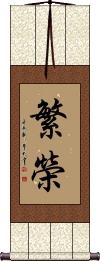
繁榮 means “prosperous,” “flourishing,” or “thriving” when used regarding a person.
However, when used about a whole country, it can mean a “booming economy.”
繁榮 is the traditional Chinese, ancient Japanese Kanji, and ancient Korean Hanja version of prosperity.
 Note: If you order this from the Japanese master calligrapher, the second character may look more like the Kanji shown to the right. If you want a different form, please note that in the special instructions for your order.
Prosperity
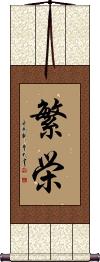
繁栄 is the same “prosperity” as the Traditional Chinese version, except for a slight change in the way the second character is written (it's the Japanese Kanji deviation from the original/ancient Chinese form).
Chinese people will still be able to read this, though you should consider this to be the Japanese form (better if your audience is Japanese).


Sometimes, the Kanji form shown to the right is used in Japanese. It will depend on the calligrapher's mood as to which form you may receive. If you have a preference, please let us know at the time of your order.
Live in Prosperity
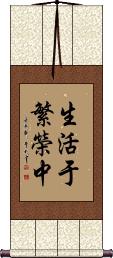
生活于繁榮中 means “live in prosperity.” It's kind of a suggestion to be prosperity the center of your world.
This is the way some people want to live (and you should always live for what you love). However, this phrase does not suggest a peaceful life - rather one that is always busy. It's not for everyone, but it might be for you.
See Also: Prosperity
A Life of Happiness and Prosperity
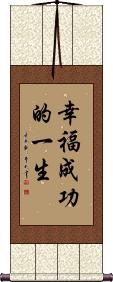
幸福成功的一生 means “A life of happiness and prosperity” or “A life of happiness and success.”
It's a very positive and inspirational wall scroll selection.
See Also: Prosperity
Prosperity and Happiness
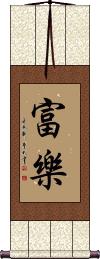
富樂 is the Chinese, Japanese Kanji, and old Korean Hanja for a title meaning prosperity and happiness.
If you have the desire to live in prosperity and happiness, this is for you.
Note: This title is often used in a Buddhist context.
Prosperity
(also means salary)
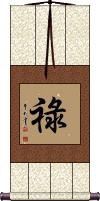
祿 is occasionally used in China to mean prosperity or good fortune.
祿 once meant the “official's salary” in old feudal China and Korea (obviously, the officials lived well, so you can imagine how this was associated with the idea of being prosperous).
祿 is only used in Korean historical documents for “salary.” In old Japanese, this means fief, allowance, stipend, reward, pension, grant, and sometimes happiness depending on context. It's very obscure in modern Japanese.
We have other entries that are better suited for a prosperity wall scroll. This entry just addresses “the coffee cup issue” where this character has been used on coffee cups and tee-shirts. However, without context, the meaning is ambiguous to some.
Abundance and Prosperity
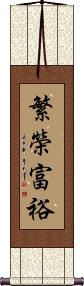
繁榮富裕 is a proverb about “Prosperity and Abundance.”
This presents and reinforces the ideas of being prosperous, a booming economy, well-to-do, well-off, wealthy, riches, and opulence.
While this is the ancient/traditional Chinese way to write this, most Japanese can fully read and understand it. It's also the correct form of old Korean Hanja (though few Koreans of the current generation will be able to read this).
See Also: Good Fortune
Worldwide Wish for Peace and Prosperity
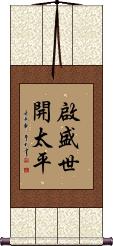
啟盛世開太平 means “To bring flourishing peace and security to the world (our current era).”
It's a wish that a new door leading to peace and prosperity could be opened to mankind.
Character and word breakdown:
啟 to open; to start; to initiate; to enlighten or awaken.
盛世 a flourishing period; period of prosperity; a golden age.
開 to open; to start; to turn on.
太平 peace and security; peace and tranquility; peace; tranquility.
I don't like to do breakdowns like this, as the words altogether create their unique meaning (encompassed in the main title above).
Year-In Year-Out Have Abundance
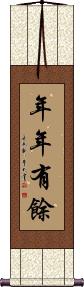
年年有餘 is a common proverb or wish of prosperity you'll hear around the time of Chinese New Year.
Directly translated character by character, it means “Year Year Have Surplus.” A more natural English translation including the deeper meaning would be “Every Year may you Have Abundance in your life.”
On a side note, this phrase often goes with a gift of something related to fish. This is because the last character, “yu” which means surplus or abundance, has exactly the same pronunciation in Mandarin as the word for “fish.”
This is also one of the most common titles for traditional paintings that feature koi fish.
In China, this phrase might make an odd wall scroll - a customer asked especially for this common phrase which is why it appears here. See my other abundance-related words if you want a wall scroll that will seem more comfortable in Chinese culture.
Note: This can be pronounced in Korean, but it's not a commonly used term.
See Also: Prosperity | Good Fortune
Abundance / Prosperous
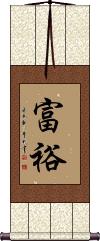
富裕 means prosperous, having an abundance, well-to-do, or well-off.
It's a simple word that suggests “you have made it” in Chinese, Japanese Kanji, and Korean Hanja.
See Also: Good Fortune
Good Luck / Good Fortune
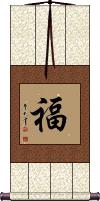
福 is pronounced “fu” in Chinese.
The character “fu” is posted by virtually all Chinese people on the doors of their homes during the Spring Festival (closely associated with the Chinese New Year).
One tradition from the Zhou Dynasty (beginning in 256 B.C.) holds that putting a fu symbol on your front door will keep the goddess of poverty away.
福 literally means good fortune, prosperity, blessed, blessedness, happiness, and fulfillment.
You'll also see this character in Vietnam (where Chinese characters were the written form until a romanization reform) where it is pronounced Phúc - a word commonly used in Vietnamese names because of its good meaning.
See Also: Lucky
Prosperous Business
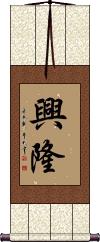
興隆 is a kind of prosperity that applies to a business. Something great to hang behind your desk if you are a small or large business owner. Doing so says that you either are a booming business or you wish success and prosperity for your business.
Can also be translated as thriving, flourishing, brisk business, and other words related to prosperity in business.
A good meaning in China but is a little antiquated in Japanese.
See Also: Prosperity
Success
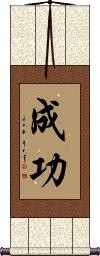
This Chinese and Japanese word for “success” is often used to refer to “career success” but is also used for other successes in life.
It matches the western dictionary definition of “The achievement of something desired, planned, or attempted.” And It's also used in this old Chinese proverb:  which means Failure is the Mother of Success.
Sometimes this word is translated as prosperity, but success, succeed, or successfully are more correct definitions.
See Also: Prosperity
Flourish
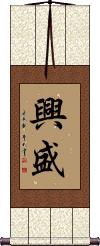
興盛 means to flourish and thrive.
This can also be translated as prosperity, flourishing, thriving, to blossom, prospering, being successful, or achieving success.
Can also be the given name Okimori in Japanese.
The Whole World at Peace
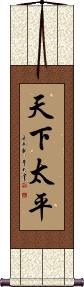
This proverb can be translated as the whole world at peace, peace and prosperity, peaceful and tranquil, peace reigns over the land, times of peace, peace and tranquillity, peaceful world, or from the Greek, times of halcyon.
Sometimes (rarely) written as 天下泰平 (variant 3rd character).
Lucky Star
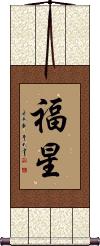
福星 is the lucky star, one of three Chinese deities (三星 or Three Stars) representing fortune/luck, prosperity, and longevity.
In Japanese, this can be the given name Fukusei - with the same “lucky star” or “star of good fortune” meaning.
Fu Lu Shou
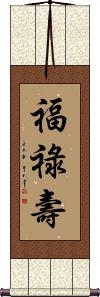
These are the short titles for Sanxing or 三星 (Three Stars).
福祿壽 are the gods of Jupiter, Ursa Major, and Sirius. Fu, Lu, and Shou represent fortune (福), presiding over the planet Jupiter, prosperity (祿), presiding over Ursa Major, and longevity (壽), presiding over Sirius.
In old Chinese folk religion, they are often represented as three old bearded wise men.
Five Red Bats
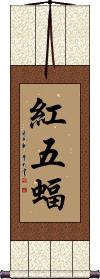
紅五蝠 is a play on words in Chinese because of some homophones.
The first thing you need to know is that the word for bat, 蝠, sounds exactly like the word for good fortune, 福. Thus, bats are often associated with good luck and good fortune in Chinese culture.
Five bats (五福 / 五蝠) means “five fortunes,” referring to luck, prosperity, wealth, happiness, and longevity.
The word red, 红, has the same sound as 宏 meaning vast, great, or magnificent. Therefore, a red bat means “vast fortune.”
Altogether, five red bats represent vast reaches of the five fortunes.
Glory and Honor
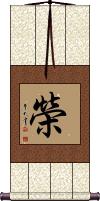
榮 relates to giving someone a tribute or praise.
It's a little odd as a gift, so this may not be the best selection for a wall scroll.
I've made this entry because this character is often misused as “honorable” or “keeping your honor.” It's not quite the same meaning, as this usually refers to a tribute or giving an honor to someone.
榮 is often found in tattoo books incorrectly listed as the western idea of personal honor or being honorable. Check with us before you get a tattoo that does not match the meaning you are really looking for. As a tattoo, this suggests that you either have a lot of pride in yourself or that you have a wish for prosperity for yourself and/or your family.
In modern Japanese Kanji, glory and honor look like the image to the right.
There is a lot of confusion about this character, so here are some alternate translations for this character: prosperous, flourishing, blooming (like a flower), glorious beauty, proud, praise, rich, or it can be the family name “Rong.” The context in which the character is used can change the meaning between these various ideas.
In the old days, this could be an honor paid to someone by the Emperor (basically a designation by the Emperor that a person has high standing).
To sum it up: 榮 has a positive meaning; however, it's a different flavor than the idea of being honorable and having integrity.
Realize Your Ambitions / Ride on the Crest of Success
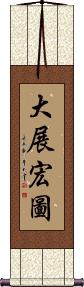
大展宏圖 is a four-character proverb used in Chinese to mean “realize your ambitions” or “exhibit your ambition and success.”
It's used to talk about someone with great career ambitions. Almost literally, it expresses the idea of someone unfolding a great career like a map or a set of blueprint plans.
Very literally translated, these four characters mean “Great unfolding of a huge map” or “Great exhibition of a colossal plan.”
This in-stock artwork might be what you are looking for, and ships right away...
Gallery Price: $120.00
Your Price: $59.88
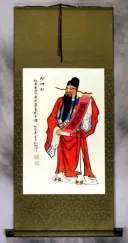
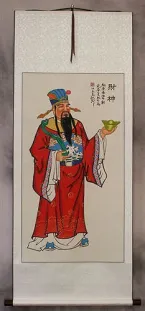
Gallery Price: $71.00
Your Price: $39.00

Gallery Price: $108.00
Your Price: $59.88
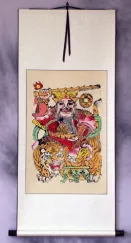
Gallery Price: $108.00
Your Price: $59.88
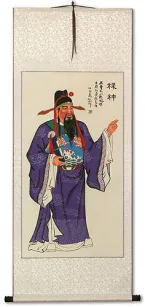
Gallery Price: $71.00
Your Price: $39.00
The following table may be helpful for those studying Chinese or Japanese...
| Title | Characters | Romaji (Romanized Japanese) | Various forms of Romanized Chinese | |
| Prosperity | 繁榮 繁荣 | han ei / hanei | fán róng / fan2 rong2 / fan rong / fanrong | fan jung / fanjung |
| Prosperity | 繁栄 繁荣 | hanei | fán róng / fan2 rong2 / fan rong / fanrong | fan jung / fanjung |
| Live in Prosperity | 生活于繁榮中 生活于繁荣中 | shēng huó yú fán róng zhōng sheng1 huo2 yu2 fan2 rong2 zhong1 sheng huo yu fan rong zhong shenghuoyufanrongzhong | sheng huo yü fan jung chung shenghuoyüfanjungchung |
|
| A Life of Happiness and Prosperity | 幸福成功的一生 | xìng fú chéng gōng de yì shēng xing4 fu2 cheng2 gong1 de yi4 sheng1 xing fu cheng gong de yi sheng xingfuchenggongdeyisheng | hsing fu ch`eng kung te i sheng hsingfuchengkungteisheng hsing fu cheng kung te i sheng |
|
| Prosperity and Happiness | 富樂 富乐 | furaku | fù lè / fu4 le4 / fu le / fule | |
| Prosperity | 祿 禄 | fuchi | lù / lu4 / lu | |
| Abundance and Prosperity | 繁榮富裕 繁荣富裕 | hanei yuuhuku haneiyuuhuku hanei yuhuku | fán róng fù yù fan2 rong2 fu4 yu4 fan rong fu yu fanrongfuyu | fan jung fu yü fanjungfuyü |
| Worldwide Wish for Peace and Prosperity | 啟盛世開太平 启盛世开太平 | qǐ shèng shì kāi tài píng qi3 sheng4 shi4 kai1 tai4 ping2 qi sheng shi kai tai ping qishengshikaitaiping | ch`i sheng shih k`ai t`ai p`ing chishengshihkaitaiping chi sheng shih kai tai ping |
|
| Year-In Year-Out Have Abundance | 年年有餘 年年有馀 | nián nián yǒu yú nian2 nian2 you3 yu2 nian nian you yu niannianyouyu | nien nien yu yü niennienyuyü |
|
| Abundance Prosperous | 富裕 | fu yuu / fuyuu / fu yu | fù yù / fu4 yu4 / fu yu / fuyu | fu yü / fuyü |
| Good Luck Good Fortune | 福 | fuku | fú / fu2 / fu | |
| Prosperous Business | 興隆 兴隆 | kou ryuu / kouryuu / ko ryu | xīng lóng xing1 long2 xing long xinglong | hsing lung hsinglung |
| Success | 成功 | seikou / seiko | chéng gōng cheng2 gong1 cheng gong chenggong | ch`eng kung chengkung cheng kung |
| Flourish | 興盛 兴盛 | kou sei / kousei / ko sei | xīng shèng xing1 sheng4 xing sheng xingsheng | hsing sheng hsingsheng |
| The Whole World at Peace | 天下太平 | tenkataihei tenkataihei | tiān xià tài píng tian1 xia4 tai4 ping2 tian xia tai ping tianxiataiping | t`ien hsia t`ai p`ing tienhsiataiping tien hsia tai ping |
| Lucky Star | 福星 | fukusei | fú xīng / fu2 xing1 / fu xing / fuxing | fu hsing / fuhsing |
| Fu Lu Shou | 福祿壽 | fú lù shòu fu2 lu4 shou4 fu lu shou fulushou | ||
| Five Red Bats | 紅五蝠 红五蝠 | hóng wǔ fú hong2 wu3 fu2 hong wu fu hongwufu | hung wu fu hungwufu |
|
| Glory and Honor | 榮 荣 / 栄 | ei | róng / rong2 / rong | jung |
| Realize Your Ambitions Ride on the Crest of Success | 大展宏圖 大展宏图 | dà jiǎn hóng tú da4 jian3 hong2 tu2 da jian hong tu dajianhongtu | ta chien hung t`u tachienhungtu ta chien hung tu |
|
| In some entries above you will see that characters have different versions above and below a line. In these cases, the characters above the line are Traditional Chinese, while the ones below are Simplified Chinese. | ||||

Successful Chinese Character and Japanese Kanji calligraphy searches within the last few hours...



