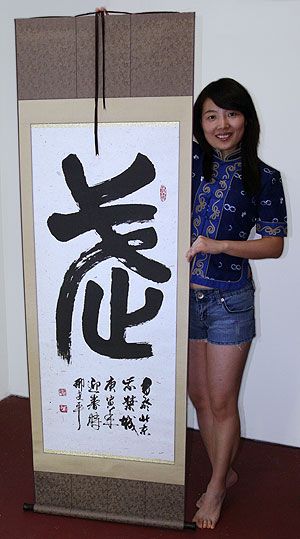
Many custom options


And formats

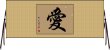

Avalokitesvara in Chinese / Japanese
Buy an Avalokitesvara calligraphy wall scroll here!
Personalize your custom “Avalokitesvara” project by clicking the button next to your favorite “Avalokitesvara” title below.
Namo Guanshiyin Pusa
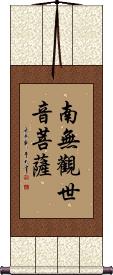
南無觀世音菩薩 means homage to the Bodhisattva Avalokitêśvara in Chinese and Japanese.
The 4th character of this homage or chant can be dropped, making it 南無觀音菩薩 or “Namo Guanyin Pusa.”
Namo Guanyin Pusa
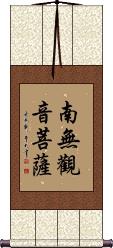
南無觀音菩薩 is the title Namo Guanyin Pusa in Chinese or Namu/Namo Kannon Bosatsu in Japanese.
This can also translate as Namo Avalokitesvara Bodhisattva.
Note: Sometimes written 南無觀世音菩薩 (just the addition of 世) making it Námó Guānshìyīn Púsà.
Goddess of Mercy and Compassion
This is the long or more formal version of this title
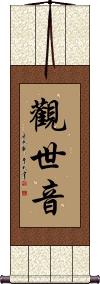
觀世音 is the longer and perhaps more formal title for the Buddhist deity known as the Goddess of Mercy or Bodhisattva of Compassion.
The longer title of this bodhisattva is Romanized in the following ways:
Mandarin Chinese: Guanshi Yin, Kuan-shih Yin.
Japanese: Kanzeon.
Sanskrit: Bodhisattva Avalokitesvara.
Korean: Gwan-se-eum.
Vietnamese: Quan Thế Âm.
Thai: Prah Mae Kuan Eim.
English: Bodhisattva of Mercy and Salvation, Goddess of Compassion, Buddha of Mercy, et al.
Please view our more common and shorter version, “Guan Yin” before you make a decision. Also, note that the first character has a slight variation in Japanese. If your audience is specifically Japanese, you may want to select that version.
Goddess of Mercy and Compassion
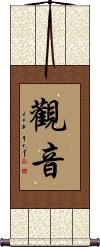
觀音/観音 is the Buddhist deity known as the Goddess of Mercy or Bodhisattva of Compassion.
In Chinese, the proper name of this being is Guan Yin. There is some debate as to whether Guan Yin is female. The argument comes from some scripture that suggests Buddhist deities take on the male form. Others say that Guan Yin has no sex. And still, others are okay with the female representation of Guan Yin.
This bodhisattva is also known or Romanized in the following ways:
Mandarin Chinese: Guan Yin, Kuan Yin, Kwan Yin.
Japanese: Kannon, Kwannon.
Sanskrit: Bodhisattva Avalokitesvara.
Korean: Gwan-eum.
Vietnamese: Quan Âm.
Thai: Kuan Eim.
English: Bodhisattva of Mercy and Salvation, Goddess of Compassion, Buddha of Mercy, et al.
Note: The first character has a slight variation in Japanese. If your audience is specifically Japanese, you may want to select that version.
See Also: Buddhism | Goddess | Namo Amitabha Buddha | Bodhisattva
Guan Shi Yin: Protector Of Life
觀世音 is an alternate title for Guanyin, the Bodhisattva of Compassion or Goddess of Mercy.
觀世音 is the Buddhist bestower of children, the protector of life and all in distress (especially of those at sea).
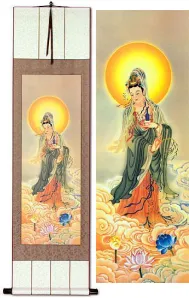
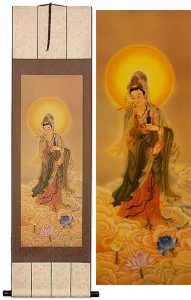
This in-stock artwork might be what you are looking for, and ships right away...
Not the results for avalokitesvara that you were looking for?
Below are some entries from our dictionary that may match your avalokitesvara search:
| Characters If shown, 2nd row is Simp. Chinese |
Pronunciation Romanization |
Simple Dictionary Definition |
観音 see styles |
mine みね |
More info & calligraphy: Goddess of Compassion |
觀音 观音 see styles |
guān yīn guan1 yin1 kuan yin kanon かんおん |
More info & calligraphy: Kwanyin(out-dated kanji) Avalokiteshvara (Bodhisattva); Avalokitesvara; Kannon; Kwannon; Guanyin; Buddhist deity of compassion; (personal name) Kan'on Guanyin |
観世音 see styles |
kanzenon かんぜのん |
More info & calligraphy: Goddess of Compassion |
觀世音 观世音 see styles |
guān shì yīn guan1 shi4 yin1 kuan shih yin Kanzeon かんぜおん |
More info & calligraphy: Guan Shi Yin: Protector Of Life(out-dated kanji) Avalokiteshvara (Bodhisattva); Avalokitesvara; Kannon; Kwannon; Guanyin; Buddhist deity of compassion Regarder of the world's sounds, or cries, the so-called Goddess of Mercy; also known as 觀音; 觀世音善薩; 觀自在 (觀世自在); 觀尹; 光世音 (the last being the older form). Avalokiteśvara, v. 阿 8. Originally represented as a male, the images are now generally those of a female figure. The meaning of the term is in doubt; it is intp. as above, but the term 觀自在 (觀世自在) accords with the idea of Sovereign Regarder and is not associated with sounds or cries. Guanyin is one of the triad of Amida, is represented on his left, and is also represented as crowned with Amida; but there are as many as thirty-three different forms of Guanyin, sometimes with a bird, a vase, a willow wand, a pearl, a 'thousand' eyes and hands, etc., and, when as bestower of children, carrying a child. The island of Putuo (Potala) is the chief centre of Guanyin worship, where she is the protector of all in distress, especially of those who go to sea. There are many sūtras, etc., devoted to the cult, but its provenance and the date of its introduction to China are still in doubt. Chapter 25 of the Lotus Sūtra is devoted to Guanyin, and is the principal scripture of the cult; its date is uncertain. Guanyin is sometimes confounded with Amitābha and Maitreya. She is said to be the daughter of king Śubhavyūha 妙莊王, who had her killed by 'stifling because the sword of the executioner broke without hurting her. Her spirit went to hell; but hell changed into paradise. Yama sent her back to life to save his hell, when she was miraculously transported on a Lotus flower to the island of Poo-too'. Eitel. |
南無觀世音菩薩 南无观世音菩萨 see styles |
nán wú guān shì yīn pú sà nan2 wu2 guan1 shi4 yin1 pu2 sa4 nan wu kuan shih yin p`u sa nan wu kuan shih yin pu sa namu Kanzeon bosatsu |
More info & calligraphy: Namo Guanshiyin Pusa |
三光 see styles |
sān guāng san1 guang1 san kuang miteru みてる |
the sun, the moon, and the stars (1) (poetic term) the Sun, the Moon and the stars; (2) {hanaf} three 20-point cards (high-scoring meld); (personal name) Miteru (三光天) Sun, moon, and stars. Also, in the second dhyāna of the form-world there are the two deva regions 少光天, 無量光天, and 光音天q.v. Also 觀音 Avalokiteśvara is styled 日天子sun-prince, or divine son of the sun, 大勢至 Mahāsthāmaprapta is styled 月天子 divine son of the moon, and 虛空藏菩薩 the bodhisattva of the empyrean, is styled 明星天子 divine son of the bright stars. |
三寳 三宝 see styles |
sān bǎo san1 bao3 san pao sanbō |
Triratna, or Ratnatraya, i.e. the Three Precious Ones: 佛 Buddha, 法 Dharma, 儈 Saṅgha, i.e. Buddha, the Law, the Ecelesia or Order. Eitel suggests this trinity may be adapted from the Trimūrti, i.e, Brahma, Viṣṇu, and Sīva. The Triratna takes many forms, e.g. the Trikāya 三身 q.v. There is also the Nepalese idea of a triple existence of each Buddha as a Nirvāṇa-Buddha, Dhyāni-Buddha, and Mānuṣi-Buddha; also the Tantric trinity of Vairocana as Nirvāṇa-Buddha, Locana according to Eitel "existing in reflex in the world of forms", and the human Buddha, Śākyamuni. There are other elaborated details known as the four and the six kinds of triratna 四 and 六種三寳, e.g. that the Triratna exists in each member of the trinity. The term has also been applied to the 三仙 q.v. Popularly the 三寳 are referred to the three images in the main hall of monasteries. The centre one is Śākyamuni, on his left Bhaiṣajya 藥師 and on his right Amitābha. There are other explanations, e.g. in some temples Amitābha is in the centre, Avalokiteśvara on his left, and Mahāsthāmaprāpta or Mañjuśrī on his right. Table of Triratna, Trikāya, and Trailokya: — DHARMASAṄGHABUDDHAEssential BodhiReflected BodhiPractical BodhiDhyāni BuddhaDhyāni BodhisattvaMānuṣī BuddhaDharmakāyaSambhogakāyaNirmāṇakāyaPurityCompletenessTransformations4th Buddha-kṣetra3rd Buddha-kṣetra1st and 2nd Buddha kṣetraArūpadhātuRūpadhātuKāmadhātu. |
三尊 see styles |
sān zūn san1 zun1 san tsun sanzon; sanson さんぞん; さんそん |
(1) (さんぞん only) {Buddh} Buddha triad; image of a Buddha attended by two Bodhisattvas; (2) (さんぞん only) {Buddh} (See 三宝) The Three Jewels; Buddha, the teachings of Buddha, and the community of monks and nuns; (3) (さんぞん only) (See 三尊天井) head and shoulders (stock price, etc. chart pattern); (4) the three people one must esteem: master, father, teacher The three honoured ones: Buddha, the Law, the Ecclesia or Order. Others are: Amitābha, Avalokiteśvara, and Mahāsthāmaprāpta, who, according to the Pure-land sect, come to welcome the dying invoker. Another group is Bhaiṣajya, Vairocana, and Candraprabha; and another, Śākyamunī, Mañjuśrī, and Samantabhadra. |
三聖 三圣 see styles |
sān shèng san1 sheng4 san sheng misato みさと |
(1) three enlightened men (Buddha, Confucius and Christ; Lao-tzu, Confucius and Buddha; etc.); three sages; three virtuous men; (2) the three most accomplished people (of a particular craft or trade); (female given name) Misato The three sages, or holy ones, of whom there are several groups. The 華嚴Huayan have Vairocana in the center with Mañjuśrī on his left and Samantabhadra on his right. The 彌陀 Mituo or Pure-land sect, have Amitābha in the center, with Avalokiteśvara on his left and Mahāsthāmaprāpta on his right. The Tiantai use the term for the 藏, 別, and 圓教v. 三教. |
來迎 来迎 see styles |
lái yíng lai2 ying2 lai ying raikou / raiko らいこう |
(surname) Raikou The coming of Buddhas to meet the dying believer and bid welcome to the Pure Land; the three special welcomers are Amitābha, Avalokiteśvara, and Mahāsthāmaprāpta. |
化生 see styles |
huà shēng hua4 sheng1 hua sheng keshou / kesho けしょう |
(noun/participle) (1) {Buddh} (See 四生) spontaneous birth; (2) goblin; monster; (surname, given name) Keshou q. v. means direct 'birth' by metamorphosis. It also means the incarnate avaatara of a deity.; aupapādaka, or aupapāduka. Direct metamorphosis, or birth by transformation, one of the 四生, by which existence in any required form is attained in an instant in full maturity. By this birth bodhisattvas residing in Tuṣita appear on earth. Dhyāni Buddhas and Avalokiteśvara are likewise called 化生. It also means unconditional creation at the beginning of a kalpa. Bhuta 部多 is also used with similar meaning. There are various kinds of 化生, e. g. 佛菩薩化生 the transformation of a Buddha or bodhisattva, in any form at will, without gestation, or intermediary conditions: 極樂化生, birth in the happy land of Amitābha by transformation through the Lotus; 法身化生 the dharmakāya, or spiritual body, born or formed on a disciple's conversion. |
千手 see styles |
qiān shǒu qian1 shou3 ch`ien shou chien shou chihira ちひら |
(female given name) Chihira (千手千眼); 千手千眼大慈大悲觀音菩薩 The thousand-hand Guanyin, see below. There are various sutras associated with this title, e.g. 千手經 an abbreviation of 手千眼觀世音菩薩大廣大圓滿無礙大悲心陀羅尼經; also 千手軌 or 軌經 an abbreviation of 金剛頂瑜伽千手千眼觀自在菩薩修行儀軌經; it is also called 千手陀羅尼 and 千手千眼儀軌經; there are many others, e.g. 千手千眼觀世音菩藤姥陀羅尼身經 and 千手千眼廣大圓滿無礙大悲心陀羅尼經 both idem 千手千臂陀羅尼神咒 which is the Avalokiteśvara-padma-jāla-mūla-tantra‐nāma-dhāraṇī. |
子安 see styles |
shian しあん |
(1) (abbreviation) safe, easy childbirth; (2) (See 子安観音,子安地蔵) guardian bodhisattva, buddha or deity of children or childbirth (esp. Ksitigarbha or Avalokitesvara); (surname) Shian |
持地 see styles |
chí dì chi2 di4 ch`ih ti chih ti mochiji もちぢ |
(surname) Mochiji Dharaṇimdhara, holder, or ruler of the earth, or land; name of a Bodhisattva, who predicted the future of Avalokiteśvara. |
補陀 补陀 see styles |
bǔ tuó bu3 tuo2 pu t`o pu to hoda ほだ |
(surname) Hoda 補陁; 補陀落 (補陀落迦) Potala; Potalaka. (1) A sea-port on the Indus, the παταλα of the ancients, identified by some with Thaṭtha, said to be the ancient home of Śākyamuni's ancestors. (2) A mountain south-east of Malakūṭa, reputed as the home of Avalokiteśvara. (3) The island of Pootoo, east of Ningpo, the Guanyin centre. (4) The Lhasa Potala in Tibet; the seat of the Dalai Lama, an incarnation of Avalokiteśvara; cf. 普; also written補怛落迦 (or 補但落迦); 逋多 (逋多羅); 布呾洛加. |
西国 see styles |
saigoku さいごく |
(1) western part of Japan (esp. Kyushu, but ranging as far east as Kinki); (2) western nations (esp. India or Europe); (3) (See 西国三十三所) thirty-three temples in the Kinki area containing statues of Kannon (Avalokitesvara); (4) (See 西国巡礼) pilgrimage to the thirty-three temples sacred to Kannon; (place-name, surname) Saigoku |
闚音 see styles |
kuī yīn kui1 yin1 k`uei yin kuei yin kion |
Avalokitêśvara |
靑頭 靑头 see styles |
qīng tóu qing1 tou2 ch`ing t`ou ching tou |
靑頸觀音 The blue-head, or blue-neck Guanyin, the former seated on a cliff, the latter with three faces, the front one of pity, the side ones of a tiger and a pig. |
饒王 饶王 see styles |
ráo wáng rao2 wang2 jao wang |
(饒王佛) Lokeśvara, 'the lord or ruler of the world; N. of a Buddha' (M.W.); probably a development of the idea of Brahmā, Viṣṇu or Śiva as lokanātha, 'lord of worlds.' In Indo-China especially it refers to Avalokiteśvara, whose image or face, in masculine form, is frequently seen, e.g. at Angkor. Also 世饒王佛. It is to Lokeśvara that Amitābha announces his forty-eight vows. |
七観音 see styles |
shichikannon しちかんのん |
(1) (See 観世音) the seven forms of Avalokitesvara; (2) the seven Avalokitesvaras of Kyoto; (place-name) Shichikannon |
七觀音 七观音 see styles |
qī guān yīn qi1 guan1 yin1 ch`i kuan yin chi kuan yin Shichi Kannon |
seven forms of Avalokitêśvara |
三尊佛 see styles |
sān zūn fó san1 zun1 fo2 san tsun fo sanzon butsu |
The three honoured Buddhas of the West: Amitābha, Avalokiteśvara, Mahāsthāmaprāpta. Though bodhisattvas, the two latter are called Buddhas when thus associated with Amitābha. |
五佛頂 五佛顶 see styles |
wǔ fó dǐng wu3 fo2 ding3 wu fo ting go butchō |
(五佛頂尊); 五頂輪王 Five bodhisattvas sometimes placed on the left of Śākyamuni, indicative of five forms of wisdom: (1) 白傘佛頂輪王 (白蓋佛頂輪王); 白 M027897佛頂, Sitāta-patra, with white parasol, symbol of pure mercy, one of the titles of Avalokiteśvara; (2) 勝佛頂 Jaya, with sword symbol of wisdom, or discretion; (3) 最勝佛頂 (一字最勝佛頂輪王); 金輪佛頂 (最勝金輪佛頂); 轉輪王佛頂 Vijaya, with golden wheel symbol of unexcelled power of preaching; (4) 火聚佛頂; 光聚佛頂 (or 放光佛頂 or 火光佛頂) ; 高佛頂 Tejorāṣi, collected brilliance, with insignia of authority 如意寶 or a fame; (5) 捨除佛頂; 除障佛頂; 摧碎佛頂; 除業佛頂; 除蓋障佛頂; 尊勝, etc. Vikīrṇa, scattering and destroying all distressing delusion, with a hook as symbol. |
五八尊 see styles |
wǔ bā zūn wu3 ba1 zun1 wu pa tsun gohachi son |
The forty forms of Guanyin, or the Guanyin with forty hands: the forty forms multiplied by the twenty-five things 二十五有 make 1, 000, hence Guanyin with the thousand hands. |
光世音 see styles |
guāng shì yīn guang1 shi4 yin1 kuang shih yin Kōseion |
idem 觀世音. |
六観音 see styles |
rokkannon ろっかんのん |
(See 六道) the Six Forms of Avalokitesvara (one for each of the six realms); (place-name) Rokkannon |
六觀音 六观音 see styles |
liù guān yīn liu4 guan1 yin1 liu kuan yin Rokkannon |
The six kinds of Guanyin. There are two groups— I. That of Tiantai: 大悲 most pitiful; 大慈 most merciful; 師子無畏 of lion-courage; 大光普照 of universal light; 天人丈夫 leader amongst gods and men; 大梵深遠 the great omnipresent Brahma. Each of this bodhisattva's six qualities of pity, etc., breaks the hindrances 三障 respectively of the hells, pretas, animals, asuras, men, and devas. II. As thousand-handed; the holy one; horseheaded; eleven-faced; Cundī (or Marīci); with the wheel of sovereign power. |
十三身 see styles |
shí sān shēn shi2 san1 shen1 shih san shen |
The thirty-three forms in which Avalokiteśvara (Guanyin) is said to have presented himself, from that of a Buddha to that of a woman or a rakṣas. Cf. Lotus Sūtra 普門 chapter. |
四菩薩 四菩萨 see styles |
sì pú sà si4 pu2 sa4 ssu p`u sa ssu pu sa shi bosatsu |
The four bodhisattvas— Avalokiteśvara, Maitreya, Samantabhadra, and Mañjuśrī. Also, the four chief bodhisattvas in the Garbhadhātu. There are also the 本化四菩薩 of the Lotus Sutra, named 上行, 無邊行, 淨行, and 安立行. |
廅樓亘 廅楼亘 see styles |
hé lóu gèng he2 lou2 geng4 ho lou keng Ōrōkō |
An early attempt to translate the name of Guanyin. 廅樓亙. |
Click here for more avalokitesvara results from our dictionary
The following table may be helpful for those studying Chinese or Japanese:
| Title | Characters | Romaji (Romanized Japanese) | Various forms of Romanized Chinese | |
| Namo Guanshiyin Pusa | 南無觀世音菩薩 南无观世音菩萨 | namu kanzeon bosatsu namukanzeonbosatsu | nán wú guān shì yīn pú sà nan2 wu2 guan1 shi4 yin1 pu2 sa4 nan wu guan shi yin pu sa nanwuguanshiyinpusa | nan wu kuan shih yin p`u sa nanwukuanshihyinpusa nan wu kuan shih yin pu sa |
| Namo Guanyin Pusa | 南無觀音菩薩 南无观音菩萨 | namu kannon bosatsu namukannonbosatsu | nán wú guàn yīn pú sà nan2 wu2 guan4 yin1 pu2 sa4 nan wu guan yin pu sa nanwuguanyinpusa | nan wu kuan yin p`u sa nanwukuanyinpusa nan wu kuan yin pu sa |
| Goddess of Mercy and Compassion | 觀世音 观世音 | guān shì yīn guan1 shi4 yin1 guan shi yin guanshiyin | kuan shih yin kuanshihyin |
|
| Goddess of Mercy and Compassion | 觀音 / 観音 观音 | kan non / kannon | guān yīn / guan1 yin1 / guan yin / guanyin | kuan yin / kuanyin |
| Guan Shi Yin: Protector Of Life | 觀世音 观世音 | kanzeon | guān shì yīn guan1 shi4 yin1 guan shi yin guanshiyin | kuan shih yin kuanshihyin |
| In some entries above you will see that characters have different versions above and below a line. In these cases, the characters above the line are Traditional Chinese, while the ones below are Simplified Chinese. | ||||

Successful Chinese Character and Japanese Kanji calligraphy searches within the last few hours...