Many custom options...


And formats...



Not what you want?
Try other similar-meaning words, fewer words, or just one word.
Bless Ande Protect in Chinese / Japanese...
Buy a Bless Ande Protect calligraphy wall scroll here!
Personalize your custom “Bless Ande Protect” project by clicking the button next to your favorite “Bless Ande Protect” title below...
Switched to secondary search mode due to lack of results using primary.
These secondary results may not be very accurate. Try a different but similar meaning word or phrase for better results. Or...
Look up Bless Ande Protect in my Japanese Kanji & Chinese Character Dictionary(My dictionary is a different system then the calligraphy search you just tried)
If you want a special phrase, word, title, name, or proverb, feel free to contact me, and I will translate your custom calligraphy idea for you.
1. Ande
4. Brotherly and Sisterly Love
5. Crisis equals Danger plus Opportunity?
9. God Bless You / May God Protect You
10. God Bless You / God Be With You
11. Protect Guard Treasure Cherish
12. Goshin-Do
13. Grace
14. Grace from Heaven / Grace from God
16. Guardian Angel
17. Love and Protect
18. Nurse
19. Duty to Defend and Protect Country
21. Protector
Ande
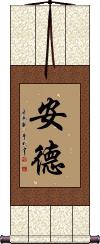
安德 is the name Ande in Chinese (Mandarin).
Ande
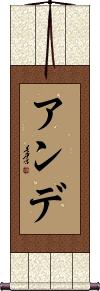
アンデ is the name Ande in Japanese Katakana.
Note: Because this title is entirely Japanese Katakana, it should be written by a Japanese calligrapher.
Blessings on this Home
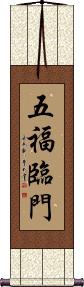
五福臨門 means “five good fortunes arrive [at the] door.”
It is understood to mean “may the five blessings descend upon this home.”
These blessings are known in ancient China to be: longevity, wealth, health, virtue, and natural death (living to old age). This is one of several auspicious sayings you might hear during the Chinese New Year.
Bless this House
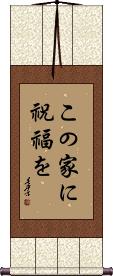
This means “Bless this house” or “Bless this home,” in Japanese.
Some may also translate this as “Bless this family,” since the Kanji for home can also mean family.
Note: Because this selection contains some special Japanese Hiragana characters, it should be written by a Japanese calligrapher.
Brotherly and Sisterly Love
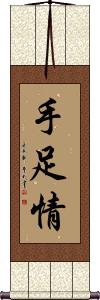
手足情 is the love between siblings.
When you love, protect, care for, and have a deep bond that only brothers or sisters can.
The actual translation is “Hand and Foot,” but the relationship between brothers or sisters is like that of hands and feet. They belong together and complete the body. Even though this says “hand and foot,” it will always be read with the brotherly and sisterly love meaning in Chinese.
Note: During the past 20 years, the “One child policy” in China is slowly making this term obsolete.
Crisis equals Danger plus Opportunity?
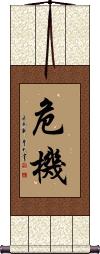
危機 means crisis in Chinese and Japanese.
Separately, the first character here does mean “danger” or “to endanger,” and the second character can mean “opportunity.”
However, I want to debunk a myth that was propagated by some westerners who did not have a clear understanding of Asian languages...
While often, Chinese/Japanese/Korean compound words (words of two or more characters) are the sum of their parts, this is not always the case. The compound is often understood with a completely different meaning than the two characters individually.
Many have said that the Chinese/Japanese/Korean word for Crisis is made up of the characters for “danger” and “opportunity.” 危機 is true when phrased this way.
However, it's not absolutely correct to say that “danger + opportunity = crisis” in Asian cultures.
English example:
If I tell you that...
Bovine creature + Guy behind the plate in baseball = Locomotive train protection

...you would think I was mad. But consider that “cow + catcher = cowcatcher,” which is the device that used to be found on steam engines to protect them if they hit an animal on the tracks. When we hear the word “cowcatcher,” we don't separate the words into their individual meanings (necessarily).
The same is true with the word for crisis in Chinese/Japanese/Korean. While you can separate the characters, few Asian people would automatically do so in their minds.
The final answer:
It is a half-truth to say, “danger plus opportunity equals crisis” in Chinese/Japanese/Korean. Use this statement and concept with caution.
Also, the second character can mean “secret” or “machine,” depending on context so I guess you have to say “a dangerous machine = crisis” or “danger + a secret = crisis.” Both of these are only slightly more ridiculous than the first premise.
PS: 危機 is probably not a great word for a scroll unless you have a special use for it.
Defense / Defend
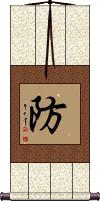
防 is a single Chinese character and Korean Hanja that means to protect, defend, guard against, prevent, ward off, or counter.
防 means the same thing in Japanese, though seldom seen alone as a single Kanji. When written alone, it could be the Japanese surname Fusegi.
Divine Blessing
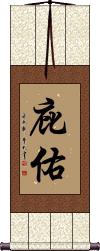
庇佑 is a Chinese way to say “divine blessing.”
This can also mean: to bless, to protect, or divine protection.
Also written as 庇祐 (variant second character).
God Bless You
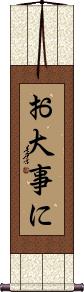
お大事に means “God bless you” in Japanese.
It can also mean “take care of yourself,” or “get well soon.” It's not always associated with religious meaning.
Note: Because this selection contains some special Japanese Hiragana characters, it should be written by a Japanese calligrapher.
God Bless You / May God Protect You
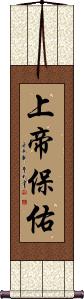
上帝保佑 is a blessing exchanged between Chinese Christians.
The first two characters mean God (The God of Zion). The second two characters express the idea of giving protection. Another way to translate this is “May God protect you.”
See Also: Guardian Angel
God Bless You / God Be With You
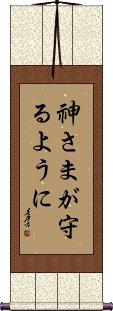
神さまが守るように is about as close as you can get to, “God Bless You” in Japanese.
This literally means “[May] God Protect [You].” It can also mean “God is Always With You,” as the word in this phrase that means “protect” can also mean to follow or be with. In fact, the Japanese dictionary entry for that word reads like this: to protect; to guard; to defend; to keep (i.e. a promise); to abide; to observe; to follow.
Note: Because this selection contains some special Japanese Hiragana characters, it should be written by a Japanese calligrapher.
Protect Guard Treasure Cherish
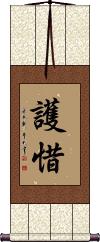
護惜 is a Zen Buddhist word that means to protect, guard, treasure, and/or cherish.
Goshin-Do
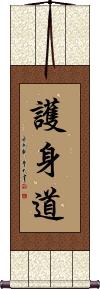
護身道 is the title for the school of martial arts known as Goshin-Do.
The literal translation of these three characters is something like “self-protection way” or “protection of the body way.”
To put this in context, the term 護身 is often used for charms or amulets that are meant to protect the wearer from harm.
Note: This phrase is pronounceable in Chinese, but it not commonly known in China.
Grace
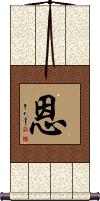
恩 is often translated as “kind act from above,” as in “The Grace of God.”
This doesn't necessarily have to come from God. It could be a favor paid to you, or help that you received (or gave). Of course, you can decide for yourself whether the grace or favor given to you by a friend is actually a gift from God.
Other possible translations of this character:
Favor / favour, acts of kindness, merits, beneficial Influence, kindness, indebtedness, obligation, and benevolent influence.
Grace from Heaven / Grace from God
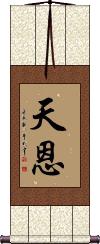
天恩 is the deepest way to say “Heaven's Grace” or “God's Grace” in Chinese.
The first character means Heaven or sky (referring, in this case, to the domain of God).
The second character means grace, blessings, benevolence, favor/favour, acts of kindness, merits, or beneficial influence.
This title can also be defined as:
Blessings of Heaven, Favor of the Emperor, Divination's luckiest day, or blessings of nature. Note: When you see “Emperor” above, remember that the Emperor, like the Pope, is theoretically chosen by God or seen as an emissary or conduit of God in ancient Asian culture. It would only be read that way in a certain context, such as “The Emperor, in his mercy, bestowed upon him Heaven's Grace, and the prisoner was set free.”
Note: Technically, this is a Japanese word too (pronounced "ten-on") but it’s rarely used in Japan anymore. Therefore, this title is best if your audience is Chinese.
Grace from Heaven / Grace from God
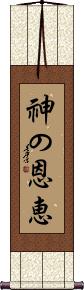
神の恩恵 means God's Grace in Japanese.
The first two characters act to create a word that means “divine,” “God's,” or “The Spirit's.”
The last two Kanji mean grace, favor/favour, blessing, or benefit.
The Great Wall of China
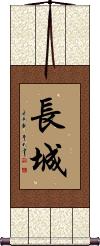
長城 is the Chinese name for the Great Wall.
Built at the northern border of China to protect from Mongol attack.
Notes:
In Japanese, this can be a surname Nagaki. Japanese often use a longer title for the Great Wall of China.
In Korean, this refers to Changsŏng (a city in Changsŏng-kun county, Chŏllanam-to province).
Guardian Angel
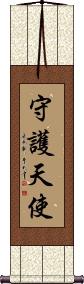
守護天使 is the title used for guardian angel in Chinese and Japanese Kanji.
It's used in the same way we use this title in the west - such as a guardian angel watching out for you and allowing you to survive a disaster or accident.
The first two characters mean to guard and protect. The second two mean “angel” (literally “Heaven's messenger”).
Love and Protect
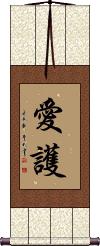
愛護 is the Chinese and Japanese Kanji for cherish, to treasure, to take care of, to love and protect, to provide loving protection, or tender care.
Nurse
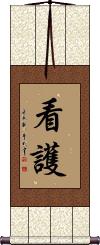
看護 is one title (of a few) for nurse in Chinese, Japanese Kanji, and old Korean Hanja.
In most cases, this title refers to a hospital nurse, those who participate in the art of nursing and is a term for an army nurse (especially in Japan).
The first character means “to look after” or “to watch over.” The second character means “to protect” or “to guard.”
Duty to Defend and Protect Country
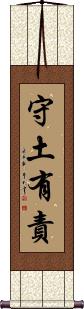
守土有責 is a Chinese proverb that expresses one's duty to defend the country.
守 means to guard, defend, keep watch, abide by the law, and/or observe (rules or ritual).
土 means land, earth, or soil.
有 is a possessive modifier in effect meaning “is a.”
責 means duty or responsibility.
So you get a literal translation of “Protecting [the] land is [a] duty/responsibility.”
Blessings and Protection
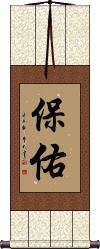
保佑 is the more religious and sometimes superstitious word for protection in Chinese. It's sort of a blessing of protection and is often translated as “bless and protect,” “blessing,” or “to bless.”
This would be used as the protection or blessing that a deity (such as God) would bestow upon you. It is not religion-specific in the same way a language cannot be specific to any religion.
 Note: Sometimes the second character is written in the form shown to the right. Let us know if you have a preference when you place your order.
See Also: Guardian Angel
Protector
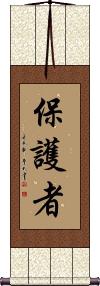
保護者 is the universal word for protector in Chinese, Japanese Kanji, and old Korean Hanja.
The first character means to defend, to protect, to insure or guarantee, to maintain, hold or keep, or to guard.
The second character means to protect.
Together the first and second characters create a word that means to defend, protect, or safeguard.
The last character means person.
Add all three characters together, and you have a word that means “protector,” one who will protect, guard, and keep you safe.
Some will also translate this word as guardian or patron.
Note: Not a common selection for a wall scroll in Asia.
See Also: Guardian Angel
Protector
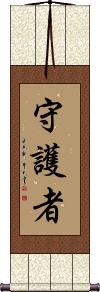
守護者 is a Chinese, Japanese Kanji, and old Korean Hanja title for a protector, watcher, or keeper.
The character breakdown:
守護 = to guard; to protect; protection; safeguard.
者 = person; someone of that nature; someone doing that work, the one [who, which].
From this breakdown, you can translate this as “The one who protects,” “Someone who safeguards,” or “guardian.”
The following table may be helpful for those studying Chinese or Japanese...
| Title | Characters | Romaji (Romanized Japanese) | Various forms of Romanized Chinese | |
| Ande | 安德 | ān dé / an1 de2 / an de / ande | an | |
| Ande | アンデ | ande | ||
| Blessings on this Home | 五福臨門 五福临门 | wǔ fú lín mén wu3 fu2 lin2 men2 wu fu lin men wufulinmen | ||
| Bless this House | この家に祝福を | kono-ka ni shukufuku o kono-kanishukufukuo | ||
| Brotherly and Sisterly Love | 手足情 | shǒu zú qíng shou3 zu2 qing2 shou zu qing shouzuqing | shou tsu ch`ing shoutsuching shou tsu ching |
|
| Crisis equals Danger plus Opportunity? | 危機 危机 | kiki | wēi jī / wei1 ji1 / wei ji / weiji | wei chi / weichi |
| Defense Defend | 防 | bou / bo | fáng / fang2 / fang | |
| Divine Blessing | 庇佑 / 庇祐 庇佑 | bì yòu / bi4 you4 / bi you / biyou | pi yu / piyu | |
| God Bless You | お大事に | odaijini | ||
| God Bless You May God Protect You | 上帝保佑 | shàng dì bǎo yòu shang4 di4 bao3 you4 shang di bao you shangdibaoyou | shang ti pao yu shangtipaoyu |
|
| God Bless You God Be With You | 神さまが守るように | kami sa ma ga mamo ru you ni kamisamagamamoruyouni kami sa ma ga mamo ru yo ni | ||
| Protect Guard Treasure Cherish | 護惜 护惜 | goshaku | hù xí / hu4 xi2 / hu xi / huxi | hu hsi / huhsi |
| Goshin-Do | 護身道 护身道 | gou shin dou goushindou go shin do | hù shēn dào hu4 shen1 dao4 hu shen dao hushendao | hu shen tao hushentao |
| Grace | 恩 | on | ēn / en1 / en | |
| Grace from Heaven Grace from God | 天恩 | tiān ēn / tian1 en1 / tian en / tianen | t`ien en / tienen / tien en | |
| Grace from Heaven Grace from God | 神の恩恵 | kami no on kei kaminoonkei | ||
| The Great Wall of China | 長城 长城 | chou jou / choujou / cho jo | cháng chéng chang2 cheng2 chang cheng changcheng | ch`ang ch`eng changcheng chang cheng |
| Guardian Angel | 守護天使 守护天使 | shu go ten shi shugotenshi | shǒu hù tiān shǐ shou3 hu4 tian1 shi3 shou hu tian shi shouhutianshi | shou hu t`ien shih shouhutienshih shou hu tien shih |
| Love and Protect | 愛護 爱护 | ai go / aigo | ài hù / ai4 hu4 / ai hu / aihu | |
| Nurse | 看護 看护 | kango | kān hù / kan1 hu4 / kan hu / kanhu | k`an hu / kanhu / kan hu |
| Duty to Defend and Protect Country | 守土有責 守土有责 | shǒu tǔ yǒu zé shou3 tu3 you3 ze2 shou tu you ze shoutuyouze | shou t`u yu tse shoutuyutse shou tu yu tse |
|
| Blessings and Protection | 保佑 / 保祐 保佑 | bǎo yòu / bao3 you4 / bao you / baoyou | pao yu / paoyu | |
| Protector | 保護者 保护者 | hogosha | bǎo hù zhě bao3 hu4 zhe3 bao hu zhe baohuzhe | pao hu che paohuche |
| Protector | 守護者 守护者 | shu go sha / shugosha | shǒu hù zhě shou3 hu4 zhe3 shou hu zhe shouhuzhe | shou hu che shouhuche |
| In some entries above you will see that characters have different versions above and below a line. In these cases, the characters above the line are Traditional Chinese, while the ones below are Simplified Chinese. | ||||

Successful Chinese Character and Japanese Kanji calligraphy searches within the last few hours...



