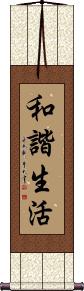
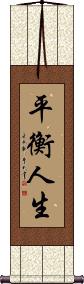
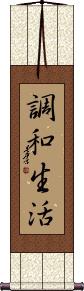
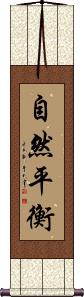
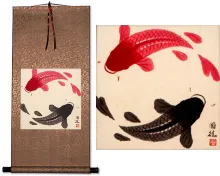
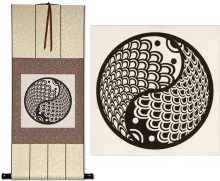
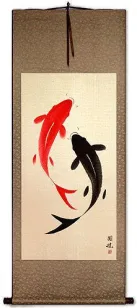
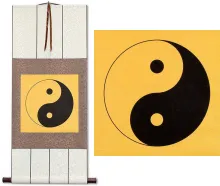
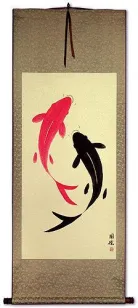
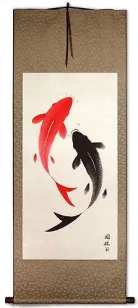
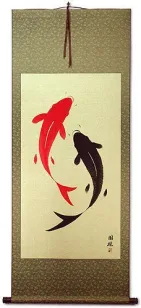
We have many options to create artwork with the Chinese characters / Asian symbols / Japanese Kanji for Balance on a wall scroll or portrait.
If you want to create a cool Balance Asian character tattoo, you can purchase that on our Chinese and Japanese Tattoo Image Service page and we'll help you select from many forms of ancient Asian symbols that express the idea of Balance.
Quick links to words on this page...


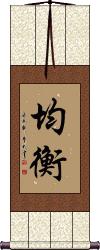
This means balance or equilibrium. This title is best for a Japanese audience where the word suggests that you life is in balance in all matters (or is a reminder for you to try and keep all matters in balance).

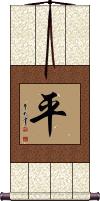
This is a single-character that means balance in Chinese, but it's not too direct or too specific about what kind of balance. Chinese people often like calligraphy art that is a little vague or mysterious. In this way, you can decide what it means to you, and you'll be right.
This character is also part of a word that means peace in Chinese, Japanese and old Korean.
Some alternate translations of this single character include: balanced, peaceful, calm, equal, even, level, smooth or flat.
Note that in Japanese, this just means "level" or "flat" by itself (not the best choice if your audience is Japanese).


This term transcends a few religions, including Taoism and Buddhism. This title refers to the inner bliss and peace that you can achieve from meditation. It can also be translated as "joy of the mystic trance" or simply "meditative bliss".
Amazing that such a complex idea can be expressed in just two Chinese characters. Note that the first character is Chan/Zen (Chinese/Japanese) which means "meditation" in both languages.


This Chinese and Japanese phrase is a direct translation for the western idea of inner peace.
The first two characters contain the idea of "heart" and "innermost being".
The last two characters mean "tranquil" and "serene".
I have seen this phrase used as "inner peace" for art prints and even on the side of coffee cups. But I think the translation is too literal. It feels like a direct translation from English rather than a nicely composed Chinese or Japanese phrase. See my other entries for "inner peace".
See Also... Serenity | Simplicity | Peace

Looking for Inner Peace? Who isn't?
This is the simplest way to convey the meaning of inner peace.
Literally this word means still, calm, serene, quiet or silent.
In the old days, Chinese, Japanese, or Korean people might hang a wall scroll with this character in their reading room to bring about a sense of peace in the room.
While they once used the same character form in Japan, they now use a slightly-simplified version in modern Japan (after WWII). This version is shown to the right, and can be selected for your wall scroll by clicking on that Kanji instead of the button above.
See Also... Peace


This is five characters from a longer ten-character phase composed by Zhuge Liang about 1800 years ago. The phrase means "Your inner peace / tranquility / serenity will help you see or reach far (into the world)". The last word means "far", but the deeper meaning is that you will surpass what you can currently see or understand. Perhaps even the idea of opening up vast knowledge and understanding of complex ideas.


This means just what it says. It's a word that expresses both the idea of being at peace and healthy at the same time.
Note: This is a bona-fide word in Chinese and Korean, and the characters will at least make sense in Japanese.

The simplest form of peace and harmony.
This can also be translated as the peaceful ideas of gentle, mild, kind, and calm. With the more harmonious context, it can be translated as union, together with, on good terms with, or on friendly terms.
Most people would just translate this character as peace and/or harmony. This is a very popular character in Asian cultures - you can even call it the "peace symbol" of Asia. In fact, this peace and harmony character was seen repeatedly during the opening ceremony of the 2008 Olympic Games in Beijing (a major theme of the games).
In old Chinese poems and literature, you might see this used as a kind of "and". As in two things summed together. As much as you could say, "the sun and moon", you could say "the sun in harmony with the moon".
See Also... Inner Peace | Patience | Simplicity


This is the Chinese and Japanese way to express "Peace and Love". These are two separate words, so the calligrapher will put a slight space between the first two characters which mean peace, and the last two which represent universal love. This space is not shown on the sample character images for this phrase.
A special note: Word lists may seem okay in English, but feel strange in Chinese and Japanese. We don't offer too many of them, but this one is often-requested, and feels okay in Chinese and Japanese, though a bit uncommon in Korean.


This is the longer way to express the idea of "peace of mind" in Chinese.
The first two characters mean heart or "innermost being".
The middle character is a connecting modifier.
The last two characters mean peace, tranquility, or serenity.
Some may also translate this as "inner peace", but I like our other inner-peace options for that idea.
This kind of makes sense in Korean, but will have an archaic read - even by those who can understand Korean Hanja.


This means "peace and tranquility" or "peace and security" in Chinese, Japanese Kanji, and old Korean Hanja.
The literal translation would be "very balanced" or "very peaceful".
The first character means very, much, too much, or extremely.
The second character means balanced, peaceful, calm, equal, even, level, or smooth.


This means peace and/or tranquility in Japanese and Korean (also understood, but not as common in Chinese).


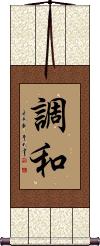
This is the Chinese order for these two characters which means peace but can also be translated as amicability, pacifically or mildness. This is often translated as a simple way to say "peace of mind". This combination is used in Korean Hanja to mean "peace and harmony".
Alone, the first character means peace and harmony.
The second chracter means balance, when read by itself.
Note: These characters are often seen in the opposite order in Japanese with the same meaning (still a good meaning, but not as common in this order in Japan).


This is the Japanese and Korean order of these characters used most often to express the idea of peace, tranquility and harmony. It's just the reverse order of the Chinese. In this order in Chinese, it means takes the "mild" definition, rather than "peace". In Korean, the combination keeps the same meaning in either order.


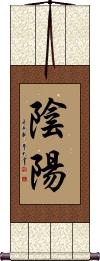
This is NOT a typical Chinese phrase. It was added to our calligraphy database at the request of a customer. These are two dynamically-opposed ideas, but this is the way to express them together.


This is how to write "peaceful heart" in Chinese.
The first character means peaceful, calm, and quiet. The second means heart, but can also mean mind, soul, or spirit.
Because the word for heart / mind / soul is interchangeable in Chinese, this can also be translated as "a peaceful soul" or "a quiet mind".
I have also seen this translated as "placid temperament" or "spirit of serenity", especially from Japanese.
While they once used the same first character form in Japan, they now use a slightly-simplified version in modern Japan (after WWII). This version is shown to the right, and can be selected for your wall scroll by clicking on that Kanji instead of the button above.


This is a nice word that encompasses great meanings within just two characters. This can be defined as relief, peace of mind, feeling at ease, to be relieved, set one's mind at rest.


This is a nice word that means peaceful, tranquil, calm, composed, "free from worry", "public peace", tranquility, good health, well-being, or welfare in Chinese and Korean.
Note: The definition in Japanese is not so broad, but still means peaceful or "public peace".


The first and second character both mean quiet. Together, they reinforce the meanings almost creating a word that means "double quiet" or "perfect quiet".
A good wall scroll for a library, reading room, or other quiet place.


Characters shown
above are read
vertically, starting
from the right
This means "To bring flourishing peace and security to the world (our current era)".
It's really a wish that a new door leading to peace and prosperity could be opened to mankind.


These two Chinese characters create a title that means to reach peace and calm through meditation. This is an excellent wall scroll for your relaxation or meditation room.
This is also a Buddhist-related term that encompasses the idea of entering into dhyana meditation.


This means "Peaceful Warrior" in Chinese. This does in fact sound like an oxymoron in Chinese - but many of you have asked for this special title.
Note, this is not the same thing as "warrior for peace".


This means "Warrior for Peace" (warrior who fights for peace) in Chinese.
Note, this is not the same thing as "peaceful warrior".


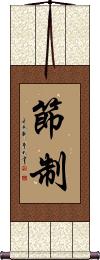
Moderation is creating a healthy balance in your life between work and play, rest and exercise. You don't overdo or get swept away by the things you like. You use your self-discipline to take charge of your life and your time.
This word can also be translated as "self-restraint" or "temperance".


This means just what the title suggests. This means antiwar, as in what a pacifist believes in.
China doesn't tend to go to war very often so it's rare to need this word. But it's the kind of word that war protesters would write on their signs. If you add the word for "protest" after this word in Chinese, you have the subject that gets a lot of press lately in China:
Anti-War protests in America.

This character is used in a lot of compound words in the CJK world. Alone, this character has a broad span of possible meanings. These meanings include relaxed, quiet, rested, contented, calm, still, to pacify, peaceful, at peace, soothing or soothed.
This character and even the pronunciation was borrowed from Chinese and absorbed into both Japanese Kanji and Korean Hanja. In all these languages, this character is pronounced like "an".


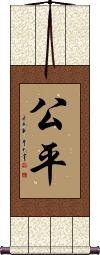
This word means impartial, fairness, and justice in Chinese, old Korean, and Japanese.
This character, on your wall, should be used to remind yourself to be fair and just in all situations of life.
See Also... Justice

This is a single character that means good health or vigor in Chinese, Japanese Kanji, and old Korean Hanja.
This character can also mean peaceful, at ease, or abundant in some contexts.
Please note that this is rarely seen alone in Japanese Kanji. In Japanese, it is used both for health-related compound words and to denote the kouhou through koushou eras of Japan.
In Korean, this can also be the family name "Kang" (caution: not the only family name romanized as Kang in Korean).


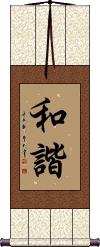
This word means harmonious, harmony, concordant, or balanced in Chinese and Japanese Kanji.
In Korean Hanja, it sometimes means reconciliation or compromise.
See Also... Peace | Inner Peace


In Chinese and Korean, the first character means "modest". The second means "empty". Together these characters reinforce the ideas of modesty and being empty of ego.
This can also be translated as humbleness or humility.
In Japan, they tend to use a slightly-simplified version of the second Kanji for this word. It also happens to be an alternate/simplified version used in China too. If you want to order the modern Japanese/simplified version, just click in the Kanji image shown to the right, instead of the button above.
See Also... Moderation


In Japanese, first Kanji means "self-effacing", "humble oneself", "condescend", "be modest". The second means "void" or "emptiness".
This is the most common way to say humble or modest in Japanese without a derogatory meaning (some other words suggest weakness, but this version holds a better humble meaning).
See Also... Moderation


Being humble is considering others to be as important as yourself. You are thoughtful of their needs and willing to be of service. You don't expect others or yourself to be perfect. You learn from your mistakes. When you do great things, humility reminds you to be thankful instead of boastful.
These characters can also be translated as modesty.
Also sometimes used in Japanese to express humility with an essence of modesty.


This is a kind of complex ten-character proverb composed by Zhuge Liang about 1800 years ago. The proverb means "Leading a simple life will yield a clear mind, and having inner peace will help you see far (into the world)".
What I have translated as "simple life" means NOT being materialistic and NOT competing in the rat race.
The last word means "far", but the deeper meaning is that you will surpass what you can currently see or understand. Perhaps even the idea of opening up vast knowledge and understanding of complex ideas.
The whole phrase has a theme that suggests if you are NOT an aggressive cut-throat person who fights his way to the top no matter how many people he crushes on the way, and instead seek inner peace, you will have a happier existence and be more likely to understand the meaning of life.
See Also... Serenity


We have also used this word as "Humility" in another listing. Depending on context, it can be translated as modesty, humbleness or humility. The first character means "modesty" while the second means "yielding". Together it could be stated as "yielding modesty".
See Also... Chastity | Prudence | Moderation


My Australian friends always say "No worries mate". It's caught on with me, though I drop the "mate" part since it confuses my fellow Americans.
If you would like to express the idea of "no worries" this is the best and most natural way to say it in Chinese.
The characters you see to the left can be translated as "put your mind at rest" or "to be at ease". You could literally translate "no worries" but it doesn't "flow" like this simple Chinese version.
For your info, the first character means to release, to free, to let go, to relax, or to rest. The second character means your heart or your mind.
Note that in Japanese and Korean, this holds the similar meaning of "peace of mind", but can also mean absentmindedness or carelessness depending on context.


This is fairly self-explanatory.
The first character means "not", "non-" or "un-"
The middle and last character together mean "violence", "use of force" or simply "violent".
Together, these three characters would normally be translated as "nonviolence". A great gift for your favorite peace-lover.
See Also... Peace


Patience is quiet hope and trust that things will turn out right. You wait without complaining. You are tolerant and accepting of difficulties and mistakes. You picture the end in the beginning and persevere to meet your goals.
These characters can also mean "to endure", "restrain oneself" and in some context it can mean "perseverance" or "endurance".
This is also used as a tenet of Taekwondo and other Korean martial arts.
Note that when writing this as Kanji, Japanese will tend to write the first character in the form shown to the right. If you select our Japanese master calligrapher, please expect this Kanji form (yes, it's just one stroke that is slightly different in location, crossing another stroke in the Japanese Kanji form).
See Also... Peace | Inner Peace | Harmony | Perseverance


Can also mean "cautious" or "careful".
Note: The Chinese and Japanese form is shown here. In Korean Hanja, the first character has a variant in one of the strokes - just let me know when you place your order if you want that Korean version (A Korean who can read Hanja, will know the meaning anyway).
Note: If you order this selection from our Japanese calligrapher, the first Kanji will vary slightly. It is technically the same character, but Japanese tend to leave a space between the upper and lower portions of this particular Kanji (see image to the right).
Note: Also considered to be one of the Seven Heavenly Virtues.
See Also... Moderation | Modesty | Chastity
Mandarin: bái tiān bù
zuò kuī xīn shì yè b� n
qiāo mén bù chī jīng


Characters shown
above are read
vertically, starting
from the right
This literally translates as: [If one does] not do bad things in the daytime, one need not be alarmed at knocks on the door in the middle of the night.
The meaning is something like, "A quiet conscience sleeps in thunder". Basically, the message is, "don't commit crimes and you won't be jumpy every time the doorbell rings (so don't do anything wrong and your life will have fewer worries and you can sleep at night)".


This phrase means "safe and sound without toil or trouble". It kind of means that all is well with a feeling of complete safety. The ideas contained in these characters include well-being, peace, tranquility, quietness, calmness, and non-problematic.


This word means "safe and sound" in Chinese, Japanese, and Korean.
Can also be translated as well-being, peace, tranquility, quietness, and calmness.
Note: There is also a longer four-character version in our calligraphy database.
See Also... Tranquility | Peace

This character is often translated as "serenity". It can also be used to express the ideas of still, calm, quiet, not moving or tranquility.
Note: This is also listed on our website as "Inner Peace" since it also fits that definition.
See Also... Peace | Inner Peace


This is one of several ways to express as "serenity" or "tranquility" in Japanese and Chinese. It can also be translated as calm, serenity, tranquil, undisturbed or serene.
See Also... Peace | Inner Peace


This is a Japanese-specific way to express "serenity" or "tranquility".
Notes: The second Kanji is not a Chinese character - it was morphed or developed in Japan after Chinese characters were absorbed into the Japanese language during the 5th century.
The first character is slightly-simplified from the original Chinese form, but still recognizable.
See Also... Peace | Inner Peace


This title is used in Taoism and Qi Gong to describe the state you can reach while sitting quietly in meditation. It contains the ideas of achieving a highly-tranquil and peaceful state. Some may describe this state as "sleeping while still awake".
If you have a relaxation or meditation room, this is the calming wall scroll that you would want hanging in that room.


In short, temperance is knowing when to say "when".
Temperance is the practice of moderation and restraint (in fact, this Asian word is often translated as moderation or restraint).
It was one of the five tenets held to be vital to society in Hellenic culture. It is also one of the Four Cardinal Virtues considered central to Christian behavior by the Catholic Church.
Note: Also considered to be one of the Seven Heavenly Virtues.


This is yet another way to express the idea of tranquility and serenity in Chinese.
See Also... Peace | Inner Peace | Harmony | Calm


This title suggests that you have, or want to get your life in balance.
The first two characters regard the idea of balance, harmony, and peace.
The second two characters mean "life". More specifically this refers to your livelihood, career, and the daily activities that comprise your life or living. Some would translate those two characters as "one's daily existence".
Note: We have a couple of titles for this idea. This version is more of a noun, thus "The Balanced Life" verses a verb form like "Balancing [Your] Life".


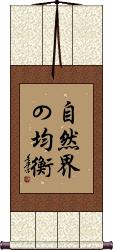
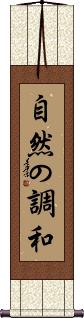
This title is about the way and balance of nature.
The first two characters mean nature or the way of life.
The second two characters mean balance or balanced.
Note: We have two versions of this title on our website. This is the one we recommend, as it is a little more natural (no pun intended).


This title is simply Universe Balanced (we might say "Balanced Universe" in English).
The first two characters mean Universe. However, in some context, it can mean cosmic, cosmos, or outer space.
The second two characters mean balance or balanced (can also mean equilibrium).


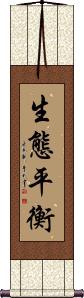
This title means "nature balanced".
The first two characters mean nature (as in mother nature, or all biological life).
The second two characters mean balance or balanced.
The art of balancing your life
Mandarin: píng héng rén shēng
Japanese: hei kou jin sei


This title suggests that you are actively trying to keep your life in balance. Think of this as being the action-verb of seeking or having a balanced life.
The first two characters mean balance, equilibrium or keeping things equal.
The last two characters mean "life". Literally "human life".
Note: This can be pronounced in Japanese, but this title has not been confirmed by our Japanese translator.
Wall scroll artwork shown on this page is priced as follows:
1 character $29.88 each
2-3 characters $39.88 each
4 characters $49.88 each
5-10 characters $59.88 each
11 or more characters $69.88 each
After you select your calligraphy, our website will take you through the process of customizing your artwork.
Options for other mounting such as portraits are available for $13 less.
We also offer the services of a famous master calligrapher for a $40 fee on any scroll if you are looking for investment-quality calligraphy.
If you chose our famous master-calligrapher, you also get more choices for silk and paper colors and the option for larger artwork.
All of our calligraphy is completely done by hand in the ancient way.
When the calligrapher finishes creating your artwork, it is taken to our art mounting workshop in Beijing where a wall scroll is made by hand from a combination of silk, rice paper, and wood.
After we create your wall scroll, it takes at least two weeks for air mail delivery from Beijing to you.
Therefore, allow at least 3 weeks for delivery from the time you place your order.
When you select your calligraphy, you'll be taken to another page where you can choose various custom options.
The scroll that I am holding in this picture is a "regular size"
4-character wall scroll.
As you can see, it is a great size to hang on your wall.
(We also offer custom wall scrolls in larger sizes)
Professional calligraphers are getting to be hard to find these days.
Instead of drawing characters by hand, the new generation in China merely type roman letters into their computer keyboards and pick the character that they want from a list that pops up.
There is some fear that true Chinese calligraphy may become a lost art in the coming years. Many art institutes in China are now promoting calligraphy programs in hopes of keeping this unique form
of art alive.
Even with the teachings of a top-ranked calligrapher in China, my calligraphy will never be good enough to sell. I will leave that to the experts.
The same calligrapher who gave me those lessons also attracted a crowd of thousands and a TV crew as he created characters over 6-feet high. He happens to be ranked as one of the top 100 calligraphers in all of China. He is also one of very few that would actually attempt such a feat.
The following table is only helpful for those studying Chinese (or Japanese), and perhaps helps search engines to find this page when someone enters Romanized Chinese or Japanese
| Title | Characters Simplified Traditional |
Japanese Romaji (Romanized Japanese) | Various forms of Hanyu-Pinyin (Romanized Chinese) | |||
| Balance | 均衡 均衡 | kin kou kinkou kin ko | jūn héng jun heng | jun1 heng2 junheng | ||
| Balance / Peace | 平 平 | hira | píng ping | ping2 ping | ||
| Inner Bliss and Peace from Meditation | 禅悦 禪悅 | n/a | chán yuè chan yue | chan2 yue4 chanyue | ||
| Inner Peace | 内心平静 內心平靜 | naishin heizyou naishinheizyou naishin heizyo | nèi xīn píng jìng nei xin ping jing | nei4 xin1 ping2 jing4 neixinpingjing | ||
| Inner Peace / Silence / Serenity | 静 靜 | shizu | jìng jing | jing4 jing | ||
| Achieve Inner Peace; Find Deep Understanding | 宁静而致远 寧靜而致遠 | n/a | níng jìng ér zhì yuǎn ning jing er zhi yuan | ning2 jing4 er2 zhi4 yuan3 ningjingerzhiyuan | ||
| Peace and Good Health | 安康 安康 | n/a | ān kāng an kang | an1 kang1 ankang | ||
| Peace / Harmony | 和 和 | wa | hé he | he2 he | ||
| Peace and Love | 和平博爱 和平博愛 | wahei hakuai waheihakuai | hé píng bó ài he ping bo ai | he2 ping2 bo2 ai4 hepingboai | ||
| Peace of Mind | 内心的宁静 內心的寧靜 | n/a | nèi xīn de níng jìng nei xin de ning jing | nei4 xin1 de ning2 jing4 neixindeningjing | ||
| Peace and Tranquility | 太平 太平 | tai hei taihei | tài píng tai ping | tai4 ping2 taiping | ||
| Peace and Tranquility | 泰平 泰平 | taihei | n/a | |||
| Peace of Mind | 和平 和平 | wa hei wahei | hé píng he ping | he2 ping2 heping | ||
| Peace / Peaceful | 平和 平和 | hei wa heiwa | píng hé ping he | ping2 he2 pinghe | ||
| Peaceful Chaos | 平静的混乱 平靜的混亂 | n/a | píng jìng de hùn luàn ping jing de hun luan | ping2 jing4 de hun4 luan4 pingjingdehunluan | ||
| Peaceful Heart | 静心 靜心 | shizugokoro / seishin shizugokoro/seishin | jìng xīn jing xin | jing4 xin1 jingxin | ||
| Peaceful Heart / Peace of Mind | 安心 安心 | anshin | ān xīn an xin | an1 xin1 anxin | ||
| Peaceful / Tranquil / Calm / Free From Worry | 安宁 安寧 | an nei annei | ān níng an ning | an1 ning2 anning | ||
| Peacefulness / Tranquility / Perfectly Quiet | 静谧 靜謐 | seihitsu | jìng mì jing mi | jing4 mi4 jingmi | ||
| Worldwide Wish for Peace and Prosperity | 启盛世开太平 啟盛世開太平 | n/a | qǐ shèng shì kāi t i píng qi sheng shi kai tai ping | qi3 sheng4 shi4 kai1 tai4 ping2 qishengshikaitaiping | ||
| Reach Peace and Calm by Meditation | 安禅 安禪 | n/a | ān chán an chan | an1 chan2 anchan | ||
| Peaceful Warrior | 平和的武士 平和的武士 | n/a | píng hé de wǔ shì ping he de wu shi | ping2 he2 de wu3 shi4 pinghedewushi | ||
| Warrior for Peace | 和平武士 和平武士 | n/a | hé píng wǔ shì he ping wu shi | he2 ping2 wu3 shi4 hepingwushi | ||
| Moderation | 节制 節制 | sessei sesei | jié zhì jie zhi | jie2 zhi4 jiezhi | ||
| Antiwar / Anti-War | 反战 反戰 | n/a | fǎn zh n fan zhan | fan3 zhan4 fanzhan | ||
| Calm / Tranquility | 安 安 | an | ān an | an1 an | ||
| Fair / Impartial | 公平 公平 | kouhei kohei | gōng píng gong ping | gong1 ping2 gongping | ||
| Good Health / Healthy / Vigor | 康 康 | kou ko | kāng kang | kang1 kang | ||
| Harmony / Balance | 和谐 和諧 | wa kai wakai | hé xié he xie | he2 xie2 hexie | ||
| Humble | 谦恭 謙恭 | n/a | qiān gōng qian gong | qian1 gong1 qiangong | ||
| Humble / Modest | 谦虚 謙虛 | ken kyo kenkyo | qiān xū qian xu | qian1 xu1 qianxu | ||
| Humble / Modesty / Humility (Japanese) | 謙虚 謙虚 | ken kyo kenkyo | qiān xū qian xu | qian1 xu1 qianxu | ||
| Humility / Being Humble | 谦逊 謙遜 | kenson | qiān xùn qian xun | qian1 xun4 qianxun | ||
| A Life of Serenity Yields Understanding | 淡泊以明志宁静而致远 淡泊以明志寧靜而致遠 | n/a | dàn bó yǐ míng zhì, níng jìng ér zhì yuǎn dan bo yi ming zhi, ning jing er zhi yuan | dan4 bo2 yi3 ming2 zhi4, ning2 jing4 er2 zhi4 yuan3 | ||
| Modesty | 谦逊 謙遜 | kenson | qiān xùn qian xun | qian1 xun4 qianxun | ||
| No Worries | 放心 放心 | houshin hoshin | fàng xīn fang xin | fang4 xin1 fangxin | ||
| Non-Violence | 非暴力 非暴力 | hibouryoku hiboryoku | fēi bào lì fei bao li | fei1 bao4 li4 feibaoli | ||
| Patience / Perseverance / To Endure / Tolerant | 忍耐 忍耐 | nintai | rěn nài ren nai | ren3 nai4 rennai | ||
| Prudence | 慎重 慎重 | shinchou shincho | shèn zhòng shen zhong | shen4 zhong4 shenzhong | ||
| One Who Does Not Do Bad Things, Worries Not of Knocks at His Door | 白天不做亏心事夜半敲门不吃惊 白天不做虧心事夜半敲門不吃驚 | n/a | bái tiān bù zuò kuī xīn shì yè b� n qiāo mén bù chī jīng bai tian bu zuo kui xin shi ye ban qiao men bu chi jing | bai2 tian1 bu4 zuo4 kui1 xin1 shi4 ye4 ban4 qiao1 men2 bu4 chi1 jing1 | ||
| Safe and Sound | 平安无事 平安無事 | heian buji heianbuji | píng ān wú shì ping an wu shi | ping2 an1 wu2 shi4 pinganwushi | ||
| Safe and Sound | 平安 平安 | heian | píng ān ping an | ping2 an1 pingan | ||
| Serenity | 静 靜 | shizu / sei shizu/sei | jìng jing | jing4 jing | ||
| Serenity / Tranquility | 平静 平靜 | heisei | píng jìng ping jing | ping2 jing4 pingjing | ||
| Serenity / Tranquility (Japanese only) | 静穏 靜穏 | seion | n/a | |||
| Sit Quietly in Meditation (a state of mind) | 入静 入靜 | n/a | rù jìng ru jing | ru4 jing4 rujing | ||
| Temperance | 节制 節制 | sessei sesei | jié zhì jie zhi | jie2 zhi4 jiezhi | ||
| Tranquil / Tranquility / Serenity | 宁静 寧靜 | n/a | níng jìng ning jing | ning2 jing4 ningjing | ||
| Life in Harmony / The Balanced Life | 和谐生活 和諧生活 | n/a | hé xié shēng huó he xie sheng huo | he2 xie2 sheng1 huo2 hexieshenghuo | ||
| Nature in Balance / Balanced Nature | 生态平衡 生態平衡 | n/a | shēng tài píng héng sheng tai ping heng | sheng1 tai4 ping2 heng2 shengtaipingheng | ||
| Universe in Balance / Balanced Universe | 宇宙平衡 宇宙平衡 | n/a | yǔ zhòu píng héng yu zhou ping heng | yu3 zhou4 ping2 heng2 yuzhoupingheng | ||
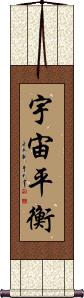
| Nature in Balance / Balanced Nature | 自然平衡 自然平衡 | n/a | zì rán píng héng zi ran ping heng | zi4 ran2 ping2 heng2 ziranpingheng | ||
| Life in Balance / Balancing Life | 平衡人生 平衡人生 | hei kou jin sei heikoujinsei hei ko jin sei | píng héng rén shēng ping heng ren sheng | ping2 heng2 ren2 sheng1 pinghengrensheng | ||
| If you have not set up your computer to display Chinese, the characters in this table probably look like empty boxes or random text garbage.
This is why we spent hundreds of hours making images so that you could view the characters in the "Balance" listings above. If you want your Windows computer to be able to display Chinese characters you can either head to your Regional and Language options in your Win XP control panel, select the [Languages] tab and click on [Install files for East Asian Languages]. This task will ask for your Win XP CD to complete in most cases. If you don't have your Windows XP CD, or are running Windows 98, you can also download/run the simplified Chinese font package installer from Microsoft which works independently with Win 98, ME, 2000, and XP. It's a 2.5MB download, so if you are on dial up, start the download and go make a sandwich. | ||||||
All custom calligraphy items are made-to-order in our little Beijing artwork-mounting workshop.
Please note: Rush service can be as fast as two weeks, but regular service is over a month for delivery.
Copyright Oriental Outpost 2002-2009 - All Rights Reserved
Image Use Policy | Privacy Policy