The Name S in Chinese/Japanese on a Personalized Wall Scroll.
Click the "Customize" button next to your name below to start your personalized S calligraphy artwork...
Switched to secondary search mode due to lack of results using primary.
These secondary results may not be very accurate. Try a different but similar meaning word or phrase for better results. Or:
Look up S in my Japanese Kanji & Chinese Character Dictionary(My dictionary is a different system then the calligraphy search you just tried)
If you want a special phrase, word, title, name, or proverb, feel free to contact me, and I will translate your custom calligraphy idea for you.
4. One Day Seems Like 1000 Years
5. 1. Right Understanding / Right Perspective / Right View / Perfect View
7. 100 Years of Happy Marriage
8. Even a fool may sometimes come up with a good idea
10. 17 Seventeen
12. Water Horse
13. 2. Right Resolve / Right Thought / Right Intention / Perfect Resolve
14. Water Goat/Sheep
15. Wood Rooster
16. 3. Right Speech / Right Talk / Perfect Speech
17. Water Snake
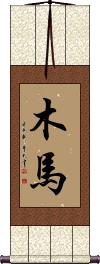
18. Wood Horse
19. Wood Goat/Sheep
20. Fire Rooster
21. Wood Snake
22. Fire Horse
23. Fire Goat/Sheep
24. Earth Rooster
26. Five Red Bats
28. Fire Snake
29. Earth Horse
30. Earth Goat/Sheep
32. Earth Snake
33. 7. Right Mindfulness / Right Memory / Perfect Mindfulness
37. Aakash
38. Aalysha
39. Aarish
40. Aasa
41. Aashir
42. Aashma
43. Aasia
44. Aasiyah
45. Abbas
46. Abbasi
47. Abbenhuis
48. Abhishek
49. Abis
50. Abishek
51. Ables
52. Abrahamson
53. Abrams
54. Abramson
55. Absalom
56. Absalon
57. Abshekh
58. Absher
59. Abshire
60. Absolon
63. In the Abyss of Infinite Bitterness - Turn to the Shore
64. Abyssinia
65. Acas
66. Optimism / Happy With Your Fate
67. Aces Dojo
68. Aceves
69. Achievement / Accomplishment
70. Achilleas
71. Achilles
72. Ackerson
1 Corinthians 13:4-8
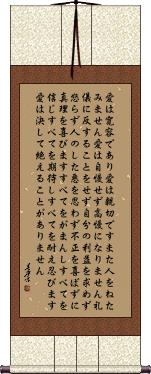
Here is 1st Corinthians 13:4-8 (just the first sentence of verse 8) in Japanese.
In the familiar NIV, this would read:
Love is patient, love is kind. It does not envy, it does not boast, it is not proud.
It does not dishonor others, it is not self-seeking, it is not easily angered, it keeps no record of wrongs.
Love does not delight in evil but rejoices with the truth.
It always protects, always trusts, always hopes, always perseveres.
Love never fails...
The Japanese text is from the 新改訳聖書 (Shinkaiyaku) or New Japanese Bible. Popular among most Protestant denominations in modern Japan.
Note: Because this selection contains some special Japanese Hiragana characters, it should be written by a Japanese calligrapher.
1 Corinthians 13:5
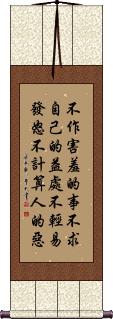
Here is 1 Corinthians 13:5 in Chinese.
The text with punctuation:
不作害羞的事。不求自己的益处。不轻易发怒。不计算人的恶。
Hand-painted calligraphy does not retain punctuation.
This translation is from the Chinese Union Bible.
You may know it from the KJV as:
Doth not behave itself unseemly, seeketh not her own, is not easily provoked, thinketh no evil.
1 Corinthians 14:22
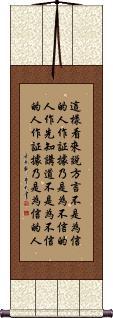
Here is 1 Corinthians 14:22 in Chinese.
The text with punctuation:
这样看来,说方言,不是为信的人作证据,乃是为不信的人。作先知讲道,不是为不信的人作证据,乃是为信的人。
Hand-painted calligraphy does not retain punctuation.
This translation is from the Chinese Union Bible.
You may know it from the KJV as:
Wherefore tongues are for a sign, not to them that believe, but to them that believe not: but prophesying serveth not for them that believe not, but for them which believe.
One Day Seems Like 1000 Years
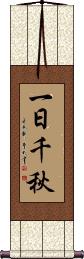
一日千秋 is a Japanese and Chinese proverb about missing someone.
一日千秋 is often used to express how hard it is to wait for someone's return or to be away from someone.
Some will translate this as “one day feels like a very long time” or “waiting for someone (something) is hard.”
You might see this romanized as a single word, Ichijitsusenshuu, or as “Ichijitsu Senshuu” from Japanese.
If you break down the characters one-by-one, we get:
一 = one/a
日 = day/sun (can also represent time or date)
千 = 1000/thousand
秋 = autumn/fall
Together, 千秋 can mean “autumn comes thousand times” (or 1000 years). It can also be read as 1000 periods of time.
However, it conveys the idea of heartache as you wait for someone you miss.
1. Right Understanding / Right Perspective / Right View / Perfect View
Samyag Dristhi / Samyag Drsti / Samma Ditthi
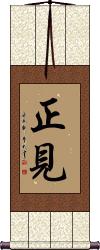
正見 is one of the Noble Eightfold Paths of Buddhism. Right View, along with the Right Thought, constitutes the path to Wisdom.
To get to the correct view of the world, you must first understand and follow Four Noble Truths.
Note: This term is exclusively used by devout Buddhists. It is not a common term, and remains an unknown concept to most Japanese and Chinese people.
See Also: Buddhism | Enlightenment | Noble Eightfold Path
Ten perfect Mahayana rules
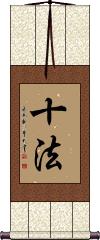
十法 is the title of the ten perfect or perfecting Mahāyāna rules.
The order of rules is as follows:
1. right belief.
2. right conduct.
3. right spirit.
4. the joy of the bodhi mind.
5. joy in the dharma.
6. joy in meditation.
7. pursuing the correct dharma.
8. obedience to, or accordance with dharma.
9. departing from pride, desire, etc.
10. comprehending the inner teaching of Buddha and taking no pleasure in attaining such knowledge or noting the ignorance of others.
This title is only used in the context of Buddhism. Japanese and Chinese people who are not familiar with Buddhism will not recognize this title.
100 Years of Happy Marriage
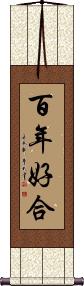
百年好合 is a wish or greeting, often heard at Chinese weddings, for a couple to have 100 good years together.
Some will translate this more naturally into English as: “May you live a long and happy life together.”
The character breakdown:
百 = 100
年 = Years
好 = Good (Happy)
合 = Together
Even a fool may sometimes come up with a good idea
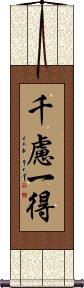
千慮一得 means “1000 tries, one success,” or “[a] thousand tries [leads to] one success.”
This proverb is a humble way to express your success, ideas, or accomplishments. It carries the self-deprecating implication that you simply got lucky when inventing or creating something.
Translations for this proverb include:
Even without any notable ability on my part, I may still get it right sometimes by good luck.
Even a fool may sometimes come up with a good idea.
Compare this to the English idiom, “Even a broken clock is right twice a day.”
Water Rooster
The Year of the Water Rooster
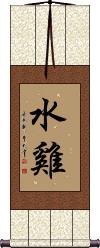
水雞 is Water Rooster in Chinese.
In the Chinese zodiac and sexagenary (60-year) cycle, this combination occurs in years that include 1873, 1933, 1993, and 2053.
In the sexagenary cycle, this year is represented by 癸酉.
See Also: Rooster / Chicken
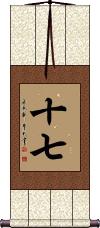
17 Seventeen
Golden/Metal Snake
The Year of the Gold Snake
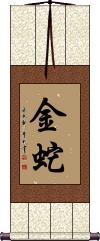
金蛇 is Golden/Metal Snake in Chinese.
In the Chinese zodiac and sexagenary (60-year) cycle, this combination occurs in years that include 1881, 1941, 2001, and 2061.
In the sexagenary cycle, this year is represented by 辛巳.
See Also: Snake / Serpent
Water Horse
The Year of the Water Horse
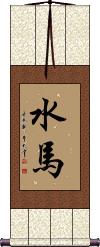
水馬 is Water Horse in Chinese.
In the Chinese zodiac and sexagenary (60-year) cycle, this combination occurs in years that include 1882, 1942, 2002, and 2062.
In the sexagenary cycle, this year is represented by 壬午.
See Also: Horse
2. Right Resolve / Right Thought / Right Intention / Perfect Resolve
Samyak Samkalpa / Samma Sankappa
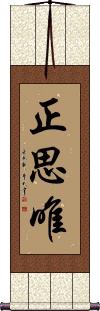
正思唯 is one of the Noble Eightfold Paths of Buddhism. Right Thought, along with the Right View, constitute the path to Wisdom.
In Buddhism, Right Thought, in simple terms, means to free yourself from having ill will towards anyone or anything. It also suggests that you remain harmless to other living creatures.
This can also be defined as “Resolve in favor of renunciation, goodwill, and non-harming of sentient beings.”
 There is an ancient/alternate version of the third character for this selection. You can see that alternation third character to the right. If you want your selection to use that older character, just click on the character to the right, instead of the button above.
Note: This term is exclusively used by devout Buddhists. It is not a common term, and remains an unknown concept to most Japanese and Chinese people.
See Also: Buddhism | Enlightenment | Noble Eightfold Path
Water Goat/Sheep
The Year of the Water Goat/Sheep
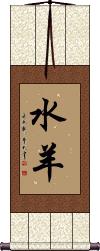
水羊 is Water Goat/Sheep in Chinese.
In the Chinese zodiac and sexagenary (60-year) cycle, this combination occurs in years that include 1883, 1943, 2003, and 2063.
In the sexagenary cycle, this year is represented by 癸未.
See Also: Goat / Sheep
Wood Rooster
The Year of the Wood Rooster
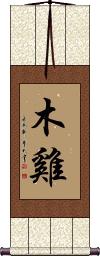
木雞 is Wood Rooster in Chinese.
In the Chinese zodiac and sexagenary (60-year) cycle, this combination occurs in years that include 1885, 1945, 2005, and 2065.
In the sexagenary cycle, this year is represented by 乙酉.
See Also: Rooster / Chicken
3. Right Speech / Right Talk / Perfect Speech
Samyag Vaca / Samma Vaca / Samma Vacha
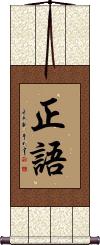
正語 is one of the Noble Eightfold Paths of Buddhism. Right Speech, along with Right Action and Right Living, constitute the path to Virtue.
Right Speech is abstaining from lying, abstaining from divisive speech, abstaining from abusive speech, abstaining from idle chatter, abstaining from slander, abstaining from gossip, or any form of harmful or wrong speech.
This term is exclusively used by devout Buddhists. It is not a common term, and remains an unknown concept to most Japanese and Chinese people.
See Also: Buddhism | Enlightenment | Noble Eightfold Path
Water Snake
The Year of the Water Snake
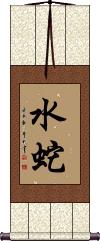
水蛇 is Water Snake in Chinese.
In the Chinese zodiac and sexagenary (60-year) cycle, this combination occurs in years that include 1893, 1953, 2013, and 2073.
In the sexagenary cycle, this year is represented by 癸巳.
See Also: Snake / Serpent
Wood Horse
The Year of the Wood Horse
Wood Goat/Sheep
The Year of the Wood Goat/Sheep
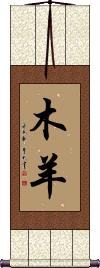
木羊 is Wood Goat/Sheep in Chinese.
In the Chinese zodiac and sexagenary (60-year) cycle, this combination occurs in years that include 1895, 1955, 2015, and 2075.
In the sexagenary cycle, this year is represented by 乙未.
See Also: Goat / Sheep
Fire Rooster
The Year of the Fire Rooster
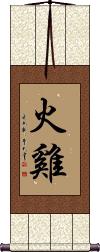
火雞 is Fire Rooster in Chinese.
In the Chinese zodiac and sexagenary (60-year) cycle, this combination occurs in years that include 1897, 1957, 2017, and 2077.
In the sexagenary cycle, this year is represented by 丁酉.
See Also: Rooster / Chicken
Wood Snake
The Year of the Wood Snake
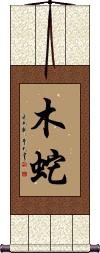
木蛇 is Wood Snake in Chinese.
In the Chinese zodiac and sexagenary (60-year) cycle, this combination occurs in years that include 1905, 1965, 2025, and 2085.
In the sexagenary cycle, this year is represented by 乙巳.
See Also: Snake / Serpent
Fire Horse
The Year of the Fire Horse
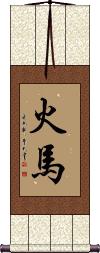
火馬 is Fire Horse in Chinese.
In the Chinese zodiac and sexagenary (60-year) cycle, this combination occurs in years that include 1906, 1966, 2026, and 2086.
In the sexagenary cycle, this year is represented by 丙午.
See Also: Horse
Fire Goat/Sheep
The Year of the Fire Goat/Sheep
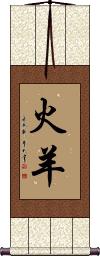
火羊 is Fire Goat/Sheep in Chinese.
In the Chinese zodiac and sexagenary (60-year) cycle, this combination occurs in years that include 1907, 1967, 2027, and 2087.
In the sexagenary cycle, this year is represented by 丁未.
See Also: Goat / Sheep
Earth Rooster
The Year of the Earth Rooster
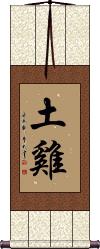
土雞 is Earth Rooster in Chinese.
In the Chinese zodiac and sexagenary (60-year) cycle, this combination occurs in years that include 1909, 1969, 2029, and 2089.
In the sexagenary cycle, this year is represented by 己酉.
See Also: Rooster / Chicken
Five Codes of Tang Soo Do
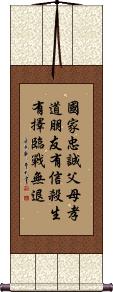
国家忠诚父母孝道朋友有信杀生有择临战无退 are the five codes of Tang Soo Do.
I suggest you have this arranged in five columns when you get to the options page for your custom calligraphy wall scroll.
Here are my translations of each of the five codes:
國家忠誠 Be loyal to your country.
父母孝道 Regarding parents, behave in a filial way.
朋友有信 Be faithful in friendship.
殺生有擇 When fighting for life and death, make noble choices.
臨戰無退 No retreat in battle.
Note: “Tang Soo Do” is a romanization of 唐手道. It's 당수도 in Korean Hangul. It can also be romanized as “Tangsudo” or “Dangsudo.”
Five Red Bats
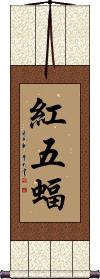
紅五蝠 is a play on words in Chinese because of some homophones.
The first thing you need to know is that the word for bat, 蝠, sounds exactly like the word for good fortune, 福. Thus, bats are often associated with good luck and good fortune in Chinese culture.
Five bats (五福 / 五蝠) means “five fortunes,” referring to luck, prosperity, wealth, happiness, and longevity.
The word red, 红, has the same sound as 宏 meaning vast, great, or magnificent. Therefore, a red bat means “vast fortune.”
Altogether, five red bats represent vast reaches of the five fortunes.
Five Reflections / Gosei
ki ryo ku ni ka ku ru na ka ri shi ka? do ryo ku ni u ra mi na ka ri shi ka?
bu sho u ni wa ta ru na ka ri shi ka?
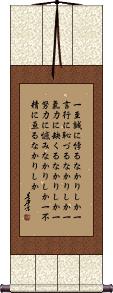
These are the “Five Reflections” of Vice Admiral Hajime Matsushita of the Japanese Imperial Navy.
These days, the Five Reflections are recited or contemplated daily by Japan Maritime Self-Defense Force recruits in training. This long proverb is popularly translated into English this way:
Hast thou not gone against sincerity?
Hast thou not felt ashamed of thy words and deeds?
Hast thou not lacked vigor?
Hast thou not exerted all possible efforts?
Hast thou not become slothful?
Note: Because this selection contains some special Japanese Hiragana characters, it should be written by a Japanese calligrapher.
Fire Snake
The Year of the Fire Snake
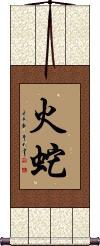
火蛇 is Fire Snake in Chinese.
In the Chinese zodiac and sexagenary (60-year) cycle, this combination occurs in years that include 1917, 1977, 2037, and 2097.
In the sexagenary cycle, this year is represented by 丁巳.
See Also: Snake / Serpent
Earth Horse
The Year of the Earth Horse
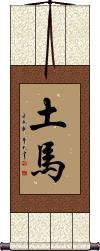
土馬 is Earth Horse in Chinese.
In the Chinese zodiac and sexagenary (60-year) cycle, this combination occurs in years that include 1918, 1978, 2038, and 2098.
In the sexagenary cycle, this year is represented by 戊午.
See Also: Horse
Earth Goat/Sheep
The Year of the Earth Goat/Sheep
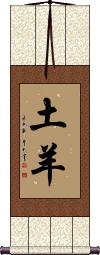
土羊 is Earth Goat/Sheep in Chinese.
In the Chinese zodiac and sexagenary (60-year) cycle, this combination occurs in years that include 1919, 1979, 2039, and 2099.
In the sexagenary cycle, this year is represented by 己未.
See Also: Goat / Sheep
Golden/Metal Rooster
The Year of the Golden/Metal Rooster
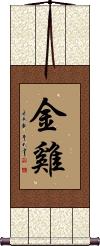
金雞 is Golden/Metal Rooster in Chinese.
In the Chinese zodiac and sexagenary (60-year) cycle, this combination occurs in years that include 1921, 1981, 2041, and 2101.
In the sexagenary cycle, this year is represented by 辛酉.
See Also: Rooster / Chicken
Earth Snake
The Year of the Earth Snake
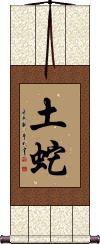
土蛇 is Earth Snake in Chinese.
In the Chinese zodiac and sexagenary (60-year) cycle, this combination occurs in years that include 1869, 1929, 1989, and 2049.
In the sexagenary cycle, this year is represented by 己巳.
See Also: Snake / Serpent
7. Right Mindfulness / Right Memory / Perfect Mindfulness
Samyak Smriti / Samyak Smrti / Samma Sati
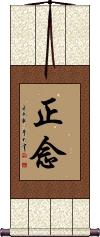
正念 is one of the Noble Eightfold Paths of Buddhism. Right Mindfulness, along with Right Effort and Right Concentration, constitute the path to Concentration or Perfect Thought.
Right Mindfulness is about remaining focused on one's body, feelings, mind, and mental qualities. It's also about being ardent, aware, and mindful, and supposes that you've already put aside worldly desire and aversion.
Monk Bhikkhu Bodhi described this as “The mind is deliberately kept at the level of bare attention, a detached observation of what is happening within us and around us in the present moment.” When practicing right mindfulness, the mind is trained to remain in the present, open, quiet, and alert, contemplating the present event.
Another definition: Ongoing mindfulness of body, feelings, thinking, and objects of thought.
This term is exclusively used by devout Buddhists. It is not a common term, and remains an unknown concept to most Japanese and Chinese people.
See Also: Buddhism | Enlightenment | Noble Eightfold Path
Golden/Metal Horse
The Year of the Golden/Metal Horse
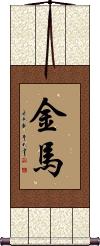
金馬 is Golden/Metal Horse in Chinese.
In the Chinese zodiac and sexagenary (60-year) cycle, this combination occurs in years that include 1870, 1930, 1990, and 2050.
In the sexagenary cycle, this year is represented by 庚午.
See Also: Horse
Eight Black Horses
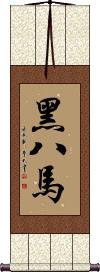
黑八馬 means “eight black horses” in Chinese.
This is an unusual title for calligraphy, but several people have searched for it, so we added it.
Eight horses are a sign of success in business in Chinese culture.
Golden/Metal Goat/Sheep
The Year of the Golden/Metal Goat/Sheep
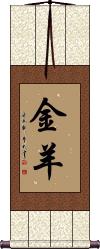
金羊 is Golden/Metal Goat/Sheep in Chinese.
In the Chinese zodiac and sexagenary (60-year) cycle, this combination occurs in years that include 1871, 1931, 1991, and 2051.
In the sexagenary cycle, this year is represented by 辛未.
See Also: Goat / Sheep
Aakash
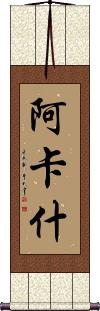
阿卡什 is the name Aakash in Chinese (Mandarin).
Aakash

アーカシュ is the name Aakash in Japanese Katakana.
Note: Because this title is entirely Japanese Katakana, it should be written by a Japanese calligrapher.
Aalysha
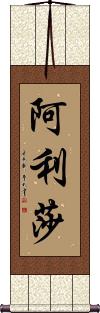
阿利莎 is the name Aalysha in Chinese (Mandarin).
Aalysha
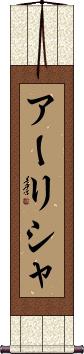
アーリシャ is the name Aalysha in Japanese (Katakana).
Note: Because this title is entirely Japanese Katakana, it should be written by a Japanese calligrapher.
Aarish

阿里什 is the name Aarish in Chinese (Mandarin).
Aarish

アーリッシュ is the name Aarish in Japanese Katakana.
Note: Because this title is entirely Japanese Katakana, it should be written by a Japanese calligrapher.
Aasa
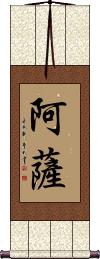
阿薩 is the name Aasa in Chinese (Mandarin).
Aasa
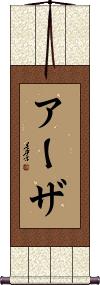
アーザ is the name Aasa in Japanese (Katakana).
Note: Because this title is entirely Japanese Katakana, it should be written by a Japanese calligrapher.
Aashir
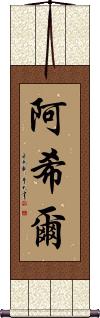
阿希爾 is the name Aashir in Chinese (Mandarin).
Aashir
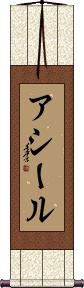
アシール is the name Aashir in Japanese Katakana.
Note: Because this title is entirely Japanese Katakana, it should be written by a Japanese calligrapher.
Aashma

阿什瑪 is the name Aashma in Chinese (Mandarin).
Aashma

アーシュマ is the name Aashma in Japanese Katakana.
Note: Because this title is entirely Japanese Katakana, it should be written by a Japanese calligrapher.
Aasia
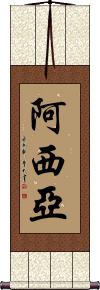
阿西亞 is the name Aasia in Chinese (Mandarin).
Aasia
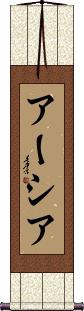
アーシア is the name Aasia in Japanese Katakana.
Note: Because this title is entirely Japanese Katakana, it should be written by a Japanese calligrapher.
Aasiyah
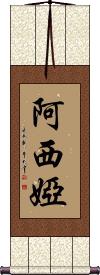
阿西婭 is the name Aasiyah in Chinese (Mandarin).
Aasiyah
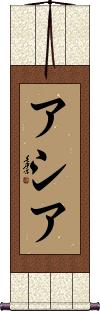
アシア is the name Aasiyah in Japanese Katakana.
Note: Because this title is entirely Japanese Katakana, it should be written by a Japanese calligrapher.
Abbas
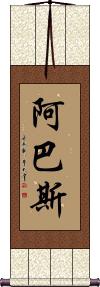
阿巴斯 is the name Abbas in Chinese (Mandarin).
Abbas
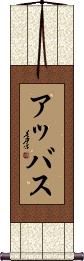
アッバス is the name Abbas in Japanese Katakana.
Note: Because this title is entirely Japanese Katakana, it should be written by a Japanese calligrapher.
Abbasi
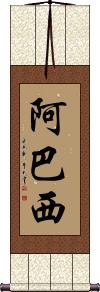
阿巴西 is the name Abbasi in Chinese (Mandarin).
Abbasi
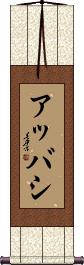
アッバシ is the name Abbasi in Japanese Katakana.
Note: Because this title is entirely Japanese Katakana, it should be written by a Japanese calligrapher.
Abbenhuis
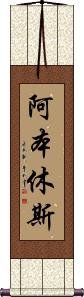
阿本休斯 is the name Abbenhuis in Chinese (Mandarin).
Abbenhuis
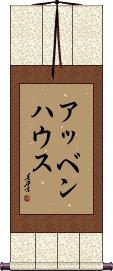
アッベンハウス is the name Abbenhuis in Japanese Katakana.
Note: Because this title is entirely Japanese Katakana, it should be written by a Japanese calligrapher.
Abhishek
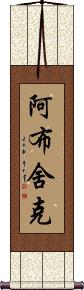
阿布舍克 is the name Abhishek in Chinese (Mandarin).
Abhishek
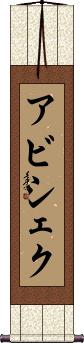
アビシェク is the name Abhishek in Japanese (Katakana).
Note: Because this title is entirely Japanese Katakana, it should be written by a Japanese calligrapher.
Abis
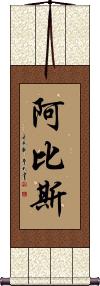
阿比斯 is the name Abis in Chinese (Mandarin).
Abis
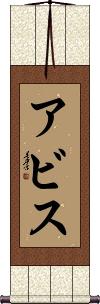
アビス is the name Abis in Japanese Katakana.
Note: Because this title is entirely Japanese Katakana, it should be written by a Japanese calligrapher.
Abishek
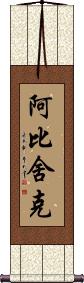
阿比舍克 is the name Abishek in Chinese (Mandarin).
Abishek
アビシェク is the name Abishek in Japanese (Katakana).
Note: Because this title is entirely Japanese Katakana, it should be written by a Japanese calligrapher.
Ables

阿布爾斯 is the name Ables in Chinese (Mandarin).
Ables

エイブルズ is the name Ables in Japanese Katakana.
Note: Because this title is entirely Japanese Katakana, it should be written by a Japanese calligrapher.
Abrahamson

阿布拉罕森 is the name Abrahamson in Chinese (Mandarin).
Abrahamson

アブラハムソン is the name Abrahamson in Japanese Katakana.
Note: Because this title is entirely Japanese Katakana, it should be written by a Japanese calligrapher.
Abrams

艾布拉姆斯 is the name Abrams in Chinese (Mandarin).
Abrams

エイブラムス is the name Abrams in Japanese Katakana.
Note: Because this title is entirely Japanese Katakana, it should be written by a Japanese calligrapher.
Abramson

阿布拉姆森 is the name Abramson in Chinese (Mandarin).
Abramson

アブラムソン is the name Abramson in Japanese Katakana.
Note: Because this title is entirely Japanese Katakana, it should be written by a Japanese calligrapher.
Absalom
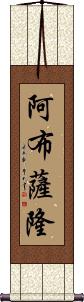
阿布薩隆 is the name Absalom in Chinese (Mandarin).
Absalom
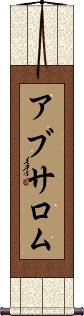
アブサロム is the name Absalom in Japanese.
Note: Because this title is entirely Japanese Katakana, it should be written by a Japanese calligrapher.
Absalon
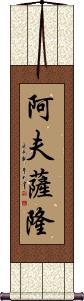
阿夫薩隆 is the transliteration to Mandarin Chinese for the Latin / Spanish name Absalón.
Absalon
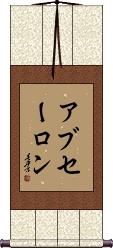
アブセーロン is the name Absalon in Japanese (Katakana).
Note: Because this title is entirely Japanese Katakana, it should be written by a Japanese calligrapher.
Abshekh

阿布舍赫 is the name Abshekh in Chinese (Mandarin).
Abshekh

アブシェク is the name Abshekh in Japanese Katakana.
Note: Because this title is entirely Japanese Katakana, it should be written by a Japanese calligrapher.
Absher

阿布舍爾 is the name Absher in Chinese (Mandarin).
Absher

アブシャー is the name Absher in Japanese Katakana.
Note: Because this title is entirely Japanese Katakana, it should be written by a Japanese calligrapher.
Abshire

阿布希爾 is the name Abshire in Chinese (Mandarin).
Abshire
アブシャー is the name Abshire in Japanese Katakana.
Note: Because this title is entirely Japanese Katakana, it should be written by a Japanese calligrapher.
Absolon

阿布索隆 is the name Absolon in Chinese (Mandarin).
Absolon

アブソロン is the name Absolon in Japanese Katakana.
Note: Because this title is entirely Japanese Katakana, it should be written by a Japanese calligrapher.
Abundance / Prosperous
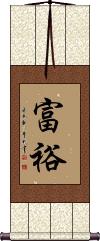
富裕 means prosperous, having an abundance, well-to-do, or well-off.
It's a simple word that suggests “you have made it” in Chinese, Japanese Kanji, and Korean Hanja.
See Also: House of Good Fortune
Abundance and Prosperity
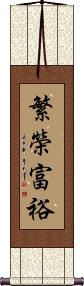
繁榮富裕 is a proverb about “Prosperity and Abundance.”
This presents and reinforces the ideas of being prosperous, a booming economy, well-to-do, well-off, wealthy, riches, and opulence.
While this is the ancient/traditional Chinese way to write this, most Japanese can fully read and understand it. It's also the correct form of old Korean Hanja (though few Koreans of the current generation will be able to read this).
See Also: House of Good Fortune
In the Abyss of Infinite Bitterness - Turn to the Shore
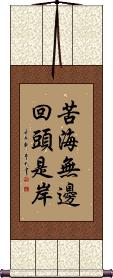
苦海無邊, 回頭是岸 can be translated almost directly as “The sea of bitterness has no bounds, turn your head to see the shore.”
Often this proverb refers to how Buddhist enlightenment can allow one to shed off the abyss of worldly suffering. But it can apply to other religions. If you find yourself trapped in the hardship of this worldly life, take a new turn, and seek a path to salvation.
Abyssinia
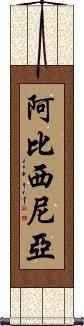
This is a common Mandarin Chinese transliteration for the female Arabic name Abyssinia.
Abyssinia
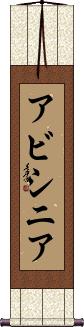
アビシニア is the name Abyssinia in Japanese (Katakana).
Note: Because this title is entirely Japanese Katakana, it should be written by a Japanese calligrapher.
Acas
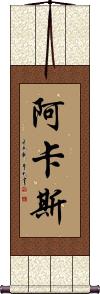
阿卡斯 is the name Acas in Chinese (Mandarin).
Acas

アカス is the name Acas in Japanese Katakana.
Note: Because this title is entirely Japanese Katakana, it should be written by a Japanese calligrapher.
Optimism / Happy With Your Fate
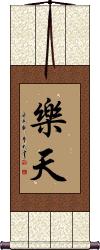
樂天 is about being optimistic and also making the best of whatever life throws at you.
This is hard to define. One dictionary defines this as “acceptance of fate and happy about it.” There is one English word equivalent, which is sanguinity or sanguinary.
You can also say that this means “Be happy with whatever Heaven provides,” or “Find happiness in whatever fate Heaven bestows upon you.” 樂天 suggests being an optimist in life.
Note: This is sometimes a given name in China.
 Please note that Japanese tend to write the first character in a slightly-different form (as seen to the right). Let us know if you have a preference when you place your order.
Aces Dojo

エースド道場 is the name Aces Dojo in Japanese.
Yes, I made this title just for your one dojo since you searched for it.
Note: Because this selection contains some special Japanese Katakana characters, it should be written by a Japanese calligrapher.
Aceves

阿塞維斯 is the name Aceves in Chinese (Mandarin).
Aceves

アセベス is the name Aceves in Japanese Katakana.
Note: Because this title is entirely Japanese Katakana, it should be written by a Japanese calligrapher.
Achievement / Accomplishment
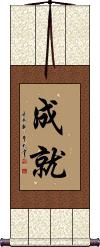
成就 is the word most often used in Chinese, Korean and Japanese to mean accomplishment or achievement.
成就 can also be used to mean success, attain a result, fulfillment, realization, or completion.
Achilleas
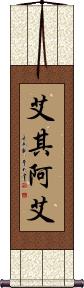
艾其阿艾 is the name Achilleas in Chinese (Mandarin).
Achilleas
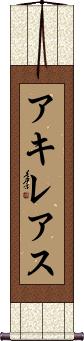
アキレアス is the name Achilleas in Japanese.
Note: Because this title is entirely Japanese Katakana, it should be written by a Japanese calligrapher.
Achilles
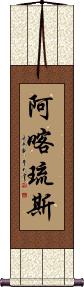
阿喀琉斯 is the name Achilles in Chinese (Mandarin).
Achilles
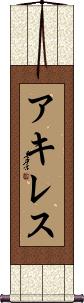
アキレス is the name Achilles in Japanese (Katakana).
Note: Because this title is entirely Japanese Katakana, it should be written by a Japanese calligrapher.
Ackerson

阿克森 is the name Ackerson in Chinese (Mandarin).




