Many custom options...


And formats...



Ying in Chinese / Japanese...
Buy a Ying calligraphy wall scroll here!
Personalize your custom “Ying” project by clicking the button next to your favorite “Ying” title below...
2. Shadow
4. Eagle Claw Overturning Fist
5. Yin Yang
7. England
9. Eng
10. Adapt Oneself
11. Divine Spirit
12. England
13. Hero
14. Heroic Spirit
15. Indar
16. Ingi
17. Inka
18. Shadow of Karma / Dogged by Karma
19. Keiko
20. Poppy
21. Strong Willed
23. Buzzard
24. English / Briton / Person from England
28. Indira
29. Ingham
30. Ingrid
31. Irving
32. Pangain-Noon
33. Shadow Warrior
34. Ingle
35. Cherry Blossom
36. Ingram
37. Ingrida
40. Ingraham
41. Ingersoll
42. Ingalls
43. Ingrassia
44. United Kingdom
46. Alone with only your shadow for company
47. Strong bones come from hard knocks
Cherry Blossom / Sakura
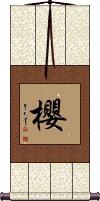
櫻 is the single-character (short) way to write “cherry blossom” or “cherry tree” in Chinese and traditional Japanese Kanji.
 There is an alternate version of this character, which has become the standard for Japanese Kanji. If you want this version, instead of the one shown to the upper left, please click on the Kanji shown to the right instead of the button above. Although this is an alternate form in Chinese, most Chinese people will think this is just the Japanese version (Chinese people
don’t
necessarily know the history and all alternate forms of Chinese characters from the past). Therefore, this version shown to the right is best if your audience is Japanese (though most Japanese will recognize the form shown in the upper left).
There is an alternate version of this character, which has become the standard for Japanese Kanji. If you want this version, instead of the one shown to the upper left, please click on the Kanji shown to the right instead of the button above. Although this is an alternate form in Chinese, most Chinese people will think this is just the Japanese version (Chinese people
don’t
necessarily know the history and all alternate forms of Chinese characters from the past). Therefore, this version shown to the right is best if your audience is Japanese (though most Japanese will recognize the form shown in the upper left).
Shadow
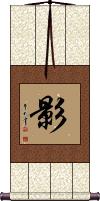
影 means shadow in Chinese, Japanese Kanji, and old Korean Hanja.
Depending on the context, this can also mean silhouette, reflection, image, or presence.
White Eagle Style
Bai Ying Pai
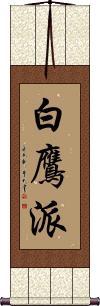
白鷹派 is the title “Bai Ying Pai” or “White Eagle School.”
The first character means white.
The second means eagle, falcon, and/or hawk.
The third means school (as in the school or style of martial arts).
Eagle Claw Overturning Fist
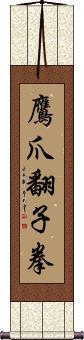
鷹爪翻子拳 is the title of a Chinese martial arts style known as “Ying Zhua Fan Zi Quan” or “Eagle Claw Overturning Fist.”
This style was derived from a combination of 鷹爪派 (Eagle Claw School) and 子母拳 (Son-Mother Fist). The title “son-mother” may seem odd, but it refers to a fist or punches seemingly coming out of another fist or punch. In modern times, 子母彈 is a title for “cluster bomb” (bombs coming out of another bomb).
Yin Yang
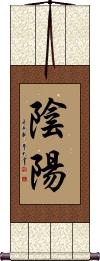
陰陽 literally means yin and yang in written form (versus the common yin-yang symbol). The first character has the element of the moon, while the second character has the element of the sun so that you can see, even in written form, they suggest the balance of opposites (of night and day). You could also translate this title as “sun and moon.”
Note: This title is often misspelled as Ying Yang instead of Yin Yang.
See Also: Taoism
A Traditional Warm Welcome
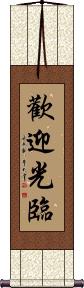
歡迎光臨 would be the ultimate Chinese “welcome mat.” Except it will be on your wall, and people will not step on it.
In a somewhat literal translation, you could say it means “I feel happy as I welcome you, as you have brought a shining light to this place with your arrival,” or more simply, “I am happy you've come as your presents brightens up the place.”
It has become common for this greeting to be announced by the staff upon the arrival of any customer into a fancy store in China. You will also see these characters on the “welcome mats” in front of 4 and 5-star hotels in China.
Having this on a wall scroll is an extra nice touch. I have seen a few horizontal scrolls with this phrase on the wall behind the reception desk of better hotels or near the front door of fine shops. At the fanciest department stores and restaurants in China, several greeters (almost always young women) will stand by the front door, all wearing sashes with this phrase embroidered. As you walk in, they will bow and say “huan ying guang lin” to welcome you to the establishment.
Note: The first two and last two characters do make words in Korean Hanja but are seldom used as a sentence like this in Korean.
England
Can mean: Courage / Bravery
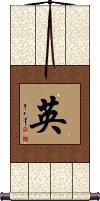
In Chinese, Japanese, and old Korean, 英 can often be confused or read as a short name for England (this character is the first syllable of the word for England, the English language, the British Pound, and other titles from the British Isles).
In some contexts, this can mean “outstanding” or even “flower.” But it will most often read as having something to do with the United Kingdom.
This is not the most common way to say hero, courage or bravery but you may see it used sometimes.
I strongly recommend that you choose another form of courage/bravery.
Eagle / Falcon / Hawk
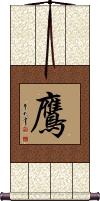
鷹 is the way to write eagle, falcon, or hawk in Chinese.
It means hawk or falcon in Japanese Kanji, and simply “eagle” in old Korean Hanja. Though we have different words for them in English, eagles, falcons, and hawks are all seen as the same general type of bird in Asian languages.
If you are looking for the Dutch surname Valk, or the German surname Falco by meaning, this would be a good character for you.
There are other multi-character words (most of them contain this character) which express different specific species of birds of prey (bald eagle, osprey, golden eagle, etc). If you need a more specific title, just contact me.
英 is the name Eng in Chinese (Mandarin).
Adapt Oneself
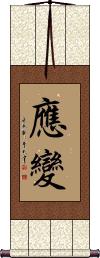
應變 means “to meet a contingency,” “to adapt oneself to changes,” or “to adapt to changes” in Chinese.
It's also used in Japanese but usually only in the context of Buddhism. 應變 is probably the shortest way to express the idea of adapting and overcoming whatever circumstances present themselves.
Divine Spirit
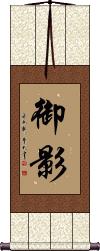
御影 is a Japanese word that means divine spirit or honorific language for “spirit of the dead.”
This can also refer to an image of a deity, buddha, royal, noble, etc.)
In the Buddhist context, it can mean (wooden) images of saints or deities.
御影 is also a Japanese name, Mikage.
Note: This is also a word in Chinese but not used very often in China (except perhaps by certain Buddhists).
England
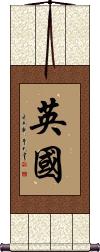
This is the Chinese name for the country of England.
See Also: Great Britain | United Kingdom | Ireland | Scotland | Northern Ireland | Europe
Hero
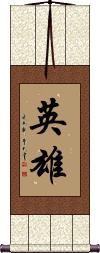
英雄 is the best way to write hero in Chinese and Japanese - especially for calligraphy.
英雄 is also the name of the Chinese movie titled Hero starring Jet Li.
The first character means brave (it can also mean British or English but not in this case).
The second character means heroic but also suggests a male person.
My Japanese dictionary also defines this as “a great man.”
Heroic Spirit
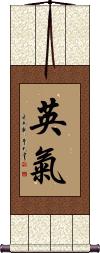
英氣 is a way to write heroic spirit in Chinese.
This may be an arrogant thing to hang on your wall.
Indar
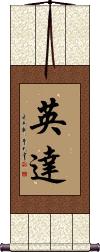
英達 is the name Indar in Chinese (Mandarin).
Ingi
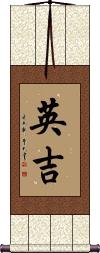
英吉 is the name Ingi in Chinese (Mandarin).
Inka
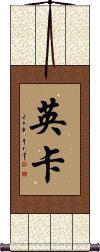
英卡 is the name Inka in Chinese (Mandarin).
Shadow of Karma / Dogged by Karma
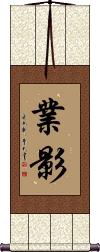
業影 is a Buddhist title that literally means “Karma Shadow.”
It figuratively means karma dogging one's steps like a shadow.
It's similar to the western idea of “karma is a bitch.”
Keiko
Shadow / Reflection
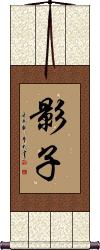
This word means shadow or reflection.
This is a common female given name in Japanese where it's romanized as Keiko or Kēko.
Poppy
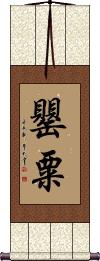
罌粟 is the poppy plant and flower in Chinese and Japanese.
Strong Willed
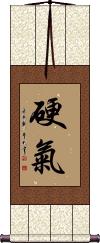
硬氣 means firm, unyielding, or strong-willed in Chinese.
If you take pride in being strong-willed or a bit stubborn, this could be for you.
Take Up a Challenge
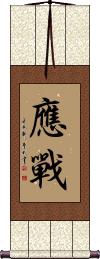
應戰 is a Chinese word that means “to take up a challenge” or “to face an attack and meet it.”
Buzzard

禿鷹 is the name Buzzard in Chinese (Mandarin).
English / Briton / Person from England
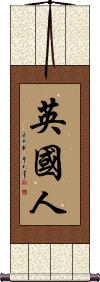
英國人 is the traditional Chinese and Japanese way to write British person, Briton, English person, Englishman, Englishwoman, etc.
In modern Japan, the middle character has been simplified, making it 英国人. This same simplification is used in mainland China as well.
The Eagle Claw School
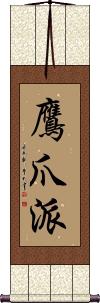
鷹爪派 is the title of a Chinese martial arts style known as “The Eagle Claw School.”
It is believed this style was developed by General Yue Fei in the early 12th Century.
Firefly / Lightning Bug
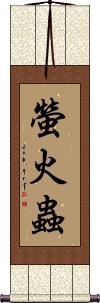
螢火蟲 is a very verbose Chinese title for a firefly, glowworm, or lightning bug.
The first character, 螢, means firefly or glow-worm by itself. This title adds the character for fire (火) and bug (蟲).
Griffin / Gryphon
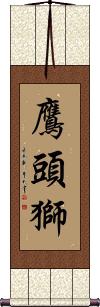
鷹頭獅 is the Chinese title for a Griffin.
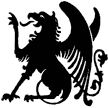 This refers to the legendary creature with the head, talons, and wings of an eagle and the body of a lion. Sometimes also spelled Gryphon or Griffon. From the Greek γρύφων or γρύπων, or Latin Gryphus.
This Chinese title, 鷹頭獅, literally means “Eagle Head Lion.”
Indira
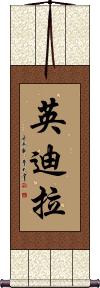
英迪拉 is the name Indira in Chinese (Mandarin).
Ingham
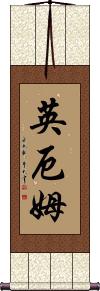
英厄姆 is the name Ingham in Chinese (Mandarin).
Ingrid
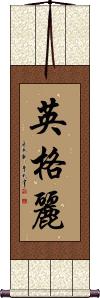
英格麗 is the name Ingrid in Chinese (Mandarin).
Irving
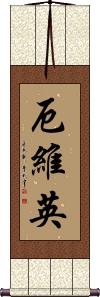
厄維英 is a common way to transliterate the name Irving into Mandarin Chinese.
Pangain-Noon
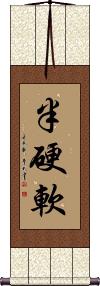
This is the martial arts title Pangai-Noon or Pan Gai Noon in Chinese.
The meaning is something like half hard, half soft.
Shadow Warrior
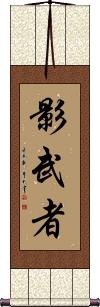
影武者 is the title for Shadow Warrior in Chinese and Japanese.
This may refer to a few video games that share this English title, or a Japanese movie called Kagemusha.
If you are looking for the Japanese TV show, that was originally 影の軍団 (Kage no Gundan), which more literally means “Army of Shadows,” but was re-titled Shadow Warrior when released outside Japan in English.
In Japan, this title can also refer to a body double or decoy of an army general or leader used to avoid assassination. It can also be somebody who does all the work (or fighting) behind the scenes (not getting much, if any, credit).

Ingle

英格爾 is the name Ingle in Chinese (Mandarin).
Cherry Blossom
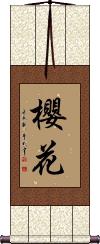
櫻花 is how to write “cherry blossom” in Chinese and traditional Japanese Kanji.
The first character means “cherry” or sometimes “cherry tree.”
The second character means “flowers” or “blossoms.”
Oddly, my Chinese dictionary also defines these two characters as “Japanese oriental cherry tree” or “Oriental cherry blossom.” However, the first character is the only one that means “cherry,” so it can refer to any cherry blossoms in the whole world (not just those in Asia).
There is an alternate version of the first character, which has become the standard for Japanese Kanji. If you want this version, instead of the one shown to the upper left, please click on the Kanji shown to the right instead of the button above. Although this is an alternate form in Chinese, most Chinese people will think this is just the Japanese version (Chinese people
don’t
necessarily know the history and all alternate forms of Chinese characters from the past). Therefore, this version shown to the right is best if your audience is Japanese (though most Japanese will recognize the form shown in the upper left).
Ingram
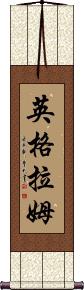
英格拉姆 is the name Ingram in Chinese (Mandarin).
Ingrida

英格麗達 is the name Ingrida in Chinese (Mandarin).
Lonely Soul / Solitary
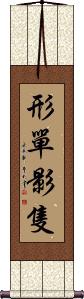
形單影隻 is a Chinese idiom that means “lonely soul” if you are a solitary person, or a lost soul, this may be the title for you.
Woman Hero / Heroine
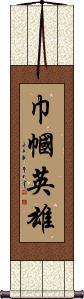
巾幗英雄 is an excellent and somewhat ancient way to say woman hero in Chinese. 巾幗英雄 is used in modern times to refer to an outstanding woman or a woman with significant accomplishments.
In the old days, it was a title for a woman warrior (oh, did I mention that there were great female generals who led massive armies into battle in ancient China?)
Ingraham
英格拉姆 is the name Ingraham in Chinese (Mandarin).
Ingersoll

英格索爾 is the name Ingersoll in Chinese (Mandarin).
Ingalls

英格爾斯 is the name Ingalls in Chinese (Mandarin).
Ingrassia

英格拉西亞 is the name Ingrassia in Chinese (Mandarin).
United Kingdom
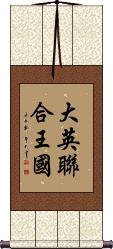
大英聯合王國 is the Chinese name for the United Kingdom.
See Also: Great Britain | England | Scotland | Ireland | Europe
British Virgin Islands
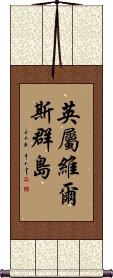
英屬維爾斯群島 is the Chinese name for the British Virgin Islands (overseas territory of the United Kingdom).
See Also: United States Virgin Islands | North America
Alone with only your shadow for company
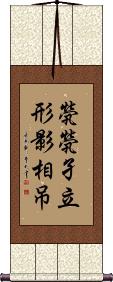
煢煢孑立形影相吊 is a Chinese proverb about the state of being as alone as you possibly can be.
It can be translated as “Alone with only your shadow for comfort/company.”
See Also: I Miss You
Strong bones come from hard knocks
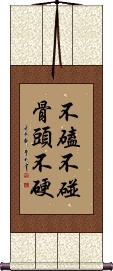
不磕不碰骨頭不硬 is a Chinese proverb that literally translates as: Without being knocked around a bit, [one's] bones won't become hard.
Figuratively, this means: One can't become strong without first being tempered by “hard knocks.”
While true for everyone, this sounds like the “Iron Body” form of Kung Fu, where practitioners' bodies are beaten (and often bone fractured) in order to become stronger.
For the rest of us, this is just about how we can be tempered and build character through the hardships in our lives.
This is not a common title for a wall scroll in China.
Improvise Adapt Overcome
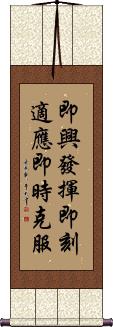
即興發揮即刻適應即時克服 is the coolest way to put together this famous word list, “Improvise Adapt Overcome.”
There are shorter ways to write “adapt,” and “overcome,” but “improvise” needs a four-character word to be expressed accurately in Chinese. To match them up, the other two are using four-character words as well. This makes it sound more natural in Chinese (though word lists are not a natural construct in Chinese grammar).
The words break down like this: 即興發揮, 即刻適應, 即時克服. I suggest the 3-column option when you customize your wall scroll. That way, the words will occupy one column each.
A great gift for a U.S. Marine, or anyone who follows this mantra.
Sun Tzu: Regard Your Soldiers as Children
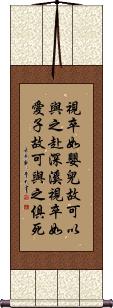
視卒如嬰兒故可以與之赴深溪視卒如愛子故可與之俱死 is an entry from the 10th section within the Earth/Terrain chapter of Sun Tzu's Art of War.
This is often translated as “Regard your soldiers as your children, and they will follow you into the deepest valleys. Look upon them as your own beloved sons, and they will stand by you even unto death.”
Daodejing / Tao Te Ching - Chapter 9
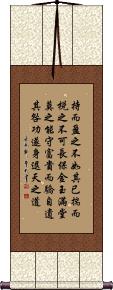
This text is the ninth chapter of the Daodejing / Tao Te Ching.
To hold until full is not as good as stopping.
An oversharpened sword cannot last long.
A room filled with gold and jewels cannot be protected.
Boasting of wealth and virtue brings your demise.
After finishing the work, withdraw.
持而盈之不如其已揣而梲之不可長保金玉滿堂莫之能守富貴而驕自遺其咎功遂身退天之道 is the Way of Heaven.
Dr. Muller's translation of all 81 Daodejing chapters
The text reads:
持而盈之、不如其已。揣而梲之、不可長保。 金玉滿堂、莫之能守。 富貴而驕、自遺其咎。 功遂身退、天之道。
This classical Chinese passage comes from the Mawangdui (馬王堆帛書) text.
Not the results for ying that you were looking for?
Below are some entries from our dictionary that may match your ying search...
| Characters If shown, 2nd row is Simp. Chinese |
Pronunciation Romanization |
Simple Dictionary Definition |
影 see styles |
yǐng ying3 ying kage かげ |
More info & calligraphy: Shadow(1) shadow; silhouette; figure; shape; (2) reflection; image; (3) ominous sign; (4) light (stars, moon); (5) trace; shadow (of one's former self); (surname) Kage Shadow, picture, image, reflection, hint; one of the twelve 'colours'. |
櫻 樱 see styles |
yīng ying1 ying takazakura たかざくら |
More info & calligraphy: Cherry Blossom / Sakura(out-dated kanji) (1) cherry tree; cherry blossom; (2) decoy; fake buyer; shill; (3) hired applauder; (4) (colloquialism) horse meat; (surname) Takazakura |
英 see styles |
yīng ying1 ying yungu ゆんぐ |
More info & calligraphy: England(1) (abbreviation) (See 英吉利・イギリス・1) United Kingdom; Britain; (2) (abbreviation) (See 英語) English (language); (personal name) Yungu brilliant |
螢 萤 see styles |
yíng ying2 ying hotaru ほたる |
More info & calligraphy: Firefly / Glow Worm(out-dated kanji) (kana only) firefly (Luciola cruciata); lightning bug; glowworm; (surname, female given name) Hotaru a firefly |
鷹 鹰 see styles |
yīng ying1 ying you / yo よう |
More info & calligraphy: Eagle / Falcon / Hawk(kana only) hawk; falcon; (given name) Yō |
影子 see styles |
yǐng zi ying3 zi5 ying tzu keiko / keko けいこ |
More info & calligraphy: Keiko(female given name) Keiko |
御影 see styles |
yù yǐng yu4 ying3 yü ying mikage みかげ |
More info & calligraphy: Divine Spirit[wooden] images of saints |
應戰 应战 see styles |
yìng zhàn ying4 zhan4 ying chan |
More info & calligraphy: Take Up a Challenge |
應變 应变 see styles |
yìng biàn ying4 bian4 ying pien ōhen |
More info & calligraphy: Adapt Oneselfadapt to changes |
業影 业影 see styles |
yè yǐng ye4 ying3 yeh ying gōyō |
More info & calligraphy: Shadow of Karma / Dogged by Karma |
櫻花 樱花 see styles |
yīng huā ying1 hua1 ying hua sakura さくら |
More info & calligraphy: Cherry Blossom(female given name) Sakura |
硬氣 硬气 see styles |
yìng qì ying4 qi4 ying ch`i ying chi |
More info & calligraphy: Strong Willed |
禿鷹 秃鹰 see styles |
tū yīng tu1 ying1 t`u ying tu ying hagetaka はげたか |
More info & calligraphy: Buzzard(kana only) (colloquialism) vulture |
罌粟 罂粟 see styles |
yīng sù ying1 su4 ying su keshi けし |
More info & calligraphy: Poppy(kana only) poppy (Papaver somniferum) |
英國 英国 see styles |
yīng guó ying1 guo2 ying kuo eikoku / ekoku えいこく |
More info & calligraphy: England(out-dated kanji) Great Britain; the United Kingdom |
英氣 英气 see styles |
yīng qì ying1 qi4 ying ch`i ying chi |
More info & calligraphy: Heroic Spirit |
英雄 see styles |
yīng xióng ying1 xiong2 ying hsiung fusao ふさお |
More info & calligraphy: Hero(1) hero; heroine; great person; (2) Eroica Symphony (Beethoven, 1804); (3) (abbreviation) Heroic Polonaise (Chopin); (given name) Fusao |
英國人 英国人 see styles |
yīng guó rén ying1 guo2 ren2 ying kuo jen |
More info & calligraphy: English / Briton / Person from EnglandSee: 英国人 |
螢火蟲 萤火虫 see styles |
yíng huǒ chóng ying2 huo3 chong2 ying huo ch`ung ying huo chung |
More info & calligraphy: Firefly / Lightning Bug |
鷹頭獅 鹰头狮 see styles |
yīng tóu shī ying1 tou2 shi1 ying t`ou shih ying tou shih |
More info & calligraphy: Griffin / Gryphon |
営 see styles |
yíng ying2 ying |
Japanese variant of 營|营 |
嚶 嘤 see styles |
yīng ying1 ying |
calling of birds |
塋 茔 see styles |
yíng ying2 ying |
(literary) a grave |
媖 see styles |
yīng ying1 ying |
(complimentary name for a woman) |
媵 see styles |
yìng ying4 ying |
maid escorting bride to new home; concubine |
嫈 see styles |
yīng ying1 ying |
attentively; carefully |
嬰 婴 see styles |
yīng ying1 ying enda えんだ |
infant; baby (prefix noun) {music} (See 変・5,嬰ヘ長調) sharp; (personal name) Enda Infant, baby. |
嬴 see styles |
yíng ying2 ying |
old variant of 贏|赢[ying2], to win, to profit; old variant of 盈[ying2], full |
巆 𫶕 see styles |
yíng ying2 ying |
used in 岭巆|岭𫶕[ling2 ying2] |
応 see styles |
yìng ying4 ying kotae こたえ |
Japanese variant of 應|应 (1) agreement; affirmative; (interjection) (2) aye; yes; OK; okay; yeah; all right; (female given name) Kotae |
Click here for more ying results from our dictionary
The following table may be helpful for those studying Chinese or Japanese...
| Title | Characters | Romaji (Romanized Japanese) | Various forms of Romanized Chinese | |
| Cherry Blossom Sakura | 櫻 樱 / 桜 | sakura | yīng / ying1 / ying | |
| Shadow | 影 | kage | yǐng / ying3 / ying | |
| White Eagle Style | 白鷹派 白鹰派 | bái yīng pài bai2 ying1 pai4 bai ying pai baiyingpai | pai ying p`ai paiyingpai pai ying pai |
|
| Eagle Claw Overturning Fist | 鷹爪翻子拳 鹰爪翻子拳 | yīng zhuǎ fān zi quán ying1 zhua3 fan1 zi5 quan2 ying zhua fan zi quan yingzhuafanziquan | ying chua fan tzu ch`üan yingchuafantzuchüan ying chua fan tzu chüan |
|
| Yin Yang | 陰陽 阴阳 | in you / inyou / in yo | yīn yáng / yin1 yang2 / yin yang / yinyang | |
| A Traditional Warm Welcome | 歡迎光臨 欢迎光临 | huān yíng guāng lín huan1 ying2 guang1 lin2 huan ying guang lin huanyingguanglin | huan ying kuang lin huanyingkuanglin |
|
| England | 英 | ei | yīng / ying1 / ying | |
| Eagle Falcon Hawk | 鷹 鹰 | taka | yīng / ying1 / ying | |
| Eng | 英 | yīng / ying1 / ying | ||
| Adapt Oneself | 應變 应变 | ou hen / ouhen / o hen | yìng biàn ying4 bian4 ying bian yingbian | ying pien yingpien |
| Divine Spirit | 御影 | goei | yù yǐng / yu4 ying3 / yu ying / yuying | yü ying / yüying |
| England | 英國 英国 | yīng guó / ying1 guo2 / ying guo / yingguo | ying kuo / yingkuo | |
| Hero | 英雄 | ei yuu / eiyuu / ei yu | yīng xióng ying1 xiong2 ying xiong yingxiong | ying hsiung yinghsiung |
| Heroic Spirit | 英氣 英气 | yīng qì / ying1 qi4 / ying qi / yingqi | ying ch`i / yingchi / ying chi | |
| Indar | 英達 英达 | yīng dá / ying1 da2 / ying da / yingda | ying ta / yingta | |
| Ingi | 英吉 | yīng jí / ying1 ji2 / ying ji / yingji | ying chi / yingchi | |
| Inka | 英卡 | yīng kǎ / ying1 ka3 / ying ka / yingka | ying k`a / yingka / ying ka | |
| Shadow of Karma Dogged by Karma | 業影 业影 | gou you / gouyou / go yo | yè yǐng / ye4 ying3 / ye ying / yeying | yeh ying / yehying |
| Keiko | 影子 | keiko | yǐng zi / ying3 zi5 / ying zi / yingzi | ying tzu / yingtzu |
| Poppy | 罌粟 罂粟 | ke shi / keshi | yīng sù / ying1 su4 / ying su / yingsu | |
| Strong Willed | 硬氣 硬气 | yìng qì / ying4 qi4 / ying qi / yingqi | ying ch`i / yingchi / ying chi | |
| Take Up a Challenge | 應戰 应战 | yìng zhàn ying4 zhan4 ying zhan yingzhan | ying chan yingchan |
|
| Buzzard | 禿鷹 秃鹰 | tū yīng / tu1 ying1 / tu ying / tuying | t`u ying / tuying / tu ying | |
| English Briton Person from England | 英國人 英国人 | ei koku jin eikokujin | yīng guó rén ying1 guo2 ren2 ying guo ren yingguoren | ying kuo jen yingkuojen |
| The Eagle Claw School | 鷹爪派 鹰爪派 | yīng zhuǎ pài ying1 zhua3 pai4 ying zhua pai yingzhuapai | ying chua p`ai yingchuapai ying chua pai |
|
| Firefly Lightning Bug | 螢火蟲 萤火虫 | yíng huǒ chóng ying2 huo3 chong2 ying huo chong yinghuochong | ying huo ch`ung yinghuochung ying huo chung |
|
| Griffin Gryphon | 鷹頭獅 鹰头狮 | yīng tóu shī ying1 tou2 shi1 ying tou shi yingtoushi | ying t`ou shih yingtoushih ying tou shih |
|
| Indira | 英迪拉 | yīng dí lā ying1 di2 la1 ying di la yingdila | ying ti la yingtila |
|
| Ingham | 英厄姆 | yīng è mǔ ying1 e4 mu3 ying e mu yingemu | ying o mu yingomu |
|
| Ingrid | 英格麗 英格丽 | yīng gé lì ying1 ge2 li4 ying ge li yinggeli | ying ko li yingkoli |
|
| Irving | 厄維英 厄维英 | è wéi yīng e4 wei2 ying1 e wei ying eweiying | o wei ying oweiying |
|
| Pangain-Noon | 半硬軟 半硬软 | bàn yìng ruǎn ban4 ying4 ruan3 ban ying ruan banyingruan | pan ying juan panyingjuan |
|
| Shadow Warrior | 影武者 | kagemusha | yīng wǔ zhǔ ying1 wu3 zhu3 ying wu zhu yingwuzhu | ying wu chu yingwuchu |
| Ingle | 英格爾 英格尔 | yīng gé ěr ying1 ge2 er3 ying ge er yinggeer | ying ko erh yingkoerh |
|
| Cherry Blossom | 櫻花 樱花 / 桜花 | ouka / oka | yīng huā / ying1 hua1 / ying hua / yinghua | |
| Ingram | 英格拉姆 | yīng gé lā mǔ ying1 ge2 la1 mu3 ying ge la mu yinggelamu | ying ko la mu yingkolamu |
|
| Ingrida | 英格麗達 英格丽达 | yīng gé lì dá ying1 ge2 li4 da2 ying ge li da yinggelida | ying ko li ta yingkolita |
|
| Lonely Soul Solitary | 形單影隻 形单影只 | xíng dān yǐng zhī xing2 dan1 ying3 zhi1 xing dan ying zhi xingdanyingzhi | hsing tan ying chih hsingtanyingchih |
|
| Woman Hero Heroine | 巾幗英雄 巾帼英雄 | jīn guó yīng xióng jin1 guo2 ying1 xiong2 jin guo ying xiong jinguoyingxiong | chin kuo ying hsiung chinkuoyinghsiung |
|
| Ingraham | 英格拉姆 | yīng gé lā mǔ ying1 ge2 la1 mu3 ying ge la mu yinggelamu | ying ko la mu yingkolamu |
|
| Ingersoll | 英格索爾 英格索尔 | yīng gé suǒ ěr ying1 ge2 suo3 er3 ying ge suo er yinggesuoer | ying ko so erh yingkosoerh |
|
| Ingalls | 英格爾斯 英格尔斯 | yīng gé ěr sī ying1 ge2 er3 si1 ying ge er si yinggeersi | ying ko erh ssu yingkoerhssu |
|
| Ingrassia | 英格拉西亞 英格拉西亚 | yīng gé lā xī yà ying1 ge2 la1 xi1 ya4 ying ge la xi ya yinggelaxiya | ying ko la hsi ya yingkolahsiya |
|
| United Kingdom | 大英聯合王國 大英联合王国 | dài yīng lián hé wáng guó dai4 ying1 lian2 he2 wang2 guo2 dai ying lian he wang guo daiyinglianhewangguo | tai ying lien ho wang kuo taiyinglienhowangkuo |
|
| British Virgin Islands | 英屬維爾斯群島 英属维尔斯群岛 | yīng shǔ wéi ěr sī qún dǎo ying1 shu3 wei2 er3 si1 qun2 dao3 ying shu wei er si qun dao yingshuweiersiqundao | ying shu wei erh ssu ch`ün tao yingshuweierhssuchüntao ying shu wei erh ssu chün tao |
|
| Alone with only your shadow for company | 煢煢孑立形影相吊 茕茕孑立形影相吊 | qióng qióng jié lì xíng yǐng xiāng diào qiong2 qiong2 jie2 li4 xing2 ying3 xiang1 diao4 qiong qiong jie li xing ying xiang diao | ch`iung ch`iung chieh li hsing ying hsiang tiao chiung chiung chieh li hsing ying hsiang tiao |
|
| Strong bones come from hard knocks | 不磕不碰骨頭不硬 不磕不碰骨头不硬 | bù kē bù pèng gǔ tóu bù yìng bu4 ke1 bu4 peng4 gu3 tou2 bu4 ying4 bu ke bu peng gu tou bu ying bukebupenggutoubuying | pu k`o pu p`eng ku t`ou pu ying pukopupengkutoupuying pu ko pu peng ku tou pu ying |
|
| Improvise Adapt Overcome | 即興發揮即刻適應即時克服 即兴发挥即刻适应即时克服 | jí xìng fā huī jí kè shì yìng jí shí kè fú ji2 xing4 fa1 hui1 ji2 ke4 shi4 ying4 ji2 shi2 ke4 fu2 ji xing fa hui ji ke shi ying ji shi ke fu | chi hsing fa hui chi k`o shih ying chi shih k`o fu chi hsing fa hui chi ko shih ying chi shih ko fu |
|
| Sun Tzu: Regard Your Soldiers as Children | 視卒如嬰兒故可以與之赴深溪視卒如愛子故可與之俱死 视卒如婴儿故可以与之赴深溪视卒如爱子故可与之俱死 | shì cù rú yīng ér gù kě yǐ yú zhī fù shēn xī shì cù rú ài zǐ gù kě yú zhī jū sǐ shi4 cu4 ru2 ying1 er2 gu4 ke3 yi3 yu2 zhi1 fu4 shen1 xi1 shi4 cu4 ru2 ai4 zi3 gu4 ke3 yu2 zhi1 ju1 si3 shi cu ru ying er gu ke yi yu zhi fu shen xi shi cu ru ai zi gu ke yu zhi ju si | shih ts`u ju ying erh ku k`o i yü chih fu shen hsi shih ts`u ju ai tzu ku k`o yü chih chü ssu shih tsu ju ying erh ku ko i yü chih fu shen hsi shih tsu ju ai tzu ku ko yü chih chü ssu |
|
| Daodejing Tao Te Ching - Chapter 9 | 持而盈之不如其已揣而梲之不可長保金玉滿堂莫之能守富貴而驕自遺其咎功遂身退天之道 持而盈之不如其已揣而梲之不可长保金玉满堂莫之能守富贵而骄自遗其咎功遂身退天之道 | chí ér yíng zhī bù rú qí yǐ chuǎi ér zhī bù kě cháng bǎo jīn yù mǎn táng mò zhī néng shǒu fù guì ér jiāo zì yí qí jiù gōng suì shēn tuì tiān zhī dào chi2 er2 ying2 zhi1 bu4 ru2 qi2 yi3 chuai3 er2 棁 zhi1 bu4 ke3 chang2 bao3 jin1 yu4 man3 tang2 mo4 zhi1 neng2 shou3 fu4 gui4 er2 jiao1 zi4 yi2 qi2 jiu4 gong1 sui4 shen1 tui4 tian1 zhi1 dao4 chi er ying zhi bu ru qi yi chuai er 棁 zhi bu ke chang bao jin yu man tang mo zhi neng shou fu gui er jiao zi yi qi jiu gong sui shen tui tian zhi dao | ch`ih erh ying chih pu ju ch`i i ch`uai erh chih pu k`o ch`ang pao chin yü man t`ang mo chih neng shou fu kuei erh chiao tzu i ch`i chiu kung sui shen t`ui t`ien chih tao chih erh ying chih pu ju chi i chuai erh chih pu ko chang pao chin yü man tang mo chih neng shou fu kuei erh chiao tzu i chi chiu kung sui shen tui tien chih tao |
|
| In some entries above you will see that characters have different versions above and below a line. In these cases, the characters above the line are Traditional Chinese, while the ones below are Simplified Chinese. | ||||

Successful Chinese Character and Japanese Kanji calligraphy searches within the last few hours...



