Many custom options...


And formats...



Guan in Chinese / Japanese...
Buy a Guan calligraphy wall scroll here!
Personalize your custom “Guan” project by clicking the button next to your favorite “Guan” title below...
1. Guan Yu
4. Guan Shi Yin: Protector Of Life
5. Unwavering Hall / Fudoshinkan
6. Warrior Saint / Saint of War
7. Gwan
10. Goddess of Mercy and Compassion
11. Guaman
12. Caring
13. Champ / Champion
14. Guam
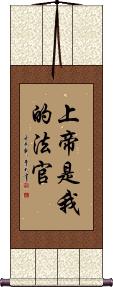
16. Judge
17. White Stork
18. Kwanyin
19. Dragon Hall
20. Chidokan
22. Mi Guk Kwan
23. Moo Duk Kwan
24. Shotokan
27. Bushidokan
28. Just Do It
29. Shikantaza
30. Sisterhood / Sisters Relationship
31. Relationship
32. Bushidokan Dojo
35. There is one single thread binding my Way together
36. Guanxi
37. Do not shed a tear until you see the coffin
38. God is my Judge
40. Shito-Ryu Ki-Me-Kan Karate-Do
41. Shotokan Aikido
42. Black or white cat matters not as long as it can catch mice
43. Daodejing / Tao Te Ching - Chapter 1
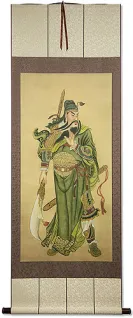
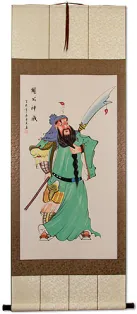
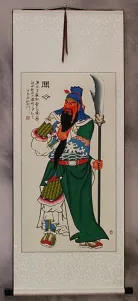
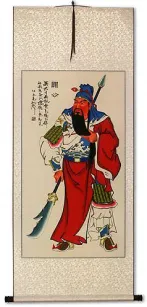
Guan Yu
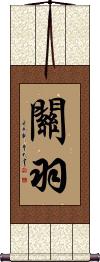
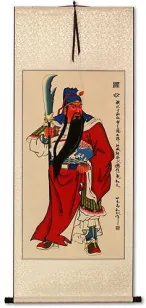
關羽 is the name Guan Yu, Army General for the Kingdom of Shu.
He is also known as Guan Gong (like saying Duke Guan or Sir Guan)
He was immortalized in the novel, “Romance of the Three Kingdoms.”
He was a fearsome fighter, also famous for his virtue and loyalty. He is worshiped by some modern-day soldiers and has the title “Warrior Saint” in China. Some believe he offers safety and protection for military servicemen.
Guan Yu lived until 219 A.D.
Guan Gong / Warrior Saint
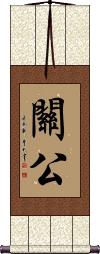
關公 is a Chinese title, Guan Gong, that means Lord Guan (The warrior saint of ancient China).
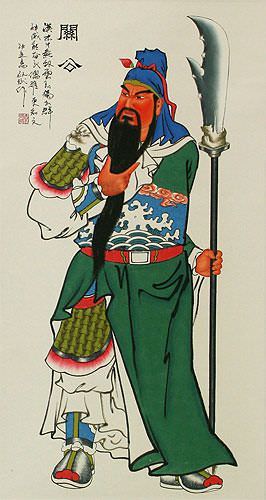 While his real name was Guan Yu / 關羽, he is commonly known by the title of Guan Gong (關公).
Some Chinese soldiers still pray to Guan Gong for protection. They would especially do this before going into battle. Statues of Guan Gong are seen throughout China.
Guan / Kwan / Seki
Surname
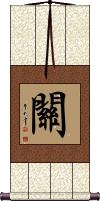
關 is a surname in three languages.
In Chinese, it romanizes as Guan.
In Korean, it's Kwan (or Gwan).
In Japanese it's Seki.
The meaning of the character is mountain pass; to close; to shut; to turn off; barrier; frontier.
Guan Shi Yin: Protector Of Life
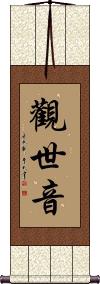
觀世音 is an alternate title for Guanyin, the Bodhisattva of Compassion or Goddess of Mercy.
觀世音 is the Buddhist bestower of children, the protector of life and all in distress (especially of those at sea).
Unwavering Hall / Fudoshinkan

不動心館 can be translated as “Fudoshinkan,” or “Immovable Mind Hall.”
Fudoshinkan (不動心館) refers to various Japanese martial arts schools, primarily focusing on Aikido, Iaido (sword art), and Jodo (short staff), emphasizing the concept of Fudoshin (不動心) – a calm, immovable mind in the face of challenge, reflecting traditional samurai spirit through dynamic training and inner peace
Immovable mind; unwavering composure. Hall/school (as in -kan / -gwan).
Warrior Saint / Saint of War
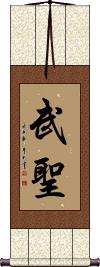
This Chinese title, Wusheng, means Saint of War.
武聖 is usually a reference to Guan Yu (關羽), also known as Guan Gong (關公).
Some Chinese soldiers still pray to Wusheng for protection. They would especially do this before going into battle.
Gwan
The surname "Gwan" is primarily of Chinese origin, meaning things like "mountain pass," "to close," or "to manage."
Other Chinese variations include 官 and 管.
Romanization variations of 關: Guan (Mandarin), Kwan (Cantonese/HK), Kuan (Taiwan), Quan (Vietnamese).
History: Associated with ancient states and officials, like the descendants of Guan Zhong.
In Korean there is a Gwan or Kwon that comes from 權 (권), meaning "power" or "authority," though "Gwan" can also be used as a given name with meanings like "strong" or "official".
Goddess of Compassion
Long or more formal Japanese version of this title
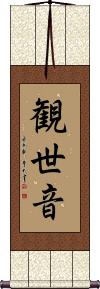
観世音 is the more extended and more formal Japanese version of Bodhisattva of Compassion or Guan Yin.
In Japanese, this is pronounced Kanzeon. The Chinese version is a bit more common in Asia, but in Japanese, they use a slight variation of the first character. Choose this version only if your intended audience is specifically Japanese.
Goddess of Compassion
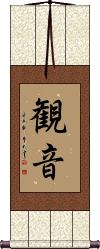
観音 is the specifically Japanese version of Bodhisattva of Compassion or Guan Yin.
In Japanese, this is pronounced Kannon and occasionally spelled Kwannon. The Chinese version is a bit more commonly seen in Asia. However, in Japanese, there is a slight variation with the first character.
Some time ago, a camera company in Japan named their company after this Buddhist deity. That camera company is still known as Canon (they chose a “C” instead of a “K” when they Romanized this name).
The Great Path has No Gate
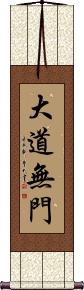
大道無門 is a Buddhist proverb that means “The Great Way has no entrance,” “The Great Way is gateless,” or “The Great Path lacks a gate.”
This can be translated in many other ways.
This concept was authored within a long sacred text by 無門慧開 (known as Wúmén Huìkāi in Chinese or Mumon Ekai in Japanese). He was a Chinese Chan Master (in Japanese, a Zen Master) who lived between 1183 and 1260 AD. His most famous work was a 48-koan collection titled “The Gateless Barrier” or “The Gateless Gate” (無門關 Wú Mén Guān in Chinese, or 無門関 Mu Mon Kan in Japanese). This calligraphy title is a notable line from this collection.
I like this reference to the source of this proverb: The Gateless Gate 無門關
Goddess of Mercy and Compassion
This is the long or more formal version of this title
觀世音 is the longer and perhaps more formal title for the Buddhist deity known as the Goddess of Mercy or Bodhisattva of Compassion.
The longer title of this bodhisattva is Romanized in the following ways:
Mandarin Chinese: Guanshi Yin, Kuan-shih Yin.
Japanese: Kanzeon.
Sanskrit: Bodhisattva Avalokitesvara.
Korean: Gwan-se-eum.
Vietnamese: Quan Thế Âm.
Thai: Prah Mae Kuan Eim.
English: Bodhisattva of Mercy and Salvation, Goddess of Compassion, Buddha of Mercy, et al.
Please view our more common and shorter version, “Guan Yin” before you make a decision. Also, note that the first character has a slight variation in Japanese. If your audience is specifically Japanese, you may want to select that version.
Guaman
關 is the name Guaman in Chinese (Mandarin).
Caring
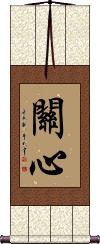
關心 means caring in Chinese.
Caring is giving love and attention to people and things that matter to you and anyone who needs help. When you care about people, you help them. You do a careful job, giving your very best effort. You treat people and things gently and respectfully. Caring makes the world a safer place.
Note: 關心 is also a word in Korean Hanja, but in Korean, it means taking interest or concern. In Korean, it's still a good word, but it doesn't quite have the “caring for a person” meaning that it does in Chinese.
See Also: Benevolence | Altruism
Champ / Champion
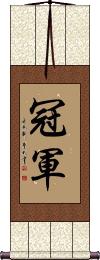
冠軍 is a Chinese word that means champ or champion.
Guam
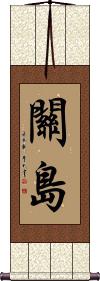
關島 is the Chinese name for the island of Guam (overseas territory of the United States).
See Also: North America
Guandi: God of War
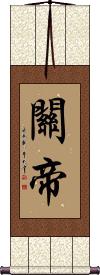
關帝 is the title, Guandi, the God of War, a deified hero of the Three Kingdoms, and a protector of Buddhism.
Judge
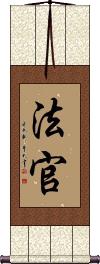
法官 is the written title used to refer to Judges in the legal court system in China, Japan, and ancient Korea (the same word used but now written differently in modern Korea).
White Stork
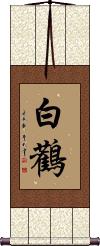
白鸛 means “white stork.”
The scientific name of this Chinese bird species is Ciconia ciconia from the stork family Ciconiidae.
Kwanyin
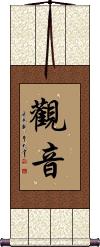
觀音 is the name Kwanyin in Chinese (Mandarin).
Dragon Hall

龍館 can be translated as “dragon hall” or “dragon school”.
Through history, and depending on context, 館 has a lot of possible meanings such as building, shop, embassy, consulate, schoolroom, mansion, palace, manor house, castle, small fortress, or official residence (of a government official).
Chidokan
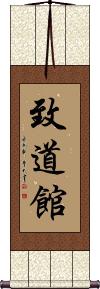
致道館 is the name Chidokan.
Chidōkan was established in 1805. The original Chidōkan school was located in Tsuruoka, Japan.
The original school taught a combination of traditional Chinese literature, Ogasawara-ryū etiquette, Chinese medicine and martial arts alongside Confucianism.
Koushinkan / Koshinkan

孝心館 is the title for Koushinkan, Koshinkan, or Kōshin-Kan.
The romanization of this title varies a little, but the original characters are the same.
孝 = Filial piety or obedience.
心 = Heart, mind, intention, or center.
馆 = Building or establishment (dojo).
This can be pronounced in Chinese and has the same meaning, but you should consider this a Japanese martial arts title.
Mi Guk Kwan
American School
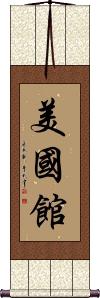
美國館 is a Korean Hanja title, which roughly means “U.S. School.”
The first two characters mean “USA” (literally: Beautiful Kingdom/Country).
The last character means “school,” “building,” and “schoolroom” in this context.
This “Mi Guk Kwan” title is used to mean “The American School of Tang Soo Do.”
If you want this in modern Korean Hangul, just click the Hangul characters in the pronunciation box next to the Korean flag above.
Moo Duk Kwan
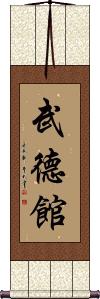
武德館 is the original title for the Korean martial arts style, Moo Duk Kwan.
Shotokan
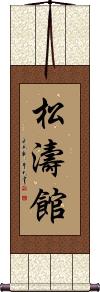
松濤館 are the Kanji characters that make up the title for Shotokan.
This should be considered a Japanese-only title. It does make sense and is pronounceable in Chinese and Korean but only as a title for a building (perhaps a martial arts hall) surrounded by pine trees. Also, the first two characters were simplified in both Japanese and Chinese. The third character was simplified in Chinese but not Japanese.
Upon request, we can offer the fully traditional Chinese version but be sure you know what you are asking for.
Note: This would be understood in Chinese and Korean Hanja by a person from those cultures who is familiar with martial arts and various schools of Japanese karate.
The Gateless Gate
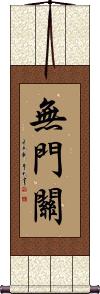
無門關 is the ancient title for “The Gateless Barrier.”
This has both direct meaning and is the title of a 13th-century collection of koans, compiled by a Chinese Chan Master known as Wumen in China (known in Japan as Zen Master Mumon).
While this is the original title, you may see this written as 無門関 in Japan, where the last character, 關, was simplified to 関 after 1945.
Isshin Hall / Isshinkan

一心館 can be translated as “Isshin-kan,” or “Single-Mindedness Hall/School.”
Bushidokan
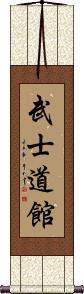
武士道館 is the title Bushidokan or Bushido-Kan.
Just Do It
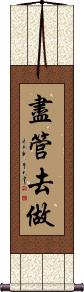
盡管去做 is, “just do it,” as in the Nike slogan.
This version is the one commonly used in mainland China.
Shikantaza
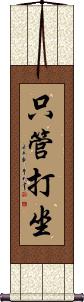
只管打坐 is the Japanese Buddhist term shikantaza which represents zazen meditation in which one focuses on sitting without actively seeking enlightenment.
Sometimes this is translated as “meditation of just sitting” or “meditation practice where one stays intensely focused without focusing on any particular object.”
Sometimes written, 祗管打坐 with the same pronunciation and perceived meaning.
Sisterhood / Sisters Relationship
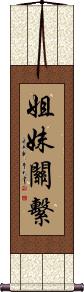
姐妹關繫 is an expression that means “sisterhood.”
Literally, this means “sisters relationship.”
Relationship
Most common Japanese version
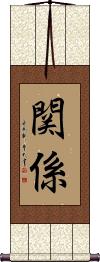
The dictionary definition is:
relation, relationship, connection, participation, involvement, concern, influence, effect, related to, connected to, or as a suffix to sexual it can mean sexual relations or relationship.
But there's more to it...
In Japan, the relationship that you have with certain people can open doors for you. Having this relationship with someone also means they would never rip you off but instead are honor-bound to treat you fairly.
See our Chinese Guanxi entry for more information. This term is used in very similar ways in China, Japan, and Korea.
Bushidokan Dojo
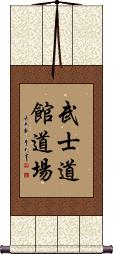
武士道館道場 is the title Bushidokan Dojo.
Namo Guanyin Pusa
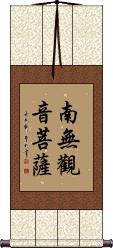
南無觀音菩薩 is the title Namo Guanyin Pusa in Chinese or Namu/Namo Kannon Bosatsu in Japanese.
This can also translate as Namo Avalokitesvara Bodhisattva.
Note: Sometimes written 南無觀世音菩薩 (just the addition of 世) making it Námó Guānshìyīn Púsà.
Shotokan Karate-Do
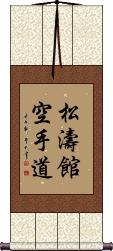
鬆濤館空手道 art the Japanese Kanji that make up the title for Shotokan Karate.
This should be considered a Japanese-only title. It does make sense and is pronounceable in Chinese and Korean but only as a title for a building (perhaps a martial arts hall) surrounded by pine trees - followed by the characters for “The empty hand method” (kong shou dao / Karate-do). Also, the first two characters were simplified in both Japanese and Chinese. The third character was simplified in Chinese but not Japanese.
Upon request, we can offer the fully traditional Chinese version but be sure you know what you are asking for.
Note: This would be understood in Chinese and Korean Hanja by a person from those cultures familiar with martial arts and various schools of Japanese karate.
There is one single thread binding my Way together
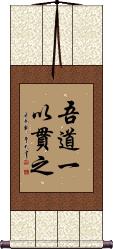
吾道一以貫之 is a phrase from the Analects of Confucius that translates as “My Way has one thread that runs through it.”
Other translations include:
My Way is penetrated by a single thread.
There is one single thread binding my Way together.
My Way is run through with a unifying thread.
My Way is Consistent.
And sometimes poetic license is taken, and it is translated as:
My Way is the only one; I'll treasure it and stick to it with humility until the end.
After this was said, some 2500+ years ago, another disciple of Confucius clarified the meaning by stating, “Our master's Way is to be loyal and have a sense of reciprocity.”
In Japanese, this is purported to be romanized as “Waga michi ichi wo motte kore wo tsuranuku,” though some will argue the true pronunciation.
Note: Sometimes written 吾道以一貫之 instead of 吾道一以貫之 with no difference in meaning.
Guanxi
The Chinese Concept of Relationship and Exchange of Favors
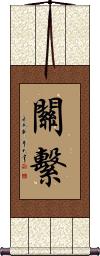
The dictionary definition is:
Relations/relationship, to concern, to affect, to have to do with, or connection.
But there's more to it...
In China, the relationship that you have with certain people can open doors for you. Having guanxi with someone also means they would never defraud you but are honor-bound to treat you fairly (of course, this goes both ways). Sometimes it is suggested that guanxi is the exchange of favors. 關繫 / 関繫 / 關係 is more about having a relationship that allows you to ask for and expect favors without shame.
There is no concept in western culture that exactly matches guanxi, but perhaps having a social or professional network is similar.
Note that there are some variations common within Chinese, Japanese Kanji, and Korean Hanja for this word... Japanese tend to use a Chinese alternate form as shown to the right for
the first character.
 There's also another alternate form of that first character (currently used as the official Simplified form in mainland China) which looks like the character shown to the right. It's basically the central radical of the alternate version shown above but without the “door radical” around it. In more free-flowing calligraphy styles, this version would be the likely choice for a calligrapher.
 In Modern Japanese, they use the character shown to the right.
They also tend to use this same form in Korean Hanja (I've only checked this word in my Korean dictionary, but it has not been confirmed by a translator's review).
 If that was not confusing enough, there is another alternate form of that second character. See right.
An Asian calligrapher of any nationality may use these forms at their discretion. However, They would tend to stick to the most common form used in their respective languages.
If you have any preference on any of these issues, please give us a special note with your order, and we'll make sure it's done the way you want.
Do not shed a tear until you see the coffin
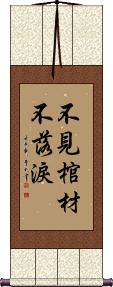
不見棺材不落淚 is a cautionary tale that suggests you are unknowingly (though it should be obvious)on a bad course.
It further suggests that you will not realize your folly until the worst has happened.
This can also be a warning of inaction until it's too late to take action. Again, not realizing your error until it's too late.
In an alternate interpretation, some will suggest this means doing something bad and not looking back - Then the worst happens.
It should be noted that this is one of the oddest selections for a wall scroll in our whole Asian calligraphy database. All of our translators are convinced that no Chinese person would ever hang this on their wall.
God is my Judge
Namo Guanshiyin Pusa
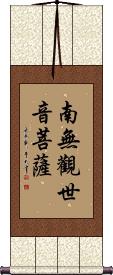
南無觀世音菩薩 means homage to the Bodhisattva Avalokitêśvara in Chinese and Japanese.
The 4th character of this homage or chant can be dropped, making it 南無觀音菩薩 or “Namo Guanyin Pusa.”
Shito-Ryu Ki-Me-Kan Karate-Do
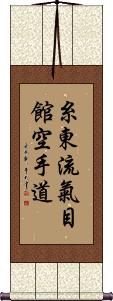
糸東流氣目館空手道 is the title for Shito-Ryu Ki-Me-Kan Karate-Do.
A school of Karate.
Note that while this title can be pronounced in Chinese, it only makes complete sense in Japanese.
Shotokan Aikido
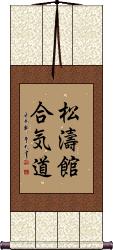
松涛館合気道 is the title for Shotokan Aikido in Japanese.
Note: Chinese and Korean pronunciations of these characters are included above, however, this title would only be understood in Chinese or Korean by someone who practices or is familiar with Shotokan Aikido. Please consider this title to be “Japanese only.”
See Also: Martial Arts | Hapkido
Black or white cat matters not as long as it can catch mice
Ability is more important than looks
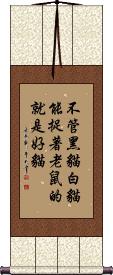
不管黑猫白猫能捉着老鼠的就是好猫 literally translates as: It doesn't matter [if a] cat [is] black [or] white, [as long as it] can catch mice, it's a good cat.
This proverb was either composed or made famous by Deng XiaoPing in 1961 when he exclaimed, “I don't care if it's a white cat or a black cat. It's a good cat so long as it catches mice” when his critics pointed out that his ideas were Capitalistic (free market). The response was meant to say, “It does not matter if it's Communist or Capitalist, as long as it works.”
This is a Chinese proverb that can be used to suggest one should disregard looks or a person's race, as long as they can do the job. It can also be used as a metaphor for many other situations.
Deng XiaoPing probably saved China from collapse (as the Soviet Union experienced). He changed China’s economy from pure Communism to a hybrid where the free market (Capitalism) is encouraged. More about Deng XiaoPing
Daodejing / Tao Te Ching - Chapter 1
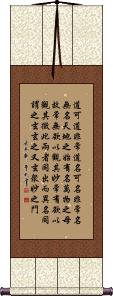
This text is the first chapter of the Daodejing / Tao Te Ching.
The Way that can be followed is not the eternal Way.
The name that can be named is not the eternal name.
The nameless is the origin of heaven and earth
While naming is the origin of a myriad of things.
Therefore, always desireless, you see the mystery
Ever desiring, you see the manifestations.
These two are the same—
When they appear, they are given different names.
This sameness is the mystery,
Mystery within mystery;
The door to all marvels.
Dr. Muller's translation of all 81 Daodejing chapters
The text reads:
道可道、非常道。名可名、非常名。 無名天地之始 有名萬物之母。故常無欲以觀其妙、常有欲以觀其徼。此兩者同出而異名。同謂之玄。玄之又玄、衆妙之門。
This classical Chinese passage comes from the Mawangdui (馬王堆帛書) text.
Daodejing / Tao Te Ching - Chapter 54
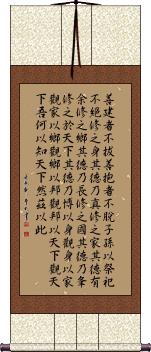
This is the Mawangdui version of Daodejing chapter 54.
By its virtue alone can one generation after another carry on the ancestral sacrifice.
Apply it to yourself, and by its power, you will be freed from dross.
Apply it to your household, and your household shall thereby have abundance.
Apply it to the village, and the village will be made secure.
Apply it to the kingdom, and the kingdom shall thereby be made to flourish.
Apply it to an empire, and the empire shall thereby be extended.
Therefore just as through oneself, one may contemplate Oneself;
So through the household one may contemplate the Household;
And through the village, one may contemplate the Village;
And through the kingdom, one may contemplate the Kingdom;
And through the empire, one may contemplate the Empire.
How do I know that the empire is so? By this.
What is firmly rooted cannot be pulled out;
What is tightly held in the arms will not slip loose;
Through this, the offering of sacrifice by descendants will never come to an end.
Cultivate it in your person, and its virtue will be genuine;
Cultivate it in the family, and its virtue will be more than sufficient;
Cultivate it in the hamlet, and its virtue will endure;
Cultivate it in the state, and its virtue will abound;
Cultivate it in the empire, and its virtue will be pervasive.
Hence look at the person through the person;
Look at the family through the family;
Look at the hamlet through the hamlet;
Look at the state through the state;
Look at the empire through the empire.
How do I know that the empire is like that?
By means of this.
Daodejing / Tao Te Ching - Chapter 27
The Mastery of Effortless Skill

Chapter 27 of the Daodejing reveals a profound truth about mastery: the highest skill leaves no trace, requires no force, and appears almost invisible.
善行無轍跡,
善言無瑕謫,
善數不用籌策,
善閉無關鍵而不可開,
善結無繩約而不可解。
是以聖人常善救人,
故無棄人;
常善救物,
故無棄物。
是謂襲明。
故善人者,不善人之師;
不善人者,善人之資。
不貴其師,不愛其資,
雖智大迷,
是謂要妙。
The sage moves through life with such natural harmony that nothing seems imposed; doors need no locks, knots require no rope, and actions leave no mark behind.
This is the essence of wúwéi (effortless action), where true ability arises from deep alignment with the Tao rather than deliberate effort.
At its heart, this chapter teaches compassion without exception. The sage “abandons no one and nothing,” recognizing value in all people and all things. Even those who seem flawed or unrefined are not rejected, but understood as part of a greater whole with each person both a student and a teacher in the unfolding of life.
Laozi reminds us that wisdom is not about perfection or control, but about subtle awareness. The truly skilled individual does not rely on tools, rules, or rigid structures; instead, they embody an intuitive understanding that makes their actions naturally complete.
In this way, excellence becomes quiet, effortless, and beyond imitation.
This teaching also reflects a deeper philosophical insight: Opposites are interdependent. The “good” person learns from the “not good,” and the “not good” provides the material for growth. To reject either is to misunderstand the balance of existence itself.
As calligraphy, Daodejing Chapter 27 serves as a reminder to cultivate inner mastery rather than outward display. It is a meditation on refinement, humility, and the quiet power of skill perfected through harmony with the natural order.
Note: The Chinese text used here is based on the early Mawangdui silk manuscript tradition (2nd century BCE). The Guodian manuscripts do NOT preserve Chapter 27 in full form.
This in-stock artwork might be what you are looking for, and ships right away...

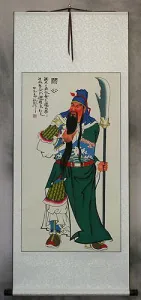

Gallery Price: $71.00
Your Price: $39.00
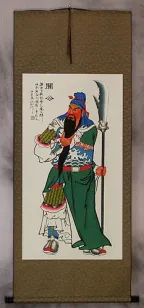
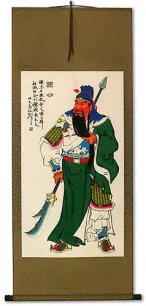
Gallery Price: $200.00
Your Price: $79.88
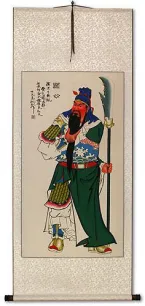
Gallery Price: $200.00
Your Price: $79.88
Gallery Price: $200.00
Your Price: $79.88
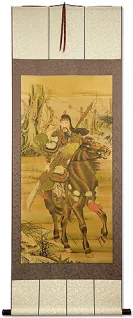
Gallery Price: $200.00
Your Price: $79.88
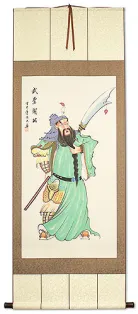
Gallery Price: $144.00
Your Price: $79.88
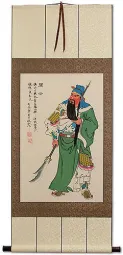
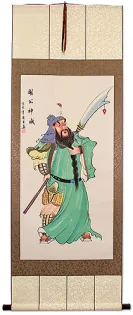
Not the results for guan that you were looking for?
Below are some entries from our dictionary that may match your guan search...
| Characters If shown, 2nd row is Simp. Chinese |
Pronunciation Romanization |
Simple Dictionary Definition |
冠 see styles |
guàn guan4 kuan masaru まさる |
to put on a hat; to be first; to dub (1) (See 衣冠,束帯) traditional cap worn by Shinto clergy and courtiers; (2) crown; diadem; coronet; (3) (かんむり only) top kanji radical; (4) (かむり only) (See 俳諧・1) first verse of a haikai, etc.; (adj-t,adv-to) (5) (かん only) best; peerless; first; (6) (かんむり only) name; title; named sponsorship of a program, event, team, etc.; (counter) (7) (かん only) {shogi} counter for titles; (given name) Masaru crown |
關 关 see styles |
guān guan1 kuan seki せき |
More info & calligraphy: Guan / Kwan / Seki(surname) Seki To shut, a closed place, barrier, frontier; to include, concern, involve. |
冠軍 冠军 see styles |
guàn jun guan4 jun1 kuan chün |
More info & calligraphy: Champ / Champion |
法官 see styles |
fǎ guān fa3 guan1 fa kuan hougan / hogan ほうがん |
More info & calligraphy: Judgejudge; (surname) Hougan |
白鸛 白鹳 see styles |
bái guàn bai2 guan4 pai kuan |
More info & calligraphy: White Stork |
觀音 观音 see styles |
guān yīn guan1 yin1 kuan yin kanon かんおん |
More info & calligraphy: Kwanyin(out-dated kanji) Avalokiteshvara (Bodhisattva); Avalokitesvara; Kannon; Kwannon; Guanyin; Buddhist deity of compassion; (personal name) Kan'on Guanyin |
關公 关公 see styles |
guān gōng guan1 gong1 kuan kung |
More info & calligraphy: Guan Gong / Warrior Saint |
關島 关岛 see styles |
guān dǎo guan1 dao3 kuan tao |
More info & calligraphy: Guam |
關帝 关帝 see styles |
guān dì guan1 di4 kuan ti Kantei |
More info & calligraphy: Guandi: God of War |
關心 关心 see styles |
guān xīn guan1 xin1 kuan hsin |
More info & calligraphy: Caring |
關羽 关羽 see styles |
guān yǔ guan1 yu3 kuan yü |
More info & calligraphy: Guan Yu |
無門關 无门关 see styles |
wú mén guān wu2 men2 guan1 wu men kuan Mumon kan |
More info & calligraphy: The Gateless Gate |
觀世音 观世音 see styles |
guān shì yīn guan1 shi4 yin1 kuan shih yin Kanzeon かんぜおん |
More info & calligraphy: Guan Shi Yin: Protector Of Life(out-dated kanji) Avalokiteshvara (Bodhisattva); Avalokitesvara; Kannon; Kwannon; Guanyin; Buddhist deity of compassion Regarder of the world's sounds, or cries, the so-called Goddess of Mercy; also known as 觀音; 觀世音善薩; 觀自在 (觀世自在); 觀尹; 光世音 (the last being the older form). Avalokiteśvara, v. 阿 8. Originally represented as a male, the images are now generally those of a female figure. The meaning of the term is in doubt; it is intp. as above, but the term 觀自在 (觀世自在) accords with the idea of Sovereign Regarder and is not associated with sounds or cries. Guanyin is one of the triad of Amida, is represented on his left, and is also represented as crowned with Amida; but there are as many as thirty-three different forms of Guanyin, sometimes with a bird, a vase, a willow wand, a pearl, a 'thousand' eyes and hands, etc., and, when as bestower of children, carrying a child. The island of Putuo (Potala) is the chief centre of Guanyin worship, where she is the protector of all in distress, especially of those who go to sea. There are many sūtras, etc., devoted to the cult, but its provenance and the date of its introduction to China are still in doubt. Chapter 25 of the Lotus Sūtra is devoted to Guanyin, and is the principal scripture of the cult; its date is uncertain. Guanyin is sometimes confounded with Amitābha and Maitreya. She is said to be the daughter of king Śubhavyūha 妙莊王, who had her killed by 'stifling because the sword of the executioner broke without hurting her. Her spirit went to hell; but hell changed into paradise. Yama sent her back to life to save his hell, when she was miraculously transported on a Lotus flower to the island of Poo-too'. Eitel. |
倌 see styles |
guān guan1 kuan |
keeper of domestic animals; herdsman; (old) hired hand in certain trade |
官 see styles |
guān guan1 kuan tsukasa つかさ |
government official; governmental; official; public; organ of the body; CL:個|个[ge4] (1) government; government service; the bureaucracy; (2) government post; government official; (female given name) Tsukasa Official, public. |
慣 惯 see styles |
guàn guan4 kuan nareru なれる |
accustomed to; used to; indulge; to spoil (a child) (given name) Nareru to become accustomed to |
摜 掼 see styles |
guàn guan4 kuan |
to fling; to fall; to wear |
棺 see styles |
guān guan1 kuan ikuo いくお |
coffin coffin; casket; (personal name) Ikuo A coffin 棺材. |
毌 see styles |
guàn guan4 kuan |
old variant of 貫|贯[guan4] |
涫 see styles |
guàn guan4 kuan |
(classical) to boil |
灌 see styles |
guàn guan4 kuan kan |
to irrigate; to pour; to install (software); to record (music) To water, sprinkle, pour; to flow together, or into, accumulate. |
爟 see styles |
guàn guan4 kuan |
light a fire |
琯 see styles |
guǎn guan3 kuan |
mus. instr.; to polish jade or gold |
瓘 see styles |
guàn guan4 kuan |
jade used for making goblets |
痯 see styles |
guǎn guan3 kuan |
ill-looking |
瘝 see styles |
guān guan1 kuan |
incapacitated; inefficient |
盥 see styles |
guàn guan4 kuan tarai; tarai たらい; タライ |
to wash (especially hands) (kana only) tub; washbasin; washbowl |
矔 see styles |
guàn guan4 kuan |
brilliant (of eyes) |
祼 see styles |
guàn guan4 kuan |
pour out libation |
筦 管 see styles |
guǎn guan3 kuan |
variant of 管[guan3] See: 管 |
Click here for more guan results from our dictionary
The following table may be helpful for those studying Chinese or Japanese...
| Title | Characters | Romaji (Romanized Japanese) | Various forms of Romanized Chinese | |
| Guan Yu | 關羽 关羽 | guān yǔ / guan1 yu3 / guan yu / guanyu | kuan yü / kuanyü | |
| Guan Gong Warrior Saint | 關公 关公 | guān gōng guan1 gong1 guan gong guangong | kuan kung kuankung |
|
| Guan Kwan Seki | 關 关 | seki | guān / guan1 / guan | kuan |
| Guan Shi Yin: Protector Of Life | 觀世音 观世音 | kanzeon | guān shì yīn guan1 shi4 yin1 guan shi yin guanshiyin | kuan shih yin kuanshihyin |
| Unwavering Hall Fudoshinkan | 不動心館 | fudōshin-kan | bù dòng xīn guǎn bu4 dong4 xin1 guan3 bu dong xin guan budongxinguan | pu tung hsin kuan putunghsinkuan |
| Warrior Saint Saint of War | 武聖 武圣 | wǔ shèng / wu3 sheng4 / wu sheng / wusheng | ||
| Gwan | 關 关 | guān / guan1 / guan | kuan | |
| Goddess of Compassion | 観世音 | kan ze on / kanzeon | guān shì yīn guan1 shi4 yin1 guan shi yin guanshiyin | kuan shih yin kuanshihyin |
| Goddess of Compassion | 観音 | kan non / kannon | guān yīn / guan1 yin1 / guan yin / guanyin | kuan yin / kuanyin |
| The Great Path has No Gate | 大道無門 大道无门 | dai dou mu mon daidoumumon dai do mu mon | dà dào wú mén da4 dao4 wu2 men2 da dao wu men dadaowumen | ta tao wu men tataowumen |
| Goddess of Mercy and Compassion | 觀世音 观世音 | guān shì yīn guan1 shi4 yin1 guan shi yin guanshiyin | kuan shih yin kuanshihyin |
|
| Guaman | 關 关 | guān / guan1 / guan | kuan | |
| Caring | 關心 关心 | guān xīn / guan1 xin1 / guan xin / guanxin | kuan hsin / kuanhsin | |
| Champ Champion | 冠軍 冠军 | guàn / guan4 jun1 / guan jun / guanjun | kuan chün / kuanchün | |
| Guam | 關島 关岛 | guān dǎo / guan1 dao3 / guan dao / guandao | kuan tao / kuantao | |
| Guandi: God of War | 關帝 关帝 | kan tei / kantei | Guān dì / Guan1 di4 / Guan di / Guandi | Kuan ti / Kuanti |
| Judge | 法官 | hou kan / houkan / ho kan | fǎ guān / fa3 guan1 / fa guan / faguan | fa kuan / fakuan |
| White Stork | 白鸛 白鹳 | bái guàn / bai2 guan4 / bai guan / baiguan | pai kuan / paikuan | |
| Kwanyin | 觀音 观音 | guàn yīn / guan4 yin1 / guan yin / guanyin | kuan yin / kuanyin | |
| Dragon Hall | 龍館 | ryū kan / ryūkan | lóng guǎn long2 guan3 long guan longguan | lung kuan lungkuan |
| Chidokan | 致道館 | chi dou kan chidoukan chi do kan | zhì dào guǎn zhi4 dao4 guan3 zhi dao guan zhidaoguan | chih tao kuan chihtaokuan |
| Koushinkan Koshinkan | 孝心館 孝心馆 | kou shin kan koushinkan ko shin kan | xiào xīn guǎn xiao4 xin1 guan3 xiao xin guan xiaoxinguan | hsiao hsin kuan hsiaohsinkuan |
| Mi Guk Kwan | 美國館 美国馆 | měi guó guǎn mei3 guo2 guan3 mei guo guan meiguoguan | mei kuo kuan meikuokuan |
|
| Moo Duk Kwan | 武德館 | bu toku kan butokukan | mù dù guān mu4 du4 guan1 mu du guan muduguan | mu tu kuan mutukuan |
| Shotokan | 鬆濤館 松涛館 | shou tou kan shoutoukan sho to kan | sōng tāo guǎn song1 tao1 guan3 song tao guan songtaoguan | sung t`ao kuan sungtaokuan sung tao kuan |
| The Gateless Gate | 無門關 无门关 | mu mon kan / mumonkan | wú mén guān wu2 men2 guan1 wu men guan wumenguan | wu men kuan wumenkuan |
| Isshin Hall Isshinkan | 一心館 | isshin-kan / ishin-kan | yī xīn guǎn yi1 xin1 guan3 yi xin guan yixinguan | i hsin kuan ihsinkuan |
| Bushidokan | 武士道館 武士道馆 | bu shi dou kan bushidoukan bu shi do kan | wǔ shì dào guǎn wu3 shi4 dao4 guan3 wu shi dao guan wushidaoguan | wu shih tao kuan wushihtaokuan |
| Just Do It | 盡管去做 尽管去做 | jìn guǎn qù zuò jin4 guan3 qu4 zuo4 jin guan qu zuo jinguanquzuo | chin kuan ch`ü tso chinkuanchütso chin kuan chü tso |
|
| Shikantaza | 只管打坐 | shi kan ta za shikantaza | zhǐ guǎn dǎ zuò zhi3 guan3 da3 zuo4 zhi guan da zuo zhiguandazuo | chih kuan ta tso chihkuantatso |
| Sisterhood Sisters Relationship | 姐妹關繫 姐妹关系 | jiě mèi guān xì jie3 mei4 guan1 xi4 jie mei guan xi jiemeiguanxi | chieh mei kuan hsi chiehmeikuanhsi |
|
| Relationship | 關繫 / 関繫 / 關係 関係 | kan kei / kankei | guān xì / guan1 xi4 / guan xi / guanxi | kuan hsi / kuanhsi |
| Bushidokan Dojo | 武士道館道場 武士道馆道场 | bu shi dou kan dou jou bushidoukandoujou bu shi do kan do jo | wǔ shì dào guǎn dào chǎng wu3 shi4 dao4 guan3 dao4 chang3 wu shi dao guan dao chang wushidaoguandaochang | wu shih tao kuan tao ch`ang wushihtaokuantaochang wu shih tao kuan tao chang |
| Namo Guanyin Pusa | 南無觀音菩薩 南无观音菩萨 | namu kannon bosatsu namukannonbosatsu | nán wú guàn yīn pú sà nan2 wu2 guan4 yin1 pu2 sa4 nan wu guan yin pu sa nanwuguanyinpusa | nan wu kuan yin p`u sa nanwukuanyinpusa nan wu kuan yin pu sa |
| Shotokan Karate-Do | 鬆濤館空手道 松涛館空手道 | shou tou kan kara te dou shoutoukankaratedou sho to kan kara te do | sōng tāo guǎn kōng shǒu dào song1 tao1 guan3 kong1 shou3 dao4 song tao guan kong shou dao songtaoguankongshoudao | sung t`ao kuan k`ung shou tao sungtaokuankungshoutao sung tao kuan kung shou tao |
| There is one single thread binding my Way together | 吾道一以貫之 吾道一以贯之 | ware dou tsurayuki waredoutsurayuki ware do tsurayuki | wú dào yī yǐ guàn zhī wu2 dao4 yi1 yi3 guan4 zhi1 wu dao yi yi guan zhi wudaoyiyiguanzhi | wu tao i i kuan chih wutaoiikuanchih |
| Guanxi | 關繫 / 関繫 / 關係 关系 / 関係 | kankei | guān xì / guan1 xi4 / guan xi / guanxi | kuan hsi / kuanhsi |
| Do not shed a tear until you see the coffin | 不見棺材不落淚 不见棺材不落泪 | bú jiàn guān cái bú luò lèi bu2 jian4 guan1 cai2 bu2 luo4 lei4 bu jian guan cai bu luo lei bujianguancaibuluolei | pu chien kuan ts`ai pu lo lei puchienkuantsaipulolei pu chien kuan tsai pu lo lei |
|
| God is my Judge | 上帝是我的法官 | shàng dì shì wǒ de fǎ guān shang4 di4 shi4 wo3 de fa3 guan1 shang di shi wo de fa guan shangdishiwodefaguan | shang ti shih wo te fa kuan shangtishihwotefakuan |
|
| Namo Guanshiyin Pusa | 南無觀世音菩薩 南无观世音菩萨 | namu kanzeon bosatsu namukanzeonbosatsu | nán wú guān shì yīn pú sà nan2 wu2 guan1 shi4 yin1 pu2 sa4 nan wu guan shi yin pu sa nanwuguanshiyinpusa | nan wu kuan shih yin p`u sa nanwukuanshihyinpusa nan wu kuan shih yin pu sa |
| Shito-Ryu Ki-Me-Kan Karate-Do | 糸東流氣目館空手道 糸东流気目馆空手道 | shito-ryu ki-me-kan karate-dou shito-ryu ki-me-kan karate-do | mì dōng liú qì mù guǎn kōng shǒu dào mi4 dong1 liu2 qi4 mu4 guan3 kong1 shou3 dao4 mi dong liu qi mu guan kong shou dao | mi tung liu ch`i mu kuan k`ung shou tao mi tung liu chi mu kuan kung shou tao |
| Shotokan Aikido | 鬆濤館合氣道 (Old Japanese/Chinese) 松涛館合気道 (Modern Japanese) | shou tou kan ai ki dou shoutoukanaikidou sho to kan ai ki do | sōng tāo guǎn hé qì dào song1 tao1 guan3 he2 qi4 dao4 song tao guan he qi dao songtaoguanheqidao | sung t`ao kuan ho ch`i tao sungtaokuanhochitao sung tao kuan ho chi tao |
| Black or white cat matters not as long as it can catch mice | 不管黑貓白貓能捉著老鼠的就是好貓 不管黑猫白猫能捉着老鼠的就是好猫 | bù guǎn hēi māo bái māo néng zhuō zhe lǎo shǔ de jiù shì hǎo mǎo bu4 guan3 hei1 mao1 bai2 mao1 neng2 zhuo1 zhe lao3 shu3 de jiu4 shi4 hao3 mao3 bu guan hei mao bai mao neng zhuo zhe lao shu de jiu shi hao mao | pu kuan hei mao pai mao neng cho che lao shu te chiu shih hao mao | |
| Daodejing Tao Te Ching - Chapter 1 | 道可道非常道名可名非常名無名天地之始有名萬物之母故常無欲以觀其妙常有欲以觀其徼此兩者同出而異名同謂之玄玄之又玄衆妙之門 道可道非常道名可名非常名无名天地之始有名万物之母故常无欲以观其妙常有欲以观其徼此两者同出而异名同谓之玄玄之又玄众妙之门 | dào kě dào fēi cháng dào míng kě míng fēi cháng míng wú míng tiān dì zhī shǐ yǒu míng wàn wù zhī mǔ gù cháng wú yù yǐ guān qí miào cháng yǒu yù yǐ guān qí zhēng cǐ liǎng zhě tóng chū ér yì míng tóng wèi zhī xuán xuán zhī yòu xuán zhòng miào zhī mén dao4 ke3 dao4 fei1 chang2 dao4 ming2 ke3 ming2 fei1 chang2 ming2 wu2 ming2 tian1 di4 zhi1 shi3 you3 ming2 wan4 wu4 zhi1 mu3 gu4 chang2 wu2 yu4 yi3 guan1 qi2 miao4 chang2 you3 yu4 yi3 guan1 qi2 jiao3 ci3 liang3 zhe3 tong2 chu1 er2 yi4 ming2 tong2 wei4 zhi1 xuan2 xuan2 zhi1 you4 xuan2 zhong4 miao4 zhi1 men2 dao ke dao fei chang dao ming ke ming fei chang ming wu ming tian di zhi shi you ming wan wu zhi mu gu chang wu yu yi guan qi miao chang you yu yi guan qi jiao ci liang zhe tong chu er yi ming tong wei zhi xuan xuan zhi you xuan zhong miao zhi men | tao k`o tao fei ch`ang tao ming k`o ming fei ch`ang ming wu ming t`ien ti chih shih yu ming wan wu chih mu ku ch`ang wu yü i kuan ch`i miao ch`ang yu yü i kuan ch`i chiao tz`u liang che t`ung ch`u erh i ming t`ung wei chih hsüan hsüan chih yu hsüan chung miao chih men tao ko tao fei chang tao ming ko ming fei chang ming wu ming tien ti chih shih yu ming wan wu chih mu ku chang wu yü i kuan chi miao chang yu yü i kuan chi chiao tzu liang che tung chu erh i ming tung wei chih hsüan hsüan chih yu hsüan chung miao chih men |
|
| Daodejing Tao Te Ching - Chapter 54 | 善建者不拔善抱者不脫子孫以祭祀不絕修之身其德乃真修之家其德有余修之鄉其德乃長修之國其德乃夆修之於天下其德乃博以身觀身以家觀家以鄉觀鄉以邦觀邦以天下觀天下吾何以知天下然茲以此 善建者不拔善抱者不脱子孙以祭祀不绝修之身其德乃真修之家其德有余修之乡其德乃长修之国其德乃夆修之于天下其德乃博以身观身以家观家以乡观乡以邦观邦以天下观天下吾何以知天下然兹以此 | shàn jiàn zhě bù bá shàn bào zhě bù tuō zǐ sūn yǐ jì sì bù jué xiū zhī shēn qí dé nǎi zhēn xiū zhī jiā qí dé yǒu yú xiū zhī xiāng qí dé nǎi zhǎng xiū zhī guó qí dé nǎi féng xiū zhī yú tiān xià qí dé nǎi bó yǐ shēn guān shēn yǐ jiā guān jiā yǐ xiāng guān xiāng yǐ bāng guān bāng yǐ tiān xià guān tiān xià wú hé yǐ zhī tiān xià rán zī yǐ cǐ shan4 jian4 zhe3 bu4 ba2 shan4 bao4 zhe3 bu4 tuo1 zi3 sun1 yi3 ji4 si4 bu4 jue2 xiu1 zhi1 shen1 qi2 de2 nai3 zhen1 xiu1 zhi1 jia1 qi2 de2 you3 yu2 xiu1 zhi1 xiang1 qi2 de2 nai3 zhang3 xiu1 zhi1 guo2 qi2 de2 nai3 feng2 xiu1 zhi1 yu2 tian1 xia4 qi2 de2 nai3 bo2 yi3 shen1 guan1 shen1 yi3 jia1 guan1 jia1 yi3 xiang1 guan1 xiang1 yi3 bang1 guan1 bang1 yi3 tian1 xia4 guan1 tian1 xia4 wu2 he2 yi3 zhi1 tian1 xia4 ran2 zi1 yi3 ci3 shan jian zhe bu ba shan bao zhe bu tuo zi sun yi ji si bu jue xiu zhi shen qi de nai zhen xiu zhi jia qi de you yu xiu zhi xiang qi de nai zhang xiu zhi guo qi de nai feng xiu zhi yu tian xia qi de nai bo yi shen guan shen yi jia guan jia yi xiang guan xiang yi bang guan bang yi tian xia guan tian xia wu he yi zhi tian xia ran zi yi ci | shan chien che pu pa shan pao che pu t`o tzu sun i chi ssu pu chüeh hsiu chih shen ch`i te nai chen hsiu chih chia ch`i te yu yü hsiu chih hsiang ch`i te nai chang hsiu chih kuo ch`i te nai feng hsiu chih yü t`ien hsia ch`i te nai po i shen kuan shen i chia kuan chia i hsiang kuan hsiang i pang kuan pang i t`ien hsia kuan t`ien hsia wu ho i chih t`ien hsia jan tzu i tz`u shan chien che pu pa shan pao che pu to tzu sun i chi ssu pu chüeh hsiu chih shen chi te nai chen hsiu chih chia chi te yu yü hsiu chih hsiang chi te nai chang hsiu chih kuo chi te nai feng hsiu chih yü tien hsia chi te nai po i shen kuan shen i chia kuan chia i hsiang kuan hsiang i pang kuan pang i tien hsia kuan tien hsia wu ho i chih tien hsia jan tzu i tzu |
|
| Daodejing Tao Te Ching - Chapter 27 | 善行無轍跡善言無瑕謫善數不用籌策善閉無關鍵而不可開善結無繩約而不可解是以聖人常善救人故無棄人常善救物故無棄物是謂襲明故善人者不善人之師不善人者善人之資不貴其師不愛其資雖智大迷是謂要妙 善行无辙迹善言无瑕谪善数不用筹策善闭无关键而不可开善结无绳约而不可解是以圣人常善救人故无弃人常善救物故无弃物是谓袭明故善人者不善人之师不善人者善人之资不贵其师不爱其资虽智大迷是谓要妙 | shàn xíng wú zhé jì shàn yán wú xiá zhé shàn shù bù yòng chóu cè shàn bì wú guān jiàn ér bù kě kāi shàn jié wú shéng yuē ér bù kě jiě shì yǐ shèng rén cháng shàn jiù rén gù wú qì rén cháng shàn jiù wù gù wú qì wù shì wèi xí míng gù shàn rén zhě bù shàn rén zhī shī bù shàn rén zhě shàn rén zhī zī bù guì qí shī bù ài qí zī suī zhì dà mí shì wèi yào miào shan4 xing2 wu2 zhe2 ji4 shan4 yan2 wu2 xia2 zhe2 shan4 shu4 bu4 yong4 chou2 ce4 shan4 bi4 wu2 guan1 jian4 er2 bu4 ke3 kai1 shan4 jie2 wu2 sheng2 yue1 er2 bu4 ke3 jie3 shi4 yi3 sheng4 ren2 chang2 shan4 jiu4 ren2 gu4 wu2 qi4 ren2 chang2 shan4 jiu4 wu4 gu4 wu2 qi4 wu4 shi4 wei4 xi2 ming2 gu4 shan4 ren2 zhe3 bu4 shan4 ren2 zhi1 shi1 bu4 shan4 ren2 zhe3 shan4 ren2 zhi1 zi1 bu4 gui4 qi2 shi1 bu4 ai4 qi2 zi1 sui1 zhi4 da4 mi2 shi4 wei4 yao4 miao4 shan xing wu zhe ji shan yan wu xia zhe shan shu bu yong chou ce shan bi wu guan jian er bu ke kai shan jie wu sheng yue er bu ke jie shi yi sheng ren chang shan jiu ren gu wu qi ren chang shan jiu wu gu wu qi wu shi wei xi ming gu shan ren zhe bu shan ren zhi shi bu shan ren zhe shan ren zhi zi bu gui qi shi bu ai qi zi sui zhi da mi shi wei yao miao | shan hsing wu che chi shan yen wu hsia che shan shu pu yung ch`ou ts`e shan pi wu kuan chien erh pu k`o k`ai shan chieh wu sheng yüeh erh pu k`o chieh shih i sheng jen ch`ang shan chiu jen ku wu ch`i jen ch`ang shan chiu wu ku wu ch`i wu shih wei hsi ming ku shan jen che pu shan jen chih shih pu shan jen che shan jen chih tzu pu kuei ch`i shih pu ai ch`i tzu sui chih ta mi shih wei yao miao shan hsing wu che chi shan yen wu hsia che shan shu pu yung chou tse shan pi wu kuan chien erh pu ko kai shan chieh wu sheng yüeh erh pu ko chieh shih i sheng jen chang shan chiu jen ku wu chi jen chang shan chiu wu ku wu chi wu shih wei hsi ming ku shan jen che pu shan jen chih shih pu shan jen che shan jen chih tzu pu kuei chi shih pu ai chi tzu sui chih ta mi shih wei yao miao |
|
| In some entries above you will see that characters have different versions above and below a line. In these cases, the characters above the line are Traditional Chinese, while the ones below are Simplified Chinese. | ||||

Successful Chinese Character and Japanese Kanji calligraphy searches within the last few hours...



