Many custom options...


And formats...



Feeling in Chinese / Japanese...
Buy a Feeling calligraphy wall scroll here!
Personalize your custom “Feeling” project by clicking the button next to your favorite “Feeling” title below...
Pleasant Feeling
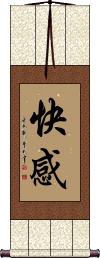
快感 is a Chinese, Japanese, and old Korean word meaning pleasure, thrill, delight, joy, pleasurable sensation, or pleasant feeling.
Feeling of Bliss
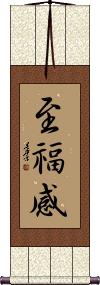
至福感 is “feelings of bliss” in Japanese.
A breakdown of the Kanji in this title:
至福 (shifuku) beatitude; supreme bliss.
感 (kan) feeling; sensation; emotion; admiration; impression.
Sorrow / Feeling Sorry
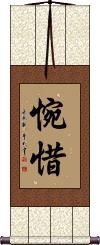
惋惜 is a Chinese word that means “to feel sorry for a person over something that should have happened.”
Note: This is a strange thing to write on a wall scroll for Chinese people.
This in-stock artwork might be what you are looking for, and ships right away...
These search terms might be related to Feeling:
1. Right Understanding / Right Perspective / Right View / Perfect View
A Father’s Love
A Mother’s Love / Motherly Love
Adoring Love
Air / Atmosphere
Air Force
Appreciation and Love for Your Parents
Belief / Trust
Benevolent Love
Best Love / Most Sincere Love
Brotherly and Sisterly Love
Consideration / Meticulous Care
Consideration / Thought / Ikko
Crazy Love
Divine Love
Earth Fire Water Air
Eternal Love
Eternal Love / Love Eternally
Even a Fool May Sometimes Come Up With a Good Idea
Faith Hope Love
Faith Love Peace
Family Love
Family Love / Domestic Bliss
Feel at Ease Anywhere / the World is My Home
Firm Belief / Strong Faith
First Love
Forbidden Love
Forever Love
Four Noble Truths: Desire and Attachment
Four Noble Truths: Elimination of Desire or Attachment
God is Love
Goddess of Love: Aphrodite
Goddess of Love: Venus
Greatest Infinite Love
Greatest Love
I Love You
I Love You / Aishiteru
I Love You to the Moon and Back
Idea / Concept
Idea / Thought
Idea / Thought / Meaning
If You Love Your Child, Send Them Out Into the World
Infinite Love
Intuition
Jesus Christ is Love
Kansei Engineering / Sense Engineering
Life Full of Love
Life of Love
Life With Love
Live for What You Love
Live Laugh Love
Live Love Die
Lost Love
Love
Love and Affection
Love and Devotion
Love and Happiness
Love and Hate
Love and Honor
Love and Protect
Love and Respect
Love and Respect / Kindness and Respect
Love Between Child and Parents
Love Binds Us Together
Love Conquers All
Love Faith Strength
Love for Humanity / Brotherly Love
Love for Parents
Love Forever / Love Eternal
Love Gems / Fruit of Love / Children
Love Life
Love Loyalty Respect
Love Myself First
Love the Flower, Love the Pot Also
Love the House and Its Crow
Love Will Find a Way
Love Without Reason
Love Your Children, but Discipline Them Too
Love Yourself First
Loving Heart / One’s Love
Madly in Love
Make Guests Feel at Home
Mercy / Compassion / Love
My True Love
One Love
Passionate Love / Ardent Love and Devotion
Peace and Love
Peace, Love, Happiness
Pledge of Lifelong Love
Predestined Love / Love by Fate
Pure Love
Self-Love / Love Yourself / Love Oneself
Sense of Humor
Sense of Shame / Sense of Honor / Integrity / Modesty (Korean)
Sisterhood / Sisterly Love
Sixth Sense / Intuition
Sky / Air / Ether / Space
Sorry / Feel Apologetic / Regret
Strength and Love
Strength and Love in Unity
Strength Love Honor
Sun Tzu: Regard Your Soldiers as Children
The Art of Love
The Pain of Love / Love Troubles
Thought / Thinking / Idea
Together Forever in Love
True Love
Trust in God / Belief in God
Unconditional Love
Universal Love
Venus / Amor / God of Love
You Are Only as Old as You Feel
Not the results for feeling that you were looking for?
Below are some entries from our dictionary that may match your feeling search...
| Characters If shown, 2nd row is Simp. Chinese |
Pronunciation Romanization |
Simple Dictionary Definition |
念 see styles |
niàn nian4 nien nen ねん |
More info & calligraphy: Mindfulness(1) (esp. 〜の念) sense; idea; thought; feeling; (2) desire; concern; (3) (esp. 念に〜、念の/が〜) attention; care; (personal name) Nen smṛti. Recollection, memory; to think on, reflect; repeat, intone; a thought; a moment. |
情 see styles |
qíng qing2 ch`ing ching makoto まこと |
More info & calligraphy: Passions / Feelings / Emotions(1) feelings; emotion; sentiment; (2) compassion; sympathy; (3) passion; affection; love; (4) the way things really are; the actual situation; (personal name) Makoto The feelings, passions, desires, affections, sensations; sentient; affinities; affairs, facts. Particular affections, duties, or affairs. |
意 see styles |
yì yi4 i kokoro こころ |
More info & calligraphy: Idea / Thought / Meaning(1) feelings; thoughts; (2) meaning; (personal name) Kokoro Manas, the sixth of the ṣaḍāyatanas or six means of perception, i.e. sight, hearing, smell, taste, touch, and mind. Manas means "mind (in its widest sense as applied to all the mental powers), intellect, intelligence, understanding, perception, sense, conscience, will". M.W. It is "the intellectual function of consciousness", Keith. In Chinese it connotes thought, idea, intention, meaning, will; but in Buddhist terminology its distinctive meaning is mind, or the faculty of thought. |
親 亲 see styles |
qìng qing4 ch`ing ching yoshimi よしみ |
More info & calligraphy: Kean(1) (ant: 疎・そ・2) intimacy; closeness; friendliness; (2) close relative; (prefix) (3) (See 親米) pro- (e.g. pro-American); (personal name) Yoshimi Personally related, own, intimate; family; a wife, marriage. |
ロス see styles |
rosu ロス |
More info & calligraphy: Roth |
快感 see styles |
kuài gǎn kuai4 gan3 k`uai kan kuai kan kaikan かいかん |
More info & calligraphy: Pleasant Feelingpleasant feeling; pleasant sensation; pleasure |
統感 统感 see styles |
tǒng gǎn tong3 gan3 t`ung kan tung kan |
More info & calligraphy: Togetherness |
舒服 see styles |
shū fu shu1 fu5 shu fu |
More info & calligraphy: Comfortable |
タウナー see styles |
daunaa / dauna ダウナー |
More info & calligraphy: Towner |
思いやり see styles |
omoiyari おもいやり |
More info & calligraphy: Compassion / Kindness |
凝 see styles |
níng ning2 ning tomoda ともだ |
to congeal; to concentrate attention; to stare (1) muscle stiffness (esp. in shoulders); (2) (med) (kana only) lump (in tissue, esp. breast); swelling; hardening; lesion; (3) (kana only) lingering discomfort; uneasiness; bad aftertaste; unpleasant feeling; muscle stiffness (esp. in shoulders); (personal name) Tomoda To congeal, consolidate, form. |
受 see styles |
shòu shou4 shou uke うけ |
to receive; to accept; to suffer; subjected to; to bear; to stand; pleasant; (passive marker); (LGBT) bottom {Buddh} (See 五蘊,十二因縁) vedana (sensation); (place-name) Uke To receive, be, bear; intp. of vedana, 'perception,' 'knowledge obtained by the senses, feeling, sensation.' M. W. It is defined as mental reaction to the object, but in general it means receptivity, or sensation; the two forms of sensation of physical and mental objects are indicated. It is one of the five skandhas; as one of the twelve nidānas it indicates the incipient stage of sensation in the embryo. |
塊 块 see styles |
kuài kuai4 k`uai kuai saikachi さいかち |
lump; chunk; piece; classifier for pieces of cloth, cake, soap etc; (coll.) classifier for money and currency units (1) lump; mass; bundle; clump; clod; cluster; (2) group; crowd; (3) embodiment (of an idea, quality, feeling etc.); personification; (surname) Saikachi a clod |
感 see styles |
gǎn gan3 kan kan かん |
to feel; to move; to touch; to affect; feeling; emotion; (suffix) sense of ~ (n,n-suf) (1) feeling; sensation; emotion; admiration; impression; (2) (abbreviation) {ling} (part of speech tag used in dictionaries) (See 感動詞) interjection; (given name) Kan To influence, move. |
款 see styles |
kuǎn kuan3 k`uan kuan yoshimi よしみ |
section; paragraph; funds; CL:筆|笔[bi3],個|个[ge4]; classifier for versions or models (of a product) (1) title; heading; article; (2) (See 款を通ずる・かんをつうずる) benevolence; friendly feeling; (given name) Yoshimi |
気 see styles |
qì qi4 ch`i chi taiki たいき |
Japanese variant of 氣|气 (suffix) (kana only) seeming; giving the appearance of; giving one the feeling of; (personal name) Taiki |
片 see styles |
piàn pian4 p`ien pien katayanagi かたやなぎ |
thin piece; flake; a slice; film; TV play; to slice; to carve thin; partial; incomplete; one-sided; classifier for slices, tablets, tract of land, area of water; classifier for CDs, movies, DVDs etc; used with numeral 一[yi1]: classifier for scenario, scene, feeling, atmosphere, sound etc; Kangxi radical 91 (counter) (See 一片・いっぺん・1) counter for scraps, fragments, petals, etc.; (surname) Katayanagi A slice, slip, card; brief, few. |
發 发 see styles |
fā fa1 fa hatsu はつ |
to send out; to show (one's feeling); to issue; to develop; to make a bundle of money; classifier for gunshots (rounds) (surname) Hatsu To shoot forth, send, issue; start, initiate; expound; prosper. |
興 兴 see styles |
xìng xing4 hsing hajime はじめ |
feeling or desire to do something; interest in something; excitement (1) interest; entertainment; pleasure; (2) (See 六義・1) implicit comparison (style of the Shi Jing); (given name) Hajime abhyudaya. Rise, begin; prosper; elated. |
艶 艳 see styles |
yàn yan4 yen yoshi よし |
variant of 豔|艳[yan4] (1) gloss; luster; lustre; shine; sheen; polish; (2) mellowness (of a voice); youthfulness (e.g. of skin); (3) interest; appeal; charm; color; colour; feeling; (4) romance; love; sexiness; (given name) Yoshi |
觸 触 see styles |
chù chu4 ch`u chu fure ふれ |
to touch; to make contact with something; to stir up sb's emotions (surname) Fure To butt, strike against; contact. sparśa, touch, contact, collision, the quality of tangibility, feeling, sensation. M.W. Eleven kinds of sensation are given— hot, cold, hard, soft, etc. sparśa is one of the twelve nidānas, cf. 十二因緣, and of the sadāyatana, cf. 六入. It is also used with the meaning of 濁 unclean. |
賫 赍 see styles |
jī ji1 chi |
to present (a gift); to harbor (a feeling) |
響 响 see styles |
xiǎng xiang3 hsiang rizumu りずむ |
echo; sound; noise; to make a sound; to sound; to ring; loud; classifier for noises (irregular okurigana usage) (1) echo; reverberation; (2) sound (esp. the distinctive sound of an object or activity, e.g. rain, gun, gallop, drum); noise; (3) quality of a sound (e.g. a fine phrase, clear voice, resonant bell); feeling of a sound; emotion or feeling inspired by something heard or read; (female given name) Rizumu pratiśrut. Echo, resonance. |
齎 赍 see styles |
jī ji1 chi sei |
(literary) to harbor (a feeling); (literary) to present as a gift to bring |
っ気 see styles |
kke っけ |
(suffix noun) (See 気・け・1) sign; indication; trace; touch; feeling of |
わね see styles |
wane ワネ |
(expression) (feminine speech) (sentence end) (See わ・1,ね・1) expresses depth of feeling or emphasis; (personal name) Vane |
乗り see styles |
nori(p); nori のり(P); ノリ |
(1) riding; ride; (2) spread (of paints); (suffix noun) (3) -seater (e.g. two-seater); (4) (kana only) (esp. ノリ. possibly from 気乗り) (getting into the) mood; (entering into the) spirit; energy; enthusiasm; rhythm; feeling |
乘興 乘兴 see styles |
chéng xìng cheng2 xing4 ch`eng hsing cheng hsing |
while in high spirits; feeling upbeat; on an impulse |
五蘊 五蕴 see styles |
wǔ yùn wu3 yun4 wu yün goun / gon ごうん |
the Five Aggregates (from Sanskrit "skandha") (Buddhism) {Buddh} the five skandhas (matter, sensation, perception, mental formations and consciousness); the five aggregates The five skandhas, pañca-skandha: also 五陰; 五衆; 五塞犍陀 The five cumulations, substances, or aggregates, i. e. the components of an intelligent being, specially a human being: (1) 色 rūpa, form, matter, the physical form related to the five organs of sense; (2) 受 vedana, reception, sensation, feeling, the functioning of the mind or senses in connection with affairs and things; (3) 想 saṃjñā, conception, or discerning; the functioning of mind in distinguishing; (4) 行 saṃskāra, the functioning of mind in its processes regarding like and dislike, good and evil, etc.; (5) 識 vijñāna, mental faculty in regard to perception and cognition, discriminative of affairs and things. The first is said to be physical, the other four mental qualities; (2), (3), and (4) are associated with mental functioning, and therefore with 心所; (5) is associated with the faculty or nature of the mind 心王 manas. Eitel gives— form, perception, consciousness, action, knowledge. See also Keith's Buddhist Philosophy, 85-91. |
人心 see styles |
rén xīn ren2 xin1 jen hsin jinshin じんしん |
popular feeling; the will of the people (1) human nature; human heart; human spirit; kindness; sympathy; (2) (じんしん only) public feeling; people's sentiments; (3) (ひとごころ only) (See 人心地・ひとごこち・1) consciousness; awareness; (given name) Jinshin minds of men |
Click here for more feeling results from our dictionary
The following table may be helpful for those studying Chinese or Japanese...
| Title | Characters | Romaji (Romanized Japanese) | Various forms of Romanized Chinese | |
| Pleasant Feeling | 快感 | kaikan | kuài gǎn / kuai4 gan3 / kuai gan / kuaigan | k`uai kan / kuaikan / kuai kan |
| Feeling of Bliss | 至福感 | shi fuku kan shifukukan | ||
| Sorrow Feeling Sorry | 惋惜 | wàn xí / wan4 xi2 / wan xi / wanxi | wan hsi / wanhsi | |

Successful Chinese Character and Japanese Kanji calligraphy searches within the last few hours...



