Many custom options...


And formats...



Weather in Chinese / Japanese...
Buy a Weather calligraphy wall scroll here!
Personalize your custom “Weather” project by clicking the button next to your favorite “Weather” title below...
1. Regardless of the Weather, We Overcome Troubles Together
3. Hiyori
4. Fix the roof before the rain; Dig the well before you are thirsty
6. Hot / Heat
8. Overcome: Regardless of the Rain and Wind
Regardless of the Weather, We Overcome Troubles Together
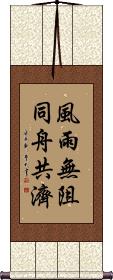
The first four characters are often translated as “Go ahead as planned regardless of the weather” or, “[Overcome] despite the rain and wind.” The last four characters can mean “Stick together” but literally means “Take the same boat [together].”
風雨無阻同舟共濟 is a Chinese proverb that suggests that you are willing (or should be willing) to overcome any adversity, and accomplish your task at hand. The second part (last four characters) is sometimes left off but this second part strongly suggests that you should overcome that adversity together.
Beautiful Clear Sky
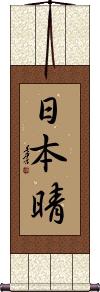
日本晴 is a Japanese Kanji title that means beautiful weather, clear and cloudless sky, or clear weather.
It's a little odd, but if you literally translated this phrase, it says, “Japanese weather,” as if that was an indication of perfect weather (maybe a little arrogant on behalf of Japan - I've experienced a monsoon there, which was unpleasant).
Hiyori
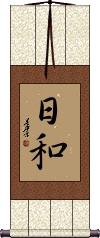
日和 is the name Hiyori in Japanese.
This can also be pronounced Biwa and can mean ideal weather when not used as a proper name.
Fix the roof before the rain; Dig the well before you are thirsty
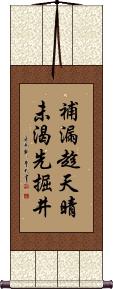
补漏趁天晴未渴先掘井 is a Chinese proverb that literally translates as: Mend the roof while the weather is fine, [and when you are] not yet thirsty, dig the well beforehand.
In simple terms, this means: Always being prepared in advance.
See Also: Have a Walking Stick at the Ready Before You Stumble
Sunny / Clear and Bright
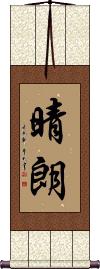
晴朗 is the Chinese, Japanese Kanji, and old Korean Hanja for sunny and cloudless.
This can also mean fair, serene, clear, and bright.
This usually refers to clear weather and sunny skies.
Hot / Heat
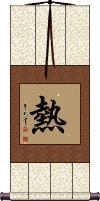
熱 means hot in Chinese, Japanese Kanji, and old Korean Hanja.
This can also be translated as: to warm up; to heat up; hot weather; fervent; fever; (high) temperature.
In some contexts, it can mean zeal, passion, enthusiasm, craze, or rage.
Wind of Change
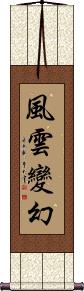
風雲變幻 is a Chinese proverb that means “wind of change” or “changeable situation.”
The first character, 風, means wind, but when combined with the second character, 風雲, you have weather, winds and clouds, nature, or the elements. Colloquially, this can refer to an unstable situation or state of affairs.
The last two characters, 變幻, mean change or fluctuate.
Overcome: Regardless of the Rain and Wind
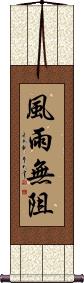
風雨無阻 is a proverb that is often translated as “Go ahead as planned regardless of the weather” or, “[Overcome] despite the rain and wind.”
This is a Chinese proverb that suggests that you are willing (or should be willing) to overcome any adversity, and accomplish your task at hand.
There is a second/optional part to this phrase that suggests that you should do this together with someone (see our other 8-character version if you want the full phrase).
One frost doesn't make winter

一次霜凍不代表整個冬天 is a proverb that means “One frost doesn't make winter.”
The deeper meaning is that a single early sign of cold weather doesn't signify the full onset or severity of winter; it's about the gradual transition of seasons, patience, and not jumping to conclusions.
It's a reminder to stay resilient, wait for the real season to arrive, and not let one small event define the whole experience, similar to how one kind word can warm you for months.
While the origin of this proverb is murky (not originally Chinese, likely a modern adaptation of “One swallow does not a summer make”), this idea aligns with the Chinese solar terms (二十四節氣), which mark subtle shifts, like the transition from "cold dew" (寒露) to "frost falls" (霜降).
Art of War: 5 Points of Analysis
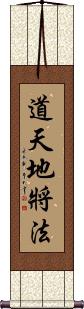
道天地將法 is a list of five key points to analyzing your situation from the first chapter of Sun Tzu's Art of War.
This reads like a 5-part military proverb. Sun Tzu says that to sharpen your skills, you must plan. To plan well, you must know your situation. Therefore, you must consider and discuss the following:
1. Philosophy and Politics: Make sure your way or your policy is agreeable among all of your troops (and the citizens of your kingdom as well). For when your soldiers believe in you and your way, they will follow you to their deaths without hesitation and will not question your orders.
2. Heaven/Sky: Consider climate / weather. This can also mean considering whether God is smiling upon you. In the modern military, this could be waiting for clear skies so that you can have air support for an amphibious landing.
3. Ground/Earth: Consider the terrain in which the battle will take place. This includes analyzing defensible positions, and exit routes, while using varying elevations to your advantage. When you plan an ambush, you must know your terrain and the best location from which to stage that ambush. This knowledge will also help you avoid being ambushed, as you will know where the likely places in which to expect an ambush from your enemy.
4. Leadership: This applies to you as the general and your lieutenants. A leader should be smart and be able to develop good strategies. Leaders should keep their word, and if they break a promise, they should punish themselves as harshly as they would punish subordinates. Leaders should be benevolent to their troops, with almost a fatherly love for them. Leaders must have the ability to make brave and fast decisions. Leaders must have steadfast principles.
5. [Military] Methods: This can also mean laws, rules, principles, models, or systems. You must have an efficient organization in place to manage both your troops and supplies. In the modern military, this would be a combination of how your unit is organized and your SOP (Standard Operating Procedure).
Notes: This is a simplistic translation and explanation. Much more is suggested in the actual text of the Art of War (Bing Fa). It would take a lot of study to master all of these aspects. In fact, these five characters can be compared to the modern military acronyms such as BAMCIS or SMEAC.
CJK notes: I have included the Japanese and Korean pronunciations but in Chinese, Korean and Japanese, this does not make a typical phrase (with subject, verb, and object) it is a list that only someone familiar with Sun Tzu’s writings would understand.
These search terms might be related to Weather:
Autumn / Fall Season
Endure and Survive
Harden
Patience / Perseverance / to Endure / Tolerant
Spring Season
Summer Season
Survive
Winter Season
You Must Endure a Harsh Winter to Appreciate the Warmth of Springtime
The following table may be helpful for those studying Chinese or Japanese...
| Title | Characters | Romaji (Romanized Japanese) | Various forms of Romanized Chinese | |
| Regardless of the Weather, We Overcome Troubles Together | 風雨無阻同舟共濟 风雨无阻同舟共济 | fēng yǔ wú zǔ tóng zhōu gòng jì feng1 yu3 wu2 zu3 tong2 zhou1 gong4 ji4 feng yu wu zu tong zhou gong ji fengyuwuzutongzhougongji | feng yü wu tsu t`ung chou kung chi feng yü wu tsu tung chou kung chi |
|
| Beautiful Clear Sky | 日本晴 | nihonbare | ||
| Hiyori | 日和 | hiyori | ||
| Fix the roof before the rain; Dig the well before you are thirsty | 補漏趁天晴未渴先掘井 补漏趁天晴未渴先掘井 | bǔ lòu chèn tiān qíng wèi kě xiān jué jǐng bu3 lou4 chen4 tian1 qing2 wei4 ke3 xian1 jue2 jing3 bu lou chen tian qing wei ke xian jue jing | pu lou ch`en t`ien ch`ing wei k`o hsien chüeh ching pu lou chen tien ching wei ko hsien chüeh ching |
|
| Sunny Clear and Bright | 晴朗 | seirou / sero seiro / sero | qíng lǎng qing2 lang3 qing lang qinglang | ch`ing lang chinglang ching lang |
| Hot Heat | 熱 热 | netsu | rè / re4 / re | je |
| Wind of Change | 風雲變幻 风云变幻 | fēng yún biàn huàn feng1 yun2 bian4 huan4 feng yun bian huan fengyunbianhuan | feng yün pien huan fengyünpienhuan |
|
| Overcome: Regardless of the Rain and Wind | 風雨無阻 风雨无阻 | fēng yǔ wú zǔ feng1 yu3 wu2 zu3 feng yu wu zu fengyuwuzu | feng yü wu tsu fengyüwutsu |
|
| One frost doesn't make winter | 一次霜凍不代表整個冬天 一次霜冻不代表整个冬天 | yī cì shuāng dòng bù dài biǎo zhěng gè dōng tiān yi1 ci4 shuang1 dong4 bu4 dai4 biao3 zheng3 ge4 dong1 tian1 yi ci shuang dong bu dai biao zheng ge dong tian | i tz`u shuang tung pu tai piao cheng ko tung t`ien i tzu shuang tung pu tai piao cheng ko tung tien |
|
| Art of War: 5 Points of Analysis | 道天地將法 道天地将法 | dou ten chi shou hou doutenchishouhou do ten chi sho ho | dào tiān dì jiàng fǎ dao4 tian1 di4 jiang4 fa3 dao tian di jiang fa daotiandijiangfa | tao t`ien ti chiang fa taotientichiangfa tao tien ti chiang fa |
| In some entries above you will see that characters have different versions above and below a line. In these cases, the characters above the line are Traditional Chinese, while the ones below are Simplified Chinese. | ||||

Successful Chinese Character and Japanese Kanji calligraphy searches within the last few hours...



