Many custom options...


And formats...



The Way of the Truth in Chinese / Japanese...
Buy a The Way of the Truth calligraphy wall scroll here!
Personalize your custom “The Way of the Truth” project by clicking the button next to your favorite “The Way of the Truth” title below...
Thirst for Truth
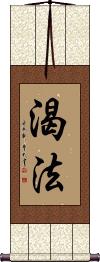
渴法 means to thirst for the truth or the Buddha-way.
渴法 is the internal need to seek the way of the truth in Buddhism.
True Religion / Buddha Truth
The way of the truth
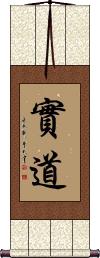
實道 is a Buddhist title that means “The true way,” “The true religion,” “The way of the truth,” or “The absolute Buddha-truth.”
Walk in the Way
The Way of Buddha Truth
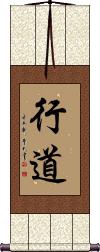
In Taoist and Buddhist contexts, 行道 means to “Walk in the Way.” In Buddhism, that further means to follow the Buddha truth. In some Buddhist sects, this can mean making a procession around a statue of the Buddha (always with the right shoulder towards the Buddha).
Outside of that context, this can mean route (when going somewhere), the way to get somewhere, etc.
In Japanese, this can be the surname or given name Yukimichi.
Seeking Truth
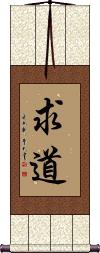
求道 means seeking for truth, or to seek (practice for, strive for) enlightenment.
求道 is used mostly in a Buddhist context, so some non-Buddhists may not recognize it.
Comparison Leads to Truth and Enlightenment
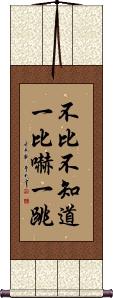
不比不知道一比吓一跳 is a Chinese proverb that literally means: [If one not does] not make comparisons, [one will] not know [the truth] when [one] compares, [one will be] greatly surprised.
This goes to the idea that if you do not know bad times, you cannot know what good times are.
...And...
You can not know light without experiencing darkness.
Another way to translate this would be: If you wish to be enlightened, you need to make comparisons and analyze every aspect (of a situation, issue, or problem).
Buddha Seeking
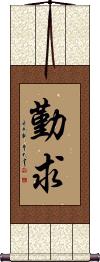
勤求 is a complex word that means inquiring in the Buddha way.
To put it another way, it is seeking something in the right way, at the right time, and diligently seeking only truth or the good.
This in-stock artwork might be what you are looking for, and ships right away...

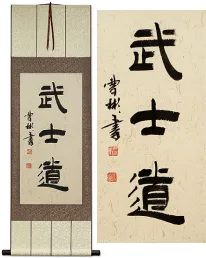
Gallery Price: $200.00
Your Price: $98.88

Gallery Price: $200.00
Your Price: $118.88
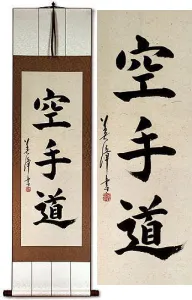
Gallery Price: $268.00
Your Price: $148.77
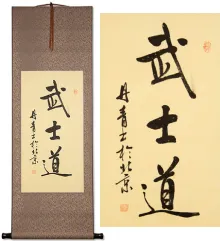
Gallery Price: $87.00
Your Price: $47.88

Gallery Price: $200.00
Your Price: $118.88

Gallery Price: $200.00
Your Price: $118.88
Not the results for The Way of the Truth that you were looking for?
Below are some entries from our dictionary that may match your The Way of the Truth search...
| Characters If shown, 2nd row is Simp. Chinese |
Pronunciation Romanization |
Simple Dictionary Definition |
法 see styles |
fǎ fa3 fa minori みのり |
More info & calligraphy: Dharma / The Law(n,n-suf) (1) law; act; principle; (n,n-suf) (2) method; (n,n-suf) (3) {gramm} mood; (n,n-suf) (4) {Buddh} dharma; law; (female given name) Minori Dharma, 達磨; 曇無 (or 曇摩); 達摩 (or 達謨) Law, truth, religion, thing, anything Buddhist. Dharma is 'that which is held fast or kept, ordinance, statute, law, usage, practice, custom'; 'duty'; 'right'; 'proper'; 'morality'; 'character'. M. W. It is used in the sense of 一切 all things, or anything small or great, visible or invisible, real or unreal, affairs, truth, principle, method, concrete things, abstract ideas, etc. Dharma is described as that which has entity and bears its own attributes. It connotes Buddhism as the perfect religion; it also has the second place in the triratna 佛法僧, and in the sense of 法身 dharmakāya it approaches the Western idea of 'spiritual'. It is also one of the six media of sensation, i. e. the thing or object in relation to mind, v. 六塵. |
道 see styles |
dào dao4 tao wataru わたる |
More info & calligraphy: Daoism / Taoism(1) (abbreviation) (See 道・みち・1) road; path; street; route; (2) (See 道・みち・5) way; set of practices; rules for conducting oneself; (3) (abbreviation) (in Japanese schools) (See 道徳教育) moral education; (4) Buddhist teachings; (5) Taoism; (6) administrative region of Japan (Hokkaido); (7) (hist) administrative region of Japan (Tokaido, Tosando, etc.); (8) province (administrative region of Korea); (9) circuit (administrative region of China); (10) (hist) province (Tang-era administrative region of China); (personal name) Wataru mārga. A way, road; the right path; principle, Truth, Reason, Logos, Cosmic energy; to lead; to say. The way of transmigration by which one arrives at a good or bad existence; any of the six gati, or paths of destiny. The way of bodhi, or enlightenment leading to nirvāṇa through spiritual stages. Essential nirvāṇa, in which absolute freedom reigns. For the eightfold noble path v. 八聖道.; The two Ways: (1) (a) 無礙道 or 無間道 The open or unhindered way, or the way of removing all obstacles or intervention, i. e. all delusion; (b) 解脫道 the way of release, by realization of truth. (2) (a) 難行道 The hard way of "works", i. e. by the six pāramitā and the disciplines. (b) 易行道 the easy way salvation, by the invocation of Amitābha. (3) (a) 有漏道 The way of reincarnation or mortality; (b) 無漏 the enlightened way of escape from the miseries of transmigration. (4) (a) 教道 The way of instruction; (b) 證道 the way of realization. (5) The two lower excretory organs. |
實道 实道 see styles |
shí dào shi2 dao4 shih tao jitsudō |
More info & calligraphy: True Religion / Buddha Truth |
法輪 法轮 see styles |
fǎ lún fa3 lun2 fa lun noriwa のりわ |
More info & calligraphy: Eternal Wheel of Life{Buddh} (See 輪宝,転法輪) the teachings of Buddha (as likened to the Dharmachakra, originally a wheel-like weapon used to destroy the evils of mankind); Buddhist doctrine; (surname) Noriwa dharmacakra, the Wheel of the Law, Buddha-truth which is able to crush all evil and all opposition, like Indra's wheel, and which rolls on from man to man, place to place, age to age. 轉法輪To turn, or roll along the Law-wheel, i.e. to preach Buddha-truth. |
渴法 see styles |
kě fǎ ke3 fa3 k`o fa ko fa katsuhō |
More info & calligraphy: Thirst for Truth |
羅漢 罗汉 see styles |
luó hàn luo2 han4 lo han rakan らかん |
More info & calligraphy: Luohan / Lohan(abbreviation) {Buddh} (See 阿羅漢・あらかん) arhat; (place-name, surname) Rakan arhan, arhat; worthy, worshipful, an arhat, the saint, or perfect man of Hīnayāna; the sixteen, eighteen, or 500 famous disciples appointed to witness to buddha-truth and save the world; v. 阿. |
行道 see styles |
xíng dào xing2 dao4 hsing tao yukimichi ゆきみち |
More info & calligraphy: Walk in the Wayroute (when going somewhere); way (to get somewhere); (surname, given name) Yukimichi To walk in the way, follow the Buddha-truth; to make procession round an image, especially of the Buddha, with the right shoulder towards it. |
道場 道场 see styles |
dào chǎng dao4 chang3 tao ch`ang tao chang michiba みちば |
More info & calligraphy: Dojo / Martial Arts Studio(1) dojo; hall used for martial arts training; (2) (abbreviation) {Buddh} (See 菩提道場) manda (place of Buddhist practice or meditation, esp. the place under the bodhi tree where Buddha attained enlightenment); (surname) Michiba Truth-plot. bodhimaṇḍala, circle, or place of enlightenment. The place where Buddha attained enlightenment. A place, or method, for attaining to Buddha-truth. An object of or place for religious offerings. A place for teaching, learning, or practising religion. |
道諦 道谛 see styles |
dào dì dao4 di4 tao ti doutai / dotai どうたい |
More info & calligraphy: Four Noble Truths: Path Leading Away From Sufferingmārga, the dogma of the path leading to the extinction of passion, the fourth of the four axioms, i.e. the eightfold noble path, v. 八聖道. |
釋迦牟尼 释迦牟尼 see styles |
shì jiā móu ní shi4 jia1 mou2 ni2 shih chia mou ni Shakamuni |
More info & calligraphy: Shakyamuni / The Buddha釋迦文 (釋迦文尼); 釋伽文 Śākyamuni, the saint of the Śākya tribe. muni is saint, holy man, sage, ascetic monk; it is: intp. as 仁 benevolent, charitable, kind, also as 寂默 one who dwells in seclusion. After '500 or 550' previous incarnations, Śākyamuni finally attained to the state of Bodhisattva, was born in the Tuṣita heaven, and descended as a white elephant, through her right side, into the womb of the immaculate Māyā, the purest woman on earth; this was on the 8th day of the 4th month; next year on the 8th day of the 2nd month he was born from her right side painlessly as she stood under a tree in the Lumbinī garden. For the subsequent miraculous events v. Eitel. also the 神通遊戲經 (Lalitavistara), the 釋迦如來成道記, etc. Simpler statements say that he was born the son of Śuddhodana, of the kṣatriya caste, ruler of Kapilavastu, and Māyā his wife; that Māyā died seven days later, leaving him to be brought up by her sister Prājapati; that in due course he was married to Yaśodharā who bore him a son, Rāhula; that in search of truth he left home, became an ascetic, severely disciplined himself, and finally at 35 years of age, under a tree, realized that the way of release from the chain of rebirth and death lay not in asceticism but in moral purity; this he explained first in his four dogmas, v. 四諦 and eightfold noble way 八正道, later amplified and developed in many sermons. He founded his community on the basis of poverty, chastity, and insight or meditation, ad it became known as Buddhism, as he became known as Buddha, the enlightened. His death was probably in or near 487 B.C., a few years before that of Confucius in 479. The sacerdotal name of his family is Gautama, said to be the original name of the whole clan, Śākya being that of his branch, v. 瞿, 喬.; his personal name was Siddhārtha, or Sarvārthasiddha, v. 悉. |
珠 see styles |
zhū zhu1 chu megumi めぐみ |
bead; pearl; CL:粒[li4],顆|颗[ke1] (1) ball; sphere; globe; orb; (2) bead (of sweat, dew, etc.); drop; droplet; (3) ball (in sports); (4) pile (of noodles, etc.); (5) bullet; (6) bulb (i.e. a light bulb); (7) lens (of glasses, etc.); (8) bead (of an abacus); (9) (slang) (abbreviation) ball (i.e. a testicle); (10) gem; jewel (esp. spherical; sometimes used figuratively); pearl; (11) female entertainer (e.g. a geisha); (12) (derogatory term) person (when commenting on their nature); character; (13) item, funds or person used as part of a plot; (n,n-suf) (14) egg; (suffix noun) (15) coin; (16) precious; beautiful; excellent; (female given name) Megumi mani. A pearl; a bead; synonym for buddha-truth. |
諦 谛 see styles |
dì di4 ti tai たい |
to examine; truth (Buddhism) {Buddh} satya; truth; (given name) Tai To judge, examine into, investigate, used in Buddhism for satya, a truth, a dogma, an axiom; applied to the āryasatyāni, the four dogmas, or noble truths, of 苦, 集, 滅, and 道 suffering, (the cause of its) assembly, the ( possibility of its cure, or) extinction, and the way (to extinction), i.e. the eightfold noble path, v. 四諦 and 八聖道. There are other categories of 諦, e.g. (2) 眞 and 俗 Reality in contrast with ordinary ideas of things; (3) 空, 假 and 中 q.v. (6) by the 勝論宗; and(8) by the 法相宗.; Two forms of statement: (a) 俗諦 saṃvṛti-satya, also called 世諦, 世俗諦, 覆俗諦, 覆諦, meaning common or ordinary statement, as if phenomena were real; (b) 眞諦 paramartha-satya, also called 第一諦, 勝義諦, meaning the correct dogma or averment of the enlightened. Another definition is 王法 and 佛法, royal law and Buddha law. |
一極 一极 see styles |
yī jí yi1 ji2 i chi ikkyoku いっきょく |
monopole; singular pole; unipole The one ultimate, or finality; ultimate enlightenment; the one final truth or way; the 一實 or Absolute. |
三毒 see styles |
sān dú san1 du2 san tu sandoku さんどく |
{Buddh} (See 煩悩・2) the three kleshas that poison the heart of man (desire, ill will and ignorance) The three poisons, also styled 三根; 三株; they are 貪 concupiscence, or wrong desire, 瞋 anger, hate, or resentment, and 痴 stupidity, ignorance, unintelligence, or unwillingness to accept Buddha-truth; these three are the source of all the passions and delusions. They represent in part the ideas of love, hate, and moral inertia. v. 智度論 19, 31. |
三生 see styles |
sān shēng san1 sheng1 san sheng mitsuo みつお |
(surname, given name) Mitsuo The three births, or reincarnations, past, present, future. Tiantai has (a) 種 planting the seed; (b) 熟 ripening; (c) 脫 liberating, stripping, or harvesting, i.e. beginning, development, and reward of bodhi, a process either gradual or instantaneous. Huayan has (a) 見聞生 a past life of seeing and hearing Buddha-truth; (b) 解行生 liberation in the present life; (c) 證入生 realization of life in Buddhahood. This is also called 三生成佛, Buddhahood in the course of three lives. There is also a definition of three rebirths as the shortest term for arhatship, sixty kalpas being the longest. There are other definitions. |
乘津 see styles |
shèng jīn sheng4 jin1 sheng chin jōshin |
The vehicle and ford to nirvana, i.e. Buddha-truth. |
二教 see styles |
èr jiào er4 jiao4 erh chiao nikyō |
Dual division of the Buddha's teaching. There are various definitions: (1) Tiantai has (a) 顯教 exoteric or public teaching to the visible audience, and (b) 密教 at the same time esoteric teaching to an audience invisible to the other assembly. (2) The 眞言 Shingon School by "exoteric" means all the Buddha's preaching, save that of the 大日經 which it counts esoteric. (3) (a) 漸教 and (b) 頓教 graduated and immediate teaching, terms with various uses, e.g. salvation by works Hīnayāna, and by faith, Mahāyāna, etc.; they are applied to the Buddha's method, to the receptivity of hearers and to the teaching itself. (4) Tiantai has (a) 界内教 and (b) 界外教 teachings relating to the 三界 or realms of mortality and teachings relating to immortal realms. (5) (a) 半字教 and (b) 滿字教 Terms used in the Nirvāṇa sūtra, meaning incomplete word, or letter, teaching and complete word teaching, i.e. partial and complete, likened to Hīnayāna and Mahāyāna. (6) (a) 捃收教 and (b) 扶律談常教 of the Nirvāṇa sūtra, (a) completing those who failed to hear the Lotus; (b) "supporting the law, while discoursing on immortality," i.e. that the keeping of the law is also necessary to salvation. (7) Tiantai's division of (a) 偏教 and (b) 圓教 the partial teaching of the 藏, 通, and schools as contrasted with the perfect teaching of the 圓 school. (8) Tiantai's division of (a) 構教 and (6) 實教 temporary and permanent, similar to the last two. (9) (a) 世間教 The ordinary teaching of a moral life here; (b) 出世間教 the teaching of Buddha-truth of other-worldly happiness in escape from mortality. (10) (a) 了義教 the Mahāyāna perfect or complete teaching, and (b) 不了義教 Hīnayāna incompleteness. (11) The Huayan division of (a) 屈曲教 indirect or uneven teaching as in the Lotus and Nirvāṇa sūtras, and (b) 平道教 direct or levelled up teaching as in the Huayan sūtra. (12) The Huayan division of (a) 化教 all the Buddha's teaching for conversion and general instruction, and (b) 制教 his rules and commandments for the control and development of his order. |
二見 二见 see styles |
èr jiàn er4 jian4 erh chien futami ふたみ |
(can be adjective with の) forked (road, river); (place-name, surname) Futami Two (wrong) views: (1) Looking on people grudgingly with regard to almsgiving and preaching the Buddha-truth. (2) (a) 有見 Holding to the real existence of (material) things; (b) 無見 holding to their entire unreality. (3) (a) 斷見 Holding to the view of total annihilation; (b) 常見 to that of permanence or immortality. |
傳法 传法 see styles |
chuán fǎ chuan2 fa3 ch`uan fa chuan fa denpou / denpo でんぽう |
to pass on doctrines from master to disciple (Buddhism) (surname) Denpou To transmit, or spread abroad the Buddha truth. |
六慧 see styles |
liù huì liu4 hui4 liu hui rokue |
The six kinds of wisdom. Each is allotted seriatim to one of the six positions 六位 q. v. (1) 聞慧 the wisdom of hearing and apprehending the truth of the middle way is associated with the 十住; (2) 思慧 of thought with the 十行; (3) 修慧 of observance with the 十廻向; (4) 無相慧 of either extreme, or the mean, with the 十地; (5) 照寂慧 of understanding of nirvana with 等覺慧; (6) 寂照慧 of making nirvana illuminate all beings associated with 佛果 Buddha-fruition. They are a 別教 Differentiated School series and all are associated with 中道 the school of the 中 or middle way. |
化誘 化诱 see styles |
huà yòu hua4 you4 hua yu keyū |
To convert and entice (into the way of truth). |
十地 see styles |
shí dì shi2 di4 shih ti juuji / juji じゅうじ |
{Buddh} dasabhumi (forty-first to fiftieth stages in the development of a bodhisattva); (place-name) Jūji daśabhūmi; v. 十住. The "ten stages" in the fifty-two sections of the development of a bodhisattva into a Buddha. After completing the十四向 he proceeds to the 十地. There are several groups. I. The ten stages common to the Three Vehicles 三乘 are: (1) 乾慧地 dry wisdom stage, i. e. unfertilized by Buddha-truth, worldly wisdom; (2) 性地 the embryo-stage of the nature of Buddha-truth, the 四善根; (3) 八人地 (八忍地), the stage of the eight patient endurances; (4) 見地 of freedom from wrong views; (5) 薄地 of freedom from the first six of the nine delusions in practice; (6) 離欲地 of freedom from the remaining three; (7) 巳辨地 complete discrimination in regard to wrong views and thoughts, the stage of an arhat; (8) 辟支佛地 pratyeka-buddhahood, only the dead ashes of the past left to sift; (9) 菩薩地 bodhisattvahood; (10) 佛地 Buddhahood. v. 智度論 78. II. 大乘菩薩十地 The ten stages of Mahāyāna bodhisattva development are: (1) 歡喜地 Pramuditā, joy at having overcome the former difficulties and now entering on the path to Buddhahood; (2) 離垢地 Vimalā, freedom from all possible defilement, the stage of purity; (3) 發光地 Prabhākarī, stage of further enlightenment; (4) 焰慧地 Arciṣmatī, of glowing wisdom; (5) 極難勝地 Sudurjayā, mastery of utmost or final difficulties; (6) 現前地 Abhimukhī, the open way of wisdom above definitions of impurity and purity; (7) 遠行地 Dūraṁgamā, proceeding afar, getting above ideas of self in order to save others; (8) 不動地 Acalā, attainment of calm unperturbedness; (9) 善慧地 Sādhumatī, of the finest discriminatory wisdom, knowing where and how to save, and possessed of the 十力 ten powers; (10) 法雲地 Dharmamegha, attaining to the fertilizing powers of the law-cloud. Each of the ten stages is connected with each of the ten pāramitās, v. 波. Each of the 四乘 or four vehicles has a division of ten. III. The 聲聞乘十地 ten Śrāvaka stages are: (1) 受三歸地 initiation as a disciple by receiving the three refuges, in the Buddha, Dharma, and Saṅgha; (2) 信地 belief, or the faith-root; (3) 信法地 belief in the four truths; (4) 内凡夫地 ordinary disciples who observe the 五停心觀, etc.; (5) 學信戒 those who pursue the 三學 three studies; (6) 八人忍地 the stage of 見道 seeing the true Way; (7) 須陀洹地 śrota-āpanna, now definitely in the stream and assured of nirvāṇa; (8) 斯陀含地 sakrdāgāmin, only one more rebirth; (9) 阿那含地 anāgāmin, no rebirth; and (10) 阿羅漢地 arhatship. IV. The ten stages of the pratyekabuddha 緣覺乘十地 are (1) perfect asceticism; (2) mastery of the twelve links of causation; (3) of the four noble truths; (4) of the deeper knowledge; (5) of the eightfold noble path; (6) of the three realms 三法界; (7) of the nirvāṇa state; (8) of the six supernatural powers; (9) arrival at the intuitive stage; (10) mastery of the remaining influence of former habits. V. 佛乘十地 The ten stages, or characteristics of a Buddha, are those of the sovereign or perfect attainment of wisdom, exposition, discrimination, māra-subjugation, suppression of evil, the six transcendent faculties, manifestation of all bodhisattva enlightenment, powers of prediction, of adaptability, of powers to reveal the bodhisattva Truth. VI. The Shingon has its own elaborate ten stages, and also a group 十地十心, see 十心; and there are other groups. |
味道 see styles |
wèi dao wei4 dao5 wei tao midō |
flavor; taste; (fig.) feeling (of ...); sense (of ...); hint (of ...); (fig.) interest; delight; (dialect) smell; odor Taste, flavour; the taste of Buddha-truth or tasting the doctrine. |
四依 see styles |
sì yī si4 yi1 ssu i shi e |
The four necessaries, or things on which the religious rely. (1) 行四依 The four of ascetic practitioners— rag clothing; begging for food; sitting under trees; purgatives and diuretics as moral and spiritual means; these are also termed 四聖種. (2) 法四依 The four of the dharma: i. e. the truth, which is eternal, rather than man, even its propagator; the sutras of perfect meaning i. e. of the 道實相 the truth of the 'middle' way; the meaning, or spirit, not the letter; wisdom 智, i.e. Buddha-wisdom rather than mere knowledge 識. There are other groups. Cf. 四事. |
四等 see styles |
sì děng si4 deng3 ssu teng shitō |
The four virtues which a Buddha out of his infinite heart manifests equally to all; also called 四無量 q. w. They are: 慈悲喜捨 maitrī, karuṇā, muditā, upekṣā, i. e. kindness, pity, joy and indifference, or 護 protection. Another group is 字語法身, i. e. 字 that all Buddhas have the same title or titles; 語 speak the same language; 法 proclaim the same truth; and 身 have each the threefold body, or trikāya. A third group is 諸法 all things are equally included in the bhūtatathatā; 發心 the mind-nature being universal, its field of action is universal; 道等 the way or method is also universal; therefore 慈悲 the mercy (of the Buddhas) is universal for all. |
圓宗 圆宗 see styles |
yuán zōng yuan2 zong1 yüan tsung enshū |
The sect of the complete or final Buddha-truth, i.e. Tiantai; cf. 圓教. |
圓悟 圆悟 see styles |
yuán wù yuan2 wu4 yüan wu engo えんご |
(personal name) Engo Completely to apprehend the truth. In Tiantai, the complete apprehension at the same time of noumenon, phenomenon, and the middle way. |
天子 see styles |
tiān zǐ tian1 zi3 t`ien tzu tien tzu yoshiko よしこ |
the (rightful) emperor; "Son of Heaven" (traditional English translation) (1) emperor; ruler (with a heavenly mandate); (2) heavenly being; celestial being; (female given name) Yoshiko A son of Heaven. The Emperor-Princes, i. e. those who in previous incarnations have kept the middle and lower grades of the ten good qualities 十善 and, in consequence, are born here as princes. It is the title of one of the four mara, who is 天主 or lord of the sixth heaven of desire; he is also known as 天子魔 (天子業魔) and with his following opposes the Buddha-truth. |
天魔 see styles |
tiān mó tian1 mo2 t`ien mo tien mo tenma てんま |
demonic; devil {Buddh} (See 四魔) demon of the sixth heaven in the realm of desire who tries to prevent people from doing good deva-māra, 魔羅 one of the four Māras, who dwells in the sixth heaven. Paranirmita-vaśa-vartin, at the top of the Kāmadhātu, with his innumerable host, whence he constantly obstructs the Buddha-truth and its followers. He is also styled 殺者 the slayer; also 波旬 explained by 惡愛 sinful love or desire, as he sends his daughters to seduce the saints; also 波卑 (波卑夜) Papiyan, the evil one. He is the special Māra of the Śākyamuni period; other Buddhas suffer from other Māras; v. 魔. |
実は see styles |
jitsuha じつは |
(exp,adv) as a matter of fact; by the way; to tell you the truth; to be honest; frankly |
Click here for more The Way of the Truth results from our dictionary
The following table may be helpful for those studying Chinese or Japanese...
| Title | Characters | Romaji (Romanized Japanese) | Various forms of Romanized Chinese | |
| Thirst for Truth | 渴法 | katsuhō | kě fǎ / ke3 fa3 / ke fa / kefa | k`o fa / kofa / ko fa |
| True Religion Buddha Truth | 實道 实道 | jitsu dou / jitsudou / jitsu do | shí dào / shi2 dao4 / shi dao / shidao | shih tao / shihtao |
| Walk in the Way | 行道 | yukimichi | xíng dào / xing2 dao4 / xing dao / xingdao | hsing tao / hsingtao |
| Seeking Truth | 求道 | gu dou / gudou / gu do | qiú dào / qiu2 dao4 / qiu dao / qiudao | ch`iu tao / chiutao / chiu tao |
| Comparison Leads to Truth and Enlightenment | 不比不知道一比嚇一跳 不比不知道一比吓一跳 | bù bǐ bù zhī dào yī bǐ xià yì tiào bu4 bi3 bu4 zhi1 dao4 yi1 bi3 xia4 yi4 tiao4 bu bi bu zhi dao yi bi xia yi tiao | pu pi pu chih tao i pi hsia i t`iao pu pi pu chih tao i pi hsia i tiao |
|
| Buddha Seeking | 勤求 | gongu | qín qiú / qin2 qiu2 / qin qiu / qinqiu | ch`in ch`iu / chinchiu / chin chiu |
| In some entries above you will see that characters have different versions above and below a line. In these cases, the characters above the line are Traditional Chinese, while the ones below are Simplified Chinese. | ||||

Successful Chinese Character and Japanese Kanji calligraphy searches within the last few hours...



