Many custom options...


And formats...



Shen in Chinese / Japanese...
Buy a Shen calligraphy wall scroll here!
Personalize your custom “Shen” project by clicking the button next to your favorite “Shen” title below...
1. Shen Long
2. Shen / Shum
3. Three Treasures of Chinese Medicine
4. Betelgeuse
6. Body
8. Shim
9. Avatar
10. Body and Mind
11. Charm / Grace
12. Deities / Gods
13. Dragon Spirit
15. Goddess
16. Goddess of Beauty / Beautiful Spirit
17. Grim Reaper / God of Death
18. Intense / Serious / Deep / Profound
19. Kishen
21. Nekogami
23. Ocean
25. Shena
26. Shenai
27. Sacrifice / Devotion / Dedication
28. Shinto
30. Spirit
32. God of Thunder
33. Shenk
34. Schenk
35. Schenck
36. Divine Hall / Sacred Temple
37. Apollo
38. Goshin-Do
39. Jin Shin Jyutsu
41. Spirituality
42. Valkyrie
43. Sessions
44. Nations
45. Child of God
46. The Spirit of Dragon and Tiger
47. The Spirit of the Dragon Horse
48. Esprit de Corps / Team Spirit
49. Far-Sighted in Deep Thought
50. Free Spirit
51. God is Good
53. Intuitive Wisdom / Inner Light
54. Love and Honor
57. Spiritual Strength / Strength of Spirit
59. Under the Protection of the Dragon Saint
60. Warrior Soul / Heroic Spirit
62. Wellness
65. Mind Body Spirit
67. Sun Goddess
68. Example is Better than Precept
69. God in the Glorious Center of Heaven
72. The Spirit of the Dragon Horse and Power of a Tiger
73. Remember What Is Important To You
76. Galatians 5:25
77. John 3:16
78. Taekwondo Tenets / Spirit of Taekwon-do
79. Sun Tzu: Regard Your Soldiers as Children
80. John 3:16
81. Daodejing / Tao Te Ching - Chapter 9
82. Joshua 1:9
Shen Long
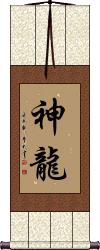
神龍 or Shen Long literally means “god dragon” or “divine dragon.”
神龍 is a spiritual dragon from Chinese mythology that controls wind, storms, clouds, and rain. Historically, farmers in China avoid offending this dragon, as it could result in a drought or flooding of their fields.
Shen Long has blue/azure scales and appears on the beautiful robes of some Chinese emperors.
Sometimes romanized as Shen Lung and sometimes written as 神竜 in Japan with the pronunciation of Shinryū or Shenron. It can also be a given name in Japan.
Shen / Shum
Surname
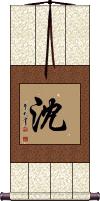
This is a Chinese surname that romanizes as Shen from Mandarin or Shum from Cantonese.
In Japanese, it can be the surnames Chin, Chimu, Sen, Sun, Shin, or Shimu.
The meaning is to sink or heavy.
This 沈 character is a variant of 沉.
Three Treasures of Chinese Medicine
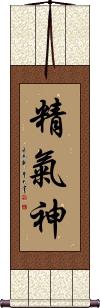
精, 氣, 神 are the characters jing, qi, and shen.
As a set, these three characters are known in English as the treasures of traditional Chinese medicine, the treasures of Qi Gong, or the three treasures of Taoism / Daoism.
Sometimes this set is titled 三寶 (sānbǎo) or “three treasures,” but here, we're writing each treasure out.
Here's how these characters are perceived in this context...
Jing: nutritive essence; refined; perfected; pure
Qi: vitality; energy; force; breath; vigor
Shen: spirit; soul; mind; being
To keep it simple, you can use “essence, vitality, and spirit” to define these.
Betelgeuse
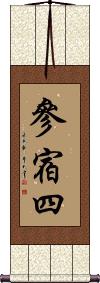
參宿四 is the title for Betelgeuse (star in the constellation Orion) in Chinese.
Also known as “α Orionis” (Alpha Orionis), Alpha Ori, or in Japan the Heike-boshi or Heike-star.
Note: 参宿 (Shēn Xiù) is the name given by ancient Chinese astronomers for a constellation of three stars (the three naked-eye visible belt stars of Orion). Therefore, 參宿四 means the Fourth Star of the constellation of Three Stars (which sounds like a joke). As telescopes got better, it should be noted that there are actually 10 stars in the constellation.
Shenzhou Spacecraft
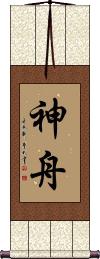
神舟 is the name of the Chinese spacecraft “Shenzhou.” The name means “divine craft” or “saintly vessel.”
The name is a play on words in Chinese, as there is an alternate name for China that is pronounced “Shenzhou” but means “Divine land” or “Land of the Gods” (just the second character is different).
The first flight of a Shenzhou spacecraft was in 1999, with more missions following. The next is planned for 2008, and will include China's first “spacewalk.” The tenth Shenzhou mission is planned for 2015, when China has promised its people that a Chinese astronaut will walk on the moon (or at least orbit the moon - there are two ways to interpret the announcement made in 2005).
For those of you concerned, this word is pronounced more like “Shen Joe” (with a slightly soft “J”) than the Romanization would suggest.
2016 Update: I wrote the above in 2006. Imagine that, 10 years later, none of the promises came true.
Body
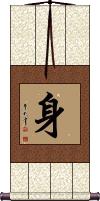
身 is how to write “body” as in your human body, in Chinese, Japanese Kanji, and Korean Hanja.
Depending on the context and certain language issues, this character can also mean: main part, hull, oneself, somebody, person, I, me, sword, lifetime, one's station in life, etc.
While this written word is universal in three languages, it still makes a rather odd selection for a wall scroll. Also, they tend to use 体 (karada) in Japanese for the body (depending on context).
See Also: Karada
Spirit / Spiritual Essence
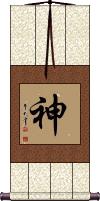
神 is the simplest way to write spirit in Chinese, Japanese Kanji, and old Korean.
This single character alone will conjure up ideas of the spiritual world. 神 can also be translated as “vital awareness” as in the fact that one must know they exist to exist (I think, therefore, I am).
Other translations include:
God, deity, mysterious, divine essence, lively, spiritual being, divinity, supernatural, soul, mind, nerves, and energy. In some extended context, it can mean genius or unusual.
Japanese romanizations vary a lot when this character is combined into other words. However, shin is the original pronunciation taken from Chinese into Japanese. You'll also see it romanized as kami, gami, jin, and a few others, depending on context.
Shim
沈 is the name Shim in Chinese (Mandarin).
Avatar
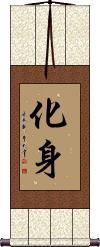
化身 is a way to say avatar in Chinese characters, Korean Hanja, and Japanese Kanji.
This is the original Buddhist idea of an avatar (not the movie). This can also mean: incarnation; reincarnation; embodiment; personification; impersonation.
化身 is the Chinese word used for the original Sanskrit, nirmāṇakāya. Alternates for nirmāṇakāya include 應身, 應化身, or 變化身. In the context of Buddhism, this is a Buddha's metamorphosic body, which has the power to assume any shape to propagate the Truth. This title, 化身, is used for the appearance of a Buddha's many forms.
Body and Mind
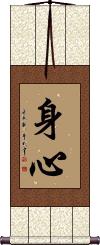
身心 means “body and mind” or “mental and physical” in Chinese and Japanese.
In the Buddhist context, body and mind encompass the five elements (skandha) of a sentient being.
The body is the physical material (rūpa) of life. The mind embraces the other four skandhas, which are consciousness, perception, action, and knowledge.
Charm / Grace
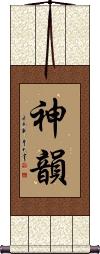
神韻 is the Chinese and Japanese word for charm or grace (in poetry or art) or exceptional artistry.
Deities / Gods
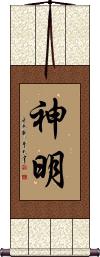
In Chinese, Japanese Kanji, and old Korean Hanja, 神明 title refers to deities or gods (can be the singular or plural form).
Depending on the context, this could also mean “divine.”
Specifically, in Japanese, this can refer to Amaterasu (as an enshrined deity).
In some Buddhist contexts, this also means deity but can also refer to “intelligence” (as in all-knowing).
Dragon Spirit
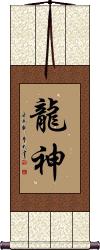
龍神 is a Chinese, Japanese Kanji, and old Korean Hanja title that can mean “dragon god,” “dragon king,” or “dragon spirit.”
In the context of Buddhism, this is one of eight kinds of spiritual beings found in Mahāyāna texts.
Enigma / Mysterious
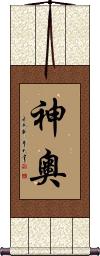
神奧 is a Chinese word that means mysterious or enigma.
This version of enigma or mystery is somewhat spiritual - as if the soul is the puzzle to be solved.
Goddess
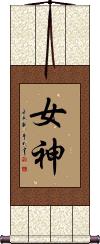
女神 is Goddess from English or Dea from Latin in both Chinese and Japanese.
The literal meaning:
女 = Female or woman.
神 = Spirit, deity, soul, or saint.
Goddess of Beauty / Beautiful Spirit
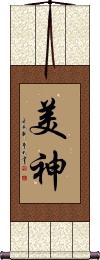
In Chinese, 美神 means Goddess of Beauty.
The first character means beauty or beautiful.
The second character means spirit (can also mean god, goddess, or soul).
Some will use this as a short way to say, “Beautiful Spirit.”
This has a similar meaning in Japanese but is used more often as a female given name in Japan. As a Japanese given name, it can be pronounced Mikami, Mikan, or Binasu.
Grim Reaper / God of Death
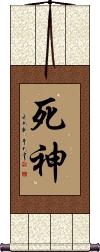
死神 is the title of the mythological figure (often called the Grim Reaper in western culture) in charge of taking the souls of those who die.
This title can be translated directly as “god of death” or “spirit of death.” The first character literally means “death,” and the second means “spirit” or “god.”
死神 is a very strange title for a calligraphy wall scroll. I'm not even sure if my calligraphers will write it, as it has some bad superstitious feelings attached to it.
Intense / Serious / Deep / Profound
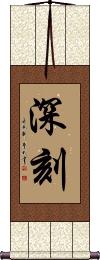
深刻 is a Chinese word that is the form of intense that describes a person who is deep, serious, and a true thinker.
If you find yourself contemplating the world and coming up with profound ideas, this might be the word for you. In some contexts (especially Korean), it can mean seriousness, gravity, or acuteness.
In Japanese, this can mean “serious problem” or can be a rare given name, Misa. You should not use this if your audience is Japanese.
Kishen
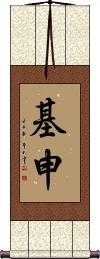
基申 is the name Kishen in Chinese (Mandarin).
Mysterious / Mystery
Nekogami
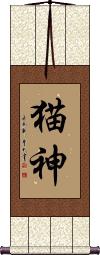
貓神 is the title Nekogami or “Cat God” in Japanese.
This can also be pronounced “neko shin” or “neko kami.”
猫神 is the modern Japanese version, before WWII, this would have been written 貓神 (just the first Kanji varies).
This also makes sense in Chinese, though the traditional version, 貓神, would be better for Chinese calligraphy.
Neptune / Poseidon
Sea God
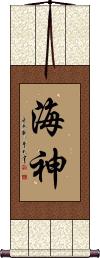
海神 is a Chinese and Japanese title that means “Emperor of the Sea” or “God of the Sea.”
This would be the Chinese and Japanese equivalent of Neptune or Poseidon.
In Japanese, this can also be the given names Watatsumi or Kaijin and the surname Umikami.
Ocean
Surname

奧申 is the name Ocean in Chinese (Mandarin).
This sounds like Ocean, but does not mean ocean. It's a transliteration, not a translation.
Prudence / Considerate
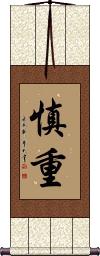
慎重 conveys the idea of being considerate, having prudence, and being thoughtful when taking action.
慎重 can also mean cautious, careful, discreet, deliberate, or taking all things into consideration.
The general meaning is shared across languages. However, in Chinese, this is more about prudence, while in Japanese, this is more about being considerate.
Chinese Catholics use this word to represent “prudence” in the list of the Seven Heavenly Virtues.

 Note: Depending on your choice of Chinese or Japanese calligraphers, the first Kanji will vary slightly.
It is technically the same character. Japanese tend to leave a space between the upper and lower portions of this particular Kanji. See sample images to the right.
Note: Depending on your choice of Chinese or Japanese calligraphers, the first Kanji will vary slightly.
It is technically the same character. Japanese tend to leave a space between the upper and lower portions of this particular Kanji. See sample images to the right.
See Also: Moderation | Modesty | Chastity
Shena
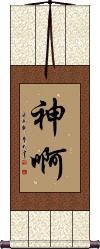
神啊 is the name Shena in Chinese (Mandarin).
Shenai
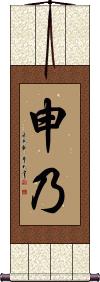
申乃 is the name Shenai in Chinese (Mandarin).
Sacrifice / Devotion / Dedication
(complete bodily devotion)
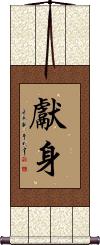
獻身 is used to describe being so devoted to something that you will make sacrifices for that goal/thing/person.
You can also translate this word as any of the following:
Sacrifice one's life for...
To dedicate oneself to...
Self-devotion
Dedication
Devote to...
Self-sacrifice
Giving your whole body to...
This can be a dedication to or for someone but is often used as a dedication or making sacrifices for your country, public service, or a cause. For instance, an Olympic athlete makes great sacrifices to train in his/her sport for their country and compatriots.

 While the form shown to the upper-left is considered an ancient Japanese version, in modern Japan, they use the simplified version of the first Kanji (shown to the right). Click on the Kanji at the right instead of the button above if you want this modern Japanese version.
If you are looking for a more religious meaning of devotion, see Faith.
See Also: Confidence | Dedication
Shinto
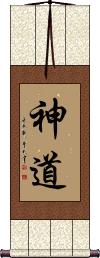
神道 is how to write Shinto, a Japanese national religion.
The meaning is “Way of the Gods.”
This term also has meaning for Chinese Buddhists, where it means the spirit world of devas, asuras, and pretas. It can also be understood as doctrines concerning the soul.
Soldier of the Gods
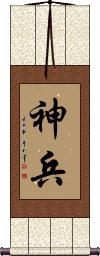
神兵 is a Japanese, Chinese, and Korean title that means “soldier dispatched by a god,” or “soldier under the protection of the gods.”
神兵 is used more in Japanese (especially in animation) than the other languages.
Spirit
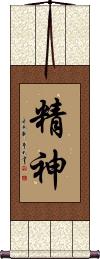
精神 is the kind of spirit you have if you perform well in sports or competitions. It is the idea of having a good attitude and putting your all into something - so much so that others can see or feel your spirit. It is the essence of your being that can only be subjectively described because there are no words that can fully explain what “spirit” really is.
For your information:
My Japanese dictionary further tries to explain this word by comparing it to mind, soul, heart, or intention.
My Chinese dictionary compares these characters to meanings like vigor, vitality, drive, and mentality.
My Korean dictionary defines this as mind, spirit, and soul.
Tension and Relaxation
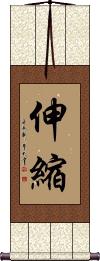
伸縮 can mean, to lengthen and shorten; flexible; adjustable; retractable; extensible; expansion and contraction; elasticity; flexibility; elastic; stretchy.
伸縮 is often romanized from Korean as “Shin Chook,” which is associated with one of the 8 key concepts of Tang Soo Do.
God of Thunder
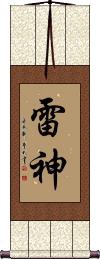
雷神 is how to write the Japanese “Thunder God.” They don't really have separate words for thunder and lightning in Japanese, so this is also the “Lightning God.”
雷神 makes sense in Chinese (though not a common title).
This is also the origin of the English name Raiden.
Shenk

申克 is the name Shenk in Chinese (Mandarin).
Schenk
申克 is the name Schenk in Chinese (Mandarin).
Schenck
申克 is the name Schenck in Chinese (Mandarin).
Divine Hall / Sacred Temple

神殿 means “Divine Hall” or “Sacred Temple.”
Other meanings include “Temple of the Gods” or “Sacred Shrine Hall.”
In the simplest terms, it means temple, shrine, or sanctuary. This can also be a Japanese surname when pronounced as Kodono.
This title has strong religious and spiritual resonance. Commonly seen in Shinto-themed decor, dojo walls, and meditation rooms.
Apollo
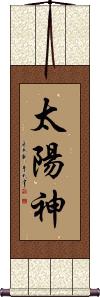
太陽神 means “Sun God” in Chinese, Japanese, and Korean.
It's used in Chinese to mean the Greek God Apollo. This can also be used in Chinese to refer to Nasa's Apollo missions to the moon.
Goshin-Do
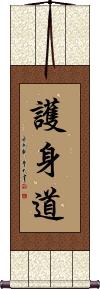
護身道 is the title for the school of martial arts known as Goshin-Do.
The literal translation of these three characters is something like “self-protection way” or “protection of the body way.”
To put this in context, the term 護身 is often used for charms or amulets that are meant to protect the wearer from harm.
Note: This phrase is pronounceable in Chinese, but it not commonly known in China.
Jin Shin Jyutsu
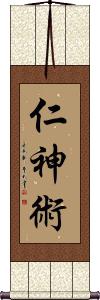
仁神術 is Jin Shin Jyutsu or Jin Shin Jutsu.
This is a practice of calming the mind and clearing the flow of Qi energy in the body. Jin Shin Jyutsu has some commonality with the practice of Reiki.
A good translation of 仁神術 would be “Benevolent Spirit Method.”
We can break that down into all of the possible meanings:
仁 = benevolence (esp. as a virtue of Confucianism), consideration, compassion, humanity, charity, kindness, or virtue.
神 = deity, soul, spirit, mysterious, psyche, god, divinity, spiritual powers, deva, divine, spiritual, or supernatural.
術 = way, method, means, art, trick, or plan. The correct romaji for this 術 Kanji should be “jutsu.” However, in martial arts, this is often written “jitsu” but in this case, “jyutsu” became common.
Scarlet / Crimson
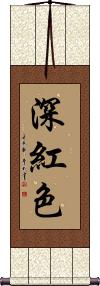
深紅色 is a Japanese and Chinese title for scarlet or crimson-red color.
Spirituality
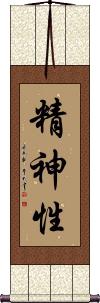
精神性 is the Chinese and Japanese Kanji for spirituality or spiritual nature.
This can also refer to someone's mental state or psychogenic essence.
Valkyrie
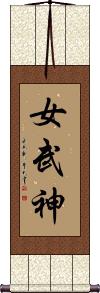
女武神 is the Chinese title for Valkyrie, the female spirit who determines which Soldiers live and die in battle.
Sessions

塞申斯 is the name Sessions in Chinese (Mandarin).
Nations

內申斯 is the name Nations in Chinese (Mandarin).
Child of God
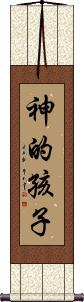
神的孩子 is “Child of God” in Chinese.
The Spirit of Dragon and Tiger
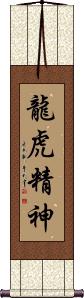
龍虎精神 means the spirit of the dragon and tiger.
It speaks to the vitality and vigor that is the nature of these two creatures.
Beyond “spirit,” the last two characters can also mean mind, soul, or heart. Therefore, you can also say this means “Heart of the Dragon and Tiger,” etc.
龍虎精神 is often titled “Ryukoseishin” in many Japanese martial arts.
The Spirit of the Dragon Horse
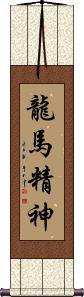
龍馬精神 is an old proverb that is used to wish someone good health and success combined as a great compliment.
The meaning is “The vigor and spirit of the legendary dragon-horse.” These four characters are often accompanied by four more which mean “...and the power and prestige of the tiger.” Here we are just offering the first part which is considered the short version.
By giving a wall scroll like this to someone, you were either wishing or telling them that they have an amazing quality. There is also a suggestion of good health - at least anyone with the vigor of a dragon horse would seem to also be in good health.
Note: In Japanese, this would be read as the spirit of 坂本龍馬 (Sakamoto_Ryōma), a beloved rebel who help abolish the old Japanese feudal system. This can be confusing, so I am declaring this proverb to be Chinese only.
Esprit de Corps / Team Spirit
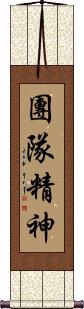
團隊精神 is a Chinese word that can mean “esprit de corps” or “team spirit.”
Other translations include collectivism, teamwork, or solidarity.
Far-Sighted in Deep Thought
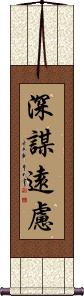
深謀遠慮 is a Chinese, Japanese, and Korean proverb that means “deep plans and distant thoughts,” “to plan far ahead,” or “far sight and deep design.”
Free Spirit
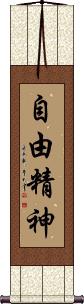
The first two characters mean freedom or liberty.
The second two characters mean spirit, heart, mind, or soul.
Together, 自由精神 is a title that is very similar to the English term “free spirit.”
See Also: Freedom | Independence
God is Good
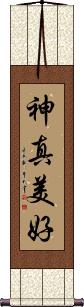
神真美好 means “God is good,” in Chinese.
You can also translate this as “God is really good” or “God is so good.”
The last two characters are a version of good that suggests very strong goodness. The characters read, “beautifully good.”
Independent Spirit
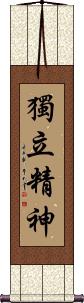
獨立精神 means independent spirit in Chinese.
The first two characters mean independent, independence, or to stand alone.
The last two characters mean spirit, spiritual, vigor, vitality, drive, mind, consciousness, thought, essence, heart, or soul.
With this information, you can make your translation combination such as “independent heart,” “stand-alone spirit,” or more creatively, “the drive to stand alone” in English. There are a lot of ways to interpret 獨立精神.
Intuitive Wisdom / Inner Light
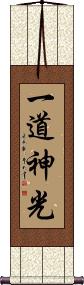
一道神光 is a Buddhist term that means “inner light,” or “intuitive wisdom.”
This actually reads, “[the] one path/way [of] spiritual light.” It implies that your spirit knows the way, and will light the path for you.
Love and Honor
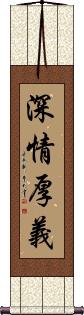
深情厚義 means to love and honor.
This is more or less the kind of thing you'd find in marriage vows.
The first two characters suggest deep love or deep emotions, passion, and feelings.
The last two characters mean generous justice or thick honor (the third character is an adjective that means generous or thick). It just means that you will honor your lover's wishes and treat them justly and righteously (fairly).
This is the longer four-character version, there is also a short and sweet two character version.
See Also: Love and Honor
Pledge of Lifelong Love
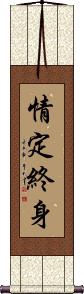
情定終身 is a pledge of eternal love in Chinese.
This can also be a colloquial way to refer to the act of exchanging marriage vows.
If you and your mate want to express how committed you are to your life-long love, this will be a great piece of calligraphy for your wall. Also, a nice phrase to celebrate an anniversary.
Spiritual Soul Mates
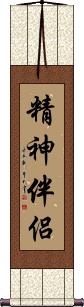
精神伴侶 means “Spiritual Soul Mates.” The first two characters mean “spiritual” or “soul.” The second two characters mean “mates,” “companions,” or “partners.”
This is more about the spiritual connection between partners rather than a “fate-brought-us-together” kind of soul mates.
Both halves of this title have meaning in Japanese but I've not yet confirmed that this is a commonly used title in Japan.
Spiritual Strength / Strength of Spirit
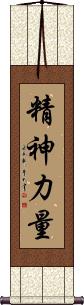
精神力量 is a title that speaks of one's soul or spirit and the capacity or strength that soul possesses.
The first two characters mean mind, heart, spirit, and/or soul.
The last two characters mean strength, capacity, or ability.
Note: Separately, these are two words in Japanese and can be pronounced, but this does not make a natural title in Japanese (best if your audience is Chinese).
Tranquil Midnight
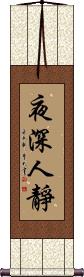
夜深人靜 literally means “Night Deep/Dark People Quiet/Tranquil.”
In more natural English, some translate this as “late night, all is quiet,” “tranquil midnight,” or “in the dead of night” (implying the dead quiet of midnight).
Under the Protection of the Dragon Saint
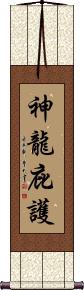
神龍庇護 is not the most common thing to say in Chinese, but it is grammatically correct and a cool title.
The first character means “supernatural or saintly.” The second is “dragon.” The last two mean protection. You could also translate this as something like “Protected by the Dragon God” or more closely “Holy Dragon.”
Warrior Soul / Heroic Spirit
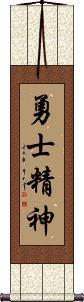
勇士精神 can be translated as the warrior's spirit or warrior's soul. The first two characters can be translated as “warrior” or literally “brave soldier/man,” although some will translate this word as “hero.” Therefore, this is also how to say “heroic spirit.”
The second two characters mean vigor, vitality, drive, spirit, mind, heart, mental essence, and psychological component. Basically “your soul.”
We have two versions of this phrase. The only difference is the first two and last two characters are swapped. The version here suggests that you admire or like the idea of the spirit of a warrior. The other version suggests that you are the warrior or hero.
Soul of a Warrior
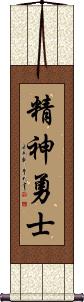
精神勇士 can be translated as the spirit or soul of a warrior. The first two characters can be translated as vigor, vitality, drive, spirit, mind, heart, mental essence, and psychological component. Basically, “your soul.”
The second two characters mean “warrior” or literally “brave soldier/man,” although some will translate this word as “hero.” Therefore, this is also how to say “soul of a hero.”
Note: This title is best for Chinese and old Korean. It does make sense in Japanese but is not a common or natural Kanji combination in Japanese.
We have two versions of this phrase. The only difference is the first two and last two characters are swapped. The version here suggests that you are the warrior or hero. The other version suggests that you admire or like the idea of the spirit of a warrior.
Wellness
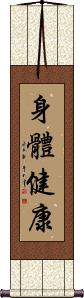
身體健康 is how to express “wellness” in Chinese. The meaning is not much different than the idea of “good health.” The first two characters alone are often translated as “health.” Some will also translate this title as “physical health.”
If you want to fill your room with a feeling of wellness, this is the wall scroll for you.
This is also the ancient way to express wellness in Japanese Kanji and old Korean Hanja. The modern Japanese form is 身体健康 (the only difference is the second Kanji). Let me know if you need your calligraphy written in modern Japanese.
Beautiful Dreamer
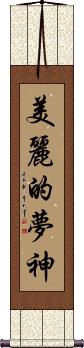
美麗的夢神 is the Chinese title for the song Beautiful Dreamer.
It translates as Beautiful Dream Saint.
Fruit of the Spirit
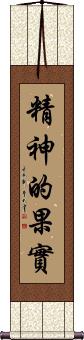
精神的果實 means “Fruit of the Spirit” in Chinese.
Mind Body Spirit
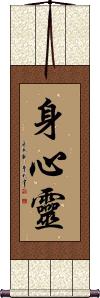
身心靈 is probably the best way to express the idea of “Body, Mind, and Spirit” in Chinese and old Korean Hanja. We are actually using the word “heart” here because, for thousands of years, the heart was thought to be the place where your thoughts, feelings, and emotions came from. We do something similar in the west when we say “warm-hearted” or “I love you with all of my heart.” In this context, heart = mind in Asian language and culture.
The very literal translation of these three characters is “body, heart & spirit,” which could also be interpreted as “body, mind & soul.”
We have arranged these characters in this order because it simply “feels” like the proper order in the Chinese language. Word lists like this are not so common for calligraphy artwork, so we must be careful to put them in the most natural order. It should be noted that this is not a common title in Asia, nor is it considered an actual phrase (as it lacks a clear subject, verb, and object).
 In Japanese Kanji, they use an alternate form of the character for soul or spirit. If you want this using the Japanese alternate, please click on the Kanji shown to the right instead of the button above.
Japanese disclaimer: This is not a natural phrase/list in Japanese. While not totally-natural in Chinese, this word list is best if your audience is Chinese.
Spirit of Taekwondo
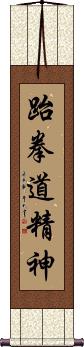
跆拳道精神 means “Taekwondo Spirit” or “The Spirit of Taekwondo.”
跆拳道精神 is the title of General Choi's calligraphy often referred to as “The Tenets of Taekwon-do.”
Sun Goddess
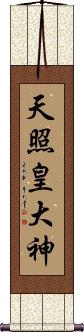
天照皇大神 is the title for Sun Goddess or Amaterasu Oomikami in Japanese.
Rare Chinese Buddhists/Shitoists may be familiar with this (so I have included the Chinese pronunciation above) however, this should generally be considered a specifically-Japanese title.
Besides Amaterasuoomikami, this can also be pronounced/romanized as Tenshoukoudaijin. There are several similar ways to write Sun Goddess in Japanese, so don't be surprised if you see different forms on the web, etc.
Example is Better than Precept
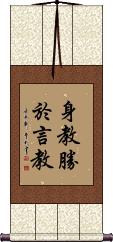
Tell somebody how to do something and they might get it.
Show them how to do it, and they will master it in no time.
身教勝於言教 can also be translated as “Behavior teaches more than words.”
See Also: Wisdom
God in the Glorious Center of Heaven
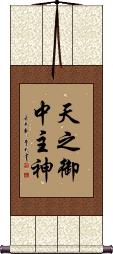
天之御中主神 is a phrase submitted by a customer.
I do not have information on the origin of this phrase.
Sanctified by God
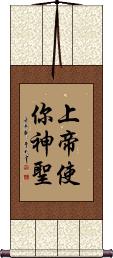
上帝使你神聖 means “Sanctified by God,” in Chinese.
This was added at the request of a customer. This may be more appropriate for a priest or reverend than a layman. But that depends on how your religion sees the order of things.
If you directly translate, you get something like, “God made you Holy.”
Here's the character breakdown:
上帝 = God
使 = Makes; Made; Let
你 = You
神聖 = Sacred; Holy; Sanctification; Divine; Hallow; Holiness
Nothing is Impossible
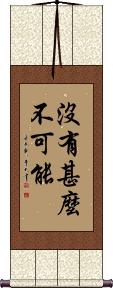
没有什么不可能 is a Chinese phrase that means “Nothing is impossible.”
The Spirit of the Dragon Horse and Power of a Tiger
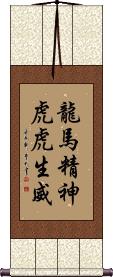
龍馬精神虎虎生威 is an old proverb that is used to wish someone great health and success combined as a great compliment.
The meaning is “The vigor and spirit of the legendary dragon-horse and the power and prestige of the tiger.”
By giving a wall scroll like this to someone, you were either wishing or telling them that they have these qualities. There is also a suggestion of good health - at least anyone with the vigor of a dragon horse would seem to also be in good health.
Remember What Is Important To You
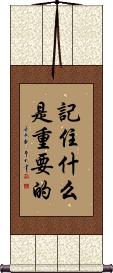
记住什么是重要的 means “Remember What Is Important To You” in Mandarin Chinese.
Strong Mind Strong Body
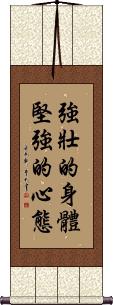
強壯的身體堅強的心態 is the Chinese phrase for “Strong Mind, Strong Body,” however, the character order is actually “Strong Body, Strong Mind,” as that's the more natural word order in Chinese.
Seven Heavenly Virtues
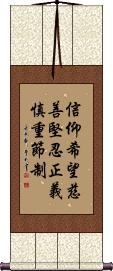
信仰希望慈善堅忍正義慎重節制 is a list in Chinese and Japanese Kanji of an interpretation of the Seven Heavenly Virtues.
1. Faith is belief in God, and the right virtues.
2. Hope is taking a positive future view that good will prevail.
3. Charity is a concern for, and active helping of, others.
4. Fortitude is never giving up.
5. Justice is being fair and equitable with others.
6. Prudence is care of and moderation with money.
7. Temperance is moderation of needed things and abstinence from things that are not needed.
The full list is here. 信仰希望慈善堅忍正義慎重節制 is a word list, not a common phrase. While all Chinese and Japanese people will recognize the words in the list, they may not understand what the list is about (unless they are familiar with the Seven Heavenly Virtues).
don’t get this as a tattoo or anything like that without first consulting a native translator in the target language. These are fine for a wall scroll but a long discussion is needed before you commit to this for a lifetime inking commitment.
Galatians 5:25
If we live in the Spirit, let us also walk in the Spirit
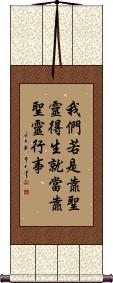
我們若是靠聖靈得生就當靠聖靈行事 is the translation of Galatians 5:25 into Mandarin Chinese via the Chinese Union Bible.
KJV: If we live in the Spirit, let us also walk in the Spirit.
NIV: Since we live by the Spirit, let us keep in step with the Spirit.
The annotation of this Chinese translation:
1.我们 wǒ men - we / us / ourselves
2.若是 ruò shì - if
3.靠 kào - depend upon / lean on / near / by / against / to support
4.圣灵 shèng líng - Holy Ghost
5.得 děi - to have to / must / ought to / degree or possibility
6.生就 shēng jiù - born one way or another (nervous, suspicious, etc.)
7.当 dàng - suitable / adequate / fitting / proper
8.靠 kào - depend upon / lean on / near / by / against / to support
9.圣灵 shèng líng - Holy Ghost
10.行事 xíng shì - how one does things / how one runs things (in this case, it suggests, “to walk in step with”)
John 3:16 (first half)
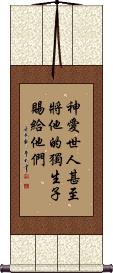
神愛世人甚至將他的獨生子賜給他們 is the first half of John 3:16 in Chinese.
It reads roughly, “For God so loved the world, that he gave his only begotten Son.”
This came directly from the Chinese Union Bible first printed in 1919.
Taekwondo Tenets / Spirit of Taekwon-do
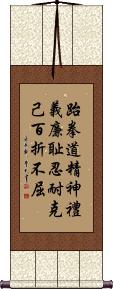
跆拳道精神禮義廉耻忍耐克己百折不屈 is General Choi's writing that is often called “The Tenets of Taekwon-do.”
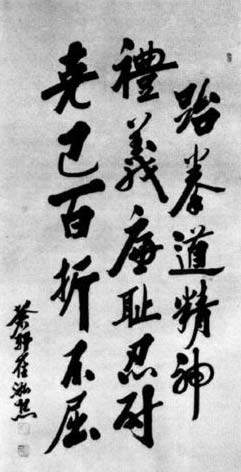
The actual title would be translated as “Taekwondo Spirit” or “The Spirit of Taekwondo.” It was originally written in Korean Hanja (Chinese characters used in Korea for about 1600 years).
General Choi's original calligraphy is shown to the right. Your custom calligraphy will be unique, and not an exact match, as each calligrapher has their own style.In modern times, the common form of written Korean is Hangul (a phonetic character set). The table below shows the text in Hangul and Hanja along with a pronunciation guide and a brief English translation:
| Traditional Korean Hanja | Modern Korean Hangul | Pronunciation | English |
| 跆拳道精神 | 태권도정신 | tae gweon do jeong sin | Taekwondo Spirit |
| 禮儀 | 예의 | ye yi | Courtesy / Etiquette / Propriety / Decorum / Formality |
| 廉耻 | 염치 | yeom ci | Integrity / Sense of Honor |
| 忍耐 | 인내 | in nae | Patience / Perseverance / Endurance |
| 克己 | 극기 | geug gi | Self-Control / Self-Denial / Self-Abnegation |
| 百折不屈 | 백절불굴 | baeg jeor bur gur | Indomitable Spirit (Undaunted even after repeated attacks from the opponent) |
| Note that the pronunciation is the official version now used in South Korea. However, it is different than what you may be used to. For instance, “Taekwon-do” is “tae gweon do.” This new romanization is supposed to be closer to actual Korean pronunciation. | |||
Sun Tzu: Regard Your Soldiers as Children
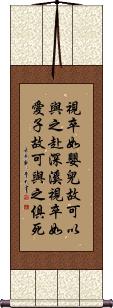
視卒如嬰兒故可以與之赴深溪視卒如愛子故可與之俱死 is an entry from the 10th section within the Earth/Terrain chapter of Sun Tzu's Art of War.
This is often translated as “Regard your soldiers as your children, and they will follow you into the deepest valleys. Look upon them as your own beloved sons, and they will stand by you even unto death.”
John 3:16

神愛世人甚至將他的獨生子賜給他們叫一切信他的不至滅亡反得永生 is the full translation of John 3:16 into Chinese.
This is from the Chinese Union Bible which comes from a revised version of the King James. This Chinese Bible was originally translated and printed in 1919 (several revisions since then).
Because of the origin being the KJV, I'll say that in English, this would be, “For God so loved the world, that he gave his only begotten Son, that whosoever believeth in him should not perish but have everlasting life.”
As with any translation, there are interesting cultural and linguistic issues. For instance, the word used for “world” in Chinese can also mean “common people.” So you could say that it means “For God so loved the common people...”
This does not take away from the text, as it will be understood with the same meaning and connotation.
There is no direct Greek-to-Chinese translation in print (that I know of), so this is the best available. Of course, you can ask any Greek person of faith, and they will claim that a bit is lost from the original Greek of the New Testament to any of the English versions of the Bible in print.
Daodejing / Tao Te Ching - Chapter 9
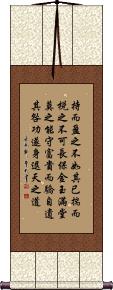
This text is the ninth chapter of the Daodejing / Tao Te Ching.
To hold until full is not as good as stopping.
An oversharpened sword cannot last long.
A room filled with gold and jewels cannot be protected.
Boasting of wealth and virtue brings your demise.
After finishing the work, withdraw.
持而盈之不如其已揣而梲之不可長保金玉滿堂莫之能守富貴而驕自遺其咎功遂身退天之道 is the Way of Heaven.
Dr. Muller's translation of all 81 Daodejing chapters
The text reads:
持而盈之、不如其已。揣而梲之、不可長保。 金玉滿堂、莫之能守。 富貴而驕、自遺其咎。 功遂身退、天之道。
This classical Chinese passage comes from the Mawangdui (馬王堆帛書) text.
Joshua 1:9
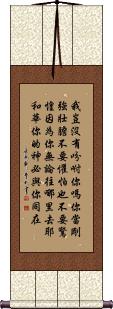
Here is the full translation of Joshua 1:9 into Chinese.
The text with punctuation:
我岂没有吩咐你吗?你当刚强壮胆。不要惧怕,也不要惊惶。因为你无论往哪里去,耶和华你的神必与你同在。
Hand-painted calligraphy does not retain punctuation.
This translation comes from the 1919 Chinese Union Bible.
For reference, from the KJV, this reads, “Have not I commanded thee? Be strong and of a good courage; be not afraid, neither be thou dismayed: for the LORD thy God is with thee whithersoever thou goest.”
Daodejing / Tao Te Ching - Chapter 54
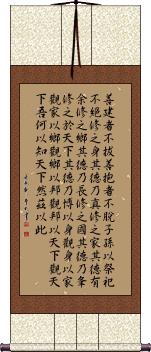
This is the Mawangdui version of Daodejing chapter 54.
By its virtue alone can one generation after another carry on the ancestral sacrifice.
Apply it to yourself, and by its power, you will be freed from dross.
Apply it to your household, and your household shall thereby have abundance.
Apply it to the village, and the village will be made secure.
Apply it to the kingdom, and the kingdom shall thereby be made to flourish.
Apply it to an empire, and the empire shall thereby be extended.
Therefore just as through oneself, one may contemplate Oneself;
So through the household one may contemplate the Household;
And through the village, one may contemplate the Village;
And through the kingdom, one may contemplate the Kingdom;
And through the empire, one may contemplate the Empire.
How do I know that the empire is so? By this.
What is firmly rooted cannot be pulled out;
What is tightly held in the arms will not slip loose;
Through this, the offering of sacrifice by descendants will never come to an end.
Cultivate it in your person, and its virtue will be genuine;
Cultivate it in the family, and its virtue will be more than sufficient;
Cultivate it in the hamlet, and its virtue will endure;
Cultivate it in the state, and its virtue will abound;
Cultivate it in the empire, and its virtue will be pervasive.
Hence look at the person through the person;
Look at the family through the family;
Look at the hamlet through the hamlet;
Look at the state through the state;
Look at the empire through the empire.
How do I know that the empire is like that?
By means of this.
Return to Dwell in Gardens and Fields Poem

This is Tao Yuanming's poem, “Returning to Dwell in Gardens and Fields.”
少無適俗韻 性本愛丘山。
誤落塵網中 一去三十年。
羈鳥戀舊林 池魚思故淵。
開荒南野際 抱拙歸園田。
方宅十餘畝 草屋八九間。
榆柳蔭後簷 桃李羅堂前。
暖暖遠人村 依依墟裡煙。
狗吠深巷中 雞鳴桑樹顛。
戶庭無塵雜 虛室有餘閒。
久在樊籠裡 復得返自然。
This in-stock artwork might be what you are looking for, and ships right away...
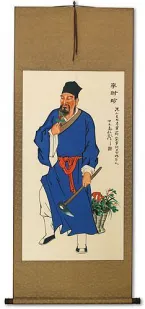
Gallery Price: $58.00
Your Price: $32.00
Gallery Price: $200.00
Your Price: $79.88
Gallery Price: $63.00
Your Price: $35.00
Not the results for Shen that you were looking for?
Below are some entries from our dictionary that may match your Shen search...
| Characters If shown, 2nd row is Simp. Chinese |
Pronunciation Romanization |
Simple Dictionary Definition |
神 see styles |
shén shen2 shen miwa みわ |
More info & calligraphy: Spirit / Spiritual Essence(1) spirit; psyche; (2) (See 神・かみ・1) god; deity; divinity; kami; (female given name) Miwa Inscrutable spiritual powers, or power; a spirit; a deva, god, or divinity; the human spirit; divine, spiritual, supernatural. |
身 see styles |
shēn shen1 shen misaki みさき |
More info & calligraphy: Body(1) one's body; one's person; (2) oneself; one's appearance; (3) one's place (in society, etc.); one's position; (4) main part; meat (as opposed to bone, skin, etc.); wood (as opposed to bark); blade (as opposed to its handle); container (as opposed to its lid); (surname) Misaki kāya; tanu; deha. The body; the self.; Two forms of body; there are numerous pairs, e. g. (1) (a) 分段身 The varied forms of the karmic or ordinary mortal body, or being; (b) 變易身 the transformable, or spiritual body. (2) (a) 生身 The earthly body of the Buddha; (b) 化身 hinirmāṇakāya, which may take any form at will. (3) (a) 生身 his earthly body; (b) 法身 his moral and mental nature—a Hīnayāna definition, but Mahāyāna takes his earthly nirmāṇakāya as the 生身 and his dharmakāya or that and his saṃbhogakāya as 法身. (4) 眞應二身 The dharmakāya and nirmāṇakāya. (5) (a) 實相身 The absolute truth, or light, of the Buddha, i. e. the dharmakāya; (b) 爲物身 the functioning or temporal body. (6) (a) 眞身 the dharmakāya and saṃbhogakāya; (b) 化身 the nirmāṇakāya. (7) (a) 常身 his permanent or eternal body; (b) 無常身 his temporal body. (8) (a) 實身 and 化身 idem 二色身. |
伸縮 伸缩 see styles |
shēn suō shen1 suo1 shen so shinshuku しんしゅく |
More info & calligraphy: Tension and Relaxation(n,vs,vt,vi) expansion and contraction; elasticity; flexibility |
化身 see styles |
huà shēn hua4 shen1 hua shen keshin けしん |
More info & calligraphy: Avatar(n,vs,adj-no,vi) {Buddh} incarnation; impersonation; personification; avatar nirmāṇakāya, 應身, 應化身; 變化身 The third characteristic or power of the trikāya 三身, a Buddha's metamorphosic body, which has power to assume any shape to propagate the Truth. Some interpret the term as connoting pan-Buddha, that all nature in its infinite variety is the phenomenal 佛身 Buddha-body. A narrower interpretation is his appearance in human form expressed by 應身, while 化身 is used for his manifold other forms of appearances. |
大神 see styles |
dà shén da4 shen2 ta shen daijin だいじん |
More info & calligraphy: Okami / God(archaism) (honorific or respectful language) god; (place-name, surname) Daijin |
女神 see styles |
nǚ shén nu:3 shen2 nü shen megami めがみ |
More info & calligraphy: Goddessgoddess; female deity; (female given name) Megami |
慎重 see styles |
shèn zhòng shen4 zhong4 shen chung shinchou / shincho しんちょう |
More info & calligraphy: Prudence / Considerate(noun or adjectival noun) (ant: 軽率) careful; cautious; prudent; discreet; deliberate |
死神 see styles |
sǐ shén si3 shen2 ssu shen shinigami しにがみ |
More info & calligraphy: Grim Reaper / God of Deathgod of death; Death |
海神 see styles |
hǎi shén hai3 shen2 hai shen watatsumi わたつみ |
More info & calligraphy: Neptune / Poseidonsea god; Poseidon; Neptune; (female given name) Watatsumi |
深刻 see styles |
shēn kè shen1 ke4 shen k`o shen ko misa みさ |
More info & calligraphy: Intense / Serious / Deep / Profound(noun or adjectival noun) serious; severe; grave; acute; (female given name) Misa |
獻身 献身 see styles |
xiàn shēn xian4 shen1 hsien shen |
More info & calligraphy: Sacrifice / Devotion / DedicationSee: 献身 |
神奧 神奥 see styles |
shén ào shen2 ao4 shen ao |
More info & calligraphy: Enigma / Mysterious |
神明 see styles |
shén míng shen2 ming2 shen ming jinmei / jinme じんめい |
More info & calligraphy: Deities / Gods(1) deity; god; (2) (See 天照大神) Amaterasu (as an enshrined deity); (surname) Jinmei The spirits of heaven and earth, the gods; also the intelligent or spiritual nature. |
神殿 see styles |
shén diàn shen2 dian4 shen tien kodono こどの |
More info & calligraphy: Divine Hall / Sacred Templetemple; shrine; sanctuary; (surname) Kodono |
神秘 see styles |
shén mì shen2 mi4 shen mi shinpi しんぴ |
More info & calligraphy: Mysterious / Mystery(n,adj-na,adj-no) mystery; mysteriousness; secret; (female given name) Shinpi |
神舟 see styles |
shén zhōu shen2 zhou1 shen chou shenchou / shencho シェンチョウ |
More info & calligraphy: Shenzhou Spacecraft(obj) Shenzhou (spacecraft) |
神道 see styles |
shén dào shen2 dao4 shen tao jindou / jindo じんどう |
More info & calligraphy: ShintoShinto; Shintoism; (surname) Jindō The spirit world of devas, asuras, and pretas. Psychology, or the doctrines concerning the soul. The teaching of Buddha. Shinto, the Way of the Gods, a Japanese national religion. |
神韻 神韵 see styles |
shén yùn shen2 yun4 shen yün shinin しんいん |
More info & calligraphy: Charm / Graceexceptional artistry |
精神 see styles |
jīng shen jing1 shen5 ching shen seishin / seshin せいしん |
More info & calligraphy: Spirit(1) mind; spirit; soul; heart; ethos; (2) attitude; mentality; will; intention; (3) spirit (of a matter); essence; fundamental significance; (given name) Seishin Vitality; also the pure and spiritual, the subtle, or recondite. |
美神 see styles |
měi shén mei3 shen2 mei shen mikan みかん |
More info & calligraphy: Goddess of Beauty / Beautiful Spirit(See ヴィーナス・1) god of beauty; goddess of beauty; Venus; (female given name) Mikan |
身心 see styles |
shēn xīn shen1 xin1 shen hsin shinshin しんじん |
More info & calligraphy: Body and Mind(noun - becomes adjective with の) mind and body Body and mind, the direct fruit of the previous life. The body is rūpa, the first skandha; mind embraces the other four, consciousness, perception, action, and knowledge; v. 五蘊. |
雷神 see styles |
léi shén lei2 shen2 lei shen raijin らいじん |
More info & calligraphy: God of Thunder(1) god of thunder; (2) {Shinto} Raijin (god of thunder); (place-name) Raijin |
龍神 龙神 see styles |
lóng shén long2 shen2 lung shen ryuujin / ryujin りゅうじん |
More info & calligraphy: Dragon SpiritA dragon-god, or spirit. |
太陽神 太阳神 see styles |
tài yáng shén tai4 yang2 shen2 t`ai yang shen tai yang shen taiyoushin / taiyoshin たいようしん |
More info & calligraphy: Apollosun god |
女武神 see styles |
nǚ wǔ shén nu:3 wu3 shen2 nü wu shen |
More info & calligraphy: Valkyrie |
深紅色 深红色 see styles |
shēn hóng sè shen1 hong2 se4 shen hung se shinkoushoku / shinkoshoku しんこうしょく |
More info & calligraphy: Scarlet / Crimsonscarlet; deep crimson |
精氣神 精气神 see styles |
jīng qì shén jing1 qi4 shen2 ching ch`i shen ching chi shen |
More info & calligraphy: Three Treasures of Chinese Medicine |
精神性 see styles |
jīng shén xìng jing1 shen2 xing4 ching shen hsing seishinsei / seshinse せいしんせい |
More info & calligraphy: Spiritualityspirituality; spiritual nature |
伸 see styles |
shēn shen1 shen yoboru よぼる |
to stretch; to extend (surname, given name) Yoboru stretching or spreading not |
侁 see styles |
shēn shen1 shen |
large crowd |
Click here for more Shen results from our dictionary
The following table may be helpful for those studying Chinese or Japanese...
| Title | Characters | Romaji (Romanized Japanese) | Various forms of Romanized Chinese | |
| Shen Long | 神龍 | shenron / shinryuu shenron / shinryu | shén lóng shen2 long2 shen long shenlong | shen lung shenlung |
| Shen Shum | 沈 | jin | shěn / shen3 / shen | |
| Three Treasures of Chinese Medicine | 精氣神 精气神 | jīng qì shén jing1 qi4 shen2 jing qi shen jingqishen | ching ch`i shen chingchishen ching chi shen |
|
| Betelgeuse | 參宿四 | sān sù sì san1 su4 si4 san su si sansusi | san su ssu sansussu |
|
| Shenzhou Spacecraft | 神舟 | shén zhōu shen2 zhou1 shen zhou shenzhou | shen chou shenchou |
|
| Body | 身 | mi | shēn / shen1 / shen | |
| Spirit Spiritual Essence | 神 | shin / kami | shén / shen2 / shen | |
| Shim | 沈 | shěn / shen3 / shen | ||
| Avatar | 化身 | keshin | huà shēn / hua4 shen1 / hua shen / huashen | |
| Body and Mind | 身心 | shin jin / shinjin | shēn xīn / shen1 xin1 / shen xin / shenxin | shen hsin / shenhsin |
| Charm Grace | 神韻 神韵 | shi nin / shinin | shén yùn / shen2 yun4 / shen yun / shenyun | shen yün / shenyün |
| Deities Gods | 神明 | jin myou / jinmyou / jin myo | shén míng shen2 ming2 shen ming shenming | |
| Dragon Spirit | 龍神 龙神 | ryuu jin / ryuujin / ryu jin | lóng shén long2 shen2 long shen longshen | lung shen lungshen |
| Enigma Mysterious | 神奧 神奥 | shén ào / shen2 ao4 / shen ao / shenao | ||
| Goddess | 女神 | megami / joshin | nǚ shén / nv3 shen2 / nv shen / nvshen | nü shen / nüshen |
| Goddess of Beauty Beautiful Spirit | 美神 | mikami | měi shén / mei3 shen2 / mei shen / meishen | |
| Grim Reaper God of Death | 死神 | shinigami | sǐ shén / si3 shen2 / si shen / sishen | ssu shen / ssushen |
| Intense Serious Deep Profound | 深刻 | shinkoku / misa | shēn kè / shen1 ke4 / shen ke / shenke | shen k`o / shenko / shen ko |
| Kishen | 基申 | jī shēn / ji1 shen1 / ji shen / jishen | chi shen / chishen | |
| Mysterious Mystery | 神秘 | shinpi | shén mì / shen2 mi4 / shen mi / shenmi | |
| Nekogami | 貓神 猫神 | neko gami / nekogami | māo shén / mao1 shen2 / mao shen / maoshen | |
| Neptune Poseidon | 海神 | wadatsumi | hǎi shén / hai3 shen2 / hai shen / haishen | |
| Ocean | 奧申 奥申 | ào shēn / ao4 shen1 / ao shen / aoshen | ||
| Prudence Considerate | 慎重 | shin chou / shinchou / shin cho | shèn zhòng shen4 zhong4 shen zhong shenzhong | shen chung shenchung |
| Shena | 神啊 | shén a / shen2 a5 / shen a / shena | ||
| Shenai | 申乃 | shēn nǎi / shen1 nai3 / shen nai / shennai | ||
| Sacrifice Devotion Dedication | 獻身 献身 | ken shin / kenshin | xiàn shēn xian4 shen1 xian shen xianshen | hsien shen hsienshen |
| Shinto | 神道 | shin tou / shin dou shintou / shindou shin to / shin do | shén dào / shen2 dao4 / shen dao / shendao | shen tao / shentao |
| Soldier of the Gods | 神兵 | shin pei / shinpei | shén bīng shen2 bing1 shen bing shenbing | shen ping shenping |
| Spirit | 精神 | sei shin / seishin | jīng shén jing1 shen2 jing shen jingshen | ching shen chingshen |
| Tension and Relaxation | 伸縮 伸缩 | shin shuku / shinshuku | shēn suō / shen1 suo1 / shen suo / shensuo | shen so / shenso |
| God of Thunder | 雷神 | rai jin / raijin | léi shén / lei2 shen2 / lei shen / leishen | |
| Shenk | 申克 | shēn kè / shen1 ke4 / shen ke / shenke | shen k`o / shenko / shen ko | |
| Schenk | 申克 | shēn kè / shen1 ke4 / shen ke / shenke | shen k`o / shenko / shen ko | |
| Schenck | 申克 | shēn kè / shen1 ke4 / shen ke / shenke | shen k`o / shenko / shen ko | |
| Divine Hall Sacred Temple | 神殿 | shinden | shén diàn shen2 dian4 shen dian shendian | shen tien shentien |
| Apollo | 太陽神 太阳神 | taiyoushin / taiyoshin | tài yáng shén tai4 yang2 shen2 tai yang shen taiyangshen | t`ai yang shen taiyangshen tai yang shen |
| Goshin-Do | 護身道 护身道 | gou shin dou goushindou go shin do | hù shēn dào hu4 shen1 dao4 hu shen dao hushendao | hu shen tao hushentao |
| Jin Shin Jyutsu | 仁神術 | jin shin jutsu jinshinjutsu | rén shén shù ren2 shen2 shu4 ren shen shu renshenshu | jen shen shu jenshenshu |
| Scarlet Crimson | 深紅色 深红色 | shin kou shoku shinkoushoku shin ko shoku | shēn hóng sè shen1 hong2 se4 shen hong se shenhongse | shen hung se shenhungse |
| Spirituality | 精神性 | seishinsei / seshinse | jīng shén xìng jing1 shen2 xing4 jing shen xing jingshenxing | ching shen hsing chingshenhsing |
| Valkyrie | 女武神 | nǚ wǔ shén nv3 wu3 shen2 nv wu shen nvwushen | nü wu shen nüwushen |
|
| Sessions | 塞申斯 | sāi shēn sī sai1 shen1 si1 sai shen si saishensi | sai shen ssu saishenssu |
|
| Nations | 內申斯 内申斯 | nèi shēn sī nei4 shen1 si1 nei shen si neishensi | nei shen ssu neishenssu |
|
| Child of God | 神的孩子 | shén de hái zi shen2 de hai2 zi shen de hai zi shendehaizi | shen te hai tzu shentehaitzu |
|
| The Spirit of Dragon and Tiger | 龍虎精神 龙虎精神 | ryu ko sei shin ryukoseishin | lóng hǔ jīng shén long2 hu3 jing1 shen2 long hu jing shen longhujingshen | lung hu ching shen lunghuchingshen |
| The Spirit of the Dragon Horse | 龍馬精神 龙马精神 | lóng mǎ jīng shén long2 ma3 jing1 shen2 long ma jing shen longmajingshen | lung ma ching shen lungmachingshen |
|
| Esprit de Corps Team Spirit | 團隊精神 团队精神 | tuán duì jīng shén tuan2 dui4 jing1 shen2 tuan dui jing shen tuanduijingshen | t`uan tui ching shen tuantuichingshen tuan tui ching shen |
|
| Far-Sighted in Deep Thought | 深謀遠慮 深谋远虑 | shinbouenryo / shinboenryo shinboenryo / shinboenryo | shēn móu yuǎn lǜ shen1 mou2 yuan3 lu:4 shen mou yuan lu: shenmouyuanlu: | shen mou yüan lü shenmouyüanlü |
| Free Spirit | 自由精神 | zì yóu jīng shén zi4 you2 jing1 shen2 zi you jing shen ziyoujingshen | tzu yu ching shen tzuyuchingshen |
|
| God is Good | 神真美好 | shén zhēn měi hǎo shen2 zhen1 mei3 hao3 shen zhen mei hao shenzhenmeihao | shen chen mei hao shenchenmeihao |
|
| Independent Spirit | 獨立精神 独立精神 | dú lì jīng shén du2 li4 jing1 shen2 du li jing shen dulijingshen | tu li ching shen tulichingshen |
|
| Intuitive Wisdom Inner Light | 一道神光 | ichidou no shinkou ichidounoshinkou ichido no shinko | yī dào shén guāng yi1 dao4 shen2 guang1 yi dao shen guang yidaoshenguang | i tao shen kuang itaoshenkuang |
| Love and Honor | 深情厚義 深情厚义 | shēn qíng hòu yì shen1 qing2 hou4 yi4 shen qing hou yi shenqinghouyi | shen ch`ing hou i shenchinghoui shen ching hou i |
|
| Pledge of Lifelong Love | 情定終身 情定终身 | qíng dìng zhōng shēn qing2 ding4 zhong1 shen1 qing ding zhong shen qingdingzhongshen | ch`ing ting chung shen chingtingchungshen ching ting chung shen |
|
| Spiritual Soul Mates | 精神伴侶 精神伴侣 | sei shin han ryo seishinhanryo | jīng shén bàn lǚ jing1 shen2 ban4 lv3 jing shen ban lv jingshenbanlv | ching shen pan lü chingshenpanlü |
| Spiritual Strength Strength of Spirit | 精神力量 | seishin rikiryou seishinrikiryou seishin rikiryo | jīng shén lì liàng jing1 shen2 li4 liang4 jing shen li liang jingshenliliang | ching shen li liang chingshenliliang |
| Tranquil Midnight | 夜深人靜 夜深人静 | yè shēn rén jìng ye4 shen1 ren2 jing4 ye shen ren jing yeshenrenjing | yeh shen jen ching yehshenjenching |
|
| Under the Protection of the Dragon Saint | 神龍庇護 神龙庇护 | shén lóng bì hù shen2 long2 bi4 hu4 shen long bi hu shenlongbihu | shen lung pi hu shenlungpihu |
|
| Warrior Soul Heroic Spirit | 勇士精神 | yǒng shì jīng shén yong3 shi4 jing1 shen2 yong shi jing shen yongshijingshen | yung shih ching shen yungshihchingshen |
|
| Soul of a Warrior | 精神勇士 | jīng shén yǒng shì jing1 shen2 yong3 shi4 jing shen yong shi jingshenyongshi | ching shen yung shih chingshenyungshih |
|
| Wellness | 身體健康 身体健康 | shin tai ken kou shintaikenkou shin tai ken ko | shēn tǐ jiàn kāng shen1 ti3 jian4 kang1 shen ti jian kang shentijiankang | shen t`i chien k`ang shentichienkang shen ti chien kang |
| Beautiful Dreamer | 美麗的夢神 美丽的梦神 | měi lì de mèng shén mei3 li4 de meng4 shen2 mei li de meng shen meilidemengshen | mei li te meng shen meilitemengshen |
|
| Fruit of the Spirit | 精神的果實 精神的果实 | jīng shén de guǒ shí jing1 shen2 de guo3 shi2 jing shen de guo shi jingshendeguoshi | ching shen te kuo shih chingshentekuoshih |
|
| Mind Body Spirit | 身心靈 / 身心霊 身心灵 | mi shin rei mishinrei | shēn xīn líng shen1 xin1 ling2 shen xin ling shenxinling | shen hsin ling shenhsinling |
| Spirit of Taekwondo | 跆拳道精神 | te kon do sei shin tekondoseishin | tái quán dào jīng shen tai2 quan2 dao4 jing1 shen2 tai quan dao jing shen taiquandaojingshen | t`ai ch`üan tao ching shen taichüantaochingshen tai chüan tao ching shen |
| Sun Goddess | 天照皇大神 | amaterasuoomikami amaterasuomikami | tiān zhào huáng dà shén tian1 zhao4 huang2 da4 shen2 tian zhao huang da shen tianzhaohuangdashen | t`ien chao huang ta shen tienchaohuangtashen tien chao huang ta shen |
| Example is Better than Precept | 身教勝於言教 身教胜于言教 | shēn jiào shèng yú yán jiào shen1 jiao4 sheng4 yu2 yan2 jiao1 shen jiao sheng yu yan jiao shenjiaoshengyuyanjiao | shen chiao sheng yü yen chiao | |
| God in the Glorious Center of Heaven | 天之御中主神 | tiān zhī yù zhōng zhǔ shén tian1 zhi1 yu4 zhong1 zhu3 shen2 tian zhi yu zhong zhu shen tianzhiyuzhongzhushen | t`ien chih yü chung chu shen tienchihyüchungchushen tien chih yü chung chu shen |
|
| Sanctified by God | 上帝使你神聖 上帝使你神圣 | shèng dì shǐ nǐ shén shèng sheng4 di4 shi3 ni3 shen2 sheng4 sheng di shi ni shen sheng shengdishinishensheng | sheng ti shih ni shen sheng shengtishihnishensheng |
|
| Nothing is Impossible | 沒有甚麼不可能 没有什么不可能 | méi yǒu shén bù kě néng mei2 you3 shen2 me5 bu4 ke3 neng2 mei you shen me bu ke neng meiyoushenmebukeneng | mei yu shen me pu k`o neng meiyushenmepukoneng mei yu shen me pu ko neng |
|
| The Spirit of the Dragon Horse and Power of a Tiger | 龍馬精神虎虎生威 龙马精神虎虎生威 | lóng mǎ jīng shén hǔ hǔ shēng wēi long2 ma3 jing1 shen2 hu3 hu3 sheng1 wei1 long ma jing shen hu hu sheng wei | lung ma ching shen hu hu sheng wei | |
| Remember What Is Important To You | 記住什么是重要的 记住什么是重要的 | jì zhù shén shì zhòng yào de ji4 zhu4 shen2 me shi4 zhong4 yao4 de ji zhu shen me shi zhong yao de jizhushenmeshizhongyaode | chi chu shen me shih chung yao te | |
| Strong Mind Strong Body | 強壯的身體堅強的心態 强壮的身体坚强的心态 | qiáng zhuàng de shēn tǐ jiān qiáng de xīn tài qiang2 zhuang4 de shen1 ti3 jian1 qiang2 de xin1 tai4 qiang zhuang de shen ti jian qiang de xin tai | ch`iang chuang te shen t`i chien ch`iang te hsin t`ai chiang chuang te shen ti chien chiang te hsin tai |
|
| Seven Heavenly Virtues | 信仰希望慈善堅忍正義慎重節制 信仰希望慈善坚忍正义慎重节制 | shinkou kibou jizen kennin seigi shinchou sessei shinko kibo jizen kennin seigi shincho sesei | xìn yǎng xī wàng cí shàn jiān rěn zhèng yì shèn zhòng jié zhì xin4 yang3 xi1 wang4 ci2 shan4 jian1 ren3 zheng4 yi4 shen4 zhong4 jie2 zhi4 xin yang xi wang ci shan jian ren zheng yi shen zhong jie zhi | hsin yang hsi wang tz`u shan chien jen cheng i shen chung chieh chih hsin yang hsi wang tzu shan chien jen cheng i shen chung chieh chih |
| Galatians 5:25 | 我們若是靠聖靈得生就當靠聖靈行事 我们若是靠圣灵得生就当靠圣灵行事 | wǒ men ruò shì kào shèng líng shēn jiù dāng kào shèng líng xíng shì wo3 men ruo4 shi4 kao4 sheng4 ling2 dei3 shen1 jiu4 dang1 kao4 sheng4 ling2 xing2 shi4 wo men ruo shi kao sheng ling dei shen jiu dang kao sheng ling xing shi | wo men jo shih k`ao sheng ling tei shen chiu tang k`ao sheng ling hsing shih wo men jo shih kao sheng ling tei shen chiu tang kao sheng ling hsing shih |
|
| John 3:16 (first half) | 神愛世人甚至將他的獨生子賜給他們 神爱世人甚至将他的独生子赐给他们 | shén ài shì rén shèn zhì jiāng tā de dú shēng zǐ cì gè tā mén shen2 ai4 shi4 ren2 shen4 zhi4 jiang1 ta1 de du2 sheng1 zi3 ci4 gei3 ta1 men2 shen ai shi ren shen zhi jiang ta de du sheng zi ci gei ta men | shen ai shih jen shen chih chiang t`a te tu sheng tzu tz`u kei t`a men shen ai shih jen shen chih chiang ta te tu sheng tzu tzu kei ta men |
|
| Taekwondo Tenets Spirit of Taekwon-do | 跆拳道精神禮義廉耻忍耐克己百折不屈 跆拳道精神礼义廉耻忍耐克己百折不屈 | tái quán dào jīng shén lǐ yì lián chǐ rěn nài kè jǐ bǎi zhé bù qū tai2 quan2 dao4 jing1 shen2 li3 yi4 lian2 chi3 ren3 nai4 ke4 ji3 bai3 zhe2 bu4 qu1 tai quan dao jing shen li yi lian chi ren nai ke ji bai zhe bu qu | t`ai ch`üan tao ching shen li i lien ch`ih jen nai k`o chi pai che pu ch`ü tai chüan tao ching shen li i lien chih jen nai ko chi pai che pu chü |
|
| Sun Tzu: Regard Your Soldiers as Children | 視卒如嬰兒故可以與之赴深溪視卒如愛子故可與之俱死 视卒如婴儿故可以与之赴深溪视卒如爱子故可与之俱死 | shì cù rú yīng ér gù kě yǐ yú zhī fù shēn xī shì cù rú ài zǐ gù kě yú zhī jū sǐ shi4 cu4 ru2 ying1 er2 gu4 ke3 yi3 yu2 zhi1 fu4 shen1 xi1 shi4 cu4 ru2 ai4 zi3 gu4 ke3 yu2 zhi1 ju1 si3 shi cu ru ying er gu ke yi yu zhi fu shen xi shi cu ru ai zi gu ke yu zhi ju si | shih ts`u ju ying erh ku k`o i yü chih fu shen hsi shih ts`u ju ai tzu ku k`o yü chih chü ssu shih tsu ju ying erh ku ko i yü chih fu shen hsi shih tsu ju ai tzu ku ko yü chih chü ssu |
|
| John 3:16 | 神愛世人甚至將他的獨生子賜給他們叫一切信他的不至滅亡反得永生 神爱世人甚至将他的独生子赐给他们叫一切信他的不至灭亡反得永生 | shén ài shì rén shèn zhì jiāng tā de dú shēng zǐ cì gè tā mén jiào yí qiè xìn tā de bú zhì miè wáng fǎn dé yǒng shēng shen2 ai4 shi4 ren2 shen4 zhi4 jiang1 ta1 de du2 sheng1 zi3 ci4 gei3 ta1 men2 jiao4 yi2 qie4 xin4 ta1 de bu2 zhi4 mie4 wang2 fan3 de2 yong3 sheng1 shen ai shi ren shen zhi jiang ta de du sheng zi ci gei ta men jiao yi qie xin ta de bu zhi mie wang fan de yong sheng | shen ai shih jen shen chih chiang t`a te tu sheng tzu tz`u kei t`a men chiao i ch`ieh hsin t`a te pu chih mieh wang fan te yung sheng shen ai shih jen shen chih chiang ta te tu sheng tzu tzu kei ta men chiao i chieh hsin ta te pu chih mieh wang fan te yung sheng |
|
| Daodejing Tao Te Ching - Chapter 9 | 持而盈之不如其已揣而梲之不可長保金玉滿堂莫之能守富貴而驕自遺其咎功遂身退天之道 持而盈之不如其已揣而梲之不可长保金玉满堂莫之能守富贵而骄自遗其咎功遂身退天之道 | chí ér yíng zhī bù rú qí yǐ chuǎi ér zhī bù kě cháng bǎo jīn yù mǎn táng mò zhī néng shǒu fù guì ér jiāo zì yí qí jiù gōng suì shēn tuì tiān zhī dào chi2 er2 ying2 zhi1 bu4 ru2 qi2 yi3 chuai3 er2 棁 zhi1 bu4 ke3 chang2 bao3 jin1 yu4 man3 tang2 mo4 zhi1 neng2 shou3 fu4 gui4 er2 jiao1 zi4 yi2 qi2 jiu4 gong1 sui4 shen1 tui4 tian1 zhi1 dao4 chi er ying zhi bu ru qi yi chuai er 棁 zhi bu ke chang bao jin yu man tang mo zhi neng shou fu gui er jiao zi yi qi jiu gong sui shen tui tian zhi dao | ch`ih erh ying chih pu ju ch`i i ch`uai erh chih pu k`o ch`ang pao chin yü man t`ang mo chih neng shou fu kuei erh chiao tzu i ch`i chiu kung sui shen t`ui t`ien chih tao chih erh ying chih pu ju chi i chuai erh chih pu ko chang pao chin yü man tang mo chih neng shou fu kuei erh chiao tzu i chi chiu kung sui shen tui tien chih tao |
|
| Joshua 1:9 | 我豈沒有吩咐你嗎你當剛強壯膽不要懼怕也不要驚惶因為你無論往哪里去耶和華你的神必與你同在 我岂没有吩咐你吗你当刚强壮胆不要惧怕也不要惊惶因为你无论往哪里去耶和华你的神必与你同在 | wǒ qǐ méi yǒu fēn fù nǐ ma nǐ dāng gāng qiáng zhuàng dǎn bù yào jù pà yě bù yào jīng huáng yīn wèi nǐ wú lùn wǎng nǎ lǐ qù yē hé huá nǐ de shén bì yǔ nǐ tóng zài wo3 qi3 mei2 you3 fen1 fu4 ni3 ma ni3 dang1 gang1 qiang2 zhuang4 dan3 bu4 yao4 ju4 pa4 ye3 bu4 yao4 jing1 huang2 yin1 wei4 ni3 wu2 lun4 wang3 na3 li3 qu4 ye1 he2 hua2 ni3 de shen2 bi4 yu3 ni3 tong2 zai4 wo qi mei you fen fu ni ma ni dang gang qiang zhuang dan bu yao ju pa ye bu yao jing huang yin wei ni wu lun wang na li qu ye he hua ni de shen bi yu ni tong zai | wo ch`i mei yu fen fu ni ma ni tang kang ch`iang chuang tan pu yao chü p`a yeh pu yao ching huang yin wei ni wu lun wang na li ch`ü yeh ho hua ni te shen pi yü ni t`ung tsai wo chi mei yu fen fu ni ma ni tang kang chiang chuang tan pu yao chü pa yeh pu yao ching huang yin wei ni wu lun wang na li chü yeh ho hua ni te shen pi yü ni tung tsai |
|
| Daodejing Tao Te Ching - Chapter 54 | 善建者不拔善抱者不脫子孫以祭祀不絕修之身其德乃真修之家其德有余修之鄉其德乃長修之國其德乃夆修之於天下其德乃博以身觀身以家觀家以鄉觀鄉以邦觀邦以天下觀天下吾何以知天下然茲以此 善建者不拔善抱者不脱子孙以祭祀不绝修之身其德乃真修之家其德有余修之乡其德乃长修之国其德乃夆修之于天下其德乃博以身观身以家观家以乡观乡以邦观邦以天下观天下吾何以知天下然兹以此 | shàn jiàn zhě bù bá shàn bào zhě bù tuō zǐ sūn yǐ jì sì bù jué xiū zhī shēn qí dé nǎi zhēn xiū zhī jiā qí dé yǒu yú xiū zhī xiāng qí dé nǎi zhǎng xiū zhī guó qí dé nǎi féng xiū zhī yú tiān xià qí dé nǎi bó yǐ shēn guān shēn yǐ jiā guān jiā yǐ xiāng guān xiāng yǐ bāng guān bāng yǐ tiān xià guān tiān xià wú hé yǐ zhī tiān xià rán zī yǐ cǐ shan4 jian4 zhe3 bu4 ba2 shan4 bao4 zhe3 bu4 tuo1 zi3 sun1 yi3 ji4 si4 bu4 jue2 xiu1 zhi1 shen1 qi2 de2 nai3 zhen1 xiu1 zhi1 jia1 qi2 de2 you3 yu2 xiu1 zhi1 xiang1 qi2 de2 nai3 zhang3 xiu1 zhi1 guo2 qi2 de2 nai3 feng2 xiu1 zhi1 yu2 tian1 xia4 qi2 de2 nai3 bo2 yi3 shen1 guan1 shen1 yi3 jia1 guan1 jia1 yi3 xiang1 guan1 xiang1 yi3 bang1 guan1 bang1 yi3 tian1 xia4 guan1 tian1 xia4 wu2 he2 yi3 zhi1 tian1 xia4 ran2 zi1 yi3 ci3 shan jian zhe bu ba shan bao zhe bu tuo zi sun yi ji si bu jue xiu zhi shen qi de nai zhen xiu zhi jia qi de you yu xiu zhi xiang qi de nai zhang xiu zhi guo qi de nai feng xiu zhi yu tian xia qi de nai bo yi shen guan shen yi jia guan jia yi xiang guan xiang yi bang guan bang yi tian xia guan tian xia wu he yi zhi tian xia ran zi yi ci | shan chien che pu pa shan pao che pu t`o tzu sun i chi ssu pu chüeh hsiu chih shen ch`i te nai chen hsiu chih chia ch`i te yu yü hsiu chih hsiang ch`i te nai chang hsiu chih kuo ch`i te nai feng hsiu chih yü t`ien hsia ch`i te nai po i shen kuan shen i chia kuan chia i hsiang kuan hsiang i pang kuan pang i t`ien hsia kuan t`ien hsia wu ho i chih t`ien hsia jan tzu i tz`u shan chien che pu pa shan pao che pu to tzu sun i chi ssu pu chüeh hsiu chih shen chi te nai chen hsiu chih chia chi te yu yü hsiu chih hsiang chi te nai chang hsiu chih kuo chi te nai feng hsiu chih yü tien hsia chi te nai po i shen kuan shen i chia kuan chia i hsiang kuan hsiang i pang kuan pang i tien hsia kuan tien hsia wu ho i chih tien hsia jan tzu i tzu |
|
| Return to Dwell in Gardens and Fields Poem | 少無適俗韻性本愛丘山誤落塵網中一去三十年羈鳥戀舊林池魚思故淵開荒南野際抱拙歸園田方宅十余畝草屋八九間榆柳蔭后檐桃李羅堂前暖暖遠人村依依墟里煙狗吠深巷中雞鳴桑樹顛戶庭無塵雜虛室有余閑久在樊籠里復得返自然 少无适俗韵性本爱丘山误落尘网中一去三十年羁鸟恋旧林池鱼思故渊开荒南野际抱拙归园田方宅十余亩草屋八九间榆柳荫后檐桃李罗堂前暖暖远人村依依墟里烟狗吠深巷中鸡鸣桑树颠户庭无尘杂虚室有余闲久在樊笼里复得返自然 | shào wú shì sú yùn xìng běn ài qiū shān wù luò chén wǎng zhōng yī qù sān shí nián jī niǎo liàn jiù lín chí yú sī gù yuān kāi huāng nán yě jì bào zhuō guī yuán tián fāng zhái shí yú mǔ cǎo wū bā jiǔ jiān yú liǔ yīn hòu yán táo lǐ luó táng qián nuǎn nuǎn yuǎn rén cūn yī yī xū lǐ yān gǒu fèi shēn xiàng zhōng jī míng sāng shù diān hù tíng wú chén zá xū shì yǒu yú xián jiǔ zài fán lóng lǐ fù dé fǎn zì rán shao4 wu2 shi4 su2 yun4 xing4 ben3 ai4 qiu1 shan1 wu4 luo4 chen2 wang3 zhong1 yi1 qu4 san1 shi2 nian2 ji1 niao3 lian4 jiu4 lin2 chi2 yu2 si1 gu4 yuan1 kai1 huang1 nan2 ye3 ji4 bao4 zhuo1 gui1 yuan2 tian2 fang1 zhai2 shi2 yu2 mu3 cao3 wu1 ba1 jiu3 jian1 yu2 liu3 yin1 hou4 yan2 tao2 li3 luo2 tang2 qian2 nuan3 nuan3 yuan3 ren2 cun1 yi1 yi1 xu1 li3 yan1 gou3 fei4 shen1 xiang4 zhong1 ji1 ming2 sang1 shu4 dian1 hu4 ting2 wu2 chen2 za2 xu1 shi4 you3 yu2 xian2 jiu3 zai4 fan2 long2 li3 fu4 de2 fan3 zi4 ran2 shao wu shi su yun xing ben ai qiu shan wu luo chen wang zhong yi qu san shi nian ji niao lian jiu lin chi yu si gu yuan kai huang nan ye ji bao zhuo gui yuan tian fang zhai shi yu mu cao wu ba jiu jian yu liu yin hou yan tao li luo tang qian nuan nuan yuan ren cun yi yi xu li yan gou fei shen xiang zhong ji ming sang shu dian hu ting wu chen za xu shi you yu xian jiu zai fan long li fu de fan zi ran | shao wu shih su yün hsing pen ai ch`iu shan wu lo ch`en wang chung i ch`ü san shih nien chi niao lien chiu lin ch`ih yü ssu ku yüan k`ai huang nan yeh chi pao cho kuei yüan t`ien fang chai shih yü mu ts`ao wu pa chiu chien yü liu yin hou yen t`ao li lo t`ang ch`ien nuan nuan yüan jen ts`un i i hsü li yen kou fei shen hsiang chung chi ming sang shu tien hu t`ing wu ch`en tsa hsü shih yu yü hsien chiu tsai fan lung li fu te fan tzu jan shao wu shih su yün hsing pen ai chiu shan wu lo chen wang chung i chü san shih nien chi niao lien chiu lin chih yü ssu ku yüan kai huang nan yeh chi pao cho kuei yüan tien fang chai shih yü mu tsao wu pa chiu chien yü liu yin hou yen tao li lo tang chien nuan nuan yüan jen tsun i i hsü li yen kou fei shen hsiang chung chi ming sang shu tien hu ting wu chen tsa hsü shih yu yü hsien chiu tsai fan lung li fu te fan tzu jan |
|
| In some entries above you will see that characters have different versions above and below a line. In these cases, the characters above the line are Traditional Chinese, while the ones below are Simplified Chinese. | ||||

Successful Chinese Character and Japanese Kanji calligraphy searches within the last few hours...



