Many custom options...


And formats...



Rave in Chinese / Japanese...
Buy a Rave calligraphy wall scroll here!
Personalize your custom “Rave” project by clicking the button next to your favorite “Rave” title below...
Switched to secondary search mode due to lack of results using primary.
These secondary results may not be very accurate. Try a different but similar meaning word or phrase for better results. Or...
Look up Rave in my Japanese Kanji & Chinese Character Dictionary(My dictionary is a different system then the calligraphy search you just tried)
If you want a special phrase, word, title, name, or proverb, feel free to contact me, and I will translate your custom calligraphy idea for you.
1. Advance Bravely / Indomitable Spirit
2. Black Raven
5. Brave Heart
6. Braven
10. Craven
11. Cravens
12. Craver
15. Graves
16. Hargrave
17. Hargraves
18. Journey / Travel
19. Mountain Travels Poem by Dumu
20. Musgrave
21. Praveen
22. Raven / Crow
23. Read 10,000 Books, Travel 10,000 Miles
24. Sand / Gravel
25. Seagraves
26. Strong and brave
28. Better to Travel 10,000 Miles than Read 10,000 Books
29. Traveler
30. Traveler / Wanderer / Vagabond / Rolling Stone
31. Traver
32. Travers
Advance Bravely / Indomitable Spirit
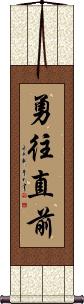
This proverb creates an image of a warrior bravely advancing against an enemy regardless of the odds.
This proverb can also be translated as “indomitable spirit” or “march fearlessly onward.”
See Also: Indomitable | Fortitude
Black Raven
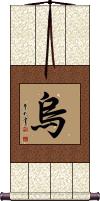
烏 can mean raven or crow but is also used as an alternate way to write the color black.
Therefore, this is a symbol of the black raven (with emphasis on black). This can also mean rook or dark.
Notes: This can be the Japanese surname Karasu, or Chinese surname Wu.
The Brave Have No Fears
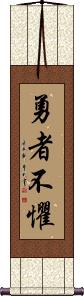
This proverb means “Brave people [are] without fear,” or “The brave are without fear.”
勇者不懼 is a proverb credited to Confucius. It's one of three phrases in a set of things he said.
This phrase is originally Chinese but has penetrated Japanese culture as well (many Confucian phrases have) back when Japan borrowed Chinese characters into their language.
This phrase has also been converted into modern Japanese grammar when written as 勇者は懼れず. If you want this version just click on those characters.
See Also: No Fear
Brave Warrior
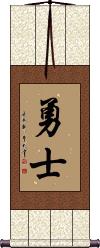
勇士 is the Chinese, Japanese Kanji, and old Korean Hanja for a brave warrior, a brave person, a hero, or a brave man.
In Japanese, this can be a given name, Yuuji.
Brave Heart
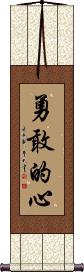
勇敢的心 is the title “Braveheart,” as in the movie starring Mel Gibson.
The character meanings break down this way:
勇敢 brave.
的 possessive particle.
心 heart/mind.
Braven

布雷文 is the name Braven in Chinese (Mandarin).
Braven

ブレイブン is the name Braven in Japanese Katakana.
Note: Because this title is entirely Japanese Katakana, it should be written by a Japanese calligrapher.
Bravery / Courage
Courage in the face of Fear
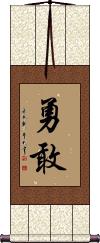
勇敢 is about courage or bravery in the face of fear.
You do the right thing even when it is hard or scary. When you are courageous, you don't give up. You try new things. You admit mistakes. This kind of courage is the willingness to take action in the face of danger and peril.
勇敢 can also be translated as braveness, valor, heroic, fearless, boldness, prowess, gallantry, audacity, daring, dauntless, and/or courage in Japanese, Chinese, and Korean. This version of bravery/courage can be an adjective or a noun. The first character means bravery and courage by itself. The second character means “daring” by itself. The second character emphasizes the meaning of the first but adds the idea that you are not afraid of taking a dare, and you are not afraid of danger.
勇敢 is more about brave behavior and not so much the mental state of being brave. You'd more likely use this to say, “He fought courageously in the battle,” rather than “He is very courageous.”
Bravery / Courage
Single Character for Courage
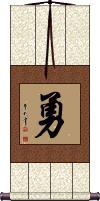
勇 can be translated as bravery, courage, valor, or fearless in Chinese, Japanese and Korean.
勇 is the simplest form to express courage or bravery, as there is also a two-character form that starts with this same character.
勇 can also be translated as brave, daring, fearless, plucky, or heroic.
This is also a virtue of the Samurai Warrior
See our page with just Code of the Samurai / Bushido here
Brave the Waves
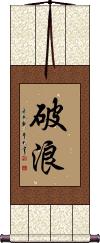
破浪 can be translated from Chinese as “braving the waves” or “bravely setting sail.”
It literally means: “break/cleave/cut [the] waves.”
破浪 is a great title to encourage yourself or someone else not to be afraid of problems or troubles.
Because of the context, this is especially good for sailors or yachtsmen and surfers too.
Note: While this can be understood in Japanese, it's not commonly used in Japan. Therefore, please consider this to be primarily a Chinese proverb.
Bravery / Courage
Courageous Energy
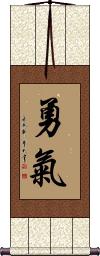
勇氣 is one of several ways to express bravery and courage in Chinese, Japanese, and Korean.
This version is the most spiritual. This is the essence of bravery from deep within your being. This is the mental state of being brave versus actual brave behavior. You'd more likely use this to say, “He is very courageous,” rather than “He fought courageously in the battle.”
The first character also means bravery or courage when it's seen alone. With the second character added, an element of energy or spirit is added. The second character is the same “chi” or “qi” energy that Kung Fu masters focus on when they strike. For this reason, you could say this means “spirit of courage” or “brave spirit.”
This is certainly a stronger word than just the first character alone.
Beyond bravery or courage, dictionaries also translate this word as valor/valour, nerve, audacity, daring, pluck, plucky, gallantry, guts, gutsy, and boldness.
This is also one of the 8 key concepts of tang soo do.
 While the version shown to the left is commonly used in Chinese and Korean Hanja (and ancient Japanese Kanji), please note that the second character is written with slightly fewer strokes in modern Japanese. If you want the modern Japanese version, please click on the character to the right. Both styles would be understood by native Chinese, Japanese, and many (but not all) Korean people. You should make your selection based on the intended audience for your calligraphy artwork. Or pick the single-character form of bravery/courage which is universal.
Craven

克雷文 is the name Craven in Chinese (Mandarin).
Craven

クレイヴン is the name Craven in Japanese Katakana.
Note: Because this title is entirely Japanese Katakana, it should be written by a Japanese calligrapher.
Cravens

克雷文斯 is the name Cravens in Chinese (Mandarin).
Cravens

クレイヴンズ is the name Cravens in Japanese Katakana.
Note: Because this title is entirely Japanese Katakana, it should be written by a Japanese calligrapher.
Craver

克雷弗 is the name Craver in Chinese (Mandarin).
Craver

クレイバー is the name Craver in Japanese Katakana.
Note: Because this title is entirely Japanese Katakana, it should be written by a Japanese calligrapher.
Fortune favors the brave
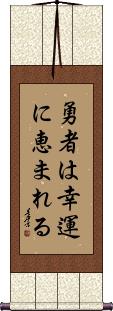
勇者は幸運に恵まれる is a Japanese proverb that suggests that in history, the brave or courageous tend to be the ones who win.
Note: Because this selection contains some special Japanese Hiragana characters, it should be written by a Japanese calligrapher.
Fortune Favors The Brave
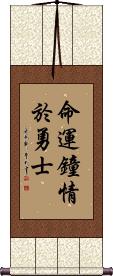
命運鐘情於勇士 means “Fortune favors the brave” in Chinese.
This is not the only way to express the idea of fortune favoring the bold or brave.
It's not originally a Chinese phrase, so it's been translated into Chinese in various ways.
Graves

格雷夫斯 is the name Graves in Chinese (Mandarin).
Graves

グレイブス is the name Graves in Japanese Katakana.
Note: Because this title is entirely Japanese Katakana, it should be written by a Japanese calligrapher.
Hargrave

哈格雷夫 is the name Hargrave in Chinese (Mandarin).
Hargrave

ハーグレイヴ is the name Hargrave in Japanese Katakana.
Note: Because this title is entirely Japanese Katakana, it should be written by a Japanese calligrapher.
Hargraves

哈格雷夫斯 is the name Hargraves in Chinese (Mandarin).
Hargraves

ハーグレイヴス is the name Hargraves in Japanese Katakana.
Note: Because this title is entirely Japanese Katakana, it should be written by a Japanese calligrapher.
Journey / Travel
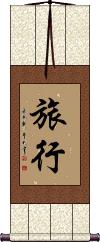
旅行 means journey or travels. It is sometimes used to refer to a vacation.
If you like a good adventure, maybe this is the word for you.
Journey / Travel
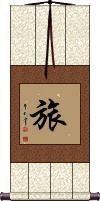
旅 is a single Chinese character, Japanese Kanji, and old Korean Hanja that means trip, travel, or journey.
In an older context, this could refer to an army brigade or a 500-man battalion from the Zhou-dynasty Chinese army.
Mountain Travels Poem by Dumu

This poem was written almost 1200 years ago during the Tang dynasty.
It depicts traveling up a place known as Cold Mountain, where some hearty people have built their homes. The traveler is overwhelmed by the beauty of the turning leaves of the maple forest that surrounds him just as night overtakes the day, and darkness prevails. His heart implores him to stop, and take in all of the beauty around him.
First, before you get to the full translation, I must tell you that Chinese poetry is a lot different than what we have in the west. Chinese words simply don't rhyme in the same way that English or other western languages do. Chinese poetry depends on rhythm and a certain beat of repeated numbers of characters.
I have done my best to translate this poem keeping a certain feel of the original poet. But some of the original beauty of the poem in its original Chinese will be lost in translation.
Far away on Cold Mountain, a stone path leads upwards.
Among white clouds, people's homes reside.
Stopping my carriage I must, as to admire the maple forest at nights fall.
In awe of autumn leaves showing more red than even flowers of early spring.
Hopefully, this poem will remind you to stop, and “take it all in” as you travel through life.
The poet's name is “Du Mu” in Chinese that is: 
 .
.
The title of the poem, “Mountain Travels” is: 

You can have the title, poet's name, and even “Tang Dynasty” written as an inscription on your custom wall scroll if you like.
More about the poet:
Dumu lived from 803-852 AD and was a leading Chinese poet during the later part of the Tang dynasty.
He was born in Chang'an, a city in central China and the former capital of the ancient Chinese empire in 221-206 BC. In present-day China, his birthplace is currently known as Xi'an, the home of the Terracotta Soldiers.
He was awarded his Jinshi degree (an exam administered by the emperor's court which leads to becoming an official of the court) at the age of 25 and went on to hold many official positions over the years. However, he never achieved a high rank, apparently because of some disputes between various factions, and his family's criticism of the government. His last post in the court was his appointment to the office of Secretariat Drafter.
During his life, he wrote scores of narrative poems, as well as a commentary on the Art of War and many letters of advice to high officials.
His poems were often very realistic and often depicted everyday life. He wrote poems about everything, from drinking beer in a tavern to weepy poems about lost love.
The thing that strikes you most is the fact even after 1200 years, not much has changed about the beauty of nature, toils, and troubles of love and beer drinking.
Musgrave

穆斯格雷夫 is the name Musgrave in Chinese (Mandarin).
Musgrave

マスグレイブ is the name Musgrave in Japanese Katakana.
Note: Because this title is entirely Japanese Katakana, it should be written by a Japanese calligrapher.
Praveen
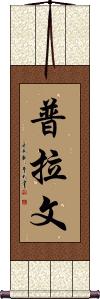
普拉文 is the name Praveen in Chinese (Mandarin).
Praveen
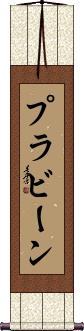
プラビーン is the name Praveen in Japanese (Katakana).
Note: Because this title is entirely Japanese Katakana, it should be written by a Japanese calligrapher.
Raven / Crow
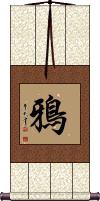
鴉 is raven or crow in Chinese characters, old Korean Hanja, and Japanese Kanji. 鴉 is also an abbreviation for the Corvus species.
If this is your favorite bird, hang this symbol on your wall.
Note: Can also be the surname Karasu in Japanese.
Read 10,000 Books, Travel 10,000 Miles
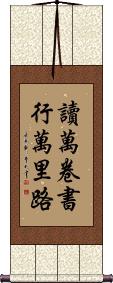
讀萬卷書行萬里路 is a lifelong suggestion for expanding your horizons by gaining knowledge, experience, and seeing the world.
Of course, this was written long ago when it was hard to travel 10,000 miles (at least 1000 years before the invention of the airplane).
With air travel and the business I'm in, I often achieve that lifetime goal on a monthly basis.
However, I am a little behind in the book count.
Note: An ancient Chinese mile (里 or lǐ) referred to in this proverb is about a third of a British/American mile. However, at that time, this was a great distance to travel.
Sand / Gravel
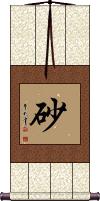
砂 means sand or gravel in Chinese, Japanese Kanji, and old Korean Hanja.
The radicals in the character imply the grit from ground-down stone or rock.
This can also be the Japanese surname Sunahama.
Seagraves

西格雷夫斯 is the name Seagraves in Chinese (Mandarin).
Seagraves

シーグレーブス is the name Seagraves in Japanese Katakana.
Note: Because this title is entirely Japanese Katakana, it should be written by a Japanese calligrapher.
Strong and brave

剛健勇猛 can be translated as “Strong and brave.”
剛健 = Strong and healthy, or robust spirit/body.
勇猛 = Valor, fierce, and/or courage.
Traveler / To Live Abroad
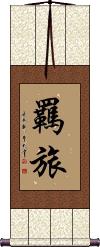
羈旅 is a Chinese and Japanese title for traveler/traveller, to live abroad, to be traveling, or just travel.
Better to Travel 10,000 Miles than Read 10,000 Books
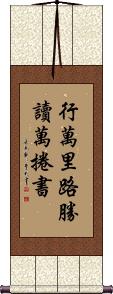
行万里路胜读万卷书 translates a few ways:
To travel ten thousand miles beats reading ten-thousand books.
Better to travel ten thousand li than to read ten thousand books. (a “li” is an ancient Chinese mile)
Traveling thousands of miles is better than reading thousands of books.
No matter how you slice it, this Chinese proverb is claiming that experience is more profound and meaningful than what you can get from a book. Go do it! Don't just read about it.
Traveler
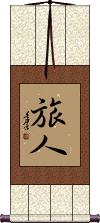
旅人 is a Japanese title for traveller/traveler, wayfarer, nomad, a person who goes from place to place, pilgrim, etc.
Traveler / Wanderer / Vagabond / Rolling Stone
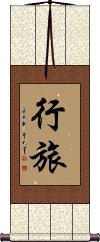
行旅 is a Chinese and Japanese title meaning traveler/traveller, wanderer, vagabond, rolling stone, or traveling/travelling.
Traver

特拉弗 is the name Traver in Chinese (Mandarin).
Traver

トラバー is the name Traver in Japanese Katakana.
Note: Because this title is entirely Japanese Katakana, it should be written by a Japanese calligrapher.
Travers

特拉弗斯 is the name Travers in Chinese (Mandarin).
Travers

トラバース is the name Travers in Japanese Katakana.
Note: Because this title is entirely Japanese Katakana, it should be written by a Japanese calligrapher.
The following table may be helpful for those studying Chinese or Japanese...
| Title | Characters | Romaji (Romanized Japanese) | Various forms of Romanized Chinese | |
| Advance Bravely Indomitable Spirit | 勇往直前 | yǒng wǎng zhí qián yong3 wang3 zhi2 qian2 yong wang zhi qian yongwangzhiqian | yung wang chih ch`ien yungwangchihchien yung wang chih chien |
|
| Black Raven | 烏 乌 | karasu | wū / wu1 / wu | |
| The Brave Have No Fears | 勇者不懼 勇者不惧 | yuu sha fu ku yuushafuku yu sha fu ku | yǒng zhě bú jù yong3 zhe3 bu2 ju4 yong zhe bu ju yongzhebuju | yung che pu chü yungchepuchü |
| Brave Warrior | 勇士 | yuu shi / yuushi / yu shi | yǒng shì / yong3 shi4 / yong shi / yongshi | yung shih / yungshih |
| Brave Heart | 勇敢的心 | yǒng gǎn de xīn yong3 gan3 de xin1 yong gan de xin yonggandexin | yung kan te hsin yungkantehsin |
|
| Braven | 布雷文 | bù léi wén bu4 lei2 wen2 bu lei wen buleiwen | pu lei wen puleiwen |
|
| Braven | ブレイブン | bureibun | ||
| Bravery Courage | 勇敢 | yuu kan / yuukan / yu kan | yǒng gǎn / yong3 gan3 / yong gan / yonggan | yung kan / yungkan |
| Bravery Courage | 勇 | isamu / yu- | yǒng / yong3 / yong | yung |
| Brave the Waves | 破浪 | ha rou / harou / ha ro | pò làng / po4 lang4 / po lang / polang | p`o lang / polang / po lang |
| Bravery Courage | 勇氣 勇气 / 勇気 | yuuki / yuki | yǒng qì / yong3 qi4 / yong qi / yongqi | yung ch`i / yungchi / yung chi |
| Craven | 克雷文 | kè léi wén ke4 lei2 wen2 ke lei wen keleiwen | k`o lei wen koleiwen ko lei wen |
|
| Craven | クレイヴン | kureiiin / kureiin | ||
| Cravens | 克雷文斯 | kè léi wén sī ke4 lei2 wen2 si1 ke lei wen si keleiwensi | k`o lei wen ssu koleiwenssu ko lei wen ssu |
|
| Cravens | クレイヴンズ | kureiiinzu / kureiinzu | ||
| Craver | 克雷弗 | kè léi fú ke4 lei2 fu2 ke lei fu keleifu | k`o lei fu koleifu ko lei fu |
|
| Craver | クレイバー | kureibaa / kureiba | ||
| Fortune favors the brave | 勇者は幸運に恵まれる | yuusha ha kouun ni megumareru yusha ha koun ni megumareru | ||
| Fortune Favors The Brave | 命運鐘情於勇士 命运钟情于勇士 | mìng yùn zhōng qíng yú yǒng shì ming4 yun4 zhong1 qing2 yu2 yong3 shi4 ming yun zhong qing yu yong shi | ming yün chung ch`ing yü yung shih ming yün chung ching yü yung shih |
|
| Graves | 格雷夫斯 | gé léi fū sī ge2 lei2 fu1 si1 ge lei fu si geleifusi | ko lei fu ssu koleifussu |
|
| Graves | グレイブス | gureibusu | ||
| Hargrave | 哈格雷夫 | hā gé léi fū ha1 ge2 lei2 fu1 ha ge lei fu hageleifu | ha ko lei fu hakoleifu |
|
| Hargrave | ハーグレイヴ | haagureiii / hagureii | ||
| Hargraves | 哈格雷夫斯 | hā gé léi fū sī ha1 ge2 lei2 fu1 si1 ha ge lei fu si hageleifusi | ha ko lei fu ssu hakoleifussu |
|
| Hargraves | ハーグレイヴス | haagureiiisu hagureiisu | ||
| Journey Travel | 旅行 | ryokou / ryoko | lǚ xíng / lv3 xing2 / lv xing / lvxing | lü hsing / lühsing |
| Journey Travel | 旅 | ryo / tabi | lǚ / lu:3 / lu: | lü |
| Mountain Travels Poem by Dumu | 遠上寒山石徑斜白雲生處有人家停車坐愛楓林晚霜葉紅於二月花 远上寒山石径斜白云生处有人家停车坐爱枫林晚霜叶红于二月花 | yuǎn shàng hán shān shí jìng xiá bái yún shēng chù yǒu rén jiā tíng chē zuò ài fēng lín wǎn shuàng yè hóng yú èr yuè huā yuan3 shang4 han2 shan1 shi2 jing4 xia2 bai2 yun2 sheng1 chu4 you3 ren2 jia1 ting2 che1 zuo4 ai4 feng1 lin2 wan3 shuang4 ye4 hong2 yu2 er4 yue4 hua1 yuan shang han shan shi jing xia bai yun sheng chu you ren jia ting che zuo ai feng lin wan shuang ye hong yu er yue hua | yüan shang han shan shih ching hsia pai yün sheng ch`u yu jen chia t`ing ch`e tso ai feng lin wan shuang yeh hung yü erh yüeh hua yüan shang han shan shih ching hsia pai yün sheng chu yu jen chia ting che tso ai feng lin wan shuang yeh hung yü erh yüeh hua |
|
| Musgrave | 穆斯格雷夫 | mù sī gé léi fū mu4 si1 ge2 lei2 fu1 mu si ge lei fu musigeleifu | mu ssu ko lei fu mussukoleifu |
|
| Musgrave | マスグレイブ | masugureibu | ||
| Praveen | 普拉文 | pǔ lā wén pu3 la1 wen2 pu la wen pulawen | p`u la wen pulawen pu la wen |
|
| Praveen | プラビーン | purabiin / purabin | ||
| Raven Crow | 鴉 鸦 | karasu | yā / ya1 / ya | |
| Read 10,000 Books, Travel 10,000 Miles | 讀萬卷書行萬里路 读万卷书行万里路 | dú wàn juǎn shū, xíng wàn lǐ lù du2 wan4 juan3 shu1 xing2 wan4 li3 lu4 du wan juan shu xing wan li lu duwanjuanshuxingwanlilu | tu wan chüan shu hsing wan li lu | |
| Sand Gravel | 砂 | suna | shā / sha1 / sha | |
| Seagraves | 西格雷夫斯 | xī gé léi fū sī xi1 ge2 lei2 fu1 si1 xi ge lei fu si xigeleifusi | hsi ko lei fu ssu hsikoleifussu |
|
| Seagraves | シーグレーブス | shiigureebusu shigurebusu | ||
| Strong and brave | 剛健勇猛 | gō ken yū mō gōkenyūmō | gāng jiàn yǒng měng gang1 jian4 yong3 meng3 gang jian yong meng gangjianyongmeng | kang chien yung meng kangchienyungmeng |
| Traveler To Live Abroad | 羈旅 羁旅 | kiryo | jī lǚ / ji1 lv3 / ji lv / jilv | chi lü / chilü |
| Better to Travel 10,000 Miles than Read 10,000 Books | 行萬里路勝讀萬捲書 行万里路胜读万卷书 | xíng wàn lǐ lù shèng dú wàn juǎn shū xing2 wan4 li3 lu4 sheng4 du2 wan4 juan3 shu1 xing wan li lu sheng du wan juan shu | hsing wan li lu sheng tu wan chüan shu | |
| Traveler | 旅人 | ryojin / tabibito / tabinin | ||
| Traveler Wanderer Vagabond Rolling Stone | 行旅 | kou ryo / kouryo / ko ryo | xíng lǚ / xing2 lv3 / xing lv / xinglv | hsing lü / hsinglü |
| Traver | 特拉弗 | tè lā fú te4 la1 fu2 te la fu telafu | t`e la fu telafu te la fu |
|
| Traver | トラバー | torabaa / toraba | ||
| Travers | 特拉弗斯 | tè lā fú sī te4 la1 fu2 si1 te la fu si telafusi | t`e la fu ssu telafussu te la fu ssu |
|
| Travers | トラバース | torabaasu / torabasu | ||
| In some entries above you will see that characters have different versions above and below a line. In these cases, the characters above the line are Traditional Chinese, while the ones below are Simplified Chinese. | ||||

Successful Chinese Character and Japanese Kanji calligraphy searches within the last few hours...



