Many custom options...


And formats...



Poverty in Chinese / Japanese...
Buy a Poverty calligraphy wall scroll here!
Personalize your custom “Poverty” project by clicking the button next to your favorite “Poverty” title below...
Do not fear poverty; Fear low ambitions
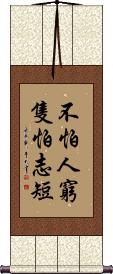
不怕人窮隻怕志短 is a Chinese proverb that literally translates as: It is not poverty that is to be feared; It is low ambition.
Figuratively, this means: It is not poverty but a lack of lofty aspiration that is to be regretted.
Overcome
Overcoming Hardships
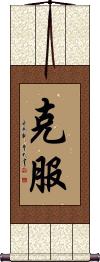
In Chinese, Japanese Kanji, and old Korean Hanja, 克服 means “overcome” (as in overcoming hardships, etc.). It can also mean to conquer, to put up with, or to endure.
This can be a conquest over a problem, disease, handicap, poverty, or illness. Other definitions include overcoming, bringing under control, subjugation, or victory over something.
This can be used as an inspirational wall scroll to remind someone to try to overcome difficulties that may arise in life.
Brown
Single character for brown color
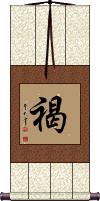
褐 is the most simple way to express brown in Chinese.
It also means brown in Japanese but this character is not often written alone in Japanese (they would tend to write 褐色 (brown color) to refer to brown or the color of tanned skin.
In some contexts, this can refer to gray or a dark color, or coarse hemp cloth.
In the Buddhist context, it can refer to a coarse serge (cheaply sewn clothing) hence poverty.
Note: In Taiwanese Mandarin, this is spoken with the 2nd or rising tone instead of the 4th or falling tone used in the mainland.
Wabi Sabi

侘び寂び is Wabi-Sabi, the aesthetic sense in Japanese art emphasizing quiet simplicity and subdued refinement.
侘び represents the beauty to be found in poverty and simplicity, subdued taste, quiet refinement, and sober refinement.
寂び conveys solitude, tranquility, silence, quiet, calm, or stillness.
This is the full four-character version of Wabi-Sabi. There is also an abbreviated version, 侘寂, which you may see in logos or when a Kanji-only version of Wabi-Sabi is desired.
More about this subject at Wikipedia: Wabi Sabi
Note: Because this selection contains some special Japanese Hiragana characters, it should be written by a Japanese calligrapher.
Good Luck / Good Fortune
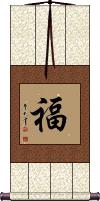
福 is pronounced “fu” in Chinese.
The character “fu” is posted by virtually all Chinese people on the doors of their homes during the Spring Festival (closely associated with the Chinese New Year).
One tradition from the Zhou Dynasty (beginning in 256 B.C.) holds that putting a fu symbol on your front door will keep the goddess of poverty away.
福 literally means good fortune, prosperity, blessed, blessedness, happiness, and fulfillment.
You'll also see this character in Vietnam (where Chinese characters were the written form until a romanization reform) where it is pronounced Phúc - a word commonly used in Vietnamese names because of its good meaning.
See Also: Lucky
Not the results for Poverty that you were looking for?
Below are some entries from our dictionary that may match your Poverty search...
| Characters If shown, 2nd row is Simp. Chinese |
Pronunciation Romanization |
Simple Dictionary Definition |
褐 see styles |
hè he4 ho kachi; katsu; kachin(ok) かち; かつ; かちん(ok) |
More info & calligraphy: Brown(1) (See 褐色) dark indigo (almost black); (2) coarse cloth Coarse serge, hence poverty. |
安貧樂道 安贫乐道 see styles |
ān pín lè dào an1 pin2 le4 dao4 an p`in le tao an pin le tao |
More info & calligraphy: Better to be Happy than Rich |
釋迦牟尼 释迦牟尼 see styles |
shì jiā móu ní shi4 jia1 mou2 ni2 shih chia mou ni Shakamuni |
More info & calligraphy: Shakyamuni / The Buddha釋迦文 (釋迦文尼); 釋伽文 Śākyamuni, the saint of the Śākya tribe. muni is saint, holy man, sage, ascetic monk; it is: intp. as 仁 benevolent, charitable, kind, also as 寂默 one who dwells in seclusion. After '500 or 550' previous incarnations, Śākyamuni finally attained to the state of Bodhisattva, was born in the Tuṣita heaven, and descended as a white elephant, through her right side, into the womb of the immaculate Māyā, the purest woman on earth; this was on the 8th day of the 4th month; next year on the 8th day of the 2nd month he was born from her right side painlessly as she stood under a tree in the Lumbinī garden. For the subsequent miraculous events v. Eitel. also the 神通遊戲經 (Lalitavistara), the 釋迦如來成道記, etc. Simpler statements say that he was born the son of Śuddhodana, of the kṣatriya caste, ruler of Kapilavastu, and Māyā his wife; that Māyā died seven days later, leaving him to be brought up by her sister Prājapati; that in due course he was married to Yaśodharā who bore him a son, Rāhula; that in search of truth he left home, became an ascetic, severely disciplined himself, and finally at 35 years of age, under a tree, realized that the way of release from the chain of rebirth and death lay not in asceticism but in moral purity; this he explained first in his four dogmas, v. 四諦 and eightfold noble way 八正道, later amplified and developed in many sermons. He founded his community on the basis of poverty, chastity, and insight or meditation, ad it became known as Buddhism, as he became known as Buddha, the enlightened. His death was probably in or near 487 B.C., a few years before that of Confucius in 479. The sacerdotal name of his family is Gautama, said to be the original name of the whole clan, Śākya being that of his branch, v. 瞿, 喬.; his personal name was Siddhārtha, or Sarvārthasiddha, v. 悉. |
佗 see styles |
tuó tuo2 t`o to ta わび |
carry on the back (irregular kanji usage) the beauty to be found in poverty and simplicity; subdued taste; quiet refinement; sober refinement; wabi He, she, it; other; i.e. 他; translit. tha, e.g. in sthāna , sthāman. |
侘 see styles |
chà cha4 ch`a cha wabi わび |
boast; despondent (irregular okurigana usage) the beauty to be found in poverty and simplicity; subdued taste; quiet refinement; sober refinement; wabi |
寒 see styles |
hán han2 han kan かん |
cold; poor; to tremble (n,int) cold; (surname) Kan śīta. Cold; in poverty; plain. |
貧 贫 see styles |
pín pin2 p`in pin hanawa はなわ |
poor; inadequate; deficient; garrulous (1) poverty; penury; want; need; (2) (archaism) insufficiency; shortage; deficiency; (personal name) Hanawa Poor, in poverty.; The two kinds of poverty: of goods, and of the religion. |
二貧 二贫 see styles |
èr pín er4 pin2 erh p`in erh pin nihin |
two kinds of poverty |
佗び see styles |
wabi わび |
(irregular kanji usage) the beauty to be found in poverty and simplicity; subdued taste; quiet refinement; sober refinement; wabi |
佗人 see styles |
wabibito わびびと |
lonesome person; unwanted person; poverty-stricken person |
侘び see styles |
wabi わび |
the beauty to be found in poverty and simplicity; subdued taste; quiet refinement; sober refinement; wabi |
倥傯 倥偬 see styles |
kǒng zǒng kong3 zong3 k`ung tsung kung tsung |
pressing; urgent; poverty-stricken; destitute See: 倥偬 |
兩財 两财 see styles |
liǎng cái liang3 cai2 liang ts`ai liang tsai ryōzai |
The two talents, or rewards from previous incarnations, 内 inner, i. e. bodily or personal conditions, and 外 external, i. e. wealth or poverty, etc. |
匱乏 匮乏 see styles |
kuì fá kui4 fa2 k`uei fa kuei fa gibō |
to be deficient in something; to be short of something (supplies, money etc) poverty |
哭窮 哭穷 see styles |
kū qióng ku1 qiong2 k`u ch`iung ku chiung |
to bewail one's poverty; to complain about being hard up; to pretend to be poor |
困窮 see styles |
konkyuu / konkyu こんきゅう |
(n,vs,vi) (1) poverty; need; destitution; (n,vs,vi) (2) having great difficulty with; struggling greatly with; being in distress |
困頓 困顿 see styles |
kùn dùn kun4 dun4 k`un tun kun tun |
fatigued; exhausted; poverty-stricken; in straitened circumstances |
固窮 固穷 see styles |
gù qióng gu4 qiong2 ku ch`iung ku chiung |
to endure poverty stoically |
大意 see styles |
dà yi da4 yi5 ta i masamoto まさもと |
careless synopsis; precis; summary; gist; outline; (personal name) Masamoto The general meaning or summary of a sutra or śāstra. Also, the name of a youth, a former incarnation of the Buddha : to save his nation from their poverty, he plunged into the sea to obtain a valuable pearl from the sea-god who, alarmed by the aid rendered by Indra, gave up the pearl ; v. 大意經. |
寒酸 see styles |
hán suān han2 suan1 han suan kansan かんさん |
wretched; poverty-stricken; unpresentable (for clothing, gifts etc) (noun - becomes adjective with の) suffering in poverty; abject poverty |
扶貧 扶贫 see styles |
fú pín fu2 pin2 fu p`in fu pin |
assistance to the poor; poverty alleviation |
斷頓 断顿 see styles |
duàn dùn duan4 dun4 tuan tun |
to go without meals (due to poverty or scarcity) |
檀越 see styles |
tán yuè tan2 yue4 t`an yüeh tan yüeh danotsu だんおつ |
(Buddhism) benefactor (designation of a lay person by a monk) alms-giver; person who donates to a monk or a temple; dana-pati dānapati, an almsgiver, patron; various definitions are given, e.g. one who escapes the karma of poverty by giving. |
沙門 沙门 see styles |
shā mén sha1 men2 sha men shamon しゃもん |
monk (Sanskrit: Sramana, originally refers to north India); Buddhist monk {Buddh} shramana (wandering monk); (surname) Shamon śramaṇa. 桑門; 娑門; 喪門; 沙門那; 舍羅磨拏; 沙迦懣曩; 室摩那拏 (1) Ascetics of all kinds; 'the Sarmanai, or Samanaioi, or Germanai of the Greeks, perhaps identical also with the Tungusian Saman or Shaman.' Eitel. (2) Buddhist monks 'who 'have left their families and quitted the passions', the Semnoi of the Greeks'. Eitel. Explained by 功勞 toilful achievement, 勤息 diligent quieting (of the mind and the passions), 淨志 purity of mind, 貧道 poverty. 'He must keep well the Truth, guard well every uprising (of desire), be uncontaminated by outward attractions, be merciful to all and impure to none, be not elated to joy nor harrowed by distress, and able to bear whatever may come.' The Sanskrit root is śram, to make effort; exert oneself, do austerities. |
淪落 沦落 see styles |
lún luò lun2 luo4 lun lo rinraku りんらく |
to degenerate; impoverished; to fall (into poverty); to be reduced (to begging) (n,vs,vi) (See 堕落) ruin; depravity; corruption |
清貧 清贫 see styles |
qīng pín qing1 pin2 ch`ing p`in ching pin seihin / sehin せいひん |
poor but upright; destitute poverty without selfish desire; honourable poverty (honorable); being poor yet honest |
減貧 减贫 see styles |
jiǎn pín jian3 pin2 chien p`in chien pin |
to reduce poverty; poverty reduction |
漂零 see styles |
piāo líng piao1 ling2 p`iao ling piao ling hyourei / hyore ひょうれい |
variant of 飄零|飘零[piao1 ling2] (rare) being ruined (reduced to poverty); falling low; going under; coming to ruin |
福田 see styles |
fú tián fu2 tian2 fu t`ien fu tien fuguda ふぐだ |
field for growing happiness; domain for practices leading to enlightenment (Buddhism) (surname) Fuguda The field of blessedness, i.e. any sphere of kindness, charity, or virtue; there are categories of 2, 3, 4, and 8, e.g. that of study and that of charity; parents, teachers, etc.; the field of poverty as a monk, etc. |
窘迫 see styles |
jiǒng pò jiong3 po4 chiung p`o chiung po |
poverty-stricken; very poor; hard-pressed; in a predicament; embarrassed |
Click here for more Poverty results from our dictionary
The following table may be helpful for those studying Chinese or Japanese...
| Title | Characters | Romaji (Romanized Japanese) | Various forms of Romanized Chinese | |
| Do not fear poverty; Fear low ambitions | 不怕人窮隻怕志短 不怕人穷只怕志短 | bú pà rén qióng zhǐ pà zhì duǎn bu2 pa4 ren2 qiong2 zhi3 pa4 zhi4 duan3 bu pa ren qiong zhi pa zhi duan buparenqiongzhipazhiduan | pu p`a jen ch`iung chih p`a chih tuan pu pa jen chiung chih pa chih tuan |
|
| Overcome | 克服 / 剋服 克服 | koku fuku / kokufuku | kè fú / ke4 fu2 / ke fu / kefu | k`o fu / kofu / ko fu |
| Brown | 褐 | katsu | hè / he4 / he | ho |
| Wabi Sabi | 侘び寂び | wabi sabi / wabisabi | ||
| Good Luck Good Fortune | 福 | fuku | fú / fu2 / fu | |
| In some entries above you will see that characters have different versions above and below a line. In these cases, the characters above the line are Traditional Chinese, while the ones below are Simplified Chinese. | ||||

Successful Chinese Character and Japanese Kanji calligraphy searches within the last few hours...



