Many custom options...


And formats...



Poli in Chinese / Japanese...
Buy a Poli calligraphy wall scroll here!
Personalize your custom “Poli” project by clicking the button next to your favorite “Poli” title below...
Switched to secondary search mode due to lack of results using primary.
These secondary results may not be very accurate. Try a different but similar meaning word or phrase for better results. Or...
Look up Poli in my Japanese Kanji & Chinese Character Dictionary(My dictionary is a different system then the calligraphy search you just tried)
If you want a special phrase, word, title, name, or proverb, feel free to contact me, and I will translate your custom calligraphy idea for you.
1. Apolinario
2. Appoline
4. To cut and polish each other
5. Hipolito
6. Ippolito
7. Ladispoli
8. Napoli
9. Napolitano
10. Police
11. Police / Public Security Bureau
12. Poling
13. Polite
14. Polito
Apolinario
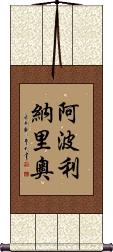
阿波利納里奧 is the transliteration to Mandarin Chinese for the Latin / Spanish name Apolinario.
Apolinario
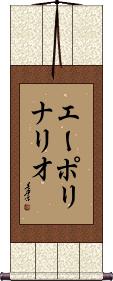
エーポリナリオ is the name Apolinario in Japanese (Katakana).
Note: Because this title is entirely Japanese Katakana, it should be written by a Japanese calligrapher.
Appoline
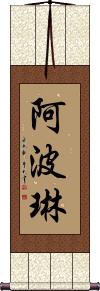
This is a common Mandarin Chinese transliteration for the female French name Appoline.
Appoline
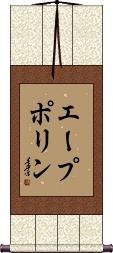
エープポリン is the name Appoline in Japanese (Katakana).
Note: Because this title is entirely Japanese Katakana, it should be written by a Japanese calligrapher.
Courtesy / Politeness
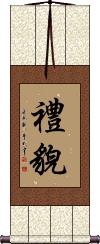
禮貌 is a Chinese and old Korean word that means courtesy or politeness.
Courtesy is being polite and having good manners. When you speak and act courteously, you give others a feeling of being valued and respected. Greet people pleasantly. Bring courtesy home. Your family needs it most of all. Courtesy helps life to go smoothly.
If you put the words "fēi cháng bù" in front of this, it is like adding "very much not." it’s a great insult in China, as nobody wants to be called "extremely discourteous" or "very much impolite."
To cut and polish each other

相切相磋 means, “to cut and polish each other” or “mutual cutting and polishing.”
This is an original Chinese phrase (also known in Japan), though it matches the idea of “Iron sharpens iron; so one person sharpens another.” (Proverbs 27:17).
This was derived at some point from the Chinese phrase, 切磋琢磨, which means “cutting, filing, carving, polishing.”
Hipolito
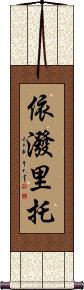
This is a common Mandarin Chinese transliteration for the male Portuguese/Latin name Hipolito.
Hipolito
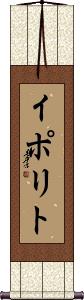
イポリト is the name Hipolito in Japanese (Katakana).
Note: Because this title is entirely Japanese Katakana, it should be written by a Japanese calligrapher.
Ippolito

伊波利托 is the name Ippolito in Chinese (Mandarin).
Ippolito

イッポリト is the name Ippolito in Japanese Katakana.
Note: Because this title is entirely Japanese Katakana, it should be written by a Japanese calligrapher.
Ladispoli

拉迪斯波利 is the name Ladispoli in Chinese (Mandarin).
Ladispoli

ラディスポリ is the name Ladispoli in Japanese Katakana.
Note: Because this title is entirely Japanese Katakana, it should be written by a Japanese calligrapher.
Napoli

那不勒斯 is the name Napoli in Chinese (Mandarin).
Napoli

ナポリ is the name Napoli in Japanese Katakana.
Note: Because this title is entirely Japanese Katakana, it should be written by a Japanese calligrapher.
Napolitano

納波利塔諾 is the name Napolitano in Chinese (Mandarin).
Napolitano

ナポリターノ is the name Napolitano in Japanese Katakana.
Note: Because this title is entirely Japanese Katakana, it should be written by a Japanese calligrapher.
Police
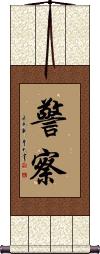
警察 is the Chinese, Japanese Kanji, and old Korean Hanja title for police (or police officer).
Police cars all over China and Japan have these characters painted on the doors. Police officers' helmets and equipment are also emblazoned with these two characters.
Police / Public Security Bureau
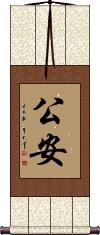
公安 is the Chinese, Japanese Kanji, and old Korean Hanja title for (The Ministry of) Public Security. 公安 can also generally mean public safety, public security, or public welfare. It is a positive term in Japan, where some even name their daughters “Kouan” (this title).
In China, this is the kinder name for the PSB or Public Security Bureau. It's really the national police of China - occasionally brutal and seldom properly-trained or educated. Once in a while, you find a PSB officer who lives up to the title of 公安. Before the 1989 massacre, it was the PSB officers who refused to stop nor kill any of the protesting college students (so they're not all bad). The Chinese government had to call in soldiers from Inner Mongolia to kill thousands of protesters.
Poling

波林 is the name Poling in Chinese (Mandarin).
Poling

ポリング is the name Poling in Japanese Katakana.
Note: Because this title is entirely Japanese Katakana, it should be written by a Japanese calligrapher.
Polite

ポライト is the name Polite in Japanese Katakana.
Note: Because this title is entirely Japanese Katakana, it should be written by a Japanese calligrapher.
Polito

波利托 is the name Polito in Chinese (Mandarin).
Polito

ポリト is the name Polito in Japanese Katakana.
Note: Because this title is entirely Japanese Katakana, it should be written by a Japanese calligrapher.
Cutting and Polishing

切磋琢磨 literally means “cutting, filing, carving, polishing” in Chinese, Japanese Kanji, and old Korean Hanja.
Originally describing polishing jade, 切磋琢磨 became a metaphor for people refining one another through study or interaction.
This can have the following interpretations:
To learn by exchanging ideas or experiences.
Mutual encouragement (to improve).
Cultivating one's character by studying hard.
Peers improving each other.
Mutual refinement.
Diligent application.
Intellectual sharpening.
In the context of self-reflection, it can mean discussing and pondering.
切磋琢磨 is probably the closest philosophical equivalent to “iron sharpens iron.”
The following table may be helpful for those studying Chinese or Japanese...
| Title | Characters | Romaji (Romanized Japanese) | Various forms of Romanized Chinese | |
| Apolinario | 阿波利納里奧 阿波利纳里奥 | ā bō lì nà lǐ ào a1 bo1 li4 na4 li3 ao4 a bo li na li ao abolinaliao | a po li na li ao apolinaliao |
|
| Apolinario | エーポリナリオ | eeporinario eporinario | ||
| Appoline | 阿波琳 | ā bō lín a1 bo1 lin2 a bo lin abolin | a po lin apolin |
|
| Appoline | エープポリン | eepuporin / epuporin | ||
| Courtesy Politeness | 禮貌 礼貌 | lǐ mào / li3 mao4 / li mao / limao | ||
| To cut and polish each other | 相切相磋 | sousetsu sousa sousetsusousa sosetsu sosa | xiāng qiē xiāng cuō xiang1 qie1 xiang1 cuo1 xiang qie xiang cuo xiangqiexiangcuo | hsiang ch`ieh hsiang ts`o hsiangchiehhsiangtso hsiang chieh hsiang tso |
| Hipolito | 依潑里托 依泼里托 | yī pō lǐ tuō yi1 po1 li3 tuo1 yi po li tuo yipolituo | i p`o li t`o ipolito i po li to |
|
| Hipolito | イポリト | iporito | ||
| Ippolito | 伊波利托 | yī bō lì tuō yi1 bo1 li4 tuo1 yi bo li tuo yibolituo | i po li t`o ipolito i po li to |
|
| Ippolito | イッポリト | ipporito / iporito | ||
| Ladispoli | 拉迪斯波利 | lā dí sī bō lì la1 di2 si1 bo1 li4 la di si bo li ladisiboli | la ti ssu po li latissupoli |
|
| Ladispoli | ラディスポリ | radisupori | ||
| Napoli | 那不勒斯 | nà bù lēi sī na4 bu4 lei1 si1 na bu lei si nabuleisi | na pu lei ssu napuleissu |
|
| Napoli | ナポリ | napori | ||
| Napolitano | 納波利塔諾 纳波利塔诺 | nà bō lì tǎ nuò na4 bo1 li4 ta3 nuo4 na bo li ta nuo nabolitanuo | na po li t`a no napolitano na po li ta no |
|
| Napolitano | ナポリターノ | naporitaano naporitano | ||
| Police | 警察 | keisatsu | jǐng chá / jing3 cha2 / jing cha / jingcha | ching ch`a / chingcha / ching cha |
| Police Public Security Bureau | 公安 | kou an / kouan / ko an | gōng ān / gong1 an1 / gong an / gongan | kung an / kungan |
| Poling | 波林 | bō lín / bo1 lin2 / bo lin / bolin | po lin / polin | |
| Poling | ポリング | poringu | ||
| Polite | ポライト | poraito | ||
| Polito | 波利托 | bō lì tuō bo1 li4 tuo1 bo li tuo bolituo | po li t`o polito po li to |
|
| Polito | ポリト | porito | ||
| Cutting and Polishing | 切磋琢磨 | sessata kuma sessatakuma sesata kuma | ||
| In some entries above you will see that characters have different versions above and below a line. In these cases, the characters above the line are Traditional Chinese, while the ones below are Simplified Chinese. | ||||

Successful Chinese Character and Japanese Kanji calligraphy searches within the last few hours...



