Many custom options...


And formats...



Orgi in Chinese / Japanese...
Buy an Orgi calligraphy wall scroll here!
Personalize your custom “Orgi” project by clicking the button next to your favorite “Orgi” title below...
Switched to secondary search mode due to lack of results using primary.
These secondary results may not be very accurate. Try a different but similar meaning word or phrase for better results. Or...
Look up Orgi in my Japanese Kanji & Chinese Character Dictionary(My dictionary is a different system then the calligraphy search you just tried)
If you want a special phrase, word, title, name, or proverb, feel free to contact me, and I will translate your custom calligraphy idea for you.
1. Forgive
3. Forgive
7. Forgive Yourself / Release Yourself
8. Forgiveness
9. Georgia
10. Georgiana
11. Georgie
12. Georgina
13. Giorgi
14. Giorgia
15. Giorgio
16. God Forgive Me
17. Kindness and Forgiving Nature
18. Morgin
Forgive
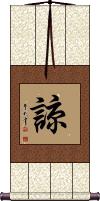
This single character means “forgive” in Chinese.
In Korean, this kind of means forgive but also has slightly different definitions of considering, excuse, faithful or believe.
Forgive
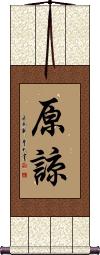
This two-character word means “forgive” in Chinese.
It can also be defined as “to pardon” or “to excuse.” 原諒 is a kind of general forgiveness.
Begging Forgiveness
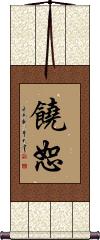
饒恕 is a Chinese word that is a kind of forgiveness that you would beg for like a servant begging a master.
This can also be the forgiveness that a person would beg from the king or God.
This word suggests that this is forgiveness for something really bad (a terrible crime or sin).
Forgive
Deep heartfelt forgiveness
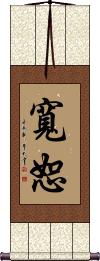
寛恕 is a word of Chinese origin means forgive or forgiveness.
寬恕 is a deep kind of forgiveness from the bottom of your heart.
In a religious context, this is the kind of forgiveness that you beg God for and that God grants you.
In Korean Hanja, this can also be defined as forbearance or leniency.
In Japanese Kanji, beyond forgiveness, this can also mean magnanimity or generosity.
While we don't actively recommend Asian tattoos, this would be the forgiveness title that is best for a tattoo in most cases.
 Note: The first character can also be written in the form shown to the right (especially in Japanese). If you have a preference, please let us know in the "special instructions" when you place your order.
Forgive and Forget
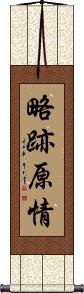
略跡原情 is a Chinese proverb that means “to overlook past faults,” or “forgive and forget.”
It's more literally, “Abridge or make small the scars from your past emotions.” You should let it go.
The character breakdown:
略 (lüè) abbreviation; omission; abridge.
跡 (jī) ruins; scar; traces.
原 (yuán) former.
情 (qíng) feeling; emotion.
Forgive and Forget
Confucian Proverb
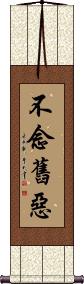
不念舊惡 is a Chinese proverb that can be translated as “Do not recall old grievances,” or more simply as “Forgive and forget.”
The character breakdown:
不 (bù) not; no; don't.
念 (niàn) read aloud.
舊 (jiù) old; former.
惡 (è) wicked deeds; grievances; sins.
This proverb comes from the Analects of Confucius.
Forgive and Forget
Water Under the Bridge
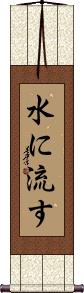
水に流す is a Japanese proverb that suggests that “water continues to flow.”
It's similar to our English phrase, “Water under the bridge.” The perceived meaning is, “Forgive and forget.”
I have also seen this translated as “Don't cry over spilled milk.”
Note: Because this selection contains some special Japanese Hiragana characters, it should be written by a Japanese calligrapher.
Forgive Me of My Sins
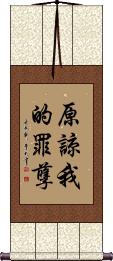
原諒我的罪孽 is a religious phrase, which means exactly what the title suggests.
See Also: Christian
Forgive Yourself
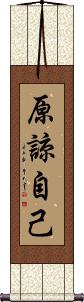
原諒自己 is how to write “forgive yourself” in Chinese.
The first two characters mean “to excuse,” “to forgive,” or “to pardon.”
The last two characters mean “self” (reflexive pronoun), “yourself,” or “oneself.”
Forgive Yourself / Release Yourself
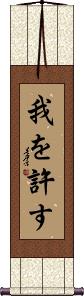
我を許す is how to write “forgive yourself” in Japanese.
The first two characters mean “regarding myself.”
The last two characters mean “to forgive,” “to excuse (from),” “to pardon,” “to release,” “to let off,” “to permit,” “to allow,” and/or “to approve.”
Note: Because this selection contains some special Japanese Hiragana characters, it should be written by a Japanese calligrapher.
Forgiveness (from the top down)
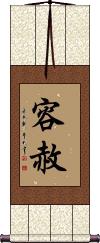
容赦 is the kind of forgiveness that a king might give to his subjects for crimes or wrong-doings.
容赦 is a rather high-level forgiveness. Meaning that it goes from a higher level to a lower (not the reverse).
Alone, the first character can mean “to bear,” “to allow,” and/or “to tolerate,” and the second can mean “to forgive,” “to pardon,” and/or “to excuse.”
When you put both characters together, you get forgiveness, pardon, mercy, leniency, or going easy (on someone).
See Also: Benevolence
Forgiveness
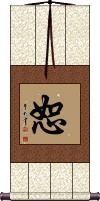
恕 means to forgive, show mercy, absolve, or excuse in Chinese and Korean Hanja (though mostly used in compound words in Korean).
恕 incorporates the pictogram of a heart at the bottom, and a woman and a mouth at the top. The heart portion has the most significance, as it is suggested that it is the heart's nature to forgive.
In Asian culture, as with most other cultures, forgiveness is an act of benevolence and altruism. In forgiving, you put yourself in someone else's shoes and show them the kindness that you would want them to show you. Confucius referred to this quality as “human-heartedness.”
Georgia
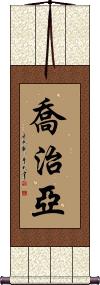
喬治亞 is the name Georgia in Chinese (Mandarin).
Georgia
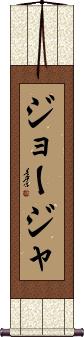
ジョージャ is the name Georgia in Japanese.
Note: Because this title is entirely Japanese Katakana, it should be written by a Japanese calligrapher.
Georgiana
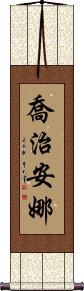
喬治安娜 is the name Georgiana in Chinese (Mandarin).
Georgiana
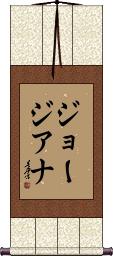
ジョージアナ is the name Georgiana in Japanese Katakana.
Note: Because this title is entirely Japanese Katakana, it should be written by a Japanese calligrapher.
Georgie
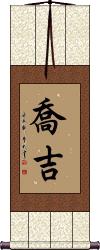
喬吉 is the name Georgie in Chinese (Mandarin).
Georgie
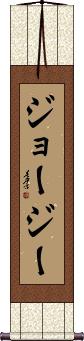
ジョージー is the name Georgie in Japanese (Katakana).
Note: Because this title is entirely Japanese Katakana, it should be written by a Japanese calligrapher.
Georgina
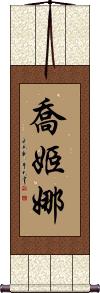
喬姬娜 is the transliteration to Mandarin Chinese for the Latin / Spanish name Georgina.
Georgina
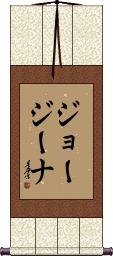
ジョージーナ is the name Georgina in Japanese.
Note: Because this title is entirely Japanese Katakana, it should be written by a Japanese calligrapher.
Giorgi
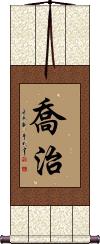
喬治 is the name Giorgi in Chinese (Mandarin).
Giorgi

ジョルジ is the name Giorgi in Japanese Katakana.
Note: Because this title is entirely Japanese Katakana, it should be written by a Japanese calligrapher.
Giorgia
喬治亞 is the name Giorgia in Chinese (Mandarin).
Giorgia
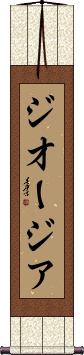
ジオージア is the name Giorgia in Japanese (Katakana).
Note: Because this title is entirely Japanese Katakana, it should be written by a Japanese calligrapher.
Giorgio
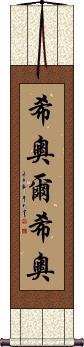
希奧爾希奧 is the transliteration to Mandarin Chinese for the Latin / Spanish name Giorgio.
Giorgio
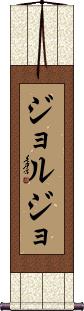
ジョルジョ is the name Giorgio in Japanese.
Note: Because this title is entirely Japanese Katakana, it should be written by a Japanese calligrapher.
God Forgive Me
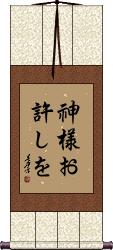
神様お許しを is how to write “God Forgive Me” in Japanese.
There is an essence of humble begging or “please” implied in this phrase.
Note: Because this selection contains some special Japanese Hiragana characters, it should be written by a Japanese calligrapher.
Kindness and Forgiving Nature
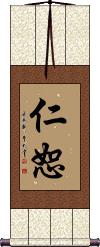
仁恕 is a word in Chinese and Japanese that means something like benevolence with magnanimity or kindness with a forgiving nature.
If this describes you, then you are the type of person that I would like to call my friend.
This may not be the most common word in daily use, but it's old enough that it transcended cultures from China to Japan in the 5th century when Japan lacked a written language and absorbed Chinese characters and words into their language.
Note: 仁恕 is not commonly used in Korean.
Morgin
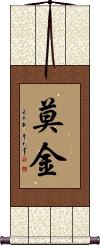
莫金 is the name Morgin in Chinese (Mandarin).
Morgin
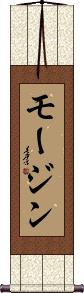
モージン is the name Morgin in Japanese Katakana.
Note: Because this title is entirely Japanese Katakana, it should be written by a Japanese calligrapher.
Please Forgive Me
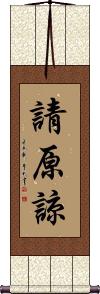
If you are looking for forgiveness, 請原諒 is what you would say to ask/beg for it.
Note: This is a strange thing to write on a wall scroll for Chinese people - but you can bend the rules if you want in the west.
Please Forgive Me
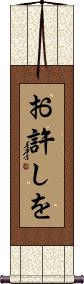
お許しを is how to write “Please Forgive Me,” in Japanese.
Often, Japanese Christians will add “God” (Kamisama) in front of this.
Note: Because this selection contains some special Japanese Hiragana characters, it should be written by a Japanese calligrapher.
The following table may be helpful for those studying Chinese or Japanese...
| Title | Characters | Romaji (Romanized Japanese) | Various forms of Romanized Chinese | |
| Forgive | 諒 谅 | liàng / liang4 / liang | ||
| Forgive | 原諒 原谅 | yuán liàng yuan2 liang4 yuan liang yuanliang | yüan liang yüanliang |
|
| Begging Forgiveness | 饒恕 饶恕 | ráo shù / rao2 shu4 / rao shu / raoshu | jao shu / jaoshu | |
| Forgive | 寬恕 / 寛恕 宽恕 | kan jo / kanjo | kuān shù / kuan1 shu4 / kuan shu / kuanshu | k`uan shu / kuanshu / kuan shu |
| Forgive and Forget | 略跡原情 略迹原情 | lüè jì yuán qíng lve4 ji4 yuan2 qing2 lve ji yuan qing lvejiyuanqing | chi yüan ch`ing chiyüanching chi yüan ching |
|
| Forgive and Forget | 不念舊惡 不念旧恶 | bú niàn jiù è bu2 nian4 jiu4 e4 bu nian jiu e bunianjiue | pu nien chiu o punienchiuo |
|
| Forgive and Forget | 水に流す | mizu ni naga su mizuninagasu | ||
| Forgive Me of My Sins | 原諒我的罪孽 原谅我的罪孽 | yuán liàng wǒ de zuì niè yuan2 liang4 wo3 de zui4 nie4 yuan liang wo de zui nie yuanliangwodezuinie | yüan liang wo te tsui nieh yüanliangwotetsuinieh |
|
| Forgive Yourself | 原諒自己 原谅自己 | yuán liàng zì jǐ yuan2 liang4 zi4 ji3 yuan liang zi ji yuanliangziji | yüan liang tzu chi yüanliangtzuchi |
|
| Forgive Yourself Release Yourself | 我を許す | ware o yuru su wareoyurusu | ||
| Forgiveness (from the top down) | 容赦 | you sha / yousha / yo sha | róng shè / rong2 she4 / rong she / rongshe | jung she / jungshe |
| Forgiveness | 恕 | shù / shu4 / shu | ||
| Georgia | 喬治亞 乔治亚 | qiáo zhì yà qiao2 zhi4 ya4 qiao zhi ya qiaozhiya | ch`iao chih ya chiaochihya chiao chih ya |
|
| Georgia | ジョージャ | jooja / joja | ||
| Georgiana | 喬治安娜 乔治安娜 | qiáo zhì ān nà qiao2 zhi4 an1 na4 qiao zhi an na qiaozhianna | ch`iao chih an na chiaochihanna chiao chih an na |
|
| Georgiana | ジョージアナ | joojiana / jojiana | ||
| Georgie | 喬吉 乔吉 | qiáo jí / qiao2 ji2 / qiao ji / qiaoji | ch`iao chi / chiaochi / chiao chi | |
| Georgie | ジョージー | joojii / joji | ||
| Georgina | 喬姬娜 乔姬娜 | qiáo jī nà qiao2 ji1 na4 qiao ji na qiaojina | ch`iao chi na chiaochina chiao chi na |
|
| Georgina | ジョージーナ | joojiina / jojina | ||
| Giorgi | 喬治 乔治 | qiáo zhì / qiao2 zhi4 / qiao zhi / qiaozhi | ch`iao chih / chiaochih / chiao chih | |
| Giorgi | ジョルジ | joruji | ||
| Giorgia | 喬治亞 乔治亚 | qiáo zhì yà qiao2 zhi4 ya4 qiao zhi ya qiaozhiya | ch`iao chih ya chiaochihya chiao chih ya |
|
| Giorgia | ジオージア | jioojia / jiojia | ||
| Giorgio | 希奧爾希奧 希奥尔希奥 | xī ào ěr xī ào xi1 ao4 er3 xi1 ao4 xi ao er xi ao xiaoerxiao | hsi ao erh hsi ao hsiaoerhhsiao |
|
| Giorgio | ジョルジョ | jorujo | ||
| God Forgive Me | 神様お許しを | kami sama o yuru shi wo kamisamaoyurushiwo | ||
| Kindness and Forgiving Nature | 仁恕 | jinjo | rén shù / ren2 shu4 / ren shu / renshu | jen shu / jenshu |
| Morgin | 莫金 | mò jīn / mo4 jin1 / mo jin / mojin | mo chin / mochin | |
| Morgin | モージン | moojin / mojin | ||
| Please Forgive Me | 請原諒 请原谅 | qíng yuán liàng qing2 yuan2 liang4 qing yuan liang qingyuanliang | ch`ing yüan liang chingyüanliang ching yüan liang |
|
| Please Forgive Me | お許しを | oyurushi wo oyurushiwo | ||
| In some entries above you will see that characters have different versions above and below a line. In these cases, the characters above the line are Traditional Chinese, while the ones below are Simplified Chinese. | ||||

Successful Chinese Character and Japanese Kanji calligraphy searches within the last few hours...



