Many custom options...


And formats...



Not what you want?
Try other similar-meaning words, fewer words, or just one word.
New Year Wishes in Chinese / Japanese...
Buy a New Year Wishes calligraphy wall scroll here!
Personalize your custom “New Year Wishes” project by clicking the button next to your favorite “New Year Wishes” title below...
Switched to secondary search mode due to lack of results using primary.
These secondary results may not be very accurate. Try a different but similar meaning word or phrase for better results. Or...
Look up New Year Wishes in my Japanese Kanji & Chinese Character Dictionary(My dictionary is a different system then the calligraphy search you just tried)
If you want a special phrase, word, title, name, or proverb, feel free to contact me, and I will translate your custom calligraphy idea for you.
2. 100 Years of Happy Marriage
4. Wood Dog
6. Fire Rat
7. Fire Ox/Bull
8. Earth Tiger
9. Earth Rabbit
12. Water Horse
13. Wood Rat
14. Water Goat/Sheep
15. Wood Monkey
16. Wood Rooster
17. Fire Dog
18. Fire Pig/Boar
19. Earth Rat
20. Earth Ox/Bull
23. Water Dragon
24. Wood Ox/Bull
25. Water Snake
26. Wood Horse
27. Wood Goat/Sheep
28. Fire Monkey
29. Fire Rooster
30. Earth Dog
31. Earth Pig/Boar
32. Golden/Metal Rat
34. Water Tiger
35. Fire Tiger
36. Water Rabbit
37. Wood Dragon
38. Wood Snake
39. Fire Horse
40. Fire Goat/Sheep
41. Earth Monkey
42. Earth Rooster
43. Golden/Metal Dog
45. Water Rat
46. Fire Rabbit
47. Water Ox/Bull
48. Wood Tiger
49. Wood Rabbit
50. Fire Dragon
51. Fire Snake
52. Earth Horse
53. Earth Goat/Sheep
56. Water Dog
57. Earth Dragon
58. Water Pig/Boar
59. Earth Snake
62. Water Monkey
63. Year-In Year-Out Have Abundance
64. In the Abyss of Infinite Bitterness - Turn to the Shore
66. April
67. Australia
68. Banzai
73. Chito-Ryu
74. Chou
76. Creativity
77. Daru
78. December
80. Dog
81. Double Happiness Guest Book
82. Drain the pond to get all the fish
84. February
85. Fire Horse
86. Flexibility
87. The Four Seasons
88. Fresh Start
90. 50th Golden Wedding Anniversary
91. Good Intentions
92. Happy Birthday
93. Happy New Year
95. The Whole Room Rocks With Laughter
96. Ice / Frost
97. Innovation
98. Ivy
1 Corinthians 13:4-8
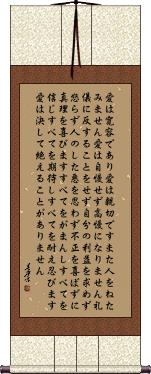
Here is 1st Corinthians 13:4-8 (just the first sentence of verse 8) in Japanese.
In the familiar NIV, this would read:
Love is patient, love is kind. It does not envy, it does not boast, it is not proud.
It does not dishonor others, it is not self-seeking, it is not easily angered, it keeps no record of wrongs.
Love does not delight in evil but rejoices with the truth.
It always protects, always trusts, always hopes, always perseveres.
Love never fails...
The Japanese text is from the 新改訳聖書 (Shinkaiyaku) or New Japanese Bible. Popular among most Protestant denominations in modern Japan.
Note: Because this selection contains some special Japanese Hiragana characters, it should be written by a Japanese calligrapher.
100 Years of Happy Marriage
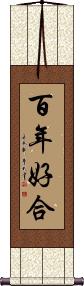
百年好合 is a wish or greeting, often heard at Chinese weddings, for a couple to have 100 good years together.
Some will translate this more naturally into English as: “May you live a long and happy life together.”
The character breakdown:
百 = 100
年 = Years
好 = Good (Happy)
合 = Together
Water Rooster
The Year of the Water Rooster
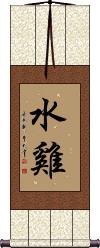
水雞 is Water Rooster in Chinese.
In the Chinese zodiac and sexagenary (60-year) cycle, this combination occurs in years that include 1873, 1933, 1993, and 2053.
In the sexagenary cycle, this year is represented by 癸酉.
See Also: Rooster
Wood Dog
The Year of the Wood Dog
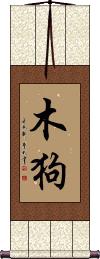
木狗 is Wood Dog in Chinese.
In the Chinese zodiac and sexagenary (60-year) cycle, this combination occurs in years that include 1874, 1934, 1994, and 2054.
In the sexagenary cycle, this year is represented by 甲戌.
See Also: Dog
Wood Pig/Boar
The Year of the Wood Pig/Boar
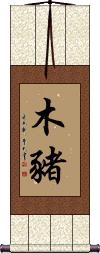
木豬 is Wood Pig/Boar in Chinese.
In the Chinese zodiac and sexagenary (60-year) cycle, this combination occurs in years that include 1875, 1935, 1995, and 2055.
In the sexagenary cycle, this year is represented by 乙亥.
See Also: Pig/Boar
Fire Rat
The Year of the Fire Rat
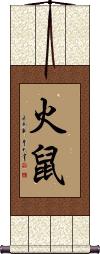
火鼠 is Fire Rat in Chinese.
In the Chinese zodiac and sexagenary (60-year) cycle, this combination occurs in years that include 1876, 1936, 1996, and 2056.
In the sexagenary cycle, this year is represented by 丙子.
See Also: Rat
Fire Ox/Bull
The Year of the Fire Ox/Bull
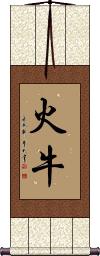
火牛 is Fire Ox/Bull in Chinese.
In the Chinese zodiac and sexagenary (60-year) cycle, this combination occurs in years that include 1877, 1937, 1997, and 2057.
In the sexagenary cycle, this year is represented by 丁丑.
See Also: Ox/Bull
Earth Tiger
The Year of the Earth Tiger
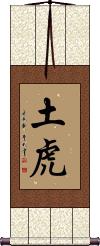
土虎 is Earth Tiger in Chinese.
In the Chinese zodiac and sexagenary (60-year) cycle, this combination occurs in years that include 1878, 1938, 1998, and 2058.
In the sexagenary cycle, this year is represented by 戊寅.
See Also: Tiger
Earth Rabbit
The Year of the Earth Rabbit
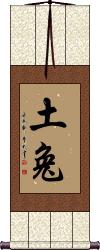
土兔 is Earth Rabbit in Chinese.
In the Chinese zodiac and sexagenary (60-year) cycle, this combination occurs in years that include 1879, 1939, 1999, and 2059.
In the sexagenary cycle, this year is represented by 己卯.
See Also: Rabbit
Golden/Metal Dragon
The Year of the Golden/Metal Dragon
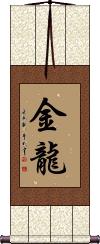
金龍 is Golden/Metal Dragon in Chinese.
In the Chinese zodiac and sexagenary (60-year) cycle, this combination occurs in years that include 1880, 1940, 2000, and 2060.
In the sexagenary cycle, this year is represented by 庚辰.
See Also: Dragon
Golden/Metal Snake
The Year of the Gold Snake
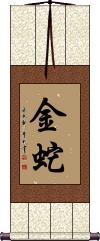
金蛇 is Golden/Metal Snake in Chinese.
In the Chinese zodiac and sexagenary (60-year) cycle, this combination occurs in years that include 1881, 1941, 2001, and 2061.
In the sexagenary cycle, this year is represented by 辛巳.
See Also: Snake
Water Horse
The Year of the Water Horse
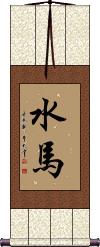
水馬 is Water Horse in Chinese.
In the Chinese zodiac and sexagenary (60-year) cycle, this combination occurs in years that include 1882, 1942, 2002, and 2062.
In the sexagenary cycle, this year is represented by 壬午.
See Also: Horse
Wood Rat
The Year of the Wood Rat
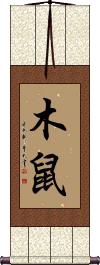
木鼠 is Wood Rat in Chinese.
In the Chinese zodiac and sexagenary (60-year) cycle, this combination occurs in years that include 1864, 1924, 1984, and 2044.
In the sexagenary cycle, this year is represented by 甲子.
See Also: Rat
Water Goat/Sheep
The Year of the Water Goat/Sheep
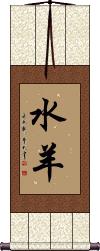
水羊 is Water Goat/Sheep in Chinese.
In the Chinese zodiac and sexagenary (60-year) cycle, this combination occurs in years that include 1883, 1943, 2003, and 2063.
In the sexagenary cycle, this year is represented by 癸未.
See Also: Goat/Sheep
Wood Monkey
The Year of the Wood Monkey
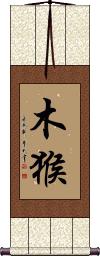
木猴 is Wood Monkey in Chinese.
In the Chinese zodiac and sexagenary (60-year) cycle, this combination occurs in years that include 1884, 1944, 2004, and 2064.
In the sexagenary cycle, this year is represented by 甲申.
See Also: Monkey
Wood Rooster
The Year of the Wood Rooster
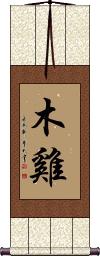
木雞 is Wood Rooster in Chinese.
In the Chinese zodiac and sexagenary (60-year) cycle, this combination occurs in years that include 1885, 1945, 2005, and 2065.
In the sexagenary cycle, this year is represented by 乙酉.
See Also: Rooster
Fire Dog
The Year of the Fire Dog
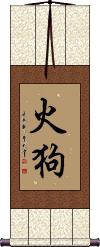
火狗 is Fire Dog in Chinese.
In the Chinese zodiac and sexagenary (60-year) cycle, this combination occurs in years that include 1886, 1946, 2006, and 2066.
In the sexagenary cycle, this year is represented by 丙戌.
See Also: Dog
Fire Pig/Boar
The Year of the Fire Pig/Boar
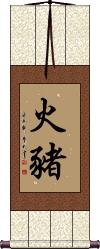
火豬 is Fire Pig/Boar in Chinese.
In the Chinese zodiac and sexagenary (60-year) cycle, this combination occurs in years that include 1887, 1947, 2007, and 2067.
In the sexagenary cycle, this year is represented by 丁亥.
See Also: Pig/Boar
Earth Rat
The Year of the Earth Rat
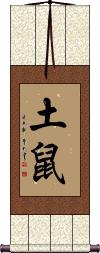
土鼠 is Earth Rat in Chinese.
In the Chinese zodiac and sexagenary (60-year) cycle, this combination occurs in years that include 1888, 1948, 2008, and 2068.
In the sexagenary cycle, this year is represented by 戊子.
See Also: Rat
Earth Ox/Bull
The Year of the Earth Ox/Bull
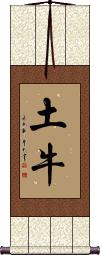
土牛 is Earth Ox/Bull in Chinese.
In the Chinese zodiac and sexagenary (60-year) cycle, this combination occurs in years that include 1889, 1949, 2009, and 2069.
In the sexagenary cycle, this year is represented by 己丑.
See Also: Ox/Bull
Golden/Metal Tiger
The Year of the Golden/Metal Tiger
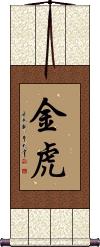
金虎 is Golden/Metal Tiger in Chinese.
In the Chinese zodiac and sexagenary (60-year) cycle, this combination occurs in years that include 1890, 1950, 2010, and 2070.
In the sexagenary cycle, this year is represented by 庚寅.
See Also: Tiger
Golden/Metal Rabbit
The Year of the Golden/Metal Rabbit
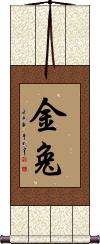
金兔 is Golden/Metal Rabbit in Chinese.
In the Chinese zodiac and sexagenary (60-year) cycle, this combination occurs in years that include 1891, 1951, 2011, and 2071.
In the sexagenary cycle, this year is represented by 辛卯.
See Also: Rabbit
Water Dragon
The Year of the Water Dragon
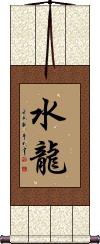
水龍 is Water Dragon in Chinese.
In the Chinese zodiac and sexagenary (60-year) cycle, this combination occurs in years that include 1892, 1952, 2012, and 2072.
In the sexagenary cycle, this year is represented by 壬辰.
See Also: Dragon
Wood Ox/Bull
The Year of the Wood Ox/Bull
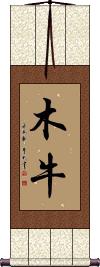
木牛 is Wood Ox/Bull in Chinese.
In the Chinese zodiac and sexagenary (60-year) cycle, this combination occurs in years that include 1865, 1925, 1985, and 2045.
In the sexagenary cycle, this year is represented by 乙丑.
See Also: Ox/Bull
Water Snake
The Year of the Water Snake
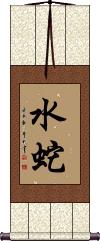
水蛇 is Water Snake in Chinese.
In the Chinese zodiac and sexagenary (60-year) cycle, this combination occurs in years that include 1893, 1953, 2013, and 2073.
In the sexagenary cycle, this year is represented by 癸巳.
See Also: Snake
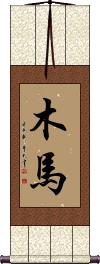
Wood Horse
The Year of the Wood Horse
Wood Goat/Sheep
The Year of the Wood Goat/Sheep
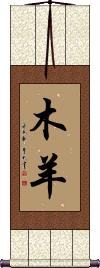
木羊 is Wood Goat/Sheep in Chinese.
In the Chinese zodiac and sexagenary (60-year) cycle, this combination occurs in years that include 1895, 1955, 2015, and 2075.
In the sexagenary cycle, this year is represented by 乙未.
See Also: Goat/Sheep
Fire Monkey
The Year of the Fire Monkey
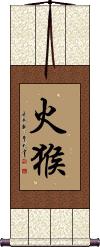
火猴 is Fire Monkey in Chinese.
In the Chinese zodiac and sexagenary (60-year) cycle, this combination occurs in years that include 1896, 1956, 2016, and 2076.
In the sexagenary cycle, this year is represented by 丙申.
See Also: Monkey
Fire Rooster
The Year of the Fire Rooster
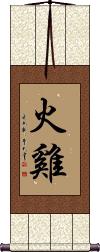
火雞 is Fire Rooster in Chinese.
In the Chinese zodiac and sexagenary (60-year) cycle, this combination occurs in years that include 1897, 1957, 2017, and 2077.
In the sexagenary cycle, this year is represented by 丁酉.
See Also: Rooster
Earth Dog
The Year of the Earth Dog
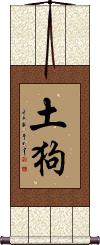
土狗 is Earth Dog in Chinese.
In the Chinese zodiac and sexagenary (60-year) cycle, this combination occurs in years that include 1898, 1958, 2018, and 2078.
In the sexagenary cycle, this year is represented by 戊戌.
See Also: Dog
Earth Pig/Boar
The Year of the Earth Pig/Boar
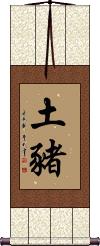
土豬 is Earth Pig/Boar in Chinese.
In the Chinese zodiac and sexagenary (60-year) cycle, this combination occurs in years that include 1899, 1959, 2019, and 2079.
In the sexagenary cycle, this year is represented by 己亥.
See Also: Pig/Boar
Golden/Metal Rat
The Year of the Golden/Metal Rat
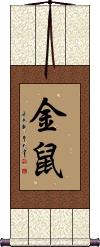
金鼠 is Golden/Metal Rat in Chinese.
In the Chinese zodiac and sexagenary (60-year) cycle, this combination occurs in years that include 1900, 1960, 2020, and 2080.
In the sexagenary cycle, this year is represented by 庚子.
See Also: Rat
Golden/Metal Ox/Bull
The Year of the Golden/Metal Ox/Bull
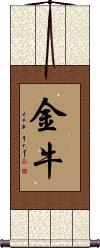
金牛 is Golden/Metal Ox/Bull in Chinese.
In the Chinese zodiac and sexagenary (60-year) cycle, this combination occurs in years that include 1901, 1961, 2021, and 2081.
In the sexagenary cycle, this year is represented by 辛丑.
See Also: Ox/Bull
Water Tiger
The Year of the Water Tiger
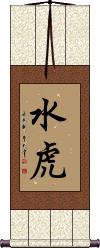
水虎 is Water Tiger in Chinese.
In the Chinese zodiac and sexagenary (60-year) cycle, this combination occurs in years that include 1902, 1962, 2022, and 2082.
In the sexagenary cycle, this year is represented by 壬寅.
See Also: Tiger
Fire Tiger
The Year of the Fire Tiger
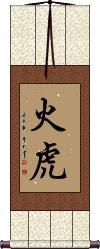
火虎 is Fire Tiger in Chinese.
In the Chinese zodiac and sexagenary (60-year) cycle, this combination occurs in years that include 1866, 1926, 1986, and 2046.
In the sexagenary cycle, this year is represented by 丙寅.
See Also: Tiger
Water Rabbit
The Year of the Water Rabbit
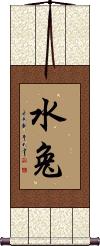
水兔 is Water Rabbit in Chinese.
In the Chinese zodiac and sexagenary (60-year) cycle, this combination occurs in years that include 1903, 1963, 2023, and 2083.
In the sexagenary cycle, this year is represented by 癸卯.
See Also: Rabbit
Wood Dragon
The Year of the Wood Dragon
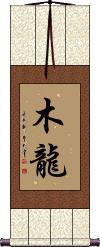
木龍 is Wood Dragon in Chinese.
In the Chinese zodiac and sexagenary (60-year) cycle, this combination occurs in years that include 1904, 1964, 2024, and 2084.
In the sexagenary cycle, this year is represented by 甲辰.
See Also: Dragon
Wood Snake
The Year of the Wood Snake
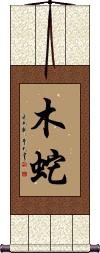
木蛇 is Wood Snake in Chinese.
In the Chinese zodiac and sexagenary (60-year) cycle, this combination occurs in years that include 1905, 1965, 2025, and 2085.
In the sexagenary cycle, this year is represented by 乙巳.
See Also: Snake
Fire Horse
The Year of the Fire Horse
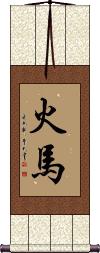
火馬 is Fire Horse in Chinese.
In the Chinese zodiac and sexagenary (60-year) cycle, this combination occurs in years that include 1906, 1966, 2026, and 2086.
In the sexagenary cycle, this year is represented by 丙午.
See Also: Horse
Fire Goat/Sheep
The Year of the Fire Goat/Sheep
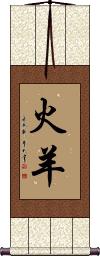
火羊 is Fire Goat/Sheep in Chinese.
In the Chinese zodiac and sexagenary (60-year) cycle, this combination occurs in years that include 1907, 1967, 2027, and 2087.
In the sexagenary cycle, this year is represented by 丁未.
See Also: Goat/Sheep
Earth Monkey
The Year of the Earth Monkey
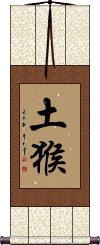
土猴 is Earth Monkey in Chinese.
In the Chinese zodiac and sexagenary (60-year) cycle, this combination occurs in years that include 1908, 1968, 2028, and 2088.
In the sexagenary cycle, this year is represented by 戊申.
See Also: Monkey
Earth Rooster
The Year of the Earth Rooster
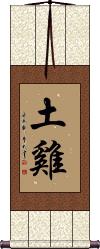
土雞 is Earth Rooster in Chinese.
In the Chinese zodiac and sexagenary (60-year) cycle, this combination occurs in years that include 1909, 1969, 2029, and 2089.
In the sexagenary cycle, this year is represented by 己酉.
See Also: Rooster
Golden/Metal Dog
The Year of the Golden/Metal Dog
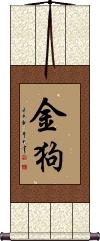
金狗 is Golden/Metal Dog in Chinese.
In the Chinese zodiac and sexagenary (60-year) cycle, this combination occurs in years that include 1910, 1970, 2030, and 2090.
In the sexagenary cycle, this year is represented by 庚戌.
See Also: Dog
Golden/Metal Pig/Boar
The Year of the Golden/Metal Pig/Boar
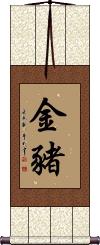
金豬 is Golden/Metal Pig/Boar in Chinese.
In the Chinese zodiac and sexagenary (60-year) cycle, this combination occurs in years that include 1911, 1971, 2031, and 2091.
In the sexagenary cycle, this year is represented by 辛亥.
See Also: Pig/Boar
Water Rat
The Year of the Water Rat
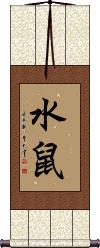
水鼠 is Water Rat in Chinese.
In the Chinese zodiac and sexagenary (60-year) cycle, this combination occurs in years that include 1912, 1972, 2032, and 2092.
In the sexagenary cycle, this year is represented by 壬子.
See Also: Rat
Fire Rabbit
The Year of the Fire Rabbit
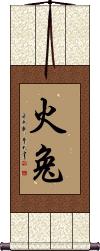
火兔 is Fire Rabbit in Chinese.
In the Chinese zodiac and sexagenary (60-year) cycle, this combination occurs in years that include 1867, 1927, 1987, and 2047.
In the sexagenary cycle, this year is represented by 丁卯.
See Also: Rabbit
Water Ox/Bull
The Year of the Water Ox/Bull
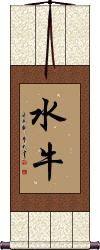
水牛 is Water Ox/Bull in Chinese.
In the Chinese zodiac and sexagenary (60-year) cycle, this combination occurs in years that include 1913, 1973, 2033, and 2093.
In the sexagenary cycle, this year is represented by 癸丑.
See Also: Ox/Bull
Wood Tiger
The Year of the Wood Tiger
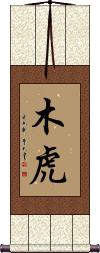
木虎 is Wood Tiger in Chinese.
In the Chinese zodiac and sexagenary (60-year) cycle, this combination occurs in years that include 1914, 1974, 2034, and 2094.
In the sexagenary cycle, this year is represented by 甲寅.
See Also: Tiger
Wood Rabbit
The Year of the Wood Rabbit
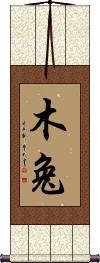
木兔 is Wood Rabbit in Chinese.
In the Chinese zodiac and sexagenary (60-year) cycle, this combination occurs in years that include 1915, 1975, 2035, and 2095.
In the sexagenary cycle, this year is represented by 乙卯.
See Also: Rabbit
Fire Dragon
The Year of the Fire Dragon
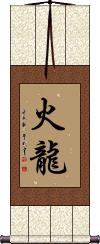
火龍 is Fire Dragon in Chinese.
In the Chinese zodiac and sexagenary (60-year) cycle, this combination occurs in years that include 1916, 1976, 2036, and 2096.
In the sexagenary cycle, this year is represented by 丙辰.
See Also: Dragon
Fire Snake
The Year of the Fire Snake
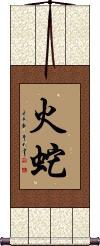
火蛇 is Fire Snake in Chinese.
In the Chinese zodiac and sexagenary (60-year) cycle, this combination occurs in years that include 1917, 1977, 2037, and 2097.
In the sexagenary cycle, this year is represented by 丁巳.
See Also: Snake
Earth Horse
The Year of the Earth Horse
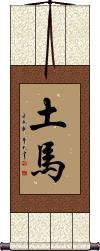
土馬 is Earth Horse in Chinese.
In the Chinese zodiac and sexagenary (60-year) cycle, this combination occurs in years that include 1918, 1978, 2038, and 2098.
In the sexagenary cycle, this year is represented by 戊午.
See Also: Horse
Earth Goat/Sheep
The Year of the Earth Goat/Sheep
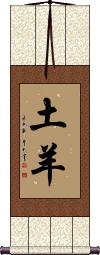
土羊 is Earth Goat/Sheep in Chinese.
In the Chinese zodiac and sexagenary (60-year) cycle, this combination occurs in years that include 1919, 1979, 2039, and 2099.
In the sexagenary cycle, this year is represented by 己未.
See Also: Goat/Sheep
Golden/Metal Monkey
The Year of the Golden/Metal Monkey
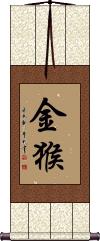
金猴 is Golden/Metal Monkey in Chinese.
In the Chinese zodiac and sexagenary (60-year) cycle, this combination occurs in years that include 1920, 1980, 2040, and 2100.
In the sexagenary cycle, this year is represented by 庚申.
See Also: Monkey
Golden/Metal Rooster
The Year of the Golden/Metal Rooster
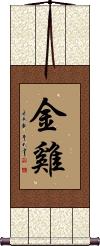
金雞 is Golden/Metal Rooster in Chinese.
In the Chinese zodiac and sexagenary (60-year) cycle, this combination occurs in years that include 1921, 1981, 2041, and 2101.
In the sexagenary cycle, this year is represented by 辛酉.
See Also: Rooster
Water Dog
The Year of the Water Dog
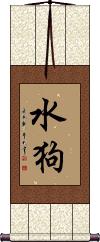
水狗 is Water Dog in Chinese.
In the Chinese zodiac and sexagenary (60-year) cycle, this combination occurs in years that include 1922, 1982, 2042, and 2102.
In the sexagenary cycle, this year is represented by 壬戌.
See Also: Dog
Earth Dragon
The Year of the Earth Dragon
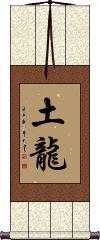
土龍 is Earth Dragon in Chinese.
In the Chinese zodiac and sexagenary (60-year) cycle, this combination occurs in years that include 1868, 1928, 1988, and 2048.
In the sexagenary cycle, this year is represented by 戊辰.
See Also: Dragon
Water Pig/Boar
The Year of the Water Pig/Boar
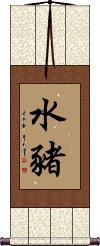
水豬 is Water Pig/Boar in Chinese.
In the Chinese zodiac and sexagenary (60-year) cycle, this combination occurs in years that include 1923, 1983, 2043, and 2103.
In the sexagenary cycle, this year is represented by 癸亥.
See Also: Pig/Boar
Earth Snake
The Year of the Earth Snake
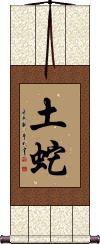
土蛇 is Earth Snake in Chinese.
In the Chinese zodiac and sexagenary (60-year) cycle, this combination occurs in years that include 1869, 1929, 1989, and 2049.
In the sexagenary cycle, this year is represented by 己巳.
See Also: Snake
Golden/Metal Horse
The Year of the Golden/Metal Horse
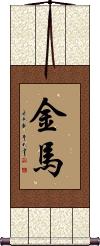
金馬 is Golden/Metal Horse in Chinese.
In the Chinese zodiac and sexagenary (60-year) cycle, this combination occurs in years that include 1870, 1930, 1990, and 2050.
In the sexagenary cycle, this year is represented by 庚午.
See Also: Horse
Golden/Metal Goat/Sheep
The Year of the Golden/Metal Goat/Sheep
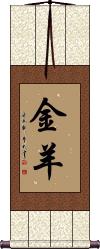
金羊 is Golden/Metal Goat/Sheep in Chinese.
In the Chinese zodiac and sexagenary (60-year) cycle, this combination occurs in years that include 1871, 1931, 1991, and 2051.
In the sexagenary cycle, this year is represented by 辛未.
See Also: Goat/Sheep
Water Monkey
The Year of the Water Monkey
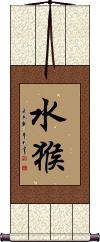
水猴 is Water Monkey in Chinese.
In the Chinese zodiac and sexagenary (60-year) cycle, this combination occurs in years that include 1872, 1932, 1992, and 2052.
In the sexagenary cycle, this year is represented by 壬申.
See Also: Monkey
Year-In Year-Out Have Abundance
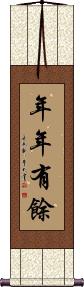
年年有餘 is a common proverb or wish of prosperity you'll hear around the time of Chinese New Year.
Directly translated character by character, it means “Year Year Have Surplus.” A more natural English translation including the deeper meaning would be “Every Year may you Have Abundance in your life.”
On a side note, this phrase often goes with a gift of something related to fish. This is because the last character, “yu” which means surplus or abundance, has exactly the same pronunciation in Mandarin as the word for “fish.”
This is also one of the most common titles for traditional paintings that feature koi fish.
In China, this phrase might make an odd wall scroll - a customer asked especially for this common phrase which is why it appears here. See my other abundance-related words if you want a wall scroll that will seem more comfortable in Chinese culture.
Note: This can be pronounced in Korean, but it's not a commonly used term.
See Also: Prosperity | Good Fortune
In the Abyss of Infinite Bitterness - Turn to the Shore
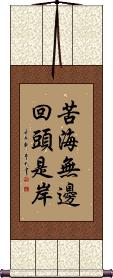
苦海無邊, 回頭是岸 can be translated almost directly as “The sea of bitterness has no bounds, turn your head to see the shore.”
Often this proverb refers to how Buddhist enlightenment can allow one to shed off the abyss of worldly suffering. But it can apply to other religions. If you find yourself trapped in the hardship of this worldly life, take a new turn, and seek a path to salvation.
All Hopes Fulfilled
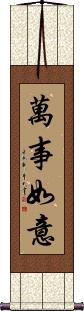
萬事如意 is a Chinese and old Korean proverb that means to have all one's wishes.
When speaking to someone, it's a way to say best wishes, all the best, may all your hopes be fulfilled, or may everything go well.
On your wall as calligraphy, it's meant to inspire all your wishes, hopes, dreams, and life to go well or come true.
April
Fourth Month
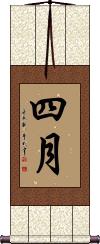
This is April in Chinese, Japanese Kanji, and old Korean Hanja.
This was originally the fourth month of the Chinese lunar year, now used for the fourth month of the Gregorian calendar (also known as the Western or Christian calendar). 四月 literally mean “fourth month” or “fourth moon.”
Australia
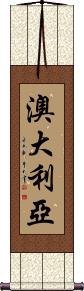
Australia
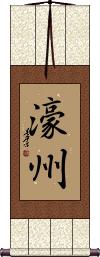
Banzai
Modern Japanese Version
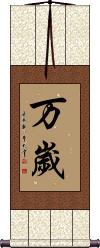
万歲 is the modern Japanese way to write banzai.
We've made two almost identical entries for this word, with just a variation on the first character. In the last century, 萬 was simplified to 万 in Japan and China. The new generation will expect it to be written as 万 but the old generation can still read the more traditional 萬 form. You must make your determination as to what version is best for you. If your audience is mostly Japanese, I suggest 万歲.
While it has become a popular, if not an odd, thing to scream as you jump out of an airplane (preferably with a parachute attached), banzai is actually a very old Asian way to say “hooray.” The Japanese word “banzai” comes from the Chinese word “wan sui” which means “The age of 10,000 years.” It is actually a wish that the Emperor or the Empire live that long.
Imagine long ago when the Emperor made a rare public appearance. This is what all of the people would yell to their leader in respect.
So if you like it as a hooray, or you want to wish someone that they live for 10,000 years, this is the calligraphy for you.
To other things with banzai in their names, I am still waiting for the promised sequel to Buckaroo Banzai.
Other translations: hurrah, long life, congratulations, cheers, live long.
Notes: Sometimes people confuse banzai with bonsai. A bonsai is a miniature tree. They have nothing to do with each other. Further, Bonzai is not a word at all - although it would make a great name for a calcium supplement for older people.
Blessings on this Home
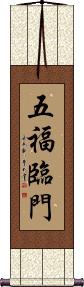
五福臨門 means “five good fortunes arrive [at the] door.”
It is understood to mean “may the five blessings descend upon this home.”
These blessings are known in ancient China to be: longevity, wealth, health, virtue, and natural death (living to old age). This is one of several auspicious sayings you might hear during the Chinese New Year.
Blessings and Good Wishes
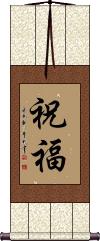
祝福 is a nice way to give good wishes to someone.
It can be a general blessing or used to congratulate someone for a special occasion or graduation.
This has a good meaning in Japanese but is more appropriate when expressed orally. 祝福 is not a natural selection for a wall scroll if your audience is Japanese.
Bravery / Courage
Courage in the face of Fear
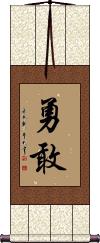
勇敢 is about courage or bravery in the face of fear.
You do the right thing even when it is hard or scary. When you are courageous, you don't give up. You try new things. You admit mistakes. This kind of courage is the willingness to take action in the face of danger and peril.
勇敢 can also be translated as braveness, valor, heroic, fearless, boldness, prowess, gallantry, audacity, daring, dauntless, and/or courage in Japanese, Chinese, and Korean. This version of bravery/courage can be an adjective or a noun. The first character means bravery and courage by itself. The second character means “daring” by itself. The second character emphasizes the meaning of the first but adds the idea that you are not afraid of taking a dare, and you are not afraid of danger.
勇敢 is more about brave behavior and not so much the mental state of being brave. You'd more likely use this to say, “He fought courageously in the battle,” rather than “He is very courageous.”
Broken Mirror Rejoined
Used in modern times for divorced couples that come back together
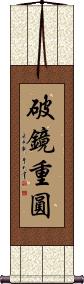
破鏡重圓 is about a husband and wife who were separated and reunited.
About 1500 years ago in China, there lived a beautiful princess named Le Chang. She and her husband Xu De Yan loved each other very much. But when the army of the Sui Dynasty was about to attack their kingdom, disposed of all of their worldly possessions and prepared to flee into exile.
They knew that in the chaos, they might lose track of each other, so the one possession they kept was a bronze mirror which is a symbol of unity for a husband and wife. They broke the mirror into two pieces, and each of them kept half of the mirror. They decided that if separated, they would try to meet at the fair during the 15th day of the first lunar month (which is the lantern festival). Unfortunately, the occupation was brutal, and the princess was forced to become the mistress of the new commissioner of the territory, Yang Su.
At the Lantern Festival the next year, the husband came to the fair to search for his wife. He carried with him his half of the mirror. As he walked through the fair, he saw the other half of the mirror for sale at a junk market by a servant of the commissioner. The husband recognized his wife's half of the mirror immediately, and tears rolled down his face as he was told by the servant about the bitter and loveless life that the princess had endured.
As his tears dripped onto the mirror, the husband scratched a poem into his wife's half of the mirror:
You left me with the severed mirror,
The mirror has returned, but absent are you,
As I gaze in the mirror, I seek your face,
I see the moon, but as for you, I see not a trace.
The servant brought the inscribed half of the mirror back to the princess. For many days, the princess could not stop crying when she found that her husband was alive and still loved her.
Commissioner Yang Su, becoming aware of this saga, realized that he could never obtain the princess's love. He sent for the husband and allowed them to reunite.
This proverb, 破鏡重圓, is now used to describe a couple who has been torn apart for some reason (usually divorce) but have come back together (or remarried).
It seems to be more common these days in America for divorced couples to reconcile and get married to each other again. This will be a great gift if you know someone who is about to remarry their ex.
Chito-Ryu
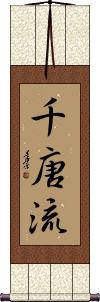
千唐流 (Chitō-Ryū, Chito-Ryu, or Chitoryu) is a style of karate founded by Tsuyoshi Chitose.
Here's the meaning of each character of the title:
千 = 1000
唐 = China (literally Tang, as in Tang Dynasty).
流 = Style or School.
Together, Chito-Ryu means “1,000 [year old] Chinese style.”
I will leave it up to you whether this is of Japanese or Okinawan style. The title certainly suggests roots traced back to China.
Chou
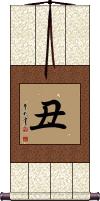
丑 can refer to the astrological time of the ox, or a Chinese surname, Chou.
丑 represents the 2nd earthly branch. In daily time, 1:00-3:00 AM, or the 12th/last month in the Chinese calendar.
In an ancient year-naming scheme, this can represent the year of the Ox (one of twelve animals paired with one of five element characters yielding a 60-year cycle).
Word of God / The Gospel
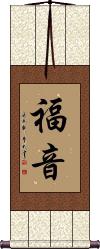
福音 is the Chinese, Korean and Japanese word for “Gospel” or “Word of God.”
福音 is a specifically Christian word in Asia (not used for any other religion).
The first character means blessing, good fortune, or good luck. This first character is a special character used throughout China to bring good tidings and fortune - especially during Chinese New Year. The second character means sound, noise, or news.
Together, these characters create a word that means “The Good News” or “The Sound of Good Fortune.”
When read by a Chinese or Japanese person, this word is always perceived as “The Christian Gospel,” “Word of God,” or even “The Voice of God.”
See Also: Christianity | Jesus Christ | God of Abraham
Creativity
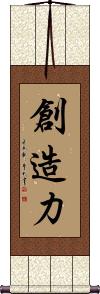
創造力 is a word that means “strength of creativity” or sort of “creativity (is your) strength.”
This can also be translated as “ingenuity.”
Creativity is the power of imagination. It is discovering your own special talents. Daring to see things in new ways and find different ways to solve problems. With your creativity, you can bring something new into the world.
The first character means “to create,” and the second means “to make or build.” Together they mean “creative.” The third character means “strength.”
Daru
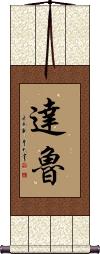
達魯 is the name Daru in Chinese (Mandarin).
Used as the name of Daru, capital of the Western Province of Papua New Guinea - also the name of the whole island in which the township resides.
December
Twelfth Month
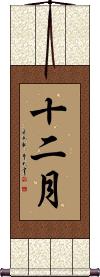
十二月 is December, the twelfth month of the year, in Chinese, Japanese Kanji, and old Korean Hanja.
Determination to Achieve
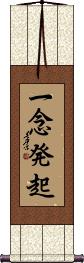
一念発起 is a Japanese proverb, “Ichinen Hokki,” which suggests being resolved to do something or having a wholehearted intention to accomplish something.
Some will translate this as “the determination to accomplish something,” or “turning over a new leaf and being determined to find success.”
Dog
(another version)
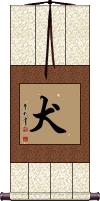
犬 is another way to write dog in Chinese and Japanese.
Just like we have words like dog, hound, pooch, and canine in English. However, this is NOT the character used to express “Year of the Dog.”
Although it is the most common way to say/write “dog” in Japanese.
See also our Chinese Zodiac page.
Double Happiness Guest Book
Customize a special Asian guest book for your wedding
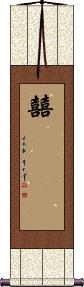
Start customizing a “Double Happiness Guest Book Wall Scroll” Here!
The paper panel length can be whatever you choose from 68cm to 135cm (27” to 53”).
If you don't mention what paper length you want in the special instructions tab (on the next page), we'll make it about 100cm (40”).
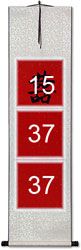
The medium-size scroll with a 33cm x 100cm (13” x 40”) paper panel can usually handle up to 89 signatures. That breaks down to 37 signatures per empty square and 15 signatures around the 囍 character. If you switch to a 135cm paper panel, add another 37 potential signatures.
We can splice two 135cm papers together, but that would be a crazy-long scroll. These are only estimates, your mileage may vary.
With silk panels, this will yield a wall scroll about 155cm (61”) long. That's enough for up to 89 signatures. Of course, that depends on if your guests just sign a brief salutation and name, or more verbose good wishes. Customer feedback is that 126 people can sign the 135cm long paper on a medium-sized scroll. If we go bigger than that, there will be a minor paper seam and an extra charge. Email me with your specifications if you need something special.
Most customers pick the festive red paper with gold flecks and white or ivory silk. Red is a good luck color in Chinese culture, thus the most popular choice. But, you can do any color combination that you want.
There is a long history of Chinese-character-use outside of mainland China. This Double Happiness character is also seen at weddings in Korea, Vietnam, Hong Kong, and Taiwan, as well as in Chinese communities in Thailand, Indonesia, and elsewhere. While Japan borrowed Chinese characters into their language, you won't see 囍 as often at Japanese weddings.
Drain the pond to get all the fish
Kill the goose that lays the golden eggs
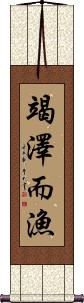
In 632 BC, Duke Wen of the Kingdom of Jin was about to lead an army against the forces of the Kingdom of Chu.
The Duke asked one of his advisers, Jiu Fan, how they could win the impending battle, as they were drastically outnumbered.
Jiu Fan said, “All is fair in war,” and suggested a plan of dishonorable tactics (cheating).
The Duke was unsure of this advice, so he asked another adviser, Yong Ji, who replied, “If you catch fish by draining the pond, you can certainly get all the fish. But there will be no fish the following year. You can cheat this one time in battle, but such tactics can only be used once, as the enemy will be wise in future encounters.”
The Duke heard the words of his wiser adviser but cheated to gain victory in the battle. However, he rewarded Yong Ji more than Jiu Fan at the victory celebration, stating that while Jiu Fan's advice gained one victory, the wise words of Yong Ji would last forever.
This Chinese idiom/proverb is still used, over 2600 years later to remind people not to burn bridges, cheat, or dishonor themselves in exchange for a short-term gain while sacrificing the future.
竭澤而漁 is very similar to the meaning of the English phrase, “Kill the goose that lays the golden eggs.”
Learning is Eternal
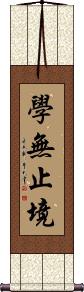
This Chinese philosophy tells of how we continue to learn throughout our lives.
This proverb can be translated in a few ways such as “Study has no end,” “Knowledge is infinite,” “No end to learning,” “There's always something new to study,” or “You live and learn.”
The deeper meaning: Even when we finish school we are still students of the world gaining more knowledge from our surroundings with each passing day.
See Also: An Open Book Benefits Your Mind | Wisdom | Learn From Wisdom
February
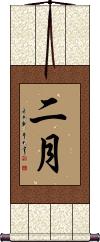
二月 is the Chinese, Japanese Kanji, and old Korean Hanja for the month of February.
This literally means the “second month” or “second moon” (of the year).
Fire Horse
火馬 is the title, “Fire Horse.”
火馬 is not a common title for calligraphy. You might be looking for 丙午, the 43rd year of the sexagenary cycle (the year of the Fire Horse, renowned for disasters and the birth of women destined to kill their husbands).
Flexibility
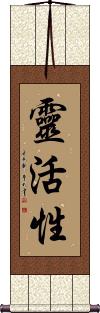
靈活性 is a Chinese and Korean word that means flexibility or being open to change.
You consider others' ideas and feelings and don't insist on your own way. Flexibility gives you creative new ways to get things done. Flexibility helps you to keep changing for the better. 靈活性 could also be defined as having a “flexible nature.”
See Also: Cooperation
The Four Seasons
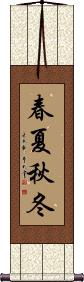
春夏秋冬 is one way to express “The Four Seasons “ or “All Year Round “.
The characters here represent Spring, Summer, Autumn (Fall), and Winter.
Fresh Start
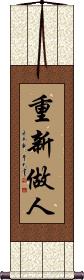
重新做人 is a Chinese proverb that means or suggests starting a new life or to make a fresh start.
Good Luck / Good Fortune
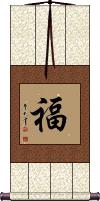
福 is pronounced “fu” in Chinese.
The character “fu” is posted by virtually all Chinese people on the doors of their homes during the Spring Festival (closely associated with the Chinese New Year).
One tradition from the Zhou Dynasty (beginning in 256 B.C.) holds that putting a fu symbol on your front door will keep the goddess of poverty away.
福 literally means good fortune, prosperity, blessed, blessedness, happiness, and fulfillment.
You'll also see this character in Vietnam (where Chinese characters were the written form until a romanization reform) where it is pronounced Phúc - a word commonly used in Vietnamese names because of its good meaning.
See Also: Lucky
50th Golden Wedding Anniversary
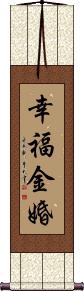
幸福金婚 means “Happy Golden Anniversary” and is a great gift for a couple who is celebrating 50 years together.
The first two characters mean happy, blessed, or happiness.
The last two characters mean “couple's golden anniversary.” It means “golden wedding” or “golden marriage,” but this is only used for the 50-year-mark of a marriage (the same way we use gold to represent 50 years in the west).
幸福金婚 is a nice title to use with an inscription. You could request something like, “Happy 50th Anniversary, Mr. and Mrs. Smith,” to be written down the side of this title in smaller Chinese characters.
Please note: This can be pronounced and understood in Japanese but not as commonly used in Japan. Japanese people who read this will understand it but might tend to feel it’s of Chinese origin.
Good Intentions
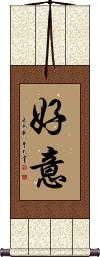
好意 is how to write good intentions in Chinese, Japanese, and old Korean Hanja.
This can also be translated as kindness, goodwill, favor/favour, courtesy, good wishes, friendliness, and/or amity.
Happy Birthday
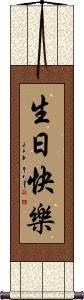
生日快樂 is how to write “Happy Birthday” in Chinese.
The first two characters mean “birthday,” and the second two characters mean “happiness,” or rather a wish for happiness.
Because a birthday only lasts one day per year, we strongly suggest that you find an appropriate and personal calligraphy gift that can be hung in the recipient's home year-round.
Happy Birthday
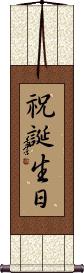
祝誕生日 is the shortest way to write “Happy Birthday” in Japanese.
The first Kanji means “wish” or “express good wishes,” and the last three characters mean “birthday.”
Because a birthday only lasts one day per year, we strongly suggest that you find an appropriate and personal calligraphy gift that can be hung in the recipient's home year-round.
Happy New Year
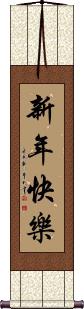
If you want to wish someone a happy new year, 新年快樂 is the way.
You can hang this up during Western New Years (Dec 31st - Jan 1st) and keep it up until after Chinese New Year which happens in either January or February of each year (it changes from year to year because China uses a lunar calendar).
Honor for Ancestors
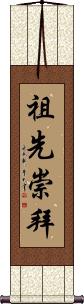
祖先崇拜 means “Appreciation and honor of your ancestors.”
This can refer to anyone from your grandparents and beyond.
The first two characters mean ancestors or forefathers.
The last two characters mean worship, adore/adoration, or admiration.
This is the kind of wall scroll that a filial son or daughter in China or Japan would hang to honor their ancestors who paved the way for the new generation.
 Japanese use a slight variation on the last Kanji. If you want this specifically Japanese version, just click on the Kanji image to the right (instead of the button above). Note that Japanese people would easily be able to identify the original Chinese form of that Kanji anyway.
They also have a similar phrase in old Korean but the first two characters are reversed - just let me know if you want that version when you place your order.
The Whole Room Rocks With Laughter
The perfect scroll if you love humor or as a gift for the comedian in your life
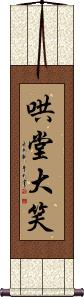
In China, 哄堂大笑 is a proverb that is used in response to a good joke or witty comment.
The story goes that Mr. Feng and Mr. He were both senior officials in the Song Dynasty (about a thousand years ago). One day, Mr. Feng walked into their shared office wearing a new pair of boots. The boots caught the eye of Mr. He who said, “New boots! - how much were they?.” Mr. Feng lifted one of the boots off the ground as if to show it off and responded, “900 coins.”
Astonished, Mr. Feng explained, “900? How can that be? - I paid 1800 coins for my boots!.” Mr. Feng then lifted his other foot off the ground and said, “This boot was also 900 coins.”
It is said that the whole room was shaking from the laughter of all that heard Mr. Feng's joke on Mr. He.
Ice / Frost
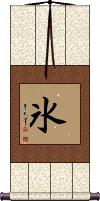
冰 is the Japanese Kanji for “ice” or “frost.”
冰 is also the way to write “ice” in old Korean Hanja.
Note: This form is not commonly used anymore in Chinese - though still understood for the most part.
FYI: There was a time when Japan did not have a written language and simply absorbed Chinese characters into their language by meaning. When this occurred around the 5th century, the character shown here was a common but alternate way to write “ice” in Chinese, so it was the one that ended up being absorbed into the Japanese language. Not long after that, a similar thing happened in Korea - although Korea has replaced virtually all of the Chinese characters they once used with the new Hangul writing system.
Innovation
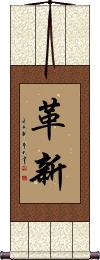
革新 means innovate or innovation in Chinese, Japanese Kanji, and old Korean Hanja.
The literal meaning is “new leather,” but you must understand that colloquially, this leather character also means renewal, reform, change, or transformation.
While the first character is leather or reform, the second character strictly means “new.”
Innovation
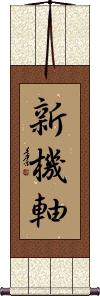
新機軸 is a Japanese word that is used to mean: innovation, new departure, new way, milestone, or breakthrough.
The literal meaning is, “new axis” or “new axle.” It's almost like saying a new wheel (like coming up with a round wheel when the previous version was square).
Please note that this also has meaning in Chinese but only would mean “new axle” without the meaning of “innovation” being associated with it. Consider this to be “Japanese only.”
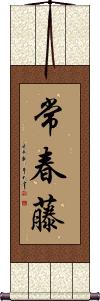
This is a common way to write “ivy” in Chinese.
There are varieties of ivy plant, and other ways to say ivy in Chinese but this version is probably the nicest. It's the one you would use if writing a poem about ivy etc.
If you want the actual meaning, this is, “Always Young Vine,” or “Ever Living Vine.” The literal meaning of the characters is more like, “Always Spring[time] Vine.” But Spring can have other representations in Chinese such as new life, youth, freshness, joyfulness, etc.
This in-stock artwork might be what you are looking for, and ships right away...
Gallery Price: $240.00
Your Price: $148.88

Gallery Price: $72.00
Your Price: $39.88

Gallery Price: $72.00
Your Price: $39.88
Gallery Price: $72.00
Your Price: $39.88


Gallery Price: $61.00
Your Price: $33.88

Gallery Price: $61.00
Your Price: $33.88

Gallery Price: $61.00
Your Price: $33.88
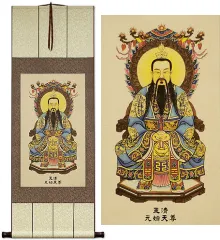
Gallery Price: $304.00
Your Price: $168.88

Gallery Price: $240.00
Your Price: $148.88

Gallery Price: $240.00
Your Price: $148.88

Successful Chinese Character and Japanese Kanji calligraphy searches within the last few hours...



