Many custom options...


And formats...



My in Chinese / Japanese...
Buy a My calligraphy wall scroll here!
Personalize your custom “My” project by clicking the button next to your favorite “My” title below...
Switched to secondary search mode due to lack of results using primary.
These secondary results may not be very accurate. Try a different but similar meaning word or phrase for better results. Or...
Look up My in my Japanese Kanji & Chinese Character Dictionary(My dictionary is a different system then the calligraphy search you just tried)
If you want a special phrase, word, title, name, or proverb, feel free to contact me, and I will translate your custom calligraphy idea for you.
2. Ammy
3. Amy
4. Amya
5. Amyshka
7. Attack When The Enemy Has Low Morale
8. Bellamy
9. Be Myself
10. Camy
11. Camyl
13. Daemyn
15. Demy
16. I am the Master of My Destiny
17. Emmy
18. Emy
19. Emya
20. Emylee
22. The Mysterious Bond Between People
29. Geremy
31. Glammy
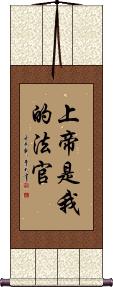
32. God is my Judge
33. Hiromy
34. Feel at Ease Anywhere / The World is My Home
35. Immy
36. Isshin Academy
38. Jamy
39. Jamya
40. Jasmyne
41. Jemmy
42. Jeremy
43. Jeromy
47. Jesus is My Life
48. Jimmy
49. Joemy
50. Kimmy
51. Kirin / Giraffe / Mythical Creature
52. Know Thy Enemy, Know Thyself
53. Know Your Enemy, Know Yourself, and You Cannot Lose
54. Know Your Enemy, Know Yourself, and Win 100 Battles
55. Leahmya
58. Maintain An Army For 1000 Days, Use It For An Hour
60. Mommy
62. My Son
63. My True Love
64. Mya
65. Myah
66. Myanmar
You are Always in My Heart
nǐ yī zhí zài wǒ xīn zhōng
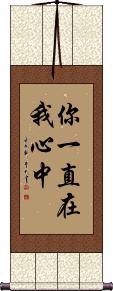
你一直在我心中 means “You are always in my heart” in Chinese.
你 = You
一直 = Always
在 = In/At
我 = Me/My
心中 = Heart/Mind
The idea or definition of heart and mind kind of overlap in ancient Chinese, so this can also mean “You are always in my mind.”
Ammy
ài mǐ
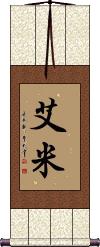
艾米 is the name Ammy in Chinese (Mandarin).
Ammy
ami
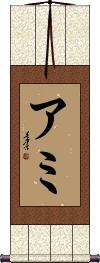
アミ is the name Ammy in Japanese Katakana.
Note: Because this title is entirely Japanese Katakana, it should be written by a Japanese calligrapher.
ài mǐ
This is the most common transliteration to Mandarin Chinese for the name Amy.
ài měi
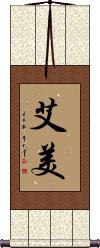
This is the second most common transliteration to Mandarin Chinese for the name Amy.
eimi
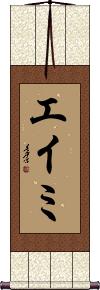
エイミ is the name Amy in Japanese.
Note: Because this title is entirely Japanese Katakana, it should be written by a Japanese calligrapher.
Amya
ā mǐ yà
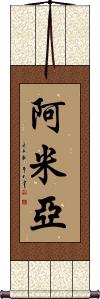
阿米亞 is the name Amya in Chinese (Mandarin).
Amya
amiya

アミヤ is the name Amya in Japanese Katakana.
Note: Because this title is entirely Japanese Katakana, it should be written by a Japanese calligrapher.
Amyshka
ā mǐ shí kǎ
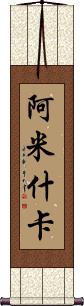
阿米什卡 is the name Amyshka in Chinese (Mandarin).
Amyshka
amishuka
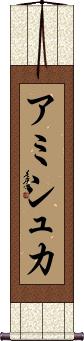
アミシュカ is the name Amyshka in Japanese Katakana.
Note: Because this title is entirely Japanese Katakana, it should be written by a Japanese calligrapher.
Army / Military
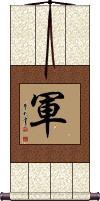
Attack When The Enemy Has Low Morale
bì qí ruì qì jī qí duò guī
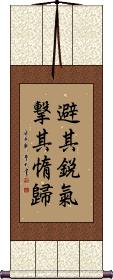
避其鋭氣擊其惰歸 is a Chinese proverb that literally translates as: Avoid [your enemy's] fighting spirit [and] attack [when] his [morale is] declining.
Figuratively, this means: Avoid the enemy when his morale is high and strike him when his morale is flagging.
Bellamy
bèi lā mǐ

貝拉米 is the name Bellamy in Chinese (Mandarin).
Bellamy
beramii

ベラミー is the name Bellamy in Japanese Katakana.
Note: Because this title is entirely Japanese Katakana, it should be written by a Japanese calligrapher.
Be Myself
zuò wǒ zì jǐ
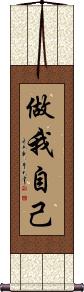
做我自己 means “be myself” or just “being me” in Chinese.
Camy
kǎ mǐ
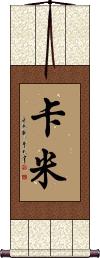
卡米 is the name Camy in Chinese (Mandarin).
Camy
kamii
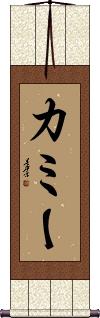
カミー is the name Camy in Japanese.
Note: Because this title is entirely Japanese Katakana, it should be written by a Japanese calligrapher.
Camyl
kǎ mǐ ěr
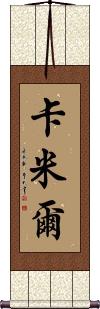
卡米爾 is the name Camyl in Chinese (Mandarin).
Camyl
kamiru
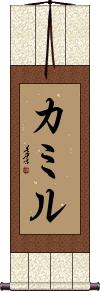
カミル is the name Camyl in Japanese (Katakana).
Note: Because this title is entirely Japanese Katakana, it should be written by a Japanese calligrapher.
I Control My Own Destiny
wǒ de mìng yùn wǒ zhǎng wò
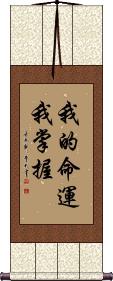
我的命運我掌握 is a way to write “I control my own destiny” in Chinese.
The direct translation is more like, “My destiny, I'm in control.” The meaning is the same, but Chinese grammar and word order vary a bit from English.
There's a few other variations, and if you want any of these, just email me:
我的命运我做主 (wo3 de ming4 yun4 wo3 zuo4 zhu3) "my destiny, I'm in charge"
我的未来我掌握 (wo3 de wei4 lai2 wo3 zhang3 wo4) "my future, I'm in control"
我的未来我做主 (wo3 de wei4 lai2 wo3 zuo4 zhu3) "My future, I'm in charge"
Daemyn
dài mǐn
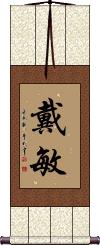
戴敏 is the name Daemyn in Chinese (Mandarin).
Daemyn
demin
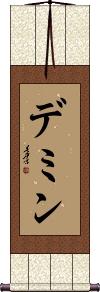
デミン is the name Daemyn in Japanese Katakana.
Note: Because this title is entirely Japanese Katakana, it should be written by a Japanese calligrapher.
Daimyo / Great Name
dà míng
dai myou
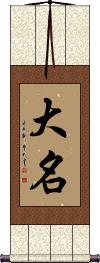
大名 is the title Daimyō in Japanese, which means “lord” or “great name.”
This has the same meaning in Chinese as “great name,” or “your distinguished name.” In ancient Japan, this referred to a feudal lord.
Also sometimes romanized from Japanese as Daimio, Daimyou, Oomiyou, or Oomyou.
Demy
dé mǐ
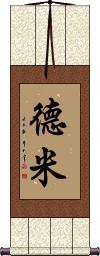
德米 is the name Demy in Chinese (Mandarin).
Demy
demii
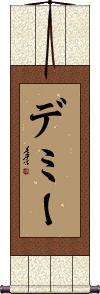
デミー is the name Demy in Japanese (Katakana).
Note: Because this title is entirely Japanese Katakana, it should be written by a Japanese calligrapher.
I am the Master of My Destiny
wǒ mìng yóu wǒ bù yóu tiān
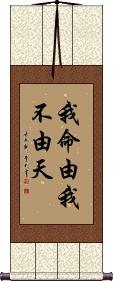
我命由我不由天 is often translated as “The one that shapes my destiny will always be myself rather than the God” or “Rather than Heaven, I am the master of my fate.”
Breaking down the words directly:
我命 = My fate/destiny
由我 = depends (on) me
不 = not
由天 dependant (on) Heaven.
See Also: Choose Your Own Destiny
Emmy
ài mǐ
This is a common Mandarin Chinese transliteration for the female French name Emmy.
Emmy
emii
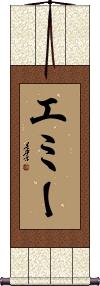
エミー is the name Emmy in Japanese.
Note: Because this title is entirely Japanese Katakana, it should be written by a Japanese calligrapher.
āi mǐ
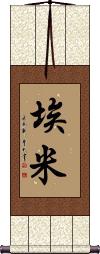
埃米 is the name Emy in Chinese (Mandarin).
emii
エミー is the name Emy in Japanese.
Note: Because this title is entirely Japanese Katakana, it should be written by a Japanese calligrapher.
Emya
ài mǐ yà
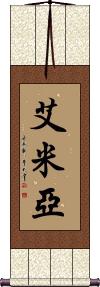
艾米亞 is the name Emya in Chinese (Mandarin).
Emya
emia
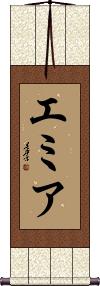
エミア is the name Emya in Japanese (Katakana).
Note: Because this title is entirely Japanese Katakana, it should be written by a Japanese calligrapher.
Emylee
ài mǐ lì
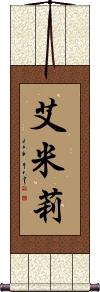
艾米莉 is the name Emylee in Chinese (Mandarin).
Emylee
emirii
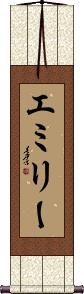
エミリー is the name Emylee in Japanese Katakana.
Note: Because this title is entirely Japanese Katakana, it should be written by a Japanese calligrapher.
Enigma / Mysterious
shén ào
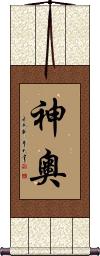
神奧 is a Chinese word that means mysterious or enigma.
This version of enigma or mystery is somewhat spiritual - as if the soul is the puzzle to be solved.
The Mysterious Bond Between People
The invisible force that brings people together forever
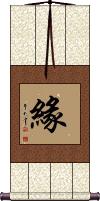
緣 represents the fate that brings and bonds people together.
緣 is a complicated single character. It can mean a lot of different things depending on how you read it.
In Japanese, it can mean fate, destiny, a mysterious force that binds two people together, a relationship between two people, bond, link, connection, family ties, affinity, opportunity, or chance (to meet someone and start a relationship). It can also mean “someone to rely on,” relative, reminder, memento, or the female given name, Yori.
It's the same in Chinese, where it's defined as cause, reason, karma, fate, or predestined affinity.
In the Buddhist context, it's Pratyaya. This is the concept of indirect conditions, as opposed to direct causes. It's when something happens (meeting someone) by circumstance or a contributing environment. Instead of a direct cause or act, it is a conditioning cause without direct input or action by the involved people.
Occasionally, this character is used in a facetious way to say hem, seam, or edge of clothing. In this case, it's the seam that brings or holds the clothing together.
 Note: Japanese will tend to use the variant of this Kanji shown to the right. If you want this version (and are ordering this from the Japanese master calligrapher), click on the Kanji at the right instead of the button above.
Forever In My Heart
yǒng yuǎn zài wǒ xīn zhōng
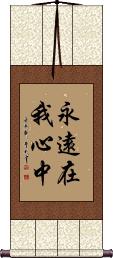
永远在我心中 means “forever in my heart” or “always in my heart” in Chinese.
Always in My Heart
yǒng zhù wǒ xīn
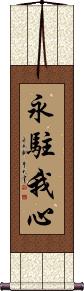
永駐我心 is one of a few ways to write “always in my heart” or “forever in my heart” in Chinese.
The first character means eternal, forever, or always.
The second character means resides, in, or stationed (in the case of troops).
The third character means me, my, or mine.
The last character means heart (but can also mean mind or soul).
Forever In My Heart
yǒng yuǎn zài wǒ xīn
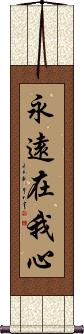
永遠在我心 means “forever in my heart” or “always in my heart” in Chinese.
This is the shorter, somewhat lyrical version of this phrase.
永遠 forever/eternal
在 at/in/exists
我 me/myself/my
心 heart/mind/soul
Forever In My Heart
i tsu ma de mo watashi no kokoro no naka ni
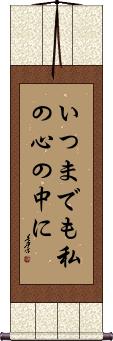
いつまでも私の心の中に means “forever in my heart” or “always in my heart” in Japanese.
Note: Because this selection contains some special Japanese Hiragana characters, it should be written by a Japanese calligrapher.
Forever In My Heart
ei en ni watashi no kokoro no naka ni
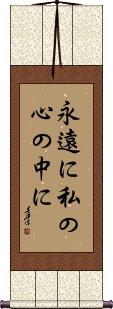
永遠に私の心の中に means “forever in my heart” or “always in my heart” in Japanese.
The character breakdown:
永遠 (eien) eternity; perpetuity; immortality; permanence.
に (ni) indicates the location of a person or thing.
私の (watashi no) my; mine.
心の中 (kokoro no naka) the middle of one's mind; the midst of one's heart.
に (ni) indicates the location of a person or thing (makes this “in” the middle of one's heart).
Note: There’s more than one way to say "Forever in My Heart" in Japanese, so you’ll find another version in our database. This is the very verbose version.
Note: Because this selection contains some special Japanese Hiragana characters, it should be written by a Japanese calligrapher.
Forgive Me of My Sins
yuán liàng wǒ de zuì niè
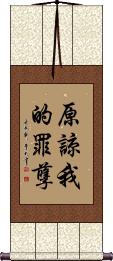
原諒我的罪孽 is a religious phrase, which means exactly what the title suggests.
See Also: Christian
Fudo Myo-o / Wisdom King
bù dòng míng wáng
fu dou myou ou
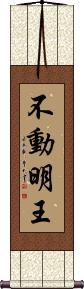
不動明王 is the fierce form of the Buddha Vairocana, and the most important of the Myō-ō or Ming Wang class of deities.
Romanized as Fudō Myō-ō, in Japanese Buddhism or Bùdòng Míngwáng / Pu-Tung Ming-Wang in Chinese Buddhism,
Originally Acala/Achala (अचल “The Immovable”), Acalanātha (अचलनाथ “Immovable Lord”) or Āryācalanātha (आर्याचलनाथ, “Noble Immovable Lord”).
In English, this deity is sometimes called “Wisdom King.”
Whore / Mysterious Woman
Danger: Means prostitute in Japanese!
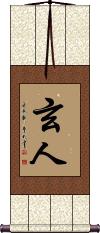
玄人 literally means “Mysterious Person/Woman.”
In Japanese, this is associated with a “geisha,” which matches this definition of a “mysterious woman.” However, this is the colloquial way to say “professional geisha” or “expert prostitute” in Japanese. It, therefore, might not be what you want on your wall.
Notes: This is a "Japanese only" term, though a Chinese person who sees these characters will think of a geisha or an alluring Japanese female musician.
While not often seen in Korean Hanja, this would mean a "dark woman," as in a woman that you cannot easily see through.
Geremy
jié lè mǐ
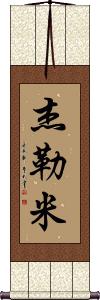
杰勒米 is the name Geremy in Chinese (Mandarin).
I give you my hand
watashi no te o ataeru
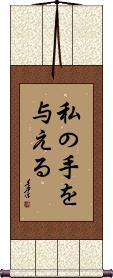
私の手を与える means “I give you my hand,” in Japanese.
Note: Because this selection contains some special Japanese Hiragana characters, it should be written by a Japanese calligrapher.
Glammy
gé lā mǐ

格拉米 is the name Glammy in Chinese (Mandarin).
Glammy
guramii

グラミー is the name Glammy in Japanese Katakana.
Note: Because this title is entirely Japanese Katakana, it should be written by a Japanese calligrapher.
God is my Judge
Hiromy
hóng měi
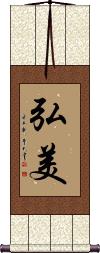
弘美 is the name Hiromy in Chinese (Mandarin).
Hiromy
hiromii
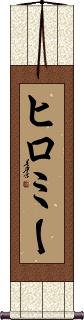
ヒロミー is the name Hiromy in Japanese Katakana.
Note: Because this title is entirely Japanese Katakana, it should be written by a Japanese calligrapher.
Feel at Ease Anywhere / The World is My Home
sì hǎi wéi jiā
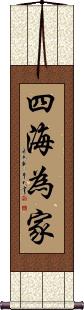
四海為家 literally reads, “Four Seas Serve-As [my/one's] Home.”
Together, 四海 which literally means “four seas” is understood to mean “the whole world” or “the seven seas.” It's presumed to be an ancient word from back when only four seas were known - so it equates to the modern English term, “seven seas.”
This can be translated or understood in a few different ways:
To regard the four corners of the world all as home.
To feel at home anywhere.
To roam about unconstrained.
To consider the entire country, or the world, to be one's own.
Immy
yī mǐ

伊米 is the name Immy in Chinese (Mandarin).
Immy
imii
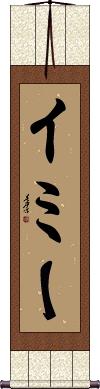
イミー is the name Immy in Japanese Katakana.
Note: Because this title is entirely Japanese Katakana, it should be written by a Japanese calligrapher.
Isshin Academy

一心学院 can be translated as “Isshin Academy.”
In martial arts usage, this term is typically chosen to express a training mindset, ethical conduct, or personal cultivation. It is commonly used in dojo culture, mottos, and calligraphy titles.
Cross-language note: while the core meaning is broadly shared across Chinese and Japanese usage, nuance and frequency can differ by tradition.
I walk my own path
wǒ xíng wǒ sù
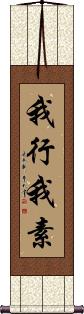
我行我素 is a way to say, “I walk my own path,” or “to continue in one's own way,” in Chinese.
This does not always have a completely positive connotation. It can mean ignoring advice or to persist in your path, no matter what others say or think.
Jamy
jié mǐ
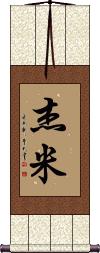
杰米 is the name Jamy in Chinese (Mandarin).
Jamy
jami
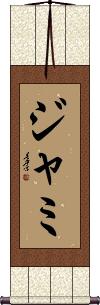
ジャミ is the name Jamy in Japanese Katakana.
Note: Because this title is entirely Japanese Katakana, it should be written by a Japanese calligrapher.
Jamya
jiǎ mǐ yà

賈米婭 is the name Jamya in Chinese (Mandarin).
Jamya
jamiya

ジャミヤ is the name Jamya in Japanese Katakana.
Note: Because this title is entirely Japanese Katakana, it should be written by a Japanese calligrapher.
Jasmyne
jiǎ sī mǐn

賈斯敏 is the name Jasmyne in Chinese (Mandarin).
Jasmyne
jasumin
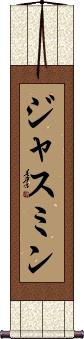
ジャスミン is the name Jasmyne in Japanese Katakana.
Note: Because this title is entirely Japanese Katakana, it should be written by a Japanese calligrapher.
Jemmy
jié mǐ
杰米 is the name Jemmy in Chinese (Mandarin).
Jemmy
jemii
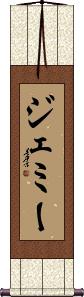
ジェミー is the name Jemmy in Japanese Katakana.
Note: Because this title is entirely Japanese Katakana, it should be written by a Japanese calligrapher.
Jeremy
jié ruì mǐ
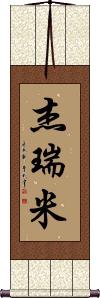
杰瑞米 is the name Jeremy in Chinese (Mandarin).
Jeremy
jié lǐ mǐ
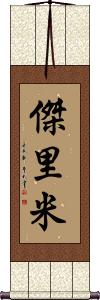
This is the second most common way to write the name Jeremy transliterated into Mandarin Chinese.
Jeremy
jeremii
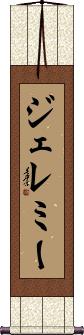
ジェレミー is the name Jeremy in Japanese.
Note: Because this title is entirely Japanese Katakana, it should be written by a Japanese calligrapher.
Jeromy
jié luó mǐ
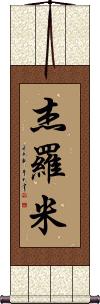
杰羅米 is the name Jeromy in Chinese (Mandarin).
Jeromy
jeromii

ジェロミー is the name Jeromy in Japanese Katakana.
Note: Because this title is entirely Japanese Katakana, it should be written by a Japanese calligrapher.
Jesus Christ is my Savior
yē sū jī dū shì wǒ jiù zhǔ
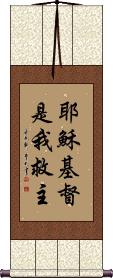
耶稣基督是我救主 is a Chinese phrase that reads “Jesus Christ is my savior.”
Jesus Christ is My Savior
Iesu kirisuto wa watashi no sukuinushi desu
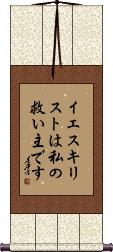
イエスキリストは私の救い主です is a Japanese phrase that means “Jesus Christ is my savior.”
Note: Because this selection contains some special Japanese Hiragana and Katakana characters, it should be written by a Japanese calligrapher.
Jesus is my Savior
yē sū shì wǒ jiù zhǔ
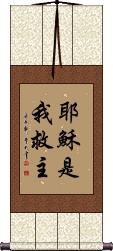
耶穌是我救主 is a Chinese phrase that reads, “Jesus is my savior.”
Jesus is my Savior
iesu wa watashi no sukuinushi desu
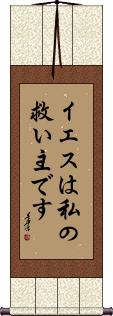
イエスは私の救い主です is a Japanese phrase that means “Jesus is my savior.”
Note: Because this selection contains some special Japanese Hiragana and Katakana characters, it should be written by a Japanese calligrapher.
Jesus is My Life
yē sū shì wǒ de shēng mìng
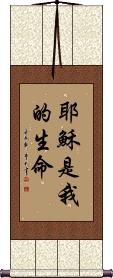
耶穌是我的生命 means Jesus is my life in Chinese.
The first two characters are a transliteration of the name Jesus into Mandarin Chinese.
The third character means, is.
The fourth and fifth mean my or mine.
The last two characters mean life, as in lifespan, or from birth to death.
This is not a common phrase for Chinese Christians, but this is the best way to translate this idea from English to Mandarin Chinese.
Jimmy
jí mǐ
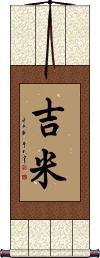
吉米 is the name Jimmy in Chinese (Mandarin).
Jimmy
jimii
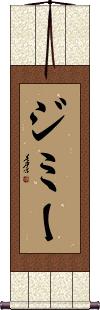
ジミー is the name Jimmy in Japanese.
Note: Because this title is entirely Japanese Katakana, it should be written by a Japanese calligrapher.
Joemy
qiáo mǐ

喬米 is the name Joemy in Chinese (Mandarin).
Joemy
joomii

ジョーミー is the name Joemy in Japanese Katakana.
Note: Because this title is entirely Japanese Katakana, it should be written by a Japanese calligrapher.
Kimmy
kē mí
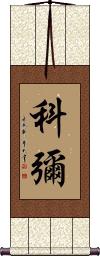
科彌 is the name Kimmy in Chinese (Mandarin).
Kimmy
kimii
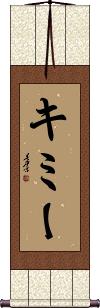
キミー is the name Kimmy in Japanese.
Note: Because this title is entirely Japanese Katakana, it should be written by a Japanese calligrapher.
Kirin / Giraffe / Mythical Creature
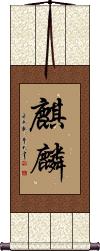
麒麟 is the title of a mythical beast of Asia.
The animal is thought to be related to the giraffe, and in some ways, it is a giraffe. However, it is often depicted with the horns of a dragon or deer and sometimes with the body like a horse, but many variations exist.
In Japanese, it is pronounced “Kirin” as in “Kirin Ichiban” beer.
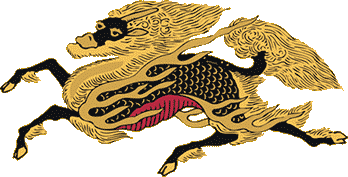
Notes:
1. This is sometimes spelled as “kylin.”
2. In Japanese, this is the only Kanji word for giraffe. Therefore in Japan, this word needs context to know whether you are talking about the mythical creature or the long-necked giraffe of Africa.
3. Apparently, this was the first word used for regular giraffes in China (some were brought from Africa to China during the Ming Dynasty - probably around the year 1400). Though the mythical creature may have existed before, the name “qilin” was given to the “new giraffe.” This is because, more than 600 years ago, giraffes somewhat matched the mythical creature's description when Chinese people saw them for the first time. Later, to avoid such an ambiguous title, a three-character word was devised to mean a “giraffe of Africa.” The characters for “qilin” shown here are only for the mythological version in modern Chinese.
4. More information about the qilin / kirin from Wikipedia.
5. This creature is sometimes translated as the “Chinese Unicorn,” although it is generally portrayed with two horns. I think this is done more for the fantasy aspect of the unicorn and because most westerners don't know what a qilin or kirin is (this avoids a long explanation by the translator).
6. In Korean, this can mean kirin or simply giraffe (usually, the mythological creature is what they would think of when seeing these characters alone on a wall scroll).
Know Thy Enemy, Know Thyself
zhí bǐ zhí jī
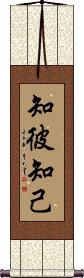
This proverb is from Sun Tzu's (Sunzi's) Art of War.
It means that if you know and understand the enemy, you also know yourself. Four secondary characters come after this in the Art of War (not included here) which suggests you cannot lose a battle when you follow this philosophy.
In a very literal and somewhat-boring way, this can also be translated as “Estimate correctly one's strength as well as that of one's opponent.”
Know Thy Enemy, Know Thyself
te ki o shi ri o no re o shi ru
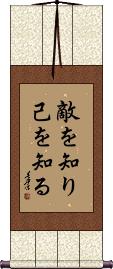
敵を知り己を知る is the Japanese version of “know your enemy, know yourself.”
There is a longer version of this proverb that adds, “...and you can win 100 battles.”
Note: Because this selection contains some special Japanese Hiragana characters, it should be written by a Japanese calligrapher.
Know Your Enemy, Know Yourself, and You Cannot Lose
zhí bǐ zhí jī bǎi zhàn bú dài
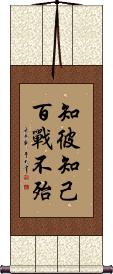
知彼知己百戰不殆 is from Sun Tzu's (Sunzi's) Art of War. It means that if you know and understand the enemy, you also know yourself, and thus with this complete understanding, you cannot lose.
This proverb is often somewhat directly translated as “Know the enemy and know yourself, and you can fight a hundred battles without defeat.”
It can also be translated as “If you know both yourself and your enemy, you can come out of hundreds of battles without danger,” or “Know your enemy, know yourself, and your victory will not be threatened.”
Know Your Enemy, Know Yourself, and Win 100 Battles
teki o shi ri o no o shi re ba hya ku sen aya u ka ra zu
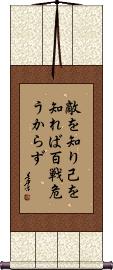
敵を知り己を知れば百戦危うからず is the longer/full Japanese version of this proverb. This means “Know your enemy, know yourself, and you will not fear a hundred battles.”
Others will translate this as “Know thy enemy, know thyself, yields victory in one hundred battles.”
Note: Because this selection contains some special Japanese Hiragana characters, it should be written by a Japanese calligrapher.
Leahmya
lì yǎ mǐ yà
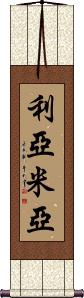
利亞米亞 is the name Leahmya in Chinese (Mandarin).
Leahmya
riimya
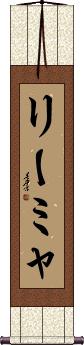
リーミャ is the name Leahmya in Japanese (Katakana).
Note: Because this title is entirely Japanese Katakana, it should be written by a Japanese calligrapher.
The LORD is my Shepherd
yē hé huá shì wǒ de mù zhě
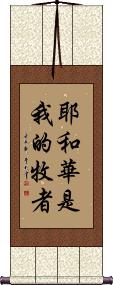
耶和華是我的牧者 is the first line from Psalms 23 straight out of the Chinese Union Bible.
This reads, “The LORD is my shepherd,” or “Jehovah is my shepherd.”
The character breakdown:
耶和華 = Jehovah (most English Bibles translate as LORD or God). This Chinese title is meant to sound a bit like the original Hebrew YHWH or Yahweh.
是 = is.
我的 = my.
牧者 = shepherd.
Love Myself First
xiān ài wǒ zì jǐ
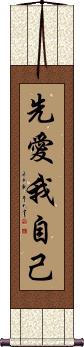
This directly translates as, “First, love myself.”
While you might be looking for “Love yourself first,” there's the problem with yourself versus myself. If this is on your wall or tattooed on your arm, should it not say “myself” since it's directed at you, and not others?
See Also: Love Yourself First
yǎng bīng qiān rì, yàng bīng yì shí
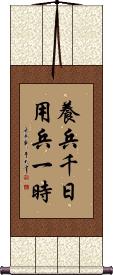
Nothing could be more true. When I was in the Marine Corps, we trained for years for combat that often lasts only hours.
養兵千日用兵一時 is a Chinese proverb that, also reminds me of a common phrase used in the military to describe combat: “Weeks of total boredom, punctuated with five minutes of sheer terror.”
This may have some roots in Sun Tzu's The Art of War. Though I can not find this passage in his writings.
On the subject of the Art of War, if you have a favorite passage, we can create a custom calligraphy scroll with that phrase.
Mama / Mother / Mommy
mā
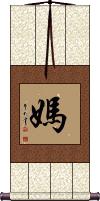
媽 is the oral way that most Chinese people refer to their mothers. Often, they will put this together twice (two of the same character in a row) to create a word that sounds like “Mama.” That's absolutely what little kids call their mothers in China. This Chinese “Mama” is the rough equivalent of “Mommy” in English. Beyond a certain age, Chinese will start to just say “Ma,” which is like saying “Mom.”
This entry is just here for a language lesson. This would make a strange wall scroll by Chinese standards. In Chinese, there are sometimes oral words that don't seem appropriate when written in calligraphy, and this is one of them. See our entry for “Loving Mother” for a better selection.
See Also: Loving Mother | Family
Mommy
mamii
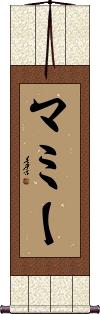
マミー is how to write “Mommy” in Japanese phonetically.
Note: Because this title is entirely Japanese Katakana, it should be written by a Japanese calligrapher.
Mummy / Dried Corpse
gān shī
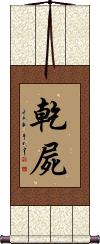
乾屍 is mummy or “dried corpse” in Chinese.
Not sure why you would want this on a wall scroll, but many people search for it here.
My Son
wǒ ér
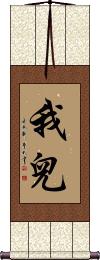
我兒 means “my son” in Chinese.
The first character means my, mine, me, or I (it's possessive in this case).
The second character means son (or baby).
Note: 我兒 is a very unusual title for a calligraphy wall scroll.
My True Love
wǒ xīn zhēn ài
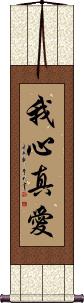
我心真愛 is a slightly poetic way to express this sentiment to someone.
The meaning is “My True Love,” but the characters directly translate as “I/Me/My Heart/Mind True/Real Love.”
Note that Chinese grammar and construction are different, so this sounds very eloquent and artsy in Chinese.
In Korean Hanja, the third character should be written differently. Just let me know when you place your order if you want that version - it will still make sense in Chinese. This phrase makes sense in Korean but is not commonly used.
My True Love
shin jitsu no ai
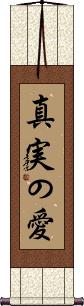
真実の愛 means “true love” or “genuine affection” in Japanese.
The first two Kanji mean true, real, genuine, or authentic.
The third Kanji is a connecting possessive article.
The last character is love or affection.
miào
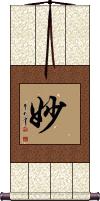
妙 is the name Mya in Chinese (Mandarin).
mia
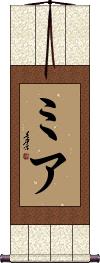
ミア is the name Mya in Japanese.
Note: Because this title is entirely Japanese Katakana, it should be written by a Japanese calligrapher.
Myah
mài yà
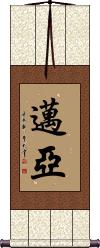
邁亞 is the name Myah in Chinese (Mandarin).
Myah
maia
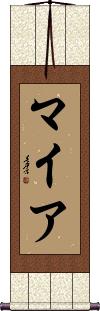
マイア is the name Myah in Japanese Katakana.
Note: Because this title is entirely Japanese Katakana, it should be written by a Japanese calligrapher.
Myanmar
miǎn diàn
men den
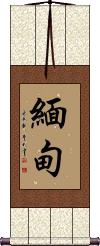
This is the Chinese name for the country of Myanmar (formerly known as Burma).
This is occasionally used in Japanese (especially in historic documents) with the same meaning (though they also have a Katakana name for Myanmar/Burma).
See Also: Asia

Successful Chinese Character and Japanese Kanji calligraphy searches within the last few hours...
A Moment of Time is as Precious as GoldAadilAaliyahAartiAbbiAbbyAbdulAbdullahAbdulrahmanAbigaelAbubakarAdelaAdrianAdrianaAdrielAdvance BravelyAgusteAhmedAileenAinsleyAishaAislingAkashAkemiAkilaAlaricAlexanderAlexandraAlexandriaAlieAlinaAlishaAlways Try to Do BetterAlyciaAminaAmirAnasAnatoliAndreasAndyAngelAngelaAnikAnilaAnniAnoukAnshuAnshulAnushkaArcherArdenArdiAreebArelyArenAriaArielaArielleArifArleyArminArmstrongArnoldAryanArzooAscendAsheAstridAthenaAuraAyeshaAylahAzamAzariahAzharAzisAzizBanzaiBe Like Water My FriendBe True to YourselfBeatriceBeatrizBeckBellaBenoitBensonBentoBest FriendsBest Friends ForeverBetter to Be Happy Than RichBhumikaBibiBijayBlaineBlakeBlissBodenBogdanBramBrazilBrendaBrennanBrielleBrodyBrother and Sister BondBryantCaitlynCalebCaliCallumCalmCamilleCapucineCarmenCarsonCarterCasanovaCathCaydenChandChaosCharlieCharmaineChavezChelseaChop Wood Carry WaterChrist My SaviorChristelleChristieCindyClarissaClarityClintonCompassionConstantineContentmentCoriCosmoCourageCourtneyCraigCraneCyrineCyrusDaisyDaito Ryu Aiki JujutsuDaltonDamarisDanaDaniaDanieleDanielleDaodejing Chapter 9DaphneDarrenDarrylDavidDeanDeath Before DishonorDemetriDestinyDevonteDexterDillonDionDollyDominicDominickDragaDragon Crane TigerDrewDrunken MonkeyDuarteEddieEdwinElaineEleanorElenaEliaEliakimElianaElieElijahElinaElisaEllieEllisEloiseElsaEmiliaEmmanuelErenEricaErnestoErrolEstherEverything Happens for a ReasonEvieEwan



