Many custom options...


And formats...



Meaning of Love in Chinese / Japanese...
Buy a Meaning of Love calligraphy wall scroll here!
Personalize your custom “Meaning of Love” project by clicking the button next to your favorite “Meaning of Love” title below...
1. Passionate Love / Ardent Love and Devotion
2. My True Love
5. Adoring Love
10. I love you to the moon and back
11. Brotherly and Sisterly Love
12. Faith Hope Love
14. Soul Mates
16. Erin
17. Aijou-Ryu
18. Aysia
19. True Heart
20. Benevolence
21. Corinthians 13:4
22. Kama - Desire Wish Longing
23. You are always a beauty in your lover’s eyes
24. Alert / On Guard / Lingering Mind
25. Best
27. Caring
28. Daoism / Taoism
29. Tea Fate
Passionate Love / Ardent Love and Devotion
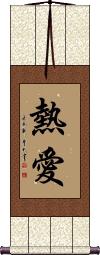
熱愛 means love passionately, ardent love, devotion, adoration.
The literal meaning is “hot love,” as the first character means heat, fervent, hot, and warm. Sometimes it can mean fever, restlessness, or zeal. The second character is, of course, love. If you adore and are devoted to someone with all your love, this is the title for you.
My True Love
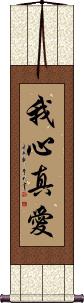
我心真愛 is a slightly poetic way to express this sentiment to someone.
The meaning is “My True Love,” but the characters directly translate as “I/Me/My Heart/Mind True/Real Love.”
Note that Chinese grammar and construction are different, so this sounds very eloquent and artsy in Chinese.
In Korean Hanja, the third character should be written differently. Just let me know when you place your order if you want that version - it will still make sense in Chinese. This phrase makes sense in Korean but is not commonly used.
Infinite Love
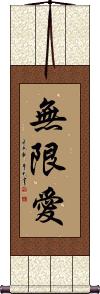
無限愛 is the Chinese and Japanese title meaning infinite love, unlimited love, or unbounded love.
The first character means never, not, or like the prefix “un-.”
The second means limited, restricted, or bound.
The third means love or affection.
Greatest Infinite Love
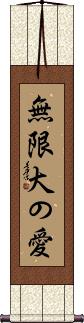
無限大の愛 is a Japanese title meaning infinite great love, unlimited great love, or eternal love.
無 means never, not, or like a prefix “un-.”
限 means limited, restricted, or bound.
大 means great or big.
の is a possessive article.
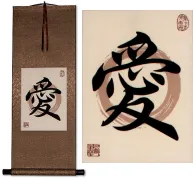
愛 means love or affection.
Adoring Love
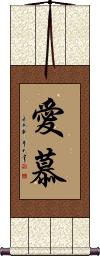
愛慕 means “adoring love” in Chinese, Japanese, and Korean.
I suppose this is the best kind of love to have. 愛慕 has the common character for love. But the second character modifies and reinforces the meaning to become adore, adoring love, or to love and adore.
Ancient Chinese warning:
Adoring someone is fine until you are in the shoes of the Prince of the Kingdom of Wu. This Prince adored a certain beautiful woman (Xi Shi) so much that he neglected his duties and soon let the kingdom fall into ruins.
Live Laugh Love
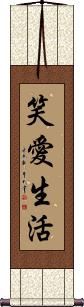
In English, the word order shown in the title is the most natural or popular. In Chinese, the natural order is a little different:
The first character means laugh (sometimes means smile).
The second character means love.
The last two characters mean “live” as in “to be alive” or “pursue life.”
Please note: 笑愛生活 is not a normal phrase in that it does not have a subject, verb, or object. It is a word list. Word lists are not common in Asian languages/grammar (at least not as normal as in English). We only added this entry because so many people requested it.
We put the characters in the order shown above, as it almost makes a single word with the meaning “A life of laughter and love.” It's a made-up word, but it sounds good in Chinese.
We removed the Japanese pronunciation guide from this entry, as the professional Japanese translator deemed it "near nonsense" from a Japanese perspective. Choose this only if your audience is Chinese and you want the fewest-possible characters to express this idea.
In Korean, this would be 소애생활 or "so ae saeng hwar" but I have not confirmed that this makes sense in Korean.
Loving Heart / One’s Love
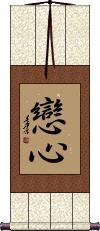
戀心 literally means “loving heart.” It can also be translated as “one's love” or “awakening of love.”
戀心 is used exclusively for love between boyfriends and girlfriends or husband and wife.
Breaking down the meaning of each Kanji, the first means love, affection, or tender passion. The second Kanji means heart, mind, or soul (most will read it as the heart).
See Also: Compassion | Love
Love and Devotion
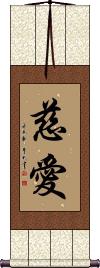
慈愛 refers to the kind of love and devotion you might have to your children or any loved one.
This especially applied to your children but could also be any member of your family - spouse, etc.
This can also be translated as affection, kindness, love, to love affectionately.
慈愛 is also used in a Buddhist context with the same meaning.
In Japanese, this can also be a female given name romanized as Yasue.
Strength and Love in Unity
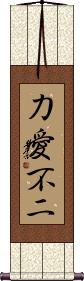
力愛不二 is a proverb that literally means:
“Strength [and] Love [are] Not Two [separate ideas/concepts/things].”
You'll find this proverb translated from Japanese to English as:
Love and strength are not separate.
Power and love are indivisible.
Strength and love in harmony.
Strength and love stand together.
Old Japanese grammar is quite different than English, and so this proverb says a lot within the brevity of just 4 characters. If you just read these characters directly as “Strength Love Not Two,” you'd probably miss the real meaning.
According to the Swedish Shorinji Kempo Federation, this is the second characteristic of Shorinji Kempo.
This post really explains the concept best in my opinion: Bushido by MS: Riki Ai Fu Ni, which states: "Riki Ai Funi" is the philosophy that power (Riki) and love (Ai) are indivisible. More concretely, a person, who is powerful but does not have love, cannot control and misuse his/her power; on the other hand, a person, who has loved ones but is not powerful enough, cannot protect himself/herself nor loved ones.
I love you to the moon and back

我愛你到地老天荒 is a Chinese version of “I love you to the moon and back.”
The literal meaning of this phrase is, “I love you from the end of the Earth to the reaches of Heaven” or more simply translated as, “I love you until the end of time.”
Brotherly and Sisterly Love
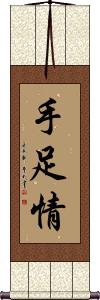
手足情 is the love between siblings.
When you love, protect, care for, and have a deep bond that only brothers or sisters can.
The actual translation is “Hand and Foot,” but the relationship between brothers or sisters is like that of hands and feet. They belong together and complete the body. Even though this says “hand and foot,” it will always be read with the brotherly and sisterly love meaning in Chinese.
Note: During the past 20 years, the “One child policy” in China is slowly making this term obsolete.
Faith Hope Love
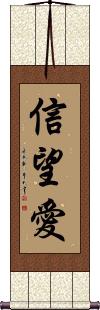
信望愛 is a Chinese list of words meaning faith, hope, and love.
This is not a typical phrase in Chinese but rather just random words strung together. There's no bad meaning, it's just not typical Chinese grammar.
Faith Hope Love
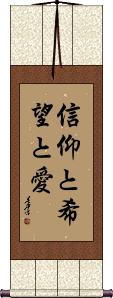
信仰と希望と愛 is a Japanese list of words (not really a phrase) meaning faith, hope, and love.
Some have associated this word list with Corinthians 13:13, though there are no specific religious connotations in this word list, and it's not directly from that Japanese Bible verse.
Note: Because this selection contains some special Japanese Hiragana characters, it should be written by a Japanese calligrapher.
Spiritual Soul Mates
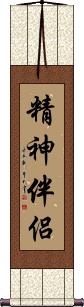
精神伴侶 means “Spiritual Soul Mates.” The first two characters mean “spiritual” or “soul.” The second two characters mean “mates,” “companions,” or “partners.”
This is more about the spiritual connection between partners rather than a “fate-brought-us-together” kind of soul mates.
Both halves of this title have meaning in Japanese but I've not yet confirmed that this is a commonly used title in Japan.
Soul Mates
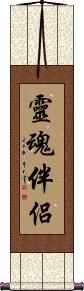
靈魂伴侶 is the literal translation of “Soul Mates.”
This is kind of the western way to express “soul mates” but translated into Chinese, Japanese Kanji, and old Korean Hanja.
The first two characters mean “soul” or “spirit.”
The second two characters mean “mate,” “companion” or “partner.”
Although not the most common title, these characters have good meaning and will be received well in Chinese, Japanese, and Korean. It's a universal title!
Loving Heart / Compassion
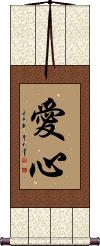
愛心 literally means “loving heart.” It can also be translated as “compassion.”
In Chinese, it carries more of a compassionate meaning.
愛心 is rarely used in Japanese anymore, so best if your audience is Chinese.
See Also: Compassion | Love
Erin
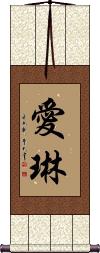
This is an alternate transliteration to Mandarin Chinese for the name Erin.
This version uses “love” as the first character. This is not the standard but popular, as the resulting meaning is “Love Gem.”
Aijou-Ryu
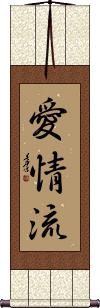
This is the title Aijō-Ryū, Aijou-Ryu or Aijou-Ryuu meaning “style of love and affection” or “flow of love” in Japanese.
Aysia
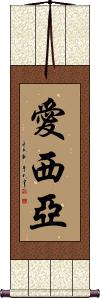
愛西亞 is the transliteration to Mandarin Chinese for the name Aysia.
The meaning is “Love West Asia,” although it will be read as a name, rather than this meaning by most.
True Heart
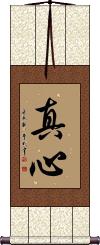
While 真心 literally reads as “true heart” or “genuine heart,” the understood meaning is sincerity, devotion, sincere, or heartfelt. Some will extend the meaning to be like “true love.” It's the idea of doing something or treating someone with genuine feelings.
真心 is valid and has the same meaning in both Chinese characters and Japanese Kanji.
Note: While not too common, this can be the female given name “Mami” in Japanese.
Benevolence
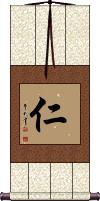
Beyond benevolence, 仁 can also be defined as “charity” or “mercy” depending on context.
The deeper meaning suggests that one should pay alms to the poor, care for those in trouble, and take care of his fellow man (or woman).
仁 is one of the five tenets of Confucius. In fact, it is a subject that Confucius spent a great deal of time explaining to his disciples.
I have also seen this benevolent-related word translated as perfect virtue, selflessness, love for humanity, humaneness, goodness, goodwill, or simply “love” in the non-romantic form.
This is also a virtue of the Samurai Warrior
See our page with just Code of the Samurai / Bushido here
Corinthians 13:4
All you need to know about LOVE
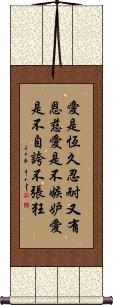
愛是恆久忍耐又有恩慈愛是不嫉妒愛是不自誇不張狂 is 1st Corinthians 13:4 in Chinese.
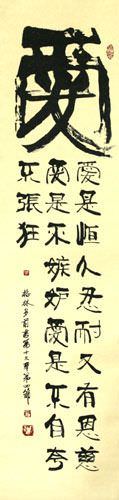
With large “love” character added.
In English, this reads:
1st Corinthians 13:4 (KJV) Charity suffereth long, and is kind; charity envieth not; charity vaunteth not itself, is not puffed up...
1st Corinthians 13:4 (NIV) Love is patient, love is kind. It does not envy, it does not boast, it is not proud.
1st Corinthians 13:4 (Basic English) Love is never tired of waiting; love is kind; love has no envy; love has no high opinion of itself, love has no pride.
The Chinese translation follows the love meaning, rather than the King James' use of “charity.” I was a little confused when writing this description with the significant differences between the NIV vs. KJV translations. After speaking to a Greek scholar about this, it would seem that the KJV has an almost errant translation with the use of “charity” in place of “love.”
We used the most popular Christian Chinese Bible, which is the Chinese Union Version (CUV). The CUV was first published in 1919. We use this so that the Chinese translation would be as accurate and standard as possible. Any Chinese Christian worth their salt will easily be able to identify this verse when they see these characters.
If you want a big “love” character written above the verse on your artwork, just make a note in the “special instructions” tab when you are customizing your artwork. There is no extra charge for that service on this special verse.
Kama - Desire Wish Longing
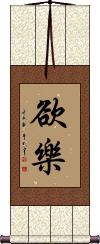
欲樂 is the Chinese and Japanese title representing the Buddhist and Jainist joys of the five desires.
Kama comes from the Pali/Sanskrit काम. The meaning is “desire, wish, longing.”
In Jainism, it can include sensual pleasure, sexual desire, and longing.
However, the Buddhist context refers more to any desire, wish, passion, longing, the pleasure of the senses, desire for, longing to and after, the aesthetic enjoyment of life, affection, or love, enjoyment of love is particularly with or without the enjoyment of sexual, sensual and erotic desire, and is often used without sexual connotations.
You are always a beauty in your lover’s eyes
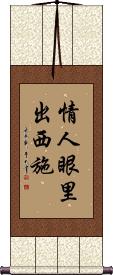
Any woman with affection for Asian art will love a gift of this Chinese proverb calligraphy on a wall scroll.
She will melt in your arms as you tell her the meaning of these characters.
Contained in this phrase is a reference to the most beautiful woman in Chinese history. Her name was Xi Shi, and she was known to have good looks that need not have fine robes or makeup. Her charms were so powerful that she brought down an entire kingdom (in a successful effort to bring honor and pride back to her people).
情人眼里出西施 is a great way to express that the woman in your life is your one love.
Alert / On Guard / Lingering Mind
Zanshin
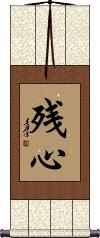
残心 is a Japanese Kanji word meaning: continued alertness; unrelaxed alertness; remaining on one's guard; lingering mind, and being prepared for a counterstrike. This context is used in martial arts, which is probably why you are looking up this word.
In archery and golf, it can be the follow-through.
In the context of love and relationships, it can be lingering affection, attachment, regret, regrets, or reluctance.
Best
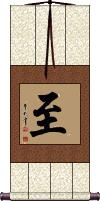
至 is a little strange as calligraphy, but 至 would be the character that means “best” or “extreme” in Chinese and Korean.
The problem is, this is seldom used alone. It's mostly used in combination with other characters to make words like “best friend,” “best food,” and “best love.”
I do not recommend this character for a wall scroll. It's better if you find a more specific term that fits your circumstances.
Note: This can be pronounced in Japanese and has a similar meaning but it is rarely if ever used in modern Japanese.
Zendo / The Zen Way
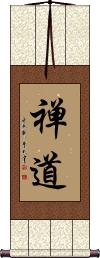
禪道 is a title used in certain contexts but is not widely known by the general population of China or Japan.
In Japanese, you will see this title romanized as “zendo,” which is the brand name of a board game, and also a title used by some martial arts studios and karate dojos. Oddly, many translate this as “zen fist,” although there is no “fist” in the title. If you literally translated this title, it would be “meditation way” or “meditation method.”
In Chinese, this would be “chan dao” with the same literal meaning as the Japanese title. It's used in China by just a handful of martial arts styles/studios.
You should only order this title if you really understand the meaning, and it has some personal connection to you (such as practicing a martial art style that uses this title, or if you love the board game Zendo). Many who see your wall scroll will not be familiar with this title, and you'll have some explaining to do.
 The first character can also be written in a more complex traditional way as shown to the right. Let us know in the special instructions for your calligraphy project if you want this style.
 If you order this from the Japanese master calligrapher, the first character will automatically be written with an extra dot on top. This is the variant form of the original Chinese character which is commonly used in modern Japan Kanji. See sample to the right.
Caring
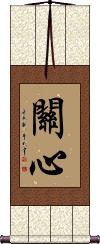
關心 means caring in Chinese.
Caring is giving love and attention to people and things that matter to you and anyone who needs help. When you care about people, you help them. You do a careful job, giving your very best effort. You treat people and things gently and respectfully. Caring makes the world a safer place.
Note: 關心 is also a word in Korean Hanja, but in Korean, it means taking interest or concern. In Korean, it's still a good word, but it doesn't quite have the “caring for a person” meaning that it does in Chinese.
See Also: Benevolence | Altruism
Daoism / Taoism
Literally: The Way or Road
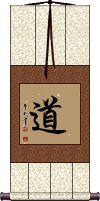
道 is the character “dao” which is sometimes written as “tao” but pronounced like “dow” in Mandarin.
道 is the base of what is known as “Taoism.” If you translate this literally, it can mean “the way” or “the path.”
Dao is believed to be that which flows through all things and keeps them in balance. It incorporates the ideas of yin and yang (e.g. there would be no love without hate, no light without dark, no male without female.)
The beginning of Taoism can be traced to a mystical man named
Lao Zi (604-531 BC), who followed, and added to the teachings of Confucius.
More about Taoism / Daoism here.
Note that this is pronounced “dou” and sometimes “michi” when written alone in Japanese but pronounced “do” in word compounds such as Karate-do and Bushido. It's also “do” in Korean.
Alternate translations and meanings: road, way, path; truth, principle province.
Important Japanese note: In Japanese, this will generally be read with the road, way, or path meaning. Taoism is not as popular or well-known in Japan so Daoist/Taoist philosophy is not the first thing a Japanese person will think of when they read this character.
See our Taoism Page
Tea Fate
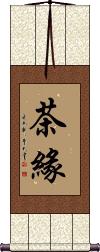
茶緣 is a special title for the tea lover. This kind of means “tea fate,” but it's more spiritual and hard to define. Perhaps the tea brought you in to drink it. Perhaps the tea will bring you and another tea-lover together. Perhaps you were already there, and the tea came to you. Perhaps it's the ah-ha moment you will have when drinking the tea.
I've been told not to explain this further, as it will either dilute or confuse the purposefully-ambiguous idea embedded in this enigma.
I happen to be the owner of a piece of calligraphy written by either the son or nephew of the last emperor of China, which is the title he wrote. It was given to me at a Beijing tea house in 2001. 茶緣 is where I learned to love tea after literally spending weeks tasting and studying everything I could about Chinese tea. I did not understand the significance of the authorship or the meaning of the title at all. Some 10 years later, I realized the gift was so profound and had such providence. Only now do I realize the value of a gift that it is too late to give proper thanks for. It was also years later that I ended up in this business and could have the artwork properly mounted as a wall scroll. It has been borrowed for many exhibitions and shows and always amazes native Chinese and Taiwanese who read the signature. This piece of calligraphy I once thought was just a bit of ink on a thin and wrinkled piece of paper, is now one of my most valued possessions. And fate has taught me to be more thankful for seemingly simple gifts.
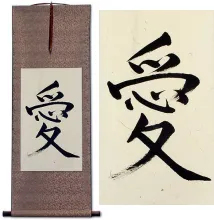
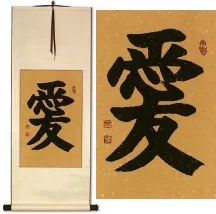
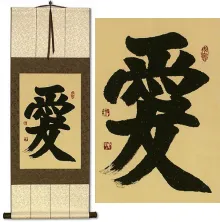
This in-stock artwork might be what you are looking for, and ships right away...
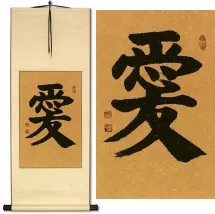
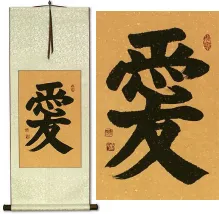


Gallery Price: $87.50
Your Price: $39.00
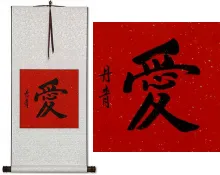
Gallery Price: $65.00
Your Price: $39.88
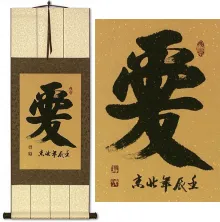
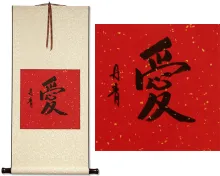
Gallery Price: $65.00
Your Price: $39.88

Gallery Price: $200.00
Your Price: $122.88
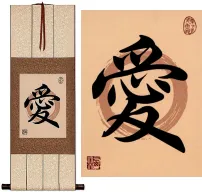
Gallery Price: $200.00
Your Price: $69.88
The following table may be helpful for those studying Chinese or Japanese...
| Title | Characters | Romaji (Romanized Japanese) | Various forms of Romanized Chinese | |
| Passionate Love Ardent Love and Devotion | 熱愛 热爱 | netsu ai / netsuai | rè ài / re4 ai4 / re ai / reai | je ai / jeai |
| My True Love | 我心真愛 我心真爱 | wǒ xīn zhēn ài wo3 xin1 zhen1 ai4 wo xin zhen ai woxinzhenai | wo hsin chen ai wohsinchenai |
|
| Infinite Love | 無限愛 无限爱 | mu gen ai / mugenai | wú xiàn ài wu2 xian4 ai4 wu xian ai wuxianai | wu hsien ai wuhsienai |
| Greatest Infinite Love | 無限大の愛 | bu gen dai no ai bugendainoai | ||
| Adoring Love | 愛慕 爱慕 | ai bou / aibou / ai bo | ài mù / ai4 mu4 / ai mu / aimu | |
| Live Laugh Love | 笑愛生活 笑爱生活 | xiào ài shēng huó xiao4 ai4 sheng1 huo2 xiao ai sheng huo xiaoaishenghuo | hsiao ai sheng huo hsiaoaishenghuo |
|
| Loving Heart One’s Love | 戀心 恋心 | koi gokoro / koigokoro | ||
| Love and Devotion | 慈愛 慈爱 | jiai | cí ài / ci2 ai4 / ci ai / ciai | tz`u ai / tzuai / tzu ai |
| Strength and Love in Unity | 力愛不二 力爱不二 | riki ai fu ni rikiaifuni | ||
| I love you to the moon and back | 我愛你到地老天荒 我爱你到地老天荒 | wǒ ài nǐ dào dì lǎo tiān huāng wo3 ai4 ni3 dao4 di4 lao3 tian1 huang1 wo ai ni dao di lao tian huang woainidaodilaotianhuang | wo ai ni tao ti lao t`ien huang woainitaotilaotienhuang wo ai ni tao ti lao tien huang |
|
| Brotherly and Sisterly Love | 手足情 | shǒu zú qíng shou3 zu2 qing2 shou zu qing shouzuqing | shou tsu ch`ing shoutsuching shou tsu ching |
|
| Faith Hope Love | 信望愛 信望爱 | xìn wàng ài xin4 wang4 ai4 xin wang ai xinwangai | hsin wang ai hsinwangai |
|
| Faith Hope Love | 信仰と希望と愛 | shinkou to kibou to ai shinkoutokiboutoai shinko to kibo to ai | ||
| Spiritual Soul Mates | 精神伴侶 精神伴侣 | sei shin han ryo seishinhanryo | jīng shén bàn lǚ jing1 shen2 ban4 lv3 jing shen ban lv jingshenbanlv | ching shen pan lü chingshenpanlü |
| Soul Mates | 靈魂伴侶 灵魂伴侣 | reikon hanryo reikonhanryo | líng hún bàn lǚ ling2 hun2 ban4 lv3 ling hun ban lv linghunbanlv | ling hun pan lü linghunpanlü |
| Loving Heart Compassion | 愛心 爱心 | ài xīn / ai4 xin1 / ai xin / aixin | ai hsin / aihsin | |
| Erin | 愛琳 爱琳 | ài lín / ai4 lin2 / ai lin / ailin | ||
| Aijou-Ryu | 愛情流 爱情流 | ai jou ryuu aijouryuu ai jo ryu | ||
| Aysia | 愛西亞 爱西亚 | ài xī yà ai4 xi1 ya4 ai xi ya aixiya | ai hsi ya aihsiya |
|
| True Heart | 真心 | mago koro / magokoro | zhēn xīn / zhen1 xin1 / zhen xin / zhenxin | chen hsin / chenhsin |
| Benevolence | 仁 | jin | rén / ren2 / ren | jen |
| Corinthians 13:4 | 愛是恆久忍耐又有恩慈愛是不嫉妒愛是不自誇不張狂 爱是恒久忍耐又有恩慈爱是不嫉妒爱是不自夸不张狂 | ài shì héng jiǔ rěn nài yòu yǒu én cí ài shì bú jì dù ài shì bú zì kuā bù zhāng kuáng ai4 shi4 heng2 jiu3 ren3 nai4 you4 you3 en2 ci2 ai4 shi4 bu2 ji4 du4 ai4 shi4 bu2 zi4 kua1 bu4 zhang1 kuang2 ai shi heng jiu ren nai you you en ci ai shi bu ji du ai shi bu zi kua bu zhang kuang | ai shih heng chiu jen nai yu yu en tz`u ai shih pu chi tu ai shih pu tzu k`ua pu chang k`uang ai shih heng chiu jen nai yu yu en tzu ai shih pu chi tu ai shih pu tzu kua pu chang kuang |
|
| Kama - Desire Wish Longing | 欲樂 欲乐 | yokuraku | yù lè / yu4 le4 / yu le / yule | yü le / yüle |
| You are always a beauty in your lover’s eyes | 情人眼里出西施 | qíng rén yǎn lǐ chū xī shī qing2 ren2 yan3 li3 chu1 xi1 shi1 qing ren yan li chu xi shi qingrenyanlichuxishi | ch`ing jen yen li ch`u hsi shih chingjenyenlichuhsishih ching jen yen li chu hsi shih |
|
| Alert On Guard Lingering Mind | 残心 | zan shin / zanshin | ||
| Best | 至 | shi | zhì / zhi4 / zhi | chih |
| Zendo The Zen Way | 禅道 / 禪道 禅道 | zen dou / zendou / zen do | chán dào / chan2 dao4 / chan dao / chandao | ch`an tao / chantao / chan tao |
| Caring | 關心 关心 | guān xīn / guan1 xin1 / guan xin / guanxin | kuan hsin / kuanhsin | |
| Daoism Taoism | 道 | michi / -do | dào / dao4 / dao | tao |
| Tea Fate | 茶緣 茶缘 | chá yuán / cha2 yuan2 / cha yuan / chayuan | ch`a yüan / chayüan / cha yüan | |
| In some entries above you will see that characters have different versions above and below a line. In these cases, the characters above the line are Traditional Chinese, while the ones below are Simplified Chinese. | ||||

Successful Chinese Character and Japanese Kanji calligraphy searches within the last few hours...



