Many custom options...


And formats...



Not what you want?
Try other similar-meaning words, fewer words, or just one word.
Martial Art in Chinese / Japanese...
Buy a Martial Art calligraphy wall scroll here!
Personalize your custom “Martial Art” project by clicking the button next to your favorite “Martial Art” title below...
See also: Martial Arts Words and Phrases
1. Aikido
4. Kempo Karate / Law of the Fist Empty Hand
6. Karate-Do
7. Iaijutsu
8. Drunken Fist
9. Takemusu
10. Itto-Ryu
11. Wing Chun
12. Kyodo
13. Shinto Muso-Ryu
14. Shaolin Chuan / Shao Lin Quan
16. Judo
17. Go Kan Ryu
18. Daito-Ryu
21. Mugai-Ryu
22. Mizong-Yi
23. Shihan
25. Grandmaster / Grand Master
26. Kenpo / Kempo / Quan Fa / Chuan Fa
27. Iaido
28. Jodo
29. Kyusho Jitsu
32. Taekwondo
35. Unwavering Hall / Fudoshinkan
36. Jeet Kune Do
37. Nippon Kempo
41. Ba Ji Quan
42. Jin Shin Jyutsu
43. Kyuki-Do
44. Tai Chi Chuan / Tai Ji Quan
45. Kyojitsu: Falsehood and Truth
46. Hapkido
Aikido
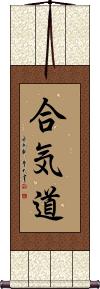
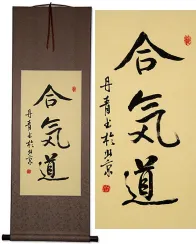
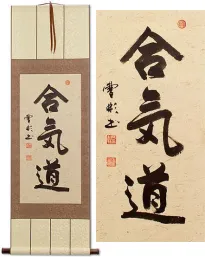
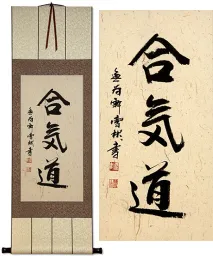
合気道 is the modern Japanese way to write Aikido.
Aikido is often referred to as the defensive martial art.
While Aikido was born in Japan, it has become a somewhat famous form of defensive tactics taught to soldiers and Marines, as well as some law enforcement officers in the West.
Looking at the characters, the first means “union” or “harmony.”
The second character means “universal energy” or “spirit.”
The third means “way” or “method.”
Please note that while the original 合氣道 characters can be pronounced in Chinese, this word is not well-known in China and is not considered part of the Chinese lexicon.
Note: It is somewhat accepted that this is the origin of Hapkido in Korea. And other than a modern simplification to the middle Kanji of this 3-Kanji word, it is written the same in Korean Hanja.
See Also: Martial Arts | Hapkido
Martial Arts / Budo
Way of the Warrior
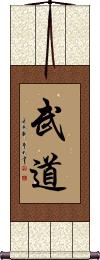
武道 is the very common Japanese way to say “Martial Arts.”
武道 is used mostly in Japanese dojos but is also understood in Chinese and Korean.
Some will use this title to mean chivalry (the conduct of a knight) or military art. The way this word is understood would depend on the context in which it is used.
The first character means “force,” “warlike,” or “essence of a warrior.”
The second character means “method,” “path,” and “the way.” It is the same character used to describe/mean the philosophy of Taoism / Daoism.
Some will also translate this as “The Way of the Warrior”; especially in the context of Korean martial arts.
Martial Arts Master
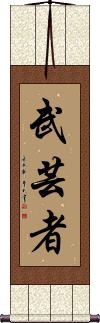
武芸者 is the Japanese Kanji title for “Martial Arts Master.” It suggests that you have reached at least the level of black belt and are probably to the level where you are ready to become an instructor.
Please consider carefully where you stand before ordering this phrase on a wall scroll. If you are not a master, this will make you look a bit foolish.
If you want to get this as a gift for your master at the dojo. Try to discreetly make sure this term is used in your school. Different schools and styles of Japanese martial arts use different terms. You may notice in the Romaji that the last two characters romanize as “geisha” which means “person skilled in arts” (what a geisha girl really is). The title here has the character for “martial,” “warrior,” and/or “military” in front of it. Therefore the literal translation is “martial art person.”
These Kanji are valid Chinese characters and Korean Hanja, but this title does not really make sense in Chinese and is not often used in Korean, though a Chinese or Korean would be able to guess the meaning by looking at the first and last characters.
Kempo Karate / Law of the Fist Empty Hand
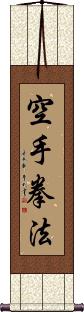
空手拳法 is the Kanji title for Kempo Karate.
The first two characters mean “karate” - technically they express “empty hand.”
The last two express “fist law” which is Romanized from Japanese as “Kenpo” or “Kempo.”
That “empty hand” translation can be understood better when you grasp the idea that karate is a martial art without weapons (other than the weapons organic to your body, such as your foot, hand, fist, etc). When you practice karate, you do so with empty hands (no weapons).
Note: There is also an antiquated way to write karate. It has the same pronunciation but a different first character which means “Tang” as in the Tang Dynasty. Some dojos use that form - let us know if you need that alternate form, and we'll add it.
Shorinji Kempo / Kenpo
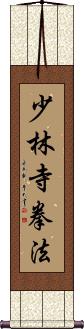
少林寺拳法 is a specific type of martial art in Japan that claims origins in the Kung Fu practiced in the original Shaolin Monastery of China.
The first three characters mean “Shaolin Monastery,” and you might notice the Japanese is pronounced in a very similar way. The reason is, many words were “borrowed” from the original Chinese when Japan did not have a written language and simply absorbed Chinese characters into their language around the 5th century. When a Japanese word did not exist, the Chinese pronunciation was often absorbed as well as the written form.
The last two characters mean “fist law” or “method of the fist.” It has long been argued as to whether the Japanese for these characters should be Romanized as “kempo” or “kenpo.” The official method should be “kenpou” but it's common to drop the “u” that comes after the “o.”
I imagine if you are looking for this title, you already know what it means, so the above is simply extra information that a student of Shorinji Kempo might want to know.
Karate-Do
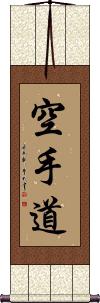
The literal meaning of 空手道 is “empty hand method” or “empty hand way.”
It is acknowledged that karate originated in China but migrated to Japan, where it was refined and became widely popular.
Karate is a martial art that uses no blades or weapons other than the “natural weapons” God gave to humans (fists and feet). The last character somehow became optional, but the meaning of that character is “method” or “the way” as in Taoism / Daoism.
Karate-Do reached Korea, where it is known as 공수도 which can be romanized as “Kong Soo Do” or “Gong Su Do.”
Iaijutsu
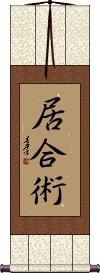
居合術 is the title for Iaijutsu, a combative sword-drawing martial art.
Beware of potential confusion: 居合術 can also be romanized as Battōjutsu; however, Battōjutsu is usually associated with 抜刀術, another blade-wielding martial art.
Drunken Fist
(A legitimate style of Kung Fu)
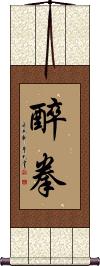
醉拳 is Drunken Fist, a traditional Chinese martial art/technique of Kung Fu.
It is a northern style of martial art that imitates a drunk person in its movements. Many staggering movements serve to deceive the opponent and keep them off-balance.
Some consider Drunken Fist to be among the more complex styles of martial arts due to the need for robust joints and fingers.
See Also: Drunken Monkey
Takemusu
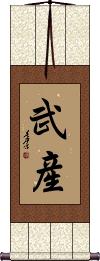
武産 is the concept developed by Morihei Ueshiba of how the ultimate martial art should be, how his aikido should be, an art that may harmonize all living beings and free techniques could be spontaneously executed.
Itto-Ryu

一刀流 is is a Japanese martial art primarily utilizing the sword.
There are many sub-styles of Itto-Ryu and this martial arts had significant influence on the development of modern Kendo.
Though 一刀流 is pronounceable in Chinese with the meaning, “One-Sword Style,” this should be considered a Japanese-only style.
Wing Chun
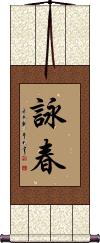
詠春 is a martial arts technique that has an oral history (versus a written one) so very little can be said for sure about its origins.
Wing Chun (or Wing Cheun) is a Chinese martial art that emphasizes short combat strokes.
The characters 詠春 literally mean “Singing Spring” (as in springtime).
If you are wondering, the spelling and pronunciation of this martial arts style in English come from the Cantonese pronunciation of these characters. The second character sounds similar in both Mandarin and Cantonese, but the first is quite different.
Note: This title can be pronounced in Japanese, but only a Japanese practitioner of Wing Chun would recognize or understand this title. It is not considered a Japanese word or martial art at all.
Kyodo

弓道 (Kyūdō) is the Japanese martial art of archery.
Kyūdō is based on kyūjutsu or “The Art of Archery” practiced during the time of the samurai class in feudal Japan.
Shinto Muso-Ryu
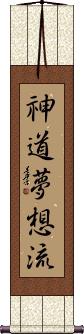
神道夢想流 is Shintō Musō-ryū, or Shindō Musō-ryū.
This is usually used in the context of jōdō, a traditional school of the Japanese martial art of jōjutsu (the art of wielding the short staff).
Shaolin Chuan / Shao Lin Quan
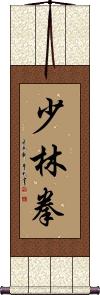
少林拳 is the title of the martial art (style of Kung Fu) that is taught to the monks and students in the Shaolin Buddhist Monastery.
The addition of Chuan or Quan, which means fist is what signifies that you are talking about this school or form of martial arts.
Daito-Ryu Aiki-jujutsu
School of Japanese Martial Arts
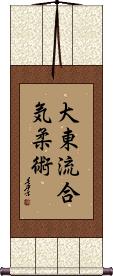
大東流合気柔術 is Daitō-Ryū Aiki-jūjutsu, a Japanese martial art established by Takeda Sōkaku.
The most famous student of Daitō-Ryū Aiki-jūjutsu is Morihei Ueshiba who later founded the school or branch of martial arts known as Aikido.
Note: 大東流合気柔術 can also be romanized as Daito-ryu Aiki-Jujutsu, Daitou-Ryuu Aiki-Juujutsu or Daito-Ryu Aiki-Jujitsu.
Judo
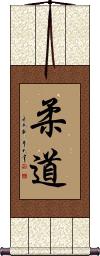
柔道 is the martial art invented in Japan and known as “Judo” around the world.
Translated directly, it means “Gentle Way” or “Flexible Way"
More about Judo
Go Kan Ryu
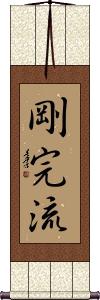
剛完流 is the title of the Gokan-Ryu or “Go Kan Ryu” martial art.
Daito-Ryu
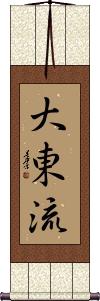
大東流 is Daitō-ryū, a Japanese martial art style - usually associated with Aikido.
Asayama Ichiden-Ryu
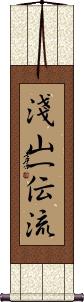
浅山一伝流 or Asayama Ichiden-ryū is a Japanese koryū martial art founded in the late Muromachi period by Asayama Ichidensai Shigetatsu.
Bojutsu / Bojitsu
The art of using a stick as a weapon
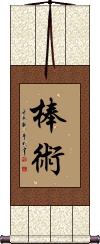
棒術 is the title Bōjutsu (though some use the romanization Bojitsu).
棒術 is a martial art centered around using a “bō” or staff as a weapon.
This title is a combination of the Japanese word “bō” (which means staff, stick, club, rod, pole, or cudgel) with the Japanese word “jutsu” (which means art or technique).
While this word can be pronounced in Chinese (bang shu), it's not a common term in China. Please consider this title to be “Japanese only.”
Mugai-Ryu

無外流 is the name Mugai-Ryu in Japanese Kanji.
無外流 means “Without Outward Flow” or “Outer Nothingness School” and is a Japanese koryū martial art school.
Mizong-Yi
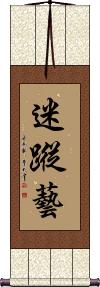
迷蹤藝 is the Chinese martial arts known as Mizong-Yi or Mizongyi, based on deception and mobility.
If you directly translate 迷蹤藝, you get something like “Lost Track Skill,” “Lost in the Art,” or “Mysterious Footwork Technique.”
Shihan
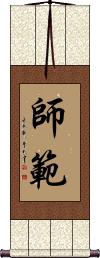
師範 or Shihan is a Japanese term, often used in Japanese martial arts.
In typical Japanese language, it can refer to a teacher or instructor. However, in martial arts, it's often an honorific title for an expert or master instructor.
Example: In Aikido the title can refer to someone with the rank of 7th dan. But other schools use it to mean a master who has earned the right to award black belts.
This term is also used in Chinese, where it refers to teacher-training or the art of teaching by example. It's used within the proper name of certain types of universities in China.
Kenjutsu / Kenjitsu
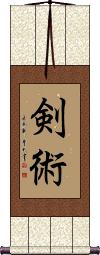
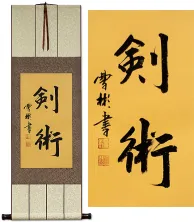
In Japanese, the modern definition, using simple terms, 剣術 is “A martial art involving swords” or “The art of the sword.”
However, in Chinese, this is the word for fencing (as in the Olympic sport).
I will suppose that you want this for the Japanese definition, which comes from skills and techniques developed in the 15th century. At that time, Kenjutsu (or swordsmanship) was a strictly military art taught to Samurai and Bushi (soldiers). The fact that swords are rarely used in military battles anymore, and with the pacification of Japan after WWII, Kenjutsu is strictly a ceremonial practice often studied as a form of martial art (more for the discipline aspect rather than practical purpose).
Language note: The Korean definition is close to the Japanese version described above. However, it should be noted that this can mean “fencing” depending on the context in Japanese, Chinese, and Korean.

 Character variation notes: There are slight variations possible with the second character. Either way is correct and understood by both Japanese and Chinese folks.
Since there are about 5 common ways to write the sword character, if you are particular about which version you want, please note that in the “special instructions” when you place your order.
Romanization note: This term is often Romanized as Kenjitsu; however, following the rules of Japanese Romaji, it should be Kenjutsu.
Grandmaster / Grand Master
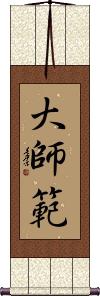
大師範 is a Japanese title for the master, grandmaster, or senior instructor.
This is a bit of an odd selection for a piece of calligraphy artwork, so proceed with caution. Better to find an appropriate phrase or title (such as the name of the martial art) and then add something like “Grandmaster Smith” as a smaller inscription down the side.
Kenpo / Kempo / Quan Fa / Chuan Fa
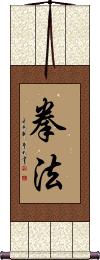
拳法 is a form of martial arts that can be translated in several ways.
Some will call it “fist principles,” “the way of the fist,” or even “law of the fist.” The first character literally means fist. The second can mean law, method, way, principle, or Buddhist teaching.
Kempo is really a potluck of martial arts. Often a combination of Chinese martial arts such as Shaolin Kung Fu with Japanese martial arts such as Karate, Jujutsu (Jujitsu), Aikido, and others. You may see the term “Kempo Karate,” which basically means Karate with other disciplines added. In this way, Kempo becomes an adjective rather than a title or school of martial arts.
These facts will long be argued by various masters and students of Kempo. Even the argument as to whether it should be spelled “kenpo” or “Kempo” ensues at dojos around the world (the correct Romaji should actually be “kenpou” if you precisely follow the rules).
The benefit of Kempo is that the techniques are easier to learn and master than pure Kung Fu (wu shu). Students are often taught basic Karate moves, kicks, and punches before augmenting the basic skills with complex Kung Fu techniques. This allows students of Kempo to achieve a level where they can defend themselves or fight in a relatively short amount of time (a few years rather than a decade or more).
Because the definition of this word is so fluid, I should make some notes here:
1. Purists in Okinawa will claim that “Okinawa Kenpo” or “Ryukyu Hon Kenpo” is the original and true version of this martial art from the old kingdom. It is actually little or no connection between Okinawa Kenpo and the way the word is used elsewhere.
2. In Chinese, where these characters are pronounced “quan fa” (sometimes Romanized as “chuan fa” because the Chinese-pinyin “q” actually sounds like an English “ch” sound), these characters do not hold the connotation of being a mixed martial art. It is simply defined as “the law of the fist.”
3. My Japanese dictionary oddly defines Kenpo as the “Chinese art of self-defense.” I personally don't feel this is the most common way that people perceive the word but just something you should know.
Iaido
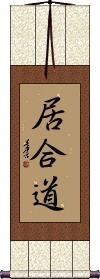
居合道 is the Japanese Kanji title for the martial art of Iaidō, which emphasizes the smooth and elegant draw of the sword from its scabbard.
These same characters are used in Chinese and old Korean but not with the same meaning as read in Japanese. Therefore, this should be considered a “Japanese only” title.
Jodo
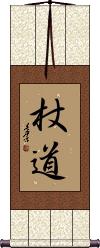
杖道 (jōdō) is a form of martial art using a cane staff.
The short staff used in this Japanese style is called a jō.
Jōdō is similar to and often compared with bōjutsu.
Note: 杖道 can also be written 杖術 (a slight variation on the first character).
Kyusho Jitsu

Kyusho Jitsu is a Japanese martial art focused on striking or manipulating vital pressure points (Kyusho) on the body to cause pain, disorientation, or incapacitation for self-defense, using minimal force by targeting nerve clusters and sensitive areas.
If you translated very literally, you get, “sensitive/urgent place/area technique.”
I have included pronunciation for Chinese and Korean, but it's really a Japanese title.
Choujiao / Chou Jiao
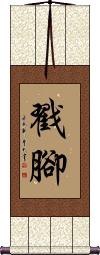
戳腳 is the title for Choujiao, Chuōjiǎo, or Chou Jiao.
This means poking or stabbing foot. This is a Chinese martial art that falls under the Northern School.
There are many jumps, kicks, and lightning-fist actions in this style.
You'll find Chou Jiao practiced in Liaoning Province, Hebei Province, and Beijing.
Naginata / Halberd
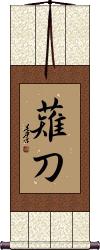
薙刀 is the Japanese word naginata.
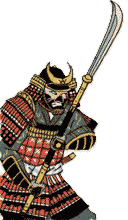 A naginata is a special kind of halberd or long sword carried by some Samurai and other warriors. It is still used ceremonially in some schools of martial arts.
Taekwondo
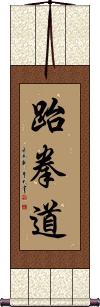
跆拳道 is one of the most widespread types of martial arts in the world as well as being an Olympic sport. Taekwondo was born in Korea with influences of Chinese and Japanese styles combined with traditional Korean combat skills. Some will define it as the “Korean art of empty-handed self-defense.”
In the simplest translation, the first character means “kick,” the second character can mean either “fist” or “punching,” and the third means “way” or “method.” Altogether, you could say this is the “Kick Punch Method.” When heard or read in various Asian languages, all will automatically think of this famous Korean martial art. It is written the same in Japanese Kanji, Chinese, and Korean Hanja characters - so the appearance of the characters is universal. However, you should note that there is another way to write this in modern Korean Hangul characters, which looks like the image to the right. 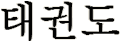
We suggest the original Korean Hanja (Chinese characters) for a wall scroll, but if you need the Hangul version, you must use master calligrapher Cao Bin: Order Taekwondo in Korean Hangul
Note: Taekwondo is sometimes Romanized as Tae-Kwondo, Tae Kwon Do, Taekwon-do, Taegwondo, Tae Gweon Do, Tai Kwon Do, Taikwondo, Taekwando, Tae Kwan Do and in Chinese Taiquandao, Tai Quan Dao, Taichuando, or Tai Chuan Tao.
Zendo / The Zen Way
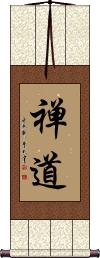
禪道 is a title used in certain contexts but is not widely known by the general population of China or Japan.
In Japanese, you will see this title romanized as “zendo,” which is the brand name of a board game, and also a title used by some martial arts studios and karate dojos. Oddly, many translate this as “zen fist,” although there is no “fist” in the title. If you literally translated this title, it would be “meditation way” or “meditation method.”
In Chinese, this would be “chan dao” with the same literal meaning as the Japanese title. It's used in China by just a handful of martial arts styles/studios.
You should only order this title if you really understand the meaning, and it has some personal connection to you (such as practicing a martial art style that uses this title, or if you love the board game Zendo). Many who see your wall scroll will not be familiar with this title, and you'll have some explaining to do.
 The first character can also be written in a more complex traditional way as shown to the right. Let us know in the special instructions for your calligraphy project if you want this style.
 If you order this from the Japanese master calligrapher, the first character will automatically be written with an extra dot on top. This is the variant form of the original Chinese character which is commonly used in modern Japan Kanji. See sample to the right.
Shotokan Karate-Do
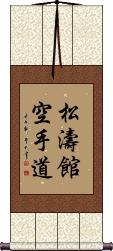
鬆濤館空手道 art the Japanese Kanji that make up the title for Shotokan Karate.
This should be considered a Japanese-only title. It does make sense and is pronounceable in Chinese and Korean but only as a title for a building (perhaps a martial arts hall) surrounded by pine trees - followed by the characters for “The empty hand method” (kong shou dao / Karate-do). Also, the first two characters were simplified in both Japanese and Chinese. The third character was simplified in Chinese but not Japanese.
Upon request, we can offer the fully traditional Chinese version but be sure you know what you are asking for.
Note: This would be understood in Chinese and Korean Hanja by a person from those cultures familiar with martial arts and various schools of Japanese karate.
Unwavering Hall / Fudoshinkan

不動心館 can be translated as “Fudoshinkan,” or “Immovable Mind Hall.”
Fudoshinkan (不動心館) refers to various Japanese martial arts schools, primarily focusing on Aikido, Iaido (sword art), and Jodo (short staff), emphasizing the concept of Fudoshin (不動心) – a calm, immovable mind in the face of challenge, reflecting traditional samurai spirit through dynamic training and inner peace
Immovable mind; unwavering composure. Hall/school (as in -kan / -gwan).
Jeet Kune Do
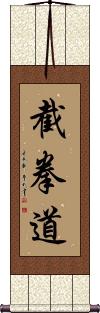
In Cantonese, 截拳道 is Jeet Kune Do. Often it is explained as the “Way of the Intercepting Fist.”
截拳道 is a martial art style founded by Bruce Lee.
The first character means to cut off or sever.
The second character is a fist.
The last character means way or method.
See Also: Bruce Lee
Nippon Kempo
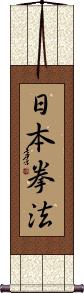
日本拳法 is the title for Nippon Kempo, Japanese Kempo, Nihon Kempo, or Nippon Kenpo.
While Kempo or Kenpo is already a Japanese term, this has the word “Japan” (Nippon) to drive home the fact that this refers to the Japanese martial art of Kenpo.
Muso Jikiden Eishin-Ryu
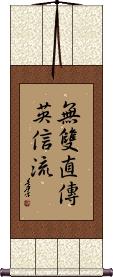
無雙直傳英信流 is the traditional or old way to write the Japanese martial arts title, Musō Jikiden Eishin-Ryū (iaido style).
In modern Japanese, the second and fourth Kanji are different, making them 無双直伝英信流.
Musō Jikiden Eishin-Ryū is arguably the most renowned Japanese sword art school, with a history dating back to the early 1600s.
Tenshin Buko-Ryu Heiho

天真武甲流兵法 is the Kanji title that romanizes as Tenshin Bukō-Ryū Heihō or Tenshin Buko-Ryu Heiho.
天真武甲流兵法 is a Japanese koryū martial art that has its roots in the Toda-ryū, founded in the late Muromachi period around the year 1560 by Toda Seigen.
This title can be pronounced in Chinese with a similar meaning, however, it should be considered a Japanese title.
Jujitsu / Jujutsu
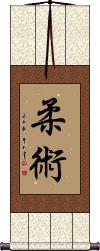
柔術 has been somewhat incorrectly spelled and pronounced “Jujitsu” for some time in the English-speaking world. The correct Japanese Romaji is Jujutsu or Juujutsu.
A little background on the word: By combining the Kanji pronounced “Ju” (which means flexible, pliable, gentle, yielding) with the Kanji pronounced “Jutsu” (which means art or technique), we get a meaning that can be translated as “flexible technique,” “gentle art” or “yielding technique.”
柔術 does make sense in Chinese as well, although pronounced “rou shu” in China.
The Jujutsu system has a history in Japan that started well before the 1600s. Some see this style as a variation of the “Empty Hand Method” (Karate-do). Even the samurai of old used some Jujutsu methods in defending themselves with their unarmed hands against weapons that could pierce their heavy armor.
There are convoluted relationships between various schools and systems of martial arts, but it's generally accepted that Jujutsu led to the development of Judo and a few other variations.
Ba Ji Quan
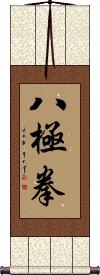
八極拳 is “Ba Ji Quan” or “Eight Extremes Fist.”
Some also translate this as “Eight Extremities Fist,” though I don't feel that's accurate.
八極拳 (Bājíquán) is a Chinese martial art that features explosive, short-range power and is famous for its elbow strikes. It originated in the Hebei Province in Northern China but spread to Taiwan and other places.
The full title is 開門八極拳 (Kāimén Bājíquán), which means Open-Door Bajiquan.
Other romanizations include: BaJiQuan, Pa Chi Ch`üan, or Pa Chi Chuan.
In Japan, this is known as Hakkyokuken.
Jin Shin Jyutsu
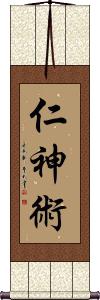
仁神術 is Jin Shin Jyutsu or Jin Shin Jutsu.
This is a practice of calming the mind and clearing the flow of Qi energy in the body. Jin Shin Jyutsu has some commonality with the practice of Reiki.
A good translation of 仁神術 would be “Benevolent Spirit Method.”
We can break that down into all of the possible meanings:
仁 = benevolence (esp. as a virtue of Confucianism), consideration, compassion, humanity, charity, kindness, or virtue.
神 = deity, soul, spirit, mysterious, psyche, god, divinity, spiritual powers, deva, divine, spiritual, or supernatural.
術 = way, method, means, art, trick, or plan. The correct romaji for this 術 Kanji should be “jutsu.” However, in martial arts, this is often written “jitsu” but in this case, “jyutsu” became common.
Kyuki-Do
Korean Martial Art
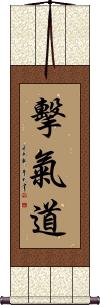
擊氣道 is the title of the Kyuki-Do form of Korean martial arts.
In Korean Hangul, it's 격기도.
While “Kyuki-Do” is the most common romanized form of this title, the official Korean romanization is actually “Gyeog Gi Do” or “Gyeoggi-Do.”
The first character means to hit, strike, attack, rout, or break.
The second means “life energy” or “atmosphere.”
The last means “the way” or “method.”
FYI: The last two characters are the same as the last two in the titles Hapkido and Aikido.
I have included Mandarin Chinese pronunciation above; However, this term would only be known by Chinese people familiar with this style of martial arts. Consider this to be a Korean-only title.
Tai Chi Chuan / Tai Ji Quan
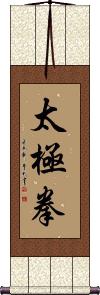
太極拳 is the famous Taoist meditation and martial art exercise. The direct translation of these characters would be something like “grand ultimate fist,” but that does not quite hit the mark for what this title really means.
An early-morning walk through any city in China near a park or an open area will yield a view of Chinese people practicing this ancient technique.
A typical scene is an old man of no less than 80 years on this earth, with a wispy white beard and perhaps a sword in one hand. He makes slow moves that are impossibly smooth. He is steady-footed and always in balance. For him, time is meaningless and proper form, and technique is far more important than speed.
For the younger generation, faster moves may look impressive and seem smooth to the casual observer. But more discipline and mental strength are needed to create perfectly smooth moves in virtual slow motion.
Note: There are two ways to Romanize these Chinese characters, as seen in the title above. The pronunciation and actual characters are the same in Chinese. If you really used English sounds/words to pronounce this, it would be something like “tie jee chew-on” (make the “chew-on” one flowing syllable).
Kyojitsu: Falsehood and Truth
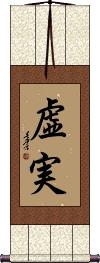
虚実 is a Japanese word that means “falsehood [and] truth” or “fiction [and] fact.”
This concept is used in warfare, gameplay, and martial arts strategies. 虚実 can be a strategy of real and/or deceptive moves. This gets to some Sun Tzu Art of War stuff where in warfare a strategic move is either a real and serious move or it is a deceptive blow.
Let's explore each character in more depth:
虚 was originally written 虛 (there is a very subtle difference in the strokes at the bottom of the character) and means unpreparedness, falsehood, emptiness, void, abstract theory, empty or unoccupied, diffident or timid, false, humble or modest, virtual, or in vain.
In the Buddhist context, 虛 represents the Pali/Sanskrit word “śūnya,” meaning empty, vacant, unreal, unsubstantial, untrue, space, humble, or in vain.
In ancient Eastern/Chinese astronomy, 虛 represents the “Emptiness” constellation (one of the 28 mansions in the sky).
実 was originally 實 in Chinese (they currently write it as 实 in Simplified Chinese) with the meaning, truth, reality, sincerity, honesty, fidelity, and substance.
The Buddhist context is similar, adding real, true, honest, really, solid, definitely, sincere, solid, fixed, full, to fill, fruit, kernel, verily, in fact, the supreme fact, or ultimate reality to the definition.
Hapkido
Korean Martial Art of re-directing force
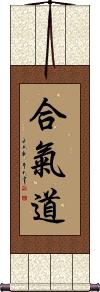
Hapkido or 合氣道 is a mostly-defensive martial art in Korea.
Hapkido has some connection to the Aikido of Japan. They are written with the same characters in both languages. However, it should be noted that the Korean Hanja characters shown here are the traditional Chinese form - but in modern Japan, the middle character was slightly simplified.
Note: You can consider this to be the older Japanese written form of Aikido. Titles on older books and signs about Aikido use this form.
The connection between Japanese Aikido and Korean Hapkido is muddled in history. The issue is probably due to the difficult relationship between the two countries around WWII. Many Koreans became virtual slaves to the Japanese during that period. After WWII, many things in Korea were disassociated from having any Japanese origin. The relationship has greatly mellowed out now.
Looking at the characters, the first means “union” or “harmony.”
The second character means “universal energy” or “spirit.”
The third means “way” or “method.”
One way to translate this into English is the “Harmonizing Energy Method.” This makes sense, as Hapkido has more to do with redirecting energy than fighting strength against strength.
More Hapkido info
More notes:
1. Sometimes Hapkido is Romanized as “hap ki do,” “hapki-do” “hab gi do” or “hapgido.”
2. Korean Hanja characters are actually Chinese characters that usually hold the same meaning in both languages. There was a time when these characters were the standard and only written form of Korean. The development of modern Korean Hangul characters is a somewhat recent event in the greater scope of history. There was a time when Chinese characters were the written form of many languages in places known in modern times as North Korea, South Korea, Japan, Vietnam, Singapore, Hong Kong, Taiwan, Mainland China, and a significant portion of Malaysia. Even today, more people in the world can read Chinese characters than English.
3. While these Korean Hanja characters can be pronounced in Chinese, this word is not well-known in China and is not considered part of the Chinese lexicon.
This in-stock artwork might be what you are looking for, and ships right away...
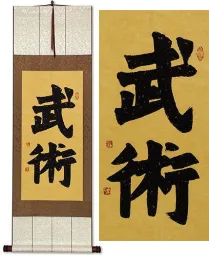
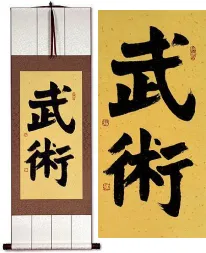
Gallery Price: $168.00
Your Price: $92.88
Gallery Price: $150.00
Your Price: $98.88
Gallery Price: $200.00
Your Price: $92.88

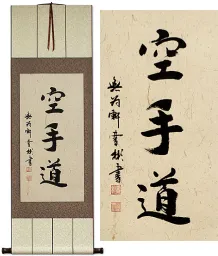

Gallery Price: $150.00
Your Price: $98.88
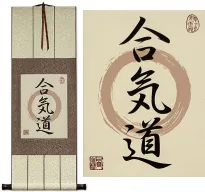
Gallery Price: $90.00
Your Price: $49.88
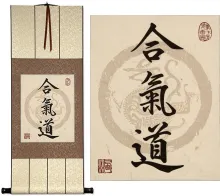
Gallery Price: $106.00
Your Price: $58.88
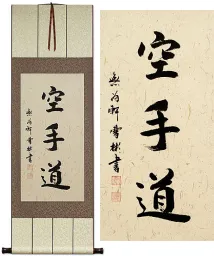
Gallery Price: $200.00
Your Price: $98.88
Gallery Price: $90.00
Your Price: $49.88
Gallery Price: $178.00
Your Price: $98.88
The following table may be helpful for those studying Chinese or Japanese...
| Title | Characters | Romaji (Romanized Japanese) | Various forms of Romanized Chinese | |
| Aikido | 合氣道 合気道 | ai ki dou / aikidou / ai ki do | hé qì dào he2 qi4 dao4 he qi dao heqidao | ho ch`i tao hochitao ho chi tao |
| Martial Arts Budo | 武道 | bu dou / budou / bu do | wǔ dào / wu3 dao4 / wu dao / wudao | wu tao / wutao |
| Martial Arts Master | 武芸者 | bugeisha | wǔ yún zhě wu3 yun2 zhe3 wu yun zhe wuyunzhe | wu yün che wuyünche |
| Kempo Karate Law of the Fist Empty Hand | 空手拳法 | kara te ken pou karatekenpou kara te ken po | kōng shǒu quán fǎ kong1 shou3 quan2 fa3 kong shou quan fa kongshouquanfa | k`ung shou ch`üan fa kungshouchüanfa kung shou chüan fa |
| Shorinji Kempo Kenpo | 少林寺拳法 | shourinji kenpou shourinjikenpou shorinji kenpo | shào lín sì quán fǎ shao4 lin2 si4 quan2 fa3 shao lin si quan fa shaolinsiquanfa | shao lin ssu ch`üan fa shaolinssuchüanfa shao lin ssu chüan fa |
| Karate-Do | 空手道 | kara te dou karatedou kara te do | kōng shǒu dào kong1 shou3 dao4 kong shou dao kongshoudao | k`ung shou tao kungshoutao kung shou tao |
| Iaijutsu | 居合術 | i ai jutsu / iaijutsu | ||
| Drunken Fist | 醉拳 | suiken | zuì quán / zui4 quan2 / zui quan / zuiquan | tsui ch`üan / tsuichüan / tsui chüan |
| Takemusu | 武産 | take musu / takemusu | ||
| Itto-Ryu | 一刀流 | ittou ryuu / ittouryuu / itto ryu | yī dāo liú / / | |
| Wing Chun | 詠春 咏春 | ei haru / eiharu | yǒng chūn yong3 chun1 yong chun yongchun | yung ch`un yungchun yung chun |
| Kyodo | 弓道 | kyo dou / kyodou / kyo do | ||
| Shinto Muso-Ryu | 神道夢想流 | shin tou mu sou ryuu shintoumusouryuu shin to mu so ryu | ||
| Shaolin Chuan Shao Lin Quan | 少林拳 | shǎo lín quán shao3 lin2 quan2 shao lin quan shaolinquan | shao lin ch`üan shaolinchüan shao lin chüan |
|
| Daito-Ryu Aiki-jujutsu | 大東流合氣柔術 大東流合気柔術 | dai tou ryuu ai ki ju jutsu daitouryuuaikijujutsu dai to ryu ai ki ju jutsu | ||
| Judo | 柔道 | juu dou / juudou / ju do | róu dào / rou2 dao4 / rou dao / roudao | jou tao / joutao |
| Go Kan Ryu | 剛完流 | gou kan ryuu goukanryuu go kan ryu | ||
| Daito-Ryu | 大東流 | dai tou ryuu daitouryuu dai to ryu | ||
| Asayama Ichiden-Ryu | 淺山一伝流 浅山一伝流 | asa yama ichi den ryuu asayamaichidenryuu asa yama ichi den ryu | ||
| Bojutsu Bojitsu | 棒術 棒术 | bou jutsu / boujutsu / bo jutsu | bàng shù / bang4 shu4 / bang shu / bangshu | pang shu / pangshu |
| Mugai-Ryu | 無外流 | mu gai ryuu mugairyuu mu gai ryu | ||
| Mizong-Yi | 迷蹤藝 迷踪艺 | mí zōng yì mi2 zong1 yi4 mi zong yi mizongyi | mi tsung i mitsungi |
|
| Shihan | 師範 师范 | shi han / shihan | shī fàn / shi1 fan4 / shi fan / shifan | shih fan / shihfan |
| Kenjutsu Kenjitsu | 剣術 剑术 | kenjutsu | jiàn shù / jian4 shu4 / jian shu / jianshu | chien shu / chienshu |
| Grandmaster Grand Master | 大師範 | daishihan | ||
| Kenpo Kempo Quan Fa Chuan Fa | 拳法 | kenpou / kenpo | quán fǎ / quan2 fa3 / quan fa / quanfa | ch`üan fa / chüanfa / chüan fa |
| Iaido | 居合道 | iaidou / iaido | ||
| Jodo | 杖道 | joudou / jodo jodo / jodo | ||
| Kyusho Jitsu | 急所術 | kyū sho jutsu kyūshojutsu | jí suǒ shù / / | |
| Choujiao Chou Jiao | 戳腳 戳脚 | chuō jiǎo chuo1 jiao3 chuo jiao chuojiao | ch`o chiao chochiao cho chiao |
|
| Naginata Halberd | 薙刀 | naginata | ||
| Taekwondo | 跆拳道 | te kon do / tekondo | tái quán dào tai2 quan2 dao4 tai quan dao taiquandao | t`ai ch`üan tao taichüantao tai chüan tao |
| Zendo The Zen Way | 禅道 / 禪道 禅道 | zen dou / zendou / zen do | chán dào / chan2 dao4 / chan dao / chandao | ch`an tao / chantao / chan tao |
| Shotokan Karate-Do | 鬆濤館空手道 松涛館空手道 | shou tou kan kara te dou shoutoukankaratedou sho to kan kara te do | sōng tāo guǎn kōng shǒu dào song1 tao1 guan3 kong1 shou3 dao4 song tao guan kong shou dao songtaoguankongshoudao | sung t`ao kuan k`ung shou tao sungtaokuankungshoutao sung tao kuan kung shou tao |
| Unwavering Hall Fudoshinkan | 不動心館 | fudōshin-kan | bù dòng xīn guǎn bu4 dong4 xin1 guan3 bu dong xin guan budongxinguan | pu tung hsin kuan putunghsinkuan |
| Jeet Kune Do | 截拳道 | sekken dou / sekkendou / seken do | jié quán dào jie2 quan2 dao4 jie quan dao jiequandao | chieh ch`üan tao chiehchüantao chieh chüan tao |
| Nippon Kempo | 日本拳法 | nippon kenpou / nihon kenpou nipon kenpo / nihon kenpo | ||
| Muso Jikiden Eishin-Ryu | 無雙直傳英信流 無双直伝英信流 | mu sou jiki den ei shin ryuu musoujikideneishinryuu mu so jiki den ei shin ryu | ||
| Tenshin Buko-Ryu Heiho | 天真武甲流兵法 | ten shin bu kou ryu hei ho tenshinbukouryuheiho ten shin bu ko ryu hei ho | tiān zhēn wǔ jiǎ liú bīng fǎ tian1 zhen1 wu3 jia3 liu2 bing1 fa3 tian zhen wu jia liu bing fa tianzhenwujialiubingfa | t`ien chen wu chia liu ping fa tienchenwuchialiupingfa tien chen wu chia liu ping fa |
| Jujitsu Jujutsu | 柔術 柔术 | juu jutsu / juujutsu / ju jutsu | róu shù / rou2 shu4 / rou shu / roushu | jou shu / joushu |
| Ba Ji Quan | 八極拳 八极拳 | hakkyo ku ken hakkyokuken hakyo ku ken | bā jí quán ba1 ji2 quan2 ba ji quan bajiquan | pa chi ch`üan pachichüan pa chi chüan |
| Jin Shin Jyutsu | 仁神術 | jin shin jutsu jinshinjutsu | rén shén shù ren2 shen2 shu4 ren shen shu renshenshu | jen shen shu jenshenshu |
| Kyuki-Do | 擊氣道 击气道 | jī qì dào ji1 qi4 dao4 ji qi dao jiqidao | chi ch`i tao chichitao chi chi tao |
|
| Tai Chi Chuan Tai Ji Quan | 太極拳 太极拳 | tai kyoku ken taikyokuken | tài jí quán tai4 ji2 quan2 tai ji quan taijiquan | t`ai chi ch`üan taichichüan tai chi chüan |
| Kyojitsu: Falsehood and Truth | 虚実 | kyo jitsu / kyojitsu | ||
| Hapkido | 合氣道 合气道 | ai ki do / aikido | hé qì dào he2 qi4 dao4 he qi dao heqidao | ho ch`i tao hochitao ho chi tao |
| In some entries above you will see that characters have different versions above and below a line. In these cases, the characters above the line are Traditional Chinese, while the ones below are Simplified Chinese. | ||||

Successful Chinese Character and Japanese Kanji calligraphy searches within the last few hours...



