Many custom options...


And formats...



Not what you want?
Try other similar-meaning words, fewer words, or just one word.
Man Bo Means in Chinese / Japanese...
Buy a Man Bo Means calligraphy wall scroll here!
Personalize your custom “Man Bo Means” project by clicking the button next to your favorite “Man Bo Means” title below...
Switched to secondary search mode due to lack of results using primary.
These secondary results may not be very accurate. Try a different but similar meaning word or phrase for better results. Or...
Look up Man Bo Means in my Japanese Kanji & Chinese Character Dictionary(My dictionary is a different system then the calligraphy search you just tried)
If you want a special phrase, word, title, name, or proverb, feel free to contact me, and I will translate your custom calligraphy idea for you.
1. Even a fool may sometimes come up with a good idea
2. 2. Right Resolve / Right Thought / Right Intention / Perfect Resolve
3. 5. Right Living / Right Livelihood / Perfect Livelihood
6. Year-In Year-Out Have Abundance
8. Optimism / Happy With Your Fate
9. Flying Ace / Aviator / Bird Man
10. Ace / One
11. Achievement
12. Active Duty
14. Acupuncture
15. Adapt Oneself
16. Adonis / Handsome Young Man
18. Adoring Love
19. Adventure
20. Adventure Lover
21. Adventure
22. Happiness in the Afterlife
23. Kind Words
24. Aiki Budo
25. Aikido
26. Aikikai
27. Aiki O'Kami
28. Air / Atmosphere
29. Sky / Void
30. Akemi
31. Akita Dog / Akitainu / Akita Inu
32. Akuma
33. Alive
36. Always with a Book in Hand
37. Fix the roof before the rain; Dig the well before you are thirsty
38. You are Always in My Heart
39. Ambition
40. Ambitious / To Improve Oneself
42. American
43. American Soldier / American Serviceman
44. Angel / Messenger of Heaven
45. Animals
49. Apollo
50. No man knows what he owes to his parents until he comes to have children of his own
52. Archer
53. Architect
54. Ardent / Fierce
55. Passionate Love / Ardent Love and Devotion
56. Army / Military
57. Art of Healing
58. The Art of Love
59. Art of War
60. Art
62. Ascend
64. Great Aspirations / Ambition
67. Assassin
68. Athlete
69. Attack When The Enemy Has Low Morale
70. August
71. Avenger
72. 1000 good moves ruined by 1 bad
74. Azuka
75. Baby
76. Bad Girl
77. Badger
78. Ba Gua Zhang
80. Ba Ji Quan
81. Bajutsu
82. Balance / Peace
84. Bamboo
85. Banzai / Wansui
86. Banzai
87. Barefoot
88. Bat
90. Be Yourself
91. Bean
92. Beast / Animal
94. Beau
Even a fool may sometimes come up with a good idea
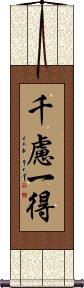
千慮一得 means “1000 tries, one success,” or “[a] thousand tries [leads to] one success.”
This proverb is a humble way to express your success, ideas, or accomplishments. As if you are a fool who just got lucky in inventing or creating something.
Translations for this proverb include:
Even without any notable ability on my part, I may still get it right sometimes by good luck.
Even a fool may sometimes come up with a good idea.
Compare this to the English idiom, “Even a broken clock is right twice a day.”
2. Right Resolve / Right Thought / Right Intention / Perfect Resolve
Samyak Samkalpa / Samma Sankappa
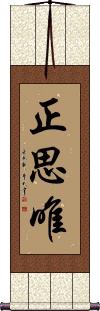
正思唯 is one of the Noble Eightfold Paths of Buddhism. Right Thought, along with the Right View, constitute the path to Wisdom.
In Buddhism, Right Thought, in simple terms, means to free yourself from having ill will towards anyone or anything. It also suggests that you remain harmless to other living creatures.
This can also be defined as “Resolve in favor of renunciation, goodwill, and non-harming of sentient beings.”
 There is an ancient/alternate version of the third character for this selection. You can see that alternation third character to the right. If you want your selection to use that older character, just click on the character to the right, instead of the button above.
Note: This term is exclusively used by devout Buddhists. It is not a common term, and is remains an unknown concept to most Japanese and Chinese people.
See Also: Buddhism | Enlightenment | Noble Eightfold Path
5. Right Living / Right Livelihood / Perfect Livelihood
Samyag Ajiva / Samma Ajiva
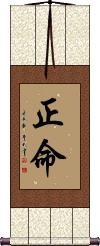
正命 (right living) is one of the Noble Eightfold Paths of Buddhism.
Right Living, along with Right Speech and Right Action, constitute the path to Virtue.
Right Living means that a Buddhist should only take a job or pursue a career in a field that does no harm. Buddhists should not work in the arms trade, as pimps or in the field of prostitution, as a butcher or in a shop that kills or sells meat, in a laboratory that does animal research, or in any other business that involves scheming or unethical behavior.
Another definition: Avoidance of professions that are harmful to sentient beings, such as slaughterer, hunter, dealer in weaponry or narcotics, etc.
This term is exclusively used by devout Buddhists. It is not a common term, and is remains an unknown concept to most Japanese and Chinese people.
See Also: Buddhism | Enlightenment | Noble Eightfold Path
Five Red Bats
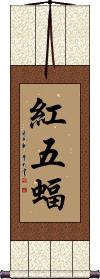
紅五蝠 is a play on words in Chinese because of some homophones.
The first thing you need to know is that the word for bat, 蝠, sounds exactly like the word for good fortune, 福. Thus, bats are often associated with good luck and good fortune in Chinese culture.
Five bats (五福 / 五蝠) means “five fortunes,” referring to luck, prosperity, wealth, happiness, and longevity.
The word red, 红, has the same sound as 宏 meaning vast, great, or magnificent. Therefore, a red bat means “vast fortune.”
Altogether, five red bats represent vast reaches of the five fortunes.
Eight Black Horses
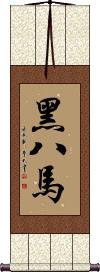
黑八馬 means “eight black horses” in Chinese.
This is an unusual title for calligraphy, but several people have searched for it, so we added it.
Eight horses are a sign of success in business in Chinese culture.
Year-In Year-Out Have Abundance
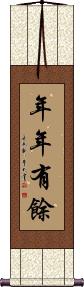
年年有餘 is a common proverb or wish of prosperity you'll hear around the time of Chinese New Year.
Directly translated character by character, it means “Year Year Have Surplus.” A more natural English translation including the deeper meaning would be “Every Year may you Have Abundance in your life.”
On a side note, this phrase often goes with a gift of something related to fish. This is because the last character, “yu” which means surplus or abundance, has exactly the same pronunciation in Mandarin as the word for “fish.”
This is also one of the most common titles for traditional paintings that feature koi fish.
In China, this phrase might make an odd wall scroll - a customer asked especially for this common phrase which is why it appears here. See my other abundance-related words if you want a wall scroll that will seem more comfortable in Chinese culture.
Note: This can be pronounced in Korean, but it's not a commonly used term.
See Also: Prosperity | Good Fortune
Abundance / Prosperous
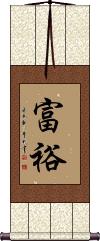
富裕 means prosperous, having an abundance, well-to-do, or well-off.
It's a simple word that suggests “you have made it” in Chinese, Japanese Kanji, and Korean Hanja.
See Also: Good Fortune
Optimism / Happy With Your Fate
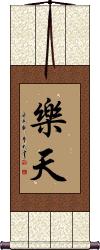
樂天 is about being optimistic and also making the best of whatever life throws at you.
This is hard to define. One dictionary defines this as “acceptance of fate and happy about it.” There is one English word equivalent, which is sanguinity or sanguinary.
You can also say that this means “Be happy with whatever Heaven provides,” or “Find happiness in whatever fate Heaven bestows upon you.” 樂天 suggests being an optimist in life.
Note: This is sometimes a given name in China.
 Please note that Japanese tend to write the first character in a slightly-different form (as seen to the right). Let us know if you have a preference when you place your order.
Flying Ace / Aviator / Bird Man
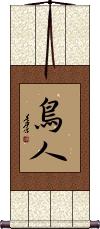
鳥人 means “bird man” or “bird person,” but it is used colloquially in Japanese to mean a flying ace or aviator.
Ace / One
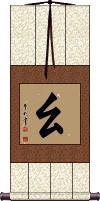
幺 means one, as used on a dice or in a card game.
Thus, in that context, it means Ace.
幺 can also be the surname “Yao” in both Chinese and Japanese.
Note: Rarely if ever used in Korean.
幺 can sometimes be written these ways: 

Achievement
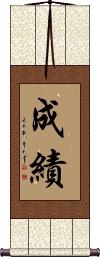
成績 is a Chinese, Japanese, and old Korean Hanja word that means achievement.
Depending on the context, it can also mean performance records, grades, or results.
Active Duty
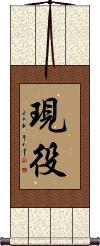
現役 is a simple way to say “active duty.”
When I got off active duty in the Marines, I suddenly discovered that everyone on active duty seemed very proud of that fact. These Japanese / Chinese characters are offered to those servicemen with that pride.
Please note that there is a longer yet more natural phrase that means “Active Duty Soldier” or literally “Active Duty Military Person” - see the next entry...
Active Duty Military
Person on Active Duty
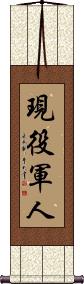
現役軍人 means “Active Duty Soldier” or literally “Active Duty Military Person.”
This title is a great way to show pride in being an active duty member of the armed forces.
The first two characters mean “active duty” and the second two characters can be translated as “military personnel,” “soldier,” or “serviceman” (it is unisex, so male or female is not indicated).
See Also: Military
Acupuncture
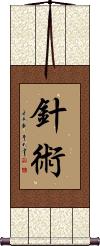
針術 is a way to write acupuncture in Chinese.
The first character means “needle” or “pin.”
The second character means “technique” or “method.”
This is theoretically a Japanese word as well but not commonly used.
Acupuncture
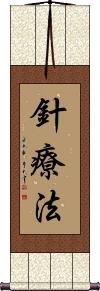
針療法 is one of two ways to write acupuncture in Chinese and Japanese.
The first character means “needle” or “pin.” The second character means “to treat” or “to cure.” The last character means “method” or “way.”
This is the only reasonable selection if your audience is Japanese. This is the formal way to express acupuncture in Chinese, so this version is universal in most of Asia (the best all-around choice in most cases).
Adapt Oneself
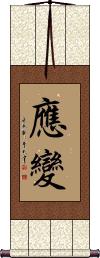
應變 means “to meet a contingency,” “to adapt oneself to changes,” or “to adapt to changes” in Chinese.
It's also used in Japanese but usually only in the context of Buddhism. 應變 is probably the shortest way to express the idea of adapting and overcoming whatever circumstances present themselves.
Adonis / Handsome Young Man
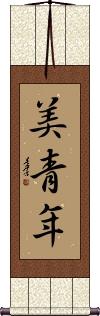
美青年 means handsome young man, or figuratively, Adonis, in Japanese.
Adorable / Cute / Lovely
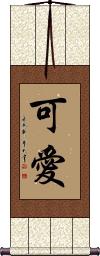
可愛 is a Chinese word that means adorable, cute, and lovely.
It also has a similar meaning in Japanese, but it's more often used as the given name Kawai.
In the Buddhist context, it can mean agreeable.
Adorable / Cute / Lovely
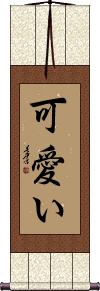
可愛い is a Japanese word that means cute, adorable, charming, lovely, or pretty.
Depending on the context, it can also mean dear, precious, darling, pet, cute little, or tiny.
Adoring Love
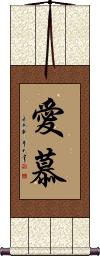
愛慕 means “adoring love” in Chinese, Japanese, and Korean.
I suppose this is the best kind of love to have. 愛慕 has the common character for love. But the second character modifies and reinforces the meaning to become adore, adoring love, or to love and adore.
Ancient Chinese warning:
Adoring someone is fine until you are in the shoes of the Prince of the Kingdom of Wu. This Prince adored a certain beautiful woman (Xi Shi) so much that he neglected his duties and soon let the kingdom fall into ruins.
Adventure
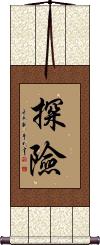
If you lead a life of adventure (like I do), a 探險 wall scroll is for you.
Alone, the first character can mean “to explore,” “to search out,” or “to scout.” The second character holds the meanings of “dangerous” and “rugged.” Together these two characters create the word that means “adventure” or “to explore.”
探険 is a modern Japanese Kanji version, but it more precisely means exploration or expedition rather than adventure. 探險 is the old/ancient Japanese version used before WWII. Let us know if you want the modern Japanese version instead.
See Also: Bon Voyage | Travel
Adventure
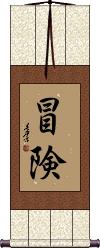
冒険 is a common Japanese way to say “Adventure.”
The first character can mean “to risk,” “to defy” or “to dare.” The second character means “inaccessible place” or “impregnable position.” Together, you get the idea of why these two characters mean adventure when put them together in Japanese.
Note: The second character is a morphed Japanese Kanji. The original Chinese version is also available and holds the same root meaning.
Adventure Lover
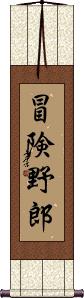
冒険野郎 is a Japanese title that means “adventure lover.”
This literally means something like “adventure wild man.”
This is a funny choice for a wall scroll, but it's a legitimate word in Japanese.
Adventure
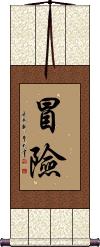
冒險 is another Chinese and Korean word for “Adventure.”
This is more of a “risk-taking” version of adventure.
The first character can mean “brave” and “bold.” The second character means “dangerous” and “rugged.” Together they can be defined as a word meaning “adventure” in Chinese and Korean.
Note: Some dictionaries translate these two characters as “take a risk.”
Happiness in the Afterlife
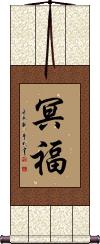
冥福 is an unusual Chinese, Japanese, and Korean term that means afterlife happiness, happiness in the next world, or the happiness of the dead.
Kind Words
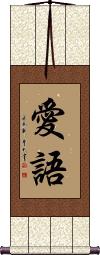
In the simplest terms, 愛語 means kind words.
In the Buddhist context, this is one of the four methods of approach to people which the bodhisattvas use to guide them to the way of the Buddha.
Other translations include loving speech or simply the words of a bodhisattva.
愛語 is also a common female name, Aigo, in Japanese.
Aiki Budo
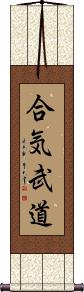
合気武道 is the title Aiki-Budo or “Aiki Martial Arts” in Japanese Kanji.
合 means “union” or “harmony.”
気/氣 means “universal energy” or “spirit.”
武 means “martial” or “military.”
道 means “way” or “method.”
合気武道 is the modern Japanese way to write this. You may also see 合氣武道, where the second character is written in the older traditional (pre-1945) form. If you want this written 合氣武道, just include a note or email with your order.
合氣武道 are all Chinese characters as well, so I included the Chinese pronunciation above. However, while it can be understood in Chinese, this is not a common term in that language and is not used in any Chinese martial arts. Also, 気 is only used in Japan - Chinese will understand 気 to be the Japanese form of 氣.
See Also: Martial Arts | Hapkido
Aikido
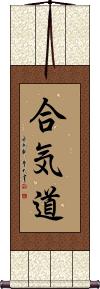
合気道 is the modern Japanese way to write Aikido.
Aikido is often referred to as the defensive martial art.
While Aikido was born in Japan, it has become a somewhat famous form of defensive tactics taught to soldiers and Marines, as well as some law enforcement officers in the West.
Looking at the characters, the first means “union” or “harmony.”
The second character means “universal energy” or “spirit.”
The third means “way” or “method.”
Please note that while the original 合氣道 characters can be pronounced in Chinese, this word is not well-known in China and is not considered part of the Chinese lexicon.
Note: It is somewhat accepted that this is the origin of Hapkido in Korea. And other than a modern simplification to the middle Kanji of this 3-Kanji word, it is written the same in Korean Hanja.
See Also: Martial Arts | Hapkido
Aikikai
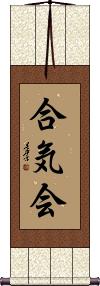
合気会 or “Aikikai” is the original school of Aikido.
Several organizations use this title. The first was established in Japan in 1940 (The Aikikai Foundation or 財団法人合気会).
The only difference between this title and Aikido is the last character, “kai” which means club, group, fraternity, organization, or assembly.
Note: 合気会 may be romanized with a dash like this: Aiki-Kai.
Aiki O'Kami

This is the Japanese martial arts Aiki O'Kami.
The Aiki (合気/合氣) means harmonious energy. While Okami or O'kami (大神) means great spirit.
You will usually see this title written as 合氣大神, though in modern Japanese (after 1945) the second character, 氣, was simplified to 気 in Japan (and 气 in China). I suggest you use 合氣大神, but please let me know when you order if you would prefer 合気大神 instead.
Air / Atmosphere
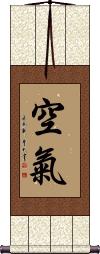
空氣 means air or atmosphere in Chinese, Japanese Kanji, and old Korean Hanja.
This is an unusual title for an Asian calligraphy wall scroll, but many of our western customers have requested it.
 While 空氣 is common in Chinese and Korean Hanja (and ancient Japanese Kanji); please note that in modern Japanese, the second character is written as 気, with slightly fewer strokes. If you want the modern Japanese version, please click on the character to the right. Both versions are understood by native Chinese, Japanese, and many (but not all) Korean people. You should choose the appropriate version based on the intended audience for your calligraphy artwork.
Sky / Void
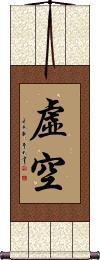
虛空 means void, hollow, empty, space, sky, atmosphere, heaven, or ether.
虛空 is the Chinese and Japanese version of the Sanskrit word ākāśa (or akasa / akash) which, beyond the sky or space meaning can be the immaterial universe behind all phenomena in the Buddhist context.
Akemi
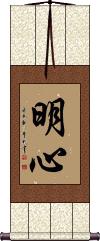
In Japanese, this is a female given name, Akemi (sometimes Meimi or Harumi).
In the Buddhist context, this title means enlightened heart.
Akita Dog / Akitainu / Akita Inu
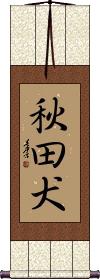
鞦田犬 is the Japanese title of the breed of dog known as an Akita.
Technically, the title above means “Akita hound” or “Akita Dog.” The literal translation of these characters is “autumn field dog.”
Note: This title is Japanese only. In China, this breed of dog is referred to as "The Japanese breed" (literally: Japanese hound).
Chinese title: 


Akuma
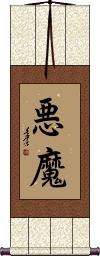
悪魔 is a Japanese word that means Devil, Demon, or Satan.
悪魔 is also the English/Japanese title for a character in Street Fighter.

 Note: In Japan, the Street Fighter is known as Gouki or Goki. This sort of means grand ghost, or great spirit. If you want this instead of the Akuma title, just click on the Goki Kanji to the right.
Alive
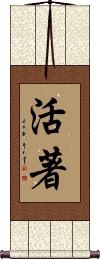
活著 is the word that means alive, as in the state of living or being alive (Chinese only).
All Hopes Fulfilled
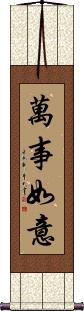
萬事如意 is a Chinese and old Korean proverb that means to have all one's wishes.
When speaking to someone, it's a way to say best wishes, all the best, may all your hopes be fulfilled, or may everything go well.
On your wall as calligraphy, it's meant to inspire all your wishes, hopes, dreams, and life to go well or come true.
Alone / A Lone Person
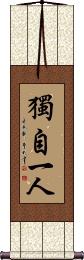
Alone / A Lone Person
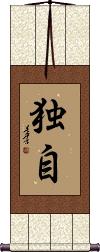
獨自 is a Japanese word that means “alone” in the context of a person by himself/herself.
This can be translated as individual, solo, on one's own, or by oneself.
See Also: I Miss You
Always with a Book in Hand
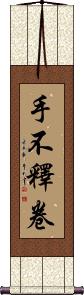
手不釋卷 is a Chinese proverb that literally means “always with a book in hand.”
It's a proverb said of a hardworking scholar or student.
This may refer to a student or scholar who is diligent and hardworking. It's a great gift for a student or scholar who loves books.
Fix the roof before the rain; Dig the well before you are thirsty
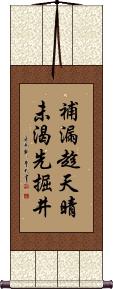
补漏趁天晴未渴先掘井 is a Chinese proverb that literally translates as: Mend the roof while the weather is fine, [and when you are] not yet thirsty, dig the well beforehand.
In simple terms, this means: Always being prepared in advance.
See Also: Have a Walking Stick at the Ready Before You Stumble
You are Always in My Heart
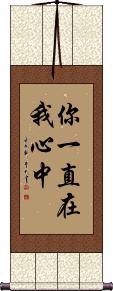
你一直在我心中 means “You are always in my heart” in Chinese.
你 = You
一直 = Always
在 = In/At
我 = Me/My
心中 = Heart/Mind
The idea or definition of heart and mind kind of overlap in ancient Chinese, so this can also mean “You are always in my mind.”
Ambition
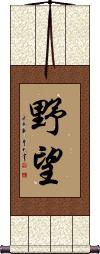
Ambitious / To Improve Oneself
Advance and Progress
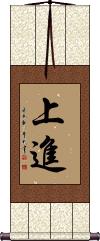
上進 is a Chinese and Japanese Kanji word that means to advance, to make progress, to do better, to be ambitious, to improve oneself, or to move forward.
This can refer to a single person, general things (such as a work project), or a whole country.
In Japanese, this is sometimes used as the given name Joushin.
American Football
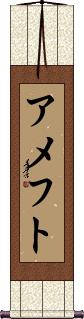
アメフト is a short word that means “American football” in Japanese.
It is supposed to sound like an abbreviated version, “ame futo” which sounds like “ah-may foot-oh” (American Football).
There's not a great standard way to say “football” in Japanese, as the sport is not popular in Japan. Other Japanese terms for football can be confused with soccer or rugby.
Note: Because this title is entirely Japanese Katakana, it should be written by a Japanese calligrapher.
See Also: Soccer
American
Person from the USA
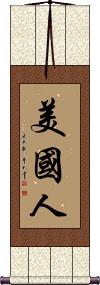
美國人 means “American” or literally “American Person” in Chinese.
American Soldier / American Serviceman
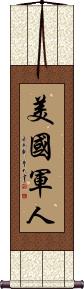
美國軍人 means “American Soldier” or literally “American Military Person.”
This can also be translated as “American military personnel,” or “American serviceman.” Gender is not specified in this title, so it's appropriate for male or female soldiers.
Angel / Messenger of Heaven
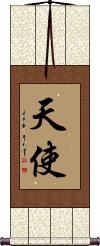
天使 is the meaning of Angel in Chinese, Japanese Kanji, and old Korean Hanja.
The first character means heaven. The second means messenger. Together it makes sense that we are talking about angels as Heaven's Messengers.
If you are an “Angel Junkie,” this may be the wall scroll for you.
I also think it's a great choice if your name happens to be Angel.
See Also: Angel
Animals
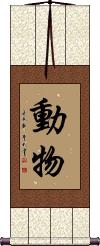
動物 is the way to write “animals” in Chinese characters, Japanese Kanji, and old Korean Hanja.
The first character means “moving,” and the second means “things.”
So animals are “moving things” in these Asian languages.
Content and Motionless
The condition of perfect meditation
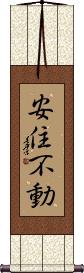
安住不動 means at peace and immovable.
The first two Kanji mean being content with one's present position or well-composed.
The last two Kanji mean immobile, firmness, fixed, and/or motionless.
In the Zen school, this is being well-composed and immovable - the ideal state of Zen meditation.
Wu Ming / Anonymous
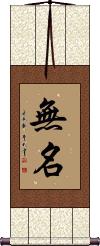
無名 is a Chinese, Japanese and Korean word that means nameless, obscure, unnamed, anonymous, unsigned, unknown, not famous, and sometimes unjustifiable.
The romanized title, Wu Ming, has been used for several different things such as a group of Italian writers, and even as the Chinese name of the infamous hackers.
Antiwar / Anti-War
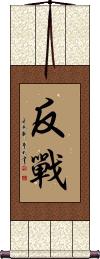
反戰 means antiwar, as in what a pacifist believes in.
China does plenty of saber-rattling but thankfully doesn't go to war very often, and Japan has embraced a pacifist ideology. Therefore, it's rare to need this word. However, this is the kind of word that war protesters would write on their signs.
 There is a modern Japanese version of the second character which has become the standard in Japan after WWII. If you want your calligraphy written in the modern Japanese form, please click on the Kanji shown to the right instead of the button above. Note: Most Japanese and all Chinese people will recognize the form shown in the upper left.
Apollo
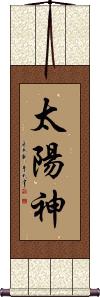
太陽神 means “Sun God” in Chinese, Japanese, and Korean.
It's used in Chinese to mean the Greek God Apollo. This can also be used in Chinese to refer to Nasa's Apollo missions to the moon.
No man knows what he owes to his parents until he comes to have children of his own
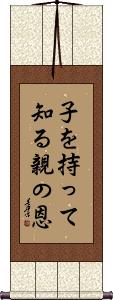
子を持って知る親の恩 literally translates as: Only after you have a baby, you would appreciate your parents (feel the way they do, etc).
This is a bit like the “walk a mile in another man's shoes” saying. Basically, it's about you cannot fully understand the plight of others until you experience it yourself. It also shows appreciation for the plight of parents.
This Japanese proverb can also be translated a few more ways:
No man knows what he owes to his parents till he comes to have children of his own.
One knows not what one owes to one's parents till one comes to have children of one's own.
Only after you have a baby, you will appreciate your parents or feel the way they do.
Only after becoming a parent yourself do you realize how much you owe [how indebted you are] to your own parents.
Note: Because this selection contains some special Japanese Hiragana characters, it should be written by a Japanese calligrapher.
Archangel / Arch Angel
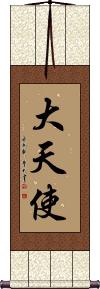
大天使 is the title Archangel in Chinese characters, Japanese Kanji, and old Korean Hanja.
The first character means big or great (in this case, it means “arch”).
The second means heaven (or sky).
The last means messenger.
The second and third characters together make the title for angel, which is literally “Heaven's Messenger.”
This title would be understood as “The Chief of all Angels,” or “The Great Angel.” Some might even say it's the boss of Angels.
See Also: Angel
Archer
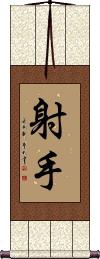
射手 means archer, shooter, or marksman in Chinese, Japanese Kanji, and old Korean Hanja.
Depending on the context, it can also mean “goal-getter” in Chinese. This would also be the word for a bowman.
射手 is modern in Asia, meaning that it's only been in use for a few hundred years. However, the more ancient version of the archer is often not even recognized by the current generation of Chinese and Japanese people.
The first character means “shoot” or “fire” (in the context of a gun or bow). It's also a suffix for radioactive things (in the context of chemistry) - radioactive things “fire off” electrons. In Japanese, the first Kanji is a short name and suffix for archery.
The second character means “hand,” but the hand can also mean a person, in the same way, that a “farmhand” is a person in English.
Archer
Modern Chinese Version
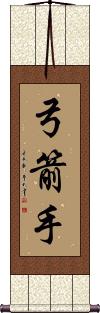
弓箭手 is how to write “archer” in modern Chinese.
弓箭手 literally means “bow arrow hand.”
There are other ways to write “archer” in Chinese, but this is probably the most common title for modern China. The other, less-common version of “archer” is also more universal because it has the same meaning in Japanese (this one is not used in Japan).
Architect
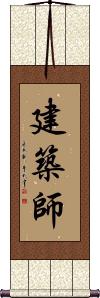
建築師 means Architect in Chinese.
The first two characters mean construction or architecture (of buildings).
The last character means teacher, master, or expert.
Architect
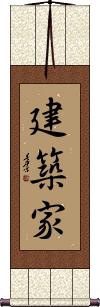
Ardent / Fierce
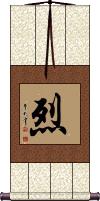
烈 is a Chinese word that means ardent; intense; fierce; stern; upright; to give one's life for a noble cause.
In another context, this character can refer to one's exploits or achievements.
In the Buddhist context, this is burning, fierce, virtuous, and/or heroic.
While technically, it had the same meaning in Japanese, it's usually a female given name, Retsu in Japanese these days.
Passionate Love / Ardent Love and Devotion
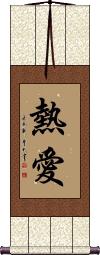
熱愛 means love passionately, ardent love, devotion, adoration.
The literal meaning is “hot love,” as the first character means heat, fervent, hot, and warm. Sometimes it can mean fever, restlessness, or zeal. The second character is, of course, love. If you adore and are devoted to someone with all your love, this is the title for you.
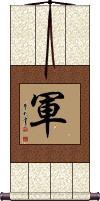
Army / Military
Art of Healing
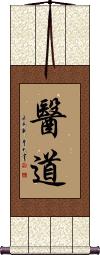
醫道 means the art of healing or medical skill.
This can also refer to a Korean TV show, Hur Jun about an ancient doctor. The Chinese-subtitled version of the show is also quite popular in China.
While this is a common title in Chinese and Korean, it's not used as often in Japanese where someone might read it as “medical course” or “the way of medicine.”
The Art of Love
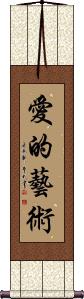
愛的藝術 means “art of love” or “art of loving” in Chinese.
This is also the Chinese title of the book “Art of Loving” by Erich Fromm.
Art of War
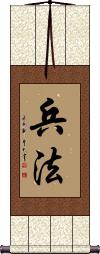
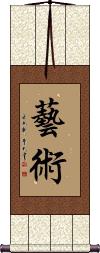
藝術 is a Chinese, Japanese, and old Korean Hanja word that means art, as in fine art, the arts, or artwork.
Asahi / Morning Sun
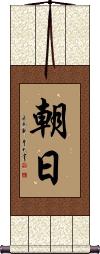
朝日 is a version of the Japanese name Asahi.
This can also be Ahisa, Asuka, Ashita, or Asaka. This means morning sun and is the name of the famous beer company in Japan.
This would be read as “Zhao Ri” in Mandarin where it means morning sun but is also known to be the Asahi company (maker of beer and other beverages).
Ascend
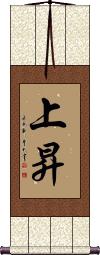
上昇 means to rise up, to go up, or to ascend in Chinese, Japanese Kanji, and old Korean Hanja.
If you are rising, ascending, or climbing, this is the word for you.
In the older Buddhist context, this means to ascend, with the implication that the destination is the heavenly realm.
I Climbed the Great Wall

登长城 means to ascend or to climb the Great Wall of China.
登長城 is the poetic and native way to express this feat.
登 means “to ascend” and is a classical verb used in inscriptions, poems, and calligraphy.
长城 is the title of the Great Wall.
This three-character phrase is concise and implies achievement rather than casual travel.
Great Aspirations / Ambition
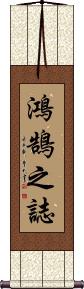
鴻鵠之誌 is a Chinese proverb that implies that having grand ambitions also means that others will not understand your great expectations and ideas.
Though the actual words come from a longer saying of Confucius, which goes, “The little swallows living under the eaves wouldn't understand the lofty ambitions of a swan (who flies far and wide).”
This Confucius quote has led to this idiomatic expression in China that means “think big.” What you'd be saying is “The lofty ambitions of a swan.”
Note that Chinese people sometimes refer to the little swallow as one who does not “think big” but is, instead, stuck in a rut or just leading a mundane life. Therefore, it's a compliment to be called a swan but not a good thing to be called a swallow.
Aspire / Burning Desire
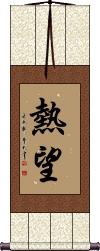
熱望 is a Chinese, Japanese Kanji, and old Korean Hanja word that means, to aspire, longing for, or burning desire.
The first character means hot, heated, or burning.
The second character means hope, expectations, aspiration, or desire.
Great Expectations
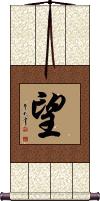
望 holds the ideas of ambition, hope, desire, aspiring to, expectations, looking towards, to gaze (into the distance), and in some contexts, full moon rising.
望 is one of those single characters that is vague but in that vagueness, it also means many things.
望 is a whole word in Chinese and old Korean but is seldom seen alone in Japanese. Still, it holds the meanings noted above in all three languages.
Assassin
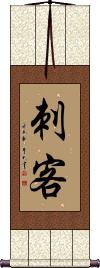
刺客 is the most sophisticated way to write “assassin” in Chinese, Korean and Japanese.
The unsophisticated way just means murderer.
Athlete
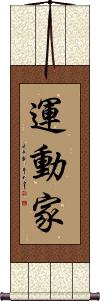
運動家 means athlete, sportsman, or sporty person.
In certain contexts, it can mean activist, campaigner, or crusader.
Attack When The Enemy Has Low Morale
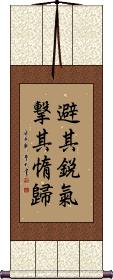
避其鋭氣擊其惰歸 is a Chinese proverb that literally translates as: Avoid [your enemy's] fighting spirit [and] attack [when] his [morale is] declining.
Figuratively, this means: Avoid the enemy when his morale is high and strike him when his morale is flagging.
August
Eighth Month
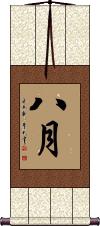
八月 is the month of August in Chinese, Japanese Kanji, and old Korean Hanja.
八月 literally means “eighth month” or “eighth moon.”
In Japanese, this can also be the female given name, Yatsuki, in much the same way August can be a female given name in English.
Avenger
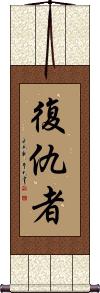
復仇者 is a Chinese title that means avenger or taker of revenge.
The first two characters literally mean avenge, vengeance, reprisal, or revenge.
The last character is a way to say, person. This last character is like adding -er or -ist to subjects like write and art to get writer and artist.
Avenger
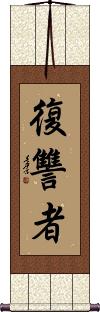
復讐者 is a Japanese Kanji title that means avenger or revenger.
The first two characters literally mean revenge or avenge.
The last character is a way to say a person (or soldier/warrior).
Altogether, you have something like, an “avenging person,” hence avenger.
1000 good moves ruined by 1 bad
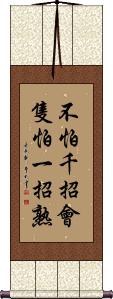
不怕千招会只怕一招熟 is a Chinese proverb that literally translates as: Do not worry about making a thousand clever moves; what [one has to] fear is one bad move.
Figuratively, this means: Even if you have made many clever moves before, one wrong move will ruin the whole game.
I compare this to the English saying, “It takes only one Aw-shit to wipe out a thousand Attaboys.”
Awesome / Awe-Inspiring
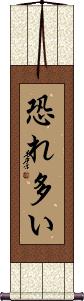
恐れ多い is a Japanese word for something awe-inspiring or awesome (in some odd context, it can refer to August).
恐れ多い is probably not appropriate for a calligraphy wall scroll unless you have a specific reason.
The word awesome is misused a lot in English or used too casually. This Japanese word is the real form of awesome, and it kind of means numerous fears and anxiety that you would feel in response to encountering something truly awesome (such as God, a tornado, a tsunami, etc.).
Note: Because this selection contains some special Japanese Hiragana characters, it should be written by a Japanese calligrapher.
Azuka
Japanese surname
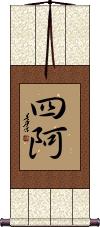
四阿 is the Japanese surname Azuka, Adzuma, Azuma, or Aoka.
This also means arbor/arbour, bower, summer house, or square gazebo.
Baby
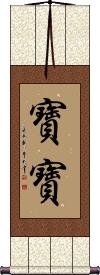
寶寶 is how Chinese people express “baby.”
The word is composed of the same character twice, and therefore literally means “double precious” or “double treasure.”
This would be a nice wall scroll to put either inside or by the door of your baby's room (not on the door, as wall scrolls swing around wildly when hung on doors that open and close a lot).
Bad Girl
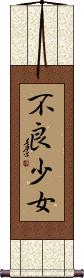
不良少女 is a Japanese word that means bad girl or female juvenile delinquent.
It's an unusual choice for calligraphy.
Badger
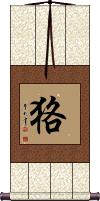
狢 is a Japanese word that means badger or “raccoon dog” (Nyctereutes procyonoides).
I have included the Chinese and Korean pronunciations above. However, this character is rarely used character in modern Chinese and Korean.
Ba Gua Zhang
Martial arts style
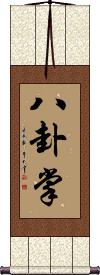
八卦掌 is the title Baguazhang, a form of Chinese boxing.
Literally translated, this means “Eight Trigrams Palm.”
You will also see this romanized as “Ba Gua Zhang,” “Bagua Zhang,” or “Pa Kua Chang” (same characters, just different spacing or romanization used in mainland China versus Taiwan).
八卦掌 is also known in Japan as hakkeshou or hakkesho.
White Eagle Style
Bai Ying Pai
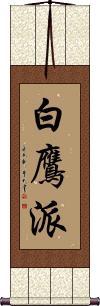
白鷹派 is the title “Bai Ying Pai” or “White Eagle School.”
The first character means white.
The second means eagle, falcon, and/or hawk.
The third means school (as in the school or style of martial arts).
Ba Ji Quan
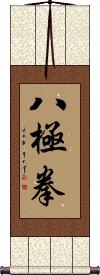
八極拳 is “Ba Ji Quan” or “Eight Extremes Fist.”
Some also translate this as “Eight Extremities Fist,” though I don't feel that's accurate.
八極拳 (Bājíquán) is a Chinese martial art that features explosive, short-range power and is famous for its elbow strikes. It originated in the Hebei Province in Northern China but spread to Taiwan and other places.
The full title is 開門八極拳 (Kāimén Bājíquán), which means Open-Door Bajiquan.
Other romanizations include: BaJiQuan, Pa Chi Ch`üan, or Pa Chi Chuan.
In Japan, this is known as Hakkyokuken.
Bajutsu

馬術 (Bajutsu) is a Japanese form of military equestrianism.
Bajutsu involves techniques of swordsmanship, tactical advance, archery, and even the care of horses.
This is also a Chinese title where it means equestrianism, horsemanship, or equestrian art (the art of riding a horse).
Balance / Peace
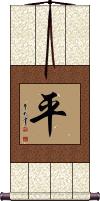
平 is a single character that means balance in Chinese but it's not too direct or too specific about what kind of balance.
Chinese people often like calligraphy art that is a little vague or mysterious. In this way, you can decide what it means to you, and you'll be right.
平 is also part of a word that means peace in Chinese, Japanese, and old Korean.
Some alternate translations of this single character include: balanced, peaceful, calm, equal, even, level, smooth, or flat.
Note that in Japanese, this just means “level” or “flat” by itself (not the best choice for balance if your audience is Japanese).
Balance / Equilibrium
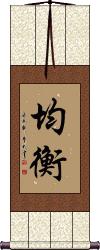
均衡 means balance or equilibrium.
This title is best for a Japanese audience where the word suggests that your life is in balance in all matters (or is a reminder for you to try and keep all matters in balance).
Bamboo
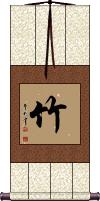
竹 is the character that means bamboo in Chinese, Japanese Kanji, and old Korean Hanja.
In Asian cultures, bamboo is often seen as a symbol of a noble gentleman (tall, straight, and honest).
There are also some multi-character bamboo words that regard individual bamboo plants, species of bamboo, bamboo as lumber, and edible bamboo shoots. However, this single character seems most appropriate for a wall scroll and covers the whole category of Asian bamboo.
Banzai / Wansui
Old Japanese / Traditional Chinese & Korean
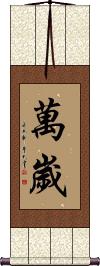
萬歲 is the traditional Chinese, Korean Hanja, and ancient Japanese way of writing banzai.
In modern times, the first character was simplified in Japan and China. So you might want to select the other entry for universal readability.
While it has become a popular, if not an odd, thing to scream as you jump out of an airplane (preferably with a parachute attached), banzai is actually a very old Asian way to say “hooray.” The Japanese word “banzai” comes from the Chinese word “wan sui,” which means “The age of 10,000 years.” It is actually a wish that the Emperor or the Empire live that long.
Imagine long ago when the Emperor made a rare public appearance. 萬歲 is what all people would yell to their leader in respect.
So if you like it as a hooray, or you want to wish someone that they live for 10,000 years, this is the calligraphy for you.
Other translations include Cheers! (not the drinking kind), hurrah!, long live [name]!, and congratulations!
To other things with banzai in their names, I am still waiting for the promised sequel to Buckaroo Banzai.
Notes: Sometimes people confuse banzai with bonsai. A bonsai is a miniature tree. They have nothing to do with each other.
Banzai
Modern Japanese Version
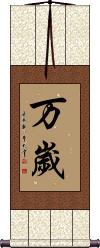
万歲 is the modern Japanese way to write banzai.
We've made two almost identical entries for this word, with just a variation on the first character. In the last century, 萬 was simplified to 万 in Japan and China. The new generation will expect it to be written as 万 but the old generation can still read the more traditional 萬 form. You must make your determination as to what version is best for you. If your audience is mostly Japanese, I suggest 万歲.
While it has become a popular, if not an odd, thing to scream as you jump out of an airplane (preferably with a parachute attached), banzai is actually a very old Asian way to say “hooray.” The Japanese word “banzai” comes from the Chinese word “wan sui” which means “The age of 10,000 years.” It is actually a wish that the Emperor or the Empire live that long.
Imagine long ago when the Emperor made a rare public appearance. This is what all of the people would yell to their leader in respect.
So if you like it as a hooray, or you want to wish someone that they live for 10,000 years, this is the calligraphy for you.
To other things with banzai in their names, I am still waiting for the promised sequel to Buckaroo Banzai.
Other translations: hurrah, long life, congratulations, cheers, live long.
Notes: Sometimes people confuse banzai with bonsai. A bonsai is a miniature tree. They have nothing to do with each other. Further, Bonzai is not a word at all - although it would make a great name for a calcium supplement for older people.
Barefoot

赤腳 means barefoot in Chinese.
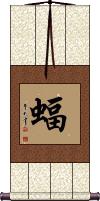
蝠 is the simplest way to write bat in Chinese and old Korean Hanja.
This also means bat in Japanese but is almost never written alone like this (it's often part of other titles for vampire bats or fruit bats).
In Chinese culture, the bat is a good luck charm, as the pronunciation is very similar to the word for “good luck” or “good fortune.” The character for bat (蝠) even looks like the good luck (福) character.
Be True to Yourself
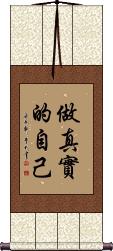
做真实的自己 means “be true to yourself” in Chinese.
Note: This is more a western-style phrase or idea, so it’s not that common to see this in Chinese.
Be Yourself
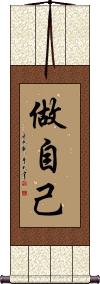
做自己 means “be yourself” in Chinese.
The first character means “to be,” “to become,” or “to act as.”
The last two characters are a word that means “oneself” or “yourself.”
Bean
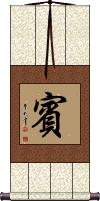
賓 is the name Bean in Chinese (Mandarin).
賓 means honored guest.
Beast / Animal
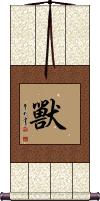
獸 means beast, animal, brute, beastly, or bestial.
Note: A strange selection for a calligraphy wall scroll.
獸 is a very generic term for a beast, so it can be one hunted for food (such as a deer or boar). It can also mean a great animal or someone who acts like a beast.
Note: In Japanese, this can be the personal name Munetada.
 In modern Japan, they use the version of this character shown to the right. If your audience in Japanese, click this special Kanji instead of the button above.
Wisdom from Hard Knocks
The school of hard knocks
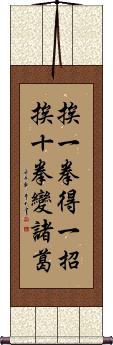
挨一拳得一招挨十拳變諸葛 is a Chinese proverb that literally translates as: Receive one blow, [and one] learns a lesson; Receive ten blows, [and one] becomes a great Zhuge [Liang].
You must first understand that a man named Zhuge Liang was one of the great strategists and philosophers in Chinese history. He's known as a man of great wisdom.
Figuratively, this phrase means:
One can learn much from failure or “hard knocks.”
Beau
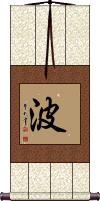
This is a common transliteration to Mandarin Chinese for the name Beau.
This Chinese character means “wave.”
This in-stock artwork might be what you are looking for, and ships right away...
Gallery Price: $108.00
Your Price: $59.88
Gallery Price: $108.00
Your Price: $59.88


Successful Chinese Character and Japanese Kanji calligraphy searches within the last few hours...



