Many custom options...


And formats...



Loss in Chinese / Japanese...
Buy a Loss calligraphy wall scroll here!
Personalize your custom “Loss” project by clicking the button next to your favorite “Loss” title below...
Lost Soul
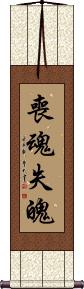
喪魂失魄 is a Chinese idiom that means “lost soul, vanished spirit.”
It relays a feeling of being distraught, at a loss, or heartbroken.
Unmoved by the Eight Winds

八風吹不動 is an ancient Buddhist phrase from about 1000 years ago.
Literal meaning: “The Eight Winds cannot move [me].”
The original famous anecdote is from Song Dynasty China, involving the poet-official 蘇東坡 (Su Dongpo / Su Shi, 1037–1101) and Zen master 佛印 (Foyin).
Su Dongpo wrote 八風吹不動,一屁打過江
“The Eight Winds cannot move me; Yet one fart blows me across the river.”
Foyin’s irreverent reply exposed Su Dongpo’s ego, which is kind of a classic Zen/Chan teaching story.
利 gain
衰 loss
毀 disgrace
譽 praise
稱 honor
譏 ridicule
苦 suffering
樂 pleasure
“The Eight Winds cannot move [him / the mind].”
“Unmoved by the Eight Winds.”
“The Eight Winds do not move me.”
“Not moved by the Eight Winds.”
“Unshaken by the Eight Winds.”
“Unaffected by the Eight Winds.”
“Unmoved by worldly forces.”
“Steadfast against the Eight Winds.”
“Remaining unmoved amid the Eight Winds.”
There is a shorter Japanese Zen version, 八風不動, which drops the middle character. Often romanized as happū fudō. The romanization of 八風吹不動 is arguably happū fukedomo ugokazu or happū sui fudō.
These search terms might be related to Loss:
Any Success Can Not Compensate for Failure in the Home
Birth Old-Age Sickness Death
Death Before Dishonor
Death Before Surrender
Death With Dignity
Do No Harm / Harmless
Failure in Not an Option
Failure is a Stepping Stone to Success
Failure is Not an Option
Failure is the Mother of Success
Failure is the Origin of Success
Grim Reaper / God of Death
Honorable Death - No Surrender
Hurt
Kill / Slaughter / Murder / Butcher
No Arrogance in Victory, No Despair in Defeat
Return From Death’s Door
Sword of Death
You May Learn From Victory, You Will Learn From Failure
Not the results for Loss that you were looking for?
Below are some entries from our dictionary that may match your Loss search...
| Characters If shown, 2nd row is Simp. Chinese |
Pronunciation Romanization |
Simple Dictionary Definition |
ロス see styles |
rosu ロス |
More info & calligraphy: Roth |
放心 see styles |
fàng xīn fang4 xin1 fang hsin houshin / hoshin ほうしん |
More info & calligraphy: No Worries(n,vs,vi) (1) absentmindedness; preoccupation; being in a daze; (n,vs,vi) (2) (dated) setting one's mind at ease; ceasing to worry; relief; (n,vs,vi) (3) (archaism) (Mencian philosophical term; contrast with 良心) loss of one's moral sense; straying from virtue absentmindedness |
カバー see styles |
kabaa / kaba カバー |
More info & calligraphy: Cover |
失 see styles |
shī shi1 shih shitsu しつ |
to lose; to miss; to fail (1) loss (of something); disadvantage; (2) mistake; error; failure; (3) flaw; defect; (4) (abbreviation) {baseb} (See 失策・2) error To lose, opp. of 得; to err. |
憖 慭 see styles |
yìn yin4 yin namaji なまじ |
(literary) to wish; to prefer to; (literary) to incur damage or loss (adverb) (1) (kana only) (See 憖い・1) thoughtlessly; rashly; unwisely; half-heartedly; (adjectival noun) (2) (See 憖い・2) halfway; half-done; incomplete |
憾 see styles |
hàn han4 han ikumi いくみ |
regret (sense of loss or dissatisfaction) (personal name) Ikumi to resent |
折 see styles |
zhé zhe2 che sagari さがり |
to break; to fracture; to snap; to suffer loss; to bend; to twist; to turn; to change direction; convinced; to convert into (currency); discount; rebate; tenth (in price); classifier for theatrical scenes; to fold; accounts book (1) opportunity; chance; occasion; time; (n,ctr) (2) fold; pleat; crease; (3) small food box (wooden or cardboard); (personal name) Sagari Tear open, break down.; To snap, break; decide; compound; fold. |
損 损 see styles |
sǔn sun3 sun takuji たくじ |
to decrease; to lose; to damage; to harm; (coll.) to ridicule; to deride; (coll.) caustic; sarcastic; nasty; mean; one of the 64 hexagrams of the Book of Changes: ䷨ (n,adj-na,vs,vi) (1) loss; damage; harm; unprofitable; (noun or adjectival noun) (2) disadvantage; handicap; drawback; unfavorable; (personal name) Takuji To spoil, hurt, damage. |
敗 败 see styles |
bài bai4 pai hai はい |
to defeat; to damage; to lose (to an opponent); to fail; to wither (1) loss; defeat; (suf,ctr) (2) (ant: 勝・しょう・3) counter for losses Subvert, defeat, ruin, spoil, destroy. |
漏 see styles |
lòu lou4 lou ro |
to leak; to divulge; to leave out by mistake; waterclock or hourglass (old) āsrava, 'flowing, running, discharge; distress, pain, affliction.' M.W. It is defined as another term for 煩惱 q.v.; also as the discharge, or outflow, from the organs of sense, wherever those exist, hence it is applied to the passions and their filth; impure efflux from the mind, v. 欲有; also to the leakage or loss thereby of the 正道 truth; also to the stream of transmigration. |
賠 赔 see styles |
péi pei2 p`ei pei |
to compensate for loss; to indemnify; to suffer a financial loss |
PL see styles |
pii eru; piieru(sk) / pi eru; pieru(sk) ピー・エル; ピーエル(sk) |
(1) (See 製造物責任) product liability; (2) profit and loss; P&L |
カバ see styles |
kaba カバ |
(noun/participle) (1) cover (e.g. book); coverage; (noun or participle which takes the aux. verb suru) (2) to compensate for (a loss); to offset (a weakness); to back up; (3) kava (Piper methysticum); cava; kavakava; (4) cava; Spanish sparkling wine; (kana only) hippopotamus (Hippopotamus amphibius); (kana only) birch (esp. Japanese white birch); (personal name) Cava |
一失 see styles |
isshitsu いっしつ |
a loss; a failure; a mistake; an error |
三苦 see styles |
sān kǔ san1 ku3 san k`u san ku sanku |
The three kinds of duḥkha, pain, or suffering: 苦苦 that produced by direct causes; 壞苦 by loss or deprivation; 行苦 by the passing or impermanency of all things. |
丟包 丢包 see styles |
diū bāo diu1 bao1 tiu pao |
(computing) packet loss; to lose a packet |
両損 see styles |
ryouson; ryouzon / ryoson; ryozon りょうそん; りょうぞん |
loss on both sides |
丸損 see styles |
maruzon まるぞん |
total loss |
亡失 see styles |
wáng shī wang2 shi1 wang shih boushitsu / boshitsu ぼうしつ |
(n,vs,vt,vi) loss (e.g. of an item) loss |
倒賠 倒赔 see styles |
dào péi dao4 pei2 tao p`ei tao pei |
to sustain loss in trade |
債負 债负 see styles |
zhài fù zhai4 fu4 chai fu saifu |
loss |
全損 全损 see styles |
quán sǔn quan2 sun3 ch`üan sun chüan sun zenson ぜんそん |
(insurance) total loss total loss |
八風 八风 see styles |
bā fēng ba1 feng1 pa feng happuu / happu はっぷう |
see 八風穴|八风穴[ba1 feng1 xue2] (1) {Buddh} eight winds; eight things that hinder enlightenment; prosperity, decline, disgrace, honor, praise, censure, suffering, and pleasure; (2) eight winds (e.g. in eight directions); (given name) Happuu The eight winds, or influences which fan the passions, i.e. gain, loss; defamation, eulogy; praise, ridicule; sorrow, joy. Also 八法. |
凹む see styles |
hekomu へこむ |
(v5m,vi) (1) to be dented; to be indented; to yield; to give; to sink; to collapse; to cave in; (v5m,vi) (2) to be beaten; to be overwhelmed; to yield; to give in; to give up; (v5m,vi) (3) (colloquialism) (See ヘコむ) to be disheartened; to feel down; to feel depressed; (v5m,vi) (4) to suffer a loss; to lose |
利衰 see styles |
lì shuāi li4 shuai1 li shuai risui |
gain or loss |
割肉 see styles |
gē ròu ge1 rou4 ko jou |
to cut some meat; to cut off a piece of flesh; (fig.) (coll.) to sell at a loss |
創痍 see styles |
soui / soi そうい |
(1) (form) (See 満身創痍・1) wound (from an edged weapon); cut; (2) (form) damage; injury; loss |
喪失 丧失 see styles |
sàng shī sang4 shi1 sang shih soushitsu / soshitsu そうしつ |
to lose; to forfeit (noun, transitive verb) loss; forfeit |
困る see styles |
komaru こまる |
(v5r,vi) (1) to be troubled; to have difficulty; to be in a fix; to be at a loss; to be stumped; to be embarrassed; (v5r,vi) (2) to be bothered; to be inconvenienced; to be annoyed; (v5r,vi) (3) to be badly off; to be hard up; to be in straitened circumstances |
報失 报失 see styles |
bào shī bao4 shi1 pao shih |
report the loss to the authorities concerned |
Click here for more Loss results from our dictionary
The following table may be helpful for those studying Chinese or Japanese...
| Title | Characters | Romaji (Romanized Japanese) | Various forms of Romanized Chinese | |
| Lost Soul | 喪魂失魄 丧魂失魄 | sàng hún shī pò sang4 hun2 shi1 po4 sang hun shi po sanghunshipo | sang hun shih p`o sanghunshihpo sang hun shih po |
|
| Unmoved by the Eight Winds | 八風吹不動 八风吹不动 | happuu sui fudou happuusuifudou hapu sui fudo | bā fēng chuī bù dòng ba1 feng1 chui1 bu4 dong4 ba feng chui bu dong bafengchuibudong | pa feng ch`ui pu tung pafengchuiputung pa feng chui pu tung |
| In some entries above you will see that characters have different versions above and below a line. In these cases, the characters above the line are Traditional Chinese, while the ones below are Simplified Chinese. | ||||

Successful Chinese Character and Japanese Kanji calligraphy searches within the last few hours...



