Many custom options...


And formats...



Not what you want?
Try other similar-meaning words, fewer words, or just one word.
Life Living in Chinese / Japanese...
Buy a Life Living calligraphy wall scroll here!
Personalize your custom “Life Living” project by clicking the button next to your favorite “Life Living” title below...
2. Alive
3. The key to immortality is first living a life worth remembering
5. Embrace Life / Embrace Living
8. Life in Harmony / Balanced Life
9. Life is Good / Life is Beautiful
10. Life Energy / Spiritual Energy
11. Everyday Life
12. Life of Love
13. Enjoy Life
14. Thug Life
15. Life is Fun
16. Enjoy Life
20. Live For The Day
21. Destiny / Fate
22. Four Noble Truths: Suffering
23. 4. Right Action / Perfect Conduct
25. Ikiru / To Live
26. Ivy
27. Live Strong
28. Star
29. Great Aspirations / Ambition
30. Reiki
Living / Live Life
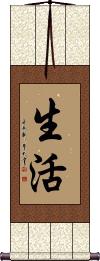
生活 means life, living, to live, or the state of being alive. It can also refer to your daily existence or livelihood. It can also be a suggestion to just “Live life.”
生活 is also the term used in other titles such as “healthy living” or Lance Armstrong's “Livestrong” campaign (Chinese title for Livestrong only).
If you need a reminder that you are alive and to take a breath, this might be the perfect wall scroll for you.
Alive
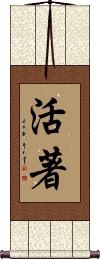
活著 is the word that means alive, as in the state of living or being alive (Chinese only).
The key to immortality is first living a life worth remembering
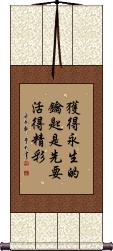
獲得永生的鑰匙是先要活得精彩 is a famous quote from Bruce Lee.
However, when quoted, he was speaking in English. So this is a translation of his English quote into Chinese. Since Bruce spoke both Chinese and English, his quotes sometimes go both ways.
Life is Short
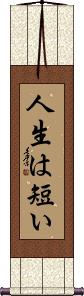
人生は短い is “life is short” in Japanese.
The character breakdown:
人生 (jinsei) life (i.e., conception to death); human life, living, lifetime.
は (ha/wa) particle (means “is” in this case).
短い (mijikai) short.
Note: Because this selection contains some special Japanese Hiragana characters, it should be written by a Japanese calligrapher.
Embrace Life / Embrace Living
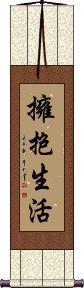
擁抱生活 is a Chinese title that means to embrace or to hug life, or embrace what it is to live.
Healthy Living
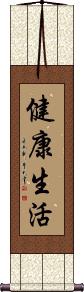
If you are into healthy living, 健康生活 might be an excellent selection for a wall scroll to hang in your home.
The first two characters speak of health, vitality, vigor, and being of sound body. The second two characters mean living or life (daily existence).
Way of Life / Art of Life
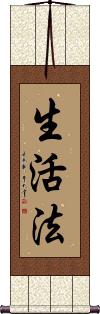
生活法 is a Japanese and Chinese title meaning “art of living” or “way of life.”
This can also be translated in a few other ways, such as “rule of life” and “the act of living.”
The “art” title kind of comes from the fact that the last character is the same as the book, “The Art of War.” So when you write your book, this is the title for “The Art of Life,” in Chinese and Japanese.
Life in Harmony / Balanced Life
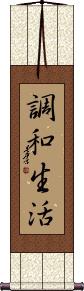
調和生活 is a Japanese title that suggests that you have, or want to get your life in balance.
The first two Kanji mean harmonious or in harmony.
The second two Kanji mean “life.” More specifically this refers to your livelihood, career, and the daily activities that comprise your life or living.
Life in Harmony / Balanced Life
Harmonious Life
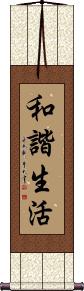
This 和諧生活 title suggests that you have, or want to get your life in balance.
The first two characters regard the idea of balance, harmony, and peace.
The second two characters mean “life.” More specifically this refers to your livelihood, career, and the daily activities that comprise your life or living. Some would translate those two characters as “one's daily existence.”
Note: We have a couple of titles for this idea. This version is more of a noun, thus "The Balanced Life" verses a verb form like "Balancing [Your] Life."
Life is Good / Life is Beautiful
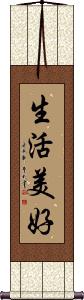
生活美好 means “life is good” in Chinese.
The first two characters mean “life” or “living.”
The last two characters mean “good” or “beautiful.”
Life Energy / Spiritual Energy
Chi Energy: Essence of Life / Energy Flow
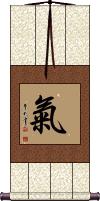
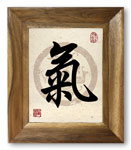
This 氣 energy flow is a fundamental concept of traditional Asian culture.
氣 is romanized as “Qi” or “Chi” in Chinese, “Gi” in Korean, and “Ki” in Japanese.
Chi is believed to be part of everything that exists, as in “life force” or “spiritual energy.” It is most often translated as “energy flow” or literally as “air” or “breath.” Some people will simply translate this as “spirit,” but you must consider the kind of spirit we're talking about. I think this is weighted more toward energy than spirit.
The character itself is a representation of steam (or breath) rising from rice. To clarify, the character for rice looks like this: 
Steam was apparently seen as visual evidence of the release of “life energy” when this concept was first developed. The Qi / Chi / Ki character is still used in compound words to mean steam or vapor.
The etymology of this character is a bit complicated. It's suggested that the first form of this character from bronze script (about 2500 years ago) looked like these samples: 

However, it was easy to confuse this with the character for the number three. So the rice radical was added by 221 B.C. (the exact time of this change is debated). This first version with the rice radical looks like this: 
The idea of Qi / Chi / Ki is really a philosophical concept. It's often used to refer to the “flow” of metaphysical energy that sustains living beings. Yet there is much debate that has continued for thousands of years as to whether Qi / Chi / Ki is pure energy or consists partially or fully of matter.
You can also see the character for Qi / Chi / Ki in common compound words such as Tai Chi / Tai Qi, Aikido, Reiki, and Qi Gong / Chi Kung.
In the modern Japanese Kanji, the rice radical has been changed into two strokes that form an X.
 The original and traditional Chinese form is still understood in Japanese, but we can also offer that modern Kanji form in our custom calligraphy. If you want this Japanese Kanji, please click on the character to the right instead of the “Select and Customize” button above.
More language notes: This is pronounced like “chee” in Mandarin Chinese, and like “key” in Japanese.
This is also the same way to write this in Korean Hanja where it is Romanized as “gi” and pronounced like “gee” but with a real G-sound, not a J-sound.
Though Vietnamese no longer use Chinese characters in their daily language, this character is still widely known in Vietnam.
See Also: Energy | Life Force | Vitality | Life | Birth | Soul
Everyday Life
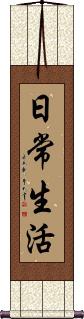
日常生活 simply means everyday life or regular life.
You can also translate it as “Living day to day.”
Life of Love
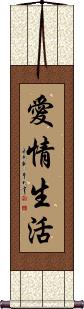
愛情生活 is the Chinese proverb for “Loving Life.” Some also translate this as “[your] Loving Life” or “Life full of Love.”
This is about being a loving person (to your spouse and/or family) during your life. This is not the same as loving the state of being alive - not “love of living” but rather “being a loving person during your life.”
Note: Korean pronunciation is included above, though use of this proverb in Korean has not been verified.
This proverb can be understood in Japanese but
it’s
primarily a Chinese proverb (it will "feel" Chinese to a Japanese person).
Enjoy Life
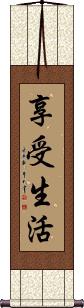
享受生活 is a Chinese proverb that means “Enjoy Life.”
The first two characters mean “to enjoy” and the last two mean “life” or “living.”
Thug Life
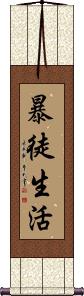
暴徒生活 is probably the best way to say “Thug Life” in Chinese, Japanese, and Korean.
It's a strange title, to be sure, so expect native Asian people to be confused when they see your Thug Life calligraphy.
The first two characters mean bandit, thug, ruffian, insurgent, rioter, or mob.
The last two characters mean life, live, or living.
Life is Fun
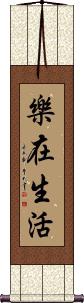
This means “life is fun” in Chinese.
樂 means fun, happy, or in some contexts, joyful music.
在 means at/is.
生活 means life or living.
Enjoy Life
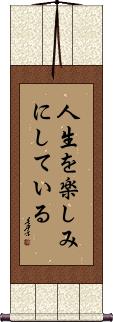
人生を楽しみにしている is one way to write “enjoy life” in Japanese.
The character breakdown:
人生 (jinsei) life (i.e. conception to death) human lifetime, living.
を (o) connecting particle.
楽しみ (tanoshimi) enjoyment; pleasure; anticipation; looking forward to.
に (ni) connecting particle.
し (shi) to do; to cause; to become; to make (into).
て (te) connecting particle.
いる (iru) indicates continuing action or resulting state.
Note: Because this selection contains some special Japanese Hiragana characters, it should be written by a Japanese calligrapher.
Principles of Life
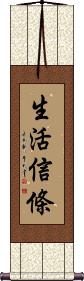
生活信條 is a Chinese proverb that means “principles of life” or “The personal obligations and rules that you live by.”
For instance, if you were a vegetarian, the act of not eating meat fits into this category.
This could also be translated as a “Way of living.”
Life in Every Breath
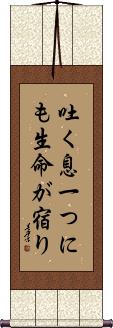
吐く息一つにも生命が宿り means “life in every breath” in Japanese.
This phrase is more like “every single breath as you live and dwell.”
The characters breakdown this way:
吐く息 (hakuiki) to breathe; exhaled air; one's breath; breathing.
一つ (hitotsu) one; only; just.
にも (nimo) also; too; as well; even.
生命 (seimei) life; existence; living.
が (ga) particle.
宿り (yadori) to lodge; to dwell; lodging; abode; shelter.
Note: Because this selection contains some special Japanese Hiragana characters, it should be written by a Japanese calligrapher.
Live for What You Love
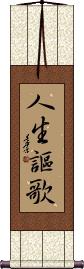
人生謳歌 means “live for what you love” in Japanese.
The first two characters mean “human life” or simply “living.” The last two characters mean “merit,” “prosperity,” or “what you enjoy.” This phrase can suggest working or staying busy for your own goals (in your career).
See Also: Prosperity
Live For The Day
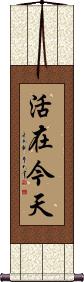
活在今天 is not an eastern concept, so it does not translate into a phrase that seems natural on a wall scroll.
However, if this is your philosophy, the characters shown here do capture your idea of living for today or living in the moment. 活在今天 says “Live in today,” and they are grammatically correct in Chinese.
Note: This kind of makes sense in Korean Hanja but the grammar is Chinese, so it’s not that natural in Korean.
Destiny / Fate
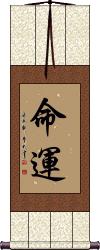
These two characters contain the ideas of fate, destiny, fortune, and luck.
You can also say that it means “what life throws at you” or “your lot in life” because the first character contains the idea of life or living.
This version is really only used in Chinese. There's another version with just the characters reversed that is more universal. In fact, skip this one. The opposite character order is better.
Four Noble Truths: Suffering
Dukkha
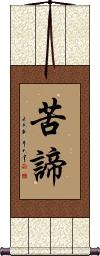
苦諦 relays that part of life in this universe is suffering.
All living things experience some form of suffering, according to Buddhist teaching.
This title is about accepting and understanding that the world is full of suffering.
This term is exclusively used by devout Buddhists. It is not a common term, and is remains an unknown concept to most Chinese, Japanese and Korean people.
See Also: Buddhism | Enlightenment
4. Right Action / Perfect Conduct
Samyak Karmanta / Samma Kammanta
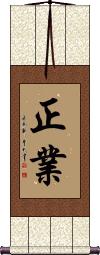
正業 is one of the Noble Eightfold Paths of Buddhism. Right Action, along with Right Speech and Right Living, constitute the path to Virtue.
The five precepts of Right Action are...
1. Refrain from destroying living beings (no murder or any form of taking a life).
2. Refrain from stealing.
3. Refrain from sexual misconduct (adultery, rape, etc.).
4. Refrain from false speech (lying or trickery).
5. Refrain from intoxicants that lead to heedlessness (no drugs or alcohol).
This concept can be summarized as “Avoidance of actions that conflict with moral discipline.”
Note: In Japanese, when read by a non-Buddhist, this will mean “the right job/vocation.”
This term is exclusively used by devout Buddhists. It is not a common term, and is remains an unknown concept to most Japanese and Chinese people.
See Also: Buddhism | Enlightenment | Noble Eightfold Path
Chop Wood, Carry Water
Before enlightenment or after, chores remain.
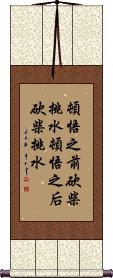
頓悟之前砍柴挑水; 頓悟之後砍柴挑水 means “Before enlightenment, chop wood, carry water; After enlightenment, chop wood, carry water.
This is a Chinese proverb that is attributed to 吴力 (Wú Lì) who lived between 1632 and 1718 - living part of his life as a devout Buddhist, and many years as a Catholic Jesuit Priest in China - what an interesting life!
This has been explained many times in many ways. I am a Buddhist, and here is my brief take on this proverb...
Before enlightenment, one may find daily chores mundane, tedious, and boring. However, upon reaching enlightenment one is not relieved of the details of daily life. An enlightened person will, however, see such chores as a joy, and do them mindfully.
There is another version floating around, which is 在你領悟之前砍柴、運水。在你領悟之後,砍柴、運水。
If you want this other version, just contact me. The meaning is the same, just different phrasing.
Ikiru / To Live
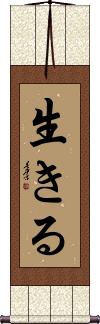
生きる is a Japanese title that means to live, to exist, to make a living, to subsist, to come to life, or to be enlivened.
生きる is also the title of a 1952 Japanese movie that uses the translated English title of “To Live.”
This term, when used in the context of baseball, and some Japanese games such as “go,” can mean “safe.”
Note: Because this selection contains some special Japanese Hiragana characters, it should be written by a Japanese calligrapher.
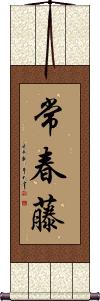
This is a common way to write “ivy” in Chinese.
There are varieties of ivy plant, and other ways to say ivy in Chinese but this version is probably the nicest. It's the one you would use if writing a poem about ivy etc.
If you want the actual meaning, this is, “Always Young Vine,” or “Ever Living Vine.” The literal meaning of the characters is more like, “Always Spring[time] Vine.” But Spring can have other representations in Chinese such as new life, youth, freshness, joyfulness, etc.
Live Strong
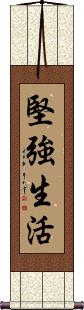
While hard to translate directly, 堅強生活 is the best way to write “Live Strong” in Chinese. If you are a cancer survivor or support Lance Armstrong's ideas, this is a nice selection for a wall scroll.
The first two characters mean strong or staunch. The last two mean living or life (daily existence). While the Chinese version is the reverse order of “Live Strong” it is the only way to write it in a natural form that is grammatically correct.
Note that we are in no way affiliated or connected to Lance or his foundation. This translation is offered because of multiple requests from customers whose philosophies or ideas match those of the Live Strong idea.
Star
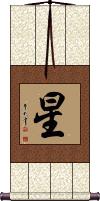
星 is how “star” is written in Chinese, Japanese, and old Korean.
Thousands of years ago, when this character was first developed, there was the belief that you could see remnants of stars in everything. In fact, some early Chinese men of science suggested that all living things came from “stardust” or cosmic debris. This could explain why the upper portion of this character means “sun” (a star itself) and the lower portion means “birth” or “life.”
Oddly enough, modern-day scientists suggest that we are all made up of cosmic dust. Seems they were getting it right in China at a time when the western world thought the Earth was flat and the Church was claiming that the sun and all cosmic bodies revolved around the Earth.
Great Aspirations / Ambition
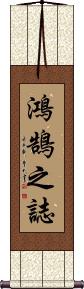
鴻鵠之誌 is a Chinese proverb that implies that having grand ambitions also means that others will not understand your great expectations and ideas.
Though the actual words come from a longer saying of Confucius, which goes, “The little swallows living under the eaves wouldn't understand the lofty ambitions of a swan (who flies far and wide).”
This Confucius quote has led to this idiomatic expression in China that means “think big.” What you'd be saying is “The lofty ambitions of a swan.”
Note that Chinese people sometimes refer to the little swallow as one who does not “think big” but is, instead, stuck in a rut or just leading a mundane life. Therefore, it's a compliment to be called a swan but not a good thing to be called a swallow.
Reiki
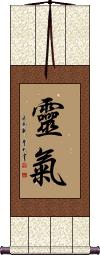
靈氣 is the title of a healing practice now found globally but with origins in Japan.
Special note: Outside of the context of the healing practice of Reiki, this means “aura” or “spiritual essence that surrounds all living things.” A Japanese person unfamiliar with the practice will take the “aura” meaning.
Reiki is a technique for stress reduction and relaxation that also heals. It can be compared to massage but is based on the idea that an unseen “life force energy” flows through us and is what causes us to be alive. If your life force energy is low, you'll be more likely to get sick or feel stressed. If your life force energy is abundant and flowing well, you become more capable of being happy and healthy.
There is a lot of information available if you want to Google this term - my job is to offer the calligraphy while you can decide if it is right for you.

Note: We are showing the ancient (traditional) form of the Reiki Kanji. I have seen Reiki written with the slightly simplified version and this more classic form. If you want the form of Reiki with the two strokes in the shape of an X on the second character and the modern first character, simply click on the Kanji characters to the right.
Note: 靈氣 is also a Chinese word, but in Chinese, these characters create a word that refers to a smart person or someone with high aspirations. It is not read as a healing method in Chinese.
In Korean Hanja, this can be read as a “mysterious atmosphere” by a Korean who is not familiar with the practice of Reiki (still has a cool meaning in Korean).
This in-stock artwork might be what you are looking for, and ships right away...

Gallery Price: $61.00
Your Price: $33.88

Gallery Price: $61.00
Your Price: $33.88


Gallery Price: $61.00
Your Price: $33.88

Gallery Price: $61.00
Your Price: $33.88
Gallery Price: $47.00
Your Price: $26.00

Gallery Price: $61.00
Your Price: $33.88
Gallery Price: $198.00
Your Price: $109.88

Gallery Price: $31.00
Your Price: $16.88
Gallery Price: $31.00
Your Price: $17.00

Gallery Price: $61.00
Your Price: $33.88

Gallery Price: $61.00
Your Price: $33.88

Gallery Price: $61.00
Your Price: $33.88
Gallery Price: $90.00
Your Price: $35.00
The following table may be helpful for those studying Chinese or Japanese...
| Title | Characters | Romaji (Romanized Japanese) | Various forms of Romanized Chinese | |
| Living Live Life | 生活 | sei katsu / seikatsu | shēng huó sheng1 huo2 sheng huo shenghuo | |
| Alive | 活著 活着 | huó zhe / huo2 zhe / huo zhe / huozhe | huo che / huoche | |
| The key to immortality is first living a life worth remembering | 獲得永生的鑰匙是先要活得精彩 获得永生的钥匙是先要活得精彩 | huò dé yǒng shēng de yào shí shì xiān yào huó dé jīng cǎi huo4 de2 yong3 sheng1 de yao4 shi2 shi4 xian1 yao4 huo2 de2 jing1 cai3 huo de yong sheng de yao shi shi xian yao huo de jing cai | huo te yung sheng te yao shih shih hsien yao huo te ching ts`ai huo te yung sheng te yao shih shih hsien yao huo te ching tsai |
|
| Life is Short | 人生は短い | jinsei ha mijikai jinseihamijikai | ||
| Embrace Life Embrace Living | 擁抱生活 拥抱生活 | yōng bào shēng huó yong1 bao4 sheng1 huo2 yong bao sheng huo yongbaoshenghuo | yung pao sheng huo yungpaoshenghuo |
|
| Healthy Living | 健康生活 | kenkou seikatsu kenkouseikatsu kenko seikatsu | jiàn kāng shēng huó jian4 kang1 sheng1 huo2 jian kang sheng huo jiankangshenghuo | chien k`ang sheng huo chienkangshenghuo chien kang sheng huo |
| Way of Life Art of Life | 生活法 | seikatsuhou seikatsuho | shēng huó fǎ sheng1 huo2 fa3 sheng huo fa shenghuofa | |
| Life in Harmony Balanced Life | 調和生活 | cho wa sei katsu chowaseikatsu | ||
| Life in Harmony Balanced Life | 和諧生活 和谐生活 | hé xié shēng huó he2 xie2 sheng1 huo2 he xie sheng huo hexieshenghuo | ho hsieh sheng huo hohsiehshenghuo |
|
| Life is Good Life is Beautiful | 生活美好 | shēng huó měi hǎo sheng1 huo2 mei3 hao3 sheng huo mei hao shenghuomeihao | ||
| Life Energy Spiritual Energy | 氣 气 / 気 | ki | qì / qi4 / qi | ch`i / chi |
| Everyday Life | 日常生活 | nichi jou sei katsu nichijouseikatsu nichi jo sei katsu | rì cháng shēng huó ri4 chang2 sheng1 huo2 ri chang sheng huo richangshenghuo | jih ch`ang sheng huo jihchangshenghuo jih chang sheng huo |
| Life of Love | 愛情生活 爱情生活 | aijyou seikatsu aijyouseikatsu aijyo seikatsu | ài qíng shēng huó ai4 qing2 sheng1 huo2 ai qing sheng huo aiqingshenghuo | ai ch`ing sheng huo aichingshenghuo ai ching sheng huo |
| Enjoy Life | 享受生活 | xiǎng shòu shēng huó xiang3 shou4 sheng1 huo2 xiang shou sheng huo xiangshoushenghuo | hsiang shou sheng huo hsiangshoushenghuo |
|
| Thug Life | 暴徒生活 | bou to sei katsu boutoseikatsu bo to sei katsu | bào tú shēng huó bao4 tu2 sheng1 huo2 bao tu sheng huo baotushenghuo | pao t`u sheng huo paotushenghuo pao tu sheng huo |
| Life is Fun | 樂在生活 乐在生活 | lè zài shēng huó le4 zai4 sheng1 huo2 le zai sheng huo lezaishenghuo | le tsai sheng huo letsaishenghuo |
|
| Enjoy Life | 人生を楽しみにしている | jin sei o tano shi mi ni shi te i ru | ||
| Principles of Life | 生活信條 生活信条 | shēng huó xìn tiáo sheng1 huo2 xin4 tiao2 sheng huo xin tiao shenghuoxintiao | sheng huo hsin t`iao shenghuohsintiao sheng huo hsin tiao |
|
| Life in Every Breath | 吐く息一つにも生命が宿り | hakuiki hitotsu nimo seimei ga yadori | ||
| Live for What You Love | 人生謳歌 | jin sei ou ka jinseiouka jin sei o ka | ||
| Live For The Day | 活在今天 | huó zài jīn tiān huo2 zai4 jin1 tian1 huo zai jin tian huozaijintian | huo tsai chin t`ien huotsaichintien huo tsai chin tien |
|
| Destiny Fate | 命運 命运 | mìng yùn / ming4 yun4 / ming yun / mingyun | ming yün / mingyün | |
| Four Noble Truths: Suffering | 苦諦 苦谛 | kutai | kǔ dì / ku3 di4 / ku di / kudi | k`u ti / kuti / ku ti |
| 4. Right Action Perfect Conduct | 正業 正业 | sei gyou / seigyou / sei gyo | zhèng yè / zheng4 ye4 / zheng ye / zhengye | cheng yeh / chengyeh |
| Chop Wood, Carry Water | 頓悟之前砍柴挑水頓悟之后砍柴挑水 顿悟之前砍柴挑水顿悟之后砍柴挑水 | dùn wù zhī qián kǎn chái tiāo shuǐ dùn wù zhī hòu kǎn chái tiāo shuǐ dun4 wu4 zhi1 qian2 kan3 chai2 tiao1 shui3 dun4 wu4 zhi1 hou4 kan3 chai2 tiao1 shui3 dun wu zhi qian kan chai tiao shui dun wu zhi hou kan chai tiao shui | tun wu chih ch`ien k`an ch`ai t`iao shui tun wu chih hou k`an ch`ai t`iao shui tun wu chih chien kan chai tiao shui tun wu chih hou kan chai tiao shui |
|
| Ikiru To Live | 生きる | ikiru | ||
| Ivy | 常春藤 | cháng chūn téng chang2 chun1 teng2 chang chun teng changchunteng | ch`ang ch`un t`eng changchunteng chang chun teng |
|
| Live Strong | 堅強生活 坚强生活 | jiān qiáng shēng huó jian1 qiang2 sheng1 huo2 jian qiang sheng huo jianqiangshenghuo | chien ch`iang sheng huo chienchiangshenghuo chien chiang sheng huo |
|
| Star | 星 | hoshi | xīng / xing1 / xing | hsing |
| Great Aspirations Ambition | 鴻鵠之誌 鸿鹄之志 | hóng hú zhī zhì hong2 hu2 zhi1 zhi4 hong hu zhi zhi honghuzhizhi | hung hu chih chih hunghuchihchih |
|
| Reiki | 靈氣 灵气 霊気 | reiki | líng qì / ling2 qi4 / ling qi / lingqi | ling ch`i / lingchi / ling chi |
| In some entries above you will see that characters have different versions above and below a line. In these cases, the characters above the line are Traditional Chinese, while the ones below are Simplified Chinese. | ||||

Successful Chinese Character and Japanese Kanji calligraphy searches within the last few hours...



