Many custom options...


And formats...



Not what you want?
Try other similar-meaning words, fewer words, or just one word.
Letter H in Chinese / Japanese...
Buy a Letter H calligraphy wall scroll here!
Personalize your custom “Letter H” project by clicking the button next to your favorite “Letter H” title below...
Honesty / Fidelity
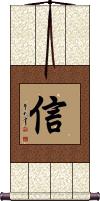
信 is another character that expresses the idea of honesty.
It can also mean truth, faith, belief in, fidelity, sincerity, trust, and/or confidence.
Some have included this in the list for the Bushido, although “makoto” is probably more common/popular.
Note: In some contexts, this character can mean a letter (mail), news, or envoy. However, alone, it will generally be read with the honesty-meaning.
See our page with just Code of the Samurai / Bushido here
See Also: Loyalty Trustworthiness Trustworthy
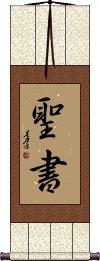
Holy Bible
Simplicity
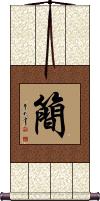
簡 expresses the idea of something simple or the essence of simplicity in life in Chinese.
This can also refer to a simple slip of bamboo for taking notes or writing a letter (especially in Korean Hanja).
Technically this is a word meaning simplicity and brevity in Japanese but it's rarely used in modern Japanese. Therefore, you should probably only select this character if your audience is Chinese.
See Also: Brevity
Book
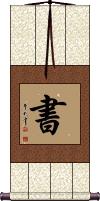
書 is the most simple way to say “book” in Chinese, Japanese, and Korean.
書 is usually read as “book” but can refer to a letter, or document.
In a certain context, it can refer to writing, penmanship, or handwriting. Especially in Chinese, it can be a short way to say calligraphy.
If you love books or want to write books, this is the simple, all-encompassing character for you.
Believe / Faith / Trust
śraddhā
信 can mean to believe, truth, faith, fidelity, sincerity, trust, and confidence in Chinese, old Korean Hanja, and Japanese Kanji.
This single character is often part of other words with similar meanings.
It is one of the five basic tenets of Confucius.
In Chinese, it sometimes has the secondary meaning of a letter (as in the mail) depending on context but it will not be read that way when seen on a wall scroll.
In the Buddhist context, this is śraddhā (faith through hearing or being taught).
Thank You / Xie Xie
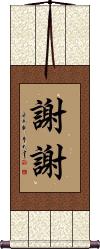
謝謝 is how to say thank you in Chinese. It is pronounced a bit like “shea shea” as in the English word for shea butter. Except you pronounce the X like “sh” but with your tongue firmly at the bottom of your mouth.
Unless you are putting this wall scroll near the exit of your store or restaurant to thank customers for coming, it is a bit of an odd selection. A gift of thanks to another person should be a more personal selection with more meaning than a simple thank you. Although common to write xie xie inside a card or letter of thanks.
Technically, this can be pronounced in Japanese but in Japan, it’s still the Chinese way to say thank you. It’s like an English speaker saying "gracias" (Spanish word for thank you).
This in-stock artwork might be what you are looking for, and ships right away...
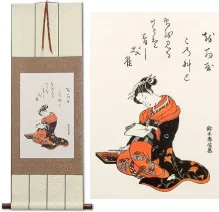
Gallery Price: $99.00
Your Price: $54.88
Not the results for Letter H that you were looking for?
Below are some entries from our dictionary that may match your Letter H search...
| Characters If shown, 2nd row is Simp. Chinese |
Pronunciation Romanization |
Simple Dictionary Definition |
信 see styles |
xìn xin4 hsin yuki ゆき |
More info & calligraphy: Honesty / Fidelity(1) honesty; sincerity; fidelity; (2) trust; reliance; confidence; (3) (religious) faith; devotion; (counter) (4) counter for received messages; (female given name) Yuki śraddhā. Faith; to believe; belief; faith regarded as the faculty of the mind which sees, appropriates, and trusts the things of religion; it joyfully trusts in the Buddha, in the pure virtue of the triratna and earthly and transcendental goodness; it is the cause of the pure life, and the solvent of doubt. Two forms are mentioned: (1) adhimukti, intuition, tr. by self-assured enlightenment. (2) śraddhā, faith through hearing or being taught. For the Awakening of Faith, Śraddhotpāda, v. 起信論. |
凱 凯 see styles |
kǎi kai3 k`ai kai tanoshi たのし |
More info & calligraphy: Kaye(given name) Tanoshi |
吉 see styles |
jí ji2 chi reikichi / rekichi れいきち |
More info & calligraphy: Lucky / Auspicious(noun - becomes adjective with の) (1) (See 御神籤・おみくじ) good fortune (esp. omikuji fortune-telling result); good luck; auspiciousness; (2) (abbreviation) (See 吉日・2) unspecified day of the month (used to obscure the date a letter, invitation, etc. was written); (given name) Reikichi śrī; auspicious, lucky, fortunate; translit. k, ke, ku, g. |
文 see styles |
wén wen2 wen remon れもん |
More info & calligraphy: Ven(1) (hist) mon; one-thousandth of a kan (unit of currency 1336-1870); (2) mon; traditional unit used for shoe and sock sizes (approx. 2.4 cm); (3) letter; character; sentence; (4) (abbreviation) (See 経文,呪文) scripture; incantation; (female given name) Remon Letters, literature, writing; refined; culture; civil; a despatch; veined; a cash; to gloss. |
斐 see styles |
fěi fei3 fei hi ひ |
More info & calligraphy: Fei(personal name) Hi |
書 书 see styles |
shū shu1 shu sho しょ |
More info & calligraphy: Book(n,n-suf) (1) book; document; (2) calligraphy (esp. Chinese); penmanship; (3) handwriting; (4) letter; note likh; to write; pustaka, a writing, book; lekha, a letter, document. |
柔 see styles |
róu rou2 jou yawara やわら |
More info & calligraphy: Heart of Judo(ant: 剛) softness; gentleness; weakness; (surname, female given name) Yawara Pliant, yielding, soft. |
派 see styles |
pài pai4 p`ai pai minamata みなまた |
(literary) tributary; branch of a river; clique; school; group; faction; (bound form) style; manner; to send (a person or resource); to dispatch; to allocate (a resource or task); to appoint (sb); classifier for factions, groups etc; (preceded by 一[yi1]) classifier used in characterizing a scene, atmosphere, demeanor, sound, remark etc; (loanword) pi (Greek letter Π, π); the circular ratio 𝜋 = 3.14159...; (loanword) pie (n,n-suf) (1) group; faction; clique; coterie; (n,n-suf) (2) (political) faction; wing; camp; (n,n-suf) (3) school (of thought, painting, etc.); (n,n-suf) (4) sect; denomination; (surname) Minamata branch |
簡 简 see styles |
jiǎn jian3 chien kan かん |
More info & calligraphy: Simplicity(1) (See 簡にして要を得る) (ant: 繁・1) simplicity; brevity; (2) letter; note; correspondence; (3) bamboo writing strip (in ancient China); (4) (abbreviation) (See 簡体字) simplified Chinese character; (surname) Kan A tablet, memorandum; to abridge; appoint; examine; abrupt, concise, direct. |
紐 纽 see styles |
niǔ niu3 niu himo(p); himo ひも(P); ヒモ |
More info & calligraphy: Neu(1) (kana only) string; cord; (2) (kana only) leash; (3) (kana only) (colloquialism) (esp. ヒモ) man who is financially dependent on a woman; gigolo; pimp; (4) (kana only) restrictions; conditions; (5) (kana only) mantle (shellfish, etc.); (6) (kana only) {food} small intestine (beef, pork); oviduct meat (chicken) |
辛 see styles |
xīn xin1 hsin shinkou / shinko しんこう |
More info & calligraphy: Sim(counter) (colloquialism) counter for spiciness of food (e.g. curry); (surname) Shinkou sharp |
澤塔 泽塔 see styles |
zé tǎ ze2 ta3 tse t`a tse ta |
More info & calligraphy: Zeta |
貝塔 贝塔 see styles |
bèi tǎ bei4 ta3 pei t`a pei ta |
More info & calligraphy: Beta |
アレフ see styles |
arefu アレフ |
More info & calligraphy: Alef |
タール see styles |
daaru / daru ダール |
dāl (eighth letter of the Arabic alphabet) (ara:); (surname) Dahl; (place-name) Dahl (Germany); Dhar (India); Dael; Dard |
阿爾法 阿尔法 see styles |
ā ěr fǎ a1 er3 fa3 a erh fa |
More info & calligraphy: Alpha |
丙 see styles |
bǐng bing3 ping minezaki みねざき |
third of the ten Heavenly Stems 十天干[shi2 tian1 gan1]; third in order; letter "C" or Roman "III" in list "A, B, C", or "I, II, III" etc; ancient Chinese compass point: 165°; propyl (1) (へい only) (See 甲乙丙丁) third rank; third class; third person (in a contract, etc.); (2) (esp. ひのえ) third sign of the Chinese calendar; (personal name) Minezaki Fire, heat, south; the third of the ten stems. |
付 see styles |
fù fu4 fu fu ふ |
to pay; to hand over to; classifier for pairs or sets of things (suffix noun) dated (e.g. a letter); date of effect (e.g. a rule change); (surname) Fu To deliver, hand over to, hand down. |
函 see styles |
hán han2 han hako はこ |
envelope; case; letter (1) box; case; chest; package; pack; crate; (2) car (of a train, etc.); (3) shamisen case; shamisen; (4) (colloquialism) public building; community building; (5) (archaism) man who carries a geisha's shamisen; (6) (archaism) receptacle for human waste; feces (faeces); (suf,ctr) (7) counter for boxes (or boxed objects) |
凾 see styles |
hán han2 han kan はこ |
(1) box; case; chest; package; pack; crate; (2) car (of a train, etc.); (3) shamisen case; shamisen; (4) (colloquialism) public building; community building; (5) (archaism) man who carries a geisha's shamisen; (6) (archaism) receptacle for human waste; feces (faeces); (suf,ctr) (7) counter for boxes (or boxed objects) A box, receptacle; to enfold: a letter. |
壬 see styles |
rén ren2 jen mibu みぶ |
ninth of the ten Heavenly Stems 十天干[shi2 tian1 gan1]; ninth in order; letter "I" or Roman "IX" in list "A, B, C", or "I, II, III" etc; ancient Chinese compass point: 345°; nona 9th in rank; ninth sign of the Chinese calendar; (surname) Mibu |
套 see styles |
tào tao4 t`ao tao |
to cover; to encase; cover; sheath; to overlap; to interleave; to model after; to copy; formula; harness; loop of rope; (fig.) to fish for; to obtain slyly; classifier for sets, collections; bend (of a river or mountain range, in place names); tau (Greek letter Ττ) |
字 see styles |
zì zi4 tzu aza あざ |
letter; symbol; character; word; CL:個|个[ge4]; courtesy or style name traditionally given to males aged 20 in dynastic China (1) character (esp. kanji); letter; written text; (2) handwriting; penmanship; (3) (as 〜の字) (See ほの字) the ... word (e.g. "the L word" = "love"); (place-name) Aza akṣara, 阿乞史囉; 阿刹羅; a letter, character; akṣara is also used for a vowel, especially the vowed 'a' as distinguished from the other vowels; a word, words. |
封 see styles |
fēng feng1 feng fuu / fu ふう |
to confer; to grant; to bestow a title; to seal; classifier for sealed objects, esp. letters seal; (surname) Fū To seal, close (a letter); classifier, or numerative of letters, etc.; to appoint (imperially). |
己 see styles |
jǐ ji3 chi ki き |
self; oneself; sixth of the ten Heavenly Stems 十天干[shi2 tian1 gan1]; sixth in order; letter "F" or Roman "VI" in list "A, B, C", or "I, II, III" etc; hexa 6th in rank; sixth sign of the Chinese calendar; (place-name) Ki Self, personal, own. |
庚 see styles |
gēng geng1 keng kou / ko こう |
age; seventh of the ten Heavenly Stems 十天干[shi2 tian1 gan1]; seventh in order; letter "G" or Roman "VII" in list "A, B, C", or "I, II, III" etc; ancient Chinese compass point: 255°; hepta 7th in rank; seventh sign of the Chinese calendar; (surname, given name) Kō Age; change; west; to reward; the seventh of the ten celestial stems. |
復 复 see styles |
fù fu4 fu fuku ふく |
to go and return; to return; to resume; to return to a normal or original state; to repeat; again; to recover; to restore; to turn over; to reply; to answer; to reply to a letter; to retaliate; to carry out (adv,conj,pref) (kana only) again; and; also; still (doing something); (given name) Fuku Again, return, revert, reply. |
戊 see styles |
wù wu4 wu bo ぼ |
fifth of the ten Heavenly Stems 十天干[shi2 tian1 gan1]; fifth in order; letter "E" or Roman "V" in list "A, B, C", or "I, II, III" etc; penta 5th in rank; fifth sign of the Chinese calendar; (place-name) Bo wu, mou; nourishing; the fifth of the ten 'stems'. |
投 see styles |
tóu tou2 t`ou tou tou / to とう |
to throw (something in a specific direction: ball, javelin, grenade etc); to cast (a ballot); to cast (a glance, a shadow etc); to put in (money for investment, a coin to operate a slot machine); to send (a letter, a manuscript etc); to throw oneself into (a river, a well etc to commit suicide); to go to; to seek refuge; to place oneself into the hands of; (coll.) to rinse (clothes) in water (1) {baseb} pitching ability; (counter) (2) {sports} counter for throws (of a javelin, bowling ball, etc.); (counter) (3) {fish} counter for casts (of a line) To cast, throw into, surrender, tender. |
拝 see styles |
bài bai4 pai haizaki はいざき |
Japanese variant of 拜[bai4] (1) bowing one's head (in respect or worship); worship; (suffix noun) (2) (honorific or respectful language) (after one's own name at the end of a letter) respectfully yours; (surname) Haizaki |
Click here for more Letter H results from our dictionary
The following table may be helpful for those studying Chinese or Japanese...
| Title | Characters | Romaji (Romanized Japanese) | Various forms of Romanized Chinese | |
| Honesty Fidelity | 信 | shin | xìn / xin4 / xin | hsin |
| Holy Bible | 聖書 圣书 | seisho | ||
| Simplicity | 簡 简 | kan | jiǎn / jian3 / jian | chien |
| Book | 書 书 | sho | shū / shu1 / shu | |
| Believe Faith Trust | 信 | shin | xìn / xin4 / xin | hsin |
| Thank You Xie Xie | 謝謝 / 謝々 谢谢 | shie shie / shieshie | xiè xie / xie4 xie / xie xie / xiexie | hsieh hsieh / hsiehhsieh |
| In some entries above you will see that characters have different versions above and below a line. In these cases, the characters above the line are Traditional Chinese, while the ones below are Simplified Chinese. | ||||

Successful Chinese Character and Japanese Kanji calligraphy searches within the last few hours...



