Many custom options...


And formats...



Not what you want?
Try other similar-meaning words, fewer words, or just one word.
Inner P in Chinese / Japanese...
Buy an Inner P calligraphy wall scroll here!
Personalize your custom “Inner P” project by clicking the button next to your favorite “Inner P” title below...
1. Inner Bliss and Peace from Meditation
2. Inner Strength / Inner Well-Being and Health
3. Inner Beauty / Inner Wisdom
6. Inner Peace
10. Inner Warrior
11. Inner Wisdom
12. Inner Freedom
13. Inner Light / Intelligence
14. Inner Strength is Better than Outward Appearance
15. Intuitive Wisdom / Inner Light
16. Inner Peace / Silence / Serenity
17. Inner Strength / Self-Improvement
18. Always Striving for Inner Strength
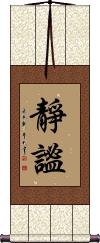
19. Peacefulness / Tranquility / Perfectly Quiet
20. Reach Peace and Calm Through Meditation
21. Inner Strength is Better than Outward Appearance
22. Achieve Inner Peace; Find Deep Understanding
23. Beauty is in the eyes of the beholder
24. Happy / Laughter / Cheerful Bliss
25. You are always a beauty in your lover’s eyes
27. Inner Beauty / Beauty of Spirit
28. Peace / Harmony
29. Tranquil / Tranquility / Serenity
30. Peace of Mind
31. Paix de l'esprit
32. Power of Oneself / Self-Sufficient
33. A Life of Serenity Yields Understanding
34. Unwavering Hall / Fudoshinkan
35. Koan
39. Open Your Heart
40. Ten perfect Mahayana rules
42. Police / Public Security Bureau
43. One Heart / One Mind / Heart and Soul
44. Zen Buddhism
Inner Bliss and Peace from Meditation
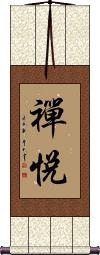
禪悅 is a title that refers to the inner bliss and peace you can achieve from meditation.
This term transcends a few religions, including Taoism and Buddhism. It can also be translated as “joy of the mystic trance” or simply “meditative bliss.”
Amazing that such a complex idea can be expressed in just two Chinese characters. Note that the first character is Chan/Zen (Chinese/Japanese), which means “meditation” in both languages.
Inner Strength / Inner Well-Being and Health
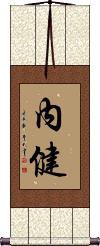
內健 is an old Chinese word meaning inner strength or inner health.
It's the idea of health and well-being starting or residing inside yourself. Also defined as fortitude within the context of good health.
Inner Beauty / Inner Wisdom
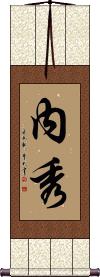
內秀 is an interesting word in Chinese that simultaneously means inner beauty and inner wisdom.
Some will translate it as “intelligent but unassuming.”
It's about having amazing abilities or traits on the inside which are not immediately obvious on the outside.
Inner Heart / Inner Soul
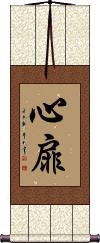
心扉 is a Chinese title meaning inner heart or soul.
Inner Strength
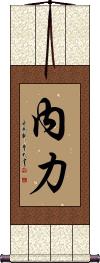
內力 is the shorter version of inner strength (can also be translated as “internal force”). The first character holds the meaning of “inner” or “internal.” The second character means “power,” “force,” or “strength.”
內力 is a Kung Fu way of talking about an inner power or strength from within. This is a way to express “inner chi.” This is something that you might hear in a real Chinese Kung Fu movie.
While understood in Chinese and Japanese, this can have a secondary meaning of “inner stress” in Japanese.
Inner Peace
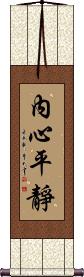
內心平靜 is a Chinese and Japanese phrase that is a direct translation of the western idea of inner peace.
The first two characters contain the idea of “heart,” “innermost being,” or “deep in the/your inner mind.”
The last two characters mean “tranquil” and “serene.”
I have seen this phrase used as “inner peace” for art prints and even on the side of coffee cups. But I think the translation is too literal. It feels like a direct translation from English rather than a nicely composed Chinese or Japanese phrase. See my other entries for “inner peace.”
See Also: Serenity | Simplicity | Peace
Inner Freedom
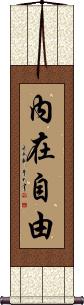
內在自由 means Inner Freedom in Chinese.
The first word, 内在 means inner, internal, intrinsic, or innate.
The second word, 自由, means freedom, free, or liberty.
Inner Warrior
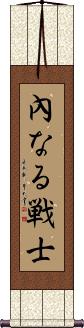
This means inner warrior in Japanese.
內なる means inner or internal.
戦士 means warrior or fighter.
Note: Because this selection contains some special Japanese Hiragana characters, it should be written by a Japanese calligrapher.
Inner Strength
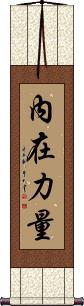
內在力量 is the slightly-verbose way to say inner strength.
The first two characters mean “intrinsic” or “inner.” The second two characters mean “power,” “force” or “strength” (especially physical strength). 內在力量 is more a short phrase rather than just a word in Chinese and Korean. This can sort of be understood in Japanese but it's not normal/proper Japanese.
Inner Warrior
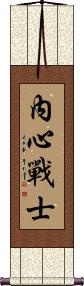
內心戰士 means Inner Warrior in Chinese.
Inner Wisdom
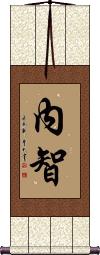
內智 is a Buddhist term that means “inner wisdom.”
Inner Freedom
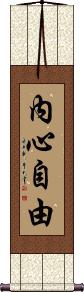
內心自由 means Inner Freedom in Chinese.
The first word, 内心, means innermost being, the mind within, or the heart within.
The second word, 自由, means freedom, free, or liberty.
There is more than one way to say inner freedom in Chinese. This version is the most common.
Inner Light / Intelligence
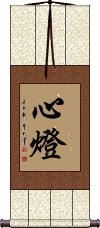
心燈 is the Buddhist concept of “The Lamp of the Mind” or “Inner Light.”
It's kind of the Buddhist way to express intelligence.
Directly translated, this means “heart light” or “heart lamp.”
Note: In ancient China, the ideas of heart and mind are interchangeable.
Inner Strength is Better than Outward Appearance
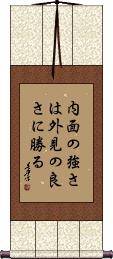
内面の強さは外見の良さに勝る is a Japanese proverb that literally translates as “inner/internal strength/power [versus] outward-appearance [the] merit/virtue/good quality [does] excel/surpass/exceed/outweigh.”
More naturally in English, this would be “Inner Strength Outweighs Outward Appearance.”
Note: Because this selection contains some special Japanese Hiragana characters, it should be written by a Japanese calligrapher.
Intuitive Wisdom / Inner Light
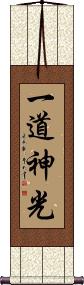
一道神光 is a Buddhist term that means “inner light,” or “intuitive wisdom.”
This actually reads, “[the] one path/way [of] spiritual light.” It implies that your spirit knows the way, and will light the path for you.
Inner Peace / Silence / Serenity
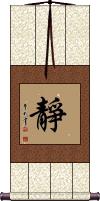
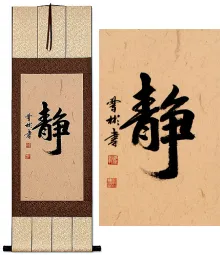
靜 is the simplest way to convey the meaning of inner peace and serenity.
靜 is often translated as “serenity.” It can also be used to express the ideas of still, calm, serene, quiet, silent, stillness, not moving, or tranquility.
In the old days, Chinese, Japanese, or Korean people might hang a wall scroll with this character in their reading room to bring about a sense of peace in the room.
 While they once used the same character form in Japan, they now use a slightly-simplified version in modern Japan (after WWII). This version is shown to the right, and can be selected for your wall scroll by clicking on that Kanji instead of the button above.
See Also: Peace
Inner Strength / Self-Improvement
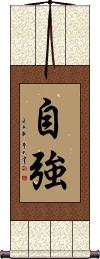
自強 is the kind of inner strength that applies to a person who has will-power and can inspire themselves to do great things.
自強 can also be the creed of a person that always pursues self-improvement.
Other translations: self-strengthening, striving for improvement, self-improvement, striving to become stronger, and self-renewal.
Always Striving for Inner Strength
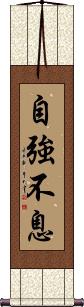
自強不息 is a proverb or idiom that suggests that the pursuit of self-improvement is eternal. It can also be a suggestion to strive unremittingly in life.
The first two characters mean inner strength with the idea of self-improvement. The last two characters mean “never rest” or “striving without giving up.”
Some will translate these four characters as “Exert and strive hard without any let-up.”
Peacefulness / Tranquility / Perfectly Quiet
Reach Peace and Calm Through Meditation
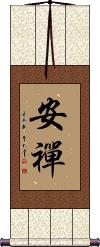
安禪 creates a title that means to reach peace and calm through meditation.
安禪 is an excellent wall scroll for your relaxation or meditation room.
This is also a Buddhist-related term that encompasses the idea of entering into dhyana meditation.
This is also used in Japanese, but in modern times, the second character has changed, so it's 安禅 now. If you want the modern Japanese version, just choose a Japanese calligrapher, and let me know when you place your order.
Inner Strength is Better than Outward Appearance
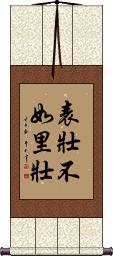
表壯不如里壯 literally translates as: [Better to be] strong inside than [to be] strong outside.
The ancient original meaning was:
[An] able [husband] outside [working to support a family is] not as good as [an] able [wife] inside [working and saving to take care of the family].
The current meaning is:
Inner strength is more important than outward appearance.
Achieve Inner Peace; Find Deep Understanding
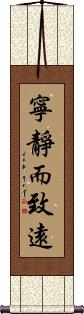
寧靜而致遠 is five characters from a longer ten-character proverb composed by Zhuge Liang about 1800 years ago.
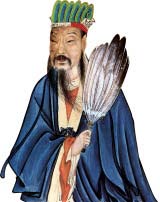
诸葛亮 Zhuge Liang
The proverb means “Your inner peace/tranquility/serenity will help you see or reach far (into the world).”
The last word means “far” but the deeper meaning is that you will surpass what you can currently see or understand. Perhaps even opening up vast knowledge and understanding of complex ideas.
Beauty is in the eyes of the beholder
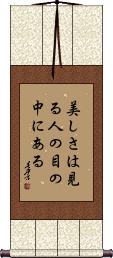
美しさは見る人の目の中にある means “Beauty is in the eyes of the beholder” in Japanese.
Japanese grammar and word order are different than English, but I will partially break this down for you:
美しさ = Beauty
は = is/relates
見る = to look/see
人の = person's
目の = eye's
中にあ = inside
る = !
Note: Because this selection contains some special Japanese Hiragana characters, it should be written by a Japanese calligrapher.
Happy / Laughter / Cheerful Bliss
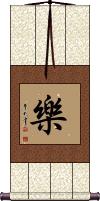
樂 is a single-character form of happiness or bliss that holds the ideas of laughing and having a good time.
This can also be translated as happy, glad, enjoyable, fun, and sometimes, music.
This a really good character if your audience is Chinese.
This is not a word seen alone very often in Korean.
 In Japanese, this character is written like the image shown to the right. If you order this from the Japanese master calligrapher, it will look like this instead of the character shown above.
Note: In Japanese, this has a meaning of comfort, ease, and enjoyment.
See Also: Joyfulness
You are always a beauty in your lover’s eyes
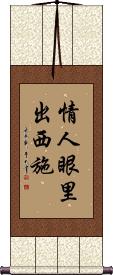
Any woman with affection for Asian art will love a gift of this Chinese proverb calligraphy on a wall scroll.
She will melt in your arms as you tell her the meaning of these characters.
Contained in this phrase is a reference to the most beautiful woman in Chinese history. Her name was Xi Shi, and she was known to have good looks that need not have fine robes or makeup. Her charms were so powerful that she brought down an entire kingdom (in a successful effort to bring honor and pride back to her people).
情人眼里出西施 is a great way to express that the woman in your life is your one love.
Perseverance / Fortitude
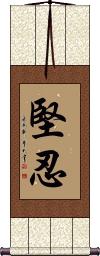
堅忍 means persistent, steadfast, fortitude, and/or perseverance.
The first character means strong, solid, firm, unyielding, or resolute.
The second character means to beat, endure, or tolerate.
Together they speak of the strength from within yourself. Some may also translate this as long-suffering in a more Biblical sense.
堅忍 is a common term in Chinese and Korean Hanja but a little less commonly used in modern Japanese Kanji. For that reason, this selection is best if your audience is Chinese or Korean.

 Note that when writing this as Kanji, Japanese will tend to write the second Kanji a little differently. If you select our Japanese master calligrapher, please expect the form where the little horizontal stroke crosses the vertical stroke. See differences in the images to the right. Technically, they are both the same character, and will be read the same in either language.
Inner Beauty / Beauty of Spirit
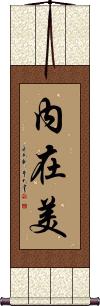
內在美 is a title that speaks of beauty on the inside.
It's not about outward or physical beauty but rather the inner beauty possessed by someone. This can also be translated as “beauty of spirit.”
Inner Beauty / Beauty of Spirit
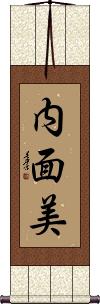
内面美 is a three-character title that speaks of beauty on the inside.
It's not about outward or physical beauty but rather the inner beauty possessed by someone. This can also be translated as “beauty of spirit.”
Peace / Harmony
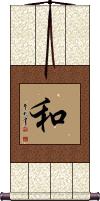
和 is the simplest form of peace and harmony.
和 can also be translated as the peaceful ideas of gentle, mild, kind, and calm. With a more harmonious context, it can be translated as union, together with, on good terms with, or on friendly terms.
Most people would just translate this character as peace and/or harmony. 和 is a very popular character in Asian cultures - you can even call it the “peace symbol” of Asia. In fact, this peace and harmony character was seen repeatedly during the opening ceremony of the 2008 Olympic Games in Beijing (a major theme of the games).
In old Chinese poems and literature, you might see this used as a kind of "and." As in two things summed together. As much as you could say, "the sun and moon," you could say "the sun in harmony with the moon."
See Also: Inner Peace | Patience | Simplicity
Tranquil / Tranquility / Serenity
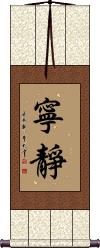
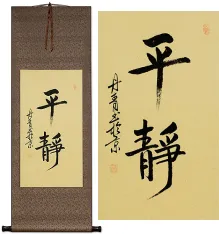
寧靜 expresses the idea of tranquility and serenity in Chinese.
See Also: Peace | Inner Peace | Harmony | Calm
Peace of Mind
(five-character version)
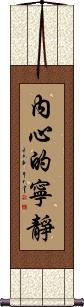
內心的寧靜 is the long way to express the idea of “peace of mind” in Chinese.
The first two characters mean heart or “innermost being.”
The middle character is a connecting modifier.
The last two characters mean peace, tranquility, or serenity.
Some may also translate this as “inner peace,” but I like our other inner-peace options for that idea.
This kind of makes sense in Korean but will have an archaic read - even by those who can understand Korean Hanja.
Paix de l'esprit
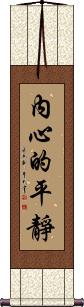
內心的平靜 means inner peace or peace of mind.
This is the Chinese equivalent of the French phrase Paix de l'esprit.
Power of Oneself / Self-Sufficient
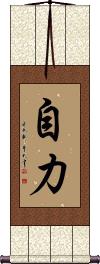
自力 is a word in Chinese, Japanese Kanji, old Korean, and Buddhist term meaning: the power within oneself; self-sufficient; by oneself; self-made; self-power; inner ability.
A Life of Serenity Yields Understanding
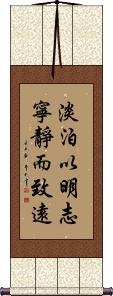
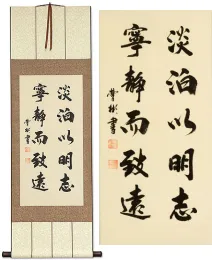
淡泊以明志寧靜而致遠 is a kind of complex ten-character proverb composed by Zhuge Liang about 1800 years ago.
淡泊以明志寧靜而致遠 is a Chinese proverb that means “Leading a simple life will yield a clear mind, and having inner peace will help you see far (into the world).”
What I have translated as “simple life” means NOT being materialistic and NOT competing in the rat race.
The last word means “far” but the deeper meaning is that you will surpass what you can currently see or understand. Perhaps even the idea of opening up vast knowledge and understanding of complex ideas.
The whole phrase has a theme that suggests that if you are NOT an aggressive, cut-throat person who fights their way to the top, no matter how many people they crush along the way, and instead seek inner peace, you will have a happier existence and be more likely to understand the meaning of life.
See Also: Serenity
Unwavering Hall / Fudoshinkan

不動心館 can be translated as “Fudoshinkan,” or “Immovable Mind Hall.”
Fudoshinkan (不動心館) refers to various Japanese martial arts schools, primarily focusing on Aikido, Iaido (sword art), and Jodo (short staff), emphasizing the concept of Fudoshin (不動心) – a calm, immovable mind in the face of challenge, reflecting traditional samurai spirit through dynamic training and inner peace
Immovable mind; unwavering composure. Hall/school (as in -kan / -gwan).
Koan
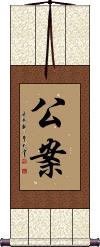
In the Buddhist context, 公案 is a Zen question for meditation.
From the Buddhist dictionary, this is:
Problems set by Zen masters, upon which thought is concentrated as a means to attain inner unity and illumination.
The secular meaning of this word can mean a judge's desk, a complex legal case, a contentious issue, a dossier, a case record, public laws, regulations, or case law.
Stay Strong / Iron Will
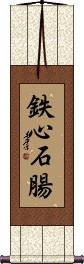
鉄心石腸 is a Japanese proverb that suggests you should have the inner-strength and will as hard and steadfast as iron.
It's the Japanese way of saying, “stay strong.” This is an especially uplifting thing to say to a person in distress or recovering from a disaster. It's kind of the survivor's creed.
If you literally translate this, it means “iron will, stone guts” or “iron heart, rock-hard bowels.”
Joyfulness / Happiness
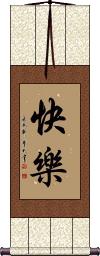
快樂 or joyfulness is an inner sense of peace and happiness.
You appreciate the gifts each day brings. Without joyfulness, when the fun stops, our happiness stops. Joy can carry us through hard times even when we are feeling very sad.
快樂 can also mean pleasure, enjoyment, delight, cheerfulness, or merry. In some ways, this is the essence that makes someone perceived as a charming person.
See Also: Happiness
Follow Your Heart
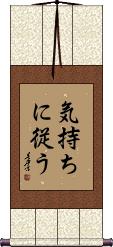
気持ちに従う is a Japanese phrase that means follow your heart.
The first part of this Japanese proverb means feeling, sensation, or mood.
The second part suggests the following, abiding by, or listening to this inner feeling.
In this context, you could say it means your heart, as the whole proverb suggests that you follow the feelings that you have inside.
Note: Because this selection contains some special Japanese Hiragana characters, it should be written by a Japanese calligrapher.
Open Your Heart

敞開心扉 is the most common way to express the idea of “Opening your heart” in Chinese.
This phrase is made up or two words:
敞开 = To open wide, to be unrestricted.
心扉 = Inner heart or soul.
If you want it brokend down further into individual characters:
敞 = Open to the view of all people, spacious, to open wide, or to disclose.
开 = Open, to start, or the beginning.
心 = Heart/Mind
扉 = Door, gate, opening, or the title page.
So maybe you can say, “To open wide the door of your heart and mind to all.”
Other variations of “open your heart” also exist such as 打開心扉, 敞開你的心扉, 打開你的心, and Simplified Chinese 敞开心扉, 打开心扉, 敞开你的心扉, or 打开你的心. These are also correct, but not as commonly used as 敞開心扉.
Ten perfect Mahayana rules
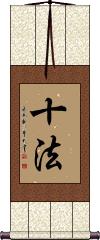
十法 is the title of the ten perfect or perfecting Mahāyāna rules.
The order of rules is as follows:
1. right belief.
2. right conduct.
3. right spirit.
4. the joy of the bodhi mind.
5. joy in the dharma.
6. joy in meditation.
7. pursuing the correct dharma.
8. obedience to, or accordance with dharma.
9. departing from pride, desire, etc.
10. comprehending the inner teaching of Buddha and taking no pleasure in attaining such knowledge or noting the ignorance of others.
This title is only used in the context of Buddhism. Japanese and Chinese people who are not familiar with Buddhism will not recognize this title.
Science / Universal Law
The rules of life, the universe, and everything.
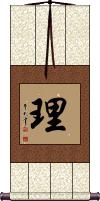
At its essence, 理 means science.
理 is a very ambiguous and open term; it speaks to the reason that all things exist, and how things work from the microscopic to the cosmic level.
In the Buddhist context, this character represents the “Universal Law.”
There are many translations for this word, including inner essence, intrinsic order, reason, logic, truth, natural science (esp. physics), principle, the underlying principles of the cosmos, the way of things, ruling principle, fundamental law, intrinsicality, universal basis, or essential element(s).
If you are a scientist, or just searching for “the answer to life, the universe, and everything,” this could be the character for you.
Police / Public Security Bureau
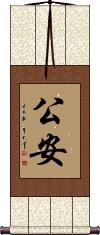
公安 is the Chinese, Japanese Kanji, and old Korean Hanja title for (The Ministry of) Public Security. 公安 can also generally mean public safety, public security, or public welfare. It is a positive term in Japan, where some even name their daughters “Kouan” (this title).
In China, this is the kinder name for the PSB or Public Security Bureau. It's really the national police of China - occasionally brutal and seldom properly-trained or educated. Once in a while, you find a PSB officer who lives up to the title of 公安. Before the 1989 massacre, it was the PSB officers who refused to stop nor kill any of the protesting college students (so they're not all bad). The Chinese government had to call in soldiers from Inner Mongolia to kill thousands of protesters.
One Heart / One Mind / Heart and Soul
Isshin
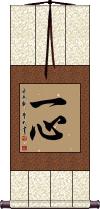
一心 can be translated as “one mind,” “single-minded focus,” or “wholehearted devotion,” from Chinese, Japanese Kanji, and old Korean Hanja.
Colloquially or figuratively, it means: wholeheartedly; heart and soul; of one mind; single-mindedness, wholeheartedness; one's whole heart; with the whole mind or heart; one mind in heart.
I'm not kidding, all of those came right from the dictionary for this one title.
In martial arts usage, this term emphasizes total commitment, where intent, attention, and action are unified without distraction.
In Japanese budō, it often conveys wholehearted dedication to practice or principle, whereas in Chinese usage it tends toward inner mental cultivation.
In Buddhism, this can refer to the bhūtatathatā, or the whole of things; the universe as one mind, or a spiritual unity.
In Japanese, this can be the female given name, Hitomi.
Zen Buddhism
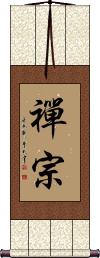
禪宗 is one way to title “Zen Buddhism.” Because the original pronunciation of Zen in Chinese is Chan, you'll also see this expressed as Chan Buddhism.
From the Buddhist Dictionary:
The Chan, meditative or intuitional, sect is usually said to have been established in China by Bodhidharma, the twenty-eighth patriarch, who brought the tradition of the Buddha-mind from India. This sect, believing in direct enlightenment, disregarded ritual and sūtras and depended upon the inner light and personal influence for the propagation of its tenets, founding itself on the esoteric tradition supposed to have been imparted to Kāśyapa by the Buddha, who indicated his meaning by plucking a flower without further explanation. Kāśyapa smiled in apprehension and is supposed to have passed on this mystic method to the patriarchs. The successor of Bodhidharma was 慧可 Huike, and he was succeeded by 僧璨 Sengcan, 道信 Daoxin, 弘忍 Hongren, 慧能 Huineng, and 神秀 Shenxiu, the sect dividing under the two latter into the southern and northern schools: the southern school became prominent, producing 南嶽 Nanyue and 靑原 Qingyuan, the former succeeded by 馬祖 Mazu, the latter by 石頭 Shitou. From Mazu's school arose the five later schools.
Daodejing / Tao Te Ching - Chapter 27
The Mastery of Effortless Skill

Chapter 27 of the Daodejing reveals a profound truth about mastery: the highest skill leaves no trace, requires no force, and appears almost invisible.
善行無轍跡,
善言無瑕謫,
善數不用籌策,
善閉無關鍵而不可開,
善結無繩約而不可解。
是以聖人常善救人,
故無棄人;
常善救物,
故無棄物。
是謂襲明。
故善人者,不善人之師;
不善人者,善人之資。
不貴其師,不愛其資,
雖智大迷,
是謂要妙。
The sage moves through life with such natural harmony that nothing seems imposed; doors need no locks, knots require no rope, and actions leave no mark behind.
This is the essence of wúwéi (effortless action), where true ability arises from deep alignment with the Tao rather than deliberate effort.
At its heart, this chapter teaches compassion without exception. The sage “abandons no one and nothing,” recognizing value in all people and all things. Even those who seem flawed or unrefined are not rejected, but understood as part of a greater whole with each person both a student and a teacher in the unfolding of life.
Laozi reminds us that wisdom is not about perfection or control, but about subtle awareness. The truly skilled individual does not rely on tools, rules, or rigid structures; instead, they embody an intuitive understanding that makes their actions naturally complete.
In this way, excellence becomes quiet, effortless, and beyond imitation.
This teaching also reflects a deeper philosophical insight: Opposites are interdependent. The “good” person learns from the “not good,” and the “not good” provides the material for growth. To reject either is to misunderstand the balance of existence itself.
As calligraphy, Daodejing Chapter 27 serves as a reminder to cultivate inner mastery rather than outward display. It is a meditation on refinement, humility, and the quiet power of skill perfected through harmony with the natural order.
Note: The Chinese text used here is based on the early Mawangdui silk manuscript tradition (2nd century BCE). The Guodian manuscripts do NOT preserve Chapter 27 in full form.
This in-stock artwork might be what you are looking for, and ships right away...
Gallery Price: $198.00
Your Price: $109.88
Gallery Price: $150.00
Your Price: $98.88

Gallery Price: $200.00
Your Price: $122.88
Gallery Price: $79.00
Your Price: $43.88
Gallery Price: $72.00
Your Price: $39.88


Gallery Price: $31.00
Your Price: $16.88
Gallery Price: $240.00
Your Price: $132.88

Gallery Price: $61.00
Your Price: $33.88

Gallery Price: $177.00
Your Price: $97.88
Gallery Price: $200.00
Your Price: $69.88
Gallery Price: $200.00
Your Price: $88.88

The following table may be helpful for those studying Chinese or Japanese...
| Title | Characters | Romaji (Romanized Japanese) | Various forms of Romanized Chinese | |
| Inner Bliss and Peace from Meditation | 禪悅 禅悦 | chán yuè / chan2 yue4 / chan yue / chanyue | ch`an yüeh / chanyüeh / chan yüeh | |
| Inner Strength Inner Well-Being and Health | 內健 | nèi jiàn / nei4 jian4 / nei jian / neijian | nei chien / neichien | |
| Inner Beauty Inner Wisdom | 內秀 内秀 | nèi xiù / nei4 xiu4 / nei xiu / neixiu | nei hsiu / neihsiu | |
| Inner Heart Inner Soul | 心扉 | xīn fēi / xin1 fei1 / xin fei / xinfei | hsin fei / hsinfei | |
| Inner Strength | 內力 内力 | nai ryoku / nairyoku | nèi lì / nei4 li4 / nei li / neili | |
| Inner Peace | 內心平靜 内心平静 | naishin heizyou naishinheizyou naishin heizyo | nèi xīn píng jìng nei4 xin1 ping2 jing4 nei xin ping jing neixinpingjing | nei hsin p`ing ching neihsinpingching nei hsin ping ching |
| Inner Freedom | 內在自由 内在自由 | nèi zài zì yóu nei4 zai4 zi4 you2 nei zai zi you neizaiziyou | nei tsai tzu yu neitsaitzuyu |
|
| Inner Warrior | 內なる戦士 内なる戦士 | |||
| Inner Strength | 內在力量 内在力量 | nèi zài lì liàng nei4 zai4 li4 liang4 nei zai li liang neizaililiang | nei tsai li liang neitsaililiang |
|
| Inner Warrior | 內心戰士 内心战士 | nèi xīn zhàn shì nei4 xin1 zhan4 shi4 nei xin zhan shi neixinzhanshi | nei hsin chan shih neihsinchanshih |
|
| Inner Wisdom | 內智 内智 | nai chi / naichi | nèi zhì / nei4 zhi4 / nei zhi / neizhi | nei chih / neichih |
| Inner Freedom | 內心自由 内心自由 | nèi xīn zì yóu nei4 xin1 zi4 you2 nei xin zi you neixinziyou | nei hsin tzu yu neihsintzuyu |
|
| Inner Light Intelligence | 心燈 心灯 | shin tou / shintou / shin to | xīn dēng / xin1 deng1 / xin deng / xindeng | hsin teng / hsinteng |
| Inner Strength is Better than Outward Appearance | 内面の強さは外見の良さに勝る | naimen no tsuyosa ha gaiken no yosa ni masaru | ||
| Intuitive Wisdom Inner Light | 一道神光 | ichidou no shinkou ichidounoshinkou ichido no shinko | yī dào shén guāng yi1 dao4 shen2 guang1 yi dao shen guang yidaoshenguang | i tao shen kuang itaoshenkuang |
| Inner Peace Silence Serenity | 靜 静 | shizu / sei | jìng / jing4 / jing | ching |
| Inner Strength Self-Improvement | 自強 自强 | zì qiáng / zi4 qiang2 / zi qiang / ziqiang | tzu ch`iang / tzuchiang / tzu chiang | |
| Always Striving for Inner Strength | 自強不息 自强不息 | zì qiáng bú xī zi4 qiang2 bu2 xi1 zi qiang bu xi ziqiangbuxi | tzu ch`iang pu hsi tzuchiangpuhsi tzu chiang pu hsi |
|
| Peacefulness Tranquility Perfectly Quiet | 靜謐 静谧 | seihitsu | jìng mì / jing4 mi4 / jing mi / jingmi | ching mi / chingmi |
| Reach Peace and Calm Through Meditation | 安禪 安禅 | an zen / anzen | ān chán / an1 chan2 / an chan / anchan | an ch`an / anchan / an chan |
| Inner Strength is Better than Outward Appearance | 表壯不如里壯 表壮不如里壮 | biǎo zhuàng bù rú lǐ zhuàng biao3 zhuang4 bu4 ru2 li3 zhuang4 biao zhuang bu ru li zhuang biaozhuangburulizhuang | piao chuang pu ju li chuang piaochuangpujulichuang |
|
| Achieve Inner Peace; Find Deep Understanding | 寧靜而致遠 宁静而致远 | níng jìng ér zhì yuǎn ning2 jing4 er2 zhi4 yuan3 ning jing er zhi yuan ningjingerzhiyuan | ning ching erh chih yüan ningchingerhchihyüan |
|
| Beauty is in the eyes of the beholder | 美しさは見る人の目の中にある | utsukushi-sa wa miru hito no me no naka ni aru | ||
| Happy Laughter Cheerful Bliss | 樂 / 楽 乐 | raku | lè / le4 / le | |
| You are always a beauty in your lover’s eyes | 情人眼里出西施 | qíng rén yǎn lǐ chū xī shī qing2 ren2 yan3 li3 chu1 xi1 shi1 qing ren yan li chu xi shi qingrenyanlichuxishi | ch`ing jen yen li ch`u hsi shih chingjenyenlichuhsishih ching jen yen li chu hsi shih |
|
| Perseverance Fortitude | 堅忍 坚忍 | ken nin / kennin | jiǎn rěn / jian3 ren3 / jian ren / jianren | chien jen / chienjen |
| Inner Beauty Beauty of Spirit | 內在美 内在美 | nèi zài měi nei4 zai4 mei3 nei zai mei neizaimei | nei tsai mei neitsaimei |
|
| Inner Beauty Beauty of Spirit | 内面美 | nai men bi / naimenbi | ||
| Peace Harmony | 和 | wa | hé / he2 / he | ho |
| Tranquil Tranquility Serenity | 寧靜 宁静 | níng jìng ning2 jing4 ning jing ningjing | ning ching ningching |
|
| Peace of Mind | 內心的寧靜 内心的宁静 | nèi xīn de níng jìng nei4 xin1 de ning2 jing4 nei xin de ning jing neixindeningjing | nei hsin te ning ching neihsinteningching |
|
| Paix de l'esprit | 內心的平靜 内心的平静 | nèi xīn de píng jìng nei4 xin1 de ping2 jing4 nei xin de ping jing neixindepingjing | nei hsin te p`ing ching neihsintepingching nei hsin te ping ching |
|
| Power of Oneself Self-Sufficient | 自力 | jiriki | zì lì / zi4 li4 / zi li / zili | tzu li / tzuli |
| A Life of Serenity Yields Understanding | 淡泊以明志寧靜而致遠 淡泊以明志宁静而致远 | dàn bó yǐ míng zhì, níng jìng ér zhì yuǎn dan4 bo2 yi3 ming2 zhi4, ning2 jing4 er2 zhi4 yuan3 dan bo yi ming zhi, ning jing er zhi yuan | tan po i ming chih, ning ching erh chih yüan | |
| Unwavering Hall Fudoshinkan | 不動心館 | fudōshin-kan | bù dòng xīn guǎn bu4 dong4 xin1 guan3 bu dong xin guan budongxinguan | pu tung hsin kuan putunghsinkuan |
| Koan | 公案 | kouan / koan | gōng àn / gong1 an4 / gong an / gongan | kung an / kungan |
| Stay Strong Iron Will | 鉄心石腸 | tesshin sekichou tesshinsekichou teshin sekicho | ||
| Joyfulness Happiness | 快樂 快乐 | kai raku / kairaku | kuài lè / kuai4 le4 / kuai le / kuaile | k`uai le / kuaile / kuai le |
| Follow Your Heart | 気持ちに従う | kimochi ni shitagau kimochinishitagau | ||
| Open Your Heart | 敞開心扉 敞开心扉 | chǎng kāi xīn fēi chang3 kai1 xin1 fei1 chang kai xin fei changkaixinfei | ch`ang k`ai hsin fei changkaihsinfei chang kai hsin fei |
|
| Ten perfect Mahayana rules | 十法 | jippou / jipo | shí fǎ / shi2 fa3 / shi fa / shifa | shih fa / shihfa |
| Science Universal Law | 理 | kotowari | lǐ / li3 / li | |
| Police Public Security Bureau | 公安 | kou an / kouan / ko an | gōng ān / gong1 an1 / gong an / gongan | kung an / kungan |
| One Heart One Mind Heart and Soul | 一心 | isshin / ishin | yī shì dài yi1 shi4 dai4 yi shi dai yishidai | i shih tai ishihtai |
| Zen Buddhism | 禪宗 禅宗 | zen shuu / zenshuu / zen shu | chán zōng chan2 zong1 chan zong chanzong | ch`an tsung chantsung chan tsung |
| Daodejing Tao Te Ching - Chapter 27 | 善行無轍跡善言無瑕謫善數不用籌策善閉無關鍵而不可開善結無繩約而不可解是以聖人常善救人故無棄人常善救物故無棄物是謂襲明故善人者不善人之師不善人者善人之資不貴其師不愛其資雖智大迷是謂要妙 善行无辙迹善言无瑕谪善数不用筹策善闭无关键而不可开善结无绳约而不可解是以圣人常善救人故无弃人常善救物故无弃物是谓袭明故善人者不善人之师不善人者善人之资不贵其师不爱其资虽智大迷是谓要妙 | shàn xíng wú zhé jì shàn yán wú xiá zhé shàn shù bù yòng chóu cè shàn bì wú guān jiàn ér bù kě kāi shàn jié wú shéng yuē ér bù kě jiě shì yǐ shèng rén cháng shàn jiù rén gù wú qì rén cháng shàn jiù wù gù wú qì wù shì wèi xí míng gù shàn rén zhě bù shàn rén zhī shī bù shàn rén zhě shàn rén zhī zī bù guì qí shī bù ài qí zī suī zhì dà mí shì wèi yào miào shan4 xing2 wu2 zhe2 ji4 shan4 yan2 wu2 xia2 zhe2 shan4 shu4 bu4 yong4 chou2 ce4 shan4 bi4 wu2 guan1 jian4 er2 bu4 ke3 kai1 shan4 jie2 wu2 sheng2 yue1 er2 bu4 ke3 jie3 shi4 yi3 sheng4 ren2 chang2 shan4 jiu4 ren2 gu4 wu2 qi4 ren2 chang2 shan4 jiu4 wu4 gu4 wu2 qi4 wu4 shi4 wei4 xi2 ming2 gu4 shan4 ren2 zhe3 bu4 shan4 ren2 zhi1 shi1 bu4 shan4 ren2 zhe3 shan4 ren2 zhi1 zi1 bu4 gui4 qi2 shi1 bu4 ai4 qi2 zi1 sui1 zhi4 da4 mi2 shi4 wei4 yao4 miao4 shan xing wu zhe ji shan yan wu xia zhe shan shu bu yong chou ce shan bi wu guan jian er bu ke kai shan jie wu sheng yue er bu ke jie shi yi sheng ren chang shan jiu ren gu wu qi ren chang shan jiu wu gu wu qi wu shi wei xi ming gu shan ren zhe bu shan ren zhi shi bu shan ren zhe shan ren zhi zi bu gui qi shi bu ai qi zi sui zhi da mi shi wei yao miao | shan hsing wu che chi shan yen wu hsia che shan shu pu yung ch`ou ts`e shan pi wu kuan chien erh pu k`o k`ai shan chieh wu sheng yüeh erh pu k`o chieh shih i sheng jen ch`ang shan chiu jen ku wu ch`i jen ch`ang shan chiu wu ku wu ch`i wu shih wei hsi ming ku shan jen che pu shan jen chih shih pu shan jen che shan jen chih tzu pu kuei ch`i shih pu ai ch`i tzu sui chih ta mi shih wei yao miao shan hsing wu che chi shan yen wu hsia che shan shu pu yung chou tse shan pi wu kuan chien erh pu ko kai shan chieh wu sheng yüeh erh pu ko chieh shih i sheng jen chang shan chiu jen ku wu chi jen chang shan chiu wu ku wu chi wu shih wei hsi ming ku shan jen che pu shan jen chih shih pu shan jen che shan jen chih tzu pu kuei chi shih pu ai chi tzu sui chih ta mi shih wei yao miao |
|
| In some entries above you will see that characters have different versions above and below a line. In these cases, the characters above the line are Traditional Chinese, while the ones below are Simplified Chinese. | ||||

Successful Chinese Character and Japanese Kanji calligraphy searches within the last few hours...



