Many custom options...


And formats...



Human in Chinese / Japanese...
Buy a Human calligraphy wall scroll here!
Personalize your custom “Human” project by clicking the button next to your favorite “Human” title below...
Human Nature
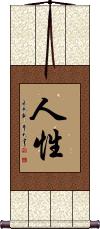
人性 is a title that is the essence of what it means to act and be human.
These two characters refer to the way we are as people.
人性 is also sometimes translated as human personality, human instinct, humanity, or humanism.
The first character literally means human or people.
The second character means nature. It can also mean property, quality, attribute, or essence. It can even be a modifier like “-ity” or “-ness,” which is why this word is also translated as “humanity.”
Human Race / Humanity / Mankind
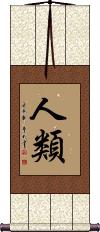
人類 is the way to say mankind or humankind in Chinese.
It's kind of the “animal title” for humans. 人類 is the word you would use if you said this phrase in Chinese, “Mammals include dolphins, monkeys, dogs, and humans among others.”
人類 is a weird selection for a calligraphy wall scroll. But a customer begged me to add this word.
The Tao or Dao of Being Human / Humanity
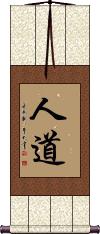
人道 is literally the “The Way of Being Human,” or “The Human Way.” It can also be translated as “humanity.”
人道 has a secondary meaning of “sidewalk” as in “the way for people to walk” (in Japanese and Korean only). But as calligraphy artwork, nobody will read it with that translation.
Please note that there are two ways to Romanize Dao or Tao (Daoism = Taoism). It's the same word in Chinese.
This in-stock artwork might be what you are looking for, and ships right away...

These search terms might be related to Human:
A Truly Determined Person Will Find a Solution
A Wise Person Reflecting a Thousand Times Can Still Make a Mistake
Alone / a Lone Person
Beautiful Soul
Daredevil Warrior / Soul of a Warrior
Do Not Fear Being Slow, Fear Standing Still
English / Briton / Person From England
Every Creature Has a Domain
Ghost / Soul / Spirit
Heart and Soul
Humility / Being Humble
I Am Worthy of Being Loved
Inner Heart / Inner Soul
Inner Strength / Inner Well-Being and Health
Kirin / Giraffe / Mythical Creature
Lonely Soul / Lost Soul
Lonely Soul / Solitary
Lost Soul
One Heart / One Mind / Heart and Soul
Person of Character
Safety and Well-Being of the Family
Soul / Spirit
Soul Mates
Soul Mates at Heart
Soul of a Warrior
Soul Sisters
Spirit / Soul
Spiritual Soul Mates
Tao / Dao of the Heart / Soul
The Buddha is in Each Sentient Being
The Tao or Dao of Being Human / Humanity
Warrior Soul / Heroic Spirit
Warrior Soul / Spirit of a Fighter
Wolf Spirit / Soul of a Wolf
Not the results for Human that you were looking for?
Below are some entries from our dictionary that may match your Human search...
| Characters If shown, 2nd row is Simp. Chinese |
Pronunciation Romanization |
Simple Dictionary Definition |
仁 see styles |
rén ren2 jen yasushi やすし |
More info & calligraphy: Benevolence(1) (じん only) benevolence (esp. as a virtue of Confucianism); consideration; compassion; humanity; charity; (2) (じん only) human; (3) kernel; (4) (じん only) {biol} (See 核小体) nucleolus; (given name) Yasushi Kindness, benevolence, virtue. |
仙 see styles |
xiān xian1 hsien hisa ひさ |
More info & calligraphy: Immortal(1) (See 仙人・1) hermit; wizard; (2) (See 仙術) wizardry; (personal name) Hisa 僊 ṛṣi, 哩始 an immortal. 仙人; 人仙 the genī, of whom there is a famous group of eight 八仙; an ascetic, a man of the hills, a hermit; the Buddha. The 楞嚴經 gives ten kinds of immortals, walkers on the earth, fliers, wanderers at will, into space, into the deva heavens, transforming themselves into any form, etc. The names of ten ṛṣis, who preceded Śākyamuni, the first being 闍提首那? Jatisena; there is also a list of sixty-eight 大仙 given in the 大孔雀咒經下 A classification of five is 天仙 deva genī, 神仙 spirit genī, 人仙 human genī, 地仙 earth, or cavern genī, and 鬼仙 ghost genī. |
猿 see styles |
yuán yuan2 yüan mase ませ |
More info & calligraphy: Monkey / Ape(out-dated or obsolete kana usage) monkey (esp. the Japanese macaque, Macaca fuscata); ape; non-human primate; (1) (kana only) monkey (esp. the Japanese macaque, Macaca fuscata); ape; non-human primate; (2) (derogatory term) sly person; (3) (derogatory term) idiot; hick; (4) sliding wooden bolt (for holding a door or window shut); (5) clasp used to control the height of a pot-hook; (6) (archaism) bathhouse prostitute; (surname) Mase monkey |
神 see styles |
shén shen2 shen miwa みわ |
More info & calligraphy: Spirit / Spiritual Essence(1) spirit; psyche; (2) (See 神・かみ・1) god; deity; divinity; kami; (female given name) Miwa Inscrutable spiritual powers, or power; a spirit; a deva, god, or divinity; the human spirit; divine, spiritual, supernatural. |
竜 see styles |
lóng long2 lung ryou / ryo りょう |
More info & calligraphy: Dragon / Emperor Symbol(1) dragon (esp. a Chinese dragon); (2) naga; semi-divine human-cobra chimera in Hindu and Buddhist mythology; (surname, female given name) Ryō |
龍 龙 see styles |
lóng long2 lung riyou / riyo りよう |
More info & calligraphy: Dragon(out-dated kanji) (1) dragon (esp. a Chinese dragon); (2) naga; semi-divine human-cobra chimera in Hindu and Buddhist mythology; (personal name) Riyou A dragon, dragon-like, imperial; tr. for nāga, which means snake, serpent; also elephant, elephantine, serpent-like, etc., cf. 那. |
五戒 see styles |
wǔ jiè wu3 jie4 wu chieh gokai ごかい |
More info & calligraphy: Five Preceptspañca-veramaṇī; the first five of the ten commandments, against killing, stealing, adultery, lying, and intoxicating liquors. 不殺生; 不偸盜; 不邪婬; 不妄語; 不飮酒 They are binding on laity, male and female, as well as on monks and nuns. The observance of these five ensures rebirth in the human realm. Each command has five spirits to guard its observer 五戒二十五神. |
人性 see styles |
rén xìng ren2 xing4 jen hsing jinsei / jinse じんせい |
More info & calligraphy: Human Naturehuman nature; instinct; humanity; humanism |
人情 see styles |
rén qíng ren2 qing2 jen ch`ing jen ching ninjou / ninjo にんじょう |
More info & calligraphy: Empathy / Humanity(1) humanity; empathy; kindness; sympathy; (2) human nature; common sense; customs and manners human emotions |
人道 see styles |
rén dào ren2 dao4 jen tao jindou(p); nindou / jindo(p); nindo じんどう(P); にんどう |
More info & calligraphy: The Tao or Dao of Being Human / Humanity(1) humanity; (2) sidewalk; footpath; (3) (にんどう only) {Buddh} (See 六道) human realm rebirth as a human being |
人里 see styles |
henbori へんぼり |
More info & calligraphy: Hitori |
人類 人类 see styles |
rén lèi ren2 lei4 jen lei jinrui じんるい |
More info & calligraphy: Human Race / Humanity / Mankindmankind; humanity human beings |
化身 see styles |
huà shēn hua4 shen1 hua shen keshin けしん |
More info & calligraphy: Avatar(n,vs,adj-no,vi) {Buddh} incarnation; impersonation; personification; avatar nirmāṇakāya, 應身, 應化身; 變化身 The third characteristic or power of the trikāya 三身, a Buddha's metamorphosic body, which has power to assume any shape to propagate the Truth. Some interpret the term as connoting pan-Buddha, that all nature in its infinite variety is the phenomenal 佛身 Buddha-body. A narrower interpretation is his appearance in human form expressed by 應身, while 化身 is used for his manifold other forms of appearances. |
四大 see styles |
sì dà si4 da4 ssu ta shidai しだい |
More info & calligraphy: Shidai / Sida / Mahabhuta(1) {Buddh} the four elements (earth, water, fire, wind); (2) the human body; (3) Tao, heaven, earth and king mahābhūta, 四界; 四大界. The four elements of which all things are made; or the four realms; i. e. earth, water, fire, and wind (or air); they represent 堅, 濕, 煖, and 動 solid, liquid, heat, and motion; motion produces and maintains life. As 實 active or formative forces they are styled 四界 (四大界) ; as 假 passive or material objects they are 四大; but the 成實論 Satyasiddhi śāstra disputes the 實 and recognizes only the 假. |
四諦 四谛 see styles |
sì dì si4 di4 ssu ti shitai したい |
More info & calligraphy: Four Noble Truths (Buddhism){Buddh} (See 苦集滅道) The Four Noble Truths catvāri-ārya-satyāni; 四聖諦; 四眞諦. The four dogmas, or noble truths, the primary and fundamental doctrines of Śākyamuni, said to approximate to the form of medical diagnosis. They are pain or 'suffering, its cause, its ending, the way thereto; that existence is suffering, that human passion (taṇhā, 欲 desire) is the cause of continued suffering, that by the destruction of human passion existence may be brought to an end; that by a life of holiness the destruction of human passion may be attained'. Childers. The four are 苦, 聚 (or 集), 滅, and 道諦, i. e. duḥkha 豆佉, samudaya 三牟提耶, nirodha 尼棲陀, and mārga 末加. Eitel interprets them (1) 'that 'misery' is a necessary attribute of sentient existence'; (2) that 'the 'accumulation' of misery is caused by the passions'; (3) that 'the 'extinction' of passion is possible; (4) mārga is 'the doctrine of the 'path' that leads to the extinction of passion'. (1) 苦 suffering is the lot of the 六趣 six states of existence; (2) 集 is the aggregation (or exacerbation) of suffering by reason of the passions; (3) 滅 is nirvana, the extinction of desire and its consequences, and the leaving of the sufferings of mortality as void and extinct; (4) 道 is the way of such extinction, i. e. the 八正道 eightfold correct way. The first two are considered to be related to this life, the last two to 出世間 a life outside or apart from the world. The four are described as the fundamental doctrines first preached to his five former ascetic companions. Those who accepted these truths were in the stage of śrāvaka. There is much dispute as to the meaning of 滅 'extinction' as to whether it means extinction of suffering, of passion, or of existence. The Nirvana Sutra 18 says that whoever accepts the four dogmas will put an end to births and deaths 若能見四諦則得斷生死 which does not of necessity mean the termination of existence but that of continued transmigration. v. 滅. |
夜叉 see styles |
yè chā ye4 cha1 yeh ch`a yeh cha yasha やしゃ |
More info & calligraphy: Yakshayaksha (Buddhist guardian deities sometimes depicted as demonic warriors) (san: yaksa); (given name) Yasha 乞叉; 藥叉; 閱叉 yakṣa, (1) demons in the earth, or in the air, or in the lower heavens; they are malignant, and violent, and devourers (of human flesh). (2) The 八大將, the eight attendants of Kuvera, or Vaiśravaṇa, the god of wealth; those on earth bestow wealth, those in the empyrean houses and carriages, those in the lower heavens guard the moat and gates of the heavenly city. There is another set of sixteen. The names of all are given in 陀羅尼集經 3. See also 羅 for rakṣa and 吉 for kṛtya. yakṣa-kṛtya are credited with the powers of both yakṣa and kṛtya. |
太陽 太阳 see styles |
tài yang tai4 yang5 t`ai yang tai yang minami みなみ |
More info & calligraphy: SunSun; (female given name) Minami |
朝露 see styles |
zhāo lù zhao1 lu4 chao lu asatsuyu; chouro / asatsuyu; choro あさつゆ; ちょうろ |
More info & calligraphy: Morning Dewmorning dew Morning dew, e.g. man's life as transient. |
理念 see styles |
lǐ niàn li3 nian4 li nien rinen りねん |
More info & calligraphy: Idea / Concept(Platonic) ideal (of how things ought to be, e.g. human rights); foundational principle; idea; conception (e.g. of the university); doctrine; ideology |
自然 see styles |
zì rán zi4 ran2 tzu jan minori みのり |
More info & calligraphy: Nature(n,adv) (dated) occurring naturally (without human influence); (female given name) Minori svayaṃbhū, also 自爾; 法爾 self-existing, the self-existent; Brahmā, Viṣṇu, and others; in Chinese it is 'self-so', so of itself, natural, of course, spontaneous. It also means uncaused existence, certain sects of heretics 自然外道 denying Buddhist cause and effect and holding that things happen spontaneously. |
カーマ see styles |
kaama / kama カーマ |
More info & calligraphy: Carma |
一視同仁 一视同仁 see styles |
yī shì tóng rén yi1 shi4 tong2 ren2 i shih t`ung jen i shih tung jen isshidoujin / isshidojin いっしどうじん |
More info & calligraphy: Impartial and Fair to the Brotherhood and Sisterhood of the World(yoji) loving every human being with impartiality; universal brotherhood; universal benevolence |
人生朝露 see styles |
rén shēng zhāo lù ren2 sheng1 zhao1 lu4 jen sheng chao lu jinseichouro / jinsechoro じんせいちょうろ |
More info & calligraphy: Life is a Dew Drop(expression) (yoji) man's life vanishes like a dew; a person's life is as fleeting as a morning dew |
生老病死 see styles |
shēng lǎo bìng sǐ sheng1 lao3 bing4 si3 sheng lao ping ssu shouroubyoushi / shorobyoshi しょうろうびょうし |
More info & calligraphy: Birth Old-Age Sickness Death(yoji) {Buddh} the four inevitables in human life (birth, aging, sickness, and death) Birth, age, sickness, death, the 四苦 four afflictions that are the lot of every man. The five are the above four and 苦 misery, or suffering. |
世 see styles |
shì shi4 shih toki とき |
life; age; generation; era; world; lifetime; epoch; descendant; noble (counter) (1) counter for generations; (suffix noun) (2) {geol} epoch; (personal name) Toki yuga. An age, 1, 000th part of a kalpa.loka, the world. 世 originally meant a human generation, a period of thirty years; it is used in Buddhism both foryuga, a period of time ever flowing, andloka, the world, worldly, earthly. The world is that which is to be destroyed; it is sunk in the round of mortality, or transmigration; and conceals, or is a veil over reality. |
人 see styles |
rén ren2 jen hitotaka ひとたか |
person; people; CL:個|个[ge4],位[wei4],名[ming2] (1) person; someone; somebody; (2) human beings; mankind; man; people; humans; (3) (kana only) (usu. ヒト) human (Homo sapiens); (4) (other) people; others; (5) character; personality; nature; (6) capable person; competent person; suitable person; right person; (7) adult; grown-up; (8) (used when rebuking or criticizing someone) I; me; one; (surname) Hitotaka manuṣya; nara; puruṣa; pudgala. Man, the sentient thinking being in the desire-realm, whose past deeds affect his present condition. |
倫 伦 see styles |
lún lun2 lun ron ろん |
human relationship; order; coherence (surname) Ron |
函 see styles |
hán han2 han hako はこ |
envelope; case; letter (1) box; case; chest; package; pack; crate; (2) car (of a train, etc.); (3) shamisen case; shamisen; (4) (colloquialism) public building; community building; (5) (archaism) man who carries a geisha's shamisen; (6) (archaism) receptacle for human waste; feces (faeces); (suf,ctr) (7) counter for boxes (or boxed objects) |
凾 see styles |
hán han2 han kan はこ |
(1) box; case; chest; package; pack; crate; (2) car (of a train, etc.); (3) shamisen case; shamisen; (4) (colloquialism) public building; community building; (5) (archaism) man who carries a geisha's shamisen; (6) (archaism) receptacle for human waste; feces (faeces); (suf,ctr) (7) counter for boxes (or boxed objects) A box, receptacle; to enfold: a letter. |
匣 see styles |
xiá xia2 hsia hako はこ kushige くしげ |
box (1) box; case; chest; package; pack; crate; (2) car (of a train, etc.); (3) shamisen case; shamisen; (4) (colloquialism) public building; community building; (5) (archaism) man who carries a geisha's shamisen; (6) (archaism) receptacle for human waste; feces (faeces); (suf,ctr) (7) counter for boxes (or boxed objects); (archaism) toiletries case |
Click here for more Human results from our dictionary
The following table may be helpful for those studying Chinese or Japanese...
| Title | Characters | Romaji (Romanized Japanese) | Various forms of Romanized Chinese | |
| Human Nature | 人性 | rén xìng / ren2 xing4 / ren xing / renxing | jen hsing / jenhsing | |
| Human Race Humanity Mankind | 人類 人类 | jinrui | rén lèi / ren2 lei4 / ren lei / renlei | jen lei / jenlei |
| The Tao or Dao of Being Human Humanity | 人道 | jindou / jindo | rén dào / ren2 dao4 / ren dao / rendao | jen tao / jentao |
| In some entries above you will see that characters have different versions above and below a line. In these cases, the characters above the line are Traditional Chinese, while the ones below are Simplified Chinese. | ||||

Successful Chinese Character and Japanese Kanji calligraphy searches within the last few hours...



