Many custom options...


And formats...



Hild in Chinese / Japanese...
Buy a Hild calligraphy wall scroll here!
Personalize your custom “Hild” project by clicking the button next to your favorite “Hild” title below...
Switched to secondary search mode due to lack of results using primary.
These secondary results may not be very accurate. Try a different but similar meaning word or phrase for better results. Or...
Look up Hild in my Japanese Kanji & Chinese Character Dictionary(My dictionary is a different system then the calligraphy search you just tried)
If you want a special phrase, word, title, name, or proverb, feel free to contact me, and I will translate your custom calligraphy idea for you.
1. No man knows what he owes to his parents until he comes to have children of his own
2. Beloved Son / Beloved Child
3. Child
4. Child of God
5. Childers
6. Childress
7. Childs
8. Clothilde
9. Fairchild
11. Hilda
12. Hilde
13. Hildebrand
14. Hildebrandt
15. Hildreth
16. Love Your Children, But Discipline Them Too
17. Love Gems / Fruit of Love / Children
18. Mathilda
19. Mathilde
20. Love Between Child and Parents
21. If you love your child, send them out into the world
No man knows what he owes to his parents until he comes to have children of his own
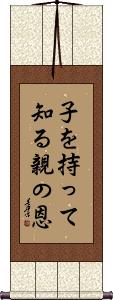
子を持って知る親の恩 literally translates as: Only after you have a baby, you would appreciate your parents (feel the way they do, etc).
This is a bit like the “walk a mile in another man's shoes” saying. Basically, it's about you cannot fully understand the plight of others until you experience it yourself. It also shows appreciation for the plight of parents.
This Japanese proverb can also be translated a few more ways:
No man knows what he owes to his parents till he comes to have children of his own.
One knows not what one owes to one's parents till one comes to have children of one's own.
Only after you have a baby, you will appreciate your parents or feel the way they do.
Only after becoming a parent yourself do you realize how much you owe [how indebted you are] to your own parents.
Note: Because this selection contains some special Japanese Hiragana characters, it should be written by a Japanese calligrapher.
Beloved Son / Beloved Child
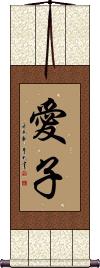
愛子 means “beloved son” in Chinese and Japanese.
While it could refer to a child in general (in Japanese), it's usually reserved or expected to be a title for a male child (in Chinese).
This can also be a given name in Japanese romanized as Aiko or Yoshiko.
Child
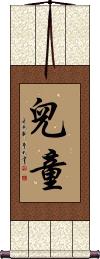
兒童 is how to write “child” in Chinese.
There are several ways to write child or offspring in Chinese, but this is the best form for calligraphy, or written (versus oral) form.
If children are essential to you, this might be the scroll you want. Or if you are a child at heart, this also works.
 In Japanese, they use a slightly-morphed version of the original Chinese first character. If you want the special Japanese version, please click on the Kanji image shown to the right, instead of the button above. Note: Japanese people would still be able to understand the Chinese version and vice versa.
See Also: Family
Child of God
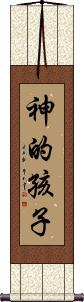
神的孩子 is “Child of God” in Chinese.
Child of God
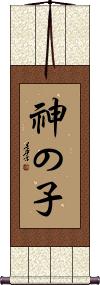
神の子 is “Child of God” in Japanese.
Childers

查爾德斯 is the name Childers in Chinese (Mandarin).
Childers

チルダーズ is the name Childers in Japanese Katakana.
Note: Because this title is entirely Japanese Katakana, it should be written by a Japanese calligrapher.
Childress

奇爾德里斯 is the name Childress in Chinese (Mandarin).
Childress

チルドレス is the name Childress in Japanese Katakana.
Note: Because this title is entirely Japanese Katakana, it should be written by a Japanese calligrapher.
Childs

查爾茲 is the name Childs in Chinese (Mandarin).
Childs

チャイルズ is the name Childs in Japanese Katakana.
Note: Because this title is entirely Japanese Katakana, it should be written by a Japanese calligrapher.
Clothilde
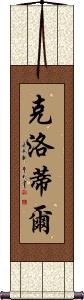
克洛蒂爾 is the name Clothilde in Chinese (Mandarin).
Clothilde
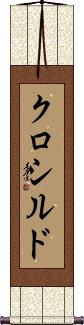
クロシルド is the name Clothilde in Japanese (Katakana).
Note: Because this title is entirely Japanese Katakana, it should be written by a Japanese calligrapher.
Fairchild
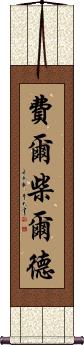
費爾柴爾德 is the name Fairchild in Chinese (Mandarin).
Fairchild
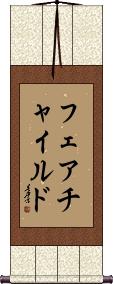
フェアチャイルド is the name Fairchild in Japanese Katakana.
Note: Because this title is entirely Japanese Katakana, it should be written by a Japanese calligrapher.
God Son / God Child
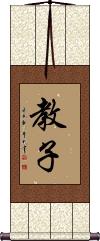
教子 is the title for a child which you have a sworn duty to raise should the child's parents die.
This title suggests it's talking about a son (male child), but this title is universal and can mean God Child (with no gender specified).
Hilda
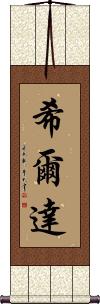
希爾達 is the transliteration to Mandarin Chinese for the Latin / Spanish name Hilda.
Hilda
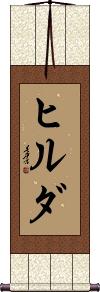
ヒルダ is the name Hilda in Japanese.
Note: Because this title is entirely Japanese Katakana, it should be written by a Japanese calligrapher.
Hilde

希爾德 is the name Hilde in Chinese (Mandarin).
Hilde

ヒルデ is the name Hilde in Japanese Katakana.
Note: Because this title is entirely Japanese Katakana, it should be written by a Japanese calligrapher.
Hildebrand

希爾德布蘭德 is the name Hildebrand in Chinese (Mandarin).
Hildebrand

ヒルデブランド is the name Hildebrand in Japanese Katakana.
Note: Because this title is entirely Japanese Katakana, it should be written by a Japanese calligrapher.
Hildebrandt

希爾德布蘭特 is the name Hildebrandt in Chinese (Mandarin).
Hildebrandt

ヒルデブラント is the name Hildebrandt in Japanese Katakana.
Note: Because this title is entirely Japanese Katakana, it should be written by a Japanese calligrapher.
Hildreth

希爾德雷斯 is the name Hildreth in Chinese (Mandarin).
Hildreth

ヒルドレス is the name Hildreth in Japanese Katakana.
Note: Because this title is entirely Japanese Katakana, it should be written by a Japanese calligrapher.
Love Your Children, But Discipline Them Too
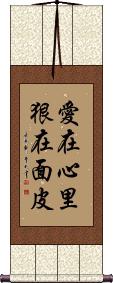
爱在心里狠在面皮 literally translates as “Love [your] children in [your] heart, [but] be stern [with them] in [your] manner.”
This is a little like saying “Love your child but don't spare the switch.”
Love Gems / Fruit of Love / Children
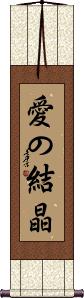
愛の結晶 is a Japanese word that means the crystals or gems of love.
Figuratively, it means the treasures you create with your love (namely, your children). Some will translate this as “fruit of love.”
It's also kind of a nickname for your beloved children.
Mathilda

馬蒂爾達 is the name Mathilda in Chinese (Mandarin).
Mathilda
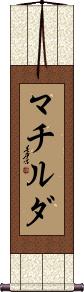
マチルダ is the name Mathilda in Japanese Katakana.
Note: Because this title is entirely Japanese Katakana, it should be written by a Japanese calligrapher.
Mathilde
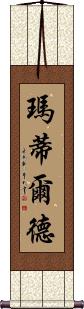
瑪蒂爾德 is the transliteration to Mandarin Chinese for the French name Mathilde.
Mathilde
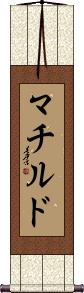
マチルド is the name Mathilde in Japanese Katakana.
Note: Because this title is entirely Japanese Katakana, it should be written by a Japanese calligrapher.
Love Between Child and Parents
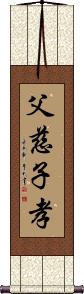
父慈子孝 is a Chinese proverb that means “benevolent father, filial son.”
Figuratively, this is the natural love between parents and children.
If you love your child, send them out into the world
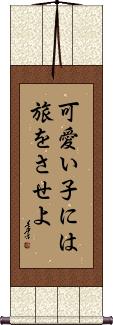
可愛い子には旅をさせよ is a Japanese proverb that means “If you love your children, send them out on a journey into the world.”
This is kind of similar to the western phrase, “Spare the rod and spoil the child.”
More literally, this reads, “Cute child, a journey granted.”
That “granted” could also be understood as “should be initiated.”
Note: Because this selection contains some special Japanese Hiragana characters, it should be written by a Japanese calligrapher.
Spare the Rod, Spoil the Child
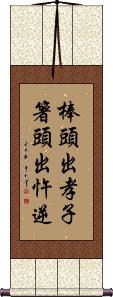
棒頭出孝子箸頭出忤逆 literally translates as:
A stick (or switch) produces filial sons; chopsticks produce disobedient [ones].
Figuratively, this means:
Strict discipline produces dutiful children, whereas indulgence produces disobedient ones.
This proverb is very similar to this English proverb:
“Spare the rod and spoil the child.”
Sun Tzu: Regard Your Soldiers as Children
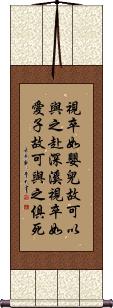
視卒如嬰兒故可以與之赴深溪視卒如愛子故可與之俱死 is an entry from the 10th section within the Earth/Terrain chapter of Sun Tzu's Art of War.
This is often translated as “Regard your soldiers as your children, and they will follow you into the deepest valleys. Look upon them as your own beloved sons, and they will stand by you even unto death.”
The following table may be helpful for those studying Chinese or Japanese...
| Title | Characters | Romaji (Romanized Japanese) | Various forms of Romanized Chinese | |
| No man knows what he owes to his parents until he comes to have children of his own | 子を持って知る親の恩 | ko wo motte shiru oya no on kowomotteshiruoyanoon | ||
| Beloved Son Beloved Child | 愛子 爱子 | manago / aiko / yoshiko | ài zǐ / ai4 zi3 / ai zi / aizi | ai tzu / aitzu |
| Child | 兒童 儿童 | jidou / jido | ér tóng / er2 tong2 / er tong / ertong | erh t`ung / erhtung / erh tung |
| Child of God | 神的孩子 | shén de hái zi shen2 de hai2 zi shen de hai zi shendehaizi | shen te hai tzu shentehaitzu |
|
| Child of God | 神の子 | kami no kou kaminokou kami no ko | ||
| Childers | 查爾德斯 查尔德斯 | chá ěr dé sī cha2 er3 de2 si1 cha er de si chaerdesi | ch`a erh te ssu chaerhtessu cha erh te ssu |
|
| Childers | チルダーズ | chirudaazu / chirudazu | ||
| Childress | 奇爾德里斯 奇尔德里斯 | qí ěr dé lǐ sī qi2 er3 de2 li3 si1 qi er de li si qierdelisi | ch`i erh te li ssu chierhtelissu chi erh te li ssu |
|
| Childress | チルドレス | chirudoresu | ||
| Childs | 查爾茲 查尔兹 | chá ěr zī cha2 er3 zi1 cha er zi chaerzi | ch`a erh tzu chaerhtzu cha erh tzu |
|
| Childs | チャイルズ | chairuzu | ||
| Clothilde | 克洛蒂爾 克洛蒂尔 | kè luò dì ěr ke4 luo4 di4 er3 ke luo di er keluodier | k`o lo ti erh kolotierh ko lo ti erh |
|
| Clothilde | クロシルド | kuroshirudo | ||
| Fairchild | 費爾柴爾德 费尔柴尔德 | fèi ěr chái ěr dé fei4 er3 chai2 er3 de2 fei er chai er de feierchaierde | fei erh ch`ai erh te feierhchaierhte fei erh chai erh te |
|
| Fairchild | フェアチャイルド | feachairudo | ||
| God Son God Child | 教子 | jiào zǐ / jiao4 zi3 / jiao zi / jiaozi | chiao tzu / chiaotzu | |
| Hilda | 希爾達 希尔达 | xī ěr dá xi1 er3 da2 xi er da xierda | hsi erh ta hsierhta |
|
| Hilda | ヒルダ | hiruda | ||
| Hilde | 希爾德 希尔德 | xī ěr dé xi1 er3 de2 xi er de xierde | hsi erh te hsierhte |
|
| Hilde | ヒルデ | hirude | ||
| Hildebrand | 希爾德布蘭德 希尔德布兰德 | xī ěr dé bù lán dé xi1 er3 de2 bu4 lan2 de2 xi er de bu lan de xierdebulande | hsi erh te pu lan te hsierhtepulante |
|
| Hildebrand | ヒルデブランド | hirudeburando | ||
| Hildebrandt | 希爾德布蘭特 希尔德布兰特 | xī ěr dé bù lán tè xi1 er3 de2 bu4 lan2 te4 xi er de bu lan te xierdebulante | hsi erh te pu lan t`e hsierhtepulante hsi erh te pu lan te |
|
| Hildebrandt | ヒルデブラント | hirudeburanto | ||
| Hildreth | 希爾德雷斯 希尔德雷斯 | xī ěr dé léi sī xi1 er3 de2 lei2 si1 xi er de lei si xierdeleisi | hsi erh te lei ssu hsierhteleissu |
|
| Hildreth | ヒルドレス | hirudoresu | ||
| Love Your Children, But Discipline Them Too | 愛在心里狠在面皮 / 愛在心里狠在麵皮 爱在心里狠在面皮 | ài zài xīn lǐ hèn zài miàn pì ai4 zai4 xin1 li3 hen4 zai4 mian4 pi4 ai zai xin li hen zai mian pi aizaixinlihenzaimianpi | ai tsai hsin li hen tsai mien p`i ai tsai hsin li hen tsai mien pi |
|
| Love Gems Fruit of Love Children | 愛の結晶 | ainokesshou ainokesho | ||
| Mathilda | 馬蒂爾達 马蒂尔达 | mǎ dì ěr dá ma3 di4 er3 da2 ma di er da madierda | ma ti erh ta matierhta |
|
| Mathilda | マチルダ | machiruda | ||
| Mathilde | 瑪蒂爾德 玛蒂尔德 | mǎ dì ěr dé ma3 di4 er3 de2 ma di er de madierde | ma ti erh te matierhte |
|
| Mathilde | マチルド | machirudo | ||
| Love Between Child and Parents | 父慈子孝 | fù cí zǐ xiào fu4 ci2 zi3 xiao4 fu ci zi xiao fucizixiao | fu tz`u tzu hsiao futzutzuhsiao fu tzu tzu hsiao |
|
| If you love your child, send them out into the world | 可愛い子には旅をさせよ | kawaii ko ni wa tabi o sa seyo kawaiikoniwatabiosaseyo kawai ko ni wa tabi o sa seyo | ||
| Spare the Rod, Spoil the Child | 棒頭出孝子箸頭出忤逆 | bàng tóu chū xiào zǐ zhù tóu chū wǔ nì bang4 tou2 chu1 xiao4 zi3 zhu4 tou2 chu1 wu3 ni4 bang tou chu xiao zi zhu tou chu wu ni | pang t`ou ch`u hsiao tzu chu t`ou ch`u wu ni pang tou chu hsiao tzu chu tou chu wu ni |
|
| Sun Tzu: Regard Your Soldiers as Children | 視卒如嬰兒故可以與之赴深溪視卒如愛子故可與之俱死 视卒如婴儿故可以与之赴深溪视卒如爱子故可与之俱死 | shì cù rú yīng ér gù kě yǐ yú zhī fù shēn xī shì cù rú ài zǐ gù kě yú zhī jū sǐ shi4 cu4 ru2 ying1 er2 gu4 ke3 yi3 yu2 zhi1 fu4 shen1 xi1 shi4 cu4 ru2 ai4 zi3 gu4 ke3 yu2 zhi1 ju1 si3 shi cu ru ying er gu ke yi yu zhi fu shen xi shi cu ru ai zi gu ke yu zhi ju si | shih ts`u ju ying erh ku k`o i yü chih fu shen hsi shih ts`u ju ai tzu ku k`o yü chih chü ssu shih tsu ju ying erh ku ko i yü chih fu shen hsi shih tsu ju ai tzu ku ko yü chih chü ssu |
|
| In some entries above you will see that characters have different versions above and below a line. In these cases, the characters above the line are Traditional Chinese, while the ones below are Simplified Chinese. | ||||

Successful Chinese Character and Japanese Kanji calligraphy searches within the last few hours...



