Many custom options...


And formats...



Not what you want?
Try other similar-meaning words, fewer words, or just one word.
Gu Kan Ryu in Chinese / Japanese...
Buy a Gu Kan Ryu calligraphy wall scroll here!
Personalize your custom “Gu Kan Ryu” project by clicking the button next to your favorite “Gu Kan Ryu” title below...
Switched to secondary search mode due to lack of results using primary.
These secondary results may not be very accurate. Try a different but similar meaning word or phrase for better results. Or...
Look up Gu Kan Ryu in my Japanese Kanji & Chinese Character Dictionary(My dictionary is a different system then the calligraphy search you just tried)
If you want a special phrase, word, title, name, or proverb, feel free to contact me, and I will translate your custom calligraphy idea for you.
1. Aijou-Ryu
2. Aiki-Jutsu
5. Bushidokan
6. Bushinkan
8. Chidokan
9. Chito-Ryu
11. The Great Path has No Gate
12. Daito-Ryu
14. Eishin-Ryu
15. Encourage
16. Unwavering Hall / Fudoshinkan
17. Fudoshin-Ryu
20. Goju Ryu
22. Goju Shoto-Ryu
23. Go Kan Ryu
24. Gu
25. Hakko-Ryu
26. Hanko
27. Isshin-Kai
31. Itto-Ryu
32. Iwama Ryu
33. Joyful
34. Kanazawa-Ryu
35. Kanzen Goju-Ryu
37. Kenshin-Kan
38. Kobukan
39. Koryu Bujutsu
41. Matsubayashi-Ryu Karate-Do
43. Meibukan
45. Mugai-Ryu
47. Muso Shinden-Ryu
49. Niten Ichi Ryu
50. Okinawa Goju Ryu Karate-Do
52. Ono-Ha Itto-Ryu
53. Qian
54. Saifa
55. Sanchin
56. Satori-Ryu
57. Seishi-Kan
58. Seishin-Kan
59. Seunchin
60. Shidokan
61. Shinden Fudo Ryu
62. Shinkage-Ryu
63. Shin Kakuto-Ryu
64. Shinto Muso-Ryu
65. Shito-Ryu Ki-Me-Kan Karate-Do
66. Shito-Ryu
68. Shobayashi-Ryu
70. Shorei-Ryu
72. Shorin Ji Ryu
73. Shorin-Ryu
75. Shoshin-Ryu
76. Shotokan-Ryu
77. Shugyo-Kan
78. Shukokai
79. Shuri-Ryu
80. Simplicity
81. Six
82. Taido
83. Tendo-Ryu
86. Tenshin Shoden Katori Shinto-ryu
87. Toukon-Ryu
88. Toyama-Ryu
90. Uechi-Ryu
91. Ueshiro Shorin-Ryu / Ueshiro Matsubayashi-Ryu
92. Wado-Kai
93. Wado-Kai Aikido
94. Wado-Ryu
95. Wado-Ryu Karate
96. Yoshin-Ryu
Aijou-Ryu
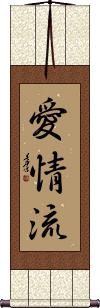
This is the title Aijō-Ryū, Aijou-Ryu or Aijou-Ryuu meaning “style of love and affection” or “flow of love” in Japanese.
Aiki-Jutsu
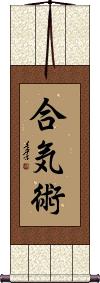
合気術 (Aiki-Jutsu) is a school of martial arts descended from Daitō-ryū Aiki-jūjutsu.
Note: Some also romanize 合気術 as Aiki-Jitsu.
Asayama Ichiden-Ryu
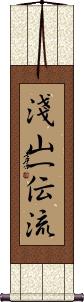
浅山一伝流 or Asayama Ichiden-ryū is a Japanese koryū martial art founded in the late Muromachi period by Asayama Ichidensai Shigetatsu.
Feeling of Bliss
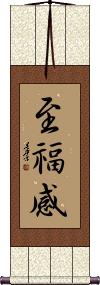
至福感 is “feelings of bliss” in Japanese.
A breakdown of the Kanji in this title:
至福 (shifuku) beatitude; supreme bliss.
感 (kan) feeling; sensation; emotion; admiration; impression.
Bushidokan
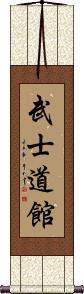
武士道館 is the title Bushidokan or Bushido-Kan.
Bushinkan
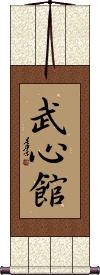
武心館 is the title for Bushinkan or Bushin-kan, which translates roughly as Warrior Heart Hall/House.
Bushi-Ryu Jujutsu
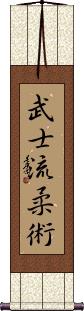
武士流柔術 is a special title added for a customer's specific school/style of Jujutsu.
Please only order this if you are a member/practitioner of this style.
Chidokan
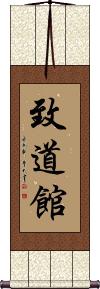
致道館 is the name Chidokan.
Chidōkan was established in 1805. The original Chidōkan school was located in Tsuruoka, Japan.
The original school taught a combination of traditional Chinese literature, Ogasawara-ryū etiquette, Chinese medicine and martial arts alongside Confucianism.
Chito-Ryu
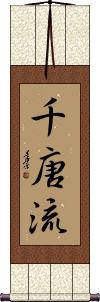
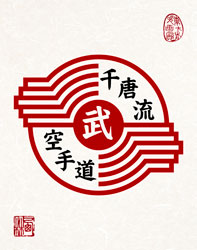
千唐流 (Chitō-Ryū, Chito-Ryu, or Chitoryu) is a style of karate founded by Tsuyoshi Chitose.
Here's the meaning of each character of the title:
千 = 1000
唐 = China (literally Tang, as in Tang Dynasty).
流 = Style or School.
Together, Chito-Ryu means “1,000 [year old] Chinese style.”
I will leave it up to you whether this is of Japanese or Okinawan style. The title certainly suggests roots traced back to China.
Chowa-Ryu Jujitsu
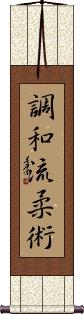
調和流柔術 is the title for Chowa-Ryu Jujitsu.
This roughly translates as harmonious-flow Jujitsu.
The first two characters are sometimes romanized as chōwa, chouwa, chowa, or cho-wa.
The Great Path has No Gate
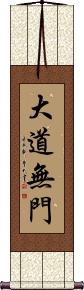
大道無門 is a Buddhist proverb that means “The Great Way has no entrance,” “The Great Way is gateless,” or “The Great Path lacks a gate.”
This can be translated in many other ways.
This concept was authored within a long sacred text by 無門慧開 (known as Wúmén Huìkāi in Chinese or Mumon Ekai in Japanese). He was a Chinese Chan Master (in Japanese, a Zen Master) who lived between 1183 and 1260 AD. His most famous work was a 48-koan collection titled “The Gateless Barrier” or “The Gateless Gate” (無門關 Wú Mén Guān in Chinese, or 無門関 Mu Mon Kan in Japanese). This calligraphy title is a notable line from this collection.
I like this reference to the source of this proverb: The Gateless Gate 無門關
Daito-Ryu
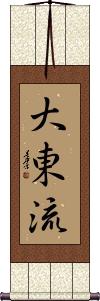
大東流 is Daitō-ryū, a Japanese martial art style - usually associated with Aikido.
Daito-Ryu Aiki-jujutsu
School of Japanese Martial Arts
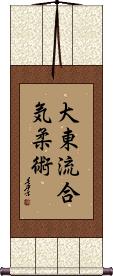
大東流合気柔術 is Daitō-Ryū Aiki-jūjutsu, a Japanese martial art established by Takeda Sōkaku.
The most famous student of Daitō-Ryū Aiki-jūjutsu is Morihei Ueshiba who later founded the school or branch of martial arts known as Aikido.
Note: 大東流合気柔術 can also be romanized as Daito-ryu Aiki-Jujutsu, Daitou-Ryuu Aiki-Juujutsu or Daito-Ryu Aiki-Jujitsu.
Eishin-Ryu
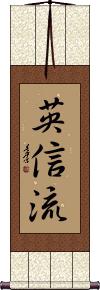
英信流 is the Japanese martial arts term, Eishin-ryu.
This can also be pronounced Hidenobu-ryu. The direct meaning is something like, hero faith school (or school of heroic faith).
Encourage
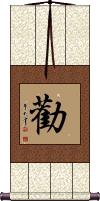
勸 is the simplest Chinese, Japanese Kanji, and old Korean Hanja word for encouragement or the act of encouraging someone.
This can also mean: to advise; to urge; to try to persuade; to exhort; to console; to soothe.
Unwavering Hall / Fudoshinkan

不動心館 can be translated as “Fudoshinkan,” or “Immovable Mind Hall.”
Fudoshinkan (不動心館) refers to various Japanese martial arts schools, primarily focusing on Aikido, Iaido (sword art), and Jodo (short staff), emphasizing the concept of Fudoshin (不動心) – a calm, immovable mind in the face of challenge, reflecting traditional samurai spirit through dynamic training and inner peace
Immovable mind; unwavering composure. Hall/school (as in -kan / -gwan).
Fudoshin-Ryu

不動心流 can be translated as “Fudoshin-Ryu,” or “Immovable Mind Style.”
Genseiryu / Gensei-Ryu
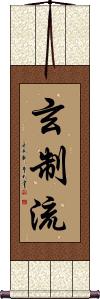
玄制流 is the Japanese title for the Genseiryū or Gensei-Ryū style of Karate.
Gojukan / Goju-Kan
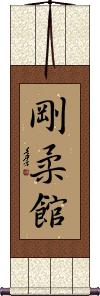
剛柔館 is the martial arts style Gojukan or Goju-Kan.
The meaning is “hardness [and] softness hall.”
剛 = Hard, firm, or strong.
柔 = Soft, softness, flexible, supple, yielding, gentleness, or pliant.
館 = Hall, building, school room, or an alternate word for a dojo.
Goju Ryu
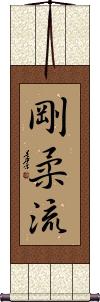
剛柔流 is the title of the Goju-Ryu or Gōjū-Ryū school/style of Karate or Japanese martial arts.
Sometimes romanized as Gojo-Ryu or Gojoryu, though technically, it should be Gōjū-Ryū (the accents indicating long vowel sounds like “gou juu ryuu”).
Goju Ryu Karate-Do
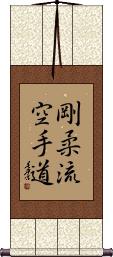
剛柔流空手道 is the title of the Goju-Ryu Karate-Do school of martial arts.
Goju Shoto-Ryu

剛柔松濤流 is the martial arts title Goju Shoto-Ryu in Japanese Kanji.
Go Kan Ryu
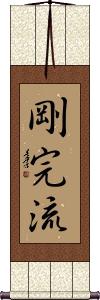
剛完流 is the title of the Gokan-Ryu or “Go Kan Ryu” martial art.
Gu
Surname

顧 is the Chinese surname Gu.
顧 means, “to look after” or “consider.”
Other characters can be surnames and romanize as Gu, so make sure you are not looking for 谷 (valley/grain), 古 (ancient), or 辜 (guilt).

グ is the name Gu in Japanese Katakana.
This is probably not what you are looking for, as Gu is more commonly a Chinese surname. Unless your non-Chinese parents named you Gu, this is not what you want.
Note: Because this title is entirely Japanese Katakana, it should be written by a Japanese calligrapher.
Hakko-Ryu
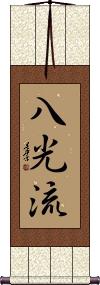
八光流 (Hakkō-Ryū) is a style of jujutsu associated with Daito-Ryu.
The title Hakko-Ryu comes from the Japanese phrase which translates as “The Style of the Eighth Light,” or more literally, “Eighth Light Style.”
The 光 character is associated with brightness or brilliance. It can be used to describe someone of great talent or potential. So the meaning goes far beyond just light.
Hanko
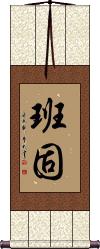
班固 is the Japanese surname Hanko.
Note: In Chinese, this title refers to Ban Gu, an Eastern Han dynasty historian who wrote the Dynastic History of Western Han.
Isshin-Kai
Isshin Society

一心会 is the Japanese martial arts title “Isshinkai” or “Isshin-Kai.”
It literally means “One Heart Association” or “Single-Heart Club.” This title is often associated with Isshin-Ryu Aikido and Isshin-Ryu Karate-Do. This title is an appropriate name for a dojo that teaches these styles.
In calligraphy, 一心会 conveys legitimacy, unity, and shared standards.
一心会 is understood as Chinese and Korean Hanja (though written as 一心會 in Traditional Chinese, and in modern times, 일심회 in Korean Hangul).
Isshin Hall / Isshinkan

一心館 can be translated as “Isshin-kan,” or “Single-Mindedness Hall/School.”
Isshin-Ryu / Isshin Style

一心流 is the title for Isshin-Ryu.
The literal meaning is “one heart method.” You could also translate it as “Unified Hearts Method,” “One-Mind School” or “One-Heart Style.”
It implies people doing things as if with one heart and mind.
As a style or lineage name, this phrase suggests a school founded on simplicity, unity of intent, and clarity of principle rather than excessive technical complexity.
The second Kanji can be defined as the heart, mind, or essence of your being. Clearly, there's a multitude of ways you can define this title in English.
See Also: Isshin-Kai
Isshin Ryu Karate Do
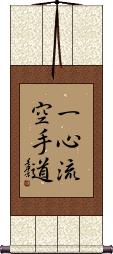
一心流空手道 is the full title for Isshin-Ryu Karate-Do.
The literal meaning is “one heart method empty hand way.”
There are other ways to translate this, but if you are looking for this title, you already know that.
This would make a great wall scroll for your dojo or private studio if you study this form of Japanese (technically from Okinawa) Karate.
Because this is a specifically-Japanese title, I strongly recommend that you select our Japanese Master Calligrapher to create this artwork.
Itto-Ryu

一刀流 is is a Japanese martial art primarily utilizing the sword.
There are many sub-styles of Itto-Ryu and this martial arts had significant influence on the development of modern Kendo.
Though 一刀流 is pronounceable in Chinese with the meaning, “One-Sword Style,” this should be considered a Japanese-only style.
Iwama Ryu
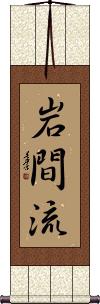
This is the martial arts style Iwama Ryu Japanese Kanja.
Joyful
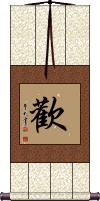
歡 means joyous, happy, delightful, and pleased.
歡 represents external happiness that may have you clapping and cheering.
Please note: The other happiness/joyful which looks like "喜" is more popular.
歡 is the ancient/old version in China and Japan. After WWII in Japan, they started using 歓. Just let us know if you want this modern version instead of the ancient one.
See Also: Happiness
Kanazawa-Ryu

This is the title Kanazawa Ryu in Japanese Kanji.
This can refer to Hirokazu Kanazawa, founder of Shotokan or the city Kanazawa in Japan.
金 = gold
沢 = marsh / swamp / abundance / richness
流 = style / lineage / system / school
So Kanazawa-Ryū literally means:
“Golden Marsh School”
or poetically
“School of Abundant Gold / Rich Spirit.”
Kanzen Goju-Ryu
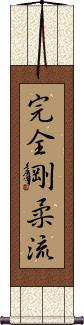
完全剛柔流 is the title of the “Kanzen Goju-Ryu” or “Kanzen Gōjū-Ryū” school of Japanese martial arts.
完全 or Kanzen means complete, whole, total, or entire.
Katori Shinto-ryu
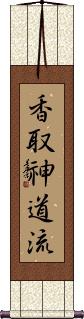
香取神道流 is the Japanese Kanji for the Katori Shintō-ryū martial arts.
Kenshin-Kan
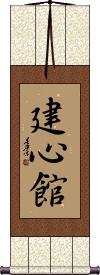
This is the Japanese martial arts school, “Kenshin-Kan” or “Ken Shin Kan” in Kanji.
Kobukan
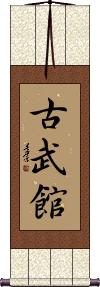
古武館 is the martial arts style Kobukan or Kobu-Kan.
The meaning is “ancient warrior hall.”
古 = Old, ancient, antique, or paleo-
武 = Martial, warrior, or military.
館 = Hall, building, school room, or an alternate word for a dojo.
Koryu Bujutsu
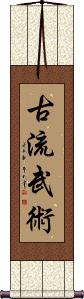
古流武術 is the title “Ko-ryū Bujutsu” which basically means “old school martial arts” or “ancient flow martial arts.”
This is more a Japanese than a Chinese martial arts term but would be understood in Chinese as well.
Koushinkan / Koshinkan

孝心館 is the title for Koushinkan, Koshinkan, or Kōshin-Kan.
The romanization of this title varies a little, but the original characters are the same.
孝 = Filial piety or obedience.
心 = Heart, mind, intention, or center.
馆 = Building or establishment (dojo).
This can be pronounced in Chinese and has the same meaning, but you should consider this a Japanese martial arts title.
Matsubayashi-Ryu Karate-Do
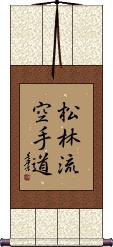
鬆林流空手道 is the Japanese title for the Matsubayashi-Ryu Karate-Do school of martial arts.
If directly translated, it means “Pine Forest Style Empty Hand Way.”
Notes:
1. 松林流 can be pronounced Matsubayashi-Ryū or Shōrin-Ryū. This can be confusing as Shōrin can also represent 少林 which refers to the Shaolin (little forest) style.
2. 松 can also be written in the traditional form of 鬆.
Matsumura Shorin-Ryu
Matsumura Sōkon's Shaolin Style
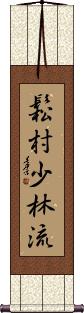
松村少林流 is the Japanese martial arts title “Matsumura Shorin-ryu.”
Meibukan
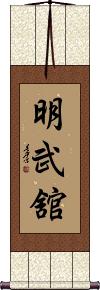
Meibukan (明武舘) is a branch of Gōjū-ryū karate. It was created by Meitoku Yagi, a student of Goju-ryu's founder, Chojun Miyagi. Meibukan means "House of the pure-minded warrior."
Meifu Shinkage-Ryu
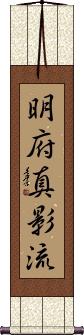
This is the martial arts style Meifu Shinkage-Ryu in Japanese Kanji.
Mugai-Ryu

無外流 is the name Mugai-Ryu in Japanese Kanji.
無外流 means “Without Outward Flow” or “Outer Nothingness School” and is a Japanese koryū martial art school.
Muso Jikiden Eishin-Ryu
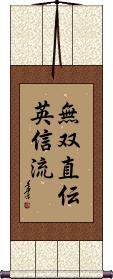
無双直伝英信流 is the modern way to write the Japanese martial arts term, Musō Jikiden Eishin-Ryū (iaido style).
Sometimes the second Kanji is written as 雙, and the fourth Kanji is written 傳, making the full title 無雙直傳英信流. See the other version of this title if you want that traditional version.
Muso Jikiden Eishin-Ryu
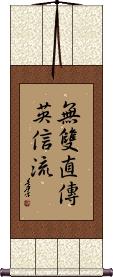
無雙直傳英信流 is the traditional or old way to write the Japanese martial arts title, Musō Jikiden Eishin-Ryū (iaido style).
In modern Japanese, the second and fourth Kanji are different, making them 無双直伝英信流.
Musō Jikiden Eishin-Ryū is arguably the most renowned Japanese sword art school, with a history dating back to the early 1600s.
Muso Shinden-Ryu
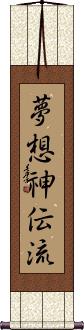
夢想神伝流 is the martial arts style Musō Shinden-Ryū in Japanese Kanji.
Nippon Shorin-Ryu
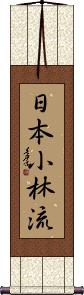
日本小林流 is the Japanese title Nippon Shorin-ryu.
Niten Ichi Ryu

&#; is the martial arts title, Niten Ichi-Ryū.
The rough translation is “Two Heavens as One.”
Okinawa Goju Ryu Karate-Do
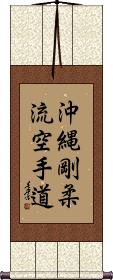
沖縄剛柔流空手道 is the title of the Okinawa Goju-Ryu Karate-Do school of martial arts.
Okinawan Goju-Kan
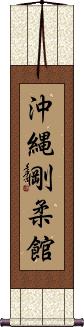
沖縄剛柔館 is the martial arts style Okinawan Gojukan or Okinawan Goju-Kan.
The meaning is “Okinawa hardness [and] softness hall.”
沖縄 = Okinawa.
剛 = Hard, firm, or strong.
柔 = Soft, softness, flexible, supple, yielding, gentleness, or pliant.
館 = Hall, building, school room, or an alternate word for a dojo.
Ono-Ha Itto-Ryu
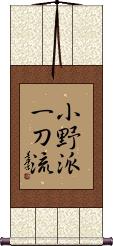
小野派一刀流 is Ono-ha Ittō-ryū, the oldest branch of Ittō-ryū styles from Ittosai Kagehisa's original martial arts style.
Qian
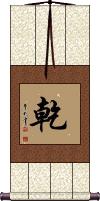
This can be the Chinese ancient surname Gan or current surname Qian. In Japanese, it can be the surname Nukui, Susumu, Ken, Kan, Kawaki, Kawai, Inute, or Inui.
The meaning of this character varies a lot depending on context. These meanings include dry, clean, foster, adoptive, heaven, male, masculine, enduring, or continual.
The “Gan” version of this character was converted to Simplified Chinese as 干 in 1965. However, the “Qian” pronunciation is not associated with 干. Though to add to the confusion, there is an unrelated Simplified Chinese character 千 that romanizes as “Qian” and is also a surname.
Saifa
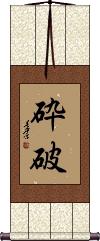
砕破 is the title “Saifa” written in Japanese Kanji. This literally means “smash and tear.” Like most styles of martial arts, Saifa has origins in China. It was Higashionna that brought Saifa to Okinawa.
Saifa is generally associated with Gōjū-ryū as a title for a kata.
Notes: While Saifa is often written as 砕破, it can also be written 碎破 (just a variation on the first Kanji). Sometimes written in Japanese Katakana as サイハ.
Sanchin
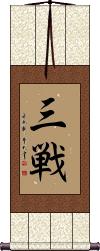
三戦 is a title that literally means “three battles/conflicts/wars.”
三戦 is often figuratively used to relay the idea of a battle to unify the mind, body, and spirit.
Original usage likely comes from Fujian province in Southern China (just across from Taiwan).
This title is used in various schools such as Okinawan Karate, Uechi-Ryū, Gōjū-Ryū, Fujian White Crane, and Five Ancestors among others.
Satori-Ryu

This is the title Satori-Ryu in Japanese.
The meaning is “Enlightenment School” or “School of Enlightenment”
Seishi-Kan

誠志館 is the martial arts style Seishi-Kan or Seishikan in Japanese Kanji.
The meaning is “House of True Will” or “House of Truth and Will”.
A few schools use a different first character for a martial arts style with the same romanization and a similar meaning, 正志館. Click here to order 正志館.
Do not confuse Seishi-Kan with Seishin-Kan! It's not the same!
Seishin-Kan

聖心館 is the martial arts style Seishin-Kan or Seishinkan in Japanese Kanji.
The meaning is “Sacred Heart Hall” or “House of the Sacred/Good Heart”.
Do not confuse Seishin-Kan with Seishi-Kan! It's not the same!
Seunchin
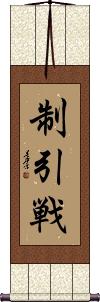
Seiunchin or 制引戦 is a kata of Goju-ryu karate.
Shidokan
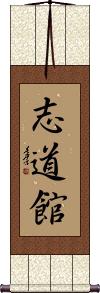
志道館 is the Japanese title Shidōkan (sometimes pronounced Kokorozashi-do-kan).
志道館 is often associated with Shorin-ryu Shidokan (小林流志道館). Do not confuse this title with the newer 士道館 which is also romanized as Shidōkan.
Shinden Fudo Ryu
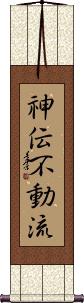
神伝不動流 is the title of the martial arts school/style known as Shinden Fudo Ryū.
Shinkage-Ryu
Style of Japanese sword fighting
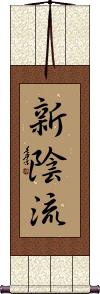
新陰流 is the title for “Shinkage-Ryu,” and the style of Japanese fencing or sword fighting.
Shin Kakuto-Ryu
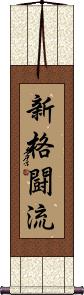
This is the title for Shinkakutō-ryū or Shin Kakuto Ryu in Japanese martial arts.
新格闘流 or Shinkakutō-ryū means “New Standard Fighting Style” or just “New Fighting Style.”
Shinto Muso-Ryu
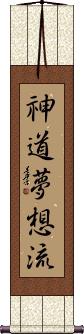
神道夢想流 is Shintō Musō-ryū, or Shindō Musō-ryū.
This is usually used in the context of jōdō, a traditional school of the Japanese martial art of jōjutsu (the art of wielding the short staff).
Shito-Ryu Ki-Me-Kan Karate-Do
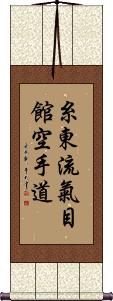
糸東流氣目館空手道 is the title for Shito-Ryu Ki-Me-Kan Karate-Do.
A school of Karate.
Note that while this title can be pronounced in Chinese, it only makes complete sense in Japanese.
Shito-Ryu
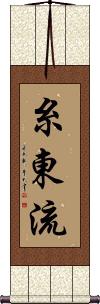
糸東流 is the title for Shito-Ryu.
Note that while this title can be pronounced in Chinese, it only makes complete sense in Japanese.
Shito-Ryu Karate-Do
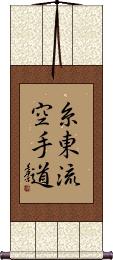
糸東流空手道 is the title for Shito-Ryu Karate-Do.
Shobayashi-Ryu

This is the title Shōbayashi-Ryu in Japanese Kanji.
小 = small
林 = forest
流 = style / school / lineage
Notes:
小林 can be read Shōbayashi or Kobayashi in Japanese.
In American/Okinawan karate groups, Shōbayashi is used to distinguish the lineage
Shobayashi Shorin-Ryu

小林少林流 is the title Shobayashi Shorin-Ryu in Japanese Kanji.
Shōbayashi Shōrin-Ryū is of real Okinawan karate lineage, but the romanization causes confusion.
小林 = Shōbayashi (can also be read Kobayashi)
少林流 = Shōrin-Ryū (Shaolin style) which means “Small-forest Shaolin School.”
This reflects the lineage that uses 小林 (small forest) instead of 松林 (pine forest) or 少林 (Shaolin) as the branch identifier of the Okinawan martial arts style.
You should use this, 小林流 (Shōbayashi/Kobayashi-Ryū) or “Small-forest style” for the Chibana lineage.
You should use 松林流 (Matsubayashi-Ryū) or “Pine-forest style” for the Nagamine lineage.
Shorei-Ryu
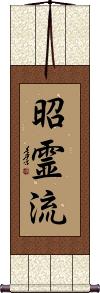
昭霊流 is Shōrei-Ryū, a type of Okinawan karate.
Shōrei-ryū means “the style of inspiration.”
Shorin-Ryu Shidokan
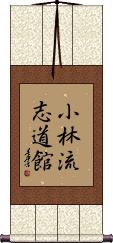
小林流志道館 is the Japanese title Shorin-ryu Shidōkan.
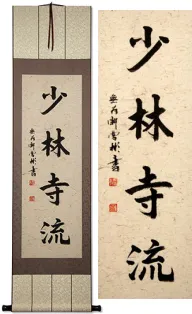
Shorin Ji Ryu
Shaolin Temple Style
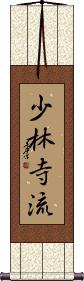
少林寺流 is the Japanese martial arts title “Shorin-ji-ryu.”
Though the first part of the title comes from the Shaolin temple in China. In Japan, this refers to an Okinawa school of karate.
Note: Sometimes, this title is written without the “ji” or “temple” Kanji.
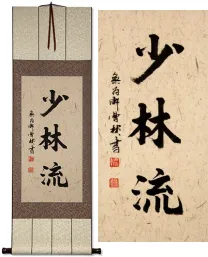
Shorin-Ryu
Shaolin Style
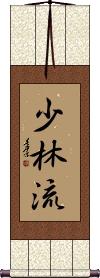
少林流 is the Japanese martial arts title “Shorin-ryu.”
Though the first part of the title comes from the Shaolin (small forest) monks of China.
In Japan, this refers to the Okinawa School of Karate.
 Note that often in Japanese, the first Kanji of this title was changed to the version shown to the right. If you prefer this version, please click on the Kanji to the right instead of the button above.
Shorin-Ryu Shobukan
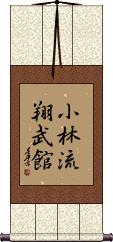
小林流翔武館 is the title, Shorin-Ryu Shobukan meaning “Little Forest Style - Soaring Warrior House” in Japanese.
There is more than one version of Shorin-Ryu and Shobukan, so make sure the characters here match the ones used at your dojo.
Shoshin-Ryu
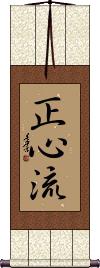
正心流 is a Japanese title that means “right heart style,” “true mind method,” or “truthful heart school.”
The first character means right, correct, greater, or true.
The second character means heart, mind, soul, or essence.
The third character means style, method, or some will translate it as a school.
Please note, there is more than one martial arts school that romanizes as Shoshin-Ryu.
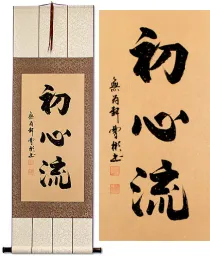
Shoshin-Ryu
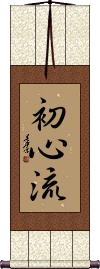
初心流 is often translated in Japanese as “beginner's mind style,” “beginner's spirit method,” or “beginner’s-mind school”
The first character means first, initial, primary, junior, beginning, or basic.
The second character means heart, mind, soul, or essence.
The third character means style, method, or some will translate it as a school.
Please note, there is more than one martial arts school that romanizes as Shoshin-Ryu.
Shotokan-Ryu
Martial arts term
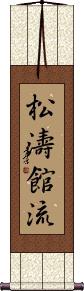
松濤館流 is the Japanese martial arts title, Shotokan-Ryu.
This is a style or school of karate.
Shugyo-Kan
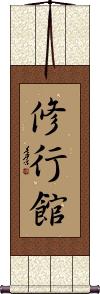
修行館 is shugyō-kan or shugyou-kan in Japanese.
Shukokai
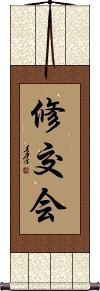
修交会 is Shūkōkai, Shūkō-kai, or Shuko-kai, a martial arts style derived from Shitō-ryū (糸東流) back in the 1940s.
Shuri-Ryu
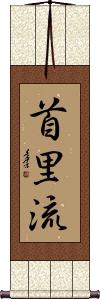
首里流 is the title of Shuri-Ryu, a style of Karate established in the mid-1900s by Robert Trias in Arizona.
Simplicity
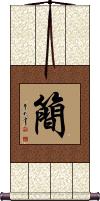
簡 expresses the idea of something simple or the essence of simplicity in life in Chinese.
This can also refer to a simple slip of bamboo for taking notes or writing a letter (especially in Korean Hanja).
Technically this is a word meaning simplicity and brevity in Japanese but it's rarely used in modern Japanese. Therefore, you should probably only select this character if your audience is Chinese.
See Also: Brevity
Six
The number six
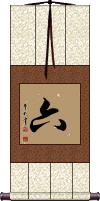
六 is the number 6 in Chinese, Korean Hanja, and Japanese Kanji. I have no idea why you would want this as a calligraphy wall scroll, but hundreds of visitors search for this number.
In Japanese, this character can be pronounced differently depending on context. It can be ryu, roku, mu, and a few others when combined with other Kanji.
There's just one way to pronounce this in Chinese. Korean also has just one pronunciation.
Also written 陸 or 陆 as an anti-fraud banker’s numeral.
Taido
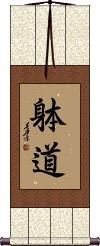
Taidō (The Way of the Body) is a style of Karate practiced in Japan and popular worldwide.
Taidō or 躰道 traces a lineage from Genseiryū (玄制流), which came from Shuri-te (首里手), one of the original martial arts schools of ancient Okinawa.
The first character 躰 is a variant of the original Chinese character 體. In modern Japan, they tend to use 体, a more simple character form. 体 is also the modern Simplified Chinese form of 體.
The 躰 character is correct for this 躰道 martial arts title. But it can be confusing with so many variants out there, not to mention other homophonic Japanese words that also romanize as Taidō or Taidou.
To have a bit more fun with this 躰 character, it has a 身 radical on the left, which sets it apart. The meaning doubles up on the “body” as 身 (shin) is a character that also means body in Japanese and Chinese. On the right is 本, which often means root, stem, origin, source, or fundamental (but can also mean “book” in some contexts). This has deviated from the original 體 which was 骨 (bone) + 豊 (vessel). Hence, the body was your “bone vessel” in ancient Asia.
The meaning of 躰, as well as 體 and 体, is usually translated as the body. When related to the physical body, it can also refer to the torso, trunk, build, physique, or the constitution of a person. As an extension of this, it can also refer to someone's health (good body = good health).
However, depending on the context, it can encompass other meanings such as form, style, system, experience, aspect, corpus, corporeal, substance, or essentials.
The second character, 道, is recognized and well-known as the “Way” and is the same “do” as in Karate-do or Aikido.
Tendo-Ryu
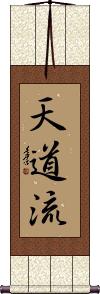
天道流 is the martial arts title Tendo-ryu or Tendō-ryū in Japanese Kanji. The meaning is “Heaven Way Style” or “Sky Way Method.”
Tenshin Buko-Ryu Heiho

天真武甲流兵法 is the Kanji title that romanizes as Tenshin Bukō-Ryū Heihō or Tenshin Buko-Ryu Heiho.
天真武甲流兵法 is a Japanese koryū martial art that has its roots in the Toda-ryū, founded in the late Muromachi period around the year 1560 by Toda Seigen.
This title can be pronounced in Chinese with a similar meaning, however, it should be considered a Japanese title.
Tenshin-Ryu Heiho
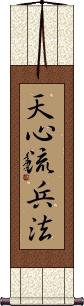
This is the martial arts style Tenshin-Ryū Heihō.
Tenshin Shoden Katori Shinto-ryu
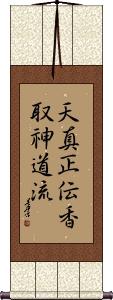
天真正伝香取神道流 is Tenshin Shōden Katori Shintō-ryū, a very old form of Japanese martial arts.
Toukon-Ryu
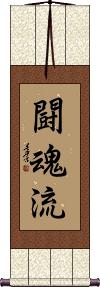
闘魂流 is the name of the Japaense style of Karate known as Toukon-Ryu.
The meaning is “Fighting Spirit Style.”
Toyama-Ryu

戸山流 or Toyama-Ryu is a relatively modern Japanese swordsmanship style (gendai budo) developed in the early 20th century at the Toyama Military Academy in Japan.
It was designed to efficiently train Imperial Japanese Army officers in swordsmanship, with a focus on practical application for battlefield use.
Uechi-Ryu Karate-Do
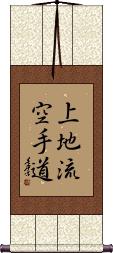
上地流空手道 is the title of the Uechi-Ryu Karate-Do school of Okinawan martial arts.
Uechi means “higher stages of practice” in a Buddhist context.
Uechi-Ryu
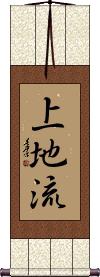
上地流 or Uechi-Ryū is the short name for a traditional style of Okinawan karate.
Uechi-Ryū is named after its creator, Kanbun Uechi. Uechi was an Okinawan man who left at the age of 19 for China to study Chinese martial arts and medicine.
The meaning of this title is “Uechi Flow,” “Uechi Style,” or “Uechi School.” Although, the name 上地 or Uechi can mean “higher stages of practice” in the Buddhist context. Therefore, you can stretch the meaning to be “Higher-Stages-of-Practice Style.”
Ueshiro Shorin-Ryu / Ueshiro Matsubayashi-Ryu

ウエシロ鬆林流 is the title Ueshiro Shorin-Ryu or Ueshiro Matsubayashi-Ryu in Japanese Katakana and Kanji.
Ueshiro's name is Okinawan, so there is no standard Japanese Kanji transliteration; therefore, a Katakana version (ウエシロ) is appropriate.
松林 can be romanized/pronounced as shorin or matsubayashi thus the two title variations.
Note: Because this selection contains some special Japanese Katakana characters, it should be written by a Japanese calligrapher.
Wado-Kai
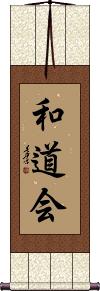
Wado-Kai is used as a title for styles of Karate and Aikido.
Breaking down the characters into the proper Japanese Romaji, you have “wa dou kai” or “wa dō kai.” The meaning is roughly-translated as “Harmony Way Club” or “Peace Method Association.” The first Kanji should probably be read as harmony, rather than peace in this case.
See Also: Wado-Ryu
Wado-Kai Aikido
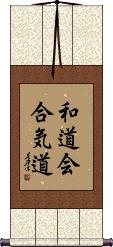
Wado-Ryu
Style of Karate or Jujitsu
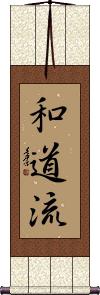
和道流 or Wado-Ryu is a style of Karate or Jujutsu (Jujitsu).
Note: Many will argue whether this is a style of Karate or Jujutsu.
While some find Wado-Ryu similar to Shotokan Karate, enough differences exist in perspective and technique that it stands by itself.
Breaking down the characters into the proper Japanese Romaji, you have “wa dou ryuu” or “wa dō ryū.” The meaning is roughly-translated as “Harmony Way Style” or “Peace Method Style.” The first Kanji should probably be read as harmony rather than peace in this case.
See Also: Wado-Kai
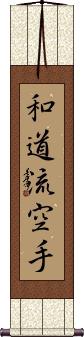
Wado-Ryu Karate
Yoshin-Ryu

This is the martial arts style Yōshin-Ryū or Yoshin-Ryu in Japanese Kanji.
This in-stock artwork might be what you are looking for, and ships right away...


Gallery Price: $106.00
Your Price: $58.88
Gallery Price: $178.00
Your Price: $98.88
Gallery Price: $180.00
Your Price: $99.88

Gallery Price: $106.00
Your Price: $58.88
The following table may be helpful for those studying Chinese or Japanese...
| Title | Characters | Romaji (Romanized Japanese) | Various forms of Romanized Chinese | |
| Aijou-Ryu | 愛情流 爱情流 | ai jou ryuu aijouryuu ai jo ryu | ||
| Aiki-Jutsu | 合氣術 合気術 | ai ki jutsu aikijutsu | ||
| Asayama Ichiden-Ryu | 淺山一伝流 浅山一伝流 | asa yama ichi den ryuu asayamaichidenryuu asa yama ichi den ryu | ||
| Feeling of Bliss | 至福感 | shi fuku kan shifukukan | ||
| Bushidokan | 武士道館 武士道馆 | bu shi dou kan bushidoukan bu shi do kan | wǔ shì dào guǎn wu3 shi4 dao4 guan3 wu shi dao guan wushidaoguan | wu shih tao kuan wushihtaokuan |
| Bushinkan | 武心館 | bu shin kan bushinkan | ||
| Bushi-Ryu Jujutsu | 武士流柔術 | bu shi ryuu ju jutsu bushiryuujujutsu bu shi ryu ju jutsu | ||
| Chidokan | 致道館 | chi dou kan chidoukan chi do kan | zhì dào guǎn zhi4 dao4 guan3 zhi dao guan zhidaoguan | chih tao kuan chihtaokuan |
| Chito-Ryu | 千唐流 | chi tou ryuu chitouryuu chi to ryu | ||
| Chowa-Ryu Jujitsu | 調和流柔術 调和流柔术 | chou wa ryuu ju jutsu chouwaryuujujutsu cho wa ryu ju jutsu | ||
| The Great Path has No Gate | 大道無門 大道无门 | dai dou mu mon daidoumumon dai do mu mon | dà dào wú mén da4 dao4 wu2 men2 da dao wu men dadaowumen | ta tao wu men tataowumen |
| Daito-Ryu | 大東流 | dai tou ryuu daitouryuu dai to ryu | ||
| Daito-Ryu Aiki-jujutsu | 大東流合氣柔術 大東流合気柔術 | dai tou ryuu ai ki ju jutsu daitouryuuaikijujutsu dai to ryu ai ki ju jutsu | ||
| Eishin-Ryu | 英信流 | ei shin ryuu eishinryuu ei shin ryu | ||
| Encourage | 勸 劝 | kan | quàn / quan4 / quan | ch`üan / chüan |
| Unwavering Hall Fudoshinkan | 不動心館 | fudōshin-kan | bù dòng xīn guǎn bu4 dong4 xin1 guan3 bu dong xin guan budongxinguan | pu tung hsin kuan putunghsinkuan |
| Fudoshin-Ryu | 不動心流 | fu dō shin ryū fudōshinryū | bù dòng xīn liú bu4 dong4 xin1 liu2 bu dong xin liu budongxinliu | pu tung hsin liu putunghsinliu |
| Genseiryu Gensei-Ryu | 玄制流 | |||
| Gojukan Goju-Kan | 剛柔館 刚柔馆 | gou juu kan goujuukan go ju kan | ||
| Goju Ryu | 剛柔流 刚柔流 | gou juu ryuu goujuuryuu go ju ryu | ||
| Goju Ryu Karate-Do | 剛柔流空手道 刚柔流空手道 | gou juu ryuu kara te dou goujuuryuukaratedou go ju ryu kara te do | ||
| Goju Shoto-Ryu | 剛柔鬆濤流 剛柔松濤流 | go ju shou to ryuu gojushoutoryuu go ju sho to ryu | ||
| Go Kan Ryu | 剛完流 | gou kan ryuu goukanryuu go kan ryu | ||
| Gu | 顧 顾 | gù / gu4 / gu | ku | |
| Gu | グ | gu | ||
| Hakko-Ryu | 八光流 | hakkou ryuu hakkouryuu hako ryu | ||
| Hanko | 班固 | hanko | bān gù / ban1 gu4 / ban gu / bangu | pan ku / panku |
| Isshin-Kai | 一心会 / 一心會 一心会 | isshin kai / isshinkai / ishin kai | yī xīn huì yi1 xin1 hui4 yi xin hui yixinhui | i hsin hui ihsinhui |
| Isshin Hall Isshinkan | 一心館 | isshin-kan / ishin-kan | yī xīn guǎn yi1 xin1 guan3 yi xin guan yixinguan | i hsin kuan ihsinkuan |
| Isshin-Ryu Isshin Style | 一心流 | isshin ryuu isshinryuu ishin ryu | yī xīn liú yi1 xin1 liu2 yi xin liu yixinliu | i hsin liu ihsinliu |
| Isshin Ryu Karate Do | 一心流空手道 | i sshin ryuu kara te dou isshinryuukaratedou i shin ryu kara te do | ||
| Itto-Ryu | 一刀流 | ittou ryuu / ittouryuu / itto ryu | yī dāo liú / / | |
| Iwama Ryu | 岩間流 | iwa ma ryuu iwamaryuu iwa ma ryu | ||
| Joyful | 歡 欢 / 歓 | kan | huān / huan1 / huan | |
| Kanazawa-Ryu | 金沢流 | kana zawa ryuu kanazawaryuu kana zawa ryu | ||
| Kanzen Goju-Ryu | 完全剛柔流 完全刚柔流 | kan zen gou juu ryuu kanzengoujuuryuu kan zen go ju ryu | ||
| Katori Shinto-ryu | 香取神道流 | ka tori shin tou ryuu katorishintouryuu ka tori shin to ryu | ||
| Kenshin-Kan | 建心館 | ken shin kan kenshinkan | ||
| Kobukan | 古武館 古武馆 | ko bu kan / kobukan | ||
| Koryu Bujutsu | 古流武術 古流武术 | ko ryuu bu jutsu koryuubujutsu ko ryu bu jutsu | gǔ liú wǔ shù gu3 liu2 wu3 shu4 gu liu wu shu guliuwushu | ku liu wu shu kuliuwushu |
| Koushinkan Koshinkan | 孝心館 孝心馆 | kou shin kan koushinkan ko shin kan | xiào xīn guǎn xiao4 xin1 guan3 xiao xin guan xiaoxinguan | hsiao hsin kuan hsiaohsinkuan |
| Matsubayashi-Ryu Karate-Do | 松林流空手道 | matsu bayashi ryuu kara te dou matsu bayashi ryu kara te do | ||
| Matsumura Shorin-Ryu | 鬆村少林流 松村少林流 | matsu mura shou rin ryuu matsumurashourinryuu matsu mura sho rin ryu | ||
| Meibukan | 明武舘 | mei bu kan / meibukan | ||
| Meifu Shinkage-Ryu | 明府真影流 | mei fu shin kage ryuu meifushinkageryuu mei fu shin kage ryu | ||
| Mugai-Ryu | 無外流 | mu gai ryuu mugairyuu mu gai ryu | ||
| Muso Jikiden Eishin-Ryu | 無雙直傳英信流 無双直伝英信流 | mu sou jiki den ei shin ryuu musoujikideneishinryuu mu so jiki den ei shin ryu | ||
| Muso Jikiden Eishin-Ryu | 無雙直傳英信流 無双直伝英信流 | mu sou jiki den ei shin ryuu musoujikideneishinryuu mu so jiki den ei shin ryu | ||
| Muso Shinden-Ryu | 夢想神伝流 | mu sou shin den ryuu musoushindenryuu mu so shin den ryu | ||
| Nippon Shorin-Ryu | 日本小林流 | nippon shou rin ryuu nipponshourinryuu nipon sho rin ryu | ||
| Niten Ichi Ryu | 二天一龍 二天 一流 | ni ten ichi ryuu nitenichiryuu ni ten ichi ryu | ||
| Okinawa Goju Ryu Karate-Do | 沖縄剛柔流空手道 沖縄刚柔流空手道 | oki nawa gou juu ryuu kara te dou oki nawa go ju ryu kara te do | ||
| Okinawan Goju-Kan | 沖縄剛柔館 沖縄刚柔馆 | okinawa gou juu kan okinawagoujuukan okinawa go ju kan | ||
| Ono-Ha Itto-Ryu | 小野派一刀流 | ono ha Ittou ryuu onohaIttouryuu ono ha Itto ryu | ||
| Qian | 乾 干 | ken | gān qián gan1 / qian2 gan / qian gan/qian | kan ch`ien kanchien kan chien |
| Saifa | 砕破 | sai fa / saifa | ||
| Sanchin | 三戦 | san sen / sansen | sān zhàn / san1 zhan4 / san zhan / sanzhan | san chan / sanchan |
| Satori-Ryu | 悟り流 | sato ri ryuu satoriryuu sato ri ryu | ||
| Seishi-Kan | 誠志館 | sei shi kan seishikan | ||
| Seishin-Kan | 聖心館 | sei shin kan seishinkan | ||
| Seunchin | 制引戦 | seunchin | ||
| Shidokan | 志道館 | shi dou kan shidoukan shi do kan | ||
| Shinden Fudo Ryu | 神伝不動流 | shin den fu do ryuu shindenfudoryuu shin den fu do ryu | ||
| Shinkage-Ryu | 新陰流 | shin kage ryuu shinkageryuu shin kage ryu | ||
| Shin Kakuto-Ryu | 新格闘流 | shin kaku tou ryuu shinkakutouryuu shin kaku to ryu | ||
| Shinto Muso-Ryu | 神道夢想流 | shin tou mu sou ryuu shintoumusouryuu shin to mu so ryu | ||
| Shito-Ryu Ki-Me-Kan Karate-Do | 糸東流氣目館空手道 糸东流気目馆空手道 | shito-ryu ki-me-kan karate-dou shito-ryu ki-me-kan karate-do | mì dōng liú qì mù guǎn kōng shǒu dào mi4 dong1 liu2 qi4 mu4 guan3 kong1 shou3 dao4 mi dong liu qi mu guan kong shou dao | mi tung liu ch`i mu kuan k`ung shou tao mi tung liu chi mu kuan kung shou tao |
| Shito-Ryu | 糸東流 糸东流 | shii tou ryuu shiitouryuu shi to ryu | mì dōng liú mi4 dong1 liu2 mi dong liu midongliu | mi tung liu mitungliu |
| Shito-Ryu Karate-Do | 糸東流空手道 糸东流空手道 | shii tou ryuu kara te dou shiitouryuukaratedou shi to ryu kara te do | ||
| Shobayashi-Ryu | 小林流 | shou bayashi ryuu shoubayashiryuu sho bayashi ryu | ||
| Shobayashi Shorin-Ryu | 小林少林流 | shou baya shi shou rin ryuu shoubayashishourinryuu sho baya shi sho rin ryu | ||
| Shorei-Ryu | 昭霊流 | shou rei ryuu shoureiryuu sho rei ryu | ||
| Shorin-Ryu Shidokan | 小林流志道館 | sho rin ryu shi dou kan shorinryushidoukan sho rin ryu shi do kan | ||
| Shorin Ji Ryu | 少林寺流 | shou rin ji ryuu shourinjiryuu sho rin ji ryu | ||
| Shorin-Ryu | 少林流 | shou rin ryuu shourinryuu sho rin ryu | ||
| Shorin-Ryu Shobukan | 小林流翔武館 | sho rin ryuu sho bu kan shorinryuushobukan sho rin ryu sho bu kan | ||
| Shoshin-Ryu | 正心流 | shou shin ryuu shoushinryuu sho shin ryu | ||
| Shoshin-Ryu | 初心流 | shou shin ryuu shoushinryuu sho shin ryu | ||
| Shotokan-Ryu | 松濤館流 | shou tou kan ryuu shoutoukanryuu sho to kan ryu | ||
| Shugyo-Kan | 修行館 | shu gyou kan shugyoukan shu gyo kan | ||
| Shukokai | 修交会 / 修交會 修交会 | shuu kou kai shuukoukai shu ko kai | ||
| Shuri-Ryu | 首里流 | shu ri ryuu shuriryuu shu ri ryu | ||
| Simplicity | 簡 简 | kan | jiǎn / jian3 / jian | chien |
| Six | 六 / 陸 六 / 陆 | ryuu / roku / muu ryu / roku / mu | liù / liu4 / liu | |
| Taido | 躰道 | tai dou / taidou / tai do | ||
| Tendo-Ryu | 天道流 | ten dou ryuu tendouryuu ten do ryu | ||
| Tenshin Buko-Ryu Heiho | 天真武甲流兵法 | ten shin bu kou ryu hei ho tenshinbukouryuheiho ten shin bu ko ryu hei ho | tiān zhēn wǔ jiǎ liú bīng fǎ tian1 zhen1 wu3 jia3 liu2 bing1 fa3 tian zhen wu jia liu bing fa tianzhenwujialiubingfa | t`ien chen wu chia liu ping fa tienchenwuchialiupingfa tien chen wu chia liu ping fa |
| Tenshin-Ryu Heiho | 天心流兵法 | ten shin ryuu hei hou tenshinryuuheihou ten shin ryu hei ho | ||
| Tenshin Shoden Katori Shinto-ryu | 天真正伝香取神道流 | ten shin shou den ka tori shin tou ryuu ten shin sho den ka tori shin to ryu | ||
| Toukon-Ryu | 闘魂流 | tou kon ryuu toukonryuu to kon ryu | ||
| Toyama-Ryu | 戸山流 | to yama ryuu toyamaryuu to yama ryu | ||
| Uechi-Ryu Karate-Do | 上地流空手道 | ue chi ryuu kara te dou uechiryuukaratedou ue chi ryu kara te do | ||
| Uechi-Ryu | 上地流 | ue chi ryuu uechiryuu ue chi ryu | ||
| Ueshiro Shorin-Ryu Ueshiro Matsubayashi-Ryu | ウエシロ鬆林流 ウエシロ松林流 | u e shi ro matsu bayashi ryuu / u e shi ro shou rin ryuu u e shi ro matsu bayashi ryu / u e shi ro sho rin ryu | ||
| Wado-Kai | 和道會 和道会 | wa dou kai / wadoukai / wa do kai | ||
| Wado-Kai Aikido | 和道會合気道 和道会合気道 | wa dou kai ai ki do wadoukaiaikido wa do kai ai ki do | ||
| Wado-Ryu | 和道流 | wa dou ryuu wadouryuu wa do ryu | ||
| Wado-Ryu Karate | 和道流空手 | wa dou ryuu kara te wadouryuukarate wa do ryu kara te | ||
| Yoshin-Ryu | 楊心流 | you shin ryuu youshinryuu yo shin ryu | ||
| In some entries above you will see that characters have different versions above and below a line. In these cases, the characters above the line are Traditional Chinese, while the ones below are Simplified Chinese. | ||||

Successful Chinese Character and Japanese Kanji calligraphy searches within the last few hours...



