Many custom options...


And formats...



Not what you want?
Try other similar-meaning words, fewer words, or just one word.
Go With God in Chinese / Japanese...
Buy a Go With God calligraphy wall scroll here!
Personalize your custom “Go With God” project by clicking the button next to your favorite “Go With God” title below...
Switched to secondary search mode due to lack of results using primary.
These secondary results may not be very accurate. Try a different but similar meaning word or phrase for better results. Or...
Look up Go With God in my Japanese Kanji & Chinese Character Dictionary(My dictionary is a different system then the calligraphy search you just tried)
If you want a special phrase, word, title, name, or proverb, feel free to contact me, and I will translate your custom calligraphy idea for you.
1. Allah
4. Angel
6. Apollo
7. Art of War: 5 Points of Analysis
8. Ascend
10. Better to Choose Nothing, Rather than Make a Poor Choice
12. Blessed by God
13. Bond
14. Born To Be Wild
15. Boxing
16. Bushin / Bujin
17. Camellia
18. Chess
19. Child of God
20. Christian / Disciple of Christ
24. Confucius: Golden Rule / Ethic of Reciprocity
26. Daodejing / Tao Te Ching - Chapter 33
27. I am the Master of My Destiny
28. Religious Devotion / Faith in God / Religious Faith
29. Grace of God / Divine Blessing
30. Divine Grace
31. Divine Love
33. Double Happiness Guest Book
34. Dragon Spirit
35. Emperor
36. Destiny Determined by Heaven
37. Fear God
38. Fighter for God
39. Flying / Flight / Rising Upward
40. A Bright Future
41. Flower Open / Blooming Flower
42. Flowers Bloom and Flowers Fall
43. Flowers Bloom and Flowers Wither
44. Flowers Fall / The End Comes
47. Forgive
49. Four Noble Truths: Desire and Attachment
50. Put out a burning wood cart with a cup of water
52. God Bless You
53. God Bless You / May God Protect You
54. God in the Glorious Center of Heaven
55. God Forgive Me
56. God is Good
57. God is Love
58. God is my Judge
59. God Loves You
60. Venus / Amor / God of Love
61. God of War
62. God of Warcraft
63. God Bless You / God Be With You
64. God of Zion / God of Abraham
68. Go-Dan / 5th Degree Black Belt
69. God Daughter
70. Goddess of Beauty / Beautiful Spirit
75. Gojutsu
76. Go Kan Ryu
78. Go With The Flow
79. Grace
80. Grace from Heaven / Grace from God
81. Grim Reaper / God of Death
84. Industrious / Hard Working
86. Heaven Blesses the Diligent
87. Heaven
88. Husband and Wife
89. Ikiru / To Live
90. The key to immortality is first living a life worth remembering
Allah
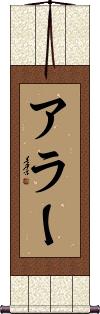
Islam has not taken much of a hold in Japan, so they just use this phonetic version of the Arabic name for God.
I don't recommend アラー for a wall scroll.
Note: Because this title is entirely Japanese Katakana, it should be written by a Japanese calligrapher.
All Hopes Fulfilled
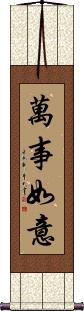
萬事如意 is a Chinese and old Korean proverb that means to have all one's wishes.
When speaking to someone, it's a way to say best wishes, all the best, may all your hopes be fulfilled, or may everything go well.
On your wall as calligraphy, it's meant to inspire all your wishes, hopes, dreams, and life to go well or come true.
Amazing Grace
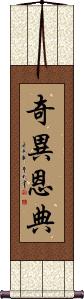
奇異恩典 is the title, “Amazing Grace” in Chinese.
The first two characters can also mean amazing, fantastic, exotic, astonishing, odd, strange, wonderful, extraordinary, uncommon, or rare.
The last two characters mean “grace,” as in “grace or favor of/from God.”
Angel
(Name Version 1)
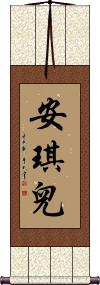
安琪兒 is the most common transliteration to Mandarin Chinese for the name Angel.
It is supposed to sound like Angel but to be honest, this one misses the mark.
I would go with the meaning of Angel if I were you.
Antiwar / Anti-War
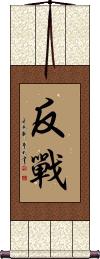
反戰 means antiwar, as in what a pacifist believes in.
China does plenty of saber-rattling but thankfully doesn't go to war very often, and Japan has embraced a pacifist ideology. Therefore, it's rare to need this word. However, this is the kind of word that war protesters would write on their signs.
 There is a modern Japanese version of the second character which has become the standard in Japan after WWII. If you want your calligraphy written in the modern Japanese form, please click on the Kanji shown to the right instead of the button above. Note: Most Japanese and all Chinese people will recognize the form shown in the upper left.
Apollo
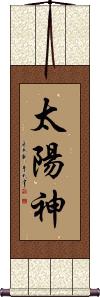
太陽神 means “Sun God” in Chinese, Japanese, and Korean.
It's used in Chinese to mean the Greek God Apollo. This can also be used in Chinese to refer to Nasa's Apollo missions to the moon.
Apollo
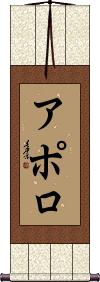
アポロ is the Japanese Katakana title for Apollo.
This can be the Greek God Apollo, or the title of the Nasa mission to the moon. Also the given name Apollo.
Note: Because this title is entirely Japanese Katakana, it should be written by a Japanese calligrapher.
Art of War: 5 Points of Analysis
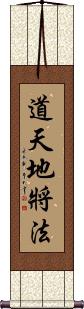
道天地將法 is a list of five key points to analyzing your situation from the first chapter of Sun Tzu's Art of War.
This reads like a 5-part military proverb. Sun Tzu says that to sharpen your skills, you must plan. To plan well, you must know your situation. Therefore, you must consider and discuss the following:
1. Philosophy and Politics: Make sure your way or your policy is agreeable among all of your troops (and the citizens of your kingdom as well). For when your soldiers believe in you and your way, they will follow you to their deaths without hesitation and will not question your orders.
2. Heaven/Sky: Consider climate / weather. This can also mean considering whether God is smiling upon you. In the modern military, this could be waiting for clear skies so that you can have air support for an amphibious landing.
3. Ground/Earth: Consider the terrain in which the battle will take place. This includes analyzing defensible positions, and exit routes, while using varying elevations to your advantage. When you plan an ambush, you must know your terrain and the best location from which to stage that ambush. This knowledge will also help you avoid being ambushed, as you will know where the likely places in which to expect an ambush from your enemy.
4. Leadership: This applies to you as the general and your lieutenants. A leader should be smart and be able to develop good strategies. Leaders should keep their word, and if they break a promise, they should punish themselves as harshly as they would punish subordinates. Leaders should be benevolent to their troops, with almost a fatherly love for them. Leaders must have the ability to make brave and fast decisions. Leaders must have steadfast principles.
5. [Military] Methods: This can also mean laws, rules, principles, models, or systems. You must have an efficient organization in place to manage both your troops and supplies. In the modern military, this would be a combination of how your unit is organized and your SOP (Standard Operating Procedure).
Notes: This is a simplistic translation and explanation. Much more is suggested in the actual text of the Art of War (Bing Fa). It would take a lot of study to master all of these aspects. In fact, these five characters can be compared to the modern military acronyms such as BAMCIS or SMEAC.
CJK notes: I have included the Japanese and Korean pronunciations but in Chinese, Korean and Japanese, this does not make a typical phrase (with subject, verb, and object) it is a list that only someone familiar with Sun Tzu’s writings would understand.
Ascend
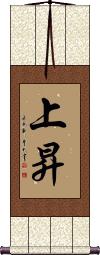
上昇 means to rise up, to go up, or to ascend in Chinese, Japanese Kanji, and old Korean Hanja.
If you are rising, ascending, or climbing, this is the word for you.
In the older Buddhist context, this means to ascend, with the implication that the destination is the heavenly realm.
Awesome / Awe-Inspiring
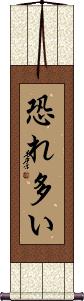
恐れ多い is a Japanese word for something awe-inspiring or awesome (in some odd context, it can refer to August).
恐れ多い is probably not appropriate for a calligraphy wall scroll unless you have a specific reason.
The word awesome is misused a lot in English or used too casually. This Japanese word is the real form of awesome, and it kind of means numerous fears and anxiety that you would feel in response to encountering something truly awesome (such as God, a tornado, a tsunami, etc.).
Note: Because this selection contains some special Japanese Hiragana characters, it should be written by a Japanese calligrapher.
Better to Choose Nothing, Rather than Make a Poor Choice
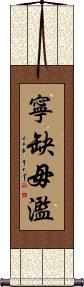
寧缺毋濫 is a Chinese proverb that can be translated as “Better to have nothing (than substandard choice).”
It basically suggests that one should prefer to go without something rather than accept a shoddy option.
See Also: A Deliberate Inaction is Better Than a Blind Action
Beyond / Exceed / Surpass
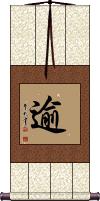
逾 means: to exceed; to go beyond; to transcend; to cross over; to jump over.
You'll see this character used in Buddhism (same meaning).
Technically, this single character is a Japanese word but is seldom used as a single Kanji in modern Japanese.
Blessed by God
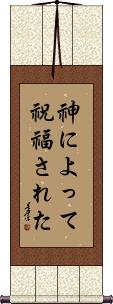
神によって祝福された means “Blessed by God” in Japanese.
This would be understood to mean “We have been blessed by God.”
Note: Because this selection contains some special Japanese Hiragana characters, it should be written by a Japanese calligrapher.
Bond
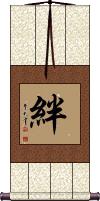
This Kanji represents a bond, as in the bond between mother and daughter, father and son, family ties, or a family bond.
絆 is the kind of character that says, no matter what happens (difficult times), we have this bond that cannot be broken.
If you go to the Japanese dictionary, the definition is the bonds (between people), (emotional) ties, relationship, connection, link, tether, or fetters.
Read this before ordering...
This Kanji is best if your audience is Japanese. While this is also a Chinese character, it has a completely different meaning in Chinese (it means to hinder or stumble in Chinese).
it’s
a very rare character in Korean Hanja but does mean bond in Korean (used in Korean words for certain kinds of glue and sticking plaster).
Born To Be Wild
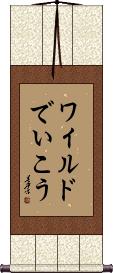
This is the Japanese version of “Born To Be Wild” (title of the Steppenwolf song).
The more literal meaning in Japanese for this phrase is “Let's go wild.”
Note: Because this title is entirely Japanese Hiragana and Katakana, it should be written by a Japanese calligrapher.
Boxing
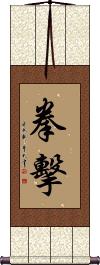
拳擊 is the term used in Chinese to refer to the original Olympic sport of combat and fighting.
If you like to strap on your boxing gloves and go a few rounds or are just a fan of boxing, this could make a nice wall scroll for you.
Note that Japanese use the same first character (which means fist) but a different Kanji for the second. Please see our Japanese boxing entry for that version.
Bushin / Bujin
God of Military Arts
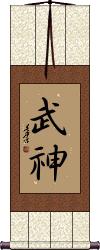
武神 is the title for Bushin, or “God of Military Arts.”
This can also be translated as “Martial Spirit.”
This title is often associated with Bujinkan, a school/style of martial arts. In that context, this can be pronounced Bujin.
In some cases, pronounced/romanized as Bukami, especially when used as a surname in Japan.
Camellia
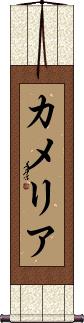
カメリア is the name Camellia in Japanese.
This sounds like Camellia, but does not mean the camellia plant or leaf.
Instead of these characters, you may want to go with the name of the plant. Of course, camellia also means tea, as varieties of camellia plants provide the leaves for many kinds of Chinese and Japanese teas.
Note: Because this title is entirely Japanese Katakana, it should be written by a Japanese calligrapher.
Chess
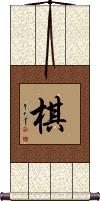
棋 is the most simple or generic way to write “chess” in Asia.
棋 is part of other more specific words for board games of strategy such as the western version of chess, Chinese chess, Weiqi, or Go.
In Japanese, this single character is pronounced “Go” and often refers to the game known in the west as “Go” (not just the 5-in-a-row version but also the complicated encirclement game of strategy known in China as Weiqi).
In Chinese, this can be more ambiguous as to which game of chess you speak.
If you like any version of chess, or games of intense strategy, this can be the character to hang on the wall in your game room.
Chess
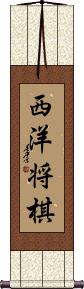
西洋将棋 is the Japanese title for the game of Chess (western style as opposed to Chinese Chess, Weiqi, or Japanese Go).
Chess
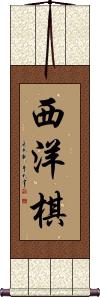
西洋棋 is the Chinese title for the game of Chess (western style as opposed to Chinese Chess, Weiqi, or Japanese Go).
Child of God
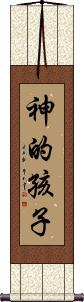
神的孩子 is “Child of God” in Chinese.
Child of God
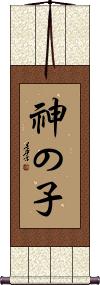
神の子 is “Child of God” in Japanese.
Christian / Disciple of Christ
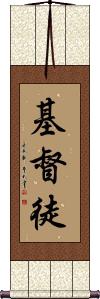
基督徒 is a very strong and direct word in Chinese for “Christian.”
The literal translation of the first two characters is “Christ.”
The last character means apprentice, follower, or disciple.
Altogether these three characters mean “Christ's Disciple” or “Christ's Apprentice.” 基督徒 is a pretty cool title to hang on your wall if you are a devout Christian.
Also used by Japanese Christians (but may be unfamiliar to non-Christian Japanese people).
See Also: Jesus Christ | God of Abraham
Disciple of Christianity
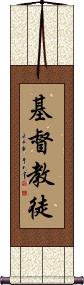
基督教徒 is the most verbose (longest) word for “Christian” in the Chinese and Japanese languages.
The literal translation of the first two characters is Christ.
The third Character means “Religion” or “Teaching.”
The last character means “apprentice” or “disciple.”
Altogether these three characters mean “Christ's Teaching Disciple” or “Christ's Religion Apprentice.”
Note: The last two characters are sometimes translated together as “follower (of a religion),” so you could also say it means “Follower of Christ.”
This four-character title makes it very clear what you are talking about in Chinese.
See Also: Jesus Christ | God of Abraham
Word of God / The Gospel
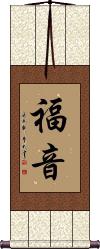
福音 is the Chinese, Korean and Japanese word for “Gospel” or “Word of God.”
福音 is a specifically Christian word in Asia (not used for any other religion).
The first character means blessing, good fortune, or good luck. This first character is a special character used throughout China to bring good tidings and fortune - especially during Chinese New Year. The second character means sound, noise, or news.
Together, these characters create a word that means “The Good News” or “The Sound of Good Fortune.”
When read by a Chinese or Japanese person, this word is always perceived as “The Christian Gospel,” “Word of God,” or even “The Voice of God.”
See Also: Christianity | Jesus Christ | God of Abraham
Christianity / Christian
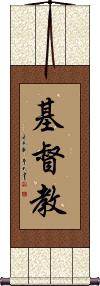
基督教 is the Chinese, Japanese and Korean word for “Christianity.”
Just as in English, this word is often used to mean “Protestant” but includes Catholics in the true definition.
It is the word used to refer to the whole “Christian religion” or “Christian Faith,” and therefore, it can be translated as “Christianity.” However, used as an adjective in regard to a person, it would translate as “Christian.” But more like saying, “His religion is Christianity,” rather than a noun form.
If you break it apart, the characters mean Base/Foundation Leading/Supervising Religion/Teaching. It makes more sense in Japanese, Chinese, and Korean. The first two characters together are translated as “Christ.” So you can also say this means “Christ's Religion” or “Christ's Teachings” when directly translated, or in reverse, “The Religion of Christ” or “The Teaching of Christ.”
Notes: The last character has a slight difference in one stroke - however, in calligraphic form, this will not be apparent. This entry can easily be read by any Korean person who knows Hanja characters (Chinese characters used in Korean).
See Also: Jesus Christ | God of Abraham
Confucius: Golden Rule / Ethic of Reciprocity
Do not do to others what you do not want done to yourself
Some may think of this as a “Christian trait,” but actually, it transcends many religions.
This Chinese teaching dates back to about 2,500 years ago in China. Confucius had always taught the belief in being benevolent (ren), but this idea was hard to grasp for some of his students, as benevolence could be kind-heartedness or an essence of humanity itself.
When answering Zhong Gong's question as to what "ren" actually meant, Confucius said:
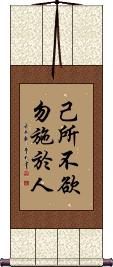
己所不欲勿施于人 or "When you go out, you should behave as if you were in the presence of a distinguished guest; when people do favors for you, act as if a great sacrifice was made for you. Whatever you wouldn't like done to you, do not do that thing to others. Don't complain at work or home.”
Hearing this, Zhong Gong said humbly, “Although I am not clever, I will do what you say.”
From this encounter, the Chinese version of the “Golden Rule” or “Ethic of Reciprocity” came to be.
The characters you see above express, “Do not do to others whatever you do not want to be done to yourself.”
See Also: Confucius Teachings | Benevolence
Courtesy / Politeness
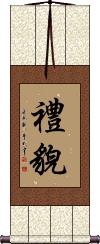
禮貌 is a Chinese and old Korean word that means courtesy or politeness.
Courtesy is being polite and having good manners. When you speak and act courteously, you give others a feeling of being valued and respected. Greet people pleasantly. Bring courtesy home. Your family needs it most of all. Courtesy helps life to go smoothly.
If you put the words "fēi cháng bù" in front of this, it is like adding "very much not." it’s a great insult in China, as nobody wants to be called "extremely discourteous" or "very much impolite."
Daodejing / Tao Te Ching - Chapter 33
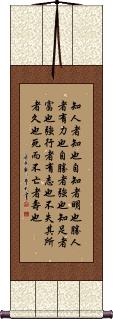
This is referred to as passage or chapter 33 of the Dao De Jing (often Romanized as “Tao Te Ching”).
These are the words of the philosopher Laozi (Lao Tzu).
To know others is wisdom;
To know oneself is acuity/intelligence.
To conquer others is power,
To conquer oneself is strength.
To know contentment is to have wealth.
To act resolutely is to have purpose.
To stay one's ground is to be enduring.
To die and yet not be forgotten is to be long-lived.
To understand others is to be knowledgeable;
To understand yourself is to be wise.
To conquer others is to have strength;
To conquer yourself is to be strong.
To know when you have enough is to be rich.
To go forward with strength is to have ambition.
To not lose your place is to be long-lasting.
To die but not be forgotten -- that's true long life.
He who is content is rich;
He who acts with persistence has will;
He who does not lose his roots will endure;
He who dies physically but preserves the Dao
will enjoy a long after-life.
Notes:
During our research, the Chinese characters shown here are probably the most accurate to the original text of Laozi. These were taken for the most part from the Mawangdui 1973 and Guodan 1993 manuscripts which pre-date other Daodejing texts by about 1000 years.
Grammar was a little different in Laozi’s time. So you should consider this to be the ancient Chinese version. Some have modernized this passage by adding, removing, or swapping articles and changing the grammar (we felt the oldest and most original version would be more desirable). You may find other versions printed in books or online - sometimes these modern texts are simply used to explain to Chinese people what the original text really means.
This language issue can be compared in English by thinking how the King James (known as the Authorized version in Great Britain) Bible from 1611 was written, and comparing it to modern English. Now imagine that the Daodejing was probably written around 403 BCE (2000 years before the King James Version of the Bible). To a Chinese person, the original Daodejing reads like text that is 3 times more detached compared to Shakespeare’s English is to our modern-day speech.
Extended notes:
While on this Biblical text comparison, it should be noted, that just like the Bible, all the original texts of the Daodejing were lost or destroyed long ago. Just as with the scripture used to create the Bible, various manuscripts exist, many with variations or copyist errors. Just as the earliest New Testament scripture (incomplete) is from 170 years after Christ, the earliest Daodejing manuscript (incomplete) is from 100-200 years after the death of Laozi.
The reason that the originals were lost probably has a lot to do with the first Qin Emperor. Upon taking power and unifying China, he ordered the burning and destruction of all books (scrolls/rolls) except those pertaining to Chinese medicine and a few other subjects. The surviving Daodejing manuscripts were either hidden on purpose or simply forgotten about. Some were not unearthed until as late as 1993.
We compared a lot of research by various archeologists and historians before deciding on this as the most accurate and correct version. But one must allow that it may not be perfect, or the actual and original as from the hand of Laozi himself.
I am the Master of My Destiny
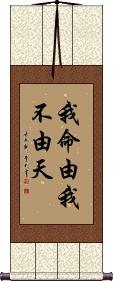
我命由我不由天 is often translated as “The one that shapes my destiny will always be myself rather than the God” or “Rather than Heaven, I am the master of my fate.”
Breaking down the words directly:
我命 = My fate/destiny
由我 = depends (on) me
不 = not
由天 dependant (on) Heaven.
See Also: Choose Your Own Destiny
Religious Devotion / Faith in God / Religious Faith
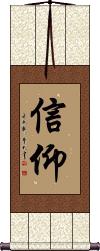
信仰 means firm belief, faith, persuasion, conviction, and sometimes religion or creed in Chinese, Japanese Kanji, and old Korean Hanja.
This clearly fits the religious connotation of the English word “devotion.”
This is often used to refer to a person of faith or a religious person.
This can be directly translated as “firm belief,” “creed,” “conviction,” or simply as “religious,” depending on context.
Some will also use this to mean “trust in God” in Japanese (though the term for God is not actually in this title).
It should be noted that this word is a little strange alone on a wall scroll.
While this can be pronounced in Japanese, it’s not a great selection for a wall scroll if your audience is Japanese.
See Also: Faith | Trust | Devotion | Trust | Trust in God
Grace of God / Divine Blessing
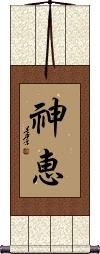
神惠 can be translated as “God's Blessing,” “Blessed by God,” or “Divine Blessing” in Japanese Kanji.
Divine Grace
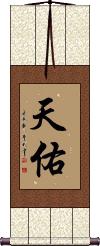
天佑 is a Chinese and Japanese word that means divine aid, divine grace, Heaven blessed, or providential help.
Some Chinese people will use this to infer that this means a home or family blessed by heaven or God. 天佑 is the shortest way to express that idea anyway.
Divine Love
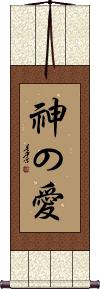
神の愛 is “divine love” in Japanese.
You could also translate it as “God's Love.”
Divine Protection
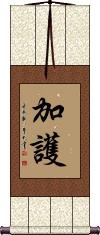
加護 is Japanese for “divine protection” or “the saving grace of God.”
Please consider this blessing to be Japanese only. This can have the same meaning in the context of Buddhism in Chinese, but it's also a nickname for “intensive care” at Chinese hospitals.
Note: My Japanese translator says this is not commonly used in Japanese. I added this because a customer asked for it. There is no better Japanese phrase to express this idea - so this is it if you want it.
Double Happiness Guest Book
Customize a special Asian guest book for your wedding
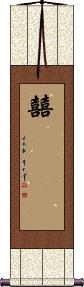
Start customizing a “Double Happiness Guest Book Wall Scroll” Here!
The paper panel length can be whatever you choose from 68cm to 135cm (27” to 53”).
If you don't mention what paper length you want in the special instructions tab (on the next page), we'll make it about 100cm (40”).
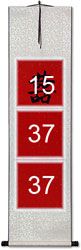
The medium-size scroll with a 33cm x 100cm (13” x 40”) paper panel can usually handle up to 89 signatures. That breaks down to 37 signatures per empty square and 15 signatures around the 囍 character. If you switch to a 135cm paper panel, add another 37 potential signatures.
We can splice two 135cm papers together, but that would be a crazy-long scroll. These are only estimates, your mileage may vary.
With silk panels, this will yield a wall scroll about 155cm (61”) long. That's enough for up to 89 signatures. Of course, that depends on if your guests just sign a brief salutation and name, or more verbose good wishes. Customer feedback is that 126 people can sign the 135cm long paper on a medium-sized scroll. If we go bigger than that, there will be a minor paper seam and an extra charge. Email me with your specifications if you need something special.
Most customers pick the festive red paper with gold flecks and white or ivory silk. Red is a good luck color in Chinese culture, thus the most popular choice. But, you can do any color combination that you want.
There is a long history of Chinese-character-use outside of mainland China. This Double Happiness character is also seen at weddings in Korea, Vietnam, Hong Kong, and Taiwan, as well as in Chinese communities in Thailand, Indonesia, and elsewhere. While Japan borrowed Chinese characters into their language, you won't see 囍 as often at Japanese weddings.
Dragon Spirit
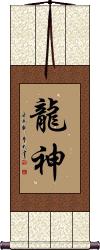
龍神 is a Chinese, Japanese Kanji, and old Korean Hanja title that can mean “dragon god,” “dragon king,” or “dragon spirit.”
In the context of Buddhism, this is one of eight kinds of spiritual beings found in Mahāyāna texts.
Emperor
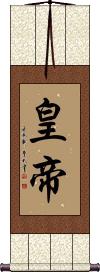
皇帝 means emperor in Chinese, Japanese, and old Korean.
From times of old, the emperors of Asia ruled under the authority of God himself. One definition of an emperor is a ruler put in power by God. This definition separates emperors from the various kings in Chinese history (although defining who is a king versus an emperor gets vague sometimes).
Occasionally, the emperor's wife was widowed, and she took the role of an empress until her death (see our entry for empress if that is what you are looking for).
Destiny Determined by Heaven
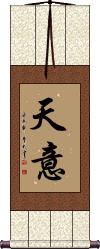
天意 is a way to express destiny in a slightly religious way.
天意 means “Heaven's Wish” or “Heaven's Desire,” with the idea of fate and destiny being derived as well. It suggests that your destiny comes from God / Heaven and that your path has already been chosen by a higher power.
My Japanese dictionary defines this word as “divine will” or “providence,” but it also holds the meaning of “the will of the emperor.” Therefore, I don't suggest this phrase if your audience is Japanese - it feels strange in Japanese anyway.
Fear God
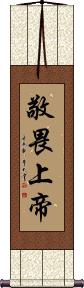
敬畏上帝 is probably the best way to translate the Christian English phrase “Fear God” into Chinese.
The first two characters mean to revere, be in awe of, or a general term of reverence. It can mean fear, but only in the context of respect or fear of authority.
Fighter for God
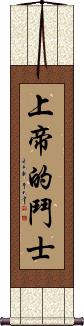
上帝的鬥士 means “God's Fighter.”
While a lot of people search for “Warrior of God,” or “Soldier of God,” this is actually the most natural way to say something like this in Chinese.
Flying / Flight / Rising Upward
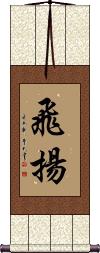
飛揚 means flight, flying, or to rise upwards in Chinese and Japanese Kanji.
飛揚 is not the most common title for a wall scroll but if you have a personal reason or this idea is important to you, then go for it.
This can also be the personal name “Hiyou” in Japanese.
A Bright Future
Incredible 10,000-Mile Flight of the Peng
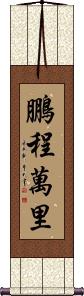
鵬程萬里 is an ancient Chinese proverb used in modern times to wish someone a long and successful career.
It's really about the 10,000 Flight of the Peng (Peng, also known as Roc is a mythical fish that can turn into a bird and take flight).
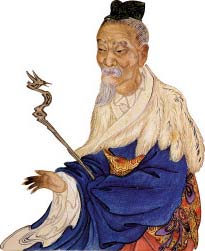
莊子
Zhuangzi or Chuang Tzu
Breaking down each character:
1. Peng or Roc (a kind of bird).
2. Journey (in this case, a flight).
3. 10,000 (Ten Thousand).
4. Li is a unit of distance often referred to as a “Chinese Mile,” though the real distance is about half a kilometer.
Direct Translation: “Peng's Journey [of] 10,000 Li.”
Literal meaning: “The 10,000-Li Flying Range Of The Roc.”
Perceived meaning: “To have a bright future” or “To go far.”
This proverb/idiom comes from the book of Zhuangzi or Chuang Tzu. It tells the tale of a huge fish that could turn into a gigantic bird. This bird was called a “peng” and was many miles long. This legendary size allowed the Peng to fly from the Northern Sea to the Southern Sea in a single bound.
Wishing someone “a Peng's Journey of 10,000 Li” will imply that they can travel far without stopping and will have great success, a long career, and a prosperous future.
Flower Open / Blooming Flower
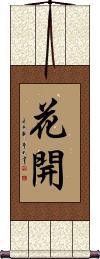
These two characters mean “flower open.”
花開 is also associated with Springtime, the beginning of something, or youth.
花開 is often followed by 花落 or “flower falls” (closes and loses its petals) which means “Things come and go” or “Youth comes and goes.”
If you like flowers and Springtime, this is a great selection for you. However, if you want the companion “flower falls” (flower withers), we offer that as a companion wall scroll or all together as a four-character phrase.
See Also: Flowers Fall
Flowers Bloom and Flowers Fall
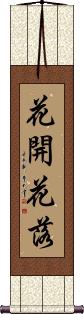
花開花落 is a complete proverb that lightly speaks of the cycle of life, or how things come and go in life.
This is used as a metaphor to suggest that youth is a temporary state that in time will pass.
This can also be used to suggest that fortunes can come and go (everything is temporary).
Note: There are two very similar versions of this proverb. The other uses a word that means wither instead of fall.
Flowers Bloom and Flowers Fall
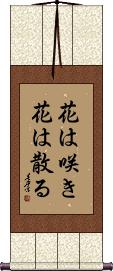
花は咲き花は散る is a Japanese proverb about the cycle of life, or how things come and go in life.
This can be used to suggest that youth, fortune, and life can come and go (everything is temporary).
Note: Because this selection contains some special Japanese Hiragana characters, it should be written by a Japanese calligrapher.
Flowers Bloom and Flowers Wither
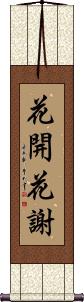
花開花謝 is a complete proverb that lightly speaks of the cycle of life, or how things come and go in life.
This is used as a metaphor to suggest that youth is a temporary state, which in time, will pass.
This proverb can be used to suggest that fortunes can come and go (everything is temporary).
Note: There are two very similar versions of this proverb. The other uses a word that means fall instead of wither.
Flowers Fall / The End Comes
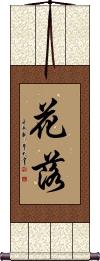
花落 means flower fall (closes and loses its petals).
It suggests nearing the end of something. A time that some might call “The sunset of life.” 花落 often follows 花開 or “flower open” to talk of the cycle of life.
We offer this as a possible companion to a “flower open” scroll (to be placed side by side or at either side of a doorway to say “things come and go” - a cool metaphor for a doorway). If placed in a doorway, it could be used to suggest to your guests that things bloom when they arrive through your door but wither when they leave (a great compliment).
See Also: Flowers Bloom
Flying Tigers AVG
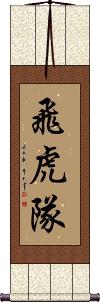
飛虎隊 is the full Chinese title of the “Flying Tigers Group.”
These were the American pilots that volunteered to go to China and fight the Japanese before the entry of the USA into World War Two. These fighter pilots were so esteemed in China that fallen American pilots could always find refuge in villages and safe passage and escape to areas of China that were not occupied by Japan at that time. Chinese villagers helped such fallen pilots with full knowledge that when the Japanese occupation forces found out, all the men, women, and children in the village would be massacred by Japanese troops (there are more than a few known cases of such massacres).
The Flying Tigers successfully kept supply lines to the Chinese resistance open and divided Japanese forces at a crucial time while America prepared to join WWII officially.
A wall scroll like this honors the men who risked or gave their lives as noble volunteers and is a reminder of the best moment in the history of Sino-American relations.
These three characters literally mean “flying tiger(s) group/team/squad.”
Note: Hanging these characters on your wall will not make you any friends with Japanese people who are aware or this history (most Japanese have no idea, as Japan’s involvement in WWII has all but been erased from school textbooks in Japan).
Begging Forgiveness
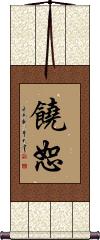
饒恕 is a Chinese word that is a kind of forgiveness that you would beg for like a servant begging a master.
This can also be the forgiveness that a person would beg from the king or God.
This word suggests that this is forgiveness for something really bad (a terrible crime or sin).
Forgive
Deep heartfelt forgiveness
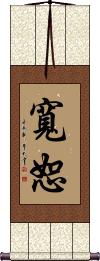
寛恕 is a word of Chinese origin means forgive or forgiveness.
寬恕 is a deep kind of forgiveness from the bottom of your heart.
In a religious context, this is the kind of forgiveness that you beg God for and that God grants you.
In Korean Hanja, this can also be defined as forbearance or leniency.
In Japanese Kanji, beyond forgiveness, this can also mean magnanimity or generosity.
While we don't actively recommend Asian tattoos, this would be the forgiveness title that is best for a tattoo in most cases.
 Note: The first character can also be written in the form shown to the right (especially in Japanese). If you have a preference, please let us know in the "special instructions" when you place your order.
Forgive and Forget
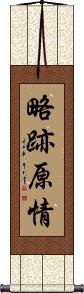
略跡原情 is a Chinese proverb that means “to overlook past faults,” or “forgive and forget.”
It's more literally, “Abridge or make small the scars from your past emotions.” You should let it go.
The character breakdown:
略 (lüè) abbreviation; omission; abridge.
跡 (jī) ruins; scar; traces.
原 (yuán) former.
情 (qíng) feeling; emotion.
Four Noble Truths: Desire and Attachment
Samudaya
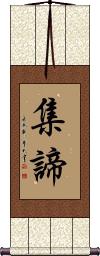
集諦 represents the idea that the core of suffering is often the concept of desire or attachment.
This can be carnal desire, monetary desire, or the attachment you have to something that you are unwilling to part with (such as a fancy car). 集諦 is a simplification of the second noble truth which is an exploration into the root causes of suffering - it's deeper than I can go in a few sentences.
This term is exclusively used by devout Buddhists. It is not a common term, and is remains an unknown concept to most Chinese, Japanese and Korean people.
See Also: Buddhism | Enlightenment
Put out a burning wood cart with a cup of water
An utterly inadequate measure
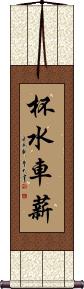
杯水車薪 is a warning against a futile effort.
This proverb literally refers to one who is “trying to put out a burning cart of wood with a cup of water,” or “throw a cup of water on a cartload of wood.” The lesson to be learned is about using the right measure or tool for the job and not wasting your effort if you are inadequately equipped for the task at hand - in other words the postscript should be “go get a bucket or a fire hose.”
God is Always With You
God is With Me Always
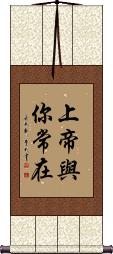
The direct translation of the Chinese characters, 上帝与你常在, is “God Together [with] You Always Exist.”
Keep in mind that Chinese grammar is sometimes very different from English. This makes perfect sense in Chinese.
Note: The title for God is the first two characters - the other words in the direct translation represent one character each.
God Bless You
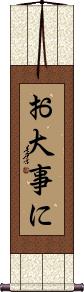
お大事に means “God bless you” in Japanese.
It can also mean “take care of yourself,” or “get well soon.” It's not always associated with religious meaning.
Note: Because this selection contains some special Japanese Hiragana characters, it should be written by a Japanese calligrapher.
God Bless You / May God Protect You
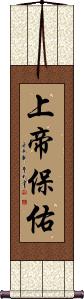
上帝保佑 is a blessing exchanged between Chinese Christians.
The first two characters mean God (The God of Zion). The second two characters express the idea of giving protection. Another way to translate this is “May God protect you.”
See Also: Guardian Angel
God in the Glorious Center of Heaven
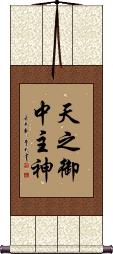
天之御中主神 is a phrase submitted by a customer.
I do not have information on the origin of this phrase.
God Forgive Me
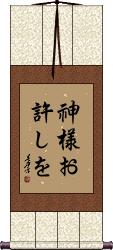
神様お許しを is how to write “God Forgive Me” in Japanese.
There is an essence of humble begging or “please” implied in this phrase.
Note: Because this selection contains some special Japanese Hiragana characters, it should be written by a Japanese calligrapher.
God is Good
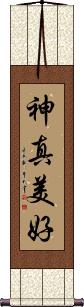
神真美好 means “God is good,” in Chinese.
You can also translate this as “God is really good” or “God is so good.”
The last two characters are a version of good that suggests very strong goodness. The characters read, “beautifully good.”
God is Good
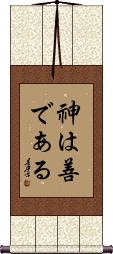
神は善である means “God is Good,” in Japanese.
Note: Because this selection contains some special Japanese Hiragana characters, it should be written by a Japanese calligrapher.
God is Love
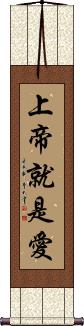
上帝就是愛 is a common way to express “God is Love” in Chinese.
God is Love
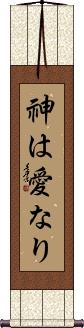
神は愛なり is a common way to express “God is Love” in Japanese.
Note: Because this selection contains some special Japanese Hiragana characters, it should be written by a Japanese calligrapher.
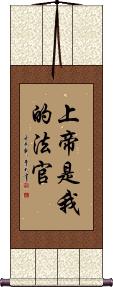
God is my Judge
God Loves You
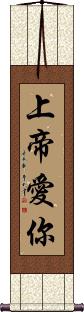
上帝愛你 means “God loves you,” in Chinese.
Venus / Amor / God of Love
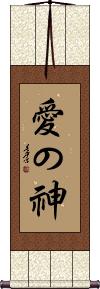
愛の神 is the Japanese title for Amor, Eros, Venus, or God of Love.
God of War
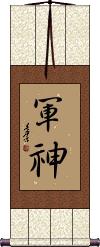
軍神 is a Japanese title meaning god of war, or war hero.
This can also be the surname Gunshin.
God of Warcraft
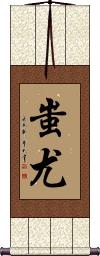
蚩尤 is the name Chi You, legendary creator of metalworking and weapons.
There is also a comet named in his honor. Some refer to him as the Chinese god of war. He is also somewhat-known in Japan as “Shiyu.”
God Bless You / God Be With You
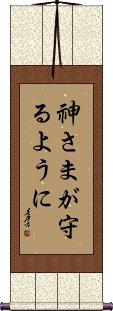
神さまが守るように is about as close as you can get to, “God Bless You” in Japanese.
This literally means “[May] God Protect [You].” It can also mean “God is Always With You,” as the word in this phrase that means “protect” can also mean to follow or be with. In fact, the Japanese dictionary entry for that word reads like this: to protect; to guard; to defend; to keep (i.e. a promise); to abide; to observe; to follow.
Note: Because this selection contains some special Japanese Hiragana characters, it should be written by a Japanese calligrapher.
God of Zion / God of Abraham
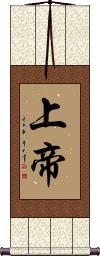
上帝 is how Chinese Christians and Jews refer to God, AKA The Judeo-Christian God.
There are Chinese Jews whose ancestry dates back to Jewish traders on the silk road. They are known as the Kaifeng Jews. Most have left China for Israel now.
There are also plenty of Christians in China of the Protestant and Catholic varieties. However, the churches are basically run by the government, and the Chinese Catholic church does not recognize the Pope.
Oddly, in my experience, I found the Chinese Protestant church to be much less political compared to Baptist and other Protestant churches that I have visited in America.
上帝 is also the typically-used title for God in Japanese.
While you may find this term in old Korean dictionaries, it is an obscure and rarely-used title for God in modern Korean.
See Also: Christianity | Jesus Christ
Allah / God of Islam
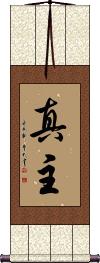
真主 is how Chinese Muslims refer to God (it literally means “True Master”).
Oddly, in China, two different names for God have emerged. Even though Muslims, Christians, and Jews all worship the same God of Abraham.
In Arabic, the word Allah is just the Arabic way to say, God. Arab Christians pray to Allah, just like Arab Muslims. Somehow in China, the title of God diverged.
If you are curious, there are millions of Muslims throughout China but especially in the northwest portion of China known as Xinjiang. Here you will find descendants of Turkmen, Persian, Arab, and other ethnicities. Some are mixed with Han-Chinese blood; others appear to be pure Turkmen. Many have fair complexions, green eyes, and light hair but all are citizens of China. A visit to Xinjiang will shift your paradigm and blow away all of your stereotypes about what it means to be Chinese.
God Give Me Strength
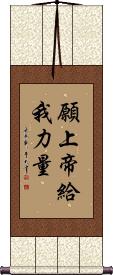
願上帝給我力量 is a wish or a prayer that you might call out at a desperate time.
Translated by us for a military serviceman in Iraq. He may need to use this phrase often, though I am not sure where he's going to find a place to hang a wall scroll.
God Give Me Strength
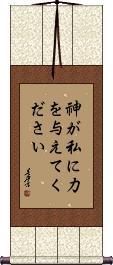
神が私に力を与えてください is “God give me strength” in Japanese.
This is the long and formal version. We also have a short version.
Note: Because this selection contains some special Japanese Hiragana characters, it should be written by a Japanese calligrapher.
God Is With You Always
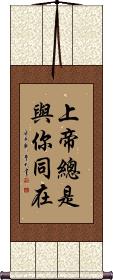
I was going to write this phrase as “God is with me always” but as a wall scroll, hanging in your room, it is talking to you (you're not talking), so it works better with you.
上帝總是與你同在 is a nice phrase that any Chinese Christian would enjoy on his/her wall.
If I annotate this, it sounds a little strange in English but it's perfectly natural in Chinese:
上帝 God | 总是 always | 与 and | 你 you | 同 together | 在 existing
Go-Dan / 5th Degree Black Belt
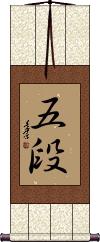
五段 represents the 5th Rank or 5th Degree (5th Degree of black belt) in Japanese martial arts.
This can also be the 5th rank in other fields such as chess play (Japanese “Go”) etc.
God Daughter
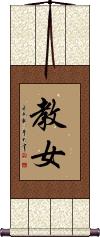
教女 is the title for a female child, which you have a sworn duty to raise should the girl's parents die.
The second character specifically designates that we are talking about a female child, thus the title God Daughter.
See Also: Family
Goddess of Beauty / Beautiful Spirit
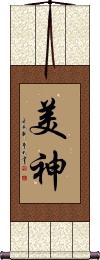
In Chinese, 美神 means Goddess of Beauty.
The first character means beauty or beautiful.
The second character means spirit (can also mean god, goddess, or soul).
Some will use this as a short way to say, “Beautiful Spirit.”
This has a similar meaning in Japanese but is used more often as a female given name in Japan. As a Japanese given name, it can be pronounced Mikami, Mikan, or Binasu.
God Give Me Strength
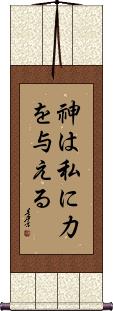
神は私に力を與える means “God give me strength,” in Japanese.
神は私に力を與える is the short version, we also have a longer more formal version.
Note: Because this selection contains some special Japanese Hiragana characters, it should be written by a Japanese calligrapher.
God is Always With Me
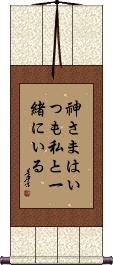
神さまはいつも私と一緒にいる is a Japanese phrase that means “God is always with me.”
Note: Because this selection contains some special Japanese Hiragana characters, it should be written by a Japanese calligrapher.
God is Always With You
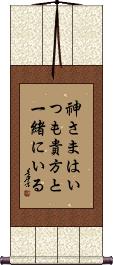
神さまはいつも貴方と一緒にいる is a Japanese phrase that means “God is always with you.”
Note: Because this selection contains some special Japanese Hiragana characters, it should be written by a Japanese calligrapher.
God Son / God Child
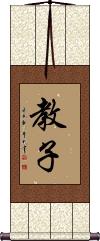
教子 is the title for a child which you have a sworn duty to raise should the child's parents die.
This title suggests it's talking about a son (male child), but this title is universal and can mean God Child (with no gender specified).
Gojutsu

Go Kan Ryu
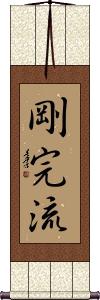
剛完流 is the title of the Gokan-Ryu or “Go Kan Ryu” martial art.
The Book of Five Rings
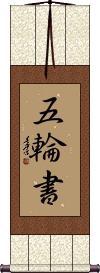
五輪書 is the Japanese title for “The Book of Five Rings.”
五輪書 is a martial arts treatise by Miyamoto Musashi written around 1643.
Technically, these three characters are “Go Rin Sho” but an unwritten “の” or “no” which is a possessive article like the English “of” is verbally added by most Japanese. Therefore, many write this in Romaji as “Go Rin No Sho.”
Go With The Flow
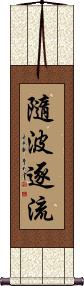
隨波逐流 is a Chinese proverb that means to drift with the waves and go with the flow.
This can be positive or negative, as it can also be used to mean following the crowd blindly.
Go With The Flow
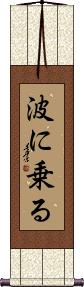
波に乗る is a Japanese proverb that means to go with the flow or to go with the times.
Note: Because this selection contains some special Japanese Hiragana characters, it should be written by a Japanese calligrapher.
Grace
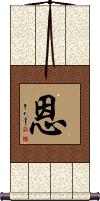
恩 is often translated as “kind act from above,” as in “The Grace of God.”
This doesn't necessarily have to come from God. It could be a favor paid to you, or help that you received (or gave). Of course, you can decide for yourself whether the grace or favor given to you by a friend is actually a gift from God.
Other possible translations of this character:
Favor / favour, acts of kindness, merits, beneficial Influence, kindness, indebtedness, obligation, and benevolent influence.
Grace from Heaven / Grace from God
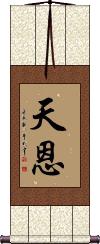
天恩 is the deepest way to say “Heaven's Grace” or “God's Grace” in Chinese.
The first character means Heaven or sky (referring, in this case, to the domain of God).
The second character means grace, blessings, benevolence, favor/favour, acts of kindness, merits, or beneficial influence.
This title can also be defined as:
Blessings of Heaven, Favor of the Emperor, Divination's luckiest day, or blessings of nature. Note: When you see “Emperor” above, remember that the Emperor, like the Pope, is theoretically chosen by God or seen as an emissary or conduit of God in ancient Asian culture. It would only be read that way in a certain context, such as “The Emperor, in his mercy, bestowed upon him Heaven's Grace, and the prisoner was set free.”
Note: Technically, this is a Japanese word too (pronounced "ten-on") but it’s rarely used in Japan anymore. Therefore, this title is best if your audience is Chinese.
Grace from Heaven / Grace from God
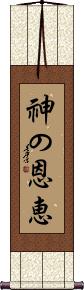
神の恩恵 means God's Grace in Japanese.
The first two characters act to create a word that means “divine,” “God's,” or “The Spirit's.”
The last two Kanji mean grace, favor/favour, blessing, or benefit.
Grim Reaper / God of Death
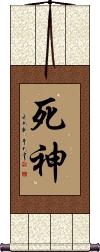
死神 is the title of the mythological figure (often called the Grim Reaper in western culture) in charge of taking the souls of those who die.
This title can be translated directly as “god of death” or “spirit of death.” The first character literally means “death,” and the second means “spirit” or “god.”
死神 is a very strange title for a calligraphy wall scroll. I'm not even sure if my calligraphers will write it, as it has some bad superstitious feelings attached to it.
Guandi: God of War
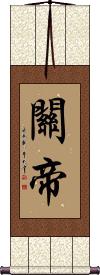
關帝 is the title, Guandi, the God of War, a deified hero of the Three Kingdoms, and a protector of Buddhism.
Hachiman: God of War
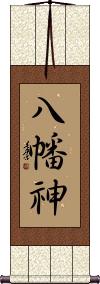
八幡神 is the Japanese God of War.
He is often known by the short name “Hachiman.” This version has the “God” title “jin” at the end, completing the idea of “God of War.”
Industrious / Hard Working
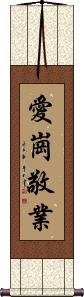
愛崗敬業 is used to refer to someone who puts forth maximum effort and achieves much.
We might call this kind of person a “go-getter” in English.
See Also: Dedication | Tenacious | Devotion
Blessed by Heaven
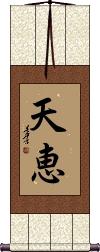
天恵 means “Heaven's Blessing,” “Blessings from Heaven,” or “Blessed by Heaven” in Japanese Kanji.
Depending on the context in which this is used, it can also mean “gift of nature,” or even “natural resources” (as in Heaven or God bestowed things like oil, iron, gold, and other natural resources upon mankind).
Heaven Blesses the Diligent
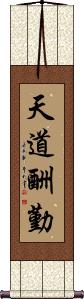
天道酬勤 can be interpreted in a few different ways:
God blesses those who work hard.
It is the way of Heaven to smile on the diligent.
God will reward those that are worthy.
Heaven blesses those who are diligent.
Whichever translation you like, a scroll like this on your wall may serve as a reminder to work hard because your diligence will pay off both in this life and the next.
Note: This can be pronounced in Korean, but it's not a commonly used term.
Heaven
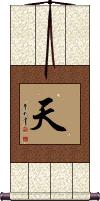
天 means “heaven” or “sky” in Chinese, Japanese Kanji, and old Korean Hanja.
The context determines if you are talking about heaven or the sky above (often they are the same concept).
When combined with other characters, words like “today” and “tomorrow” are created. While sometimes the character for “sun” is used to mean “day,” often “sky” represents “day” in Asian languages.
Example: 今天 (this sky) = “today,” 明天 (next sky) = “tomorrow” in modern Chinese and Japanese.
In Chinese culture, regardless of which religion, it's almost always assumed that God (and any other deities) live up above the sky. The concept of God living in the sky is likely the reason heaven is associated with this character.
The equation goes something like this: God's domain is the sky, thus, the sky is heaven.
Note: As a single character, this is a little ambiguous, so you might want to choose our Kingdom of Heaven selection instead.
Husband and Wife
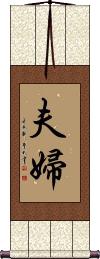
夫婦 are the Chinese characters, old Korean Hanja, and Japanese Kanji for “Husband and Wife.”
This can also be translated as a married couple, spouses, couple, or pair.
This is not a common selection for a calligraphy wall scroll in Asia but if it has a special meaning for you, go for it.
Ikiru / To Live
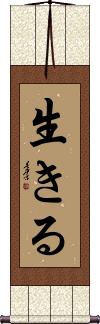
生きる is a Japanese title that means to live, to exist, to make a living, to subsist, to come to life, or to be enlivened.
生きる is also the title of a 1952 Japanese movie that uses the translated English title of “To Live.”
This term, when used in the context of baseball, and some Japanese games such as “go,” can mean “safe.”
Note: Because this selection contains some special Japanese Hiragana characters, it should be written by a Japanese calligrapher.
The key to immortality is first living a life worth remembering
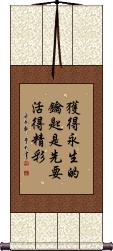
獲得永生的鑰匙是先要活得精彩 is a famous quote from Bruce Lee.
However, when quoted, he was speaking in English. So this is a translation of his English quote into Chinese. Since Bruce spoke both Chinese and English, his quotes sometimes go both ways.
Inugami / Dog Spirit
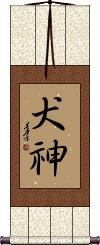
犬神 is the title Inugami, meaning dog spirit or dog god in Japanese.
In some cases, this is an evil spirit of a dog, but it depends on the context.
This in-stock artwork might be what you are looking for, and ships right away...

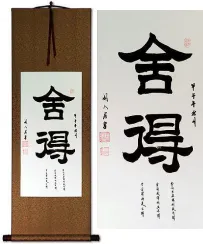
Gallery Price: $200.00
Your Price: $69.88

Gallery Price: $106.00
Your Price: $58.88
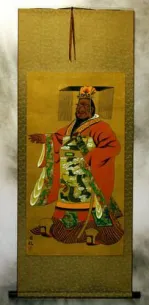
Gallery Price: $108.00
Your Price: $59.88

Successful Chinese Character and Japanese Kanji calligraphy searches within the last few hours...



