Many custom options...


And formats...



Frie in Chinese / Japanese...
Buy a Frie calligraphy wall scroll here!
Personalize your custom “Frie” project by clicking the button next to your favorite “Frie” title below...
Switched to secondary search mode due to lack of results using primary.
These secondary results may not be very accurate. Try a different but similar meaning word or phrase for better results. Or...
Look up Frie in my Japanese Kanji & Chinese Character Dictionary(My dictionary is a different system then the calligraphy search you just tried)
If you want a special phrase, word, title, name, or proverb, feel free to contact me, and I will translate your custom calligraphy idea for you.
1. Best Friends / Closest Friend
2. Best Friends
6. Eternal Friendship / Friends Forever
8. Fried
9. Frieda
10. Friedman
11. Friedrich
12. Friel
14. Friend
15. Friendliness
16. Eternal Friendship / Friends Forever
18. Friendship
19. Friendship Dojo
20. Frierson
21. Fries
22. Friesen
23. Geofried
24. Gottfried
25. Jeffries
26. Mentor: Teacher and Friend
27. Siegfried
28. Most Sincere Friend / Honest Friend / Real Friend / Best Friend
30. True Friend
31. Wilfried
Best Friends / Closest Friend
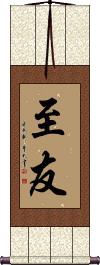
至友 is one way to say best friend in Chinese.
The first character can mean “most,” “extreme,” or “best.”
The second character means “friend” or “friends” (plural forms work differently in China).
Can also be translated as “close friend” or “most intimate friend.”
See Also: Friendship | Soulmates
Best Friends
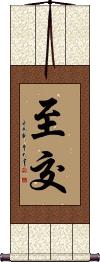
至交 is an alternate way to say best friend in Chinese.
The first character can mean “most,” “extreme” or “best.” The second character means “making friends” or “building friendship.” There's sort of a suggestion with the second character that fate caused you to intersect in life and become friends (that character can mean intersection in some context).
This can also mean “most intimate friend,” “very good friend of long-standing,” or “closest friend.”
See Also: Friendship | Soulmates
Best Friends / Buddies
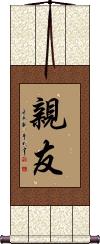
親友 is the Japanese way to say “best friend.”
The first character can mean “relative” or sometimes “parents.” The second character means “friend.” Think about the close relationship that Japanese people have with their parents and relatives, and this starts to mean “close friends.”
Some Japanese-English dictionaries also translate this as “bosom friend,” “old friend,” “intimate friend,” “buddy,” “crony” or “chum.”
Note that in Chinese, this means “relatives and friends.” It's a good meaning in Chinese, but it's not quite the same as “best friends.”
Extremely Good Friends
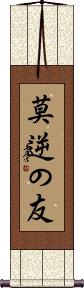
莫逆の友 is Japanese expressing meaning “excellent friends” or “best friends.”
Christian Friend
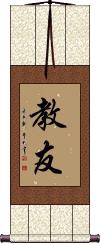
Depending on the context, 教友 can mean Christian or “friend of the same religion.”
While technically, it could be any religion, this is used mainly within the Christian faith. You can also translate this as “Christian friend” and, in some cases, “Church member.”
Eternal Friendship / Friends Forever
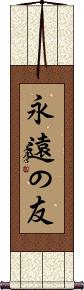
永遠の友 is a Japanese phrase about eternal friendship.
The first two characters mean eternal, eternity, perpetuity, forever, immortality, and permanence.
The third character is a possessive article which sort of makes this selection mean “Love, of the eternal kind.”
The last character is “friend” or “Friendship.”
See Also: Best Friends
Family and Friends
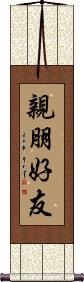
親朋好友 is a Chinese title that simply means “family and friends” or “kith and kin.”
If you read each character more literally, it's like, “relatives, friends, [and] good/close friends.”
Family and Friends
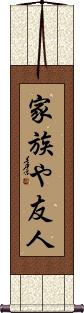
家族や友人 means “family and friends,” in Japanese.
Fried

弗里德 is the name Fried in Chinese (Mandarin).
Fried

フリード is the name Fried in Japanese Katakana.
Note: Because this title is entirely Japanese Katakana, it should be written by a Japanese calligrapher.
Frieda
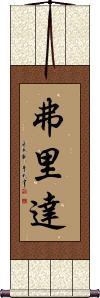
弗里達 is the name Frieda in Chinese (Mandarin).
Frieda
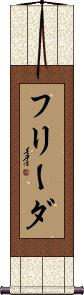
フリーダ is the name Frieda in Japanese (Katakana).
Note: Because this title is entirely Japanese Katakana, it should be written by a Japanese calligrapher.
Friedman

弗里德曼 is the name Friedman in Chinese (Mandarin).
Friedman

フリードマン is the name Friedman in Japanese Katakana.
Note: Because this title is entirely Japanese Katakana, it should be written by a Japanese calligrapher.
Friedrich
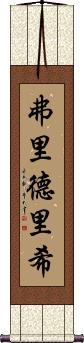
弗里德里希 is the name Friedrich in Chinese (Mandarin).
Friedrich
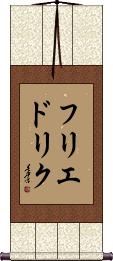
フリエドリク is the name Friedrich in Japanese (Katakana).
Note: Because this title is entirely Japanese Katakana, it should be written by a Japanese calligrapher.
Friel

弗里爾 is the name Friel in Chinese (Mandarin).
Friel

フリエル is the name Friel in Japanese Katakana.
Note: Because this title is entirely Japanese Katakana, it should be written by a Japanese calligrapher.
Friend / Friendship
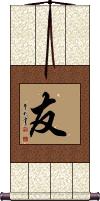
友 is the simplest way to express the idea of friends or friendship in Chinese.
It can mean friend, companion, or pal in Japanese. In Korean, it can mean friend, companion, or associate.
This single character is open to interpretation, so it can mean different things to different people (not necessarily a bad thing, as you can decide what it means to you). If you want a more concisely-defined word, you should probably pick one of our multi-character friendship-related words.
See Also: Best Friends | Friendly | Friendship
Friend
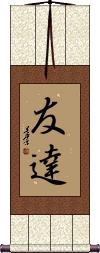
友達 is the most common way to say “friend” in Japanese.
See Also: Best Friends | Friendly | Friendship
Friendliness
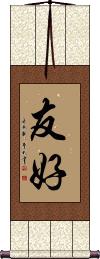
友好 is a Japanese, Chinese, and old Korean word that means friendliness.
This word can also be defined as “amity,” “friendly,” and “outgoing.”
This can be a Japanese given name Yuukou or Yuko. It can also be a Japanese surname that romanizes as Tomoyoshi.
See Also: Friendship
Eternal Friendship / Friends Forever
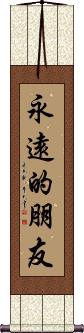
永遠的朋友 means friends that are eternal or a friendship that will last forever - you will remain the best of friends as long as you live.
The first two characters mean forever, eternal, eternity, perpetuity, immortality, and/or permanence.
The middle character links the words (it's a possessive article).
The last two characters represent friendship, or simply “friends.”
Friend / Friendship
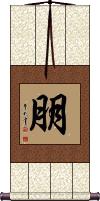
朋 is a simple way to say friend, companion, comrade, or pal in Chinese, Japanese Kanji, or old Korean Hanja.
朋 is a very short form, so a longer two-character word for friendship might be better.
Note: In Japanese, this can also be the female given name, Yukari.
Friendship
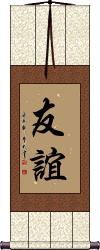
友誼 can be defined as companionship or fellowship.
This word is common in Chinese and Korean Hanja but is seldom used in Japanese anymore.
See Also: Partnership | Friendliness
Friendship
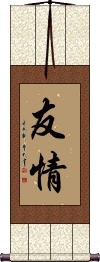
友情 can be translated as “camaraderie” or “fellowship.”
But this character combination is only used commonly in Japanese Kanji and Korean Hanja.
Friendship Dojo

友愛道場 can be translated as “Friendship Dojo.”
友愛 = Friendship or fraternity.
道場 = Training hall.
Frierson

弗里爾森 is the name Frierson in Chinese (Mandarin).
Frierson

フリアソン is the name Frierson in Japanese Katakana.
Note: Because this title is entirely Japanese Katakana, it should be written by a Japanese calligrapher.
Fries

弗里斯 is the name Fries in Chinese (Mandarin).
Fries

フリース is the name Fries in Japanese Katakana.
Note: Because this title is entirely Japanese Katakana, it should be written by a Japanese calligrapher.
Friesen

弗里森 is the name Friesen in Chinese (Mandarin).
Friesen

フリーゼン is the name Friesen in Japanese Katakana.
Note: Because this title is entirely Japanese Katakana, it should be written by a Japanese calligrapher.
Geofried
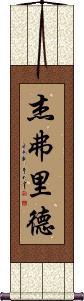
杰弗里德 is the name Geofried in Chinese (Mandarin).
Geofried
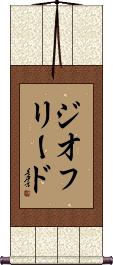
ジオフリード is the name Geofried in Japanese Katakana.
Note: Because this title is entirely Japanese Katakana, it should be written by a Japanese calligrapher.
Gottfried
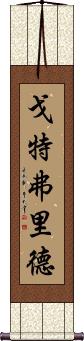
戈特弗里德 is the name Gottfried in Chinese (Mandarin).
Gottfried
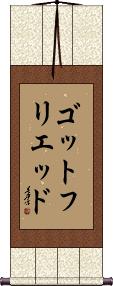
ゴットフリエッド is the name Gottfried in Japanese (Katakana).
Note: Because this title is entirely Japanese Katakana, it should be written by a Japanese calligrapher.
Jeffries

杰弗里斯 is the name Jeffries in Chinese (Mandarin).
Jeffries

ジェフリーズ is the name Jeffries in Japanese Katakana.
Note: Because this title is entirely Japanese Katakana, it should be written by a Japanese calligrapher.
Mentor: Teacher and Friend
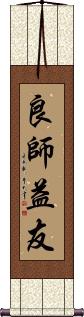
良師益友 is a Chinese proverb or word that means good teacher and helpful friend.
In the most simple translation, these 4 characters mean mentor.
Siegfried

西格弗里德 is the name Siegfried in Chinese (Mandarin).
Siegfried

ジークフリート is the name Siegfried in Japanese Katakana.
Note: Because this title is entirely Japanese Katakana, it should be written by a Japanese calligrapher.
Most Sincere Friend / Honest Friend / Real Friend / Best Friend
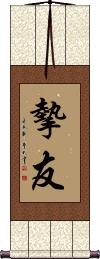
摯友 is one way to say best friend in Chinese.
The first character can mean “honest” or “most sincere.” The second character means “friend” or “friends” (plural forms work differently in Chinese).
See Also: Friendship | Soulmates
Sworn Friend / Ally
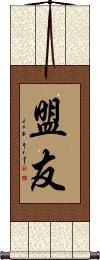
盟友 means a sworn friend or ally. If you stand on the same side of an issue with someone and perhaps fight for the same cause together, this is the term you would use to describe such a partner.
There may not be a personal relationship, as this term is also used to describe whole countries that make a coalition or fight against a common enemy.
This would be most appropriate if you are a high-level military officer, giving this wall scroll to an officer of another country as you join forces together and go to war.
True Friend
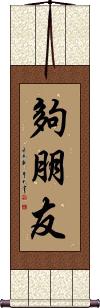
夠朋友 is a colloquial title in Chinese meaning “to be a true friend.”
True Friend
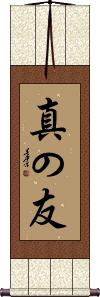
真の友 is “true friend” in Japanese.
Wilfried
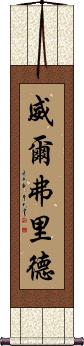
威爾弗里德 is the name Wilfried in Chinese (Mandarin).
Wilfried
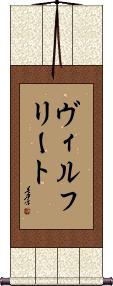
ヴィルフリート is the name Wilfried in Japanese.
Note: Because this title is entirely Japanese Katakana, it should be written by a Japanese calligrapher.
The following table may be helpful for those studying Chinese or Japanese...
| Title | Characters | Romaji (Romanized Japanese) | Various forms of Romanized Chinese | |
| Best Friends Closest Friend | 至友 | zhì yǒu / zhi4 you3 / zhi you / zhiyou | chih yu / chihyu | |
| Best Friends | 至交 | zhì jiāo / zhi4 jiao1 / zhi jiao / zhijiao | chih chiao / chihchiao | |
| Best Friends Buddies | 親友 亲友 | shin yuu / shinyuu / shin yu | qīn yǒu / qin1 you3 / qin you / qinyou | ch`in yu / chinyu / chin yu |
| Extremely Good Friends | 莫逆の友 | bakugyakunotomo | ||
| Christian Friend | 教友 | jiào yǒu / jiao4 you3 / jiao you / jiaoyou | chiao yu / chiaoyu | |
| Eternal Friendship Friends Forever | 永遠の友 | ei en no yuu eiennoyuu ei en no yu | ||
| Family and Friends | 親朋好友 亲朋好友 | qīn péng hǎo yǒu qin1 peng2 hao3 you3 qin peng hao you qinpenghaoyou | ch`in p`eng hao yu chinpenghaoyu chin peng hao yu |
|
| Family and Friends | 家族や友人 | kazoku ya yuujin kazokuyayuujin kazoku ya yujin | ||
| Fried | 弗里德 | fú lǐ dé fu2 li3 de2 fu li de fulide | fu li te fulite |
|
| Fried | フリード | furiido / furido | ||
| Frieda | 弗里達 弗里达 | fú lǐ dá fu2 li3 da2 fu li da fulida | fu li ta fulita |
|
| Frieda | フリーダ | furiida / furida | ||
| Friedman | 弗里德曼 | fú lǐ dé màn fu2 li3 de2 man4 fu li de man fulideman | fu li te man fuliteman |
|
| Friedman | フリードマン | furiidoman / furidoman | ||
| Friedrich | 弗里德里希 | fú lǐ dé lǐ xī fu2 li3 de2 li3 xi1 fu li de li xi fulidelixi | fu li te li hsi fulitelihsi |
|
| Friedrich | フリエドリク | furiedoriku | ||
| Friel | 弗里爾 弗里尔 | fú lǐ ěr fu2 li3 er3 fu li er fulier | fu li erh fulierh |
|
| Friel | フリエル | furieru | ||
| Friend Friendship | 友 | tomo | yǒu / you3 / you | yu |
| Friend | 友達 友达 | tomo dachi / tomodachi | ||
| Friendliness | 友好 | yuukou / yuko | yǒu hǎo / you3 hao3 / you hao / youhao | yu hao / yuhao |
| Eternal Friendship Friends Forever | 永遠的朋友 永远的朋友 | yǒng yuǎn de péng yǒu yong3 yuan3 de peng2 you3 yong yuan de peng you yongyuandepengyou | yung yüan te p`eng yu yungyüantepengyu yung yüan te peng yu |
|
| Friend Friendship | 朋 | tomo | péng / peng2 / peng | p`eng / peng |
| Friendship | 友誼 友谊 | yuugi / yugi | yǒu yì / you3 yi4 / you yi / youyi | yu i / yui |
| Friendship | 友情 | yuujou / yujo | yǒu qíng / you3 qing2 / you qing / youqing | yu ch`ing / yuching / yu ching |
| Friendship Dojo | 友愛道場 | yū ai dō jō yūaidōjō | yǒu ài dào chǎng you3 ai4 dao4 chang3 you ai dao chang youaidaochang | yu ai tao ch`ang yuaitaochang yu ai tao chang |
| Frierson | 弗里爾森 弗里尔森 | fú lǐ ěr sēn fu2 li3 er3 sen1 fu li er sen fuliersen | fu li erh sen fulierhsen |
|
| Frierson | フリアソン | furiason | ||
| Fries | 弗里斯 | fú lǐ sī fu2 li3 si1 fu li si fulisi | fu li ssu fulissu |
|
| Fries | フリース | furiisu / furisu | ||
| Friesen | 弗里森 | fú lǐ sēn fu2 li3 sen1 fu li sen fulisen | ||
| Friesen | フリーゼン | furiizen / furizen | ||
| Geofried | 杰弗里德 | jié fú lǐ dé jie2 fu2 li3 de2 jie fu li de jiefulide | chieh fu li te chiehfulite |
|
| Geofried | ジオフリード | jiofuriido / jiofurido | ||
| Gottfried | 戈特弗里德 | gē tè fú lǐ dé ge1 te4 fu2 li3 de2 ge te fu li de getefulide | ko t`e fu li te kotefulite ko te fu li te |
|
| Gottfried | ゴットフリエッド | gottofurieddo | ||
| Jeffries | 杰弗里斯 | jié fú lǐ sī jie2 fu2 li3 si1 jie fu li si jiefulisi | chieh fu li ssu chiehfulissu |
|
| Jeffries | ジェフリーズ | jefuriizu / jefurizu | ||
| Mentor: Teacher and Friend | 良師益友 良师益友 | liáng shī yì yǒu liang2 shi1 yi4 you3 liang shi yi you liangshiyiyou | liang shih i yu liangshihiyu |
|
| Siegfried | 西格弗里德 | xī gé fú lǐ dé xi1 ge2 fu2 li3 de2 xi ge fu li de xigefulide | hsi ko fu li te hsikofulite |
|
| Siegfried | ジークフリート | jiikufuriito jikufurito | ||
| Most Sincere Friend Honest Friend Real Friend Best Friend | 摯友 挚友 | zhì yǒu / zhi4 you3 / zhi you / zhiyou | chih yu / chihyu | |
| Sworn Friend Ally | 盟友 | meiyuu / meiyu | méng yǒu / meng2 you3 / meng you / mengyou | meng yu / mengyu |
| True Friend | 夠朋友 够朋友 | gòu péng you gou4 peng2 you5 gou peng you goupengyou | kou p`eng yu koupengyu kou peng yu |
|
| True Friend | 真の友 | shinnotomo | ||
| Wilfried | 威爾弗里德 威尔弗里德 | wēi ěr fú lǐ dé wei1 er3 fu2 li3 de2 wei er fu li de weierfulide | wei erh fu li te weierhfulite |
|
| Wilfried | ヴィルフリート | virufuriito virufurito | ||
| In some entries above you will see that characters have different versions above and below a line. In these cases, the characters above the line are Traditional Chinese, while the ones below are Simplified Chinese. | ||||

Successful Chinese Character and Japanese Kanji calligraphy searches within the last few hours...



