Many custom options...


And formats...



Dust in Chinese / Japanese...
Buy a Dust calligraphy wall scroll here!
Personalize your custom “Dust” project by clicking the button next to your favorite “Dust” title below...
Earth
(One of the five elements)
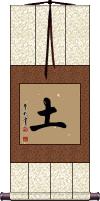
土 is earth, soil, ground, or Terra.
Earth is one of the five elements that ancient Chinese believed all things were composed of. These elements are also part of the cycle of Chinese astrology. Every person has both an animal sign, and one of the five elements according to the date of their birth.
See Also: Five Elements | Chinese Zodiac
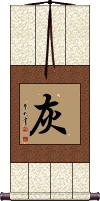
灰 is the Chinese, Japanese, and Korean word for ash or ashes.
This can also refer to dust, lime, or gray. When speaking of emotions in Chinese, it can refer to being discouraged or dejected.
In Japanese, this can be the surname, Hai.
Star
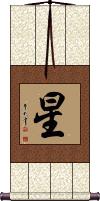
星 is how “star” is written in Chinese, Japanese, and old Korean.
Thousands of years ago, when this character was first developed, there was the belief that you could see remnants of stars in everything. In fact, some early Chinese men of science suggested that all living things came from “stardust” or cosmic debris. This could explain why the upper portion of this character means “sun” (a star itself) and the lower portion means “birth” or “life.”
Oddly enough, modern-day scientists suggest that we are all made up of cosmic dust. Seems they were getting it right in China at a time when the western world thought the Earth was flat and the Church was claiming that the sun and all cosmic bodies revolved around the Earth.
Not the results for Dust that you were looking for?
Below are some entries from our dictionary that may match your Dust search...
| Characters If shown, 2nd row is Simp. Chinese |
Pronunciation Romanization |
Simple Dictionary Definition |
土 see styles |
tǔ tu3 t`u tu do ど |
More info & calligraphy: Earth(abbreviation) (kana only) (See 土耳古・トルコ・1) Turkey; (place-name) Do Bhū; bhūmi; pṛthivī. Earth, locality, local, vulgar. |
欲 see styles |
yù yu4 yü yoku よく |
to wish for; to desire; variant of 慾|欲[yu4] greed; craving; desire; avarice; wants; (surname) Yoku rājas, passion. Also kāma, desire, love. The Chinese word means to breathe after, aspire to, desire, and is also used as 慾 for lust, passion; it is inter alia intp. as 染愛塵 tainted with the dust (or dirt) of love, or lust. The three desires are for beauty, demeanour, and softness; the five are those of the five physical senses. |
灰 see styles |
huī hui1 hui hai はい |
More info & calligraphy: Grayash; ashes; (surname) Hai Ash; lime; hot or fiery as ashes. |
坋 see styles |
bèn ben4 pen |
dust; to dust; a bank of earth; to bring together; to dig; also pr. [fen4] |
坱 see styles |
yǎng yang3 yang |
fine dust; plentiful; vast |
坲 see styles |
fó fo2 fo |
(of dust) to rise in the air |
垢 see styles |
gòu gou4 kou yoshimi よしみ |
dirt; disgrace {Buddh} (See 煩悩・2) klesha (polluting thoughts such as greed, hatred and delusion, which result in suffering); (personal name) Yoshimi mala. Dust, impurity, dregs; moral impurity; mental impurity. Whatever misleads or deludes the mind; illusion; defilement; the six forms are vexation, malevolence, hatred, flattery, wild talk, pride; the seven are desire, false views, doubt, presumption, arrogance, inertia, and meanness. |
埃 see styles |
āi ai1 ai hokori(p); hokori ほこり(P); ホコリ |
dust; dirt; angstrom; phonetic ai or e (kana only) dust dust (mote) |
塕 see styles |
wěng weng3 weng |
flying dust (dialect); dust |
塵 尘 see styles |
chén chen2 ch`en chen chiri ちり |
dust; dirt; earth (1) dust; (2) trash; garbage; rubbish; dirt; (3) (usu. as 塵ほども...ない) negligible amount; tiny bit; (4) hustle and bustle (of life); worldly cares; impurities of the world; (5) (abbreviation) {sumo} (See 塵手水) ritual gestures indicating that a fight will be clean guṇa, in Sanskrit inter alia means 'a secondary element', 'a quality', 'an attribute of the five elements', e.g. 'ether has śabda or sound for its guṇa and the ear for its organ'. In Chinese it means 'dust, small particles; molecules, atoms, exhalations'. It may be intp. as an atom, or matter, which is considered as defilement; or as an active, conditioned principle in nature, minute, subtle, and generally speaking defiling to pure mind; worldly, earthly, the world. The six guṇas or sensation-data are those of sight, sound, smell, taste, touch, and thought. |
壒 see styles |
ài ai4 ai |
dust; mud |
拂 see styles |
fú fu2 fu hotsu |
to flick; to brush off; (of a breeze) to brush lightly over; (literary) to run counter to To rub, wipe, dust. |
撢 see styles |
dǎn dan3 tan |
to dust |
撣 掸 see styles |
dǎn dan3 tan |
to brush away; to dust off; brush; duster; CL:把[ba3] |
末 see styles |
mò mo4 mo matsu まつ |
tip; end; final stage; latter part; inessential detail; powder; dust; opera role of old man (n-suf,n) (1) the end (of); (suffix noun) (2) (See 粉末) powder; (surname, given name) Matsu Branch, twig; end; dust; not; translit, ma, va, ba; cf. 摩. |
眯 see styles |
mí mi2 mi |
to blind (as with dust); Taiwan pr. [mi3] |
粉 see styles |
fěn fen3 fen minegishi みねぎし |
powder; cosmetic face powder; food prepared from starch; noodles or pasta made from any kind of flour; to turn to powder; (dialect) to whitewash; white; pink; (suffix) fan (abbr. for 粉絲|粉丝[fen3 si1]); to be a fan of (1) flour; meal; powder; dust; (2) (こな only) (slang) heroin; (personal name) Minegishi Flour, meal, powder. |
袖 see styles |
xiù xiu4 hsiu takuharu たくはる |
sleeve; to tuck inside one's sleeve (1) sleeve; (2) wing (of a stage, desk, gate, etc.); (3) (kana only) flap (of a dust jacket); (personal name) Takuharu |
霾 see styles |
mái mai2 mai bai ばい |
haze (See 黄砂・こうさ・1) loess; yellow sand; bai; dust from the Yellow River region (China) |
一塵 一尘 see styles |
yī chén yi1 chen2 i ch`en i chen ichijin |
A grain of dust, an atom, a particle. |
七微 see styles |
qī wēi qi1 wei1 ch`i wei chi wei shichimi |
The seven atoms composing an aṇu 阿耨; 阿拏, 阿菟色. Eitel's definition is seven atoms of dust, but the definition is doubtful. This molecule is larger than an "atom" , and according to the Sarvāstivāda it is the smallest visible particle. It is also a division of a yojana. |
三乘 see styles |
sān shèng san1 sheng4 san sheng minori みのり |
(surname) Minori Triyāna, the three vehicles, or conveyances which carry living beings across saṁsāra or mortality (births-and-deaths) to the shores of nirvāṇa. The three are styled 小,中, and 大. Sometimes the three vehicles are defined as 聲聞 Śrāvaka, that of the hearer or obedient disciple; 緣覺Pratyeka-buddha, that of the enlightened for self; these are described as 小乘 because the objective of both is personal salvation; the third is 菩薩Bodhisattva, or 大乘 Mahāyāna, because the objective is the salvation of all the living. The three are also depicted as 三車 three wains, drawn by a goat, a deer, an ox. The Lotus declares that the three are really the One Buddha-vehicle, which has been revealed in three expedient forms suited to his disciples' capacity, the Lotus Sūtra being the unifying, complete, and final exposition. The Three Vehicles are differently explained by different exponents, e.g. (1) Mahāyāna recognizes (a) Śrāvaka, called Hīnayāna, leading in longer or shorter periods to arhatship; (b) Pratyeka-buddha, called Madhyamayāna, leading after still longer or shorter periods to a Buddhahood ascetically attained and for self; (c) Bodhisattva, called Mahayana, leading after countless ages of self-sacrifce in saving others and progressive enlightenment to ultimate Buddhahood. (2) Hīnayāna is also described as possessing three vehicles 聲, 緣, 菩 or 小, 中, 大, the 小 and 中 conveying to personal salvation their devotees in ascetic dust and ashes and mental annihilation, the 大 leading to bodhi, or perfect enlightenment, and the Buddha's way. Further definitions of the Triyāna are: (3) True bodhisattva teaching for the 大; pratyeka-buddha without ignorant asceticism for the 中; and śrāvaka with ignorant asceticism for the 小. (4) (a) 一乘 The One-Vehicle which carries all to Buddhahood: of this the 華嚴 Hua-yen and 法華 Fa-hua are typical exponents; (b) 三乘法 the three-vehicle, containing practitioners of all three systems, as expounded in books of the 深密般若; (c) 小乘 the Hīnayāna pure and simple as seen in the 四阿合經 Four Āgamas. Śrāvakas are also described as hearers of the Four Truths and limited to that degree of development; they hear from the pratyeka-buddhas, who are enlightened in the Twelve Nidānas 因緣; the bodhisattvas make the 六度 or six forms of transmigration their field of sacrificial saving work, and of enlightenment. The Lotus Sūtra really treats the 三乘. Three Vehicles as 方便 or expedient ways, and offers a 佛乘 Buddha Vehicle as the inclusive and final vehicle. |
九想 see styles |
jiǔ xiǎng jiu3 xiang3 chiu hsiang kusō |
(九想觀) or 九相 navasaṃjñā. Meditation on a corpse in order to curb desire; one of the meditations on the unclean: vyādhmātakasaṃjñā, its tumefaction; vinīlakas., its blue, mottled colour; vipadumakas., its decay; vilohitakas., its mess of blood,etc.; vipūyakas., its discharges and rotten flesh; vikhāditakas., its being devoured by birds and beasts; vikṣiptakas., its dismembering; asthis., its bones; vidagdhakas., their being burnt and returning to dust. |
五翳 see styles |
wǔ yì wu3 yi4 wu i go ei |
The five films, or interceptors of the light of sun and moon— smoke, cloud dust, fog, and the hands of asuras. |
余塵 see styles |
yojin よじん |
trailing dust; aftereffects |
俗塵 俗尘 see styles |
sú chén su2 chen2 su ch`en su chen zokujin ぞくじん |
(form) the (dusty) world; earthly affairs; the madding crowd (of society); daily troubles of life Common dust, earthly pollution. |
六塵 六尘 see styles |
liù chén liu4 chen2 liu ch`en liu chen rokujin |
The six guṇas, qualities produced by the objects and organs of sense, i. e. sight, sound, smell, taste, touch, and idea; the organs are the 六根, 六入, 六處, and the perceptions or discernments the 六識; cf. 六境. Dust 塵 is dirt, and these six qualities are therefore the cause of all impurity. Yet 六塵說法 the Buddha made use of them to preach his law. |
冠る see styles |
kamuru かむる kaburu かぶる |
(transitive verb) (1) (kana only) to put on (one's head); to wear; to have on; to pull over (one's head); to crown (oneself); (2) (kana only) to be covered with (dust, snow, etc.); to pour (water, etc.) on oneself; to dash on oneself; to ship water; (3) (kana only) to bear (e.g. someone's debts, faults, etc.); to take (blame); to assume (responsibility); to shoulder (burden); (4) to overlap (e.g. sound or color); (5) to be similar; to be redundant; (v5r,vi) (6) to be fogged (due to overexposure, etc.); (7) to close; to come to an end; (8) to get a full house; to sell out; (9) (archaism) to blunder; to bungle; to fail; (10) (archaism) to be deceived |
冥塵 冥尘 see styles |
míng chén ming2 chen2 ming ch`en ming chen myōjin |
dark (or obscure) dust (or objects of the sense-organs) |
冪々 see styles |
bekibeki べきべき |
(adj-t,adv-to) billowing (clouds, dust) |
Click here for more Dust results from our dictionary
The following table may be helpful for those studying Chinese or Japanese...
| Title | Characters | Romaji (Romanized Japanese) | Various forms of Romanized Chinese | |
| Earth | 土 | tsuchi | tǔ / tu3 / tu | t`u / tu |
| Ash | 灰 | hai | huī / hui1 / hui | |
| Star | 星 | hoshi | xīng / xing1 / xing | hsing |

Successful Chinese Character and Japanese Kanji calligraphy searches within the last few hours...



