Many custom options...


And formats...



Competent in Chinese / Japanese...
Buy a Competent calligraphy wall scroll here!
Personalize your custom “Competent” project by clicking the button next to your favorite “Competent” title below...
Tsuyoi
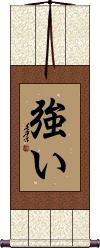
強い means strong, potent, competent, domineering, tough, brawny, powerful, healthy, rugged, skilled, resilient, solid, or fierce.
This word is ambiguous without context, so it can mean any or all of these things if you wish.
Intelligence / Intellect
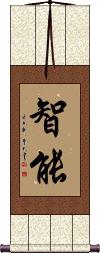
These two characters mean intelligence or intelligent.
The first character means wisdom, intellect, or knowledge.
The second means ability, talent, skill, capacity, capable, able, and can even mean competent.
Together, 知能 can mean “capacity for wisdom,” “useful knowledge,” or even “mental power.” Obviously, this translates more clearly into English as “intelligence.”
Note: This is not the same word used to mean “military intelligence.” See our other entry for that.
 In modern Japan, they tend to use a version of the first character without the bottom radical. If your audience for this artwork is Japanese, please click on the Kanji to the right instead of the button above.
Not the results for Competent that you were looking for?
Below are some entries from our dictionary that may match your Competent search...
| Characters If shown, 2nd row is Simp. Chinese |
Pronunciation Romanization |
Simple Dictionary Definition |
人 see styles |
rén ren2 jen hitotaka ひとたか |
person; people; CL:個|个[ge4],位[wei4],名[ming2] (1) person; someone; somebody; (2) human beings; mankind; man; people; humans; (3) (kana only) (usu. ヒト) human (Homo sapiens); (4) (other) people; others; (5) character; personality; nature; (6) capable person; competent person; suitable person; right person; (7) adult; grown-up; (8) (used when rebuking or criticizing someone) I; me; one; (surname) Hitotaka manuṣya; nara; puruṣa; pudgala. Man, the sentient thinking being in the desire-realm, whose past deeds affect his present condition. |
行 see styles |
xíng xing2 hsing yukue ゆくえ |
(bound form) to walk; to go; to travel; (literary) trip; journey; visit; (bound form) temporary; makeshift; (bound form) current; in circulation; (bound form) to do; to perform; capable; competent; all right; OK!; will do; behavior; conduct (Taiwan pr. [xing4]); (literary) about to; soon (n,n-suf) (1) going; travelling; traveling; journey; trip; (2) act; action; (suffix noun) (3) bank; (counter) (4) counter for banks; (counter) (5) counter for groups or parties of people; (6) type of classical Chinese verse (usu. an epic from the Tang period onwards); (7) (hist) shopping district (of similar merchants; in the Sui and Tang periods); (8) (hist) merchants' guild (in the Tang period); (female given name) Yukue Go; act; do; perform; action; conduct; functioning; the deed; whatever is done by mind, mouth, or body, i.e. in thought, word, or deed. It is used for ayana, going, road, course; a march, a division of time equal to six months; also for saṁskāra, form, operation, perfecting, as one of the twelve nidānas, similar to karma, action, work, deed, especially moral action, cf. 業. |
一端 see styles |
yī duān yi1 duan1 i tuan ippashi いっぱし |
(adj-no,adv) (kana only) fully fledged; full-fledged; proper; competent; qualified; full-grown one part |
三子 see styles |
sān zǐ san1 zi3 san tzu mine みね |
(female given name) Mine The three sons, one filial, wise, and competent; one unfilial but clever and competent; one unfilial stupid, and incompetent; types respectively of bodhisattvas, śrāvakas, and icchahtikas, 涅槃經 33. |
主務 see styles |
shumu しゅむ |
(1) person in charge; (can act as adjective) (2) competent (authority, minister, etc.) |
五障 see styles |
wǔ zhàng wu3 zhang4 wu chang goshou / gosho ごしょう |
(1) {Buddh} five hindrances (that prevent a woman from becoming a Buddha, a Brahmā, a Shakra, a devil king, or a wheel-turning king); five obstructions to women's attainment; (2) {Buddh} five hindrances (that impede ascetic practices; sensory desire, ill-will, sloth and torpor, restlessness and worry, doubt) The five hindrances, or obstacles; also 五礙; 五雲. I. Of women, i. e. inability to become Brahma-kings, Indras, Māra-kings, Caikravarti-kings, or Buddhas. II. The hindrances to the five 五力 powers, i. e. (self-) deception a bar to faith, as sloth is to zeal, anger to remembrance, hatred to meditaton, and discontent to wisdom. III. The hindrances of (1) the passion-nature, e. g. original sin; (2) of karma caused in previous lives; (3) the affairs of life; (4) no friendly or competent preceptor; (5) partial knowledge. |
來得 来得 see styles |
lái de lai2 de5 lai te |
to emerge (from a comparison); to come out as; to be competent or equal to See: 来得 |
勝任 胜任 see styles |
shèng rèn sheng4 ren4 sheng jen |
qualified; competent (professionally); to be up to a task |
強幹 强干 see styles |
qiáng gàn qiang2 gan4 ch`iang kan chiang kan |
competent; capable |
当該 see styles |
tougai / togai とうがい |
(can be adjective with の) appropriate (e.g. authorities); concerned; relevant; said; aforementioned; competent; applicable; respective |
得力 see styles |
dé lì de2 li4 te li tokuriki とくりき |
able; capable; competent; efficient (surname) Tokuriki |
有能 see styles |
yǒu néng you3 neng2 yu neng yuunou / yuno ゆうのう |
(noun or adjectival noun) (ant: 無能・1) able; capable; competent; talented; efficient ability |
稱職 称职 see styles |
chèn zhí chen4 zhi2 ch`en chih chen chih |
well qualified; competent; to be equal to the task; able to do something very well |
能幹 能干 see styles |
néng gàn neng2 gan4 neng kan yoshiki よしき |
capable; competent (personal name) Yoshiki |
花瓶 see styles |
huā píng hua1 ping2 hua p`ing hua ping hanagame はながめ kebyou / kebyo けびょう kahei / kahe かへい kabin かびん |
flower vase; (fig.) female employee considered to be just a pretty face (attractive but not very competent) (Buddhist term) vase used to hold flower offerings (often made of gilded copper); (flower) vase |
適任 see styles |
tekinin てきにん |
(adj-na,adj-no) competent; suitable; qualified |
適格 适格 see styles |
shì gé shi4 ge2 shih ko tekikaku(p); tekkaku てきかく(P); てっかく |
to be qualified (to bring a complaint, lawsuit etc) (law) (noun or adjectival noun) (ant: 欠格・1) eligible; qualified; competent |
所轄署 see styles |
shokatsusho しょかつしょ |
(1) (abbreviation) (See 所轄税務署・しょかつぜいむしょ) taxation office serving a specific area; competent tax office; (2) (abbreviation) (See 所轄警察署・しょかつけいさつしょ) police station with jurisdiction for a precinct, etc.; competent police station |
腕きき see styles |
udekiki うできき |
(adj-no,adj-na) (1) able; capable; competent; (2) able person; person of ability |
腕こき see styles |
udekoki うでこき |
(adj-no,adj-na) (1) able; capable; competent; (2) able person; person of ability |
腕利き see styles |
udekiki うできき |
(adj-no,adj-na) (1) able; capable; competent; (2) able person; person of ability |
腕扱き see styles |
udekoki うでこき |
(adj-no,adj-na) (1) able; capable; competent; (2) able person; person of ability |
人才濟濟 人才济济 see styles |
rén cái jǐ jǐ ren2 cai2 ji3 ji3 jen ts`ai chi chi jen tsai chi chi |
a galaxy of talent (idiom); a great number of competent people |
八面六臂 see styles |
hachimenroppi はちめんろっぴ |
(yoji) competent in all fields; jack of all trades; very active in many fields; versatile; all-round; 8 faces and 6 arms |
実力次第 see styles |
jitsuryokushidai じつりょくしだい |
according to (depending on) one's ability; if one is good (competent, talented) enough |
当該人物 see styles |
tougaijinbutsu / togaijinbutsu とうがいじんぶつ |
the appropriate person; competent person |
手が利く see styles |
tegakiku てがきく |
(exp,v5k) (idiom) to be able; to be competent |
監督官庁 see styles |
kantokukanchou / kantokukancho かんとくかんちょう |
competent authorities; supervisory authority |
管轄官庁 see styles |
kankatsukanchou / kankatsukancho かんかつかんちょう |
controlling office; competent (governmental) authorities |
腕っこき see styles |
udekkoki うでっこき |
(adj-no,adj-na) (1) able; capable; competent; (2) able person; person of ability |
Click here for more Competent results from our dictionary
The following table may be helpful for those studying Chinese or Japanese...
| Title | Characters | Romaji (Romanized Japanese) | Various forms of Romanized Chinese | |
| Tsuyoi | 強い | tsuyoi | ||
| Intelligence Intellect | 智能 / 知能 智能 | chinou / chino | zhì néng / zhi4 neng2 / zhi neng / zhineng | chih neng / chihneng |
| In some entries above you will see that characters have different versions above and below a line. In these cases, the characters above the line are Traditional Chinese, while the ones below are Simplified Chinese. | ||||

Successful Chinese Character and Japanese Kanji calligraphy searches within the last few hours...



