Many custom options...


And formats...



Not what you want?
Try other similar-meaning words, fewer words, or just one word.
Comes From in Chinese / Japanese...
Buy a Comes From calligraphy wall scroll here!
Personalize your custom “Comes From” project by clicking the button next to your favorite “Comes From” title below...
1. Wisdom comes from Experience
3. Experience is the Mother of Wisdom
4. Sariputra
5. Gaman
6. John 14:15
7. John 14:18
10. Dynasty
11. John 3:16
12. Yap
14. Le
15. Wood
16. Lau Gar Kung Fu
17. Sanchin
19. Joshua 1:9
21. Shorin-Ryu
24. Better to sacrifice your life than your principles
25. Shorin Ji Ryu
26. When the sun rises it first shines on the highest mountain
27. Zen Garden
28. John 3:16
29. Mercy / Compassion / Buddhist Loving Kindness
31. Silk
32. Hua Mulan
33. One Day Seems Like 1000 Years
34. Hakko-Ryu
35. When Three People Gather, Wisdom is Multiplied
36. Desire
38. Inspiration
39. Sword
40. Demon / Raksha
41. Courage to do what is right
43. Gwan
44. Destiny Determined by Heaven
46. Kama - Desire Wish Longing
47. The Red String
48. Tathata / Ultimate Nature of All Things
50. Morality of Mind
51. Daruma / Damo
52. Monkey Fist
53. Past experience is the teacher for the future
55. Mark the boat to find the lost sword / Ignoring the changing circumstances of the world
56. Daodejing / Tao Te Ching - Chapter 9
57. Unselfish: Perfectly Impartial
58. A Bright Future
59. Goddess of Mercy and Compassion
60. Daodejing / Tao Te Ching - Chapter 1
62. Devotion / Dedication / Attentive / Focused
63. Justice / Rectitude / Right Decision
65. Double Happiness
66. Banzai / Wansui
67. Undaunted After Repeated Setbacks
69. Banzai
Wisdom comes from Experience
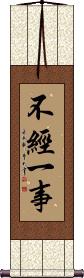
不經一事 means “You can't gain knowledge without practical experience.”
This is the short form (first half) of a longer Chinese proverb. These 4 characters remind you that wisdom only comes from experience.
Wisdom comes from Experience
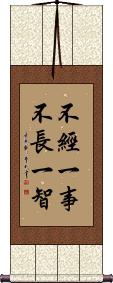
You can translate this 不经一事不长一智 Chinese proverb in a couple of ways.
The first is: You cannot gain knowledge without practice.
The second, and perhaps more popular way is: Wisdom comes from experience.
It literally means if you are inattentive to your affairs or situations you encounter, you will not gain or grow any wisdom or intellect.
Knowledge from Experience
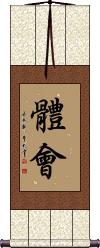
體會 is a Chinese word that basically means “knowledge [comes from] experience,” or “to learn through experience.”
This can also mean realizing or gaining understanding from your experiences.
Experience is the Mother of Wisdom
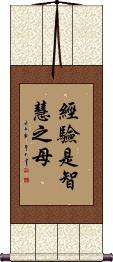
It's been said that wisdom comes from good judgment, and good judgment comes from experience, while experience comes from a series of times when you used bad judgment.
經驗是智慧之母 is a Chinese proverb that makes the simplest connection between experience and wisdom.
See Also: Failure is the Mother of Success | Wisdom | Learn From Wisdom
Sariputra
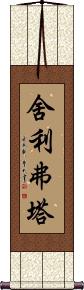
舍利弗塔 is the name Sariputra or Śāriputra in Chinese (Mandarin).
Often written in a shorter form as 舍利弗 (shě lì fú). This name comes from the Sanskrit शारिपुत्र or Śāriputra, and from Pali as Sāriputta.
This name comes from the closest disciple of the Buddha, Śāriputra, who helped establish the legacy of the Sangha (community of monks).
Gaman
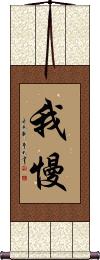
Gaman is a Zen Buddhist term from Japan that means “enduring the seemingly unbearable with patience and dignity.”
This title can also be translated as patience, perseverance, tolerance, or self-denial.
我慢 is also a Chinese Buddhist term with a different pronunciation. It comes from Sanskrit abhimāna or ātma-mada. Chinese Buddhism defines this very differently as “Egoism exalting self and depreciating others,” “self-intoxication,” or “pride.” Alone, the first character means “Me, I, or Self,” and the second character in a Buddhist context comes from Sanskrit māna and means pride, arrogance, self-conceit, looking down on others, superciliousness, etc.
I’m currently working with Japanese and Chinese translators to try and reconcile the true meaning or any commonality of this word between languages. For now, please only consider this if your audience is Japanese.
John 14:15
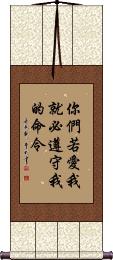
你們若愛我就必遵守我的命令 is the translation of John 14:15 into Chinese.
This comes from the Chinese Union Bible which comes from a revised King James version. This Chinese Bible was originally translated and printed in 1919 (several revisions since then).
Because of the origin being the KJV, I'll say that in English, this would be, “If ye love me, keep my commandments...”
In basic English, this would be, “If you have love for me, you will keep my laws.”
John 14:18
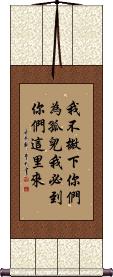
我不撇下你們為孤兒我必到你們這里來 is the translation of John 14:18 into Chinese.
This comes from the Chinese Union Bible which comes from a revised version of the King James. This Chinese Bible was originally translated and printed in 1919 (several revisions since then).
Because of the origin being the KJV, I'll say that in English, this would be, “I will not leave you comfortless: I will come to you...”
In basic English, this would be, “I will not let you be without a friend: I am coming to you.”
Do No Harm / Harmless
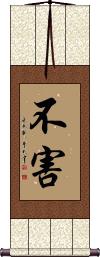
不害 is a Buddhist term that comes from the Sanskrit “ahiṃsā” meaning harmlessness, not injuring or doing harm to no one.
Die Without Regret
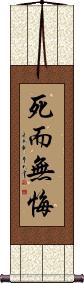
死而無悔 is how to say “die with no regrets” in Mandarin Chinese.
This proverb comes from the Analects of Confucius.
See Also: No Regrets
Dynasty
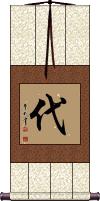
代 is the word used to designate dynasties in Asia.
代 alone can mean generation; age; period; historical era; eon; world; society; reign; era. 代 comes after the name of the dynasty, for example, the Tang Dynasty is the “Tang Dai” in Chinese.
Some have suggested that the word dynasty comes from the Chinese word “dai” (as “dai” sounds like the first syllable of a dynasty). However, the word dynasty is derived from the Greek word δυναστεία (dunasteia) meaning lordship and/or domination.
Sometimes this word is used in a different context where it can mean to represent or substitute. In this case, it can mean representative of; on behalf of; acting for, e.g. to offer incense in place of another.
In ancient Japan, this could also be a “shiro” (a unit of land area equal to one-fiftieth of a tan or about 20 square miles).
John 3:16
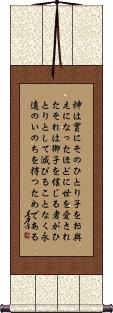
Here is the full translation of John 3:16 into Japanese.
This translation comes from the Shinkaiyaku Bible (a preferred translation by many Japanese Christians).
Just for reference, from the KJV, this reads, “For God so loved the world, that he gave his only begotten Son, that whosoever believeth in him should not perish but have everlasting life.”
Note: Because this selection contains some special Japanese Hiragana characters, it should be written by a Japanese calligrapher.
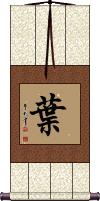
葉 is the Chinese surname Yap which means leaf.
This romanization comes from the Hokkien and Hakka dialects, particularly in the provinces of Guangdong and Fujian.
Surely I come quickly
Part of Revelation 22:20
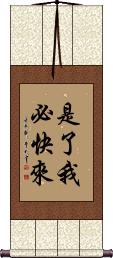
是了我必快來 is an excerpt from Revelations 22:20. It says “Surely, I am coming quickly” or “Surely I come quickly” depending on which Bible translation you use.
The Chinese translation here comes from the Chinese Union Bible which has been around for almost 100 years and is the standard for Chinese Christians.
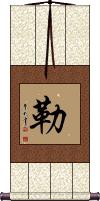
勒 is a Chinese surname that romanizes as Le or Lè and comes from ancient place names (Shu-Le) or ethnic groups like the Huns.
Use caution: There are other surnames in Asia that romanize as Le; here are a few:
Vietnamese (Lê): Most common usage, from Chinese 黎 (Lí), signifying a major royal family like the Lê Dynasty (1428–1788).
Chinese (樂 - Lè): Means "happiness" or "joy," from historical figures or noble lineages.
Korean: Can be a variant of Li or Lee, representing different Chinese characters (e.g., 黎, 呂).
Wood
(One of the five elements)
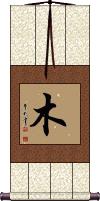
木 is the symbol for wood in Japanese, Korean and Chinese.
This can sometimes mean “tree” depending on context. In fact, the character comes from a pictogram that is supposed to resemble a tree.
Wood is one of the five elements that ancient Chinese believed all things were composed of. These elements are also part of the cycle of Chinese astrology. Every person has both an animal sign, and one of the five elements according to the date of their birth. See also Five Elements and Chinese 12 Animals / Zodiac.
Lau Gar Kung Fu
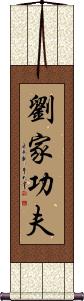
劉家功夫 are the characters for the Lau Gar Kung Fu style of martial arts.
The romanization of “Lau Gar” comes from Cantonese. “Kung Fu” is the common romanization for English from the Mandarin “Gōng Fu” or Cantonese “Gung Fu” pronunciations.
Lau gar = Lau family.
Sanchin
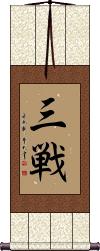
三戦 is a title that literally means “three battles/conflicts/wars.”
三戦 is often figuratively used to relay the idea of a battle to unify the mind, body, and spirit.
Original usage likely comes from Fujian province in Southern China (just across from Taiwan).
This title is used in various schools such as Okinawan Karate, Uechi-Ryū, Gōjū-Ryū, Fujian White Crane, and Five Ancestors among others.
Shili / Shiri / Sri
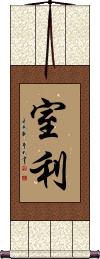
室利 is a Buddhist term or title that comes from the Sanskrit śrī.
The meaning is fortunate, lucky, prosperous, wealth, or beauty. This can be a sort of suffix for certain deities or respected people in Buddhism.
Joshua 1:9
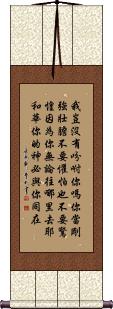
Here is the full translation of Joshua 1:9 into Chinese.
The text with punctuation:
我岂没有吩咐你吗?你当刚强壮胆。不要惧怕,也不要惊惶。因为你无论往哪里去,耶和华你的神必与你同在。
Hand-painted calligraphy does not retain punctuation.
This translation comes from the 1919 Chinese Union Bible.
For reference, from the KJV, this reads, “Have not I commanded thee? Be strong and of a good courage; be not afraid, neither be thou dismayed: for the LORD thy God is with thee whithersoever thou goest.”
Changquan / Long Fist
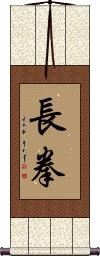
長拳 is the title for Changquan or Chang Quan, meaning Long Fist.
This style comes from the 北少林 (Northern Shaolin). Changquan belongs to the Northern Chinese School of Martial Arts.
Shorin-Ryu
Shaolin Style
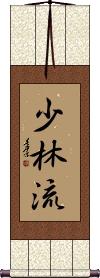
少林流 is the Japanese martial arts title “Shorin-ryu.”
Though the first part of the title comes from the Shaolin (small forest) monks of China.
In Japan, this refers to the Okinawa School of Karate.
 Note that often in Japanese, the first Kanji of this title was changed to the version shown to the right. If you prefer this version, please click on the Kanji to the right instead of the button above.
Marici / Marishiten
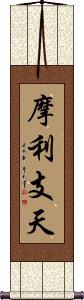
This is the Chinese and Japanese title for Marici, the Buddhist god of war.
Pronounced as Marishiten in Japan or Molizhitian in China.
The original name Mārīcī comes from the Sanskrit मारीची which literally means “Ray of Light.”
Sticky Hands / Chi Sau
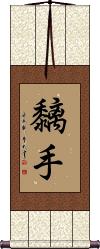
The first character means “wood glue” or can be understood as “sticky” or “sticking.”
The second character means “hand” (or “hands”).
This term can be romanized as “Chi Sau,” “Chi Sao,” or from Mandarin, “Chi Shou.”
黐手 is a concept that comes from the Wing Chun (AKA: Ving Tsun, Wing Tsun, or Yong Chun) style of martial arts. If you are looking for this term, chances are, you already know the meaning within the context of Wing Chun.
Better to sacrifice your life than your principles
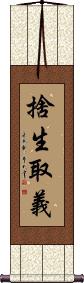
捨生取義 is a Chinese proverb that comes from the philosopher Mencius.
It can be translated in a few different ways:
To give up life for righteousness.
To choose honor over life
Better to sacrifice one's life than one's principles.
Shorin Ji Ryu
Shaolin Temple Style
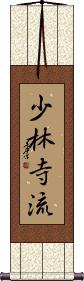
少林寺流 is the Japanese martial arts title “Shorin-ji-ryu.”
Though the first part of the title comes from the Shaolin temple in China. In Japan, this refers to an Okinawa school of karate.
Note: Sometimes, this title is written without the “ji” or “temple” Kanji.
When the sun rises it first shines on the highest mountain
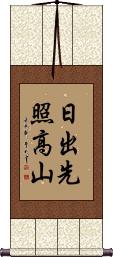
This old Buddhist phrase means, “When the sun rises it always shines first on the highest mountain,” or “When the sun appears, it first casts its light upon the highest mountain.”
This comes from the Avatamsaka Sutra and has been used as the name or portion of the name for temples in Japan and sites in China.
The Buddha's first round of teaching (Avatamsaka period) is likened to the time when the sun rises from the east horizon. When the sun first rises it illuminates the high mountains. In this analogy, the high mountains represent the great Bodhisattvas and/or those most ready to receive enlightenment and liberation.
This can be romanized from Japanese as “Nichi shutsu sen shō kō san,” “Nisshutsu saki teru takayama,” or “Hide temazu kōzan wo terasu yama.” The last one is probably the most common. Ask three Japanese people what they think the pronunciation is, and you will get three different opinions.
Zen Garden
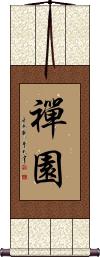
禪園 literally means “meditation garden.”
The first character happens to be known as Zen in the west (the pronunciation comes from Japanese) but this title is not often used in Japan (won't be recognized as a Japanese title).
The title “Zen Garden” was made up by westerners I'm afraid.
John 3:16

神愛世人甚至將他的獨生子賜給他們叫一切信他的不至滅亡反得永生 is the full translation of John 3:16 into Chinese.
This is from the Chinese Union Bible which comes from a revised version of the King James. This Chinese Bible was originally translated and printed in 1919 (several revisions since then).
Because of the origin being the KJV, I'll say that in English, this would be, “For God so loved the world, that he gave his only begotten Son, that whosoever believeth in him should not perish but have everlasting life.”
As with any translation, there are interesting cultural and linguistic issues. For instance, the word used for “world” in Chinese can also mean “common people.” So you could say that it means “For God so loved the common people...”
This does not take away from the text, as it will be understood with the same meaning and connotation.
There is no direct Greek-to-Chinese translation in print (that I know of), so this is the best available. Of course, you can ask any Greek person of faith, and they will claim that a bit is lost from the original Greek of the New Testament to any of the English versions of the Bible in print.
Mercy / Compassion / Buddhist Loving Kindness
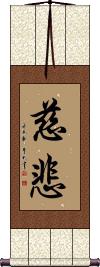
Besides the title above, 慈悲 can also be defined as clemency or lenience and sometimes the act of giving charity.
In the Buddhist context, it can be defined as “benevolence,” “loving-kindness and compassion,” or “mercy and compassion.”
This Buddhist virtue is perhaps the most important to employ in your life. All sentient beings that you encounter should be given your loving kindness. And trust me, however much you can give, it comes back. Make your life and the world a better place!
This Chinese/Japanese Buddhist term is the equivalent of Metta Karuna from Pali or Maitri Karuna from Sanskrit.
慈 can mean loving-kindness by itself.
悲 adds a component of sorrow, empathy, compassion, and sympathy for others.
See Also: Benevolence
Forgive and Forget
Confucian Proverb
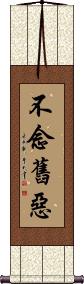
不念舊惡 is a Chinese proverb that can be translated as “Do not recall old grievances,” or more simply as “Forgive and forget.”
The character breakdown:
不 (bù) not; no; don't.
念 (niàn) read aloud.
舊 (jiù) old; former.
惡 (è) wicked deeds; grievances; sins.
This proverb comes from the Analects of Confucius.
Silk
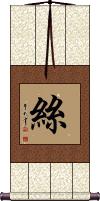
絲 is the simplest way to write silk in Chinese, Japanese Kanji, and old Korean Hanja.
This can also mean thread, and it is used as parts of words like “silk fabric” or “silk scarf.”
In Japanese, this can be the surname Ito.
絲 is used far more in Chinese for silk (silk comes from China) than in Japanese.
Hua Mulan
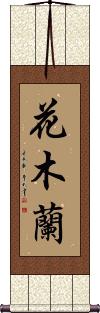
花木蘭 is the name of the famous Chinese woman warrior Hua Mulan.
She was made famous in the west by Disney's animated movie, “Mulan.”
Most of the historical information about her comes from an ancient poem. It starts with a concerned Mulan, as she is told a man from each family is to serve conscription in the army. Her father is too old, and her brother is too young. Mulan decides to take the place of her father. After twelve years of war, the army returns, and the best warriors are awarded great posts in the government and riches. Mulan turns down all offers and asks only for a good horse for the long trip home. When Mulan greets visiting comrades wearing her old clothes, they are shocked to find the warrior they rode into battle with for years is actually a woman.
One Day Seems Like 1000 Years
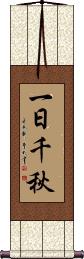
一日千秋 is a Japanese and Chinese proverb about missing someone.
一日千秋 is often used to express how hard it is to wait for someone's return or to be away from someone.
Some will translate this as “one day feels like a very long time” or “waiting for someone (something) is hard.”
You might see this romanized as a single word, Ichijitsusenshuu, or as “Ichijitsu Senshuu” from Japanese.
If you break down the characters one-by-one, we get:
一 = one/a
日 = day/sun (can also represent time or date)
千 = 1000/thousand
秋 = autumn/fall
Together, 千秋 can mean “autumn comes thousand times” (or 1000 years). It can also be read as 1000 periods of time.
However, it relays the idea of heartache as you wait for someone you miss.
Hakko-Ryu
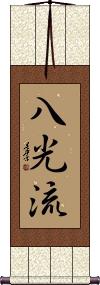
八光流 (Hakkō-Ryū) is a style of jujutsu associated with Daito-Ryu.
The title Hakko-Ryu comes from the Japanese phrase which translates as “The Style of the Eighth Light,” or more literally, “Eighth Light Style.”
The 光 character is associated with brightness or brilliance. It can be used to describe someone of great talent or potential. So the meaning goes far beyond just light.
When Three People Gather, Wisdom is Multiplied
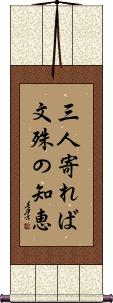
三人寄れば文殊の知恵 literally means “when three people meet, wisdom is exchanged.”
Some will suggest this means when three people come together, their wisdom is multiplied.
That wisdom part can also be translated as wit, sagacity, intelligence, or Buddhist Prajna (insight leading to enlightenment).
In the middle of this proverb is “monju,” suggesting “transcendent wisdom.” This is where the multiplication of wisdom ideas comes from.
Note: This is very similar to the Chinese proverb, "When 3 people meet, one becomes a teacher."
Note: Because this selection contains some special Japanese Hiragana characters, it should be written by a Japanese calligrapher.
Desire
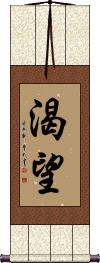
This Chinese word can mean desirous, wishful, or desire.
The first character means to thirst for [something] or to be thirsty. The second character means to hope for, to expect, to gaze (into the distance), or to look for something. The combined meaning of these two characters changes a bit, but I think it's nice to know the individual meanings to give you a better understanding of where a word comes from.
Korean definitions of this word include craving, longing, and thirst for knowledge.
Way of Life / Art of Life
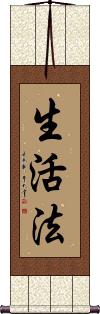
生活法 is a Japanese and Chinese title meaning “art of living” or “way of life.”
This can also be translated in a few other ways, such as “rule of life” and “the act of living.”
The “art” title kind of comes from the fact that the last character is the same as the book, “The Art of War.” So when you write your book, this is the title for “The Art of Life,” in Chinese and Japanese.
Inspiration
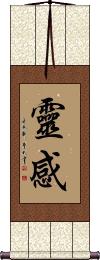
靈感 is the Chinese word closest to hitting the mark for the English word inspiration.
In a more extended context, I have even seen this translated as “brain wave.”
The first character means alert, departed soul, efficacious, quick, effective, or intelligent.
The second character means to feel, to move, to touch, or to affect.
The combined meaning of these two characters changes a bit, but I think it's nice to know the individual meanings to give you a better understanding of where a word comes from.
You could describe this word as “the thought that pops into your head just before you patent the greatest widget ever invented that everyone in the world will want.”
At least, that's the idea.
This term can also mean “intelligent thought” if you translate it directly from each character. If you are looking for inspiration or need to be inspired, this is the word for you.
 When the first character was absorbed into Japanese from Chinese, an alternate form became the standard in Japan. The Kanji shown to the right is the form currently used in Japan. This is still considered an alternate form in China to this day.
it’s
readable by both Chinese and Japanese people but if your audience is Japanese, I recommend the Kanji shown to the right - just click on that Kanji to order that version.
When the first character was absorbed into Japanese from Chinese, an alternate form became the standard in Japan. The Kanji shown to the right is the form currently used in Japan. This is still considered an alternate form in China to this day.
it’s
readable by both Chinese and Japanese people but if your audience is Japanese, I recommend the Kanji shown to the right - just click on that Kanji to order that version.
Sword
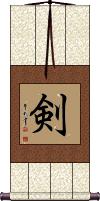
剱 is the modern Japanese way to write sword.
This Kanji character comes from original Chinese. This form would also be understood in Chinese (there are often several ways to write the same character) but I suggest this one only if your audience is Japanese (because they've settled on a slightly different form as the standard in China).
In Japanese, this character also means saber/sabre, blade, bayonet, stinger, and clock hand (clock hands are the “swords” of the clock).
See Also: Katana
Demon / Raksha
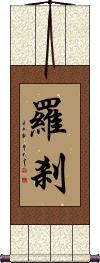
羅剎 is the Chinese version of demon that comes from the ancient Sanskrit word raksha, raksasa (rākṣasa), raksas (rakṣas), or raksasi (rākṣasī).
This title regards malignant spirits and demons. These demons are described in ancient texts as terrifying, with black bodies, red hair, and green eyes, and as devourers of men. FYI: Sometimes the second character is written in the form shown to the right.
Courage to do what is right
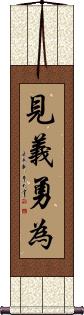
見義勇為 means the courage to do what is right in Chinese.
This could also be translated as “Never hesitate to do what is right.”
This comes from Confucian thought:
Your courage should head in an honorable direction. For example, you should take action when the goal is to attain a just result as, without honorable intent, a person’s gutsy fervor can easily lead them astray.
One who flaunts courage but disregards justice is bound to do wrong; someone who possesses courage and morality is destined to become a hero.
Some text above paraphrased from The World of Chinese - The Character of 勇
See Also: Work Unselfishly for the Common Good | Justice | Bravery
Profound / Powerful Words
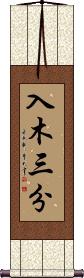
入木三分 is a four-character Chinese proverb that translates in English to a strong form of “profound” or “written with a forceful hand.”
But there is much more to the story...
The deep meaning behind this proverb comes from a man named Wan Xizhi, who lived in the third century.
He was a great writer and calligrapher whose writing style influenced generations of other writers and calligraphers.
He once wrote words on a piece of wood to be taken to an engraver.
When the engraver began to carve the characters into the wood, he found that Wang Xizhi's writing had penetrated the wood about 3/8 of an inch.
Thus people believed that his words were so powerful and profound that they caused the ink from his brush to penetrate the wood deeply.
The proverb literally means “penetrated wood three fen” (A fen is an ancient Chinese measurement of a little over 1/8 of an inch or almost 4mm).
Gwan
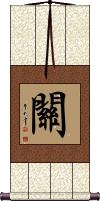
The surname "Gwan" is primarily of Chinese origin, meaning things like "mountain pass," "to close," or "to manage."
Other Chinese variations include 官 and 管.
Romanization variations of 關: Guan (Mandarin), Kwan (Cantonese/HK), Kuan (Taiwan), Quan (Vietnamese).
History: Associated with ancient states and officials, like the descendants of Guan Zhong.
In Korean there is a Gwan or Kwon that comes from 權 (권), meaning "power" or "authority," though "Gwan" can also be used as a given name with meanings like "strong" or "official".
Destiny Determined by Heaven
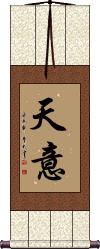
天意 is a way to express destiny in a slightly religious way.
天意 means “Heaven's Wish” or “Heaven's Desire,” with the idea of fate and destiny being derived as well. It suggests that your destiny comes from God / Heaven and that your path has already been chosen by a higher power.
My Japanese dictionary defines this word as “divine will” or “providence,” but it also holds the meaning of “the will of the emperor.” Therefore, I don't suggest this phrase if your audience is Japanese - it feels strange in Japanese anyway.
The Red Thread of Fate
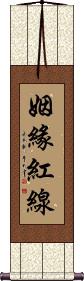
姻緣紅線 is the legendary red string of destiny that binds all soul mates or lovers together.
In ancient Chinese culture, a mythological matchmaker named 月老 (Yuè Lǎo) was the controller of the fate that led lovers to meet. He did this by tying a celestial red string to the ankle of each person. Sometime during their life, they will meet and marry as fate dictates.
While the origin of the red string comes from China, it has spread to other parts of Asia (such as Japan, where it's known as 赤い糸).
Kama - Desire Wish Longing
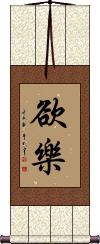
欲樂 is the Chinese and Japanese title representing the Buddhist and Jainist joys of the five desires.
Kama comes from the Pali/Sanskrit काम. The meaning is “desire, wish, longing.”
In Jainism, it can include sensual pleasure, sexual desire, and longing.
However, the Buddhist context refers more to any desire, wish, passion, longing, the pleasure of the senses, desire for, longing to and after, the aesthetic enjoyment of life, affection, or love, enjoyment of love is particularly with or without the enjoyment of sexual, sensual and erotic desire, and is often used without sexual connotations.
The Red String
Thread of Lover's Destiny / Fate
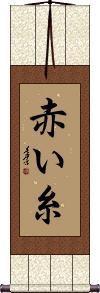
This literally translates as “the red string” or “the red thread” in Japanese, but the real meaning is much deeper...
In Japanese culture, it's believed that fate, destiny, or karma joins lovers by an unseen string, tied around one little finger of each. 赤い糸 is how soul mates find and are drawn to each other.
The Japanese concept of the red thread of fate, by most estimations, comes from Chinese folklore, where it's known as 姻緣紅線. The only difference is that in China, the celestial red thread is tied around the ankles of the lovers (versus what is usually represented as the pinky finger in Japan).
Tathata / Ultimate Nature of All Things
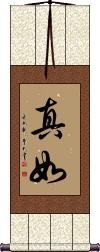
真如 comes from the Sanskrit and Pali word often romanized as “tathata” or “tathatā.” Originally written, “तथता.”
It's a Buddhist term often translated as “thusness” or “suchness,” but this does not explain it.
A better explanation may be “the ultimate nature of all things” or “ultimate truth.” However, this gives it too strong of a feeling. This concept is sometimes described as being in awe of the simple nature of something - like a blade of grass blowing in the wind or ripples on water. It is what it is supposed to be, these things follow their nature. Amazing in their mundane simplicity.
Every sect of Buddhism will have a slightly different flavor or explanation, so don't get fixated on one definition.
Notes: Sometimes Buddhists use the word dharmatā, a synonym to tathatā.
In Japan, this can also be the female given name Mayuki, or the surname Majo.
Hishiryo / Not-Thinking
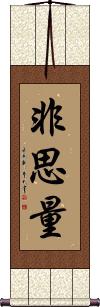
Hishiryō (非思量) literally means not-thinking.
Hishiryo can be described as a state of mind beyond thinking and non-thinking during the practice of Zazen.
Shiryō (思量) means “thinking,” and hi (非) is a prefix for negation and opposition.
Therefore, hishiryo amounts to “unthink” or “not the matter of thinking.” The word hishiryo appears in Dogen Zenji’s Fukanzazengi, Shobogenzo Zazengi, Shobogenzo Zazenshin, and Keizan Zenji’s Zazen Yojinki. It is one of the most important words used to describe zazen. Hishiryo in these writings comes from a dialogue between Yakusan Igen (745-828) and an unnamed monk, which is described in Keitoku, Dentoroku, and other Zen texts.
The above is an abridged except from School of Shodo: Hishiryo
I suggest you visit that page for a full explanation.
Morality of Mind
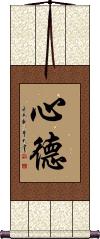
The idea of 心德 or “morality of mind” goes along with 行德 or “wu de” (martial morality or virtues of the warrior).
Here, the first character is a representation of your heart or mind.
The second character refers to morality or virtue.
This can also be translated as “morality of heart,” “virtue of heart,” or “virtue of the mind.”
Since ancient times in Asia, the idea of your mind (where your soul resides and your thought originates) has been associated with the heart. Just as in western culture, where we say “it comes from the heart” or “heartfelt emotions,” there is a belief that your heart and mind are one and the same (medical science now begs to differ).
See Also: Morality of Deed | Martial Morality
Daruma / Damo

達磨 in Japanese usually refers to Daruma, a tumbling doll with a round red-painted body.
In Japan, Daruma is a good-luck doll which is supposed to in the shape of Bodhidharma, with a blank eye to be completed when a person's wish is granted.
達磨 is also Bodhidharma or Dharma. 達磨 comes from an ancient word that means holding fast and keeping ordinances, statutes, laws, or practice.
This is also a title for Damo, or Bodhidharma, the twenty-eighth Indian and first Chinese patriarch, who arrived in China A.D. 520, the reputed founder of the Chan or Intuitional School in China. He is described as son of a king in southern India. He famously engaged in silent meditation for nine years.
Monkey Fist
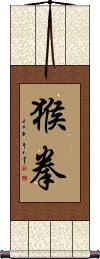
猴拳 literally means what you think, it's the “Monkey Fist” school of Kung Fu. A style that mimics the punches and movements of monkeys and apes.
Becoming popular during the Qing Dynasty, this style can trace its origins back to as early as the Song Dynasty. Some of the romance and popularity of this style comes from the novel “Journey to the West” which features the Monkey King and his fighting skills.
This novel and martial arts style has spawned a stream of Hong Kong movies featuring the Monkey King and other Kung Fu style variations such as “Drunken Monkey” and “Monkey Stealing Peaches” (a technique of disabling your opponent by grabbing and yanking on his testicles).
Note: This kind of makes sense in Korean Hanja and Japanese Kanji but probably unknown by all Koreans and Japanese except those who have an interest in this form of Kung Fu.
Past experience is the teacher for the future
Past events not forgotten serve as teachers for later events.
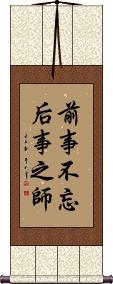
The most literal translation to English of this ancient 前事不忘后事之师 Chinese proverb is:
“Past events not forgotten serve as teachers for later events.”
However, it's been translated several ways:
Don't forget past events, they can guide you in the future.
Benefit from past experience.
Past experience, if not forgotten, is a guide for the future.
Past calamity is my teacher.
A good memory for the past is a teacher for the future.
The remembrance of the past is the teacher of the future.
If one remembers the lessons of the past; They will serve as a guide to avoid mistakes in the future.
The origin:
This proverb comes from the 5th century B.C., just before the Warring States Period in the territory now known as China.
The head of the State of Jin, Zhi Bo, seized power in a coup. He did this with help from the armies of the State of Han and Wei. Instead of being grateful for the help from Han and Wei, he treacherously took the land of Han and Wei. Never satisfied, Zhi Bo employed the armies of Han and Wei to attack and seize the State of Zhao.
The king of Zhao took advice from his minister Zhang Mengtan and secretly contacted the Han and Wei armies to reverse their plans and attack the army of Zhi Bo instead. The plan was successful, and the State of Zhao was not only saved but was set to become a powerful kingdom in the region.
Zhang Mengtan immediately submitted his resignation to a confused king of Zhao. When asked why, Zhang Mengtan said, “I've done my duty to save my kingdom, but looking back at past experience, I know sovereign kings are never satisfied with the power or land at hand. They will join others and fight for more power and more land. I must learn from past experiences, as those experiences are the teachers of future events.”
The king could not dispute the logic in that statement and accepted Zhang Mengtan's resignation.
For generations, the State of Zhao continued to fight for power and land until finally defeated and decimated by the State of Qin (which led to the birth of the Qin Dynasty in 221 B.C.).
Namaste - Greeting
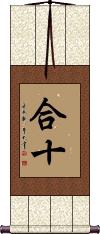
The word namaste comes from Sanskrit and is a common greeting in the Hindi and Nepali languages exchanged by devout Hindu or Buddhist people in Southern Asia (especially India).
合十 is the Chinese form (not well-known in Japan) of this word which is used to describe a Buddhist (or Hindu) greeting with palms closed together prayerfully, generally at chest level. However, this selection of characters describes the act and is not a word spoken during the greeting. Words or a greeting are seldom spoken when two Buddhists meet. The greeting is silent and respectful but composed completely of body language.
Note that the greeting namaste and the act of placing palms together are used both as a hello and goodbye (like the word aloha in Hawaiian).
If you are looking for a welcoming hello and goodbye, you may want to consider gassho or a simple welcome.
Mark the boat to find the lost sword / Ignoring the changing circumstances of the world
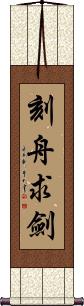
刻舟求劍 is an originally-Chinese proverb that serves as a warning to people that things are always in a state of change.
Thus, you must consider that and not depend on the old ways or a way that may have worked in the past but is no longer valid.
This idiom/proverb comes from the following story:
A man was traveling in a ferry boat across a river. With him, he carried a treasured sword. Along the way, the man became overwhelmed and intoxicated by the beautiful view and accidentally dropped his prized sword into the river. Thinking quickly, he pulled out a knife and marked on the rail of the boat where exactly he had lost his sword.
When the boat arrived on the other side of the river, the man jumped out of the boat and searched for his sword right under where he'd made the mark. Of course, the boat had moved a great distance since he made the mark, and thus, he could not find the sword.
While this man may seem foolhardy, we must take a great lesson from this parable: Circumstances change, so one should use methods to handle the change. In modern China, this is used in business to mean that one should not depend on old business models for a changing market.
This proverb dates back to the Spring and Autumn period (770–476 BC) of the territory now known as China. It has spread and is somewhat known in Japan and Korea.
Daodejing / Tao Te Ching - Chapter 9
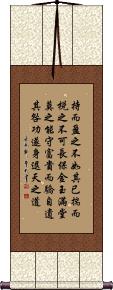
This text is the ninth chapter of the Daodejing / Tao Te Ching.
To hold until full is not as good as stopping.
An oversharpened sword cannot last long.
A room filled with gold and jewels cannot be protected.
Boasting of wealth and virtue brings your demise.
After finishing the work, withdraw.
持而盈之不如其已揣而梲之不可長保金玉滿堂莫之能守富貴而驕自遺其咎功遂身退天之道 is the Way of Heaven.
Dr. Muller's translation of all 81 Daodejing chapters
The text reads:
持而盈之、不如其已。揣而梲之、不可長保。 金玉滿堂、莫之能守。 富貴而驕、自遺其咎。 功遂身退、天之道。
This classical Chinese passage comes from the Mawangdui (馬王堆帛書) text.
Unselfish: Perfectly Impartial
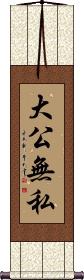
大公無私 is a Chinese proverb that comes from an old story from some time before 476 BC. About a man named Qi Huangyang, who was commissioned by the king to select the best person for a certain job in the Imperial Court.
Qi Huangyang selected his enemy for the job. The king was very confused by the selection, but Qi Huangyang explained that he was asked to find the best person for the job, not necessarily someone that he liked or had a friendship with.
Later, Confucius commented on how unselfish and impartial Qi Huangyang was by saying, “Da Gong Wu Si” which, if you look it up in a Chinese dictionary, is generally translated as “Unselfish” or “Just and Fair.”
If you translate each character, you'd have something like
“Big/Deep Justice Without Self.”
Direct translations like this leave out a lot of what the Chinese characters really say. Use your imagination, and suddenly you realize that “without self” means “without thinking about yourself in the decision” - together, these two words mean “unselfish.” The first two characters serve to drive the point home that we are talking about a concept that is similar to “blind justice.”
One of my Chinese-English dictionaries translates this simply as “just and fair.” So that is the short and simple version.
Note: This can be pronounced in Korean, but it's not a commonly used term.
See Also: Selflessness | Work Unselfishly for the Common Good | Altruism
A Bright Future
Incredible 10,000-Mile Flight of the Peng
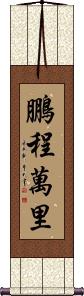
鵬程萬里 is an ancient Chinese proverb used in modern times to wish someone a long and successful career.
It's really about the 10,000 Flight of the Peng (Peng, also known as Roc is a mythical fish that can turn into a bird and take flight).
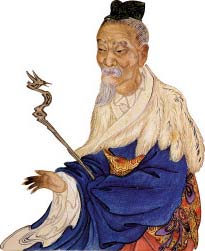
莊子
Zhuangzi or Chuang Tzu
Breaking down each character:
1. Peng or Roc (a kind of bird).
2. Journey (in this case, a flight).
3. 10,000 (Ten Thousand).
4. Li is a unit of distance often referred to as a “Chinese Mile,” though the real distance is about half a kilometer.
Direct Translation: “Peng's Journey [of] 10,000 Li.”
Literal meaning: “The 10,000-Li Flying Range Of The Roc.”
Perceived meaning: “To have a bright future” or “To go far.”
This proverb/idiom comes from the book of Zhuangzi or Chuang Tzu. It tells the tale of a huge fish that could turn into a gigantic bird. This bird was called a “peng” and was many miles long. This legendary size allowed the Peng to fly from the Northern Sea to the Southern Sea in a single bound.
Wishing someone “a Peng's Journey of 10,000 Li” will imply that they can travel far without stopping and will have great success, a long career, and a prosperous future.
Goddess of Mercy and Compassion
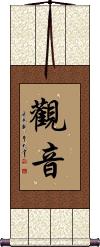
觀音/観音 is the Buddhist deity known as the Goddess of Mercy or Bodhisattva of Compassion.
In Chinese, the proper name of this being is Guan Yin. There is some debate as to whether Guan Yin is female. The argument comes from some scripture that suggests Buddhist deities take on the male form. Others say that Guan Yin has no sex. And still, others are okay with the female representation of Guan Yin.
This bodhisattva is also known or Romanized in the following ways:
Mandarin Chinese: Guan Yin, Kuan Yin, Kwan Yin.
Japanese: Kannon, Kwannon.
Sanskrit: Bodhisattva Avalokitesvara.
Korean: Gwan-eum.
Vietnamese: Quan Âm.
Thai: Kuan Eim.
English: Bodhisattva of Mercy and Salvation, Goddess of Compassion, Buddha of Mercy, et al.
Note: The first character has a slight variation in Japanese. If your audience is specifically Japanese, you may want to select that version.
See Also: Buddhism | Goddess | Namo Amitabha | Bodhisattva
Daodejing / Tao Te Ching - Chapter 1
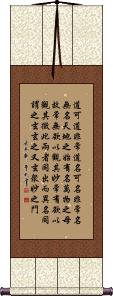
This text is the first chapter of the Daodejing / Tao Te Ching.
The Way that can be followed is not the eternal Way.
The name that can be named is not the eternal name.
The nameless is the origin of heaven and earth
While naming is the origin of a myriad of things.
Therefore, always desireless, you see the mystery
Ever desiring, you see the manifestations.
These two are the same—
When they appear, they are given different names.
This sameness is the mystery,
Mystery within mystery;
The door to all marvels.
Dr. Muller's translation of all 81 Daodejing chapters
The text reads:
道可道、非常道。名可名、非常名。 無名天地之始 有名萬物之母。故常無欲以觀其妙、常有欲以觀其徼。此兩者同出而異名。同謂之玄。玄之又玄、衆妙之門。
This classical Chinese passage comes from the Mawangdui (馬王堆帛書) text.
Frightful Demon / Asura
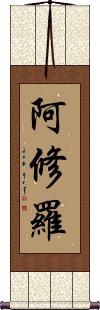
This demon title comes from the ancient Sanskrit word Asura.
阿修羅 is often used in Buddhism when describing various demons. Sometimes defined as “Fighting and battling a giant demon.”
In the context of Buddhism: This title originally meant a spirit, spirits, or even the gods (perhaps before 1700 years ago). It now generally indicates titanic demons, enemies of the gods, with whom, especially Indra, they wage constant war. They are defined as “not devas,” “ugly,” and “without wine.” There are four classes of asuras, separated according to their manner of rebirth. They can be egg-born, womb-born, transformation-born, and spawn- or water-born. Their abode is in the ocean, north of Sumeru but certain of the weaker dwell in a western mountain cave. They have realms, rulers, and palaces, as have the devas.
In terms of power, Asuras rank above humans but below most other deities. They live near the coastal foot of Mount Sumeru (on the northern side). Their domain is partially or wholly in the ocean.
Devotion / Dedication / Attentive / Focused
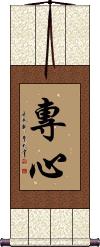
專心 makes a word that means “paying attention with your heart.”
It's often translated as “dedication,” as in “be absorbed in” or “concentrate one's efforts.” It's also used to mean “with the single mind,” “whole-heartedly,” “paying attention,” “undivided attention,” “concentration (-ed),” “engrossed,” “devotionally (listening/watching),” and/or “attentive.”
The first character means “for a particular person, occasion, or purpose,” “focused on one single thing,” “concentrated,” and sometimes, “special.”
The second character means “heart” or “mind” by itself.
My favorite translation, which comes from the Oxford Advanced Chinese/English Dictionary, is, “wholehearted devotion.”
If it seems like the meaning of this word is quite open, you are correct. The context in which the word is used matters a lot. It can mean different things depending on how you use it. This makes it kind of nice as you can decide what this means to you (within some limits). This is always positive in meaning, so even if a Chinese person reads it differently than you, it will still have a good meaning.
 In Japanese, they tend to use a variation of the second character which has one less stroke. If you want your calligraphy written this Japanese form, please click on the Kanji shown to the right instead of the button above. Note: Japanese and Chinese people will recognize either form.
Justice / Rectitude / Right Decision
Also means: honor loyalty morality righteousness
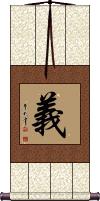
義 is about doing the right thing or making the right decision, not because it's easy but because it's ethically and morally correct.
No matter the outcome or result, one does not lose face if tempering proper justice.
義 can also be defined as righteousness, justice, morality, honor, or “right conduct.” In a more expanded definition, it can mean loyalty to friends, loyalty to the public good, or patriotism. This idea of loyalty and friendship comes from the fact that you will treat those you are loyal to with morality and justice.
義 is also one of the five tenets of Confucius's doctrine.
 There's also an alternate version of this character sometimes seen in Bushido or Korean Taekwondo tenets. It's just the addition of a radical on the left side of the character. If you want this version, click on the image to the right instead of the button above.
This is also a virtue of the Samurai Warrior
See our page with just Code of the Samurai / Bushido here
See Also: Judgment | Impartial | Confucius Tenets
Shorinji Kempo / Kenpo
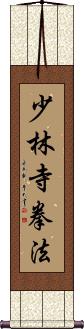
少林寺拳法 is a specific type of martial art in Japan that claims origins in the Kung Fu practiced in the original Shaolin Monastery of China.
The first three characters mean “Shaolin Monastery,” and you might notice the Japanese is pronounced in a very similar way. The reason is, many words were “borrowed” from the original Chinese when Japan did not have a written language and simply absorbed Chinese characters into their language around the 5th century. When a Japanese word did not exist, the Chinese pronunciation was often absorbed as well as the written form.
The last two characters mean “fist law” or “method of the fist.” It has long been argued as to whether the Japanese for these characters should be Romanized as “kempo” or “kenpo.” The official method should be “kenpou” but it's common to drop the “u” that comes after the “o.”
I imagine if you are looking for this title, you already know what it means, so the above is simply extra information that a student of Shorinji Kempo might want to know.
Double Happiness
(Happy wedding and marriage)
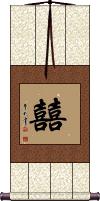
囍 is a common gift for Chinese couples getting married or newly married couples.
As we say in the west, “Two heads are better than one” Well, in the east, two “happinesses” are certainly better than one.
Some will suggest this is a symbol of two happinesses coming together. Others see it as a multiplication of happiness because of the union or marriage.
囍 is not really a character that is pronounced very often - it's almost exclusively used in written form. However, if pressed, most Chinese people will pronounce this “shuang xi” (double happy) although literally there are two “xi” characters combined in this calligraphy (but nobody will say “xi xi”).
 If you select this character, I strongly suggest the festive bright red paper for your calligraphy. Part of my suggestion comes from the fact that red is a good luck color in China, and this will add to the sentiment that you wish to convey with this scroll to the happy couple.
Banzai / Wansui
Old Japanese / Traditional Chinese & Korean
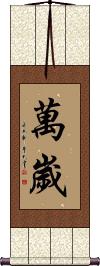
萬歲 is the traditional Chinese, Korean Hanja, and ancient Japanese way of writing banzai.
In modern times, the first character was simplified in Japan and China. So you might want to select the other entry for universal readability.
While it has become a popular, if not an odd, thing to scream as you jump out of an airplane (preferably with a parachute attached), banzai is actually a very old Asian way to say “hooray.” The Japanese word “banzai” comes from the Chinese word “wan sui,” which means “The age of 10,000 years.” It is actually a wish that the Emperor or the Empire live that long.
Imagine long ago when the Emperor made a rare public appearance. 萬歲 is what all people would yell to their leader in respect.
So if you like it as a hooray, or you want to wish someone that they live for 10,000 years, this is the calligraphy for you.
Other translations include Cheers! (not the drinking kind), hurrah!, long live [name]!, and congratulations!
To other things with banzai in their names, I am still waiting for the promised sequel to Buckaroo Banzai.
Notes: Sometimes people confuse banzai with bonsai. A bonsai is a miniature tree. They have nothing to do with each other.
Undaunted After Repeated Setbacks
Persistence to overcome all challenges
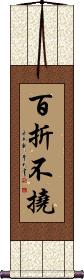
百折不撓 is a Chinese proverb that means “Be undaunted in the face of repeated setbacks.”
More directly translated, it reads, “[Overcome] a hundred setbacks, without flinching.” 百折不撓 is of Chinese origin but is commonly used in Japanese and somewhat in Korean (same characters, different pronunciation).
This proverb comes from a long, and occasionally tragic story of a man that lived sometime around 25-220 AD. His name was Qiao Xuan, and he never stooped to flattery but remained an upright person at all times. He fought to expose the corruption of higher-level government officials at great risk to himself.
Then when he was at a higher level in the Imperial Court, bandits were regularly capturing hostages and demanding ransoms. But when his own son was captured, he was so focused on his duty to the Emperor and the common good that he sent a platoon of soldiers to raid the bandits' hideout, and stop them once and for all even at the risk of his own son's life. While all of the bandits were arrested in the raid, they killed Qiao Xuan's son at first sight of the raiding soldiers.
Near the end of his career, a new Emperor came to power, and Qiao Xuan reported to him that one of his ministers was bullying the people and extorting money from them. The new Emperor refused to listen to Qiao Xuan and even promoted the corrupt Minister. Qiao Xuan was so disgusted that in protest, he resigned from his post as minister (something almost never done) and left for his home village.
His tombstone reads “Bai Zhe Bu Nao” which is now a proverb used in Chinese culture to describe a person of strong will who puts up stubborn resistance against great odds.
My Chinese-English dictionary defines these 4 characters as “keep on fighting despite all setbacks,” “be undaunted by repeated setbacks,” and “be indomitable.”
Our translator says it can mean “never give up” in modern Chinese.
Although the first two characters are translated correctly as “repeated setbacks,” the literal meaning is “100 setbacks” or “a rope that breaks 100 times.” The last two characters can mean “do not yield” or “do not give up.”
Most Chinese, Japanese, and Korean people will not take this absolutely literal meaning but will instead understand it as the title suggests above. If you want a single big word definition, it would be indefatigability, indomitableness, persistence, or unyielding.
See Also: Tenacity | Fortitude | Strength | Perseverance | Persistence
Indomitable / Unyielding
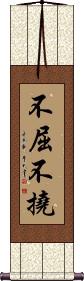
不屈不撓 means “Indomitable” or “Unyielding.”
不屈不撓 is a long word by Chinese standards. At least, it is often translated as a single word into English. It's actually a proverb in Chinese.
If you want to break it down, you can see that the first and third characters are the same. Both mean “not” (they work as a suffix to make a negative or opposite meaning to whatever character follows).
The second character means “bendable.”
The last means “scratched” or “bothered.”
So this really means “Won't be bent, can't be bothered.” I have also seen it written as “Will not crouch, will not submit.” This comes from the fact that the second character can mean “to crouch” and the last can mean “to submit” (as in “to give in” such as “submitting to the rule of someone else”). This may explain better why these four characters mean “indomitable.”
Notes:
Some will translate this as “indomitable spirit”; however, technically, there is no character to suggest the idea of “spirit” in this word.
Other translations include indefatigability, indomitableness, or unremitting tenacity.
The first two characters can be stand-alone words in Chinese.
In Japanese, this is considered two words (with very similar meanings). It's more common to see the word order flipped to 不撓不屈 in Japanese.
The same characters are used in old Korean Hanja. Just like in Japanese, the words are swapped to 不撓不屈 creating a word pronounced “불요불굴” in Korean.
See 不撓不屈
Banzai
Modern Japanese Version
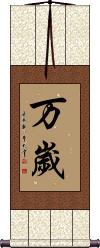
万歲 is the modern Japanese way to write banzai.
We've made two almost identical entries for this word, with just a variation on the first character. In the last century, 萬 was simplified to 万 in Japan and China. The new generation will expect it to be written as 万 but the old generation can still read the more traditional 萬 form. You must make your determination as to what version is best for you. If your audience is mostly Japanese, I suggest 万歲.
While it has become a popular, if not an odd, thing to scream as you jump out of an airplane (preferably with a parachute attached), banzai is actually a very old Asian way to say “hooray.” The Japanese word “banzai” comes from the Chinese word “wan sui” which means “The age of 10,000 years.” It is actually a wish that the Emperor or the Empire live that long.
Imagine long ago when the Emperor made a rare public appearance. This is what all of the people would yell to their leader in respect.
So if you like it as a hooray, or you want to wish someone that they live for 10,000 years, this is the calligraphy for you.
To other things with banzai in their names, I am still waiting for the promised sequel to Buckaroo Banzai.
Other translations: hurrah, long life, congratulations, cheers, live long.
Notes: Sometimes people confuse banzai with bonsai. A bonsai is a miniature tree. They have nothing to do with each other. Further, Bonzai is not a word at all - although it would make a great name for a calcium supplement for older people.
Kenjutsu / Kenjitsu
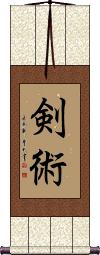
In Japanese, the modern definition, using simple terms, 剣術 is “A martial art involving swords” or “The art of the sword.”
However, in Chinese, this is the word for fencing (as in the Olympic sport).
I will suppose that you want this for the Japanese definition, which comes from skills and techniques developed in the 15th century. At that time, Kenjutsu (or swordsmanship) was a strictly military art taught to Samurai and Bushi (soldiers). The fact that swords are rarely used in military battles anymore, and with the pacification of Japan after WWII, Kenjutsu is strictly a ceremonial practice often studied as a form of martial art (more for the discipline aspect rather than practical purpose).
Language note: The Korean definition is close to the Japanese version described above. However, it should be noted that this can mean “fencing” depending on the context in Japanese, Chinese, and Korean.

 Character variation notes: There are slight variations possible with the second character. Either way is correct and understood by both Japanese and Chinese folks.
Since there are about 5 common ways to write the sword character, if you are particular about which version you want, please note that in the “special instructions” when you place your order.
Romanization note: This term is often Romanized as Kenjitsu; however, following the rules of Japanese Romaji, it should be Kenjutsu.
This in-stock artwork might be what you are looking for, and ships right away...
Gallery Price: $108.00
Your Price: $59.88

Gallery Price: $60.00
Your Price: $36.88

Gallery Price: $61.00
Your Price: $33.88

Gallery Price: $72.00
Your Price: $39.88

Gallery Price: $60.00
Your Price: $36.88
Gallery Price: $96.00
Your Price: $52.88

Gallery Price: $108.00
Your Price: $59.88

Starting at: $28.88

Gallery Price: $108.00
Your Price: $59.88

Gallery Price: $200.00
Your Price: $118.88

Gallery Price: $72.00
Your Price: $39.88

Gallery Price: $63.00
Your Price: $34.88
The following table may be helpful for those studying Chinese or Japanese...
| Title | Characters | Romaji (Romanized Japanese) | Various forms of Romanized Chinese | |
| Wisdom comes from Experience | 不經一事 不经一事 | bù jīng yī shì bu4 jing1 yi1 shi4 bu jing yi shi bujingyishi | pu ching i shih puchingishih |
|
| Wisdom comes from Experience | 不經一事不長一智 不经一事不长一智 | bù jīng yī shì bù zhǎng yī zhì bu4 jing1 yi1 shi4 bu4 zhang3 yi1 zhi4 bu jing yi shi bu zhang yi zhi bujingyishibuzhangyizhi | pu ching i shih pu chang i chih puchingishihpuchangichih |
|
| Knowledge from Experience | 體會 体会 | tǐ huì / ti3 hui4 / ti hui / tihui | t`i hui / tihui / ti hui | |
| Experience is the Mother of Wisdom | 經驗是智慧之母 经验是智慧之母 | jīng yàn shì zhì huì zhī mǔ jing1 yan4 shi4 zhi4 hui4 zhi1 mu3 jing yan shi zhi hui zhi mu jingyanshizhihuizhimu | ching yen shih chih hui chih mu | |
| Sariputra | 舍利弗塔 | shě lì fú tǎ she3 li4 fu2 ta3 she li fu ta shelifuta | she li fu t`a shelifuta she li fu ta |
|
| Gaman | 我慢 | ga man / gaman | wǒ màn / wo3 man4 / wo man / woman | |
| John 14:15 | 你們若愛我就必遵守我的命令 你们若爱我就必遵守我的命令 | nǐ mén ruò ài wǒ jiù bì zūn shǒu wǒ de mìng lìng ni3 men2 ruo4 ai4 wo3 jiu4 bi4 zun1 shou3 wo3 de ming4 ling4 ni men ruo ai wo jiu bi zun shou wo de ming ling | ni men jo ai wo chiu pi tsun shou wo te ming ling | |
| John 14:18 | 我不撇下你們為孤兒我必到你們這里來 我不撇下你们为孤儿我必到你们这里来 | wǒ bù piě xià nǐ mén wéi gū ér wǒ bì dào nǐ mén zhè lǐ lái wo3 bu4 pie3 xia4 ni3 men2 wei2 gu1 er2 wo3 bi4 dao4 ni3 men2 zhe4 li3 lai2 wo bu pie xia ni men wei gu er wo bi dao ni men zhe li lai | wo pu p`ieh hsia ni men wei ku erh wo pi tao ni men che li lai wo pu pieh hsia ni men wei ku erh wo pi tao ni men che li lai |
|
| Do No Harm Harmless | 不害 | fu gai / fugai | bù hài / bu4 hai4 / bu hai / buhai | pu hai / puhai |
| Die Without Regret | 死而無悔 死而无悔 | sǐ ér wú huǐ si3 er2 wu2 hui3 si er wu hui sierwuhui | ssu erh wu hui ssuerhwuhui |
|
| Dynasty | 代 | dai | dài / dai4 / dai | tai |
| John 3:16 | 神は 實に そのひとり 子をお 與えになったほどに 世を 愛された. それは 御子を 信じる 者が ひとりとして 滅びることなく 永遠のいのちを 持つためである. | kami wa, minoru ni, sono hitori ko o o atae ni natta hodo ni, yo o aisare ta. Sore wa miko o shinjiru mono ga, hitori toshite horobiru koto naku, eien no inochi o motsu tame de aru. | ||
| Yap | 葉 叶 | yè / ye4 / ye | yeh | |
| Surely I come quickly | 是了我必快來 是了我必快来 | shì le wǒ bì kuài lái shi4 le wo3 bi4 kuai4 lai2 shi le wo bi kuai lai shilewobikuailai | shih le wo pi k`uai lai shihlewopikuailai shih le wo pi kuai lai |
|
| Le | 勒 | lè / le4 / le | ||
| Wood | 木 | ki | mù / mu4 / mu | |
| Lau Gar Kung Fu | 劉家功夫 刘家功夫 | liú jiā gōng fu liu2 jia1 gong1 fu liu jia gong fu liujiagongfu | liu chia kung fu liuchiakungfu |
|
| Sanchin | 三戦 | san sen / sansen | sān zhàn / san1 zhan4 / san zhan / sanzhan | san chan / sanchan |
| Shili Shiri Sri | 室利 | shiri | shì lì / shi4 li4 / shi li / shili | shih li / shihli |
| Joshua 1:9 | 我豈沒有吩咐你嗎你當剛強壯膽不要懼怕也不要驚惶因為你無論往哪里去耶和華你的神必與你同在 我岂没有吩咐你吗你当刚强壮胆不要惧怕也不要惊惶因为你无论往哪里去耶和华你的神必与你同在 | wǒ qǐ méi yǒu fēn fù nǐ ma nǐ dāng gāng qiáng zhuàng dǎn bù yào jù pà yě bù yào jīng huáng yīn wèi nǐ wú lùn wǎng nǎ lǐ qù yē hé huá nǐ de shén bì yǔ nǐ tóng zài wo3 qi3 mei2 you3 fen1 fu4 ni3 ma ni3 dang1 gang1 qiang2 zhuang4 dan3 bu4 yao4 ju4 pa4 ye3 bu4 yao4 jing1 huang2 yin1 wei4 ni3 wu2 lun4 wang3 na3 li3 qu4 ye1 he2 hua2 ni3 de shen2 bi4 yu3 ni3 tong2 zai4 wo qi mei you fen fu ni ma ni dang gang qiang zhuang dan bu yao ju pa ye bu yao jing huang yin wei ni wu lun wang na li qu ye he hua ni de shen bi yu ni tong zai | wo ch`i mei yu fen fu ni ma ni tang kang ch`iang chuang tan pu yao chü p`a yeh pu yao ching huang yin wei ni wu lun wang na li ch`ü yeh ho hua ni te shen pi yü ni t`ung tsai wo chi mei yu fen fu ni ma ni tang kang chiang chuang tan pu yao chü pa yeh pu yao ching huang yin wei ni wu lun wang na li chü yeh ho hua ni te shen pi yü ni tung tsai |
|
| Changquan Long Fist | 長拳 长拳 | cháng quán chang2 quan2 chang quan changquan | ch`ang ch`üan changchüan chang chüan |
|
| Shorin-Ryu | 少林流 | shou rin ryuu shourinryuu sho rin ryu | ||
| Marici Marishiten | 摩利支天 | ma ri shi ten marishiten | mó lì zhī tiān mo2 li4 zhi1 tian1 mo li zhi tian molizhitian | mo li chih t`ien molichihtien mo li chih tien |
| Sticky Hands Chi Sau | 黐手 | chī shǒu / chi1 shou3 / chi shou / chishou | ch`ih shou / chihshou / chih shou | |
| Better to sacrifice your life than your principles | 捨生取義 舍生取义 | shě shēng qǔ yì she3 sheng1 qu3 yi4 she sheng qu yi sheshengquyi | she sheng ch`ü i sheshengchüi she sheng chü i |
|
| Shorin Ji Ryu | 少林寺流 | shou rin ji ryuu shourinjiryuu sho rin ji ryu | ||
| When the sun rises it first shines on the highest mountain | 日出先照高山 | hiide temazu kousan wo terasu yama hide temazu kosan wo terasu yama | rì chū xiān zhào gāo shān ri4 chu1 xian1 zhao4 gao1 shan1 ri chu xian zhao gao shan richuxianzhaogaoshan | jih ch`u hsien chao kao shan jihchuhsienchaokaoshan jih chu hsien chao kao shan |
| Zen Garden | 禪園 禅园 | zen sono / zensono | chán yuán chan2 yuan2 chan yuan chanyuan | ch`an yüan chanyüan chan yüan |
| John 3:16 | 神愛世人甚至將他的獨生子賜給他們叫一切信他的不至滅亡反得永生 神爱世人甚至将他的独生子赐给他们叫一切信他的不至灭亡反得永生 | shén ài shì rén shèn zhì jiāng tā de dú shēng zǐ cì gè tā mén jiào yí qiè xìn tā de bú zhì miè wáng fǎn dé yǒng shēng shen2 ai4 shi4 ren2 shen4 zhi4 jiang1 ta1 de du2 sheng1 zi3 ci4 gei3 ta1 men2 jiao4 yi2 qie4 xin4 ta1 de bu2 zhi4 mie4 wang2 fan3 de2 yong3 sheng1 shen ai shi ren shen zhi jiang ta de du sheng zi ci gei ta men jiao yi qie xin ta de bu zhi mie wang fan de yong sheng | shen ai shih jen shen chih chiang t`a te tu sheng tzu tz`u kei t`a men chiao i ch`ieh hsin t`a te pu chih mieh wang fan te yung sheng shen ai shih jen shen chih chiang ta te tu sheng tzu tzu kei ta men chiao i chieh hsin ta te pu chih mieh wang fan te yung sheng |
|
| Mercy Compassion Buddhist Loving Kindness | 慈悲 | ji hi / jihi | cí bēi / ci2 bei1 / ci bei / cibei | tz`u pei / tzupei / tzu pei |
| Forgive and Forget | 不念舊惡 不念旧恶 | bú niàn jiù è bu2 nian4 jiu4 e4 bu nian jiu e bunianjiue | pu nien chiu o punienchiuo |
|
| Silk | 絲 丝 | shi / ito | sī / si1 / si | ssu |
| Hua Mulan | 花木蘭 花木兰 | huā mù lán hua1 mu4 lan2 hua mu lan huamulan | ||
| One Day Seems Like 1000 Years | 一日千秋 | ichi jitsu sen shuu ichijitsusenshuu ichi jitsu sen shu | yí rì qiān qiū yi2 ri4 qian1 qiu1 yi ri qian qiu yiriqianqiu | i jih ch`ien ch`iu ijihchienchiu i jih chien chiu |
| Hakko-Ryu | 八光流 | hakkou ryuu hakkouryuu hako ryu | ||
| When Three People Gather, Wisdom is Multiplied | 三人寄れば文殊の知恵 | san nin yore ba monju no chie sanninyorebamonjunochie | ||
| Desire | 渴望 | kě wàng / ke3 wang4 / ke wang / kewang | k`o wang / kowang / ko wang | |
| Way of Life Art of Life | 生活法 | seikatsuhou seikatsuho | shēng huó fǎ sheng1 huo2 fa3 sheng huo fa shenghuofa | |
| Inspiration | 靈感 灵感 | reikan | líng gǎn / ling2 gan3 / ling gan / linggan | ling kan / lingkan |
| Sword | 剱 剣 | ken | jiàn / jian4 / jian | chien |
| Demon Raksha | 羅剎 / 羅刹 罗刹 | luó chà / luo2 cha4 / luo cha / luocha | lo ch`a / locha / lo cha | |
| Courage to do what is right | 見義勇為 见义勇为 | jiàn yì yǒng wéi jian4 yi4 yong3 wei2 jian yi yong wei jianyiyongwei | chien i yung wei chieniyungwei |
|
| Profound Powerful Words | 入木三分 | rù mù sān fēn ru4 mu4 san1 fen1 ru mu san fen rumusanfen | ju mu san fen jumusanfen |
|
| Gwan | 關 关 | guān / guan1 / guan | kuan | |
| Destiny Determined by Heaven | 天意 | teni | tiān yì / tian1 yi4 / tian yi / tianyi | t`ien i / tieni / tien i |
| The Red Thread of Fate | 姻緣紅線 姻缘红线 | yīn yuán hóng xiàn yin1 yuan2 hong2 xian4 yin yuan hong xian yinyuanhongxian | yin yüan hung hsien yinyüanhunghsien |
|
| Kama - Desire Wish Longing | 欲樂 欲乐 | yokuraku | yù lè / yu4 le4 / yu le / yule | yü le / yüle |
| The Red String | 赤い糸 | akai ito / akaiito | ||
| Tathata Ultimate Nature of All Things | 真如 | shinnyo | zhēn rú / zhen1 ru2 / zhen ru / zhenru | chen ju / chenju |
| Hishiryo Not-Thinking | 非思量 | hi shi ryou hishiryou hi shi ryo | fēi sī liáng fei1 si1 liang2 fei si liang feisiliang | fei ssu liang feissuliang |
| Morality of Mind | 心德 | xīn dé / xin1 de2 / xin de / xinde | hsin te / hsinte | |
| Daruma Damo | 達磨 达磨 | daruma | dá mó / da2 mo2 / da mo / damo | ta mo / tamo |
| Monkey Fist | 猴拳 | hóu quán / hou2 quan2 / hou quan / houquan | hou ch`üan / houchüan / hou chüan | |
| Past experience is the teacher for the future | 前事不忘后事之師 前事不忘后事之师 | qián shì bú wàng hòu shí zhī shī qian2 shi4 bu2 wang4 hou4 shi2 zhi1 shi1 qian shi bu wang hou shi zhi shi | ch`ien shih pu wang hou shih chih shih chien shih pu wang hou shih chih shih |
|
| Namaste - Greeting | 合十 | gou juu / goujuu / go ju | hé shí / he2 shi2 / he shi / heshi | ho shih / hoshih |
| Mark the boat to find the lost sword Ignoring the changing circumstances of the world | 刻舟求劍 刻舟求剑 | kokushuukyuuken kokushukyuken | kè zhōu qiú jiàn ke4 zhou1 qiu2 jian4 ke zhou qiu jian kezhouqiujian | k`o chou ch`iu chien kochouchiuchien ko chou chiu chien |
| Daodejing Tao Te Ching - Chapter 9 | 持而盈之不如其已揣而梲之不可長保金玉滿堂莫之能守富貴而驕自遺其咎功遂身退天之道 持而盈之不如其已揣而梲之不可长保金玉满堂莫之能守富贵而骄自遗其咎功遂身退天之道 | chí ér yíng zhī bù rú qí yǐ chuǎi ér zhī bù kě cháng bǎo jīn yù mǎn táng mò zhī néng shǒu fù guì ér jiāo zì yí qí jiù gōng suì shēn tuì tiān zhī dào chi2 er2 ying2 zhi1 bu4 ru2 qi2 yi3 chuai3 er2 棁 zhi1 bu4 ke3 chang2 bao3 jin1 yu4 man3 tang2 mo4 zhi1 neng2 shou3 fu4 gui4 er2 jiao1 zi4 yi2 qi2 jiu4 gong1 sui4 shen1 tui4 tian1 zhi1 dao4 chi er ying zhi bu ru qi yi chuai er 棁 zhi bu ke chang bao jin yu man tang mo zhi neng shou fu gui er jiao zi yi qi jiu gong sui shen tui tian zhi dao | ch`ih erh ying chih pu ju ch`i i ch`uai erh chih pu k`o ch`ang pao chin yü man t`ang mo chih neng shou fu kuei erh chiao tzu i ch`i chiu kung sui shen t`ui t`ien chih tao chih erh ying chih pu ju chi i chuai erh chih pu ko chang pao chin yü man tang mo chih neng shou fu kuei erh chiao tzu i chi chiu kung sui shen tui tien chih tao |
|
| Unselfish: Perfectly Impartial | 大公無私 大公无私 | dà gōng wú sī da4 gong1 wu2 si1 da gong wu si dagongwusi | ta kung wu ssu takungwussu |
|
| A Bright Future | 鵬程萬里 鹏程万里 | péng chéng wàn lǐ peng2 cheng2 wan4 li3 peng cheng wan li pengchengwanli | p`eng ch`eng wan li pengchengwanli peng cheng wan li |
|
| Goddess of Mercy and Compassion | 觀音 / 観音 观音 | kan non / kannon | guān yīn / guan1 yin1 / guan yin / guanyin | kuan yin / kuanyin |
| Daodejing Tao Te Ching - Chapter 1 | 道可道非常道名可名非常名無名天地之始有名萬物之母故常無欲以觀其妙常有欲以觀其徼此兩者同出而異名同謂之玄玄之又玄衆妙之門 道可道非常道名可名非常名无名天地之始有名万物之母故常无欲以观其妙常有欲以观其徼此两者同出而异名同谓之玄玄之又玄众妙之门 | dào kě dào fēi cháng dào míng kě míng fēi cháng míng wú míng tiān dì zhī shǐ yǒu míng wàn wù zhī mǔ gù cháng wú yù yǐ guān qí miào cháng yǒu yù yǐ guān qí zhēng cǐ liǎng zhě tóng chū ér yì míng tóng wèi zhī xuán xuán zhī yòu xuán zhòng miào zhī mén dao4 ke3 dao4 fei1 chang2 dao4 ming2 ke3 ming2 fei1 chang2 ming2 wu2 ming2 tian1 di4 zhi1 shi3 you3 ming2 wan4 wu4 zhi1 mu3 gu4 chang2 wu2 yu4 yi3 guan1 qi2 miao4 chang2 you3 yu4 yi3 guan1 qi2 jiao3 ci3 liang3 zhe3 tong2 chu1 er2 yi4 ming2 tong2 wei4 zhi1 xuan2 xuan2 zhi1 you4 xuan2 zhong4 miao4 zhi1 men2 dao ke dao fei chang dao ming ke ming fei chang ming wu ming tian di zhi shi you ming wan wu zhi mu gu chang wu yu yi guan qi miao chang you yu yi guan qi jiao ci liang zhe tong chu er yi ming tong wei zhi xuan xuan zhi you xuan zhong miao zhi men | tao k`o tao fei ch`ang tao ming k`o ming fei ch`ang ming wu ming t`ien ti chih shih yu ming wan wu chih mu ku ch`ang wu yü i kuan ch`i miao ch`ang yu yü i kuan ch`i chiao tz`u liang che t`ung ch`u erh i ming t`ung wei chih hsüan hsüan chih yu hsüan chung miao chih men tao ko tao fei chang tao ming ko ming fei chang ming wu ming tien ti chih shih yu ming wan wu chih mu ku chang wu yü i kuan chi miao chang yu yü i kuan chi chiao tzu liang che tung chu erh i ming tung wei chih hsüan hsüan chih yu hsüan chung miao chih men |
|
| Frightful Demon Asura | 阿修羅 阿修罗 | ashura | ē xiū luó e1 xiu1 luo2 e xiu luo exiuluo | o hsiu lo ohsiulo |
| Devotion Dedication Attentive Focused | 專心 / 専心 / 耑心 专心 | sen shin / senshin | zhuān xīn zhuan1 xin1 zhuan xin zhuanxin | chuan hsin chuanhsin |
| Justice Rectitude Right Decision | 義 义 | gi | yì / yi4 / yi | i |
| Shorinji Kempo Kenpo | 少林寺拳法 | shourinji kenpou shourinjikenpou shorinji kenpo | shào lín sì quán fǎ shao4 lin2 si4 quan2 fa3 shao lin si quan fa shaolinsiquanfa | shao lin ssu ch`üan fa shaolinssuchüanfa shao lin ssu chüan fa |
| Double Happiness | 囍 喜喜 | xǐ / xi3 / xi | hsi | |
| Banzai Wansui | 萬歲 万岁 | banzai / manzai | wàn suì / wan4 sui4 / wan sui / wansui | |
| Undaunted After Repeated Setbacks | 百折不撓 百折不挠 | hyaku setsu su tou hyakusetsusutou hyaku setsu su to | bǎi zhé bù náo bai3 zhe2 bu4 nao2 bai zhe bu nao baizhebunao | pai che pu nao paichepunao |
| Indomitable Unyielding | 不屈不撓 不屈不挠 | fu kutsu fu tou fukutsufutou fu kutsu fu to | bù qū bù náo bu4 qu1 bu4 nao2 bu qu bu nao buqubunao | pu ch`ü pu nao puchüpunao pu chü pu nao |
| Banzai | 万歲 / 萬歲 万岁 | banzai | wàn suì / wan4 sui4 / wan sui / wansui | |
| Kenjutsu Kenjitsu | 剣術 剑术 | kenjutsu | jiàn shù / jian4 shu4 / jian shu / jianshu | chien shu / chienshu |
| In some entries above you will see that characters have different versions above and below a line. In these cases, the characters above the line are Traditional Chinese, while the ones below are Simplified Chinese. | ||||

Successful Chinese Character and Japanese Kanji calligraphy searches within the last few hours...



