Many custom options...


And formats...



Augh in Chinese / Japanese...
Buy an Augh calligraphy wall scroll here!
Personalize your custom “Augh” project by clicking the button next to your favorite “Augh” title below...
Switched to secondary search mode due to lack of results using primary.
These secondary results may not be very accurate. Try a different but similar meaning word or phrase for better results. Or...
Look up Augh in my Japanese Kanji & Chinese Character Dictionary(My dictionary is a different system then the calligraphy search you just tried)
If you want a special phrase, word, title, name, or proverb, feel free to contact me, and I will translate your custom calligraphy idea for you.
1. Baugh
2. Baugher
3. Baughman
5. Brumbaugh
6. Cavanaugh
7. Cry in the Dojo - Laugh on the Battlefield
8. Daugherty
9. Daughter
10. Daughtry
11. Davaughn
14. Faught
15. Gaughan
16. Geovaughn
17. God Daughter
18. Grand Daughter
19. Happy / Laughter / Cheerful Bliss
20. Happy Laughter
21. Harbaugh
22. Haugh
23. Haught
24. Haughton
25. The Whole Room Rocks With Laughter
26. Kavanaugh
27. Kill / Slaughter / Murder / Butcher
28. Laugh / Smile
30. Laughlin
31. Live Laugh Love
32. Maughan
33. McLaughlin
34. McNaughton
36. Naughton
37. Oshaughnessy
38. Paugh
39. Roar of Laughter / Big Laughs
40. Shaughnessy
41. Stambaugh
42. Vaughan
43. Vaughn
44. Vaught
45. Waugh
Baugh

鮑 is the name Baugh in Chinese (Mandarin).
Baugh

バウ is the name Baugh in Japanese Katakana.
Note: Because this title is entirely Japanese Katakana, it should be written by a Japanese calligrapher.
Baugher

鮑格 is the name Baugher in Chinese (Mandarin).
Baugher

バウガー is the name Baugher in Japanese Katakana.
Note: Because this title is entirely Japanese Katakana, it should be written by a Japanese calligrapher.
Baughman

鮑曼 is the name Baughman in Chinese (Mandarin).
Baughman

ボーマン is the name Baughman in Japanese Katakana.
Note: Because this title is entirely Japanese Katakana, it should be written by a Japanese calligrapher.
Beloved Daughter
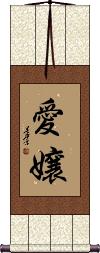
愛嬢 means “beloved daughter” in Japanese Kanji.
Brumbaugh

布倫巴赫 is the name Brumbaugh in Chinese (Mandarin).
Brumbaugh

ブルムボー is the name Brumbaugh in Japanese Katakana.
Note: Because this title is entirely Japanese Katakana, it should be written by a Japanese calligrapher.
Cavanaugh

卡瓦諾 is the name Cavanaugh in Chinese (Mandarin).
Cavanaugh

キャバノー is the name Cavanaugh in Japanese Katakana.
Note: Because this title is entirely Japanese Katakana, it should be written by a Japanese calligrapher.
Cry in the Dojo - Laugh on the Battlefield
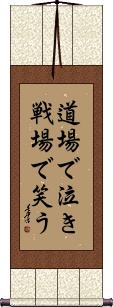
道場で泣き戦場で笑う is a Japanese phrase that means “Cry in the dojo, laugh on the battlefield.”
You'll see this phrase in a lot of dojos as a kind of philosophical joke.
Note: Because this selection contains some special Japanese Hiragana characters, it should be written by a Japanese calligrapher.
See Also: The More We Sweat in Training the Less We Bleed in Battle
Daugherty

多爾蒂 is the name Daugherty in Chinese (Mandarin).
Daugherty

ダハティ is the name Daugherty in Japanese Katakana.
Note: Because this title is entirely Japanese Katakana, it should be written by a Japanese calligrapher.
Daughter
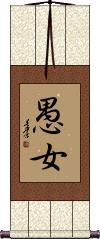
愚女 is a humble title for “daughter” in Japanese.
If you literally define each character, you get “silly girl” or “foolish woman.”
Daughtry

道特里 is the name Daughtry in Chinese (Mandarin).
Daughtry

ドートリー is the name Daughtry in Japanese Katakana.
Note: Because this title is entirely Japanese Katakana, it should be written by a Japanese calligrapher.
Davaughn

達沃恩 is the name Davaughn in Chinese (Mandarin).
Davaughn

ダヴォーン is the name Davaughn in Japanese Katakana.
Note: Because this title is entirely Japanese Katakana, it should be written by a Japanese calligrapher.
First Born Daughter
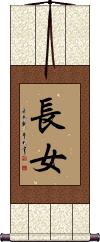
長女 is a Chinese, old Korean Hanja, and Japanese Kanji title for eldest daughter or firstborn daughter.
This can also be a given name “Osame” in Japanese.
Father and Daughter
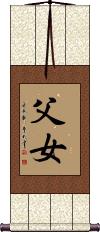
父女 is a title for “father and daughter” in Chinese.
Note: 父女 is an unusual word for a calligraphy wall scroll.
Father and Daughter
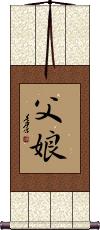
父娘 is a title for “father and daughter” in Japanese Kanji.
Faught
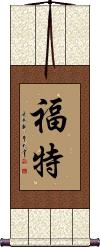
福特 is the name Faught in Chinese (Mandarin).
Faught

ファウト is the name Faught in Japanese Katakana.
Note: Because this title is entirely Japanese Katakana, it should be written by a Japanese calligrapher.
Gaughan

高根 is the name Gaughan in Chinese (Mandarin).
Gaughan

ゴーガン is the name Gaughan in Japanese Katakana.
Note: Because this title is entirely Japanese Katakana, it should be written by a Japanese calligrapher.
Geovaughn

喬沃恩 is the name Geovaughn in Chinese (Mandarin).
Geovaughn

ジェヴォーン is the name Geovaughn in Japanese Katakana.
Note: Because this title is entirely Japanese Katakana, it should be written by a Japanese calligrapher.
God Daughter
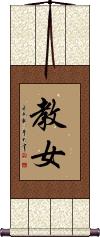
教女 is the title for a female child, which you have a sworn duty to raise should the girl's parents die.
The second character specifically designates that we are talking about a female child, thus the title God Daughter.
See Also: Family
Grand Daughter
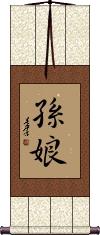
Happy / Laughter / Cheerful Bliss
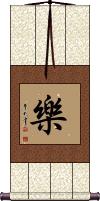
樂 is a single-character form of happiness or bliss that holds the ideas of laughing and having a good time.
This can also be translated as happy, glad, enjoyable, fun, and sometimes, music.
This a really good character if your audience is Chinese.
This is not a word seen alone very often in Korean.
 In Japanese, this character is written like the image shown to the right. If you order this from the Japanese master calligrapher, it will look like this instead of the character shown above.
Note: In Japanese, this has a meaning of comfort, ease, and enjoyment.
See Also: Joyfulness
Happy Laughter
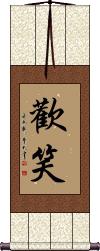
歡笑 translates as “happy laughter.”
The first character means happy or happiness.
The second character means to laugh, laughter or smile.
Harbaugh

哈博 is the name Harbaugh in Chinese (Mandarin).
Harbaugh

ハーボー is the name Harbaugh in Japanese Katakana.
Note: Because this title is entirely Japanese Katakana, it should be written by a Japanese calligrapher.
Haugh
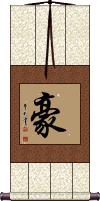
豪 is the name Haugh in Chinese (Mandarin).
Haugh
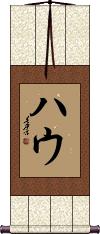
ハウ is the name Haugh in Japanese Katakana.
Note: Because this title is entirely Japanese Katakana, it should be written by a Japanese calligrapher.
Haught

霍特 is the name Haught in Chinese (Mandarin).
Haught

ハウト is the name Haught in Japanese Katakana.
Note: Because this title is entirely Japanese Katakana, it should be written by a Japanese calligrapher.
Haughton
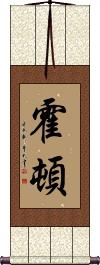
霍頓 is the name Haughton in Chinese (Mandarin).
Haughton
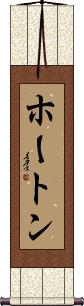
ホートン is the name Haughton in Japanese Katakana.
Note: Because this title is entirely Japanese Katakana, it should be written by a Japanese calligrapher.
The Whole Room Rocks With Laughter
The perfect scroll if you love humor or as a gift for the comedian in your life
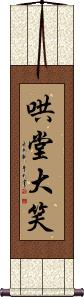
In China, 哄堂大笑 is a proverb that is used in response to a good joke or witty comment.
The story goes that Mr. Feng and Mr. He were both senior officials in the Song Dynasty (about a thousand years ago). One day, Mr. Feng walked into their shared office wearing a new pair of boots. The boots caught the eye of Mr. He who said, “New boots! - how much were they?.” Mr. Feng lifted one of the boots off the ground as if to show it off and responded, “900 coins.”
Astonished, Mr. Feng explained, “900? How can that be? - I paid 1800 coins for my boots!.” Mr. Feng then lifted his other foot off the ground and said, “This boot was also 900 coins.”
It is said that the whole room was shaking from the laughter of all that heard Mr. Feng's joke on Mr. He.
Kavanaugh
卡瓦諾 is the name Kavanaugh in Chinese (Mandarin).
Kavanaugh

カバノー is the name Kavanaugh in Japanese Katakana.
Note: Because this title is entirely Japanese Katakana, it should be written by a Japanese calligrapher.
Kill / Slaughter / Murder / Butcher
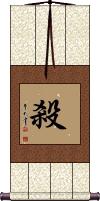
殺 is how to write “to kill” or “killing.”
殺 is an absolutely shocking word to have on a wall scroll. It will bewilder, scare, and perhaps offend any Chinese, Korean, or Japanese person who sees it. I do not in any way recommend this for a piece of calligraphy artwork. This entry is only here because our calligraphy search engine received so many requests for “kill.”
Note: In Korean Hanja, this character is not often used alone - see the other two-character entry for “kill.”
Laugh / Smile
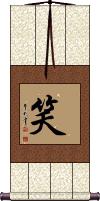
笑 simply means to laugh or smile.
Notes: In some contexts, it can mean “ridicule” in Korean Hanja. 笑 is not often seen alone in Japanese, though it is understood.
Laughing Dragon Kung Fu
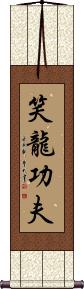
笑龍功夫 is the title for a Martial Arts studio (custom-made at by request of the owner of the studio).
Laughlin

勞克林 is the name Laughlin in Chinese (Mandarin).
Laughlin

ラフリン is the name Laughlin in Japanese Katakana.
Note: Because this title is entirely Japanese Katakana, it should be written by a Japanese calligrapher.
Live Laugh Love
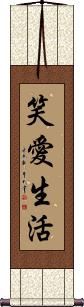
In English, the word order shown in the title is the most natural or popular. In Chinese, the natural order is a little different:
The first character means laugh (sometimes means smile).
The second character means love.
The last two characters mean “live” as in “to be alive” or “pursue life.”
Please note: 笑愛生活 is not a normal phrase in that it does not have a subject, verb, or object. It is a word list. Word lists are not common in Asian languages/grammar (at least not as normal as in English). We only added this entry because so many people requested it.
We put the characters in the order shown above, as it almost makes a single word with the meaning “A life of laughter and love.” It's a made-up word, but it sounds good in Chinese.
We removed the Japanese pronunciation guide from this entry, as the professional Japanese translator deemed it "near nonsense" from a Japanese perspective. Choose this only if your audience is Chinese and you want the fewest-possible characters to express this idea.
In Korean, this would be 소애생활 or "so ae saeng hwar" but I have not confirmed that this makes sense in Korean.
Live Laugh Love
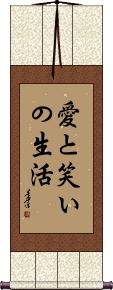
Because a word list of “Live Laugh Love” is not natural in Japanese, this takes the concept and incorporates it into a proper phrase.
愛と笑いの生活 can be translated as “A life of love and laughter” or “Live life with love and laughter.”
Note: Because this selection contains some special Japanese Hiragana characters, it should be written by a Japanese calligrapher.
Maughan

莫恩 is the name Maughan in Chinese (Mandarin).
Maughan
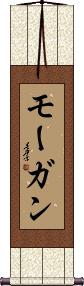
モーガン is the name Maughan in Japanese Katakana.
Note: Because this title is entirely Japanese Katakana, it should be written by a Japanese calligrapher.
McLaughlin

麥克勞克林 is the name McLaughlin in Chinese (Mandarin).
McLaughlin

マクラフリン is the name McLaughlin in Japanese Katakana.
Note: Because this title is entirely Japanese Katakana, it should be written by a Japanese calligrapher.
McNaughton

麥克諾頓 is the name McNaughton in Chinese (Mandarin).
McNaughton

マクノートン is the name McNaughton in Japanese Katakana.
Note: Because this title is entirely Japanese Katakana, it should be written by a Japanese calligrapher.
Mother and Daughter
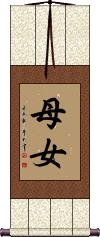
母女 means “mother and daughter” as a unit or as if mother and daughter are a whole together.
母女 is an unusual selection for a calligraphy wall scroll and can be read in many different ways. Your native Asian friends might wonder what you are trying to say. They might even read it as “a mother and daughter without a dad.”
This entry was added to our database for a customer's special request. It has the same meaning in Chinese Characters and Korean Hanja.
See Also: Mother and Son
Mother and Daughter
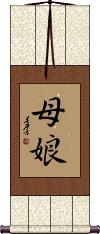
母娘 means “mother and daughter” in Japanese Kanji.
母娘 is an unusual selection for a calligraphy wall scroll and can be read in many different ways. Your native Japanese friends might wonder what you are trying to say.
Note: This will not make sense in Chinese.
See Also: Mother and Son
Naughton
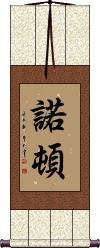
諾頓 is the name Naughton in Chinese (Mandarin).
Naughton
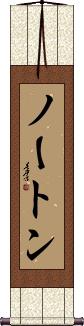
ノートン is the name Naughton in Japanese Katakana.
Note: Because this title is entirely Japanese Katakana, it should be written by a Japanese calligrapher.
Oshaughnessy

奧肖內西 is the name Oshaughnessy in Chinese (Mandarin).
Oshaughnessy

オショーネシー is the name Oshaughnessy in Japanese Katakana.
Note: Because this title is entirely Japanese Katakana, it should be written by a Japanese calligrapher.
Paugh

帕夫 is the name Paugh in Chinese (Mandarin).
Paugh
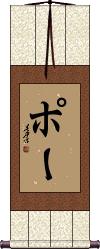
ポー is the name Paugh in Japanese Katakana.
Note: Because this title is entirely Japanese Katakana, it should be written by a Japanese calligrapher.
Roar of Laughter / Big Laughs
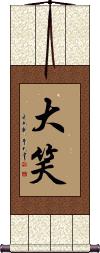
大笑 can be translated as “roar of laughter,” “loud laughter,” “hearty laugh,” or “cachinnation.”
The first character means big or great, and the second means to laugh or smile.
If you like humor, this is a great wall scroll to hang in your home.
See Also: The Whole Room Rocks With Laughter
Shaughnessy

肖內西 is the name Shaughnessy in Chinese (Mandarin).
Shaughnessy

ショーネシー is the name Shaughnessy in Japanese Katakana.
Note: Because this title is entirely Japanese Katakana, it should be written by a Japanese calligrapher.
Stambaugh

斯坦博 is the name Stambaugh in Chinese (Mandarin).
Stambaugh

スタンボー is the name Stambaugh in Japanese Katakana.
Note: Because this title is entirely Japanese Katakana, it should be written by a Japanese calligrapher.
Vaughan
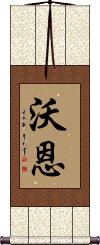
沃恩 is the name Vaughan in Chinese (Mandarin).
Vaughan
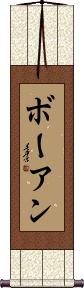
ボーアン is the name Vaughan in Japanese (Katakana).
Note: Because this title is entirely Japanese Katakana, it should be written by a Japanese calligrapher.
Vaughn
沃恩 is the name Vaughn in Chinese (Mandarin).
Vaughn
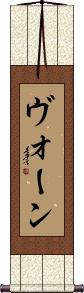
ヴォーン is the name Vaughn in Japanese.
Note: Because this title is entirely Japanese Katakana, it should be written by a Japanese calligrapher.
Vaught

沃特 is the name Vaught in Chinese (Mandarin).
Vaught

ヴォート is the name Vaught in Japanese Katakana.
Note: Because this title is entirely Japanese Katakana, it should be written by a Japanese calligrapher.
Waugh

沃 is the name Waugh in Chinese (Mandarin).
Waugh

ウォー is the name Waugh in Japanese Katakana.
Note: Because this title is entirely Japanese Katakana, it should be written by a Japanese calligrapher.
The following table may be helpful for those studying Chinese or Japanese...
| Title | Characters | Romaji (Romanized Japanese) | Various forms of Romanized Chinese | |
| Baugh | 鮑 鲍 | bào / bao4 / bao | pao | |
| Baugh | バウ | bau | ||
| Baugher | 鮑格 鲍格 | bào gé / bao4 ge2 / bao ge / baoge | pao ko / paoko | |
| Baugher | バウガー | baugaa / bauga | ||
| Baughman | 鮑曼 鲍曼 | bào màn / bao4 man4 / bao man / baoman | pao man / paoman | |
| Baughman | ボーマン | booman / boman | ||
| Beloved Daughter | 愛嬢 | ai jou / aijou / ai jo | ||
| Brumbaugh | 布倫巴赫 布伦巴赫 | bù lún bā hè bu4 lun2 ba1 he4 bu lun ba he bulunbahe | pu lun pa ho pulunpaho |
|
| Brumbaugh | ブルムボー | burumuboo / burumubo | ||
| Cavanaugh | 卡瓦諾 卡瓦诺 | kǎ wǎ nuò ka3 wa3 nuo4 ka wa nuo kawanuo | k`a wa no kawano ka wa no |
|
| Cavanaugh | キャバノー | kyabanoo / kyabano | ||
| Cry in the Dojo - Laugh on the Battlefield | 道場で泣き戦場で笑う | doujou de naki senjou de warau dojo de naki senjo de warau | ||
| Daugherty | 多爾蒂 多尔蒂 | duō ěr dì duo1 er3 di4 duo er di duoerdi | to erh ti toerhti |
|
| Daugherty | ダハティ | dahati | ||
| Daughter | 愚女 | gu jo / gujo | ||
| Daughtry | 道特里 | dào tè lǐ dao4 te4 li3 dao te li daoteli | tao t`e li taoteli tao te li |
|
| Daughtry | ドートリー | dootorii / dotori | ||
| Davaughn | 達沃恩 达沃恩 | dá wò ēn da2 wo4 en1 da wo en dawoen | ta wo en tawoen |
|
| Davaughn | ダヴォーン | davoon / davon | ||
| First Born Daughter | 長女 长女 | choujo / chojo | zhǎng zhang3 nu:3 zhang nu: zhangnu: | chang nü changnü |
| Father and Daughter | 父女 | fù nǚ / fu4 nv3 / fu nv / funv | fu nü / funü | |
| Father and Daughter | 父娘 | chichi musume chichimusume | ||
| Faught | 福特 | fú tè / fu2 te4 / fu te / fute | fu t`e / fute / fu te | |
| Faught | ファウト | fauto | ||
| Gaughan | 高根 | gāo gēn / gao1 gen1 / gao gen / gaogen | kao ken / kaoken | |
| Gaughan | ゴーガン | googan / gogan | ||
| Geovaughn | 喬沃恩 乔沃恩 | qiáo wò ēn qiao2 wo4 en1 qiao wo en qiaowoen | ch`iao wo en chiaowoen chiao wo en |
|
| Geovaughn | ジェヴォーン | jevoon / jevon | ||
| God Daughter | 教女 | jiào nǚ / jiao4 nv3 / jiao nv / jiaonv | chiao nü / chiaonü | |
| Grand Daughter | 孫娘 | mago musume magomusume | ||
| Happy Laughter Cheerful Bliss | 樂 / 楽 乐 | raku | lè / le4 / le | |
| Happy Laughter | 歡笑 欢笑 | huān xiào huan1 xiao4 huan xiao huanxiao | huan hsiao huanhsiao |
|
| Harbaugh | 哈博 | hā bó / ha1 bo2 / ha bo / habo | ha po / hapo | |
| Harbaugh | ハーボー | haaboo / habo | ||
| Haugh | 豪 | háo / hao2 / hao | ||
| Haugh | ハウ | hau | ||
| Haught | 霍特 | huò tè / huo4 te4 / huo te / huote | huo t`e / huote / huo te | |
| Haught | ハウト | hauto | ||
| Haughton | 霍頓 霍顿 | huò dùn / huo4 dun4 / huo dun / huodun | huo tun / huotun | |
| Haughton | ホートン | hooton / hoton | ||
| The Whole Room Rocks With Laughter | 哄堂大笑 | hōng tāng dà xiào hong1 tang1 da4 xiao4 hong tang da xiao hongtangdaxiao | hung t`ang ta hsiao hungtangtahsiao hung tang ta hsiao |
|
| Kavanaugh | 卡瓦諾 卡瓦诺 | kǎ wǎ nuò ka3 wa3 nuo4 ka wa nuo kawanuo | k`a wa no kawano ka wa no |
|
| Kavanaugh | カバノー | kabanoo / kabano | ||
| Kill Slaughter Murder Butcher | 殺 杀 | satsu | shā / sha1 / sha | |
| Laugh Smile | 笑 | e / shou / wa e / sho / wa | xiào / xiao4 / xiao | hsiao |
| Laughing Dragon Kung Fu | 笑龍功夫 笑龙功夫 | xiào lóng gōng fu xiao4 long2 gong1 fu xiao long gong fu xiaolonggongfu | hsiao lung kung fu hsiaolungkungfu |
|
| Laughlin | 勞克林 劳克林 | láo kè lín lao2 ke4 lin2 lao ke lin laokelin | lao k`o lin laokolin lao ko lin |
|
| Laughlin | ラフリン | rafurin | ||
| Live Laugh Love | 笑愛生活 笑爱生活 | xiào ài shēng huó xiao4 ai4 sheng1 huo2 xiao ai sheng huo xiaoaishenghuo | hsiao ai sheng huo hsiaoaishenghuo |
|
| Live Laugh Love | 愛と笑いの生活 | ai to warai no seikatsu aitowarainoseikatsu | ||
| Maughan | 莫恩 | mò ēn / mo4 en1 / mo en / moen | ||
| Maughan | モーガン | moogan / mogan | ||
| McLaughlin | 麥克勞克林 麦克劳克林 | mài kè láo kè lín mai4 ke4 lao2 ke4 lin2 mai ke lao ke lin maikelaokelin | mai k`o lao k`o lin maikolaokolin mai ko lao ko lin |
|
| McLaughlin | マクラフリン | makurafurin | ||
| McNaughton | 麥克諾頓 麦克诺顿 | mài kè nuò dùn mai4 ke4 nuo4 dun4 mai ke nuo dun maikenuodun | mai k`o no tun maikonotun mai ko no tun |
|
| McNaughton | マクノートン | makunooton / makunoton | ||
| Mother and Daughter | 母女 | mǔ nǚ / mu3 nv3 / mu nv / munv | mu nü / munü | |
| Mother and Daughter | 母娘 | haha musume hahamusume | ||
| Naughton | 諾頓 诺顿 | nuò dùn / nuo4 dun4 / nuo dun / nuodun | no tun / notun | |
| Naughton | ノートン | nooton / noton | ||
| Oshaughnessy | 奧肖內西 奥肖内西 | ào xiào nèi xī ao4 xiao4 nei4 xi1 ao xiao nei xi aoxiaoneixi | ao hsiao nei hsi aohsiaoneihsi |
|
| Oshaughnessy | オショーネシー | oshooneshii oshoneshi | ||
| Paugh | 帕夫 | pà fū / pa4 fu1 / pa fu / pafu | p`a fu / pafu / pa fu | |
| Paugh | ポー | poo / po | ||
| Roar of Laughter Big Laughs | 大笑 | taishou / taisho | dà xiào / da4 xiao4 / da xiao / daxiao | ta hsiao / tahsiao |
| Shaughnessy | 肖內西 肖内西 | xiào nèi xī xiao4 nei4 xi1 xiao nei xi xiaoneixi | hsiao nei hsi hsiaoneihsi |
|
| Shaughnessy | ショーネシー | shooneshii / shoneshi | ||
| Stambaugh | 斯坦博 | sī tǎn bó si1 tan3 bo2 si tan bo sitanbo | ssu t`an po ssutanpo ssu tan po |
|
| Stambaugh | スタンボー | sutanboo / sutanbo | ||
| Vaughan | 沃恩 | wò ēn / wo4 en1 / wo en / woen | ||
| Vaughan | ボーアン | booan / boan | ||
| Vaughn | 沃恩 | wò ēn / wo4 en1 / wo en / woen | ||
| Vaughn | ヴォーン | voon / von | ||
| Vaught | 沃特 | wò tè / wo4 te4 / wo te / wote | wo t`e / wote / wo te | |
| Vaught | ヴォート | vooto / voto | ||
| Waugh | 沃 | wò / wo4 / wo | ||
| Waugh | ウォー | woo / wo | ||
| In some entries above you will see that characters have different versions above and below a line. In these cases, the characters above the line are Traditional Chinese, while the ones below are Simplified Chinese. | ||||

Successful Chinese Character and Japanese Kanji calligraphy searches within the last few hours...



