Many custom options...


And formats...



Arth in Chinese / Japanese...
Buy an Arth calligraphy wall scroll here!
Personalize your custom “Arth” project by clicking the button next to your favorite “Arth” title below...
Switched to secondary search mode due to lack of results using primary.
These secondary results may not be very accurate. Try a different but similar meaning word or phrase for better results. Or...
Look up Arth in my Japanese Kanji & Chinese Character Dictionary(My dictionary is a different system then the calligraphy search you just tried)
If you want a special phrase, word, title, name, or proverb, feel free to contact me, and I will translate your custom calligraphy idea for you.
1. Earth Tiger
2. Earth Rabbit
3. Earth Rat
5. Earth Dog
7. Earth Monkey
9. Earth Horse
10. Earth Goat/Sheep
11. Earth Dragon
12. Earth Snake
13. Arther
14. Arthur
15. Barth
16. Barthel
17. Bartholomew
19. Bozarth
20. Earth
21. Earth Dragon
23. Earth
24. Garth
25. Hearth
26. Heaven and Earth
27. Howarth
28. MacArthur
29. Marth
30. Martha
31. Marthe
32. Marthtana
33. McArthur
34. McCarthy
35. Paramartha
36. Siddarth
37. Siddharth
38. Siddhartha
Earth Tiger
The Year of the Earth Tiger
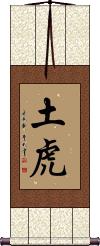
土虎 is Earth Tiger in Chinese.
In the Chinese zodiac and sexagenary (60-year) cycle, this combination occurs in years that include 1878, 1938, 1998, and 2058.
In the sexagenary cycle, this year is represented by 戊寅.
See Also: Tiger
Earth Rabbit
The Year of the Earth Rabbit
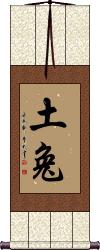
土兔 is Earth Rabbit in Chinese.
In the Chinese zodiac and sexagenary (60-year) cycle, this combination occurs in years that include 1879, 1939, 1999, and 2059.
In the sexagenary cycle, this year is represented by 己卯.
See Also: Rabbit
Earth Rat
The Year of the Earth Rat
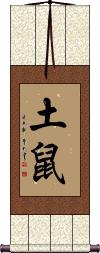
土鼠 is Earth Rat in Chinese.
In the Chinese zodiac and sexagenary (60-year) cycle, this combination occurs in years that include 1888, 1948, 2008, and 2068.
In the sexagenary cycle, this year is represented by 戊子.
See Also: Rat
Earth Ox/Bull
The Year of the Earth Ox/Bull
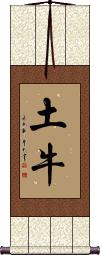
土牛 is Earth Ox/Bull in Chinese.
In the Chinese zodiac and sexagenary (60-year) cycle, this combination occurs in years that include 1889, 1949, 2009, and 2069.
In the sexagenary cycle, this year is represented by 己丑.
See Also: Ox/Bull
Earth Dog
The Year of the Earth Dog
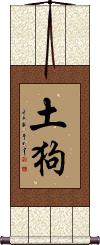
土狗 is Earth Dog in Chinese.
In the Chinese zodiac and sexagenary (60-year) cycle, this combination occurs in years that include 1898, 1958, 2018, and 2078.
In the sexagenary cycle, this year is represented by 戊戌.
See Also: Dog
Earth Pig/Boar
The Year of the Earth Pig/Boar
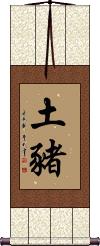
土豬 is Earth Pig/Boar in Chinese.
In the Chinese zodiac and sexagenary (60-year) cycle, this combination occurs in years that include 1899, 1959, 2019, and 2079.
In the sexagenary cycle, this year is represented by 己亥.
See Also: Pig/Boar
Earth Monkey
The Year of the Earth Monkey
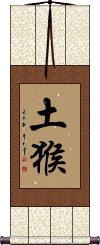
土猴 is Earth Monkey in Chinese.
In the Chinese zodiac and sexagenary (60-year) cycle, this combination occurs in years that include 1908, 1968, 2028, and 2088.
In the sexagenary cycle, this year is represented by 戊申.
See Also: Monkey
Earth Rooster
The Year of the Earth Rooster
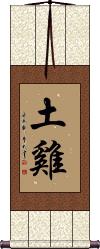
土雞 is Earth Rooster in Chinese.
In the Chinese zodiac and sexagenary (60-year) cycle, this combination occurs in years that include 1909, 1969, 2029, and 2089.
In the sexagenary cycle, this year is represented by 己酉.
See Also: Rooster
Earth Horse
The Year of the Earth Horse
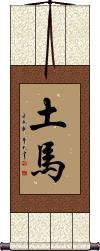
土馬 is Earth Horse in Chinese.
In the Chinese zodiac and sexagenary (60-year) cycle, this combination occurs in years that include 1918, 1978, 2038, and 2098.
In the sexagenary cycle, this year is represented by 戊午.
See Also: Horse
Earth Goat/Sheep
The Year of the Earth Goat/Sheep
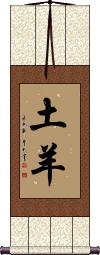
土羊 is Earth Goat/Sheep in Chinese.
In the Chinese zodiac and sexagenary (60-year) cycle, this combination occurs in years that include 1919, 1979, 2039, and 2099.
In the sexagenary cycle, this year is represented by 己未.
See Also: Goat/Sheep
Earth Dragon
The Year of the Earth Dragon
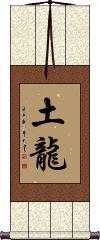
土龍 is Earth Dragon in Chinese.
In the Chinese zodiac and sexagenary (60-year) cycle, this combination occurs in years that include 1868, 1928, 1988, and 2048.
In the sexagenary cycle, this year is represented by 戊辰.
See Also: Dragon
Earth Snake
The Year of the Earth Snake
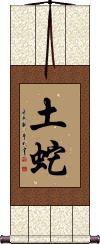
土蛇 is Earth Snake in Chinese.
In the Chinese zodiac and sexagenary (60-year) cycle, this combination occurs in years that include 1869, 1929, 1989, and 2049.
In the sexagenary cycle, this year is represented by 己巳.
See Also: Snake
Arther
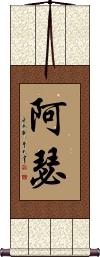
阿瑟 is the name Arther in Chinese (Mandarin).
Arther
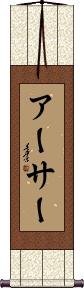
アーサー is the name Arther in Japanese (Katakana).
Note: Because this title is entirely Japanese Katakana, it should be written by a Japanese calligrapher.
Arthur
阿瑟 is the name Arthur in Chinese (Mandarin).
Arthur
アーサー is the name Arthur in Japanese.
Note: Because this title is entirely Japanese Katakana, it should be written by a Japanese calligrapher.
Barth

巴特 is the name Barth in Chinese (Mandarin).
Barth

バース is the name Barth in Japanese Katakana.
Note: Because this title is entirely Japanese Katakana, it should be written by a Japanese calligrapher.
Barthel

巴特爾 is the name Barthel in Chinese (Mandarin).
Barthel

バーテル is the name Barthel in Japanese Katakana.
Note: Because this title is entirely Japanese Katakana, it should be written by a Japanese calligrapher.
Bartholomew
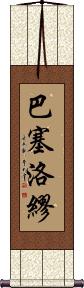
巴塞洛繆 is the name Bartholomew in Chinese (Mandarin).
Bartholomew
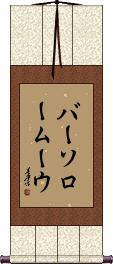
バーソロームーウ is the name Bartholomew in Japanese (Katakana).
Note: Because this title is entirely Japanese Katakana, it should be written by a Japanese calligrapher.
Body and Earth in Unity
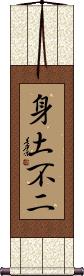
身土不二 (Shindofuni) is originally a Buddhist concept or proverb referring to the inseparability of body-mind and geographical circumstances.
This reads, “Body [and] earth [are] not two.”
Other translations or matching ideas include:
Body and land are one.
Body and earth can not be separated.
Body earth sensory curation.
You are what you eat.
Indivisibility of the body and the land (because the body is made from food and food is made from the land).
Going further, this speaks of our human bodies and the land from which we get our food being closely connected. This phrase is often used when talking about natural and organic vegetables coming directly from the farm to provide the healthiest foods in Japan.
Character notes: 身(shin) in this context does not just mean your physical body but a concept including both body and mind.
土 (do) refers to the soil, earth, clay, land, or in some cases, locality. It's not the proper name of Earth, the planet. However, it can refer to the land or realm we live in.
Japanese note: This has been used in Japan, on and off, since 1907 as a slogan for a governmental healthy eating campaign (usually pronounced as shindofuji instead of the original shindofuni in this context). It may have been hijacked from Buddhism for this propaganda purpose, but at least this is “healthy propaganda.”
Korean note: The phrase 身土不二 was in use by 1610 A.D. in Korea, where it can be found in an early medical journal.
In modern South Korea, it's written in Hangul as 신토불이. Korea used Chinese characters (same source as Japanese Kanji) as their only written standard form of the language until about a hundred years ago. Therefore, many Koreans will recognize this as a native phrase and concept.
See Also: Strength and Love in Unity
Bozarth

博扎斯 is the name Bozarth in Chinese (Mandarin).
Bozarth

ボザース is the name Bozarth in Japanese Katakana.
Note: Because this title is entirely Japanese Katakana, it should be written by a Japanese calligrapher.
Earth
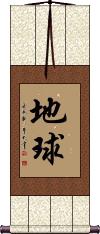
地球 is the name of the earth (our planet) in Chinese, old Korean Hanja and Japanese Kanji.
If you love the earth, or want to be reminded of where your home is in the solar system, this is the wall scroll for you.
Earth
(One of the five elements)
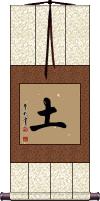
土 is earth, soil, ground, or Terra.
Earth is one of the five elements that ancient Chinese believed all things were composed of. These elements are also part of the cycle of Chinese astrology. Every person has both an animal sign, and one of the five elements according to the date of their birth.
See Also: Five Elements | Chinese Zodiac
Earth Dragon
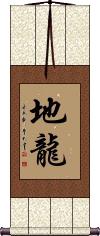
地龍 is the Earth Dragon, king of rivers and seas.
地龍 is sometimes used in Chinese as a nickname for earthworms.
Earth Fire Water Air
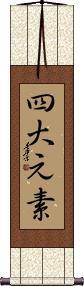
四大元素 is the title for the four classical chemical elements (fire, earth, air, and water) in Japanese.
四大 = four great/big. 元素 = elements. So 四大元素 literally means “Four Great Elements.”
Earth
(Used in Japanese version of five elements)
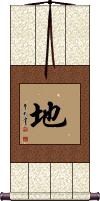
地 is the single-character element and title of the planet Earth in Chinese, old Korean Hanja, and Japanese Kanji.
Because this is a single character, the definition is a little ambiguous and can have many meanings depending on the context in which it is used. These meanings include: earth, ground, land, soil, dirt, place, territory, bottom (of a package, book, etc.), earth (one of the Japanese five elements), the region in question, the local area, skin, texture, fabric, material, weave, base, background, one's true nature, narrative (i.e. descriptive part of a story), real life, actuality, etc.
In Japanese, this Kanji can be pronounced several ways, including chi, ji, tsushi, or tsuchi.
地 is also an element of the Japanese version of the five elements (the original Chinese version uses a different version of earth).
Garth
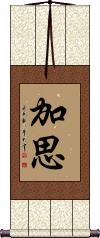
加思 is the name Garth in Chinese (Mandarin).
Garth
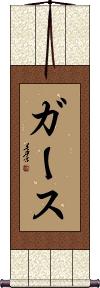
ガース is the name Garth in Japanese Katakana.
Note: Because this title is entirely Japanese Katakana, it should be written by a Japanese calligrapher.
Hearth
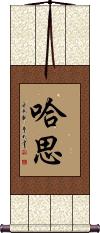
哈思 is the name Hearth in Chinese (Mandarin).
Hearth
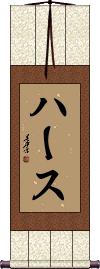
ハース is the name Hearth in Japanese Katakana.
Note: Because this title is entirely Japanese Katakana, it should be written by a Japanese calligrapher.
Heaven and Earth
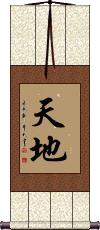
天地 is “Heaven and Earth” in Chinese, Japanese Kanji, and old Korean Hanja.
This title is used in many different contexts. It can be a general term but is also used by Buddhists and in other religions.
This can also be used to refer to all of nature, the universe, the top and bottom, the realm of life, or the sphere of existence.
Howarth

霍沃思 is the name Howarth in Chinese (Mandarin).
Howarth

ハワース is the name Howarth in Japanese Katakana.
Note: Because this title is entirely Japanese Katakana, it should be written by a Japanese calligrapher.
MacArthur

麥克阿瑟 is the name MacArthur in Chinese (Mandarin).
MacArthur

マッカーサー is the name MacArthur in Japanese Katakana.
Note: Because this title is entirely Japanese Katakana, it should be written by a Japanese calligrapher.
Marth

馬思 is the name Marth in Chinese (Mandarin).
Marth
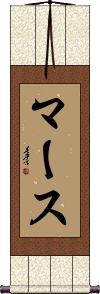
マース is the name Marth in Japanese Katakana.
Note: Because this title is entirely Japanese Katakana, it should be written by a Japanese calligrapher.
Martha
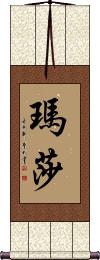
瑪莎 is the name Martha in Chinese (Mandarin).
Martha
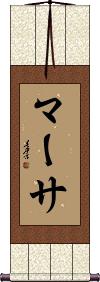
マーサ is the name Martha in Japanese.
Note: Because this title is entirely Japanese Katakana, it should be written by a Japanese calligrapher.
Marthe
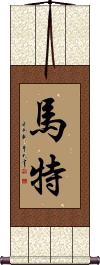
馬特 is the name Marthe in Chinese (Mandarin).
Marthe

マルテ is the name Marthe in Japanese Katakana.
Note: Because this title is entirely Japanese Katakana, it should be written by a Japanese calligrapher.
Marthtana

瑪莎塔娜 is the name Marthtana in Chinese (Mandarin).
Marthtana

マーサタナ is the name Marthtana in Japanese Katakana.
Note: Because this title is entirely Japanese Katakana, it should be written by a Japanese calligrapher.
McArthur
麥克阿瑟 is the name McArthur in Chinese (Mandarin).
McArthur
マッカーサー is the name McArthur in Japanese Katakana.
Note: Because this title is entirely Japanese Katakana, it should be written by a Japanese calligrapher.
McCarthy
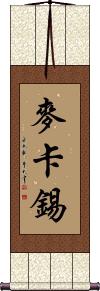
麥卡錫 is the name McCarthy in Chinese (Mandarin).
McCarthy
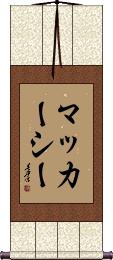
マッカーシー is the name McCarthy in Japanese Katakana.
Note: Because this title is entirely Japanese Katakana, it should be written by a Japanese calligrapher.
Paramartha
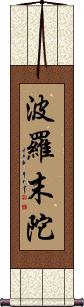
波羅末陀 is the Chinese and Japanese way to write the ancient Sanskrit word Paramārtha or परमार्थ which now means the highest truth, ultimate truth, ultimate reality, or fundamental meaning.
Paramārtha is the name of a famous Buddhist monk born in 499 CE. Paramārtha traveled the world (including Cambodia and territories that are now part of China) to spread the teachings of Buddhism by translating scriptures into the local languages so the truth could be understood by the masses.
So, we should all want to be a Paramārtha who brings the ultimate truth, knowledge, and enlightenment to others.
Siddarth
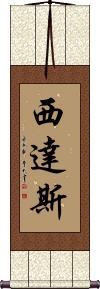
西達斯 is the name Siddarth in Chinese (Mandarin).
Siddarth
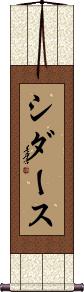
シダース is the name Siddarth in Japanese (Katakana).
Note: Because this title is entirely Japanese Katakana, it should be written by a Japanese calligrapher.
Siddharth
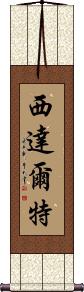
西達爾特 is the name Siddharth in Chinese (Mandarin).
Siddharth
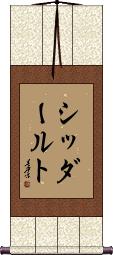
シッダールト is the name Siddharth in Japanese.
Note: Because this title is entirely Japanese Katakana, it should be written by a Japanese calligrapher.
Siddhartha
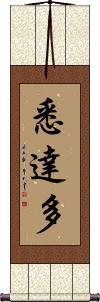
悉達多 is the name Siddhartha (as in Siddhartha Gautama), the personal name for Śākyamuni.
This same Buddha is also known as “Shakyamuni Gautama,” “Gotama Buddha,” or “Tathagata.”
Siddhartha Gautama was a spiritual teacher in the northern region of the Indian subcontinent who founded Buddhism. He is generally seen by Buddhists as the Supreme Buddha (Sammāsambuddha) of known human history.
The actual meaning of this name in Chinese is the realization of all aims, or simply being prosperous.
This name is sometimes romanized from the original Sanskrit or Pali as Siddhattha (from Siddhattha Gotama), Siddharth, Siddhārtha, or Sarvāthasiddha.
Siddhārtha or Sarvāthasiddha can also be written as 悉達, 悉多, 悉多頞他, or 悉陀.
The following table may be helpful for those studying Chinese or Japanese...
| Title | Characters | Romaji (Romanized Japanese) | Various forms of Romanized Chinese | |
| Earth Tiger | 土虎 | tǔ hǔ / tu3 hu3 / tu hu / tuhu | t`u hu / tuhu / tu hu | |
| Earth Rabbit | 土兔 | tǔ tù / tu3 tu4 / tu tu / tutu | t`u t`u / tutu / tu tu | |
| Earth Rat | 土鼠 | tǔ shǔ / tu3 shu3 / tu shu / tushu | t`u shu / tushu / tu shu | |
| Earth Ox/Bull | 土牛 | tǔ niú / tu3 niu2 / tu niu / tuniu | t`u niu / tuniu / tu niu | |
| Earth Dog | 土狗 | tǔ gǒu / tu3 gou3 / tu gou / tugou | t`u kou / tukou / tu kou | |
| Earth Pig/Boar | 土豬 土猪 | tǔ zhū / tu3 zhu1 / tu zhu / tuzhu | t`u chu / tuchu / tu chu | |
| Earth Monkey | 土猴 | tǔ hóu / tu3 hou2 / tu hou / tuhou | t`u hou / tuhou / tu hou | |
| Earth Rooster | 土雞 土鸡 | tǔ jī / tu3 ji1 / tu ji / tuji | t`u chi / tuchi / tu chi | |
| Earth Horse | 土馬 土马 | tǔ mǎ / tu3 ma3 / tu ma / tuma | t`u ma / tuma / tu ma | |
| Earth Goat/Sheep | 土羊 | tǔ yáng / tu3 yang2 / tu yang / tuyang | t`u yang / tuyang / tu yang | |
| Earth Dragon | 土龍 土龙 | tǔ lóng / tu3 long2 / tu long / tulong | t`u lung / tulung / tu lung | |
| Earth Snake | 土蛇 | tǔ shé / tu3 she2 / tu she / tushe | t`u she / tushe / tu she | |
| Arther | 阿瑟 | ā sè / a1 se4 / a se / ase | ||
| Arther | アーサー | aasaa / asa | ||
| Arthur | 阿瑟 | ā sè / a1 se4 / a se / ase | ||
| Arthur | アーサー | aasaa / asa | ||
| Barth | 巴特 | bā tè / ba1 te4 / ba te / bate | pa t`e / pate / pa te | |
| Barth | バース | baasu / basu | ||
| Barthel | 巴特爾 巴特尔 | bā tè ěr ba1 te4 er3 ba te er bateer | pa t`e erh pateerh pa te erh |
|
| Barthel | バーテル | baateru / bateru | ||
| Bartholomew | 巴塞洛繆 巴塞洛缪 | bā sāi luò mù ba1 sai4 luo4 mu4 ba sai luo mu basailuomu | pa sai lo mu pasailomu |
|
| Bartholomew | バーソロームーウ | baasoroomuuu basoromuu | ||
| Body and Earth in Unity | 身土不二 | shindofuni / shindofuji | ||
| Bozarth | 博扎斯 | bó zhā sī bo2 zha1 si1 bo zha si bozhasi | po cha ssu pochassu |
|
| Bozarth | ボザース | bozaasu / bozasu | ||
| Earth | 地球 | chi kyuu / chikyuu / chi kyu | dì qiú / di4 qiu2 / di qiu / diqiu | ti ch`iu / tichiu / ti chiu |
| Earth | 土 | tsuchi | tǔ / tu3 / tu | t`u / tu |
| Earth Dragon | 地龍 地龙 | dì lóng / di4 long2 / di long / dilong | ti lung / tilung | |
| Earth Fire Water Air | 四大元素 | yondaigenso | ||
| Earth | 地 | chi / ji / tsushi / tsuchi | dì / di4 / di | ti |
| Garth | 加思 | jiā sī / jia1 si1 / jia si / jiasi | chia ssu / chiassu | |
| Garth | ガース | gaasu / gasu | ||
| Hearth | 哈思 | hā sī / ha1 si1 / ha si / hasi | ha ssu / hassu | |
| Hearth | ハース | haasu / hasu | ||
| Heaven and Earth | 天地 | tenchi | tiān dì / tian1 di4 / tian di / tiandi | t`ien ti / tienti / tien ti |
| Howarth | 霍沃思 | huò wò sī huo4 wo4 si1 huo wo si huowosi | huo wo ssu huowossu |
|
| Howarth | ハワース | hawaasu / hawasu | ||
| MacArthur | 麥克阿瑟 麦克阿瑟 | mài kè ā sè mai4 ke4 a1 se4 mai ke a se maikease | mai k`o a se maikoase mai ko a se |
|
| MacArthur | マッカーサー | makkaasaa / makasa | ||
| Marth | 馬思 马思 | mǎ sī / ma3 si1 / ma si / masi | ma ssu / massu | |
| Marth | マース | maasu / masu | ||
| Martha | 瑪莎 玛莎 | mǎ shā / ma3 sha1 / ma sha / masha | ||
| Martha | マーサ | maasa / masa | ||
| Marthe | 馬特 马特 | mǎ tè / ma3 te4 / ma te / mate | ma t`e / mate / ma te | |
| Marthe | マルテ | marute | ||
| Marthtana | 瑪莎塔娜 玛莎塔娜 | mǎ shā tǎ nà ma3 sha1 ta3 na4 ma sha ta na mashatana | ma sha t`a na mashatana ma sha ta na |
|
| Marthtana | マーサタナ | maasatana / masatana | ||
| McArthur | 麥克阿瑟 麦克阿瑟 | mài kè ā sè mai4 ke4 a1 se4 mai ke a se maikease | mai k`o a se maikoase mai ko a se |
|
| McArthur | マッカーサー | makkaasaa / makasa | ||
| McCarthy | 麥卡錫 麦卡锡 | mài kǎ xī mai4 ka3 xi1 mai ka xi maikaxi | mai k`a hsi maikahsi mai ka hsi |
|
| McCarthy | マッカーシー | makkaashii / makashi | ||
| Paramartha | 波羅末陀 波罗末陀 | ha ra ma da haramada | bō luó mò tuó bo1 luo2 mo4 tuo2 bo luo mo tuo boluomotuo | po lo mo t`o polomoto po lo mo to |
| Siddarth | 西達斯 西达斯 | xī dá sī xi1 da2 si1 xi da si xidasi | hsi ta ssu hsitassu |
|
| Siddarth | シダース | shidaasu / shidasu | ||
| Siddharth | 西達爾特 西达尔特 | xī dá ěr tè xi1 da2 er3 te4 xi da er te xidaerte | hsi ta erh t`e hsitaerhte hsi ta erh te |
|
| Siddharth | シッダールト | shiddaaruto shiddaruto | ||
| Siddhartha | 悉達多 悉达多 | shiddatta / shiddaruta | xī dá duō xi1 da2 duo1 xi da duo xidaduo | hsi ta to hsitato |
| In some entries above you will see that characters have different versions above and below a line. In these cases, the characters above the line are Traditional Chinese, while the ones below are Simplified Chinese. | ||||

Successful Chinese Character and Japanese Kanji calligraphy searches within the last few hours...



