Many custom options...


And formats...



Accept in Chinese / Japanese...
Buy an Accept calligraphy wall scroll here!
Personalize your custom “Accept” project by clicking the button next to your favorite “Accept” title below...
Accept Your Mistake and Move On

將錯就錯 is a Chinese proverb that literally means, “If it's wrong, it's wrong.”
This proverb is a suggestion to make the best after a mistake, to accept an error and adapt to it, and to muddle through.
Accept the Situation and Move On
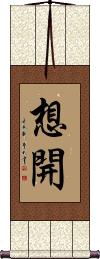
想開 is a Chinese title that translates as “move on.”
It can mean getting over a shock or bereavement. More often, it means avoiding dwelling on unpleasant things or accepting the situation and moving on. It's a suggestion to get over it and get on with life.
The literal meaning of the characters is something like “thoughts opening.” But it's understood more as getting over the same old thoughts and opening yourself up to new thoughts or ways of thinking.
These search terms might be related to Accept:
Acceptance / Tolerate
Believe
Believe / Faith / Trust
Believe in Yourself
Do Not Take Action Until the Time is Right
Endure and Survive
Patience / Perseverance / to Endure / Tolerant
Relax / Take It Easy
Take Refuge in the Three Treasures
Take Up a Challenge
Those Who Understand Are Clever, Those Who Know Themselves Are Truly Wise
You Must Endure a Harsh Winter to Appreciate the Warmth of Springtime
Not the results for Accept that you were looking for?
Below are some entries from our dictionary that may match your Accept search...
| Characters If shown, 2nd row is Simp. Chinese |
Pronunciation Romanization |
Simple Dictionary Definition |
謝 谢 see styles |
xiè xie4 hsieh ja じゃ |
More info & calligraphy: Chea(surname) Ja To thank; return (with thanks), decline; fall; apologize; accept with thanks. |
想開 想开 see styles |
xiǎng kāi xiang3 kai1 hsiang k`ai hsiang kai |
More info & calligraphy: Accept the Situation and Move On |
相信 see styles |
xiāng xìn xiang1 xin4 hsiang hsin ainobu あいのぶ |
More info & calligraphy: Believe(surname) Ainobu |
寧缺毋濫 宁缺毋滥 see styles |
nìng quē wú làn ning4 que1 wu2 lan4 ning ch`üeh wu lan ning chüeh wu lan |
More info & calligraphy: Better to Choose Nothing, Rather than Make a Poor Choice |
將錯就錯 将错就错 see styles |
jiāng cuò jiù cuò jiang1 cuo4 jiu4 cuo4 chiang ts`o chiu ts`o chiang tso chiu tso |
More info & calligraphy: Accept Your Mistake and Move On |
受 see styles |
shòu shou4 shou uke うけ |
to receive; to accept; to suffer; subjected to; to bear; to stand; pleasant; (passive marker); (LGBT) bottom {Buddh} (See 五蘊,十二因縁) vedana (sensation); (place-name) Uke To receive, be, bear; intp. of vedana, 'perception,' 'knowledge obtained by the senses, feeling, sensation.' M. W. It is defined as mental reaction to the object, but in general it means receptivity, or sensation; the two forms of sensation of physical and mental objects are indicated. It is one of the five skandhas; as one of the twelve nidānas it indicates the incipient stage of sensation in the embryo. |
奉 see styles |
fèng feng4 feng matsuri まつり |
to offer (tribute); to present respectfully (to superior, ancestor, deity etc); to esteem; to revere; to believe in (a religion); to wait upon; to accept orders (from superior) (female given name) Matsuri To receive respectfully; honoured by, have the honour to, be favoured by, serve, offer. |
收 see styles |
shōu shou1 shou teruo てるお |
to receive; to accept; to collect; to put away; to restrain; to stop; in care of (used on address line after name) (personal name) Teruo To receive; collect, gather; withdraw. |
納 纳 see styles |
nà na4 na nouzaki / nozaki のうざき |
to receive; to accept; to enjoy; to bring into; to pay (tax etc); nano- (one billionth); to reinforce sole of shoes or stockings by close sewing (surname) Nouzaki Offer: pay, give; receive, take; translit. na; cf. 衲. |
銜 衔 see styles |
xián xian2 hsien kutsuwa くつわ |
bit (of a bridle); to hold in the mouth; to harbor (feelings); to link; to accept; rank; title bit (i.e. attached to a bridle) |
三毒 see styles |
sān dú san1 du2 san tu sandoku さんどく |
{Buddh} (See 煩悩・2) the three kleshas that poison the heart of man (desire, ill will and ignorance) The three poisons, also styled 三根; 三株; they are 貪 concupiscence, or wrong desire, 瞋 anger, hate, or resentment, and 痴 stupidity, ignorance, unintelligence, or unwillingness to accept Buddha-truth; these three are the source of all the passions and delusions. They represent in part the ideas of love, hate, and moral inertia. v. 智度論 19, 31. |
不服 see styles |
bù fú bu4 fu2 pu fu fufuku ふふく |
not to accept something; to want to have something overruled or changed; to refuse to obey or comply; to refuse to accept as final; to remain unconvinced by; not to give in to (noun or adjectival noun) dissatisfaction; discontent; disapproval; objection; complaint; protest; disagreement |
俯就 see styles |
fǔ jiù fu3 jiu4 fu chiu |
to deign; to condescend; to yield to (entreaties); to submit to (sb); (polite) to deign to accept (a post) |
勸駕 劝驾 see styles |
quàn jià quan4 jia4 ch`üan chia chüan chia |
to urge sb to accept a post; to urge sb to agree to do something |
卡式 see styles |
kǎ shì ka3 shi4 k`a shih ka shih |
(of a device) designed to accept a cassette, cartridge or canister (loanword from "cassette"); designed to have a card or ticket inserted (also written 插卡式[cha1 ka3 shi4]) (loanword from "card") |
去取 see styles |
qù qǔ qu4 qu3 ch`ü ch`ü chü chü |
to accept or reject |
取る see styles |
toru とる |
(transitive verb) (1) to take; to pick up; to grab; to catch; to hold; (transitive verb) (2) to pass; to hand; to give; (transitive verb) (3) to get; to obtain; to acquire; to win; to receive; to earn; to take (e.g. a vacation); (transitive verb) (4) to adopt (a method, proposal, etc.); to take (a measure, attitude, etc.); to choose; (transitive verb) (5) to remove; to get rid of; to take off; (transitive verb) (6) to take away; to steal; to rob; (transitive verb) (7) (See 摂る) to eat; to have (e.g. lunch); to take (e.g. vitamins); (transitive verb) (8) to pick (e.g. flowers); to gather; to extract (e.g. juice); to catch (e.g. fish); to harvest (a crop); (transitive verb) (9) to take up (time, space); to occupy; to spare; to set aside; (transitive verb) (10) to secure; to reserve; to save; to put aside; to keep; (transitive verb) (11) to take (e.g. a joke); to interpret; to understand; to make out; to grasp; (transitive verb) (12) to record; to take down; (transitive verb) (13) to subscribe to (e.g. a newspaper); to take; to buy; to get; (transitive verb) (14) to order; to have delivered; (transitive verb) (15) to charge; to fine; to take (tax); (transitive verb) (16) to take (e.g. a wife); to take on (e.g. an apprentice); to adopt; to accept; (transitive verb) (17) to take control of; to take (the rudder); (transitive verb) (18) to compete (in sumo, cards, etc.); to play |
取戒 see styles |
qǔ jiè qu3 jie4 ch`ü chieh chü chieh |
To receive, or accept, the commandments, or rules; a disciple; the beginner receives the first five, the monk, nun, and the earnest laity proceed to the reception of eight, the fully ordained accepts the ten. The term is also applied by the esoteric sects to the reception of their rules on admission. |
取捨 取舍 see styles |
qǔ shě qu3 she3 ch`ü she chü she shusha しゅしゃ |
to select; to make one's choice; to decide what to accept and what to reject (noun, transitive verb) adoption or rejection; selection; choice; option selecting and rejecting |
受取 see styles |
shòu qǔ shou4 qu3 shou ch`ü shou chü uketori うけとり |
to accept; to receive receipt |
受持 see styles |
shòu chí shou4 chi2 shou ch`ih shou chih juji じゅじ |
to accept and maintain faith (Buddhism) remembering (and honoring) the teachings of Buddha to uphold |
受施 see styles |
shòu shī shou4 shi1 shou shih juse |
accept an offering |
受理 see styles |
shòu lǐ shou4 li3 shou li juri じゅり |
to accept to hear a case; to handle (a service) (noun, transitive verb) acceptance |
受禪 受禅 see styles |
shòu shàn shou4 shan4 shou shan |
to accept abdication |
受禮 受礼 see styles |
shòu lǐ shou4 li3 shou li |
to accept a gift; to acknowledge greetings |
受納 受纳 see styles |
shòu nà shou4 na4 shou na junou / juno じゅのう |
to accept; to receive (tribute) (noun, transitive verb) acceptance; receiving |
受護 受护 see styles |
shòu hù shou4 hu4 shou hu jugo |
to accept and continually observe [the precepts] |
受賄 受贿 see styles |
shòu huì shou4 hui4 shou hui |
to accept a bribe |
受降 see styles |
shòu xiáng shou4 xiang2 shou hsiang |
to accept surrender |
吸納 吸纳 see styles |
xī nà xi1 na4 hsi na |
to take in; to absorb; to admit; to accept |
Click here for more Accept results from our dictionary
The following table may be helpful for those studying Chinese or Japanese...
| Title | Characters | Romaji (Romanized Japanese) | Various forms of Romanized Chinese | |
| Accept Your Mistake and Move On | 將錯就錯 将错就错 | jiāng cuò jiù cuò jiang1 cuo4 jiu4 cuo4 jiang cuo jiu cuo jiangcuojiucuo | chiang ts`o chiu ts`o chiangtsochiutso chiang tso chiu tso |
|
| Accept the Situation and Move On | 想開 想开 | xiǎng kāi xiang3 kai1 xiang kai xiangkai | hsiang k`ai hsiangkai hsiang kai |
|
| In some entries above you will see that characters have different versions above and below a line. In these cases, the characters above the line are Traditional Chinese, while the ones below are Simplified Chinese. | ||||

Successful Chinese Character and Japanese Kanji calligraphy searches within the last few hours...



