Many custom options...


And formats...



Above All in Chinese / Japanese...
Buy an Above All calligraphy wall scroll here!
Personalize your custom “Above All” project by clicking the button next to your favorite “Above All” title below...
Overcome / Surpass / Rise Above
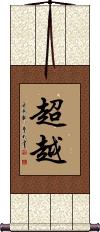
In Chinese, Japanese Kanji, and old Korean Hanja, 超越 means to overcome, surpass, transcendence, excel, exceed, go beyond, rise above, or transcend.
...And this above all to thine own self be true
A line from Shakespeare's Hamlet
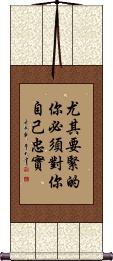
尤其要緊的你必須對你自己忠實 is the classic translation of a line from Shakespeare's Hamlet into Chinese.
Family Over Everything
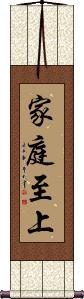
家庭至上 is a Chinese phrase that means “family above all else.”
The first two characters mean family, household, or home (they will be read as “family” in this case).
The last two characters mean supreme, paramount, or above all else.
This in-stock artwork might be what you are looking for, and ships right away...

Gallery Price: $61.00
Your Price: $33.88

Gallery Price: $61.00
Your Price: $33.88

Gallery Price: $61.00
Your Price: $33.88

Gallery Price: $61.00
Your Price: $33.88

Gallery Price: $61.00
Your Price: $33.88

Gallery Price: $72.00
Your Price: $39.88
Not the results for Above All that you were looking for?
Below are some entries from our dictionary that may match your Above All search...
| Characters If shown, 2nd row is Simp. Chinese |
Pronunciation Romanization |
Simple Dictionary Definition |
禪 禅 see styles |
shàn shan4 shan yuzuri ゆずり |
More info & calligraphy: Zen / Chan / Meditation(out-dated kanji) (1) (Buddhist term) dhyana (profound meditation); (2) (abbreviation) Zen (Buddhism); (surname) Yuzuri To level a place for an altar, to sacrifice to the hills and fountains; to abdicate. Adopted by Buddhists for dhyāna, 禪 or 禪那, i.e. meditation, abstraction, trance. dhyāna is 'meditation, thought, reflection, especially profound and abstract religious contemplation'. M.W. It was intp. as 'getting rid of evil', etc., later as 靜慮 quiet meditation. It is a form of 定, but that word is more closely allied with samādhi, cf. 禪定. The term also connotes Buddhism and Buddhist things in general, but has special application to the 禪宗 q.v. It is one of the six pāramitās, cf. 波. There are numerous methods and subjects of meditation. The eighteen brahmalokas are divided into four dhyāna regions 'corresponding to certain frames of mind where individuals might be reborn in strict accordance with their spiritual state'. The first three are the first dhyāna, the second three the second dhyāna, the third three the third dhyāna, and the remaining nine the fourth dhyāna. See Eitel. According to Childers' Pali Dictionary, 'The four jhānas are four stages of mystic meditation, whereby the believer's mind is purged from all earthly emotions, and detached as it were from his body, which remains plunged in a profound trance.' Seated cross-legged, the practiser 'concentrates his mind upon a single thought. Gradually his soul becomes filled with a supernatural ecstasy and serenity', his mind still reasoning: this is the first jhāna. Concentrating his mind on the same subject, he frees it from reasoning, the ecstasy and serenity remaining, which is the second jhāna. Then he divests himself of ecstasy, reaching the third stage of serenity. Lastly, in the fourth stage the mind becomes indifferent to all emotions, being exalted above them and purified. There are differences in the Mahāyāna methods, but similarity of aim. |
地獄 地狱 see styles |
dì yù di4 yu4 ti yü jigoku じごく |
More info & calligraphy: Hell(1) {Buddh} hell realm; Naraka; (2) {Christn} Hell; (3) hell; misery; nightmare; inferno; (4) place where a volcano or hot springs constantly spew smoke or steam; (place-name) Jigoku naraka, 捺落迦 (or 那落迦) ; niraya 泥犂; explained by 不樂 joyless; 可厭 disgusting, hateful; 苦具, 苦器 means of suffering; if 地獄 earth-prison; 冥府 the shades, or departments of darkness. Earth-prison is generally intp. as hell or the hells; it may also be termed purgatory; one of the six gati or ways of transmigration. The hells are divided into three classes: I. Central, or radical, 根本地獄 consisting of (1) The eight hot hells. These were the original hells of primitive Buddhism, and are supposed to be located umder the southern continent Jambudvīpa 瞻部州, 500 yojanas below the surface. (a) 等活 or 更活 Saṃjīva, rebirth, where after many kinds of suffering a cold wind blows over the soul and returns it to this life as it was before, hence the name 等活. (b) 黑繩 Kaslasūtra, where the sufferer is bound with black chains and chopped or sawn asunder. (c) 線合; 衆合; 堆壓 Saṃghāta, where are multitudes of implements of torture, or the falling of mountains upon the sufferer. (d) 號呌; 呼呼; 叫喚 Raurava, hell of wailing. (e) 大呌; 大號呌; 大呼 Mahāraurava, hell of great wailing. (f) 炎熱; 燒炙 Tapana, hell of fames and burning. (g) 大熱; 大燒炙; 大炎熱 Pratāpana, hell of molten lead. (h) 無間; 河鼻旨; 阿惟越致; 阿毗至; 阿鼻; 阿毗 Avīci, unintermitted suffering, where sinners die and are reborn to suffer without interval. (2) The eight cold hells 八寒地獄. (a) 頞浮陀地獄 Arbuda, where the cold causes blisters. (b) 尼刺部陀 Nirarbuda, colder still causing the blisters to burst. (c) 頞哳吒; 阿吒吒 Atata, where this is the only possible sound from frozen lips. (d) 臛臛婆; 阿波波 Hahava or Apapa, where it is so cold that only this sound can be uttered. (e) 虎虎婆 Hāhādhara or Huhuva, where only this sound can be uttered. (f) 嗢鉢羅; 鬱鉢羅 (or 優鉢羅) Utpala, or 尼羅鳥 (or 漚) 鉢羅 Nīlotpala, where the skin is frozen like blue lotus buds. (g) 鉢特摩 Padma, where the skin is frozen and bursts open like red lotus buds. (h) 摩訶鉢特摩 Mahāpadma, ditto like great red lotus buds. Somewhat different names are also given. Cf. 倶舍論 8; 智度論 16; 涅槃經 11. II. The secondary hells are called 近邊地獄 adjacent hells or 十六遊增 each of its four sides, opening from each such door are four adjacent hells, in all sixteen; thus with the original eight there are 136. A list of eighteen hells is given in the 十八泥梨經. III. A third class is called the 孤地獄 (獨地獄) Lokāntarika, or isolated hells in mountains, deserts, below the earth and above it. Eitel says in regard to the eight hot hells that they range 'one beneath the other in tiers which begin at a depth of 11,900 yojanas and reach to a depth of 40,000 yojanas'. The cold hells are under 'the two Tchahavālas and range shaft-like one below the other, but so that this shaft is gradually widening to the fourth hell and then narrowing itself again so that the first and last hell have the shortest, those in the centre the longest diameter'. 'Every universe has the same number of hells, ' but 'the northern continent has no hell whatever, the two continents east and west of Meru have only small Lokāntarika hells... whilst all the other hells are required for the inhabitants of the southern continent '. It may be noted that the purpose of these hells is definitely punitive, as well as purgatorial. Yama is the judge and ruler, assisted by eighteen officers and a host of demons, who order or administer the various degrees of torture. 'His sister performs the same duties with regard to female criminals, ' and it may be mentioned that the Chinese have added the 血盆池 Lake of the bloody bath, or 'placenta tank' for women who die in childbirth. Release from the hells is in the power of the monks by tantric means. |
天上 see styles |
tiān shàng tian1 shang4 t`ien shang tien shang tenjou / tenjo てんじょう |
More info & calligraphy: Heavenly / Celestial(1) the heavens; the skies; (2) {Buddh} (See 天路・あまじ・2) heaven; deva realm; (n,vs,vi) (3) ascending to heaven; death; (given name) Tenjō The heavens above, i. e. the six devalokas 六欲天 of the region of desire and the rupalokas andarupalokas, i. e. 色 and 無色界. |
日蓮 日莲 see styles |
rì lián ri4 lian2 jih lien nichiren にちれん |
More info & calligraphy: NichirenNichiren, the Japanese founder, in A. D. 1252, of the 日蓮宗 Nichiren sect, which is also known as the 法華宗 or Lotus sect. Its chief tenets are the three great mysteries 三大祕法, representing the trikāya: (1) 本尊 or chief object of worship, being the great maṇḍala of the worlds of the ten directions, or universe, i. e. the body or nirmāṇakāya of Buddha; (2) 題目 the title of the Lotus Sutra 妙法蓮華經 Myo-ho-ren-gwe-kyo, preceded by Namo, or, 'Adoration to the scripture of the lotus of the wonderful law, ' for it is Buddha's spiritual body; (3) 戒壇 the altar of the law, which is also the title of the Lotus as above; the believer, wherever he is, dwells in the Pure-land of calm light 寂光淨土, the saṃbhogakāya. |
春雨 see styles |
chūn yǔ chun1 yu3 ch`un yü chun yü harusame はるさめ |
More info & calligraphy: Harusame / Spring Rain(1) gentle spring rain; (2) (はるさめ only) {food} glass noodles; cellophane noodles; thin noodles made from bean starch (or potato starch); (female given name) Harusame |
樂天 乐天 see styles |
lè tiān le4 tian1 le t`ien le tien rakuten |
More info & calligraphy: Lottedeva musicians, see above. |
觀世音 观世音 see styles |
guān shì yīn guan1 shi4 yin1 kuan shih yin Kanzeon かんぜおん |
More info & calligraphy: Guan Shi Yin: Protector Of Life(out-dated kanji) Avalokiteshvara (Bodhisattva); Avalokitesvara; Kannon; Kwannon; Guanyin; Buddhist deity of compassion Regarder of the world's sounds, or cries, the so-called Goddess of Mercy; also known as 觀音; 觀世音善薩; 觀自在 (觀世自在); 觀尹; 光世音 (the last being the older form). Avalokiteśvara, v. 阿 8. Originally represented as a male, the images are now generally those of a female figure. The meaning of the term is in doubt; it is intp. as above, but the term 觀自在 (觀世自在) accords with the idea of Sovereign Regarder and is not associated with sounds or cries. Guanyin is one of the triad of Amida, is represented on his left, and is also represented as crowned with Amida; but there are as many as thirty-three different forms of Guanyin, sometimes with a bird, a vase, a willow wand, a pearl, a 'thousand' eyes and hands, etc., and, when as bestower of children, carrying a child. The island of Putuo (Potala) is the chief centre of Guanyin worship, where she is the protector of all in distress, especially of those who go to sea. There are many sūtras, etc., devoted to the cult, but its provenance and the date of its introduction to China are still in doubt. Chapter 25 of the Lotus Sūtra is devoted to Guanyin, and is the principal scripture of the cult; its date is uncertain. Guanyin is sometimes confounded with Amitābha and Maitreya. She is said to be the daughter of king Śubhavyūha 妙莊王, who had her killed by 'stifling because the sword of the executioner broke without hurting her. Her spirit went to hell; but hell changed into paradise. Yama sent her back to life to save his hell, when she was miraculously transported on a Lotus flower to the island of Poo-too'. Eitel. |
四無量心 四无量心 see styles |
sì wú liàng xīn si4 wu2 liang4 xin1 ssu wu liang hsin shi muryōshin |
More info & calligraphy: Brahmavihara - The Four Immeasurables |
生老病死 see styles |
shēng lǎo bìng sǐ sheng1 lao3 bing4 si3 sheng lao ping ssu shouroubyoushi / shorobyoshi しょうろうびょうし |
More info & calligraphy: Birth Old-Age Sickness Death(yoji) {Buddh} the four inevitables in human life (birth, aging, sickness, and death) Birth, age, sickness, death, the 四苦 four afflictions that are the lot of every man. The five are the above four and 苦 misery, or suffering. |
上 see styles |
shàng shang4 shang noboru のぼる |
(bound form) up; upper; above; previous; first (of multiple parts); to climb; to get onto; to go up; to attend (class or university); (directional complement) up; (noun suffix) on; above (suffix) (1) from the standpoint of; from the viewpoint of; with respect to; in terms of; as a matter of; in view of; so far as ... is concerned; (suffix) (2) on; above; on top of; aboard (a ship or vehicle); (noun - becomes adjective with の) (3) the best; top; first class; first grade; (4) (See 下・2,中・6) first volume (of a two or three-volume set); first book; (expression) (5) (written on a gift's wrapping paper) with my compliments; (surname) Noboru uttarā 嗢呾羅; above upper, superior; on; former. To ascend, offer to a superior. |
仝 同 see styles |
tóng tong2 t`ung tung dou / do どう |
variant of 同[tong2] (used as a surname and in given names) (unc) (See 同上) "as above" mark |
右 see styles |
yòu you4 yu yuu / yu ゆう |
(bound form) right; right-hand side; (bound form) (politics) right of center; (bound form) (old) west; (literary) the right side as the side of precedence (noun - becomes adjective with の) (1) (See 左・1) right; right-hand side; (2) right hand; (noun - becomes adjective with の) (3) the above (in a piece of vertical writing); above-mentioned; (4) the right (wing); rightist; (5) the better (of two); (female given name) Yū dakṣiṇa. The right hand, on the right, e. g. |
大 see styles |
dài dai4 tai yutaka ゆたか |
see 大夫[dai4 fu5] (pref,adj-na,n) (1) large; big; great; huge; vast; major; important; serious; severe; (prefix) (2) great; prominent; eminent; distinguished; (suffix) (3) -sized; as big as; the size of; (suffix noun) (4) (abbreviation) (See 大学・1) university; (5) large (e.g. serving size); large option; (6) (abbreviation) (See 大の月) long month (i.e. having 31 days); (given name) Yutaka Maha. 摩訶; 麼賀. Great, large, big; all pervading, all-embracing; numerous 多; surpassing ; mysterious 妙; beyond comprehension 不可思議; omnipresent 體無不在. The elements, or essential things, i.e. (a) 三大 The three all-pervasive qualities of the 眞如 q.v. : its 體, 相 , 用 substance, form, and functions, v. 起信論 . (b) 四大 The four tanmātra or elements, earth, water, fire, air (or wind) of the 倶舍論. (c)五大 The five, i.e. the last four and space 空, v. 大日經. (d) 六大 The six elements, earth, water, fire, wind, space (or ether), mind 識. Hīnayāna, emphasizing impersonality 人空, considers these six as the elements of all sentient beings; Mahāyāna, emphasizing the unreality of all things 法空, counts them as elements, but fluid in a flowing stream of life, with mind 識 dominant; the esoteric sect emphasizing nonproduction, or non-creation, regards them as universal and as the Absolute in differentiation. (e) 七大 The 楞嚴經 adds 見 perception, to the six above named to cover the perceptions of the six organs 根. |
我 see styles |
wǒ wo3 wo ga が |
I; me; my (1) {Buddh} obstinacy; (2) atman; the self; the ego I, my, mine; the ego, the master of the body, compared to the ruler of a country. Composed of the five skandhas and hence not a permanent entity. It is used for ātman, the self, personality. Buddhism takes as a fundamental dogma 無我, i.e. no 常我, no permanent ego, only recognizing a temporal or functional ego. The erroneous idea of a permanent self continued in reincarnation is the source of all illusion. But the Nirvana Sutra definitely asserts a permanent ego in the transcendental world, above the range of reincarnation; and the trend of Mahāyāna supports such permanence; v. 常我樂淨. |
戒 see styles |
jiè jie4 chieh kai; ingoto(ok) かい; いんごと(ok) |
to guard against; to exhort; to admonish or warn; to give up or stop doing something; Buddhist monastic discipline; ring (for a finger) (1) (かい only) {Buddh} admonition; commandment; (2) sila (precept) śīla, 尸羅. Precept, command, prohibition, discipline, rule; morality. It is applied to the five, eight, ten, 250, and other commandments. The five are: (1) not to kill; (2 ) not to steal; (3) not to commit adultery; (4) not to speak falsely; (5) not to drink wine. These are the commands for lay disciples; those who observe them will be reborn in the human realm. The Sarvāstivādins did not sanction the observance of a limited selection from them as did the 成實宗 Satyasiddhi school. Each of the five precepts has five guardian spirits, in all twenty-five, 五戒二十五神. The eight for lay disciples are the above five together with Nos. 7, 8, and 9 of the following; the ten commands for the ordained, monks and nuns, are the above five with the following: (6) not to use adornments of flowers, nor perfumes; (7) not to perform as an actor, juggler, acrobat, or go to watch and hear them; (8) not to sit on elevated, broad, and large divans (or beds); (9) not to eat except in regulation hours; (10) not to possess money, gold or silver, or precious things. The 具足戒full commands for a monk number 250, those for a nun are 348, commonly called 500. Śīla is also the first of the 五分法身, i.e. a condition above all moral error. The Sutra of Brahma's Net has the following after the first five: (6) not to speak of the sins of those in orders; (7) not to vaunt self and depreciate others; (8) not to be avaricious; (9) not to be angry; (10) not to slander the triratna. |
拔 see styles |
bá ba2 pa batsu |
to pull up; to pull out; to draw out by suction; to select; to pick; to stand out (above level); to surpass; to seize Pull up, or out; raise. |
捨 舍 see styles |
shě she3 she sha しゃ |
to give up; to abandon; to give alms {Buddh} equanimity; upeksa; upekkha upekṣā, neglect, indifference, abandoning, M.W. To relinquish, renounce, abandon, reject, give. One of the chief Buddhist virtues, that of renunciation, leading to a state of "indifference without pleasure or pain" (Keith), or independence of both. v. 舍. It is defined as the mind 平等 in equilibrium, i.e. above the distinction of things or persons, of self or others; indifferent, having abandoned the world and all things and having no affections or desires. One of the seven bodhyaṅgas. Translit. sa, śa, s(r). |
暾 see styles |
tūn tun1 t`un tun noboru のぼる |
sun above the horizon (given name) Noboru |
禀 see styles |
bǐng bing3 ping hin |
To petition, report, request, beg; to receive (from above); endowment. |
蒙 see styles |
méng meng2 meng mou / mo もう |
to cover; ignorant; to suffer (misfortune); to receive (a favor); to cheat (1) ignorance; (2) covering; concealing; (3) (abbreviation) (See 蒙古・1) Mongolia; (surname, given name) Meng To cover; stupid, ignorant; receive (from above); Mongol. |
藏 see styles |
zàng zang4 tsang kura くら |
storehouse; depository; Buddhist or Taoist scripture (surname) Kura Treasury, thesaurus, store, to hide; the Canon. An intp. of piṭaka, a basket, box, granary, collection of writings. The 二藏 twofold canon may be the sutras and the vinaya; or the Hīnayāna and Mahāyāna scriptures. The 三藏 or tripiṭaka consists of the sutras, vinaya, and śāstras (abhidharma). The 四藏 fourfold canon adds a miscellaneous collection. The 五藏 fivefold collection is sutras, vinaya, abhidharma, miscellaneous, and spells, or, instead of the spells, a bodhisattva collection. There is also an esoteric fivefold canon, the first three being the above, the last two being the prājñāpāramitā and the dhāraṇīs. |
該 该 see styles |
gāi gai1 kai chikai ちかい |
should; ought to; probably; must be; to deserve; to owe; to be sb's turn to do something; that; the above-mentioned (prefix) said; matter in question; (personal name) Chikai To connect, belong to; proper; ought, owe; the said; the whole. |
請 请 see styles |
qǐng qing3 ch`ing ching michi みち |
to ask; to invite; please (do something); to treat (to a meal etc); to request (1) (archaism) request; invitation; (2) (archaism) privilege in criminal law given to nobles of the fifth rank or above (ritsuryō system); (given name) Michi Request, ask, invite; please; engage; acknowledge, announce. |
諭 谕 see styles |
yù yu4 yü satoru さとる |
order (from above) (given name) Satoru |
通 see styles |
tòng tong4 t`ung tung michiaki みちあき |
classifier for an activity, taken in its entirety (tirade of abuse, stint of music playing, bout of drinking etc) (n,n-suf,adj-na) (1) authority; expert; connoisseur; well-informed person; (counter) (2) counter for messages, letters, notes, documents, etc.; (noun or adjectival noun) (3) understanding (esp. of male-female relations); tact; insight; (4) supernatural powers; magical powers; (given name) Michiaki Permeate, pass through, pervade; perceive, know thoroughly; communicate; current; free, without hindrance, unimpeded universal; e.g. 神通 supernatural, ubiquitous powers. There are categories of 五通, 六通, and 十通, all referring to supernatural powers; the five are (1) knowledge of the supernatural world; (2) deva vision; (3) deva hearing; (4) knowledge of the minds of all others; (5) knowledge of all the transmigrations of self and all others. The six are the above together with perfect wisdom for ending moral hindrance and delusion. The ten are knowing all previous transmigrations, having deva hearing, knowing the minds of others, having deva vision, showing deva powers, manifesting many bodies or forms, being anywhere instantly, power of bringing glory to one's domain, manifesting a body of transformation, and power to end evil and transmigration. |
食 see styles |
sì si4 ssu shoku(p); jiki(ok); shi(ok) しょく(P); じき(ok); し(ok) |
to feed (a person or animal) (1) food; foodstuff; (2) (しょく only) eating; appetite; (n,ctr) (3) (しょく only) meal; portion āhāra, 阿賀羅 food; to eat, feed. The rules are numerous, and seem to have changed; originally flesh food was not improper and vegetarianism was a later development; the early three rules in regard to 'clean' foods are that 'I shall not have seen the creature killed, nor heard it killed for me, nor have any doubt that it was killed for me'. The five 'unclean' foods are the above three, with creatures that have died a natural death; and creatures that have been killed by other creatures. The nine classes add to the five, creatures not killed for me; raw flesh, or creatures mauled by other creatures; things not seasonable or at the right time; things previously killed. The Laṅkavātāra Sutra and certain other sutras forbid all killed food. |
高 see styles |
gāo gao1 kao masaru まさる |
high; tall; above average; loud; your (honorific) (n,n-suf) (usu. だか when used as a suffix) quantity; amount; volume; number; amount of money; (given name) Masaru High, lofty, eminent. |
ま上 see styles |
maue まうえ |
(noun - becomes adjective with の) just above; right overhead |
より see styles |
yori ヨリ |
(particle) (1) than; (particle) (2) rather than; instead of; over; above; (particle) (3) from; out of; since; at; on (and after); (particle) (4) (with neg. sentence; as よりほかに...ない, よりしかたがない, etc.) except; but; other than; (adverb) (5) more; (female given name) Yori |
一廉 see styles |
kazutoshi かずとし |
(n-adv,adj-no) (1) (kana only) a cut above the rest; superior; respectable; full-fledged; something uncommon; (2) one field; one matter; (adverb) (3) suitably; reasonably; (male given name) Kazutoshi |
Click here for more Above All results from our dictionary
The following table may be helpful for those studying Chinese or Japanese...
| Title | Characters | Romaji (Romanized Japanese) | Various forms of Romanized Chinese | |
| Overcome Surpass Rise Above | 超越 | chou etsu / chouetsu / cho etsu | chāo yuè / chao1 yue4 / chao yue / chaoyue | ch`ao yüeh / chaoyüeh / chao yüeh |
| ...And this above all to thine own self be true | 尤其要緊的你必須對你自己忠實 尤其要紧的你必须对你自己忠实 | yóu qí yào jǐn de nǐ bì xū duì nǐ zì jǐ zhōng shí you2 qi2 yao4 jin3 de ni3 bi4 xu1 dui4 ni3 zi4 ji3 zhong1 shi2 you qi yao jin de ni bi xu dui ni zi ji zhong shi | yu ch`i yao chin te ni pi hsü tui ni tzu chi chung shih yu chi yao chin te ni pi hsü tui ni tzu chi chung shih |
|
| Family Over Everything | 家庭至上 | jiā tíng zhì shàng jia1 ting2 zhi4 shang4 jia ting zhi shang jiatingzhishang | chia t`ing chih shang chiatingchihshang chia ting chih shang |
|
| In some entries above you will see that characters have different versions above and below a line. In these cases, the characters above the line are Traditional Chinese, while the ones below are Simplified Chinese. | ||||

Successful Chinese Character and Japanese Kanji calligraphy searches within the last few hours...



