Many custom options...


And formats...



Wants in Chinese / Japanese...
Buy a Wants calligraphy wall scroll here!
Personalize your custom “Wants” project by clicking the button next to your favorite “Wants” title below...
Safe / Secure
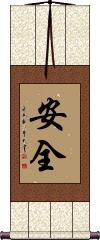
安全 is the word that represents the idea of safety and security in Chinese, Japanese Kanji, and old Korean Hanja.
Everyone wants to have some form of safety in their lives. This conveys how important the feeling of safety and security is to you.
Calm / Cool-Headed
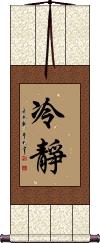
冷靜 means calm and cool-headed in Chinese, Japanese, and Korean.
Other translations: calmness, composure, coolness, serenity, tranquility.
冷靜 is a good wall scroll for someone that wants to remind themselves to stay calm and level-headed.
See Also: Sober Calm
An Open Book Benefits Your Mind
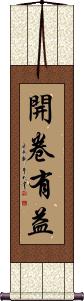
There are several ways to translate this ancient proverb. Translated literally and directly, it says, “Open roll has/yields benefit.”
To understand that, you must know a few things...
First, Chinese characters and language have deeper meanings that often are not spoken but are understood - especially with ancient texts like this. Example: It's understood that the “benefit” referred to in this proverb is to the reader's mind. Just the last character expresses that whole idea.
Second, Chinese proverbs are supposed to make you think and leave a bit of mystery to figure out.
Third, for this proverb, it should be noted that roll = book. When this proverb came about (about two thousand years ago), books were rolls of bamboo slips strung together. The first bound books like the ones we use today did not come about until about a thousand years after this proverb when they invented paper in China.
開卷有益 is a great gift for a bookworm who loves to read and increase their knowledge. Or for any friend that is or wants to be well-read.
Some other translations of this phrase:
Opening a book is profitable
The benefits of education.
These search terms might be related to Wants:
Blessings and Good Wishes
Considerate of the Needs of Others
Longevity / Long Life Wishes
Release of Desires
Not the results for wants that you were looking for?
Below are some entries from our dictionary that may match your wants search...
| Characters If shown, 2nd row is Simp. Chinese |
Pronunciation Romanization |
Simple Dictionary Definition |
慾 欲 see styles |
yù yu4 yü yoku よく |
More info & calligraphy: Desire / Longing / Cravinggreed; craving; desire; avarice; wants Passion, inordinate desire, lust, v. 欲. |
欲 see styles |
yù yu4 yü yoku よく |
More info & calligraphy: Desire / Longing / Cravinggreed; craving; desire; avarice; wants; (surname) Yoku rājas, passion. Also kāma, desire, love. The Chinese word means to breathe after, aspire to, desire, and is also used as 慾 for lust, passion; it is inter alia intp. as 染愛塵 tainted with the dust (or dirt) of love, or lust. The three desires are for beauty, demeanour, and softness; the five are those of the five physical senses. |
取巧 see styles |
qǔ qiǎo qu3 qiao3 ch`ü ch`iao chü chiao |
quick fix; opportune short cut (around a difficulty); cheap trick (to get what one wants); to pull a fast one |
告白 see styles |
gào bái gao4 bai2 kao pai kokuhaku こくはく |
to announce publicly; to explain oneself; to reveal one's feelings; to confess; to declare one's love (noun, transitive verb) (1) confession (to a crime, wrongdoing, etc.); admission; (n,vs,vi) (2) professing one's feelings (to someone one wants to go out with); declaration of love; (noun, transitive verb) (3) {Christn} profession (of faith); (noun, transitive verb) (4) {Christn} confession (of sins) |
如意 see styles |
rú yì ru2 yi4 ju i neoi ねおい |
as one wants; according to one's wishes; ruyi scepter, a symbol of power and good fortune (1) (See 不如意・ふにょい・1) going according to one's wishes; (2) {Buddh} ceremonial sceptre used by monks when reciting sutras (scepter); (place-name, surname) Neoi At will; according to desire; a ceremonial emblem, originally a short sword; tr. of Manoratha 末笯曷刺他 successor of Vasubandhu as 22nd patriarch and of Mahāṛddhiprāpta, a king of garuḍas. |
愧死 see styles |
kishi きし |
(n,vs,vi) (See 慙死) dying of shame; being so ashamed one wants to die |
慙死 see styles |
zanshi ざんし |
(noun/participle) dying of shame; being so ashamed one wants to die |
慚死 see styles |
zanshi ざんし |
(noun/participle) dying of shame; being so ashamed one wants to die |
欲勝 欲胜 see styles |
yù shèng yu4 sheng4 yü sheng yokushō |
wants to dominate |
欲害 see styles |
yù hài yu4 hai4 yü hai yokugai |
wants to harm |
欲建 see styles |
yù jiàn yu4 jian4 yü chien yokuken |
wants to establish |
欲得 see styles |
yù dé yu4 de2 yü te yokutoku よくとく |
selfishness; self-interest wants to attain |
欲殺 欲杀 see styles |
yù shā yu4 sha1 yü sha yoku setsu |
wants to kill |
欲求 see styles |
yù qiú yu4 qiu2 yü ch`iu yü chiu yokkyuu / yokkyu よっきゅう |
to desire; wants; appetites (noun, transitive verb) desire; want; will; wish; urge; craving desire, craving, aspiration |
欲示 see styles |
yù shì yu4 shi4 yü shih yoku ji |
wants to show |
欲除 see styles |
yù chú yu4 chu2 yü ch`u yü chu yoku jo |
wants to remove |
鑽謀 钻谋 see styles |
zuān móu zuan1 mou2 tsuan mou |
to use influence to get what one wants; to find a way through (esp. corrupt); to succeed by means fair or foul |
頤指 颐指 see styles |
yí zhǐ yi2 zhi3 i chih ishi いし |
to order with the chin; to indicate what one wants by facial gesture (noun/participle) bossing someone around; having a person under one's control |
ごね得 see styles |
gonedoku ごねどく |
(colloquialism) getting what one wants by complaining or grumbling; profiting by holding out or taking a hard line; getting more by raising a ruckus |
即ハボ see styles |
sokuhabo そくハボ |
(slang) (vulgar) (abbreviation) (abbr. of 即ハメボンバー) woman one wants to have sex with at first sight |
求有者 see styles |
qiú yǒu zhě qiu2 you3 zhe3 ch`iu yu che chiu yu che guu sha |
one who wants to stay alive |
逆指名 see styles |
gyakushimei / gyakushime ぎゃくしめい |
(n,vs,vt,vi) (1) nominating oneself (to something one is usually nominated to by someone else); self-nomination; (n,vs,vt,vi) (2) {baseb} designating the baseball club one (as a draft candidate) wants to join (through a system used in Japan between 1993-2007) |
黒歴史 see styles |
kurorekishi くろれきし |
(net-sl) dark history; dark past; something one wants to forget or pretend never happened |
ウォンツ see styles |
wontsu ウォンツ |
wants; desires |
偏聽偏信 偏听偏信 see styles |
piān tīng piān xìn pian1 ting1 pian1 xin4 p`ien t`ing p`ien hsin pien ting pien hsin |
selective listening; to hear what one wants to hear |
否応なく see styles |
iyaounaku / iyaonaku いやおうなく |
(adverb) whether one wants to or not; without choice |
否応無く see styles |
iyaounaku / iyaonaku いやおうなく |
(adverb) whether one wants to or not; without choice |
思い通り see styles |
omoidoori おもいどおり |
(noun or adjectival noun) as one expects; as one wants; to one's satisfaction; as one sees fit |
掇臀捧屁 see styles |
duō tún pěng pì duo1 tun2 peng3 pi4 to t`un p`eng p`i to tun peng pi |
to hold up buttocks and praise a fart (idiom); to use flatter to get what one wants; to toady; boot-licking |
暢所欲言 畅所欲言 see styles |
chàng suǒ yù yán chang4 suo3 yu4 yan2 ch`ang so yü yen chang so yü yen |
lit. fluently saying all one wants (idiom); to preach freely on one's favorite topic; to hold forth to one's heart's content |
Click here for more wants results from our dictionary
The following table may be helpful for those studying Chinese or Japanese...
| Title | Characters | Romaji (Romanized Japanese) | Various forms of Romanized Chinese | |
| Safe Secure | 安全 | an zen / anzen | ān quán / an1 quan2 / an quan / anquan | an ch`üan / anchüan / an chüan |
| Calm Cool-Headed | 冷靜 冷静 | rei sei / reisei | lěng jìng leng3 jing4 leng jing lengjing | leng ching lengching |
| An Open Book Benefits Your Mind | 開卷有益 开卷有益 | kāi juàn yǒu yì kai1 juan4 you3 yi4 kai juan you yi kaijuanyouyi | k`ai chüan yu i kaichüanyui kai chüan yu i |
|
| In some entries above you will see that characters have different versions above and below a line. In these cases, the characters above the line are Traditional Chinese, while the ones below are Simplified Chinese. | ||||

Successful Chinese Character and Japanese Kanji calligraphy searches within the last few hours...



