Many custom options...


And formats...



Unit in Chinese / Japanese...
Buy an Unit calligraphy wall scroll here!
Personalize your custom “Unit” project by clicking the button next to your favorite “Unit” title below...
Pascal
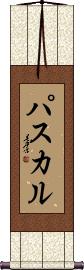
パスカル is a Japanese Katakana word used to mean pascal (unit of pressure), PASCAL (computer language), or Blaise Pascal, the famous French mathematician.
If your name is Pascal, this is also how to write your name in Japanese.
Note: Because this title is entirely Japanese Katakana, it should be written by a Japanese calligrapher.
One Love
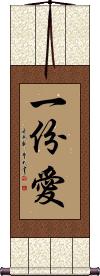
一份愛 means “one love.”
一份愛 is not referring to a person but the emotion of love.
It's like saying, “A piece of love” or “One unit of love.” There's not a perfect way to express a singular love, which is probably what you were searching for.
Stone / Rock
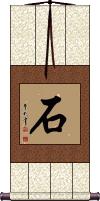
石 is the character that means rock or stone in both Chinese and Japanese.
Alone, this will be read as “stone” in Japanese but in some context, it is a unit of measure for the volume of about five bushels.
This can also refer to a gem or jewel.
This can also be the Japanese surnames that romanize as Ishi, Tsuruishi, Soku, Seki, Shi, Kazu, Iso, Ishizaki, Ishisaki, or Koku.
Military Intelligence
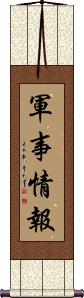
軍事情報 is the full way to say “Military Intelligence.”
The first two characters mean “military affairs.”
The second two characters mean “intelligence” or “information-gathering.”
If you work in the G2 section of your military unit, this is the wall scroll for you.
See Also: Military
Mother and Daughter
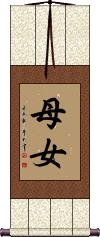
母女 means “mother and daughter” as a unit or as if mother and daughter are a whole together.
母女 is an unusual selection for a calligraphy wall scroll and can be read in many different ways. Your native Asian friends might wonder what you are trying to say. They might even read it as “a mother and daughter without a dad.”
This entry was added to our database for a customer's special request. It has the same meaning in Chinese Characters and Korean Hanja.
See Also: Mother and Son
Military Discipline
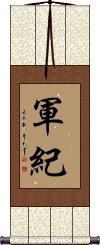
軍紀 means military discipline or military principles.
If maintaining your military discipline is important to you personally or important to your military unit, this is the wall scroll to have up behind your desk. In fact, it's the kind of thing I expect to see behind the desk of a First Sergeant or maybe a hardcore NCO.
Note: In some rare contexts, it could be extended to mean “morale,” but “discipline” is much closer to the commonly-held definition.
Note: This term is not well-known outside the military services in Asia (not used by the common person).
See Also: Self-Discipline
Dynasty
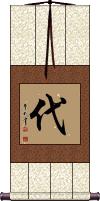
代 is the word used to designate dynasties in Asia.
代 alone can mean generation; age; period; historical era; eon; world; society; reign; era. 代 comes after the name of the dynasty, for example, the Tang Dynasty is the “Tang Dai” in Chinese.
Some have suggested that the word dynasty comes from the Chinese word “dai” (as “dai” sounds like the first syllable of a dynasty). However, the word dynasty is derived from the Greek word δυναστεία (dunasteia) meaning lordship and/or domination.
Sometimes this word is used in a different context where it can mean to represent or substitute. In this case, it can mean representative of; on behalf of; acting for, e.g. to offer incense in place of another.
In ancient Japan, this could also be a “shiro” (a unit of land area equal to one-fiftieth of a tan or about 20 square miles).
A Bright Future
Incredible 10,000-Mile Flight of the Peng
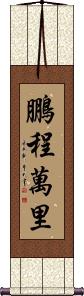
鵬程萬里 is an ancient Chinese proverb used in modern times to wish someone a long and successful career.
It's really about the 10,000 Flight of the Peng (Peng, also known as Roc is a mythical fish that can turn into a bird and take flight).
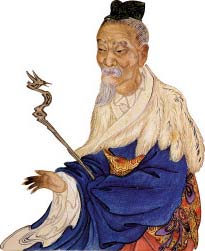
莊子
Zhuangzi or Chuang Tzu
Breaking down each character:
1. Peng or Roc (a kind of bird).
2. Journey (in this case, a flight).
3. 10,000 (Ten Thousand).
4. Li is a unit of distance often referred to as a “Chinese Mile,” though the real distance is about half a kilometer.
Direct Translation: “Peng's Journey [of] 10,000 Li.”
Literal meaning: “The 10,000-Li Flying Range Of The Roc.”
Perceived meaning: “To have a bright future” or “To go far.”
This proverb/idiom comes from the book of Zhuangzi or Chuang Tzu. It tells the tale of a huge fish that could turn into a gigantic bird. This bird was called a “peng” and was many miles long. This legendary size allowed the Peng to fly from the Northern Sea to the Southern Sea in a single bound.
Wishing someone “a Peng's Journey of 10,000 Li” will imply that they can travel far without stopping and will have great success, a long career, and a prosperous future.
Gung Ho
Working Together
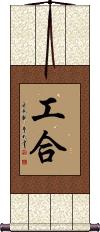
工合 is one of those Asian words that is used more in English than in the original Chinese.
Gung Ho was originally used to speak of Carlson's Raiders, a group of “Gung Ho” U.S. Marines who went on an island-hopping campaign of death during WWII.
A movie called Gung Ho came out in the mid-1940s and was later re-released in the 1950s depicting the 2nd Marine Raider Battalion, and brought this word to the mainstream.
It is still sometimes used today within the U.S. Marine Corps brotherhood to refer to a unit or group that works well together or is otherwise efficient and motivated (has good morals).
In 1986, there was a movie called Gung Ho about a Japanese company taking over an American automotive factory. They completely ignored the fact that this was a Chinese title.
It should be noted that this title actually means a condition, state, manner, or the health of something in Japanese.
Language and pronunciation notes:
Like many Asian words absorbed into common use in English, this one is drastically mispronounced. The official Romanization is “gong he” but that doesn't tell you enough. The vowel sound on the first character is like the English word “own,” now just add the g-sounds to the beginning and end. The second character is misleading, as you might think it is like the English word “he.” In reality, the vowel sound is more like the “u” in “up.”
It should also be noted that the current generation in China no longer uses or recognizes this as a common word or slogan.
Note: This can be pronounced and is a word in Japanese, though seldom used. Japanese will use a variation of "具合" instead. But still, not common.
Art of War: 5 Points of Analysis
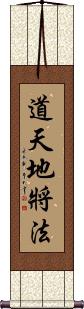
道天地將法 is a list of five key points to analyzing your situation from the first chapter of Sun Tzu's Art of War.
This reads like a 5-part military proverb. Sun Tzu says that to sharpen your skills, you must plan. To plan well, you must know your situation. Therefore, you must consider and discuss the following:
1. Philosophy and Politics: Make sure your way or your policy is agreeable among all of your troops (and the citizens of your kingdom as well). For when your soldiers believe in you and your way, they will follow you to their deaths without hesitation and will not question your orders.
2. Heaven/Sky: Consider climate / weather. This can also mean considering whether God is smiling upon you. In the modern military, this could be waiting for clear skies so that you can have air support for an amphibious landing.
3. Ground/Earth: Consider the terrain in which the battle will take place. This includes analyzing defensible positions, and exit routes, while using varying elevations to your advantage. When you plan an ambush, you must know your terrain and the best location from which to stage that ambush. This knowledge will also help you avoid being ambushed, as you will know where the likely places in which to expect an ambush from your enemy.
4. Leadership: This applies to you as the general and your lieutenants. A leader should be smart and be able to develop good strategies. Leaders should keep their word, and if they break a promise, they should punish themselves as harshly as they would punish subordinates. Leaders should be benevolent to their troops, with almost a fatherly love for them. Leaders must have the ability to make brave and fast decisions. Leaders must have steadfast principles.
5. [Military] Methods: This can also mean laws, rules, principles, models, or systems. You must have an efficient organization in place to manage both your troops and supplies. In the modern military, this would be a combination of how your unit is organized and your SOP (Standard Operating Procedure).
Notes: This is a simplistic translation and explanation. Much more is suggested in the actual text of the Art of War (Bing Fa). It would take a lot of study to master all of these aspects. In fact, these five characters can be compared to the modern military acronyms such as BAMCIS or SMEAC.
CJK notes: I have included the Japanese and Korean pronunciations but in Chinese, Korean and Japanese, this does not make a typical phrase (with subject, verb, and object) it is a list that only someone familiar with Sun Tzu’s writings would understand.
These search terms might be related to Unit:
Alone With Only Your Shadow for Company
Esprit De Corps / Determination
Esprit De Corps / Team Spirit
Five Element Dojo
Kayin / Karen Ethnic Group
Marine Corps
Misery Loves Company
United States Marine Corps
Wing Chun Fist Maxims (Part 1)
Wing Chun Fist Maxims (Part 2)
The following table may be helpful for those studying Chinese or Japanese...
| Title | Characters | Romaji (Romanized Japanese) | Various forms of Romanized Chinese | |
| Pascal | パスカル | pasukaru | ||
| One Love | 一份愛 一份爱 | yí fèn ài yi2 fen4 ai4 yi fen ai yifenai | i fen ai ifenai |
|
| Stone Rock | 石 | ishi | shí / shi2 / shi | shih |
| Military Intelligence | 軍事情報 军事情报 | gunji-jouhou gunji-joho | jūn shì qíng bào jun1 shi4 qing2 bao4 jun shi qing bao junshiqingbao | chün shih ch`ing pao chünshihchingpao chün shih ching pao |
| Mother and Daughter | 母女 | mǔ nǚ / mu3 nv3 / mu nv / munv | mu nü / munü | |
| Military Discipline | 軍紀 军纪 | gun ki / gunki | jūn jì / jun1 ji4 / jun ji / junji | chün chi / chünchi |
| Dynasty | 代 | dai | dài / dai4 / dai | tai |
| A Bright Future | 鵬程萬里 鹏程万里 | péng chéng wàn lǐ peng2 cheng2 wan4 li3 peng cheng wan li pengchengwanli | p`eng ch`eng wan li pengchengwanli peng cheng wan li |
|
| Gung Ho | 工合 | guai | gōng hé / gong1 he2 / gong he / gonghe | kung ho / kungho |
| Art of War: 5 Points of Analysis | 道天地將法 道天地将法 | dou ten chi shou hou doutenchishouhou do ten chi sho ho | dào tiān dì jiàng fǎ dao4 tian1 di4 jiang4 fa3 dao tian di jiang fa daotiandijiangfa | tao t`ien ti chiang fa taotientichiangfa tao tien ti chiang fa |
| In some entries above you will see that characters have different versions above and below a line. In these cases, the characters above the line are Traditional Chinese, while the ones below are Simplified Chinese. | ||||

Successful Chinese Character and Japanese Kanji calligraphy searches within the last few hours...



