Many custom options...


And formats...



Not what you want?
Try other similar-meaning words, fewer words, or just one word.
The Way or the Road in Chinese / Japanese...
Buy a The Way or the Road calligraphy wall scroll here!
Personalize your custom “The Way or the Road” project by clicking the button next to your favorite “The Way or the Road” title below...
Daoism / Taoism
Literally: The Way or Road
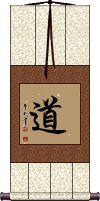
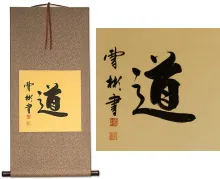
道 is the character “dao” which is sometimes written as “tao” but pronounced like “dow” in Mandarin.
道 is the base of what is known as “Taoism.” If you translate this literally, it can mean “the way” or “the path.”
Dao is believed to be that which flows through all things and keeps them in balance. It incorporates the ideas of yin and yang (e.g. there would be no love without hate, no light without dark, no male without female.)
The beginning of Taoism can be traced to a mystical man named
Lao Zi (604-531 BC), who followed, and added to the teachings of Confucius.
More about Taoism / Daoism here.
Note that this is pronounced “dou” and sometimes “michi” when written alone in Japanese but pronounced “do” in word compounds such as Karate-do and Bushido. It's also “do” in Korean.
Alternate translations and meanings: road, way, path; truth, principle province.
Important Japanese note: In Japanese, this will generally be read with the road, way, or path meaning. Taoism is not as popular or well-known in Japan so Daoist/Taoist philosophy is not the first thing a Japanese person will think of when they read this character.
See our Taoism Page
There is No Royal Road to Learning
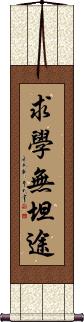
求學無坦途 is a Chinese proverb that translates as “There is no royal road to learning.”
This suggests that the path of learning can never be smooth, there will be difficulties and troubles along the way.
See Also: Learning is Eternal
The Middle Way
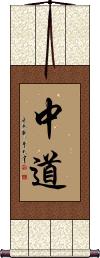
In the most basic translation, 中道 means road through the middle or middle road.
The expanded meaning can be moderation or the golden mean.
But if you are looking for this title, you are probably seeking the Buddhist definition, which is more complex.
中道 is the middle way or middle path of Buddhism. This has various interpretations. In general, it denotes the mean between two extremes and has special reference to the mean between realism and nihilism, or eternal substantial existence and annihilation.
The Buddha teaches that one should not take things to extremes. Don't be extremely evil and engage in debauchery and murder. But do not spend every waking out trying to be a perfect saint. Instead, take the middle path, try to help others, show loving kindness wherever you can, and try not to do harm. If you inadvertently harm another being, make amends if you can, and move on. Realize you are not perfect, but in time, a path of moderation lead toward proper living and enlightenment.
The Old Way / Old School
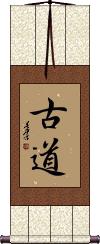
古道 is the Japanese word meaning “The Old Way.” The first character means old or ancient. The second character means “the way” and is the same character as used in Taoism / Daoism (Taoism literally means “the way”).
This second character can also be translated as “method,” as in a way of doing things.
古道 is sometimes Romanized as “Kodo,” though officially, the Romaji should be “Kodou.”
My Japanese-English dictionary further translates this word as the old road, ancient methods, ancient moral teachings, and the way of learning.
Note that this would be understood differently in Chinese. Most Chinese people would just read this as “The old road” without the other meanings derived in Japanese.
Bon Voyage
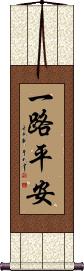
一路平安 is a wish for someone to have a pleasant journey.
It's probably the closest way to translate “bon voyage” into Chinese.
The first two characters mean one road or one path. The second two characters mean “safe and sound” or “without mishap.”
一路平安 means the same thing in Japanese but is not the most common selection for a wall scroll.
Push or Knock
To weigh one's words
During the Tang Dynasty, a man named Jia Dao (born in the year 779), a well-studied scholar and poet, went to the capital to take the imperial examination.
One day as he rides a donkey through the city streets, a poem begins to form in his mind. A portion of the poem comes into his head like this:
“The bird sits on the tree branch near a pond,
A monk approaches and knocks at the gate...”
At the same time, he wondered if the word “push” would be better than “knock” in his poem.
As he rides down the street, he imagines the monk pushing or knocking. Soon he finds himself making motions of pushing and shaking a fist in a knocking motion as he debates which word to use. He is quite a sight as he makes his way down the street on his donkey with hands and fists flying about as the internal debate continues.
As he amuses people along the street, he becomes completely lost in his thoughts and does not see the mayor's procession coming in the opposite direction. Jia Bao is blocking the way for the procession to continue down the road, and the mayor's guards immediately decide to remove Jia Bao by force. Jia Bao, not realizing that he was in the way, apologizes, explains his poetic dilemma and awaits his punishment for blocking the mayor's way.
The mayor, Han Yu, a scholar and author of prose himself, finds himself intrigued by Jia Dao's poem and problem. Han Yu gets off his horse and addresses Jia Bao, stating, “I think knock is better.” The relieved Jia Bao raises his head and is invited by the mayor to join the procession, and are seen riding off together down the street, exchanging their ideas and love of poetry.
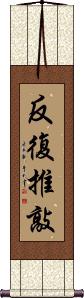
In modern Chinese, this 反復推敲 idiom is used when someone is trying to decide which word to use in their writing or when struggling to decide between two things when neither seems to have a downside.
This in-stock artwork might be what you are looking for, and ships right away...

Gallery Price: $200.00
Your Price: $98.88

Gallery Price: $200.00
Your Price: $118.88
Gallery Price: $268.00
Your Price: $148.77
Gallery Price: $87.00
Your Price: $47.88

Gallery Price: $200.00
Your Price: $118.88

Gallery Price: $200.00
Your Price: $118.88
Not the results for the way or the road that you were looking for?
Below are some entries from our dictionary that may match your the way or the road search...
| Characters If shown, 2nd row is Simp. Chinese |
Pronunciation Romanization |
Simple Dictionary Definition |
道 see styles |
dào dao4 tao wataru わたる |
More info & calligraphy: Daoism / Taoism(1) (abbreviation) (See 道・みち・1) road; path; street; route; (2) (See 道・みち・5) way; set of practices; rules for conducting oneself; (3) (abbreviation) (in Japanese schools) (See 道徳教育) moral education; (4) Buddhist teachings; (5) Taoism; (6) administrative region of Japan (Hokkaido); (7) (hist) administrative region of Japan (Tokaido, Tosando, etc.); (8) province (administrative region of Korea); (9) circuit (administrative region of China); (10) (hist) province (Tang-era administrative region of China); (personal name) Wataru mārga. A way, road; the right path; principle, Truth, Reason, Logos, Cosmic energy; to lead; to say. The way of transmigration by which one arrives at a good or bad existence; any of the six gati, or paths of destiny. The way of bodhi, or enlightenment leading to nirvāṇa through spiritual stages. Essential nirvāṇa, in which absolute freedom reigns. For the eightfold noble path v. 八聖道.; The two Ways: (1) (a) 無礙道 or 無間道 The open or unhindered way, or the way of removing all obstacles or intervention, i. e. all delusion; (b) 解脫道 the way of release, by realization of truth. (2) (a) 難行道 The hard way of "works", i. e. by the six pāramitā and the disciplines. (b) 易行道 the easy way salvation, by the invocation of Amitābha. (3) (a) 有漏道 The way of reincarnation or mortality; (b) 無漏 the enlightened way of escape from the miseries of transmigration. (4) (a) 教道 The way of instruction; (b) 證道 the way of realization. (5) The two lower excretory organs. |
中道 see styles |
zhōng dào zhong1 dao4 chung tao nakamichi なかみち |
More info & calligraphy: The Middle WayThe 'mean' has various interpretations. In general it denotes the mean between two extremes, and has special reference to the mean between realism and nihilism, or eternal substantial existence and annihilation; this 'mean' is found in a third principle between the two, suggesting the idea of a realm of mind or spirit beyond the terminology of 有 or 無, substance or nothing, or, that which has form, and is therefore measurable and ponderable, and its opposite of total non-existence. See 中論. The following four Schools define the term according to their several scriptures: the 法相 School describes it as the 唯識, v. 唯識中道; the 三論 School as the 八不 eight negations, v. 三論; the Tiantai as 實相 the true reality; and the Huayan as the 法界 dharmadhātu. Four forms of the Mean are given by the 三論玄義. |
古道 see styles |
gǔ dào gu3 dao4 ku tao furumichi ふるみち |
More info & calligraphy: The Old Way / Old School(1) old road; ancient road; (2) (こどう only) ancient methods; ancient moral teachings; the way of learning; (place-name, surname) Furumichi |
行道 see styles |
xíng dào xing2 dao4 hsing tao yukimichi ゆきみち |
More info & calligraphy: Walk in the Wayroute (when going somewhere); way (to get somewhere); (surname, given name) Yukimichi To walk in the way, follow the Buddha-truth; to make procession round an image, especially of the Buddha, with the right shoulder towards it. |
衢 see styles |
qú qu2 ch`ü chü ku ちまた |
thoroughfare (1) (kana only) the public (esp. much-discussed, much-heard); the street (e.g. "word on the street"); (2) (kana only) street; district; quarters; (3) (kana only) location (of a battle, etc.); scene (e.g. of carnage); (4) (kana only) divide (e.g. between life and death); (5) fork (in a road); crossroads A thoroughfare, a way, cf. 瞿 18. |
路 see styles |
lù lu4 lu rou / ro ろう |
road (CL:條|条[tiao2]); journey; route; line (bus etc); sort; kind (suffix) (1) route; road; (suffix) (2) distance travelled in a day; (suffix) (3) (See 七十路) one's ... (age, e.g. 40s, 60s); (surname) Rou A road, way. |
途 see styles |
tú tu2 t`u tu michi みち |
way; route; road way; route; (female given name) Michi A road, way, method. |
一路 see styles |
yī lù yi1 lu4 i lu kazuro かずろ |
the whole journey; all the way; going the same way; going in the same direction; of the same kind (adverb) (1) straight; directly; (2) voyage; journey; straight road; (given name) Kazuro |
一道 see styles |
yī dào yi1 dao4 i tao kazumichi かずみち |
together one road; ray (of hope); (given name) Kazumichi One way, the one way; the way of deliverance from mortality, the Mahāyāna. Yidao, a learned monk of the Pure-land sect. |
失迷 see styles |
shī mí shi1 mi2 shih mi |
to lose one's way; to get lost (on the road etc) |
市道 see styles |
ichimichi いちみち |
(1) city road; municipal road; (2) the way of trade; the pursuit of profit; (place-name, surname) Ichimichi |
彎路 弯路 see styles |
wān lù wan1 lu4 wan lu |
winding road; roundabout route; detour; (fig.) wrong way (of doing something) |
徹る see styles |
tooru とおる |
(v5r,vi) (1) to go by; to go past; to go along; to travel along; to pass through; to use (a road); to take (a route); to go via; to go by way of; (2) to run (between); to operate (between); to connect; (3) to go indoors; to go into a room; to be admitted; to be shown in; to be ushered in; to come in; (4) to penetrate; to pierce; to skewer; to go through; to come through; (5) to permeate; to soak into; to spread throughout; (6) to carry (e.g. of a voice); to reach far; (7) to be passed on (e.g. of a customer's order to the kitchen); to be relayed; to be conveyed; (8) to pass (a test, a bill in the House, etc.); to be approved; to be accepted; (9) to go by (a name); to be known as; to be accepted as; to have a reputation for; (10) to be coherent; to be logical; to be reasonable; to be comprehensible; to be understandable; to make sense; (11) to get across (e.g. of one's point); to be understood; (12) to be straight (e.g. wood grain); (13) (archaism) to be well-informed; to be wise; (suf,v5r) (14) to do ... completely; to do ... thoroughly |
故道 see styles |
gù dào gu4 dao4 ku tao |
old road; old way; old course (of a river) |
沿路 see styles |
yán lù yan2 lu4 yen lu enro えんろ |
along the way; on the way; area beside a road route |
王道 see styles |
wáng dào wang2 dao4 wang tao takamichi たかみち |
the Way of the King; statecraft; benevolent rule; virtuous as opposed to the Way of Hegemon 霸道 (1) righteous government; just rule; kingship; rule of right; noble path; (2) (See 学問に王道なし) easy method; simple approach; short-cut; royal road; (noun - becomes adjective with の) (3) orthodox way; proper way; traditional manner; classic approach; tried-and-true method; (personal name) Takamichi |
當道 当道 see styles |
dāng dào dang1 dao4 tang tao |
in the middle of the road; to be in the way; to hold power; (fig.) to predominate; to be in vogue See: 当道 |
直道 see styles |
zhí dào zhi2 dao4 chih tao naomichi なおみち |
straight path (that people should take); straight road; (given name) Naomichi The direct way (to nirvana and Buddha-land). |
老路 see styles |
lǎo lù lao3 lu4 lao lu |
old road; familiar way; beaten track; conventional behavior |
要津 see styles |
yào jīn yao4 jin1 yao chin youtsu / yotsu ようつ |
strategic location; important hub; key post; prominent position (surname) Yōtsu The ford, or road. |
走錯 走错 see styles |
zǒu cuò zou3 cuo4 tsou ts`o tsou tso |
to go the wrong way; to take the wrong (road, exit etc) |
路上 see styles |
lù shang lu4 shang5 lu shang rojou / rojo ろじょう |
on the road; on the way; en route (work) On the Road (novel by Jack Kerouac); (wk) On the Road (novel by Jack Kerouac) |
路次 see styles |
roji ろじ |
(See 途次) way; path; route; along the way; along the road; (surname) Roji |
載道 载道 see styles |
zài dào zai4 dao4 tsai tao |
to fill the road (also fig. clamor, cries of complaint); to communicate a moral; to convey the Way; to express (idea, preference, complaint) |
透る see styles |
tooru とおる |
(v5r,vi) (1) to go by; to go past; to go along; to travel along; to pass through; to use (a road); to take (a route); to go via; to go by way of; (2) to run (between); to operate (between); to connect; (3) to go indoors; to go into a room; to be admitted; to be shown in; to be ushered in; to come in; (4) to penetrate; to pierce; to skewer; to go through; to come through; (5) to permeate; to soak into; to spread throughout; (6) to carry (e.g. of a voice); to reach far; (7) to be passed on (e.g. of a customer's order to the kitchen); to be relayed; to be conveyed; (8) to pass (a test, a bill in the House, etc.); to be approved; to be accepted; (9) to go by (a name); to be known as; to be accepted as; to have a reputation for; (10) to be coherent; to be logical; to be reasonable; to be comprehensible; to be understandable; to make sense; (11) to get across (e.g. of one's point); to be understood; (12) to be straight (e.g. wood grain); (13) (archaism) to be well-informed; to be wise; (suf,v5r) (14) to do ... completely; to do ... thoroughly |
通る see styles |
tooru とおる |
(v5r,vi) (1) to go by; to go past; to go along; to travel along; to pass through; to use (a road); to take (a route); to go via; to go by way of; (2) to run (between); to operate (between); to connect; (3) to go indoors; to go into a room; to be admitted; to be shown in; to be ushered in; to come in; (4) to penetrate; to pierce; to skewer; to go through; to come through; (5) to permeate; to soak into; to spread throughout; (6) to carry (e.g. of a voice); to reach far; (7) to be passed on (e.g. of a customer's order to the kitchen); to be relayed; to be conveyed; (8) to pass (a test, a bill in the House, etc.); to be approved; to be accepted; (9) to go by (a name); to be known as; to be accepted as; to have a reputation for; (10) to be coherent; to be logical; to be reasonable; to be comprehensible; to be understandable; to make sense; (11) to get across (e.g. of one's point); to be understood; (12) to be straight (e.g. wood grain); (13) (archaism) to be well-informed; to be wise; (suf,v5r) (14) to do ... completely; to do ... thoroughly |
道々 see styles |
michimichi みちみち |
(adv,n) along the way; along the road; (surname) Michimichi |
道中 see styles |
dào zhōng dao4 zhong1 tao chung michinaka みちなか |
(1) middle of the road; on the road; (2) on the way (to one's destination); (surname, given name) Michinaka in the middle of the road |
道行 see styles |
dào héng dao4 heng2 tao heng michiyuki みちゆき |
skills acquired through religious practice; (fig.) ability; skill; Taiwan pr. [dao4 hang5] (irregular okurigana usage) (1) going down the road; travelling; traveling; (2) lyric composition describing scenery a traveler sees on the way (traveller); (3) eloping; (surname, given name) Michiyuki Conduct according to Buddha-truth; the discipline of religion. |
道路 see styles |
dào lù dao4 lu4 tao lu michimichi みちみち |
road; path; way; CL:條|条[tiao2] road; highway; (surname) Michimichi road |
Click here for more the way or the road results from our dictionary
The following table may be helpful for those studying Chinese or Japanese...
| Title | Characters | Romaji (Romanized Japanese) | Various forms of Romanized Chinese | |
| Daoism Taoism | 道 | michi / -do | dào / dao4 / dao | tao |
| There is No Royal Road to Learning | 求學無坦途 求学无坦途 | qiú xué wú tǎn tú qiu2 xue2 wu2 tan3 tu2 qiu xue wu tan tu qiuxuewutantu | ch`iu hsüeh wu t`an t`u chiuhsüehwutantu chiu hsüeh wu tan tu |
|
| The Middle Way | 中道 | chuu dou / chuudou / chu do | zhōng dào zhong1 dao4 zhong dao zhongdao | chung tao chungtao |
| The Old Way Old School | 古道 | kodou / kodo | ||
| Bon Voyage | 一路平安 | ichiro heian ichiroheian | yī lù píng ān yi1 lu4 ping2 an1 yi lu ping an yilupingan | i lu p`ing an ilupingan i lu ping an |
| Push or Knock | 反復推敲 反复推敲 | fǎn fù tuī qiāo fan3 fu4 tui1 qiao1 fan fu tui qiao fanfutuiqiao | fan fu t`ui ch`iao fanfutuichiao fan fu tui chiao |
|
| In some entries above you will see that characters have different versions above and below a line. In these cases, the characters above the line are Traditional Chinese, while the ones below are Simplified Chinese. | ||||

Successful Chinese Character and Japanese Kanji calligraphy searches within the last few hours...



